Showing posts with label Larry Bird. Show all posts

Wednesday, October 13, 2021

Top 100 NBA Players: #18 - Larry Bird


Larry Bird

Teams

Boston Celtics - 1979-92


Playoffs

Appearances - 12 (1980,1981,1982,1983,1984,1985,1986,1987,1988,1990,1991,1992)

Conference Finals - 8 (1980,1981,1982,1984,1985,1986,1987,1988)

NBA Finals - 5 (1981,1984,1985,1986,1987)

Championships - 3 (1981,1984,1986)


Awards and Honors

Rookie of the Year - 1980

MVP - 3 (1984,1985,1986)

Finals MVP - 2 (1981,1984,1986)

All-NBA First Team - 9 (1980,1981,1982,1983,1984,1985,1986,1987,1988)

All-NBA Second Team - 1 (1982,1990)

Hall of Fame - 1998

*(actual in bold, deserved in italics)


All-Time Ranks

Free Throw Percentage - #13

Points Per Game - #18

Total Steals - #40

Steals Per Game - #41

Total Points - #41

Total Assists - #44

Assists Per Game - #47

Rebounds Per Game - #60

Total Rebounds - #61


League Leads

Free Throw Percentage (#1-1984,1986,1987,1990, #2-1988,1992, #5-1982)

Three-Pointers Made (#1-1986,1987, #4-1985,1988, #5-1980)

Total Points (#2-1985, #3-1988, #4-1986, #5-1987)

Points Per Game (#2-1985, #3-1988, #4-1986,1987)

Three-Point Percentage (#2-1985, #3-1980, #4-1986)

Total Rebounds (#4-1981)

Rebounds Per Game (#4-1981)


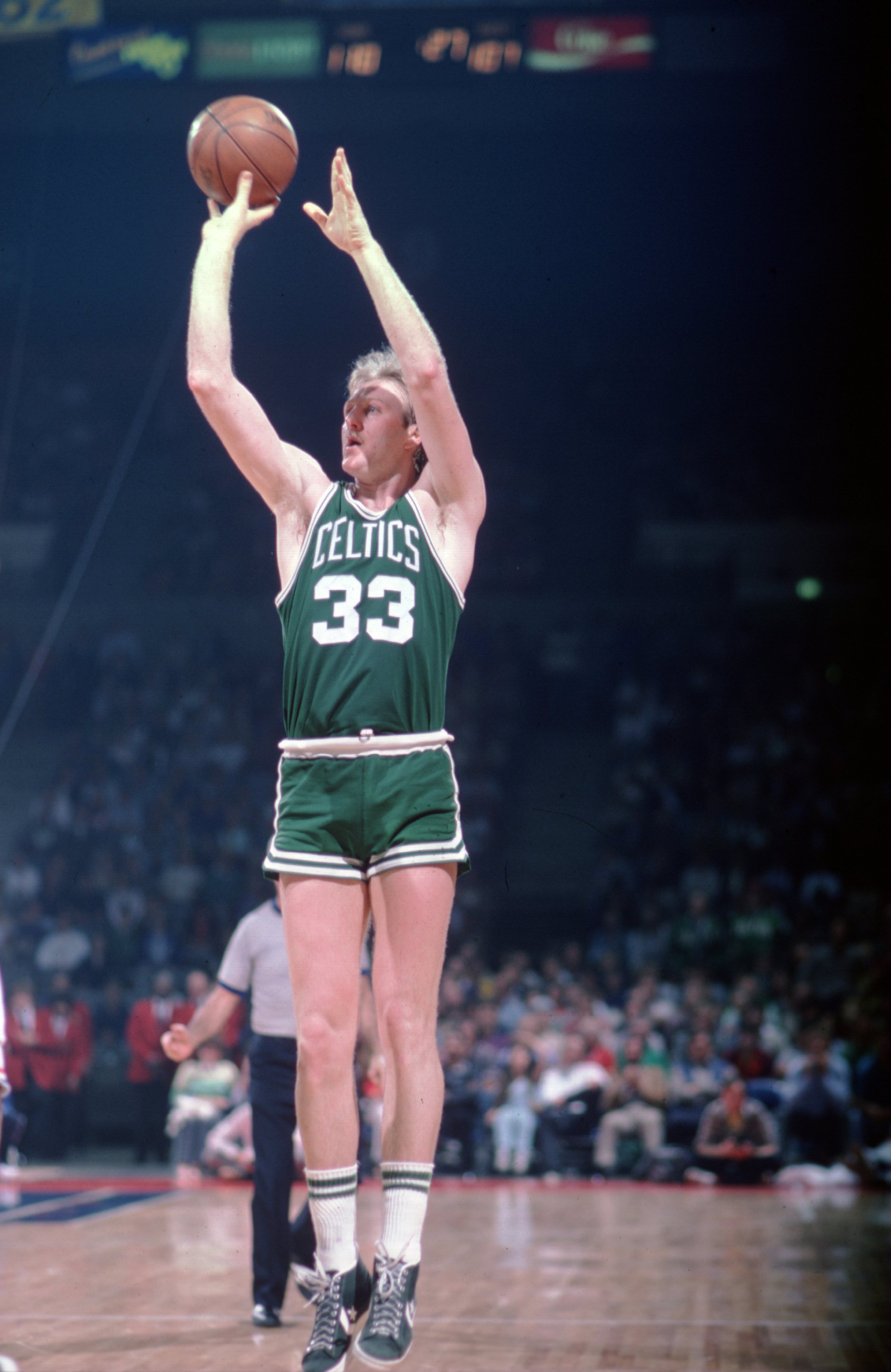
Following a junior season in which he averaged 30.0 points and 11.5 rebounds for Indiana State, Larry Bird was selected with the #6 overall pick in the NBA Draft by the Boston Celtics. He decided to return to school for his senior year, and led the Sycamores to an undefeated season and their first-ever NCAA Tournament, where they advanced all the way to the championship game before losing to Magic Johnson and Michigan State.

Bird made an immediate impact with the Celtics, helping them win 32 more games than the year before and winning the Rookie of the Year award with averages of 21.3 points, 10.4 rebounds, and 4.5 assists per game. He edged out Magic Johnson, who averaged 18.0 points, 7.7 rebounds, 7.3 assists, and 2.4 steals. He also took Boston all the way to the Conference Finals before losing to Philadelphia.

Before the next season the Celtics added Robert Parish and Kevin McHale, and with Bird matching his averages from the year before, they were able to get revenge on the 76ers in the Conference Finals, then beat the Houston Rockets in the Finals to win the first title of Bird career. Bird averaged 15.3 points, 15.3 rebounds, and 7 assists in the Finals was awarded the Finals MVP after putting up 17.7 points and 9.5 rebounds per game.

Bird made steady improvement over the next 2 years, but both seasons ended in playoff disappointment, with the 76ers beating them in the Conference Finals in 1982, and the Bucks beating them in the second round in 1983. In 1984, Bird won his first MVP award after averaging 24.2 points, 10.1 rebounds, and 6.6 assists per game and leading the league by shooting .888 from the free throw line.

That year in the playoffs, Boston faced Milwaukee again, this time in the Conference Finals, and they got their revenge, which got them to the NBA Finals to play Magic Johnson and the Lakers. The series went to 7 games, with Boston finally winning, and Bird won the Finals MVP after averaging 27.4 points and 14 rebounds per game.

Bird averages the next year were nearly identical, with the exception of his scoring, which rose to 28.7 per game, which was #2 in the league and earned him his second straight MVP. He once again led Boston to the NBA Finals for a rematch with the Lakers, but this time they fell in 6 games.

Bird became the third player ever, after Wilt Chamberlain and Bill Russell, to win 3 consecutive MVP awards in 1986, with averages of 25.8 points, 9.8 rebounds, and 6.8 assists while leading the league in free throw shooting again. Boston led the league with 67 wins that year, then cruised to another championship, beating the Rockets in 6 games and earning Bird his second Finals MVP.

Bird led the Celtics back to the Finals for the 4th straight year in 1987, beating the Pistons in the Conference Finals, before meeting the Lakers for the third time in 4 seasons in the championship round. Just like 2 years before, the Lakers knocked off the Celtics in 6 games, preventing a championship repeat.

Bird set a career high in scoring the next year, pouring in 29.9 per game, but Boston lost to Detroit in a Conference Finals rematch, and the Celtics would not make the Finals again in Bird's career. Just 6 games into the next season, Bird had surgery to remove bone spurs from both heels, which put him out for the rest of the season.

Bird had one more season where he was still among the best in the league. He averaged 24.3 points upon returning from his missed season and led the league in free throw percentage for the 4th time, but Boston lost in the first round for the first time in his career.

He missed 59 games over the next two seasons due to back issues, though he was still productive while he was on the court, scoring around 20 points per game each season, but Boston couldn't make any noise in the playoffs, and Bird's back forced him to retire in the summer of 1992, right after playing for the Dream Team in Barcelona.

The only statistical category where Bird ever led the league was free throw percentage, but he was very good and very consistent in the 3 major categories throughout his career, averaging between 19 and 30 points each season, between 8 and 11 rebounds (not counting the year he largely missed), and at least 5 assists in every full season after his rookie year. He got 3 well-deserved MVP awards and should have had 3 Finals MVPs as well, and he is definitely one of the best to ever play the game.


Wednesday, September 21, 2016

Top 100 NBA Players: #6 - Magic Johnson


Magic Johnson

There have never been two careers as intertwined and parallel as those of Magic Johnson and Larry Bird. The two originally became rivals in 1979, when they met in the NCAA Championship Game, with Magic and the Michigan State Spartans coming out on top. The two left for the NBA immediately afterward and became the most heralded pair of rookies in NBA history.

The two stars happened to be drafted by the two most storied franchises in NBA history, and despite both having grown up in the Midwest, they spent their professional careers on completely opposite sides of the country, but they would have plenty of chances to meet during their time in the NBA. 13 of the 20 teams to play in the NBA Finals and 8 of the 10 teams to win titles in the 1980's were led by either Magic Johnson or Larry Bird.

Another parallel that is easily drawn between the two players is the fact that both saw their careers end prematurely, Bird due to injuries and Magic due to HIV. Each had the potential to become the best player in history, but each was cut down in his prime and forced to settle for being one of the best ever.

So what puts Magic ahead of Bird? The first thing to look at is the number of titles, and Magic holds the edge over Bird 5-3, although he was only the best player on 4 of those title teams, which makes it a little closer. Of the three times the two players met in the NBA Finals, the Lakers won twice and the Celtics only once, and Magic also took his team to the Finals much more often, 9 times to Bird's 5.

In the 1980's there was only one season in which the Lakers did not advance at least to the Conference Finals, and that was the season in which Magic Johnson missed more than half of the regular season with a knee injury. The Celtics had two such seasons, one in which Bird missed most of the season, but the other season had no such explanation, with Boston being swept by the Milwaukee Bucks in the second round.

Bird's peak years were much better than Magic's, and he was able to play at that level for 5 years before he was cut down by injuries, but Magic was able to reach his peak level earlier in his career and maintained that level of play until his retirement 9 years later. For two seasons Magic was the league's best player, before Bird began his run at the top for 4 years, but Magic was never far behind, ranking as one of the top 10 players in the league in every full season he played.

With all the similarities between the two players, and how evenly they were matched up throughout their careers, the only place where you can definitively say that Magic was better than Bird was in playoff success, which happens to be one of the most important facets of the game. That is why Johnson is ranked just slightly ahead of Bird among the game's greatest players.

Tuesday, September 20, 2016

Top 100 NBA Players: #7 - Larry Bird


Larry Bird

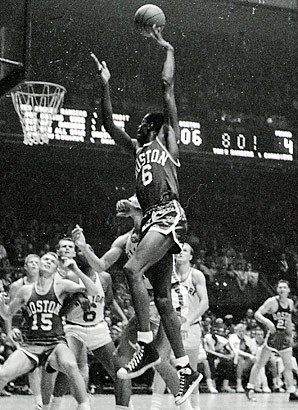
Larry Bird was one of the most dominant players of the 1980's, and he put together one of the greatest 4-year runs of any player in NBA history, but back problems ended his career prematurely and prevented him from fulfilling him potential as possibly the greatest player of all time.

When Larry Bird and Magic Johnson arrived in the NBA in 1979, they were perhaps the most anticipated pair of rookies in history, and they did not disappoint. Nearly every season for the next decade ended with one of them hoisting the championship trophy, with three of those belonging to Larry Bird and the Boston Celtics. Bird was their best player from the day he entered the league until the day he walked away.

In just his second season in the NBA, he had arrived as one of the top 5 players in the NBA, and Boston finished the season with the league's top record. That season, Bird won his first NBA championship, but was not awarded the Finals MVP award because of a subpar performance in the Finals, although it's pretty obvious from looking at the overall playoff statistics of Bird and Cedric Maxwell, who won the award, that Bird was the team's best player:

Bird - 21.9 pts, 14.0 reb, 6.1 ast, 2.3 stl, 1.0 blk, .470 FG%, .375 3P%, .894 FT%
Maxwell - 16.1 pts, 7.4 reb, 2.7 ast, 0.7 stl, 0.9 blk, .580 FG%, .818 FT%

Bird was the better player of the two by far, but because of the perception that he wasn't playing as well as he normally did, he was not rewarded with the MVP he deserved. A couple of years later, Bird turned his game up to another level and ensured that he would not be denied any award he deserved again.

For the next four seasons, Bird was easily the best player in the league, piling up some of the most dominant seasons in history right in a row, and each of those four seasons ended in the NBA Finals, with two titles and two seasons as the runner-up. His stats over those four seasons are incredible, as you can see below:

Bird (1983-1987) - 26.6 pts, 9.9 reb, 6.9 ast, 1.8 stl, .509 FG%, .395 3P%, .894 FT%

Only five other players have ever had shooting percentages that high during a single season, including Steve Nash and Kevin Durant, and only one other player ever reached those heights in the three major categories for a full season, Oscar Robertson. Bird had one more great season left, in which he set career highs in scoring average, shooting percentage, and free throw percentage, but by that time a new, younger force had emerged as the league's top player, a young man named Michael Jordan.

The next season, Bird only played in the first six games before ending his season early to have surgery on both feet, and once he returned, back issues prevented him from ever regaining the form he had before the injuries. The Celtics never made it back to the Conference Finals during the final years of Bird's career, but with all he accomplished in a relatively short time, there is no way to argue that he doesn't belong in the discussion as one of the best players of all time.

Saturday, September 17, 2016

Top 100 NBA Players: #11 - Bill Russell


Bill Russell

Bill Russell is usually on the short list of players considered to be the best of all time, and most experts rank him among the top 4 players of all time, but my formula ranks him significantly lower. I mean no disrespect in ranking him this low, but when you look at the facts, it just makes sense.

As I described earlier in my biography of Oscar Robertson, Russell played in an era of inflated statistics, so when you look at his career averages of 15.1 points and 22.5 rebounds per game, you must remember that those numbers are much higher due to the faster pace of the game and the lower shooting percentages that produced more available rebounds. If you adjust his stats for deflation to today's rates, his career numbers would be 12.1 points and 13.3 rebounds per game. That would still place him among the greatest rebounders of all time, but makes him quite mediocre offensively.

In order to be considered one of the all-time greatest players, a player needs to be exceptional in multiple facets of the game, whether it is offense, defense, longevity, or winning. Russell was a subpar offensive player, shooting just 44% from the field and 56% from the line for his career, and his longevity was decent at 13 seasons. Russell is, however, one of the game's greatest defensive players, and if blocked shots had been counted during his career, it may have been possible to rank him higher, but there is no way to prove what he did during those years.

When it comes to winning, there was no one better. In his 13 seasons in the NBA, he won 11 NBA Championships. The two times he didn't when occurred when he was injured and unable to compete or worn out from his first season as both a player and a coach. Of those 11 title teams, Russell was the best player on 8, the famous 8 consecutive titles that covered most of the 1960's. During their first title run the Celtics were still Bob Cousy's team, and by the time they won their final two titles they had become John Havlicek's team. The Finals MVP award did not exist during his career, but if it had, he would have deserved to win it eight times, and in recognition of that the NBA renamed the Finals MVP award after him in 2009.

There are only 4 players in history who can claim they were the best player on at least 3 consecutive title teams: George Mikan, Bill Russell, Michael Jordan, and Shaquille O'Neal. There are only a few others who can even claim they were the best on 3 total, such as Bird, Magic, Duncan, Havlicek, and LeBron. Besides those titles in the NBA, he also won a gold medal in the 1956 Olympics, as well as 2 national championships in his final two years at the University of San Francisco. So despite his shortcomings on the offensive side of the ball and his average longevity, Russell will always have a place among the game's greats.

Thursday, September 15, 2016

Top 100 NBA Players: #13 - Scottie Pippen


Scottie Pippen

Scottie Pippen is one of the more interesting cases on this list. He spent most of his career as the second-best player on his team, but he won a lot of championships and was actually a much better player than most people realize. 

When I profiled David Robinson a few spots ago, I mentioned that he was the committee's #4 choice to be on the Dream Team in 1992, behind only Magic, Michael, and Bird. Do you happen to know who their #5 choice was? Scottie Pippen. After picking the best four guys who were franchise players and well-respected superstars, they picked Scottie Pippen, who wasn't even the best player on his own team. That's because they saw that the Bulls were more than just Michael Jordan.

In 1992, just before that team was selected, Pippen put together a season that very few have ever come close to. His averages for that year were 21 points, 7.7 rebounds, 7.0 assists, 1.9 steals, and 51% shooting from the field. For reference, only 9 other players have ever averaged a 21-7-7, and only 6 others have done it while shooting over 50%. Those six? Bird, Wilt, Magic, Michael, Oscar, and LeBron. Not bad company, especially considering five of those players have yet to make an appearance in these rankings.

Jordan and Pippen played together for 10 season, and in each of those ten seasons they made the playoffs and advanced beyond the first round together. Jordan played 5 seasons without Pippen, three before he arrived and two after they separated in 1998. In those 5 seasons his teams made 3 playoff appearances and never advanced past the first round. Pippen, meanwhile, played 7 seasons without Jordan, making the playoffs 6 times and advancing past the first round twice. I'm not suggesting that Pippen was better than Jordan, but it's significant that Jordan needed Pippen in order to be successful.

Scottie Pippen was also recognized as being one of the best defensive small forwards of all time, as evidenced by the 8 straight seasons during the 1990's that he was named to the All-Defensive First Team. He led the league in steals in 1995, and finished in the top 5 three other times. Pippen was the player that the Bulls used to guard the other team's best player at four positions, and it was a tipped pass and steal by Pippen that sealed the 1997 Finals victory over Utah after Steve Kerr hit his famous series-winning shot.

Another thing Pippen has going for him is that he is one of a select group of players who has too many championship rings to fit on one hand. He was the second-best player on 6 championship games in 8 seasons, and was also the second-best player on a Portland team in 2000 that came within one game of the NBA Finals. 

Friday, September 9, 2016

Top 100 NBA Players: #20 - Dirk Nowitzki


Dirk Nowitzki

Dirk has been a very consistent player throughout his time in the NBA, all as a Maverick. For 12 straight seasons, he averaged at least 20 points per game. Contrast that with Kevin Garnett, with whom he has many similarities, and you'll notice that Garnett only recorded 9 consecutive seasons of 20 or more points. During that entire time, he missed fewer than 10 games in each and every season, which meant that they could count on those 20 points every night.

When Dirk first arrived in Dallas, the team still belonged to Michael Finley. After two seasons, the torch was passed to the big German, who led Dallas to its first playoff berth in over a decade, a feat that he has duplicated in the following 11 seasons as well. Kevin Garnett, meanwhile, missed the playoffs in three straight seasons with Minnesota.

Dirk is also one of only 8 players in history to finish an entire season with a 50-40-90, meaning 50% or better from the field, 40% or better from long range, and 90% or better from the free throw line. It requires a very accurate and complete offensive player to accomplish that, and among the other names that grace the list are Larry Bird, Steve Nash, Reggie Miller, Kevin Durant, and Stephen Curry. 

Nowitzki has never been known as a great rebounder, especially considering that he is 7 feet tall. He has never finished a season averaging over 10 rebounds per game, but in the playoffs, he has always turned it up a notch, grabbing at least 10 rebounds per game in 8 straight postseason campaigns. So not only did he get his team to the playoffs every year, he also stepped it up when he got there.

During his reign as the Mavericks' superstar, Dirk has led three deep playoff runs. In 2003, he took Dallas to the Western Conference Finals, where they lost to the eventual champion San Antonio Spurs. After a few seasons that ended in disappointment, he took them a step farther in 2006, getting them to the Finals, where they took a 2-0 lead and were minutes away from going up 3-0 before things fell apart and they lost to Miami. Then in 2011, he was able to take a team with no other star all the way back to the Finals to face the same Heat team, except that Miami had three superstars to Dallas' one, but Dirk trumped those three and took home the Finals MVP in the process, during his 13th season in the league.

Thursday, September 8, 2016

Top 100 NBA Players: #21 - John Havlicek


John Havlicek

When the greatest players in Celtics history are named, most people would list Larry Bird, Bill Russell, and Bob Cousy, but John Havlicek was the player who kept the Celtics relevant after Russell's retirement and was a member of both championship teams between the Russell and Bird years.

When Havlicek came into the league, he joined the perennial champion Boston Celtics, and although he was only a role player for the first few years, he was a contributor to teams that continued to win titles throughout the 60's. He averaged 14.3 points as a rookie, which turned out to be the lowest he would average in his 16-year career. He ended his career with the third-most championships of any player, with 8, behind only Bill Russell and Sam Jones, and 38 years later he still hasn't been passed on that list.

Starting in 1966-67, Havlicek started a run of 9 straight seasons as one of the 10 best players in the NBA, hitting his peak in 1970-71 and 1971-72, when he averaged 28.2 points, 8.6 rebounds, and 7.5 assists over two seasons as he became the face of the Celtics. Unfortunately, his personal peak fell right in between the years of Celtic dominance, but he did have a huge part on several champs.

In his second, third, and fourth seasons, Havlicek worked his way up the ladder toward becoming the best player in Boston, passing Bob Cousy, then Tom Heinsohn, then Sam Jones, then finally Bill Russell as the best player on the title team. While it may seem almost sacrilegious to say that Havlicek ever surpassed Russell, he was actually the best player on Russell's final two title teams, in 1968 and 1969. Here are their stats from those two playoffs:

Havlicek (1968) - 25.9 pts, 8.6 reb, 7.5 ast, .452 FG%, .828 FT%
Russell (1968) - 14.4 pts, 22.8 reb, 5.2 ast, .409 FG%, .585 FT%

Havlicek (1969) - 25.4 pts, 9.9 reb, 5.6 ast, .445 FG%, .855 FT%
Russell (1969) - 10.8 pts, 20.5 reb, 5.4 ast, .423 FG%, .506 FT%

Russell was obviously the better rebounder, one of the two best of all time, but Havlicek was a much better scorer, shooter, and, most importantly, free throw shooter. 1968 happened to be the final season that the Finals MVP award didn't exist, and 1969 was the only season that a player from the losing team won the award, when Jerry West averaged over 40 points per game in the Finals and over 30 points per game over the entire playoffs. If you believe that the best player from the winning team should get the Finals MVP, then Havlicek should have won both of these. As it turns out, he did win one a few years later, when he led a completely new Boston team to the title. Look at his stats from those playoffs:

Havlicek (1974) - 27.1 pts, 6.4 reb, 6.0 ast, .484 FG%, .881 FT%

A quick glance will tell you that he hadn't dropped off at all, and had probably gained a step, despite the fact that he was 33 years old by this time. He had become a more efficient shooter and scorer while maintaining impressive averages in rebounds and assists. That was also the first season in which defensive stats were recorded, and he managed to average 1.3 steals per game during that playoff run as well.

Sunday, September 4, 2016

Top 100 NBA Players: #26 - David Robinson


David Robinson

David Robinson was one of the most impressive physical specimens to ever take the court to play basketball, and at one point he was widely considered to be the successor to Michael Jordan as the superstar of the NBA. According to Bill Simmons, "if we ever start cloning basketball players someday, Jordan, LeBron and Robinson will be one-two-three in some order."

Robinson was so highly though of early in his career that when the time came to pick the players for the first Dream Team to compete in the 1992 Olympics, Robinson was the committee's unanimous #4 choice, behind only Jordan, Bird, and Magic. At that point, Robinson had completed only 3 season in the NBA, during which time he had been named the unanimous Rookie of the Year, Defensive Player of the Year, and two-time All-NBA First Team and All-Defensive First Team center.

Robinson's peak corresponded with Michael Jordan's first retirement, which made many believe that he would become a completely dominant force and start to make a collection of MVP's and NBA titles, but Hakeem Olajuwon took advantage of Jordan leaving and finally earned two titles of his own before MJ returned. From 1994-96, Robinson was easily one of the top 3 players in the league, but was never the unquestioned superstar. Here are his stats compared with other top players from those seasons:

Robinson (1994) - 29.8 pts, 10.7 reb, 4.8 ast, 1.7 stl, 3.3 blk, .507 FG%, .749 FT%
Olajuwon (1994) - 27.3 pts, 11.9 reb, 3.6 ast, 1.6 stl, 3.7 blk, .528 FG%, .716 FT%

Robinson (1995) - 27.6 pts, 10.8 reb, 2.9 ast, 1.7 stl, 3.2 blk, .530 FG%, .774 FT%
O'Neal (1995) - 29.3 pts, 11.4 reb, 2.7 ast, 0.9 stl, 2.4 blk, .583 FG%, .533 FT%

Robinson (1996) - 25.0 pts, 12.2 reb, 3.0 ast, 1.4 stl, 3.3 blk, .516 FG%, .761 FT%
Jordan (1996) - 30.4 pts, 6.6 reb, 4.3 ast, 2.2 stl, 0.5 blk, .495 FG%, .834 FT%

None of those seasons had a clear top player, but in each case I would place Robinson one step below his nearest competition due to their higher level of playoff success in those seasons. His peak came to an abrupt end the next season, when back and foot injuries limited him to only 6 games and caused the Spurs to miss the playoffs for the first time since his arrival.

In a way that season was also a blessing in disguise, as their horrible record earned them the top pick in the NBA Draft, which gave them Tim Duncan, the perfect complement to Robinson on the inside. That combination gave the Spurs their first two championships, the first with Duncan narrowly edging Robinson for the Finals MVP, and the second coming by a much wider margin.

One of the signature moments of Robinson's career came on the closing day of the 1994 season, when he and Shaq were in a tight race for the scoring title in the first season someone besides Michael Jordan was sitting at the top in 8 years. Shaq had put up 32 points earlier in the day, so Robinson knew exactly what he needed to do, and he had the perfect opponent, the Los Angeles Clippers. He scored 71 points that day, destroying Gervin's old team record of 63 and taking the scoring title on the very last day.

Friday, September 2, 2016

Top 100 NBA Players: #29 - Julius Erving


Julius Erving

When Julius Erving finally made his NBA debut in 1976, he was already an established superstar, having spent five seasons in the ABA and winning the final 3 MVP awards that league gave out. If I was doing a ranking of the top professional basketball players of all time, and not just NBA players, Erving would definitely jump up much closer to the top 10, but when you consider only the NBA portion of his career, it's still quite impressive.

Erving started out his time in the NBA as the second-best player in the entire league, with only Kareem playing at a higher level than the 76ers' new star. Each led his team to the top seed in his conference entering the playoffs, but Erving went a step beyond Kareem there, advancing to the NBA Finals in his "rookie" season, where they lost to Bill Walton and the Trail Blazers in Walton's only healthy season.

The next season Philadelphia once again took the top seed in the East, but they lost in the Eastern Conference Finals to the eventual champion Washington Bullets. Two years later, it was Philadelphia pulling off the conference final upset, taking down Larry Bird and the Celtics 4 games to 1, setting up a huge Finals showdown with the Los Angeles Lakers, who were led by another young star named Magic Johnson, who eventually led them to the championship and left Erving ringless still.

In 1981, Erving won his first and only NBA MVP award, although I feel that it should have gone to Moses Malone, while I will explain in more detail in a later profile. Malone ended up taking the Rockets all the way to the Finals, where they lost to Boston, while Erving lost to those same Celtics one round earlier. Even at age 30, there was no denying that Dr. J was still one of the league's premier players.

In 1982, Erving led the 76ers to the Finals for the third time in his NBA career, but they once again were no match for Magic Johnson and the Lakers. One of the reasons that Erving is not rated higher is that he was never quite good enough to lead a team all the way to the championship without more help, and that help came the next season in the form of Moses Malone.

With Malone as a teammate rather than an opponent, Erving and the 76ers returned to the NBA Finals, this time sweeping the Lakers and posting a total record of 12-1 during their dominant playoff run. Erving was finally an NBA Champion, but he wasn't the star of the show anymore. That was Moses, who won both the regular season and Finals MVP awards in the only championship season for either player.

Erving hung on for a few more seasons, but he was obviously on the downside of his career, and he was never one of the top 10 players again. In 11 NBA seasons, Erving never missed the playoffs, and he led his team to the NBA Finals 3 times and the conference finals twice before he was replaced by Malone. With Malone leading the way, he won a championship, and saw the conference finals one more time, but at that point he had also been surpassed by a young Charles Barkley. Overall, he was one of the league's most dynamic and exciting stars, and he saw quite a bit of success despite the fact that he never led a title run himself.

Saturday, August 20, 2016

Top 100 NBA Players: #44 - Alex English


Alex English

Alex English has been largely forgotten today, mostly due to his lack of postseason success, but longtime Nuggets fans remember what a great player he was, and he has a place in history that cannot be forgotten.

If you were to ask somebody who the leading scorer of the 1980's was, many would answer with Michael Jordan or Larry Bird rather than Alex English, but he happens to be the correct answer. He scored 19700 points from 1980 to 1989, averaging at least 23 points per game in every season and leading the league in 1983. His scoring average for the decade was 26.9, an amazing accomplishment that few have ever come close to.

He was more than just a great scorer, however. He averaged 5.7 rebounds per game over that same time period, with a peak of 8.0 in 1981. He also averaged 4.6 assists, and always hovered around that range throughout his career. He shot .511 for the decade from the field and .841 from the free throw line. He was an all-around star.

He also led the Nuggets to nine straight playoff berths, and although he never saw the NBA Finals in his career, he did take Denver to the Western Conference Finals once, averaging over 30 points per game during the 1985 playoffs. While most of the other players who have a good ranking on this list have seen quite a bit of playoff success, English did so much during the regular seasons that he can't be overlooked.

Friday, August 19, 2016

Top 100 NBA Players: #45 - Dennis Johnson


Dennis Johnson

Dennis Johnson is one of the most underrated guards of all time, as evidenced by the fact that he wasn't even elected to the Hall of Fame until after his death, which was a full 17 seasons after he retired. Not only did he win three championships, but he was an integral part of each of those teams.

He started his career with the Seattle SuperSonics, where in just his second season he helped take the extreme underdogs all the way to the NBA Finals. His averages went from 12.7 points and 3.6 rebounds in the regular season to 16.1 points and 4.6 rebounds in the playoffs, but in the last game of the NBA Finals, he choked, going 0-14 as the Sonics lost to the Bullets.

The next season, he came back at the same level at which he finished the previous season, matching the averages above and taking Seattle back to the Finals, and because he performed well throughout the playoffs and redeemed his previous failing, he was awarded the Finals MVP. In my profile of Gus Williams (#55) I showed why I thought the award should have gone to him instead, but there is no arguing that Johnson was one of the two stars on the title team, and that was in just his third season.

Johnson was even better the next season, averaging 19 points, 5.1 rebounds, and 4.1 assists per game while being named to the All-Defensive Team for the second of what would become nine straight seasons. Unfortunately, the Sonics lost in the Western Conference Finals that year to the Lakers, who featured Kareem Abdul-Jabbar and a rookie named Magic Johnson.

He was traded to the Phoenix Suns after that season in exchange for Paul Westphal, and while he continued to put up big numbers, he was not able to replicate the playoff success he enjoyed in Seattle. While he was a Sun, he made his only appearance on the All-NBA First Team and enjoyed his most impressive personal seasons.

After three season in Phoenix, he made his way to Boston via another trade, and was able to use his experience to help the Celtics make it to four straight NBA Finals, two of which earned him additional championship rings. While Kevin McHale and Robert Parish tend to be more recognized as stars during that period for Boston, more often than not it was Dennis Johnson playing second fiddle to Larry Bird on those great teams.

Above it all, Dennis Johnson was a winner, making the playoffs in every season after his rookie year ended. He made it at least to the Conference Finals 8 times in his career, and played in 6 NBA Finals. He was twice the second-best player on a champion, and he was always in the top 4 on those 8 teams that made deep playoff runs. Even though he never averaged 20 points per game for a full season, he was a huge asset if you wanted a winner.

Monday, August 15, 2016

Top 100 NBA Players: #49 - Kevin McHale


Kevin McHale

Today one of many great Celtic big men claims a spot among the top 50 players of all time. McHale was a major part of the Celtics dynasty of the 1980's, but he was never the star player, because Larry Bird was his teammate during his entire peak.

McHale made it at least to the Conference Finals 7 times in his 13-year career, winning three championships along the way. He was twice a top 3 player on a Conference Finalist, twice a top 3 player on an NBA Finalist, and once the #2 player on a champion, the 1986 Celtics. He was a great player, but he was never known as a superstar, although there were signs that he could have become one.

In 1987, McHale hit his peak in almost every statistical category, was named to the All-NBA First Team, and came in 4th in the MVP voting. Those aren't things that are normally associated with lesser stars, and it proves that he had the skills of a superstar, but was willing to defer to a more talented teammate in order to be more successful. Here are his stats from that monster season:

McHale - 26.1 pts, 9.9 reb, 2.6 ast, 2.2 blk, .604 FG%, .836 FT%

Only his free throw percentage and assist average were not career highs, and his field goal percentage led the entire league, the first of two straight seasons in which he did that. Unfortunately, he faded in the playoffs, averaging only 21.1 points and shooting only .762 from the free throw line, and the Celtics lost in the Finals to the rival Lakers.

McHale won three titles as a player, but hardly had any part in the first and played a small role in the second, but was a huge part of the 1986 Celtics, one of the greatest teams of all time. Even though he played in Larry Bird's shadow for his entire career, there is no doubt that he was a big part of the reason that the Celtics were always in contention during the 1980's.

Saturday, July 30, 2016

Top 100 NBA Players: #67 - Robert Parish


Robert Parish

Robert Parish was a member of 4 championship teams and played in the Finals 7 times in his career, but it's safe to say that without Larry Bird and Michael Jordan, those numbers would both be much smaller. Even though he wasn't the driving force behind those titles, he still has a place in the brotherhood of all-time greats.

Parish began his career in Golden State, playing for teams that consistently missed the playoffs, but his luck changed in 1980, when he was traded to Boston with a draft pick that became Kevin McHale for a #1 pick, which turned into Joe Barry Carroll. That trade set the Celtics' frontcourt for a decade and built a dynasty.

Parish was incredibly consistent in the 1980's, averaging over 16 points and 9 rebounds per game for 9 straight seasons, while shooting over 53% for 13 straight seasons, stretching that streak clear through 1993. While he was definitely a good player, he was just a piece in Boston, ranking as their 3rd-best player on two title teams, and lower than that for the rest of his time there.

Perhaps the most amazing thing about Parish was his durability. He played 21 seasons, and in the first 20 he never missed more than 10 games. That durability enabled him to pass Kareem Abdul-Jabbar as the player to appear in the most games in NBA history in 1996, his 20th season, during which he started 34 games for the Charlotte Hornets. While it's not the most desirable category to hold the record in, it's still an impressive achievement.

Sunday, July 24, 2016

Top 100 NBA Players: #73 - Steve Nash


Steve Nash

Steve Nash is one of my favorite players of all time, so it hurts a little bit to have to put him clear down here on the all-time list, but he has been slightly overrated by the fact that he won two MVP awards that he probably shouldn't have. But just because I don't quite feel he was MVP-worthy does not mean that he his shown some major feats of greatness during his career.

Steve Nash is the holder of several impressive records. One of the biggest is that he has the highest free throw percentage in the history of the NBA. Only three players can claim an overall free throw percentage over 90% for their career, and Nash is one of them. In 2010, he broke John Stockton's record as the oldest player to lead the league in assists, and he broke it by 3 years. The following year, he did it again, setting the bar even higher by winning the assist title at age 37. There has never been a point guard who played that well that late in his career, and that includes Jason Kidd and Stockton.

He is also one of the few players in history to achieve a 50-40-90 season, shooting 50% from the field, 40% from long range, and 90% from the free throw line. Only seven players have ever achieved this: Larry Bird, Dirk Nowitzki, Reggie Miller, Mark Price, Kevin Durant, Stephen Curry, and Nash. But Nash hasn't just joined that club, he is the captain of it. Nash has achieved it 4 times, including three straight seasons from 2007-2010, while the other 6 have done it only seven times combined. Nash barely missed out on making it five straight years with the 2006-07 season, when he finished the season shooting .899 from the free throw line. He was arguably the best in-game shooter in the history of the NBA when he retired, although Stephen Curry looks like he will probably take that title from him.

Steve Nash is one of only two MVP's in history to never make an appearance in the NBA Finals (the other is 2011 winner Derrick Rose). Even with that fact, he didn't have a complete lack of playoff success. He was a top 3 player on 4 Western Conference Finalists, but he was never able to get over that hump. In addition to his eight seasons in the top 3 in assists in the league, which includes 5 times as #1, he also led all playoff players in assists average 4 times, with an average of 13.3 per game in 2007 as his best performance.

I said earlier that I didn't believe Nash should have won those two MVP awards. It hurts more than you can imagine for me to write that, but it's true. In 2005, when he won his first award, Nash was credited with the Suns' success because he was the new guy in town, but Amare was very impressive that year, and probably should have won the award himself. Here are their stats from that season:

Stoudemire - 26.0 pts, 8.9 reb, 1.6 ast, 1.6 blk, .559 FG%, .733 FT%
Nash - 15.5 pts, 3.3 reb, 11.5 ast, .502 FG%, .431 3P%, .887 FT%

Each was impressive in his own right, but because Amare showed so much improvement that year, people assumed it was because of Nash. Having a great point guard to get you the ball has to help, but it also can't hurt that Amare was 22 years old and still growing as a player. The next year, Amare went down with a knee injury, and the Suns weren't expected to go anywhere, but Nash led them to a respectable record and a return trip to the Conference Finals, so he was able to repeat as MVP, but Dirk led the Mavericks to a better record with better numbers, which are listed below:

Nowitzki - 26.6 pts, 9.0 reb, 2.8 ast, .480 FG%, .406 3P%, .901 FT%
Nash - 18.8 pts, 4.2 reb, 10.5 ast, .512 FG%, .439 3P%, .921 FT%

Nash's resume was definitely stronger statistically in 2006, but his team was not one of the top 3 record-wise in the league, which makes him the only MVP in the past 30 years who can say that. As great as he was, the lack of championships drags him down, as does the fact that his MVP's may not have been deserved.

Thursday, July 21, 2016

Top 100 NBA Players: #77 - Jo Jo White


Jo Jo White

Jo Jo White was one of the players who bridged the gap for the Celtics from the Bill Russell dynasty to the years of Larry Bird, and although he's not as famous as those who came before or after him, he had some pretty good days starring in Boston.

Jo Jo was not the best player on the Celtics during his time there, but playing alongside big men John Havlicek and Dave Cowens, he was able to keep the Celtics in contention through a big chunk of the 70's. From 1971 to 1977, he was one of the most consistent players in the league, and an All-Star in each of those seasons. His overall stats from that period are listed below.

White - 19.6 pts, 4.5 reb, 5.6 ast, 1.4 stl

It's also notable that during those six seasons White missed a total of 3 games, and played a total of 80 playoff games during those postseasons, which means he crammed 7 years worth of games into 6 years. Included in those 6 playoff runs were two championships, and White was one of Boston's top 3 players each time.

White had a major part in one of the most memorable Finals games of all time, the triple overtime thriller in 1976 against Phoenix. White played 60 minutes in that game and hit the technical free throw that gave Boston a 2-point lead with a second left in the second overtime, which prevented them from losing on Gar Heard's miracle shot. He then hit the two free throws that iced the game in the third overtime.

Thursday, July 14, 2016

Top 100 NBA Players: #84 - Grant Hill


Grant Hill

It's easy to forget what a great player Grant Hill once was when he spent so many seasons at the end of his career as a role player or on injured reserve, but he was once one of the league's top players and the heir apparent to Michael Jordan before injuries derailed his career.

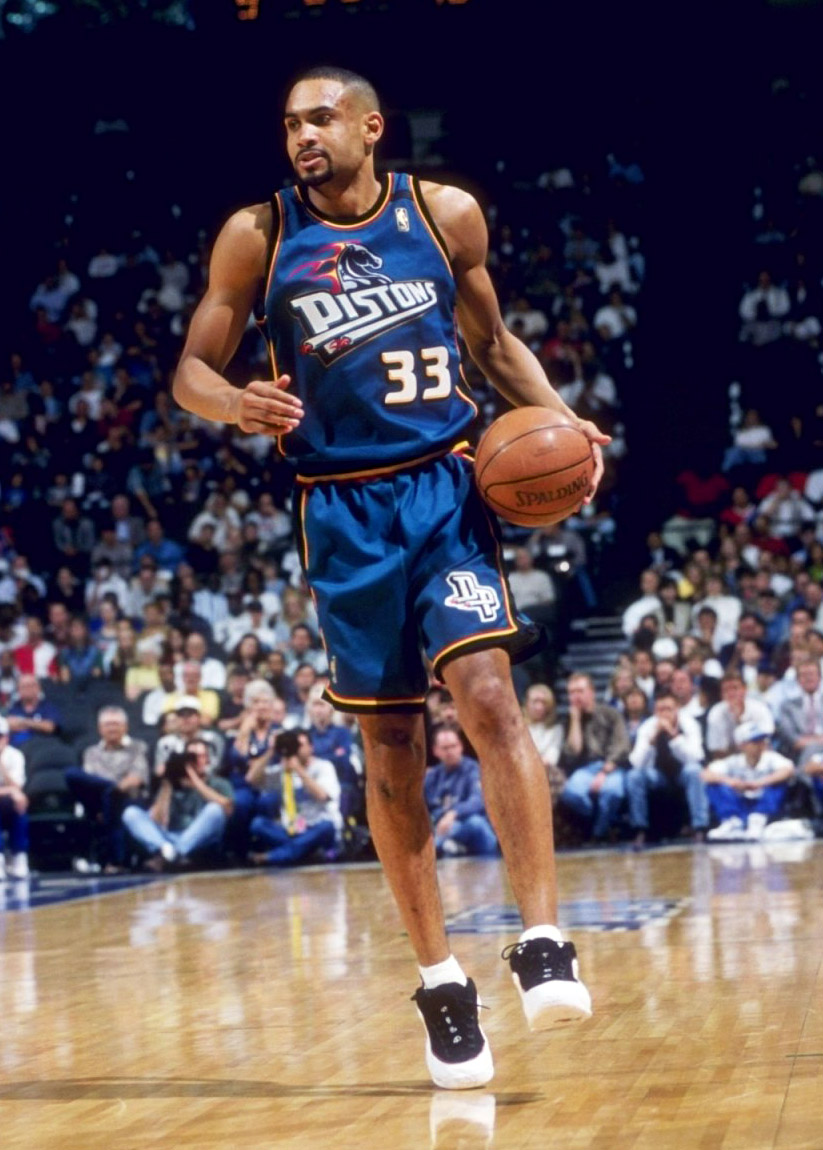
In his rookie season, Hill firmly established himself as a rising star, averaging 19.9 points, 6.4 rebounds, and 5.0 assists while leading all players in All-Star voting and winning the Rookie of the Year Award. He was the first rookie in any major American sports league to lead all players in fan voting for the All-Star Game, and he was already the best player on the Detroit Pistons.

Over the next 5 seasons, he was one of the top 10 players in the league every year, and in 1997 he put up some historic numbers. That year, he became just the fifth player in history to average at least 21 points, 9 rebounds, and 7 assists per game, joining Wilt Chamberlain, Oscar Robertson, John Havlicek, and Larry Bird in that select club. No player has accomplished that since.

What followed was nothing short of tragic. Hill injured his ankle late in the 2000 season, then was traded to Orlando in the offseason, where he missed a total of 364 games over his seven seasons with the Magic, an average of 52 games missed per season. He had numerous ankle surgeries during that time, and nearly died once when he contracted a major infection after one operation.

Rather than retiring, Hill signed with Phoenix as a free agent, where he was a starter and a captain for a few years, but not the star player he was at his peak. Hill's star power never led to playoff success, as he was on the winning side in a playoff series for the first time in 2010, making him the oldest first-time playoff series winner in history.

Wednesday, July 6, 2016

Top 100 NBA Players: #92 - Chris Bosh


Chris Bosh

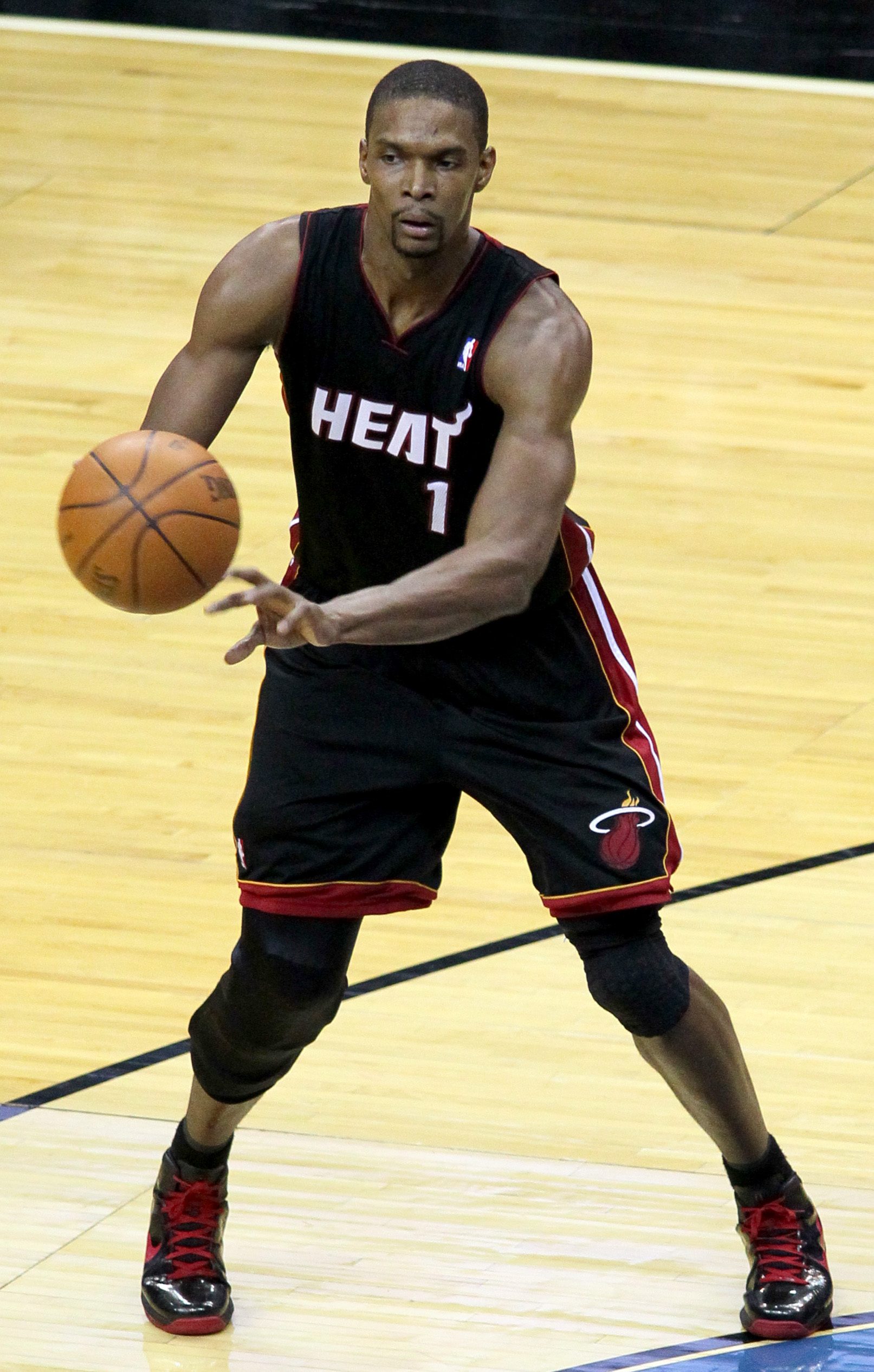
Chris Bosh is another example of a player who spent years as a star player without much playoff success, then took a backseat in order to achieve playoff success. He's missed a lot of time over the past couple of years due to problems with blood clots, but he was one of the league's top players for several years back in Toronto. Just look at his cumulative averages over his final 5 years as a Raptor:

2005-2010 - 22.8 pts, 9.9 reb, 2.5 ast, .500 FG%, .811 FT%

Those would be pretty good averages for a single season, but those were the numbers he posted over the course of five seasons on average. Only 3 men have ever matched those numbers in a single season, and all 3 are players whose all-time ranking hasn't been revealed yet: Bob Lanier, Kevin McHale, and Larry Bird. It's pretty rare to find a big man who can also score and make his free throws, but that's what Bosh brings to the table.

When he reached Miami, all of those numbers dropped off slightly, most notably his scoring, which was 4 points lower than the average above. Many would say that it was a bad career move for him, but when you look at the bigger picture, he enjoyed more success in one year than in the rest of his career combined, reaching the NBA Finals with the Heat, which was much better than his previous best, which was losing in the first round.

But the success didn't end there. With LeBron leading the way, the Heat reached 4 straight NBA Finals, winning twice, and Bosh was the #3 player on the team throughout that time. His best postseason was his first in Miami, when he averaged 18.6 points and 8.5 rebounds. When LeBron left Miami, Bosh's averages made a nice jump, with a scoring average of 20.0 per game over the past 2 seasons, but he has missed so much time that it hasn't helped him move up the list. Hopefully he is able to regain his health so that we can see a few more good years while he is still in his late prime.

Sunday, July 3, 2016

Top 100 NBA Players: # 95 - Draymond Green


Draymond Green

Green is the youngest player currently in the top 100, although only by just over 3 weeks. He was a 2nd round draft pick of the Golden State Warriors in 2012, and has shown consistent improvement throughout his 4 seasons.

After coming off the bench during his first two seasons, he became a starter in 2014 when David Lee went down with an injury in the preseason, and his play kept him in the starting lineup even after Lee returned. He averaged 11.7 points and 8.2 rebounds per game that season, finishing 2nd in the Defensive Player of the Year voting as well as the Most Improved Player voting.

He raised his level of play even more in the playoffs, putting up 13.7 points and 10.1 rebounds per game as Golden State won its first championship in 40 years. Although Klay Thompson was a little more recognizable, it was Green who was the #2 player on the Warriors through the playoffs, behind only regular season MVP Stephen Curry. Green cemented his status as a star by putting up a triple double in the championship-clinching game, becoming only the sixth player in history to achieve that feat, joining only Magic Johnson, Larry Bird, James Worthy, Tim Duncan, and LeBron James.

His upward trajectory continued last season, when he averaged 14.0 points, 9.5 rebounds, and led the team with 7.4 assists per game, twice his previous high. His performance earned him a well-deserved spot on the All-NBA Second Team, and his team set a new record for wins in the regular season.

He raised his performance again in the playoffs, helping the Warriors to their second straight NBA Finals, and took over as the team's best player while Steph Curry missed multiple games to injury and struggled to regain his form after returning. Klay Thompson took over more of the scoring load for Golden State, but Green filled the gaps everywhere else. Here are their averages for this season's playoffs:

Green - 15.4 pts, 9.9 reb, 6.0 ast, 1.6 stl, 1.8 blk
Thompson - 24.3 pts, 3.7 reb, 2.3 ast, 1.1 stl, 0.4 blk

With the consistent improvement Green has shown throughout his career, there is no telling how far he could rise up these rankings in the future. It's hard to know when he will reach his peak and how high that will be, or whether he has already reached it, but another 5 years at his current level could be enough to make him top 30 material. We'll just have to wait and see.

Friday, July 1, 2016

Top 100 NBA Players: #97 - Mark Aguirre


Mark Aguirre

Mark Aguirre was one of the top scorers of the 1980's, finishing in the top 8 five times and taking second place in 1984, behind only Adrian Dantley, whom he was traded for several years later. While he is remembered as a great scorer, he was actually a pretty good all-around player. In that 1984 season, he was not even voted to an All-NBA Team, despite having stats that compared favorably with the two stars of that season, Larry Bird and Magic Johnson.

Bird - 24.2 pts, 10.1 reb, 6.6 ast, .492 FG%, .888 FT%
Aguirre - 29.5 pts, 5.9 reb, 4.5 ast, .524 FG%, .749 FT%
Johnson - 17.6 pts, 7.3 reb, 13.1 ast, .565 FG%, .810 FT%

It's tough to argue that he was better than either of the stars, but his huge advantage in scoring over Magic has to at least put him in the conversation. He didn't rebound or pass as well as either of them, but he wasn't any slouch. In fact, that year he led the Mavericks to the first playoff appearance in franchise history.

Aguirre worked throughout the 80's to make the Mavericks a championship team, guiding them into the playoffs five times, culminating in an appearance in the Western Conference Finals in 1988. Even as the team became more successful, Aguirre's relationship with most of his teammates grew strained, and halfway through the following season, he was traded to the Detroit Pistons.

In Detroit he became a role player on a team that won two straight championships. While he made a contribution to those titles, he wasn't nearly the player that he had been, and he definitely wasn't the star of the team. Still, he made it at least to the Conference Finals in 4 straight seasons, and he was a decent contributor in three of those years.

From 1982-1988, Aguirre had 6 straight seasons of at least 22.5 points and 5.0 rebounds per game, but he finally started making deep playoff runs once his scoring dipped below 20.0 per game, so like a couple of the players below him, his own personal success did not coincide with his team's success, and that is why he ended up down at #97 despite a career scoring average of 20.0 per game.