Showing posts with label Oscar Robertson. Show all posts

Monday, November 15, 2021

Top 25 NBA Regular Seasons of All Time

Here is a list of the top 25 statistical regular seasons of all time, ranking only the top regular season for each player included, with other qualifying seasons by the same player listed in between the rankings. This is done using the same method I used for my overall all-time player rankings.

1. Wilt Chamberlain - C - PHW - 1961-62

50.4 Pts (#1), 25.7 Reb (#1), 2.4 Ast, 48.5 Min (#1), .506 FG% (#2), .613 FT%

All-NBA First Team, MVP Runner-up, 49-31 record


1a. Wilt Chamberlain - C - SFW - 1962-63


2. Russell Westbrook - PG - OKC - 2016-17

31.6 Pts (#1), 10.7 Reb (#10), 10.4 Ast (#3), 1.6 Stl (#12), 0.4 Blk, 34.6 Min (#20), .425 FG%, .343 3P%, .845 FT%

MVP, All-NBA First Team, 47-35 record


2a. Wilt Chamberlain - C - SFW - 1963-64


3. LeBron James - PF - CLE - 2017-18

27.5 Pts (#3), 8.6 Reb (#15), 9.1 Ast (#2), 1.4 Stl, 0.9 Blk, 36.9 Min (#1), .542 FG% (#14), .367 3P%, .731 FT%

All-NBA First Team, MVP Runner-up, 50-32 record

4. James Harden - PG - HOU - 2016-17

29.1 Pts (#2), 8.1 Reb, 11.2 Ast (#1), 1.5 Stl (#19), 0.5 Blk, 36.4 Min (#6), .440 FG%, .347 3P%, .847 FT%

All-NBA First Team, MVP Runner-up, 55-27 record

4a. Wilt Chamberlain - C - PHW - 1960-61


5. Shaquille O'Neal - C - LAL - 1999-00

29.7 Pts (#1), 13.6 Reb (#2), 3.8 Ast, 0.5 Stl, 3.0 Blk (#3), 40.0 Min (#4), .574 FG% (#1), .524 FT%

MVP, All-NBA First Team, All-Defensive Second Team, 67-15 record


5a. Wilt Chamberlain - C - PHW - 1959-60

5b. LeBron James - PG - LAL - 2019-20

5c. Wilt Chamberlain - C - PHI - 1966-67


6. Oscar Robertson - PG - CIN - 1963-64

31.4 Pts (#2), 9.9 Reb (#16), 11.0 Ast (#1), 45.1 Min (#2), .483 FG% (#7), .853 FT% (#1)

MVP, All-NBA First Team, 55-25 record


6a. Russell Westbrook - PG - OKC - 2015-16


7. Giannis Antetokounmpo - PF - MIL - 2019-20

29.5 Pts (#5), 13.6 Reb (#2), 5.6 Ast, 1.0 Stl, 1.0 Blk, 30.4 Min, .553 FG% (#13), .304 3P%, .633 FT%

MVP, All-NBA First Team, Defensive Player of the Year, All-Defensive First Team, 56-17 record


7a. LeBron James - SF- CLE - 2015-16


8. Michael Jordan - SG - CHI - 1988-89

32.5 Pts (#1), 8.0 Reb, 8.0 Ast (#10), 2.9 Stl (#3), 0.8 Blk, 40.2 Min (#1), .538 FG% (#11), .276 3P%, .850 FT%

All-NBA First Team, All-Defensive First Team, MVP Runner-up, 47-35 record


8a. LeBron James - SF - CLE - 2008-09


9. Nikola Jokic - C - DEN - 2021-21

26.4 Pts (#12), 10.8 Reb (#9), 8.3 Ast (#6), 1.3 Stl, 0.7 Blk, 34.6 Min (#15), .566 FG% (#14), .388 3P%, .868 FT%

MVP, All-NBA First Team, 47-25 record


9a. Wilt Chamberlain - C - PHI - 1965-66

9b. James Harden - PG - HOU - 2018-19

9c. Oscar Robertson - PG - CIN - 1964-65


10. Magic Johnson - PG - LAL - 1986-87

23.9 Pts (#10), 6.3 Reb, 12.2 Ast (#1), 1.7 Stl (#16), 0.5 Blk, 36.3 Min, .522 FG%, .205 3P%, .848 FT% (#20)

MVP, All-NBA First Team, 65-17 record


11. Stephen Curry - PG - GSW - 2015-16

30.1 Pts (#1), 5.4 Reb, 6.7 Ast (#10), 2.1 Stl (#1), 0.2 Blk, 34.2 Min, .504 FG%, .454 3P% (#2), .908 FT% (#1)

MVP, All-NBA First Team, 73-9 record 


11a. Michael Jordan - SG - CHI - 1989-90

11b. Wilt Chamberlain - C - PHI - 1965-66

11c. LeBron James - SF - MIA - 2011-12

11d. James Harden - SG - HOU - 2019-20

11e. Wilt Chamberlain - C - SFW/PHI - 1964-65

11f. LeBron James - SF - CLE - 2009-10


12. George McGinnis - PF - IND - 1974-75

29.8 Pts (#1), 14.3 Reb (#5), 6.3 Ast (#3), 2.6 Stl (#2), 0.7 Blk, 40.4 Min (#5), .451 FG%, .354 3P% (#4), .724 FT%

MVP, All-ABA First Team, 45-39 record


12a. Giannis Antetokounmpo - PF - MIL - 2020-21

12b. LeBron James - SF - CLE - 2016-17

12c. Oscar Robertson - PG - CIN - 1961-62


13. Bob McAdoo - C - BUF - 1974-75

34.5 Pts (#1), 14.1 Reb (#4), 2.2 Ast, 1.1 Stl, 2.1 Blk (#6), 43.2 Min (#1), .512 FG% (#5), .805 FT%

MVP, All-NBA First Team, 49-33 record


13b. Oscar Robertson - PG - CIN - 1966-67


14. Kareem Abdul-Jabbar - C - LAL - 1975-76

27.7 Pts (#2), 16.9 Reb (#1), 5.0 Ast (#15), 1.5 Stl, 4.1 Blk (#1), 41.2 Min (#2), .529 FG% (#5), .703 FT%

MVP, All-NBA First Team, All-Defensive Second Team, 40-42 record


15. Steve Nash - PG - PHX - 2004-05

15.5 Pts, 3.3 Reb, 11.5 Ast (#1), 1.0 Stl, 0.1 Blk, 34.3 Min, .502 FG%, .431 3P% (#6), .887 FT% (#6)

MVP, All-NBA First Team, 62-20 record


15a. Giannis Antetokounmpo - PF - MIL - 2018-19

15b. James Harden - SG - HOU - 2017-18

15c. Russell Westbrook - PG - OKC - 2017-18

15d. Michael Jordan - SG - CHI - 1990-91

15e. Shaquille O'Neal - C - ORL - 1994-95

15f. Michael Jordan - SG - CHI - 1987-88


16. Tiny Archibald - PG - KCO - 1972-73

34.0 Pts (#1), 2.8 Reb, 11.4 Ast (#1), 46.0 Min (#1), .488 FG% (#20), .847 FT% (#12)

All-NBA First Team, #3 in MVP voting, 36-46 record


17. Chris Paul - PG - NOH - 2007-08

21.1 Pts (#19), 4.0 Reb, 11.6 Ast (#1), 2.7 Stl (#1), 0.1 Blk, 37.6 Min, .488 FG%, .369 3P%, .851 FT%

All-NBA First Team, All-Defensive Second Team, MVP Runner-up, 56-26 record


17a. Oscar Robertson - PG - CIN - 1965-66

17b. Kareem Abdul-Jabbar - C - MIL - 1971-72

17c. Stephen Curry - PG - GSW - 2014-15

17d. LeBron James - PF - MIA - 2012-13

17e. Kareem Abdul-Jabbar - C - LAL - 1976-77

17f. Steve Nash - PG - PHX - 2005-06

17g. Magic Johnson - PG - LAL - 1988-89


18. Kevin Durant - SF - OKC - 2013-14

32.0 Pts (#1), 7.4 Reb, 5.5 Ast, 1.3 Stl, 0.7 Blk, 38.5 Min (#3), .503 FG%, .391 3P%, .873 FT% (#7)

MVP, All-NBA First Team, 59-23 record


19. Kevin Garnett - PF - MIN - 2003-04

24.2 Pts (#3), 13.9 Reb (#1), 5.0 Ast, 1.5 Stl (#19), 2.2 Blk (#11), 39.4 Min, .499 FG% (#11), .256 3P%, .791 FT%

MVP, All-NBA First Team, All-Defensive First Team, 58-24 record


20. George Mikan - C - MNL - 1950-51

28.4 Pts (#1), 14.1 Reb (#2), 3.1 Ast (#19), .428 FG% (#3), .803 FT% (#11)

All-NBA First Team, 44-24 record


20a. Shaquille O'Neal - C - LAL - 2000-01


21. Allen Iverson - PG - PHI - 2004-05

30.7 Pts (#1), 4.0 Reb, 7.9 Ast (#5), 2.4 Stl (#2), 0.1 Blk, 42.3 Min (#2), .424 FG%, .308 3P%, .835 FT%

All-NBA First Team, #5 in MVP voting, 43-39 record


22. Dwyane Wade - SG - MIA - 2008-09

30.2 Pts (#1), 5.0 Reb, 7.5 Ast (#8), 2.2 Stl (#2), 1.3 Blk (#16), 38.6 Min (#6), .491 FG%, .317 3P%, .765 FT%

All-NBA First Team, All-Defensive Second Team, #3 in MVP voting, 43-39 record


23. John Wall - PG - WAS - 2016-17

23.1 Pts (#18), 4.2 Reb, 10.7 Ast (#2), 2.0 Stl (#2), 0.6 Blk, 36.4 Min (#7), .451 FG%, .327 3P%, .801 FT%

All-NBA Third Team, #7 in MVP voting, 49-33 record


24. Hakeem Olajuwon - C - HOU - 1993-94

27.3 Pts (#3), 11.9 Reb (#4), 3.6 Ast, 1.6 Stl, 3.7 Blk (#2), 41.0 Min (#2), .528 FG% (#10), .421 3P%, .716 FT%

MVP, Defensive Player of the Year, All-NBA First Team, All-Defensive First Team, 58-24 record


24a. Michael Jordan - SG - CHI - 1992-93


25. Tim Duncan - PF - SAS - 2002-03

23.3 Pts (#7), 12.9 Reb (#3), 3.9 Ast, 0.7 Stl, 2.9 Blk (#3), 39.3 Min (#18), .513 FG% (#7), .273 3P%, .710 FT%

MVP, All-NBA First Team, All-Defensive First Team, 60-22 record

Tuesday, October 12, 2021

Top 100 NBA Players: #19 - Oscar Robertson


Oscar Robertson

Teams

Cincinnati Royals - 1960-70

Milwaukee Bucks - 1970-74


Playoffs

Appearances - 10 (1962,1963,1964,1965,1966,1967,1971,1972,1973,1974)

Conference Finals - 5 (1963,1964,1971,1972,1974)

NBA Finals - 2 (1971,1974)

Championships - 1 (1971)


Awards and Honors

Rookie of the Year - 1961

MVP - 1 (1964,1965,1969)

All-NBA First Team - 9 (1961,1962,1963,1964,1965,1966,1967,1968,1969,1970,1971)

All-NBA Second Team - 2 (1970,1971)

Hall of Fame - 1980

*(actual in bold, deserved in italics)


All-Time Ranks

Assists Per Game - #3

Total Assists - #7

Points Per Game - #9

Total Points - #15

Total Rebounds - #87


League Leads

Assists Per Game (#1-1961,1962,1964,1965,1966,1968,1969, #2-1963,1967, #3-1971, #4-1973)

Total Assists (#1-1961,1962,1964,1965,1966,1969, #2-1963,1967,1971, #3-1968)

Points Per Game (#1-1968, #2-1964,1967, #3-1961,1965,1966, #4-1963, #5-1962,1969)

Total Points (#2-1964,1967, #3-1961,1962,1963,1965,1966, #5-1969)

Free Throw Percentage (#1-1964,1968, #2-1965,1971, #4-1967, #5-1969)

Field Goal Percentage (#3-1963, #4-1961,1962,1967)


In his three seasons at Cincinnati, Oscar Robertson won 3 College Player of the Year Awards and won 3 scoring titles, and was the all-time leading college scorer until Pete Maravich surpassed him a decade later. He was then selected by the Cincinnati Royals as a territorial pick, meaning that they gave up their first-round pick in order to secure his rights before the draft started.

Robertson ran away with the Rookie of the Year award, averaging 30.5 points, 10.1 rebounds, and 9.7 assists per game, the last of which led the league, and became the first guard ever to average double figures in rebounds for a season. His team, however, finished in last place in the West and missed the playoffs.

His second season was one for the record books. He averaged 30.8 points, 12.5 rebounds (a career high), and 11.4 assists, which led the league again, becoming the first player to ever average a triple-double for an entire season. He also had 41 triple-doubles during the season, which stood as the record for 55 years until it was broken by Russell Westbrook in the final game in 2017. He did lead the Royals to the playoffs that year, but they lost to Detroit in the first round.

He fell just short of a triple-double average the next year, but the Royals were improving. They had moved to the Eastern Conference after the Warriors moved to California, and Robertson led them to the Conference Finals, where they fell to Bill Russell and the Celtics after a tough 7-game series. 

Robertson had his best season the next year, averaging a career high with 31.4 points per game, while grabbing 9.9 rebounds per game, and leading the league with 11.0 assists and .853 shooting from the free throw line. He was named the league MVP that season and led the Royals back to the Conference Finals, but the Celtics knocked them off again, this time in 5 games.

Robertson was still the best player in the league the next year, though he didn't win the MVP, but he did lead the league in assists for the 4th time in just his 5th season in the league. He was never able to make another deep playoff run with the Royals, with this being the first of three straight seasons where they lost in the first round, followed by 3 seasons of missing the playoffs completely.

Robertson led the league in assists 3 more times with the Royals, in 1966, 1968, and 1969, making it 7 times overall, and won the scoring title and led the league in free throw shooting in 1968 as well. All of those efforts went to waste, however, with no playoff success coming, and the Royals finally traded away their star in 1970, sending him to the Milwaukee Bucks.

He joined a team there with a budding superstar named Lew Alcindor (later to change to Kareem Abdul-Jabbar), and he was the missing piece the Bucks needed. He never averaged 20 points per game in his time with the Bucks, while never averaging less than 24 with the Royals, but in his sidekick role he was able to help the Bucks to a championship in his first season with the team. They swept the Bullets in the Finals, with Robertson averaging 23.5 points and 9.5 assists for the series.

The team remained good over the next 3 years, making the Conference Finals again in 1972, then reaching the Finals again in 1974, with Robertson remaining Kareem's main sidekick. Milwaukee lost the 1974 Finals to the Celtics in 7 games, after which Robertson retired after averaging a career low 12.7 per game that year.

Robertson's triple-double season remains his biggest legacy to this day, but he spent a decade as one of the top players in the league, winning 7 assist titles and a scoring title during that time, but was never able to reach the NBA Finals during his superstar years. Once he took a reduced role, he reached 2 Finals in 4 years and finally won a championship, but there is no doubt that he was one of the greatest to ever play the game.


Sunday, September 25, 2016

Top 100 NBA Players: #1 - Michael Jordan


Michael Jordan

Ask 100 people who the greatest player of all time is, and the top response will most likely be Michael Jordan, but it would be far from a landslide. Many others would get a significant number of votes, from Wilt Chamberlain, Bill Russell, and Oscar Robertson to Shaquille O'Neal, Kobe Bryant, and even LeBron James.  So what makes Michael Jordan the best player of all time?

There are five factors that I feel qualify a player to be considered one of the greatest of all time. Those are offensive and defensive prowess, regular season and playoff dominance, and longevity. By using these 5 factors, I'll show that Michael Jordan is the greatest player of all time.

First, offensive prowess. The purpose of offense is to score points, and there has never been a greater scorer than Michael Jordan. Wilt Chamberlain may own the record for points in a game and points per game for a full season, but Michael Jordan owns the record for most points per game over a full career. The five players with the highest career scoring averages are, in order:

Michael Jordan
Wilt Chamberlain
Kevin Durant
Elgin Baylor
LeBron James

Next, defensive prowess. This one is a little tougher to define, especially since the All-Defensive Team has only existed since 1969, Bill Russell's final season. Three players have appeared on the All-Defensive First Team nine times in their career, and if you add in Bill Russell and Wilt Chamberlain, both of whom were said to have blocked at least 8 shots in a game quite regularly, this is the list you come up with:

Michael Jordan
Kobe Bryant
Kevin Garnett
Bill Russell
Wilt Chamberlain

Then let's consider regular season dominance. Michael Jordan was the best player in the league for his final 9 seasons with the Chicago Bulls, and would have made it at least 11 if he hadn't kept retiring prematurely. He was the best player in 1988, and he was the best player in 1998, a feat only Kareem can match with his 1970 and 1980 seasons. The list of players who spent the longest time as the league's top star is as follows:

Wilt Chamberlain
Michael Jordan
Kareem Abdul-Jabbar
LeBron James
Larry Bird

Perhaps the most important category is playoff dominance. The whole point of playing the game is to win championships, and Jordan was the best player on more champions than anybody but Bill Russell. He made 6 trips to the NBA Finals in his career, and won all 6 times. The record for highest scoring average in a Finals series is 41.0, and it's no surprise that Jordan holds that record for his performance against the Phoenix Suns in 1993. Here is the list of the players who have led their teams to the most championships:

Bill Russell
Michael Jordan
Magic Johnson
Tim Duncan
Shaquille O'Neal
Larry Bird
LeBron James

Finally, let's look at longevity. When looking at this category, I'm looking at more than just playing for a long time. You must also play at a high level for a long period of time, and Michael Jordan fits that bill as well. In his first game after turning 40, he obliterated the old record for points by a player of that age. Kareem had held the record of 27, but Jordan poured in 43 that night, and scored at least 30 points 9 other times after his 40th birthday, meaning he owns the 10 highest-scoring games for a 40-year old player. Here are the 5 players who had the most productive seasons after the age of 35:

Karl Malone
Elgin Baylor
Kareem Abdul-Jabbar
Michael Jordan
Jerry West

There's only one player that appears on all 5 of these lists, and you've probably already guessed who that is. It's also worth noting that only two other players appear even 3 times on these lists, and those are Wilt Chamberlain and LeBron James, the two players I ranked just behind Jordan. Michael Jordan is the only player in history who has been dominant in every important facet of the game, which is what makes him the greatest of all time.

With that in mind, are there any current players that have a chance at displacing Jordan at the top? In my opinion, there are several that have a chance. The obvious one is LeBron James, who has already cracked three of these lists, and has already made the All-Defensive First Team six times, and has a head start on the longevity since he started so young. Another is Kevin Durant, who is a great offensive player and is improving on defense, and also entered the league very young, which could help his longevity. Russell Westbrook and Stephen Curry are also young and showing some promise, but do they have what it takes to be considered the greatest? It will be fun to watch and find out.

Saturday, September 24, 2016

Top 100 NBA Players: #3 - Wilt Chamberlain


Wilt Chamberlain

Every serious basketball fan has an opinion about Wilt Chamberlain. Either he is the greatest basketball player who ever lived, or he was vastly overrated and couldn't win when it mattered. The truth is somewhere between the two, and I'll explain why.

First of all, when it comes to regular season dominance, Wilt Chamberlain is the best player to ever set foot on a basketball court. Most people know about his 100-point game, but just one year earlier he also grabbed 55 rebounds in a game, which is still a record. But let's start back at the beginning.

When Wilt entered the NBA in 1959, he broke his first record before playing a game when he signed the richest contract in history, making $30,000 during his rookie season. That season turned out to be the most dominant rookie season ever in any sport, as he set new records for scoring and rebounding and won the All-Star MVP, regular season MVP, and Rookie of the Year awards. He also took a Warriors team that had missed the playoffs the previous year all the way to the Conference Finals, where they lost to the Boston Celtics, which would be a recurring theme throughout his career.

Two years later he had the most dominant season in history, even by today's standards. That year he averaged 50.4 points, 25.7 rebounds, and 2.4 assists while playing 48.5 minutes per game. That season represents two records which will never be broken, and his rebounding record (27.2 per game) from the previous season is just as unreachable today. The fact that games have only 48 minutes make his minutes record the most solid record in sports, and it was reached by playing all but a handful of minutes during the season and having several games go into overtime.

The scoring record is also pretty impressive. During that season he reached 50 points 45 times, which is more than any other player has done it in an entire career. Michael Jordan had 37 50-point outings for second on the all-time list, but he's far behind Wilt's 122. His 100-point game is also interesting, since he could have scored more, but the game ended immediately after he scored his final basket and the fans rushed the court. The game was such a blowout that the referees decided to call off the final minute.

Throughout the process of unveiling these rankings, I have made a point of mentioning that the pace of the game was much faster in the 1960's, which caused statistics to balloon out of proportion. In 1962 alone, Wilt averaged 50 points, Oscar Robertson averaged a triple-double, and Elgin Baylor had the highest scoring season ever by anyone not named Wilt. In order to bring these numbers into perspective, I've adjusted them to the pace of today's game, and in most cases it makes those seasons become just very good, but Wilt's 1962 season still stands the test of time. Here are what his averages look like adjusted for inflation:

Chamberlain (1962) adjusted - 40.3 pts, 15.2 reb, 2.1 ast

Even adjusted, Wilt's 1962 season stands alone as the greatest season ever in the NBA. Through the 1960's, he was the best player in every single season, even if he only won 4 MVP awards. So how can a player who was the best in the league for 10 seasons (a record, by the way) not be the best player of all time? The answer lies in the other argument I mentioned in the opening paragraph, that Wilt was not a winner.

While Wilt was the best regular season player of all time, he had the misfortune of running into the best playoff player of all time 8 times in one decade, that man being Bill Russell. In those 8 seasons, the Celtics beat Wilt's teams 7 times, each time in the Conference Finals or the Finals, with Wilt and the 76ers triumphing once, in 1967. With the help of Jerry West, he was able to win a second championship in 1972.

The persistent rumor that Wilt's teams did not win was slightly overblown. In 14 seasons, his teams won two championships, reached 6 NBA Finals, and played in the Conference Finals 12 times. If Boston and Philadelphia had been in different conferences, it's likely he would have played in the Finals at least 10 times. Even in his final season, he was still a great player, averaging a league-leading 18.6 rebounds per game and setting a league record with a 72.7% field goal percentage at age 36.

Wilt had most of the factors that lead to a high ranking on this list. He was a great offensive player. He was a great defensive player. He was a great player in the regular season. He had the longevity that is needed for greatness. What he lacked, and what ultimately kept him from the #1 spot was that greatness in the playoffs, where he was good but not great. 

Tuesday, September 20, 2016

Top 100 NBA Players: #7 - Larry Bird


Larry Bird

Larry Bird was one of the most dominant players of the 1980's, and he put together one of the greatest 4-year runs of any player in NBA history, but back problems ended his career prematurely and prevented him from fulfilling him potential as possibly the greatest player of all time.

When Larry Bird and Magic Johnson arrived in the NBA in 1979, they were perhaps the most anticipated pair of rookies in history, and they did not disappoint. Nearly every season for the next decade ended with one of them hoisting the championship trophy, with three of those belonging to Larry Bird and the Boston Celtics. Bird was their best player from the day he entered the league until the day he walked away.

In just his second season in the NBA, he had arrived as one of the top 5 players in the NBA, and Boston finished the season with the league's top record. That season, Bird won his first NBA championship, but was not awarded the Finals MVP award because of a subpar performance in the Finals, although it's pretty obvious from looking at the overall playoff statistics of Bird and Cedric Maxwell, who won the award, that Bird was the team's best player:

Bird - 21.9 pts, 14.0 reb, 6.1 ast, 2.3 stl, 1.0 blk, .470 FG%, .375 3P%, .894 FT%
Maxwell - 16.1 pts, 7.4 reb, 2.7 ast, 0.7 stl, 0.9 blk, .580 FG%, .818 FT%

Bird was the better player of the two by far, but because of the perception that he wasn't playing as well as he normally did, he was not rewarded with the MVP he deserved. A couple of years later, Bird turned his game up to another level and ensured that he would not be denied any award he deserved again.

For the next four seasons, Bird was easily the best player in the league, piling up some of the most dominant seasons in history right in a row, and each of those four seasons ended in the NBA Finals, with two titles and two seasons as the runner-up. His stats over those four seasons are incredible, as you can see below:

Bird (1983-1987) - 26.6 pts, 9.9 reb, 6.9 ast, 1.8 stl, .509 FG%, .395 3P%, .894 FT%

Only five other players have ever had shooting percentages that high during a single season, including Steve Nash and Kevin Durant, and only one other player ever reached those heights in the three major categories for a full season, Oscar Robertson. Bird had one more great season left, in which he set career highs in scoring average, shooting percentage, and free throw percentage, but by that time a new, younger force had emerged as the league's top player, a young man named Michael Jordan.

The next season, Bird only played in the first six games before ending his season early to have surgery on both feet, and once he returned, back issues prevented him from ever regaining the form he had before the injuries. The Celtics never made it back to the Conference Finals during the final years of Bird's career, but with all he accomplished in a relatively short time, there is no way to argue that he doesn't belong in the discussion as one of the best players of all time.

Saturday, September 17, 2016

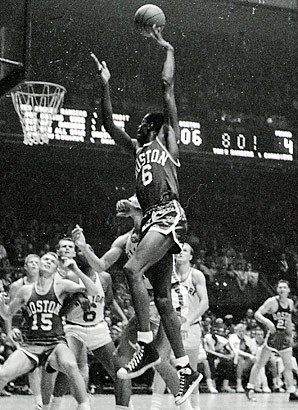
Top 100 NBA Players: #11 - Bill Russell


Bill Russell

Bill Russell is usually on the short list of players considered to be the best of all time, and most experts rank him among the top 4 players of all time, but my formula ranks him significantly lower. I mean no disrespect in ranking him this low, but when you look at the facts, it just makes sense.

As I described earlier in my biography of Oscar Robertson, Russell played in an era of inflated statistics, so when you look at his career averages of 15.1 points and 22.5 rebounds per game, you must remember that those numbers are much higher due to the faster pace of the game and the lower shooting percentages that produced more available rebounds. If you adjust his stats for deflation to today's rates, his career numbers would be 12.1 points and 13.3 rebounds per game. That would still place him among the greatest rebounders of all time, but makes him quite mediocre offensively.

In order to be considered one of the all-time greatest players, a player needs to be exceptional in multiple facets of the game, whether it is offense, defense, longevity, or winning. Russell was a subpar offensive player, shooting just 44% from the field and 56% from the line for his career, and his longevity was decent at 13 seasons. Russell is, however, one of the game's greatest defensive players, and if blocked shots had been counted during his career, it may have been possible to rank him higher, but there is no way to prove what he did during those years.

When it comes to winning, there was no one better. In his 13 seasons in the NBA, he won 11 NBA Championships. The two times he didn't when occurred when he was injured and unable to compete or worn out from his first season as both a player and a coach. Of those 11 title teams, Russell was the best player on 8, the famous 8 consecutive titles that covered most of the 1960's. During their first title run the Celtics were still Bob Cousy's team, and by the time they won their final two titles they had become John Havlicek's team. The Finals MVP award did not exist during his career, but if it had, he would have deserved to win it eight times, and in recognition of that the NBA renamed the Finals MVP award after him in 2009.

There are only 4 players in history who can claim they were the best player on at least 3 consecutive title teams: George Mikan, Bill Russell, Michael Jordan, and Shaquille O'Neal. There are only a few others who can even claim they were the best on 3 total, such as Bird, Magic, Duncan, Havlicek, and LeBron. Besides those titles in the NBA, he also won a gold medal in the 1956 Olympics, as well as 2 national championships in his final two years at the University of San Francisco. So despite his shortcomings on the offensive side of the ball and his average longevity, Russell will always have a place among the game's greats.

Thursday, September 15, 2016

Top 100 NBA Players: #13 - Scottie Pippen


Scottie Pippen

Scottie Pippen is one of the more interesting cases on this list. He spent most of his career as the second-best player on his team, but he won a lot of championships and was actually a much better player than most people realize. 

When I profiled David Robinson a few spots ago, I mentioned that he was the committee's #4 choice to be on the Dream Team in 1992, behind only Magic, Michael, and Bird. Do you happen to know who their #5 choice was? Scottie Pippen. After picking the best four guys who were franchise players and well-respected superstars, they picked Scottie Pippen, who wasn't even the best player on his own team. That's because they saw that the Bulls were more than just Michael Jordan.

In 1992, just before that team was selected, Pippen put together a season that very few have ever come close to. His averages for that year were 21 points, 7.7 rebounds, 7.0 assists, 1.9 steals, and 51% shooting from the field. For reference, only 9 other players have ever averaged a 21-7-7, and only 6 others have done it while shooting over 50%. Those six? Bird, Wilt, Magic, Michael, Oscar, and LeBron. Not bad company, especially considering five of those players have yet to make an appearance in these rankings.

Jordan and Pippen played together for 10 season, and in each of those ten seasons they made the playoffs and advanced beyond the first round together. Jordan played 5 seasons without Pippen, three before he arrived and two after they separated in 1998. In those 5 seasons his teams made 3 playoff appearances and never advanced past the first round. Pippen, meanwhile, played 7 seasons without Jordan, making the playoffs 6 times and advancing past the first round twice. I'm not suggesting that Pippen was better than Jordan, but it's significant that Jordan needed Pippen in order to be successful.

Scottie Pippen was also recognized as being one of the best defensive small forwards of all time, as evidenced by the 8 straight seasons during the 1990's that he was named to the All-Defensive First Team. He led the league in steals in 1995, and finished in the top 5 three other times. Pippen was the player that the Bulls used to guard the other team's best player at four positions, and it was a tipped pass and steal by Pippen that sealed the 1997 Finals victory over Utah after Steve Kerr hit his famous series-winning shot.

Another thing Pippen has going for him is that he is one of a select group of players who has too many championship rings to fit on one hand. He was the second-best player on 6 championship games in 8 seasons, and was also the second-best player on a Portland team in 2000 that came within one game of the NBA Finals. 

Saturday, September 10, 2016

Top 100 NBA Players: #18 - Oscar Robertson


Oscar Robertson

I know what you're thinking. How can Oscar Robertson be ranked below the top 10? He's the only person in NBA history to average a triple-double for an entire season, and he nearly did it four other times. Let me explain the factors that dropped the Big O from his usual spot in the top 10 of any other overall ranking you've probably ever seen.

First of all, let's consider his triple-double season. While I don't want to take anything away from him for such an amazing accomplishment, the fact is that his performance was a little inflated. The 1960's in general were an era of over-the-top stats, and 1962 in particular was the worst. That season, besides Oscar's huge numbers, we also saw Walt Bellamy win the Rookie of the Year with 31.6 points and 19.0 rebounds per game, and some guy named Wilt averaged over 50 points and 25 rebounds per game. It wasn't just a collision of great players that caused this unmatched season, it was a much higher pace of play which jacked up all of the statistics.

When you compare 1962 with 2012, you'll notice some major differences. The scoring average 50 years ago was 25% higher than it is today, the rebounding average was 69% higher, and the assist average was 16% higher, even in an era where they weren't given out as freely. The top 4 scoring seasons in history were Oscar's four best years, and the top 13 single season rebounding averages were all recorded by players in the 1960's. If you were to take Oscar's stats from that season and make them correspond to today's pace, here's the difference you would see:

Robertson 1962 (actual) - 30.8 pts, 12.5 reb, 11.4 ast
Robertson 1962 (adjusted) - 24.6 pts, 7.4 reb, 9.8 ast

Like I said, I am not saying that Oscar was not an incredible player, because even those numbers would put him among the top 3 players in the league today. Not only that, but I also believe that his skills would translate well to today's game, so he likely would be a potential MVP today if he weren't over 70 years old.

Now that his amazing stats have been somewhat put into perspective, let's look at another major determiner of greatness - winning when it matters. While Robertson was at his peak in Cincinnati, he led them as far as the Conference Finals twice, and failed to make the playoffs in 4 other seasons. When he finally did win a championship, with Milwaukee in 1971, it was with Kareem leading the way and Oscar setting him up. He did make a return trip to the Finals in his final season, 1974, where they lost to the Celtics in 7 games.

One final note about Robertson. He played in an era that was very different from today. There were numerous times during his college and pro career when he wasn't allowed to stay in the same hotels or eat at the same restaurants as teammates because of the color of his skin. The fact that he excelled amidst the turmoil of segregation is another testament to his greatness.

Top 100 NBA Players: #19 - Clyde Drexler


Clyde Drexler

Clyde Drexler is considered by most experts to be a second-tier star, not an all-time superstar, but these are misconceptions due to the fact that he was never able to measure up to Michael Jordan when they faced each other in the 1992 NBA Finals, but is there anybody who could?

Drexler was a great all-around player, averaging over 20 points, 5 rebounds, and 5 assists in 6 straight seasons during his prime, and during that same period he led the Trail Blazers to some of the best seasons in their history. In 1990, he led the Blazers from the third seed in the West to the NBA Finals, where they fell to the Detroit Pistons in 5 games. The next season Portland had the best regular season record, but lost in the Western Conference Finals to the Los Angeles Lakers.

In 1992, he again led the Blazers to the Finals, but they once again lost, this time to the Chicago Bulls. Many people remember Drexler for losing in those years, but he averaged over 21 points, 7 rebounds, and 7 assists per game during all three of those playoff campaigns and was by far the best player on his team, while the teams he lost to had great supporting stars.

Drexler suffered injuries during the next season, which caused people to forget about him as other teams began to dominate in the West, and when he became healthy again, Portland was no longer a championship contender, so he requested a trade and was sent to his hometown of Houston to be reunited with college teammate Hakeem Olajuwon. That season, the two superstars led the Rockets from the sixth seed in the West to their second straight NBA title, which finally earned Drexler his ring.

Many people try to discount Clyde's NBA championship by saying that he was no longer a star player when he won his title, and while he was no longer in his prime, he was definitely still a player capable of dominating. If you look at his stats in 1992, his best season, and 1995, when he won his title, you'll see that the dropoff isn't that big:

Drexler (1992) - 25.0 pts, 6.6 reb, 6.7 ast, 1.8 stl, .470 FG%, .337 3P%, .794 FT%
Drexler (1995) - 21.8 pts, 6.3 reb, 4.8 ast, 1.8 stl, .461 FG%, .360 3P%, .824 FT%

Drexler also played much bigger than his position. He is the all-time leader for offensive rebounds among guards, and is fourth all-time in overall rebounds and fifth in blocked shots for guards. The only guards with more rebounds are Jason Kidd, Oscar Robertson, and Kobe Bryant, and the only guards with more blocks are Ron Harper, Michael Jordan, Dwyane Wade, and Vince Carter. He is also one of five players in history to reach 20,000 points, 6,000 rebounds, and 6,000 assists during his career, joining John Havlicek, Oscar Robertson, Kobe Bryant, and LeBron James.

Saturday, September 3, 2016

Top 100 NBA Players: #27 - Moses Malone


Moses Malone

Moses Malone is the greatest offensive rebounder in the history of the NBA, and was a trailblazer for many of today's players, becoming the first player to successfully jump directly from high school to the pros. He also had an incredibly long career, playing 19 NBA seasons and 21 professional seasons overall.

As I stated above, Malone was easily the best offensive rebounder to ever set foot on a basketball court. He has the three highest single season totals of all time, and is also the owner of 6 of the top 10 offensive rebounding seasons. He led the league in offensive rebounds in each of his first 7 seasons, and in total rebounding six times in his career. In 1978-79, he averaged 7.2 offensive rebounds per game, and 17.6 overall. He was truly a monster on the boards.

Malone was among the top 5 players in the league for five straight seasons early in his career, from 1978-1983. During that stretch, he was awarded the MVP three times, but he may not have been the best player during those seasons. I'm going to break down the best players from four of those seasons and show my pick for each season's MVP

Gervin (1979) - 29.6 pts, 5.0 reb, 2.7 ast, 1.7 stl, 1.1 blk, .541 FG%, .826 FT%, .585 Win%
Malone (1979) - 24.8 pts, 17.6 reb, 1.8 ast, 1.0 stl, 1.5 blk, .540 FG%, .739 FT%, .573 Win%

Gervin led the league in scoring, while Malone led the league in rebounding. Gervin was the better shooter, despite being the smaller player, and his team finished ahead of Malone's in the overall standings. They also advanced farther in the playoffs than the Rockets, all of which make a strong case for Gervin deserving that season's MVP.

Erving (1981) - 24.6 pts, 8.0 reb, 4.4 ast, 2.1 stl, 1.8 blk, .521 FG%, .787 FT%, .756 Win%
Malone (1981) - 27.8 pts, 14.8 reb, 1.8 ast, 1.0 stl, 1.9 blk, .522 FG%, .757 FT%, .488 Win%

Statistically, Malone was a much better player, but Erving had the advantage of playing for the team with the best record, which is probably why he won the MVP, but in retrospect, the 76ers fell in the Eastern Conference Finals, while Malone led the Rockets all the way to the NBA Finals, where they fell to Boston in 6 games. This one's not completely clear-cut, but I believe Malone was the better player that season.

Johnson (1982) - 18.6 pts, 9.6 reb, 9.5 ast, 2.7 stl, 0.4 blk, .537 FG%, .760 FT%, .695 Win%
Malone (1982) - 31.1 pts, 14.7 reb, 1.8 ast, 0.9 stl, 1.5 blk, .519 FG%, .762 FT%, .561 Win%

Malone had an amazing season, leading the league in rebounding again while averaging over 30 points for the only time in his career, but Magic came closer to a triple-double average than anybody since Oscar Robertson and led Los Angeles to the best record in the West and eventually an NBA Championship, while Houston lost in the first round. This should have been Johnson's first MVP.

Johnson (1983) - 16.8 pts, 8.6 reb, 10.5 ast, 2.2 stl, 0.6 blk, .548 FG%, .800 FT%, .707 Win%
Malone (1983) - 24.5 pts, 15.3 reb, 1.3 ast, 1.1 stl, 2.0 blk, .501 FG%, .761 FT%, .793 Win%

Johnson nearly matched everything he had done the year before, even upping the Lakers' winning percentage and shooting much better than big man Malone, while Moses saw a huge dip in his scoring numbers, which he made up for by winning more games with his new team, the 76ers. The two teams met in the Finals, with Malone's Rockets winning in 4 games, but I still think Magic was slightly better overall, because he could pass the ball and take it away from the other team.

It was during that championship run of 1983 when Moses famously predicted that Philly would sweep through the playoffs in "fo, fo, fo," which they came within one game of accomplishing, losing just once in the second round. Moses ran away with the Finals MVP award and took home his only championship during that season.

Most experts have Malone ranked a bit higher all-time, but there are several reasons to rank him a bit lower. The first is that he really didn't have that much playoff success. He had the one magical and dominant season in 1983, and he took his team to the Finals in 1981, but other than that, he only saw the Conference Finals two other times in 19 seasons. That equals 15 seasons of losing in the first round or missing the playoffs altogether.

Another problem with Malone is that he was traded often during the prime of his career. Usually when one of the best players in the league is traded, it's because there is some sort of problem with the player, and Malone was traded not just once, but 5 times during the best years of his career. In fact, more than half of my top 20 players played for only one team during their prime years. One mark of a truly great player is that he is untradeable.

Moses was also not a great shooter, especially for a big man. His career average was under 50%, which is unacceptable for a center, and he only shot over 50% five times in his 19 seasons. His longevity, durability, and dominance in one category for a long period of time certainly help him out here, but he is not one of history's top 25.

Thursday, September 1, 2016

Top 100 NBA Players: #30 - Russell Westbrook


Russell Westbrook

Westbrook is one of the youngest players on this entire list, and is the youngest player among the top 30, and is the first of 6 active players to appear among that group. In case you don't feel that he belongs this high among the all-time greatest players, let's take a look at what he has done over the past several years.

He didn't miss a single game during his first 5 seasons in the league, and he averaged around 34 minutes per game for that entire time. By his third season in the league, he was already one of the top 6 players in the entire league, a status he has maintained for the 5 subsequent seasons.

It was also that year that the Thunder made their first deep playoff run, which is something that would become a pretty regular occurrence after that. It helps that he has had Kevin Durant beside him for his entire career up to this point, but while Durant was the best Thunder player during their first three deep playoff runs, Westbrook has established himself as the better player over the past two years. Here are their stats from 2011 and 2016:

Westbrook (2011) - 21.9 pts, 4.6 reb, 8.2 ast, 1.9 stl, .442 FG, .330 3P, .842 FT
Durant (2011) - 27.7 pts, 6.8 reb, 2.7 ast, 1.1 stl, .462 FG, .350 3P, .880 FT

Westbrook (2016) - 23.5 pts, 7.8 reb, 10.4 ast, 2.0 stl, .454 FG, .296 3P, .812 FT
Durant (2016) - 28.2 pts, 8.2 reb, 5.0 ast, 1.0 stl, .505 FG, .387 3P, .898 FT

You can see that over those 5 years, Westbrook has improved by a lot more in nearly every category than Durant, and now grabs nearly as many rebounds as Durant, who is 6 inches taller, and still gets more than twice as many assists. It's always been difficult to tell which is the better player, but with the difference in level of improvement, I would say that Westbrook is currently the better player.

In my earlier profile on Stephen Curry, I argued that Westbrook may have been the best player in the league last year rather than the unanimous MVP. Westbrook had one of the best overall seasons in history, with 18 triple-doubles, which was the most for any player in a season in the past 34 years. Also, those averages of 23.5 points, 7.8 rebounds, and 10.4 assists are nearly unmatched in history, with only one player ever eclipsing each of those averages in a single season: Oscar Robertson.

Overall, Westbrook has been a league scoring leader once, a top 6 player for 6 seasons, the best player on a conference finalist, and a close second on 3 other teams that made it at least to the conference finals. He has also led the league in triple doubles for two straight seasons, which is a mark of a great all-around player, and this is one who could make a run at the all-time top 10.

Saturday, August 13, 2016

Top 100 NBA Players: #52 - James Harden


James Harden

James Harden is one of the youngest players on this list, currently only 26 years old, but he has become a bona fide superstar since being traded to the Houston Rockets 4 years ago.

He started out as the #3 pick of the Oklahoma City Thunder in 2009, and during 3 years there he was a major contributor off the bench, showing improvement every season, culminating in his being awarded the Sixth Man of the Year Award following the 2012 season after scoring 16.8 points per game while helping Kevin Durant and Russell Westbrook reach the NBA Finals.

He and the Thunder were unable to come to terms on a new contract after that season, so he was traded to the Houston Rockets just days before the opening of the next season, and he was immediately the star of the team, scoring 25.9 points per game in his first season in the limelight. He has continued to show improvement over his time in Houston, and should have won the 2015 MVP, which was instead awarded to Stephen Curry. Here are the numbers for the two stars that season:

Harden - 27.4 pts, 5.7 reb, 7.0 ast, 1.9 stl, .440 FG%, .375 3P%, .868 FT%
Curry - 23.8 pts, 4.3 reb, 7.7 ast, 2.0 stl, .487 FG%, .443 3P%, .914 FT%

Both players had a valid argument to be named MVP, with Curry posting better shooting percentages and Harden putting up more points and grabbing more boards, but the award went to the Curry and his first-place Warriors. Curry beat out Harden again in the playoffs, knocking out the Rockets in the Western Conference Finals, though Harden did a great job getting the Rockets out of a 3-1 hole in the second round against the Clippers.

Last season Harden had even more impressive numbers, though the Rockets struggled to make the playoffs. He ended the season with the most total points for the second season in a row, as well as minutes played, and free throws made and attempted. He ended the season with averages of 29.0 points, 6.1 rebounds, and 7.5 assists, becoming only the 4 player ever to reach 29-6-7, joining Michael Jordan (once), Oscar Robertson (7 times), and LeBron James (twice), which is pretty good company.

How much higher can he rise? A lot will depend on whether he can use his all-around skills to make his teammates better and start making deep runs in the playoffs consistently, but with four straight great seasons of over 25 points per game and a couple years firmly in the MVP conversation, there is no doubt that he is one of the best players of all time.

Thursday, July 14, 2016

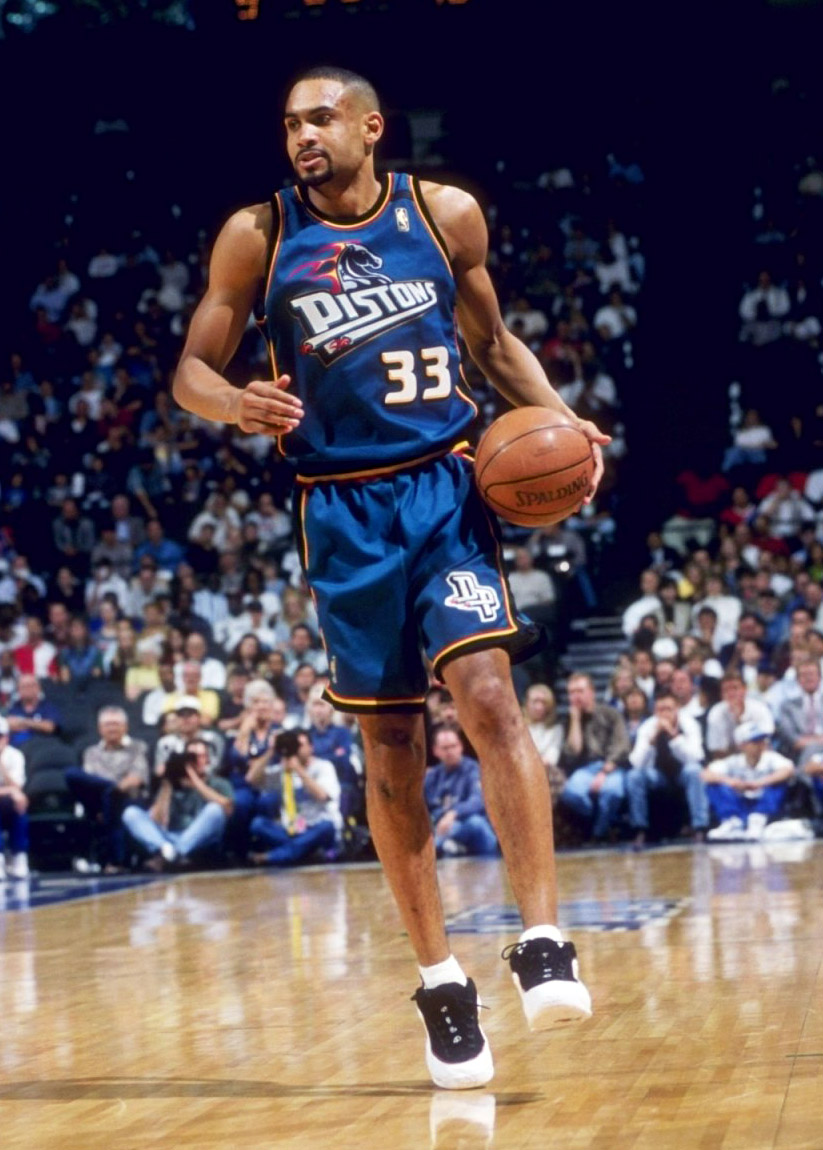
Top 100 NBA Players: #84 - Grant Hill


Grant Hill

It's easy to forget what a great player Grant Hill once was when he spent so many seasons at the end of his career as a role player or on injured reserve, but he was once one of the league's top players and the heir apparent to Michael Jordan before injuries derailed his career.

In his rookie season, Hill firmly established himself as a rising star, averaging 19.9 points, 6.4 rebounds, and 5.0 assists while leading all players in All-Star voting and winning the Rookie of the Year Award. He was the first rookie in any major American sports league to lead all players in fan voting for the All-Star Game, and he was already the best player on the Detroit Pistons.

Over the next 5 seasons, he was one of the top 10 players in the league every year, and in 1997 he put up some historic numbers. That year, he became just the fifth player in history to average at least 21 points, 9 rebounds, and 7 assists per game, joining Wilt Chamberlain, Oscar Robertson, John Havlicek, and Larry Bird in that select club. No player has accomplished that since.

What followed was nothing short of tragic. Hill injured his ankle late in the 2000 season, then was traded to Orlando in the offseason, where he missed a total of 364 games over his seven seasons with the Magic, an average of 52 games missed per season. He had numerous ankle surgeries during that time, and nearly died once when he contracted a major infection after one operation.

Rather than retiring, Hill signed with Phoenix as a free agent, where he was a starter and a captain for a few years, but not the star player he was at his peak. Hill's star power never led to playoff success, as he was on the winning side in a playoff series for the first time in 2010, making him the oldest first-time playoff series winner in history.

Thursday, July 7, 2016

Top 100 NBA Players: #91 - Bob Dandridge


Bob Dandridge

Bill Simmons refers to Bob Dandridge as his "favorite lost great from the seventies." The reason that Dandridge is "lost" is that he was a great player but never the best on a good team. He spent the entire decade of the 70's as one of the league's best players, but he always had better or more famous teammates overshadowing him. 

In Milwaukee, where he started his career, Kareem Abdul-Jabbar and Oscar Robertson took the spotlight. In Washington, where he had his career peak, people still paid more attention to Elvin Hayes and Wes Unseld. The two seasons in which he took over as the best player on the Bucks turned out to be the two least successful seasons of his career, which says to me that he was better as a second banana.

Dandridge played in 4 NBA Finals during his career, winning the NBA championship twice. In each of those Finals appearances he raised his scoring average over the previous appearance, which is impressive since he was 23 the first time he reached the Finals and 31 the last time. Here are the playoff numbers from those seasons:

1971 - 19.2 pts, #3 player on champ
1974 - 19.3 pts, #3 player on runner-up
1978 - 21.2 pts, #2 player on champ
1979 - 23.1 pts, #2 player on runner-up

Not only did he play a major role on all 4 of those Finals teams, he actually scored the winning dunk in Game 7 of the 1978 NBA Finals, which is not a small feat. Even with that accomplishment, he has been forgotten by the majority of NBA fans, and he has also been left out of the Hall of Fame by voters for decades, who obviously have failed to recognize how big a contributor he was to some of the best teams of the 1970's. The least I can do is give him a little recognition today as one of the top 100 players of all time.

Monday, July 4, 2016

Top 100 NBA Players: #94 - Kevin Johnson


Kevin Johnson

Kevin Johnson may be remembered most for the injury-plagued seasons that filled the latter half of his career, but many may have forgotten that, once upon a time, he was one of the greatest point guards to ever take the court. Don't believe me? Let's look at a few of the things KJ did that few others have ever done.

Kevin Johnson is one of only three players ever to average over 20 points and 10 assists in three straight seasons. The other two players are guys you've probably heard of: Oscar Robertson and Isiah Thomas. He is one of only two players to average over 20 points and 12 assists while shooting over 50% from the field in a season. The other is Magic Johnson (no relation).

There are all sorts of variations of these stats that you can come up with that only those four players had ever accomplished, and the only players in the past 20 years to come close to those numbers are Chris Paul and Russell Westbrook. During just his second season in the NBA, he was named the league's Most Improved Player and made the All-NBA Second Team because of these numbers:

Johnson - 20.4 pts, 4.2 reb, 12.2 ast, 1.7 stl, .505 FG%, .882 FT%

You have to remember that KJ was not a big man, only 6-1 and 190 pounds, but he was still grabbing 4 rebounds and shooting over 50% from the field. But if KJ was so great, why is he ranked this low? The problem started in the 1992-93 season, when he missed 33 games with various injuries, mostly to his hamstrings. From then on, he never played more than 70 games in a season, and he only reached the 20-ppg plateau two more times.

Johnson saw his teams make it at least to the Conference Finals three times during his career, including two trips to the Western Conference Finals in his second and third seasons, when he was either the best or second-best Sun. In 1993 the Suns made it to the NBA Finals, and he was probably the #3 player on that team, behind Dan Majerle and Charles Barkley. He did set a Finals record during game 3, when he played 62 minutes (out of 63 possible) in the triple overtime victory over Chicago.

What KJ accomplished early in his career was truly historic, and that alone would be enough for me to put him in this top 100, but it's sad that it didn't continue for longer. If he had just had the durability of Steve Nash, we might be talking about him as one of the top 3 point guards of all time, but instead he has to settle for a spot closer to the bottom of the top 100.