Serena Jamika Williams was born on September 26, 1981 in Saginaw, Michigan, and began playing tennis when she was 4 years old. She played in her first professional tournament when she had just turned 16, and upset two of the top 10 players in the world, Mary Pierce and Monica Seles, reaching the top 100 before the end of the year.
In 1999, she won the US Open singles and doubles titles, becoming just the 5th woman in history to do that, and she was still just 17 years old. The next year, she went to Sydney to compete in her first Olympics, but only in the doubles with her sister Venus, as only the top 3 players from each country could qualify for singles.
In the Olympic doubles tournament, the Williams sisters completely dominated, losing only one set in the entire tournament. In the gold medal match, they beat Boogert and Oremans of the Netherlands 6-1, 6-1 to cruise to the gold medal. Venus became the first woman in 76 years to win gold in both tennis events, and Serena had her first gold medal.
Between 2002 and 2003, she won all 4 Grand Slam finals in a row, defeating her sister Venus in the final in each, becoming just the 5th woman ever to hold all 4 titles at once. Late in 2003, she injured her knee, which required surgery, and ended up not qualifying for the 2004 Olympics as a result.
She battles through several other injuries in the ensuing years, but was finally healthy in time for the 2008 Olympics. She was seeded 4th in the singles event, and made it to the quarterfinals with only one set lost, but she lost to Yelena Dementyeva, the #5 seed, in that round, ending her first Olympic singles run a little early.
In the doubles, she and Venus were the #2 seeds, and they lost their very first set, before turning it around and winning the match, then winning the next 2 matches in straight sets. In the semifinal, they lost one set to the Ukrainians, but won the final set 6-1 to advance to the final, which they won 6-2, 6-0 to win their second gold medal as a pair.
By the time 2012 came around, she had reestablished herself as one of the best women's tennis players in the world, and she showed it at the Olympics. She went through the entire singles tournament without losing a set, and only giving up 17 total games in 6 matches, including a 6-1, 6-2 win over world #1 Vika Azarenka in the semifinal, and a 6-0, 6-1 demolition of Maria Sharapova in the gold medal match. It was the most dominant performance in the history of Olympic tennis.
In the doubles tournament, the Williams sisters were almost as dominant, again winning every single match without losing a set, and not a single set went to a tiebreaker, though some of them were a little closer than Serena's singles run, like their 6-4, 6-4 win in the gold medal match. Either way, it was a great performance, and the third gold medal won by the pair at the Olympics.
Between 2014 and 2015, Serena again won all 4 Grand Slam titles in a row making her the first woman ever to achieve the feat twice. She competed once more in the Olympics, in Rio in 2016, but was surprisingly upset in the third round of the singles event, and then even more shockingly knocked out in the first round of the doubles.
She has not competed in the Olympics since, and took nearly 4 years off from tennis completely before making a return earlier this year. It's unlikely that she will qualify to compete in the Olympics again, but with the 4 gold medals she has already won, and the dominant way that she earned each of them, she has shown that she is one of the greatest Olympians of all time.
Mariya Kondratyevna Gorokhovskaya was born on October 17, 1921 in Yevpatoriya, USSR, which is now part of Ukraine. Due to World War II, and the Soviet Union not participating in the Olympics until 1952, she was 30 years old before she made her Olympic debut.
Those Olympics were held in Helsinki, and 6 of the 7 events were held concurrently. In the team event, the Soviet Union finished with the top score in 3 of the 4 sections, and had 7 of the top 9 scorers overall, so they ended up winning the gold medal over Hungary by 4.67 points.
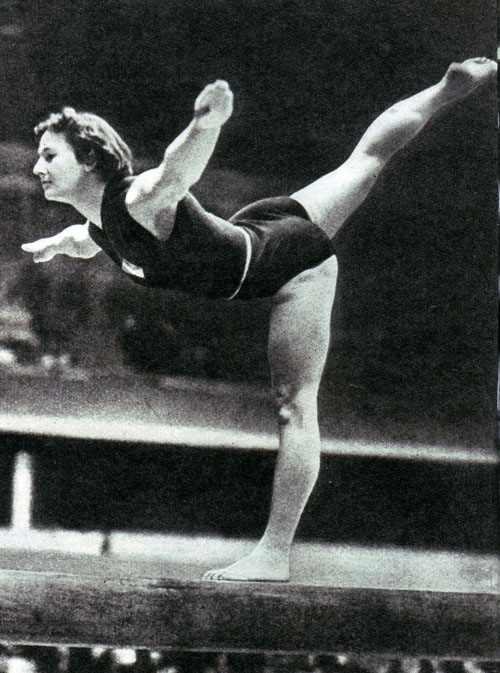
In the individual all-around, Gorokhovskaya ended up with the top overall score, beating Nina Bocharova, her teammate, by 0.84 points to win another gold medal. In the floor exercise, she won the silver medal, coming in only behind Agnes Keleti (#110) of Hungary in that event.
In the vault, the Soviets had the top 6 overall, and again, Gorokhovskaya came in second and got the silver, .01 points behind Yekaterina Kalinchuk. In the uneven bars, she finished 0.14 points behind Margit Korondi of Hungary to take home yet another silver. In the balance beam, she was beaten by Bocharova by 0.09 points, which earned her a 4th individual silver.
The next day, in the team portable apparatus event, which is basically what we know as rhythmic gymnastics today, the Soviets came in behind Sweden by 1.2 points, meaning that Gorokhovskaya had won her 5th silver medal, which is still the most for any athlete in a single Olympics in history.
She competed just once more, at the 1954 World Championships, where she won a pair of medals before retiring and becoming a coach. In 1990, she emigrated to Israel, where she coached until she passed away on July 22, 2001 in Tel Aviv. She was the first woman ever to win 7 medals in a single Olympics, and it would be 69 years before her feat was matched. Even though she only competed in the Olympics once, she was so great in that appearance that she is definitely one of the greatest Olympians of all time.
Shelly-Ann Fraser was born on December 27, 1986 in Waterhouse, Jamaica, and was a good sprinter from the time she was a small girl. As a young adult, she was somewhat nervous about competing in big competitions, and wasn't super dedicated to training, but after going to the World Championships in 2007 as a relay alternate, she realized that she enjoyed the experience, and became more focused on her craft, and the results were almost immediate.
The next year, she finished second in the Jamaican Olympic trials in the 100m, earning a coveted spot on the team headed to Beijing. Once there, Fraser won each of her 3 heats to advance to the final, along with her two Jamaican teammates. In the final, Sherone Simpson of Jamaica had a slight lead on Fraser early, but Fraser pulled away in the second half to win easily by 0.2 seconds, with Simpson and Kerron Stewart of Jamaica tying for the silver medal, giving Jamaica all 3 medals, and Fraser her first gold in her first Olympic event.
With the top three 100m runners on the team, Jamaica was expected to cruise to victory in the 4x100m relay, and they had the fastest time in the semifinal heat, but in the final, after Fraser had given them the lead on the first leg, they missed the second handoff and were disqualified.
She won the 100m World Championship the next year, becoming just the second woman ever to win the two major titles in back-to-back years. The following year, she was suspended for 6 months for testing positive for oxycodone, which is not performance-enhancing, but required to be disclosed, which she failed to do. She was married in early 2011, and changed her last name to Fraser-Pryce, then spent much of the year recovering from a calf injury.
Because of the rough couple of years she had endured, it was a bit of a surprise when Fraser-Pryce won both the 100m and the 200m at the Jamaican Olympic trials, earning her spot on the team headed to London. In the 100m, she won both of her heats to get back to the final, and she had the best start in the final, but by the halfway point, Carmelita Jeter of the USA had pulled even, and the two remained tied right through the finish, where Fraser-Pryce was able to win the gold with a lean at the line, triumphing by .03 seconds to become the third woman ever to repeat as 100m champion.
In the 200m, she won her first heat, but came in second to Sanya Richards-Ross of the USA in her semifinal, though both advanced to the final. In the final race, Allyson Felix of the USA took a slight lead by the end of the turn over Jeter, then pulled away down the stretch to win gold, while Fraser-Pryce came from behind to pass Jeter at the finish to end up with a silver medal.
Her final event in London was the 4x100m relay, which was expected to come down to Jamaica and the USA, who had the top five 100m runners between them. Fraser-Pryce gave Jamaica a small lead after her lead-off leg, but on the second leg, Felix pulled away from Simpson, and the USA had a solid lead the rest of the way, beating Jamaica by 0.59 seconds in world record time, giving Fraser-Pryce another silver medal.
She had graduated from college just before the London Olympics, and felt that she was able to focus more fully on her training after that. In 2013, she won all 3 of her events at the World Championship, the first woman ever to do that. She also became the first woman ever to own the Olympic and WC 100m titles at the same time twice.
In early 2016, she injured her toe, which made running difficult, so she didn't run in many events, but she still was able to qualify for the Olympic team. She was attempting to become the first woman ever to win the 100m three straight times, and she won both of her heats to reach the final, but in the last race, her teammate, Elaine Thompson, got off to a better start and would not be caught, while Fraser-Pryce finished third to take the bronze medal.
She also ran the anchor leg for Jamaica in the 4x100m relay. It was again expected to be a battle between Jamaica and the USA, but the Americans held the lead the entire way, despite Jamaica's efforts to catch up on the middle legs. Fraser-Pryce was behind by a bit when she took the baton, and was unable to catch up, and Jamaica ended up 0.35 seconds behind and took another silver medal in the event.
In 2017, Fraser-Pryce gave birth to her first child via emergency C-section, which took her away from training for a long time, but she started training again 11 weeks after giving birth, and ran in her first meet in Jamaica in May 2018. By 2019, she was back to form, and even won the 100m World Championship, becoming the oldest woman ever to win the event, and the first mother to win it in 24 years.
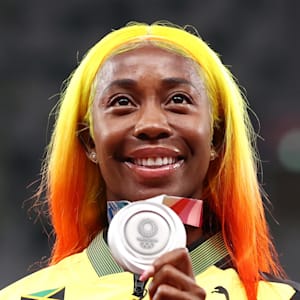
In early 2021, she ran a new personal best in the 100m, then won the Jamaican Olympic trials in both the 100m and the 200m, despite being 34 years old. She went to Tokyo for her 4th Olympics, where she and Thompson, now Elaine Thompson-Herah, were the favorites in the 100m. Both won their heats to advance to the final, and they were even early, but Thompson-Herah maintained her top speed longer, and Fraser-Pryce finished 0.13 seconds behind to take silver, her fourth straight medal in the event, making her the first athlete ever to win four 100m medals, regardless of gender.
In the 200m, the first half went almost the same as the 100m, with an even start, followed by Thompson-Herah pulling away by the end of the turn. On the straightaway, she pulled away to win in the second-fastest time ever, while Fraser-Pryce was passed twice on the way home, finishing 0.07 seconds short of a medal in 4th place.
Jamaica had swept the medals in the 100m, making them clear favorites in the 4x100m relay. Fraser-Pryce ran the third leg, and Jamaica had the lead through the first half, though just barely ahead of the USA. Fraser-Pryce was also unable to pull away, handing off to Shericka Jackson with a tiny lead, but the USA had a rough handoff, and that enabled Jamaica to finally create some space, and they won by 0.43 seconds, finally getting Fraser-Pryce her first relay gold.
She considered retirement after the Olympics, but decided to keep competing since she had run personal bests in both of her events in 2021, and she made history again in 2022 when she won her 5th 100m World Championship, becoming the first ever to win 5, and the oldest athlete ever to win a track world championship. She suffered a knee injury in 2023, which hampered her training over the next year, but she still qualified for her 5th Olympics.
She went to Paris in 2024 to try for a fifth medal in the 100m, and she got off to a good start, leading early in her first heat, but she injured her hamstring late in the race and finished second, which advanced her to the semifinal, but she was unable to continue and withdrew from the competition.
She competed through the world championship in 2025, after which she retired at age 38. Her longevity was legendary, and she won medals at 4 straight Olympic games, finishing her career with 8 total medals, including the pair of 100m golds she won to kick off her career. She is obviously one of the greatest Olympians of all time.
Ole Einar Bjorndalen was born on January 27, 1974 in Drammen, Norway, and left home at 16 to study at a sports academy, where he specialized in cross country skiing and biathlon, eventually shifting his focus completely to biathlon. At age 19, he won 3 gold medals at the Junior World Championships, and that helped him earn a spot on the Olympic team in 1994, just after his 20th birthday.
His first event was the relay, where he took the first leg, and even though he didn't miss a shot, he still was in 10th place at the end of his turn. His teammates were also perfect in shooting, but weren't able to get any higher than 7th place, which is where they finished. He also competed in the individual 20 km and the 10 km sprint, but wasn't close to the top in either, a disappointing start to his Olympic career.
He kept working hard, and by 1997, he won a bronze medal in the pursuit at the World Championships, and again made the Olympic team heading to Nagano in 1998, competing in the same 3 events. His first event that year was the 20 km individual, and he had the fastest skiing time in the event, but he missed 4 shots, which were each assigned a 1-minute penalty, which dropped him to 7th place overall.
Next was the sprint event, which had to be postponed by a day after heavy fog made the shooting impossible. With better conditions the next day, Bjorndalen dominated, with the fastest time at both shooting checkpoints, and no misses, and he ended up winning the race by over a minute, making his first gold medal one of his most dominant.
Norway and Germany were expected to battle for gold in the relay, but Norway got off to a rough start, sitting in 6th place after the first leg. The next two skiers moved them up to 4th, but they were still a minute and 43 seconds behind the Germans when Bjorndalen started his anchor leg. He flew past Russia and Belarus, and made up a lot of ground on Germany, but there just wasn't enough time, and Norway ended up taking the silver medal, 20 seconds behind Germany.
He won several more world championship medals over the next few years, but no individual golds, so what happened in Salt Lake City was a bit of a surprise. He started out by doing a cross-country skiing event, the 30 km. In that event Johann Muhlegg of Spain was far ahead of the field, winning by over 2 minutes, with Bjorndalen leading the rest of the pack heading into the final lap, but he was passed by 4 others before the finish. He originally finished in 6th place, but was moved up to 5th when Muhlegg failed a drug test, meaning that Bjorndalen finished only 13.5 seconds behind the true champion while racing in an event that wasn't even his main sport.
After that, he never skied another Olympic cross-country race, but he was about to make history in the biathlon. He started with the 20 km individual, where he was again the fastest skier in the event. He did miss 2 shots, down from 4 in the previous Olympics, and luckily this time, the two athletes that were within a minute of him on the skiing portion also missed at least 2 shots, so Bjorndalen won gold by 36 seconds over Frank Luck of Germany, who hadn't missed a shot but skied slower.
Next, he attempted to defend his gold medal in the sprint. He was one of the final athletes to start, and Sven Fischer of Germany held the lead for most of the race, but a miss at the final shooting station forced him to ski a penalty loop, and Bjorndalen made it through without a miss, which enabled him to win by 29 seconds, which was almost exactly the time Fischer lost to the penalty loop, giving him his second gold medal of 2002.
The next event was the pursuit, which was being contested for the first time in the Olympics. Skiers started according to their finish in the sprint, so Bjorndalen started with a 29 second lead. He missed two shots during the event, and was only the 6th fastest skier, but his head start was enough that noone was ever able to catch him, and he ended up winning by 43 seconds to become the first biathlete ever to win 3 golds in a single Olympics.
He finished up his Olympics with the relay, where his team was favored. They started out 18 seconds behind Russia after the first leg, but they took the lead early in the second leg, and never gave it up. They led by 21 seconds at the midway point, and by just over a minute when Bjorndalen started the anchor leg, and he was able to race without pushing too hard, bringing home the gold medal by just over 45 seconds. He thus became the only man ever to win ever biathlon event in a single Olympics.
At the 2005 World Championships, he won 4 golds, only missing out in the individual 20 km, which was his first event in Torino in 2006. For the third straight Olympics, he was the fastest skier in the event, but Michael Greis of Germany had missed only one shot, while Bjorndalen missed 2, dropping him behind by 16 seconds and leaving him with the silver medal.
Next was the sprint, which he had won twice in a row, both times without missing a shot, but he was unable to repeat that again. He missed 3 shots this time, and the 3 resulting penalty loops dropped him out of contention, finishing in 11th place, though he was probably fast enough to win if he had shot cleanly.
He started 1:14 behind in the pursuit, but was again the fastest skier in the event, which allowed him to make up a lot of ground, but he was again betrayed by his shooting. He missed 3 shots, and the penalty loops caused him to end up losing by 2.7 seconds, but he still ended up with a silver medal, which was impressive when you consider where he started.
He was again the anchor on the relay team, but his teammates all struggled with their shooting, and Norway was in 10th place by the time he got on the course. He skied the fastest leg of anyone by over 30 seconds, but was only able to move his team up to 5th place by the finish.
After that was an event new to the Olympics, the mass start 15 km race. Bjorndalen led the entire race until the final shooting station, where he missed twice, and the ensuing penalty loops caused him to lose his lead, and he was unable to catch back up before the finish, and he ended up with a bronze medal, 12 seconds behind the winner.
He again won 4 gold medals at the 2009 World Championships, giving him good momentum heading to Vancouver in 2010. The first event that year was the sprint, and the weather got worse throughout the event, and Bjorndalen started near the middle of the event. After 3 missed at the first shooting station, he was basically out of the running, and he finished in 16th place.
This meant that he started the pursuit 1:41 behind the leader, and despite a good race time and only 2 misses, he was only able to move up to 7th by the end of the event. In the 20 km individual, he was the fastest skier in the event for the 4th Olympics in a row, but Emil Hegle Svendsen, also of Norway, missed 1 less shot, and Bjorndalen ended up with a silver medal.
He also competed in the mass start, but with 7 missed shots out of 20, the worst in the competition, he only managed to finish in 26th place. He was assigned to the anchor leg in the relay again, and this time, despite a slow start, Norway was able to take a small lead after 2 legs, which was a virtual tie with Austria when Bjorndalen started. He had a really good ski time, and missed only 2 shots, while his rival missed 4, allowing him to have a comfortable victory by 38 seconds to finish with his only gold of the games.
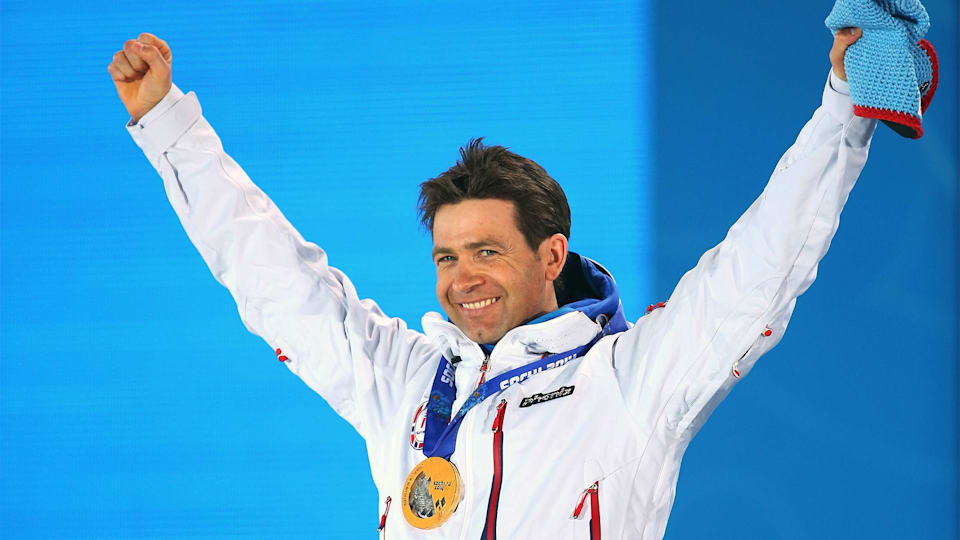
He returned for another Olympic run in 2014, when he was 40 years old. He started out with the sprint event, where he was in 5th place for most of the race, but thanks to missing only a single shot, he was in position to sprint to the finish with a chance at a medal, and he ended up pulling it off, winning the gold medal by 1.3 seconds, which was his 12 total Olympic medal, which tied him for the most ever for a Winter Olympian at the time.
He took that tiny lead into the pursuit, but he missed 3 total shots over the course of the event, and ended up finishing 4th, just 1.7 seconds away from earning a record-breaking medal. In the individual 20 km, he missed 4 shots, one at each station, and the 4 penalty minutes dropped him from 6th to 33rd place.
He struggled again in the mass start, missing 6 shots, the most in the event, and he finished 21st out of 26 who finished the event. Next was a new event, the mixed relay, with 2 women doing a 6 km leg, followed by 2 men skiing 7.5 km each. Norway was only a second behind when Bjorndalen took off on the third leg, and he gave them a huge lead of 43 seconds, and it was more than enough for the anchor to bring home for another gold, making him the most decorated Winter Olympian ever.
His final event was the relay, where he again took the third leg. The Bo brothers took the first two legs, and had Norway in the lead for the entire first half, and they gave Bjorndalen a 20 second lead. He didn't miss a shot, but his skiing was slower than usual, and by the time he finished, the lead was down to 2 seconds. On the final leg, his teammate missed 4 times, and the Norwegians ended up in 4th place. That would change in 2020, when it was discovered that the Russians had been doping, and Norway was moved up to the bronze medal position, giving Bjorndalen his 14 medal overall.
He tried to make the team again in 2018, but was chosen for the team, so his Olympic career ended after 6 trips to the Olympics. He retired later that year, but by then he was no longer the most decorated Winter Olympian, as Marit Bjorgen had surpassed him by winning her 15th Olympic medal that year. He is known as the King of Biathlon, and it is well-deserved, as he is the greatest Olympic biathlete in history, and one of the greatest Olympians ever.
Frank Kent Foss was born on May 9, 1895 in Chicago, Illinois. He won the I4CA Championship in 1915 and 1916 while attending Cornell University, and then won the AAU championships in both 1919 and 1920. He had vaulted 4.05 meters in 1919, which was higher than the world record, but it was never officially verified to count as a world record.
He went to Antwerp in 1920 to compete in the Summer Olympics, where he was the favorite going in, and he didn't disappoint. 9 vaulters cleared 3.6 meters in the qualifying round to advance to the final, but two of them were unable to repeat that in the final round. Of the 7 who did clear 3.6, only two made it any farther, with Henry Petersen of Denmark joining Foss in making it over 3.7, but Petersen was unable to clear any further heights. Foss continued to raise the bar, both literally and figuratively, and by the end he had cleared 4.09 meters, setting a new world record, and winning the gold medal by 0.39 meters, or 15.4 inches, which is still the largest margin of victory in Olympic history.
After the Olympics, Foss stopped competing, and started working in the meatpacking industry for the rest of his life. He passed away on April 5, 1989 in Hinsdale, Illinois, a suburb of Chicago. Even though he only competed in one Olympic event, he set a world record in that event, and had the largest margin of victory ever, making him one of the greatest Olympians of all time.
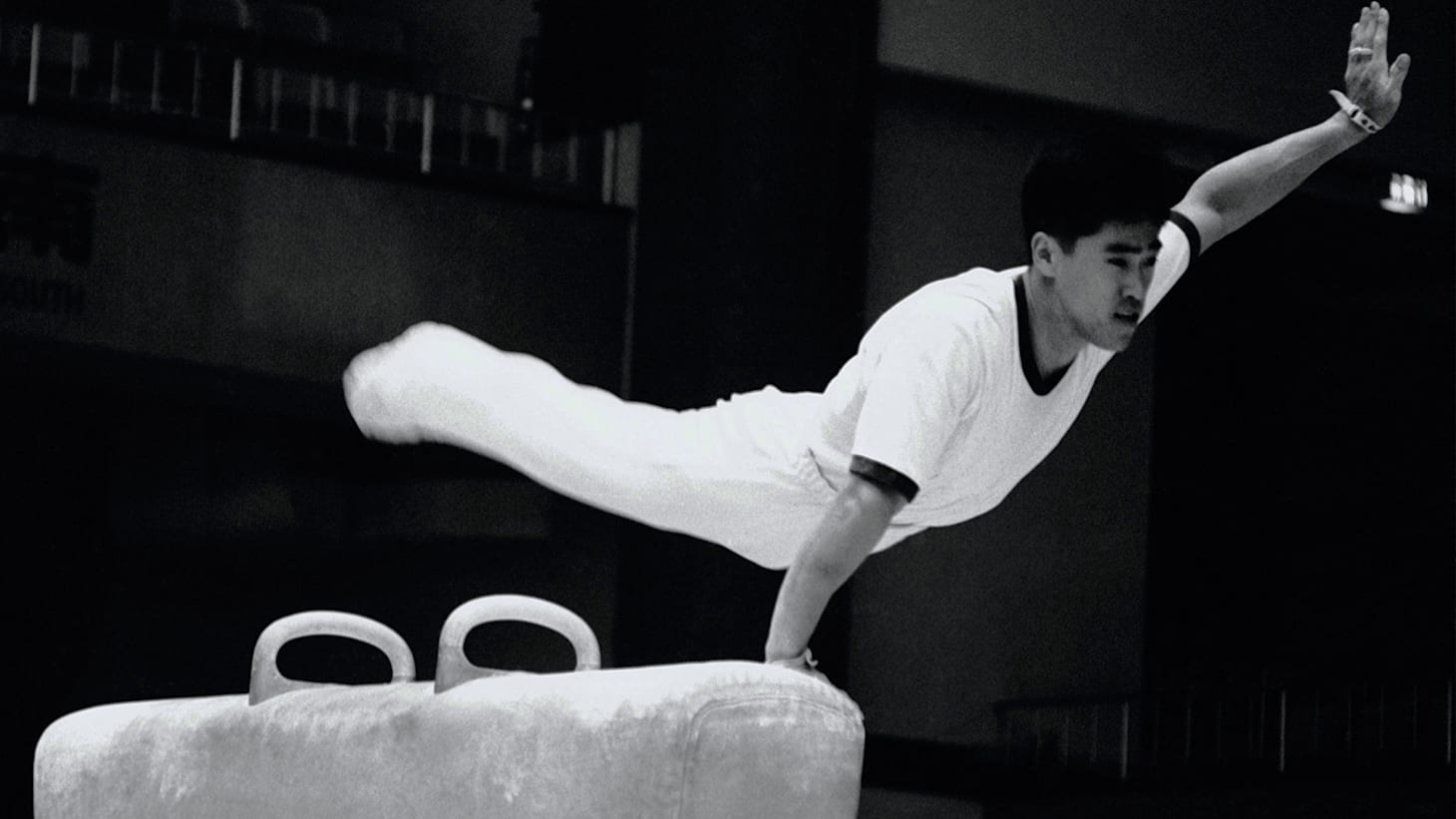
Eizo Kenmotsu was born on February 13, 1948 in Okayama, Japan, and was a phenom at gymnastics, as he was the youngest Japanese gymnast to win an Olympic gold medal at the time, a mark he held for 48 years. He made his Olympic debut when he was just 20 years old.
He started out with the team event in Mexico City in 1968, where the Japanese had won the past 2 gold medals, and he helped to keep that streak alive, as Japan came out 4.8 points ahead of the USSR, and Kenmotsu was the third-highest scoring member of the team. This was the win that made him the youngest Japanese gold medal gymnast for so many years.
The individual all-around was determined by each gymnast's scores in the team event, and even though he was #3 on the Japanese team, he was #4 overall, missing out on a medal by 0.75 points. He qualified for the event finals in every event except the rings, which was quite a feat at his age.
In the floor exercise, he was 4th after qualifying, but only scored a 9.3 in the final, dropping him to 6th. The vault was exactly the same story, except that his final score was a 9.18. He was the 5th qualifier in the parallel bars, and he held that position after the final as well, and the exact same thing happened in the pommel horse.
He also qualified 5th in the horizontal bar, but a strong final performance earned him a 9.7, which moved him up to the bronze medal, his first individual Olympic gold. While he qualified for five finals, he wasn't in medal position in any of them beforehand, so the fact that he was able to take one anyway was impressive.
In the 1970 World Championships, he won the individual all-around gold, along with three individual event silvers, so he was one of the big stars to watch in Munich in 1972. He was a big part of the Japanese winning their 4th straight team gold, and this time they beat the Soviets by 7.2 points.
For the first time, the individual all-around held a final round, with the top 36 gymnasts from the team event qualifying. Kenmotsu qualified in 2nd place, behind Sawao Kato, his teammate, by 0.35 points. In the final, he finished in the top 7 in every apparatus, and had the high score on the pommel horse, but he only outscored Kato by 0.1 overall, so he remained in 2nd and took the silver medal.
This time, he qualified for all 6 event finals. In the floor exercise, he was part of a 5-way tie for second after qualifying, but a 9.4 in the final left him in 4th place, 0.1 short of a medal. In the vault, he started out in 4th, and held his position after the final, again leaving him short of a medal, this one by 0.25 points.
He was #2 in qualifying in the parallel bars, and had a good performance that earned him a 9.6 in the final, but his teammate, Shigeru Kasamatsu, scored 9.75 in the final to pass him, dropping Kenmotsu down to the bronze. In the horizontal bar, he was again unable to move up from 4th place after qualifying, leaving him with his 3rd close call of the games.
In the rings, he had been tied for third after qualifying, but had the worst performance of the final, and finished in 5th. He had been the top qualifier in the pommel horse, but a final score of 9.4 allowed two others to pass him, and he ended up finishing with yet another bronze medal, his second of the games and third overall.
In the 1974 World Championships, he won all-around bronze, along with a gold and 2 bronzes in the individual events. In the 1976 Olympic in Montreal, he helped the Japanese win their 5th straight gold medal, but this time it was close, with the USSR coming up just 0.4 short of overtaking their long-time rivals.
That year, the individual all-around was updated again, this time allowing only 3 competitors from each country, so even though he was 6th in qualifying, he was 4th among the Japanese gymnasts, and didn't get to compete. He did, however, qualify to compete in 4 of the individual event finals.
The individual finals now only allowed 2 gymnasts per nation, which allowed Kenmotsu to compete in the floor exercise, where he was 7th in qualifying, but since 3 Soviets ahead of him were left out, he was #4 going into the final. His final score was lower than the other 5, however, leaving him with a 6th place finish.
In the horizontal bar, he was #2 in qualifying behind Mitsuo Tsukahara, who ended up having a great final score, so Kenmotsu was forced to accept the silver, his first in an individual event final. He was the lowest qualifier in the rings, and only moved up one spot in the final. In the pommel horse, he had qualified #2, and scored a 9.8 in the final, but a 9.9 from Zoltan Magyar of Hungary prevented him from moving up, leaving him to take another silver.
He won 4 more World Championship medals in 1978, but retired in 1979, before the 1980 Olympics in Moscow, which Japan ended up boycotting anyway. He went on to coach gymnastics for many years. Even though he never won an individual gold, he won three silvers and three bronzes, and reached 15 of a possible 18 event finals during his Olympic career, making him one of the greatest Olympians of all time.
Vasyl Anatoliyovych Lomachenko was born on February 17, 1988 in Bilhorod-Dnistrovskyi, USSR, which is now part of Ukraine. His father was a boxing coach, but he didn't allow Vasyl to box until he had trained in dancing and gymnastics. His first major competition was the 2007 World Championships, where he made it all the way to the final before losing, in what would be the only loss of his amateur career.
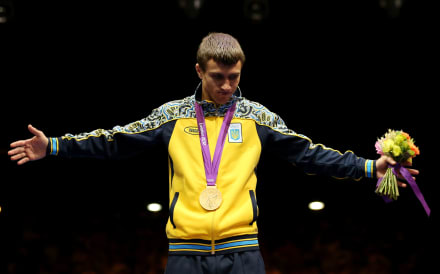
He made his Olympic debut in 2008 in Beijing, fighting in the featherweight division, and because Olympic boxing does not seed its athletes, Lomachenko had his first bout against Albert Selimov of Russia, the man who had beaten him the year before. It was his closest match of the tournament, ending up with a 14-7 win to avenge his previous loss. His next three matches were all blowouts, with margins of at least 9 in each, and the gold medal match was headed that way, with a score of 9-1, when he scored a TKO to end the match. Along with his gold medal, he was named outstanding boxer of the Olympics.
He won the 2009 World Championship, then, after the featherweight division was discontinued, he moved up to lightweight and won the 2011 World Championship in his new division. He competed at lightweight in the 2012 Olympics, and after a huge win in his first bout, he had a couple of slightly closer matches, winning by 5 and 3, before a 19-9 win in the gold medal match, earning him a second straight gold, and the very rare feat of winning gold in two different weight classes.
He turned pro in 2013, and didn't compete in the Olympics again, but compiled an 18-3 record as a pro over 11 years, and was the quickest to ever win a world title, which he achieved in his third pro fight. His second Olympic gold was very strong, but his first was legendary, with big margins in every fight, making him the greatest Olympic boxer ever, and one of the greatest Olympians of all time.
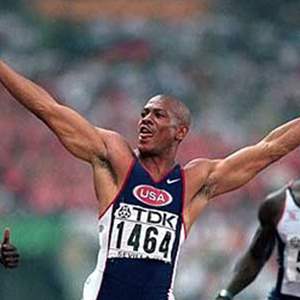
Maurice Greene was born on July 23, 1974 in Kansas City, Kansas, and played football and ran track in high school, but focused exclusively on track after getting a scholarship to the University of Kansas. He competed in his first World Championship in 1995, and won his first one in 1997. In 1999, he won the 100m, 200m, and 4x100m relay at the world championships, just the third man ever to do that, after Carl Lewis and Michael Johnson.
He also set the world record in the 100m in 1999, dropping it to 9.79 seconds. In the Sydney Olympics, he opened with the 100m, and after winning his first two races easily, he had the fastest time in the semifinals, then went on to win the final in a time of 9.87 seconds, 0.12 seconds ahead of the silver medalist, to earn his first Olympic gold medal.
Greene also ran the anchor leg for the USA in all 3 rounds of the 4x100m relay the next week. They had the fastest time in each of the first two rounds, and weren't challenged in the final, where Greene was handed a comfortable lead and coasted to the finish for another gold medal, this one by 0.29 seconds over Brazil.
Greene repeated as 100m World Champion in 2001, but struggled with injuries over the next couple of years. He watched Tim Montgomery break his world record in 2002, but then he got it back when Montgomery failed a drug test. He recovered in time to make the Olympic team that was headed to Athens in 2004.
He again started with the 100m, and he again won his first two heats, but in the semifinal, he came in 3rd, even though he ran it in 9.97 seconds. In the final, it was an extremely close race, with 4 runners within .04 seconds of each other, but Greene ended up taking the bronze medal in that mass finish, .02 seconds short of another gold.
Greene again ran the anchor leg for the favored Americans in the 4x100m relay, in which they easily made the final. In that race, the first two handoffs for the USA were clunky, and it allowed the British team to gain the lead, but after a good handoff to Greene, he bolted for the finish, but came up just short, losing by .01 second to end up with a silver medal.
His world record was beaten in 2005 by Asafa Powell, who lowered it to 9.76 seconds, and by 2008, Greene had retired from athletics. He has since worked as a track coach and PE teacher. He had a very strong peak, but it only coincided with one Olympic games, which is why he only has 2 gold medals, but he was extremely close to 2 more while coming off nagging injuries, and for all of that, he is one of the greatest Olympians of all time.
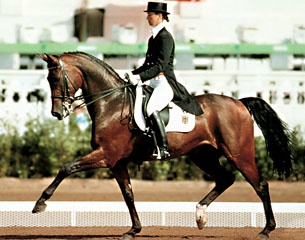
Nicole Uphoff was born on January 25, 1967 in Duisburg, West Germany, and began riding in competitions with her horse, Rembrandt, when she was 18 years old, and by the time she was 21, she was recognized as one of the best in the world, and made her first Olympic team, riding for West Germany.
In the 1988 Olympics in Seoul, her first event was the team competition, where up to 4 riders from each nation went through the process, and the three highest scores counted toward the overall score. Uphoff was the highest scorer of any competitor overall, and with one of her teammates finishing in 3rd, the German team won easily, 138 points above the Swiss, who came in second.
The top 18 riders advanced to the final in the individual event, with only 3 per nation allowed to compete, leaving one West German out. Uphoff had scored 1458 in the team round, just 3 points ahead of the next qualifier, but in the final, she was nearly perfect, and raised the bar to 1521 points, which allowed her to run away with the gold by 59 points.
She followed up her pair of Olympic golds with 2 pairs of World Championship golds, and she was the favorite heading to Barcelona in 1992, competing for the newly reunified Germany. In the team event, she again had the highest score, with 1768 under a different scoring system than before, and she was 6 points ahead of Isabell Werth, her teammate, which helped them win the team gold by nearly 500 points.
The top 16 riders advanced to the individual final, except that the 4th German rider was left out again, even though they were #4 in qualifying. In the final, the German trio again finished at the top, sweeping the medals, with Uphoff finishing 75 points ahead of Werth to successfully defend her gold medal, becoming just the second rider in history to win twice in a row, while Rembrandt became the first horse ever to repeat as champion.
In the next World Championship, she ended up only in second place, and by 1996, she failed to make the German team for the Atlanta Olympics, but as defending individual champion, she had the right to compete in the individual event, which she accepted. That event was expanded by a round that year, and she was in 9th after qualifying and 8th after the first round of the final, but dropped out before the final round, which was won by Werth, her teammate.
Rembrandt retired after the 1996 Olympics, and Uphoff spent a few years looking for a new horse. She won a competition in 1999 on a new horse, Borbet Rubinstein, but again failed to make the Olympic team in 2000, and never again attempted to return to the Olympics, though she didn't officially retire until 2013. While she was at the top of her game, she was unbeatable, winning all 4 of her Olympic gold medals in blowout fashion, making her one of the greatest Olympians of all time.
Marit Bjorgen was born on March 21, 1980 in Trondheim, Norway, and though her Olympic career started slowly, by the time she retired she was undoubtedly one of the all-time greats. She made her first Olympic team in 2002, when she was 21 years old, competing in Salt Lake City.
Her first Olympic event was the 15 km race, where she finished in 50th place, more than 7 minutes behind the gold medalist. She then took the first leg for Norway in the relay, where they were expected to win due to Russia losing a couple of their best skiers to doping. Bjorgen had Norway in 4th place after her leg, 14 seconds behind Germany, but the next skier took the lead back late in her leg, and they held it until the final 100 meters, when the final German skier shot ahead and took the gold, leaving Norway to take silver after losing by 1.3 seconds.
She also competed in the 30km, where she finished in 14 place, just over 6 minutes behind the official champion, but nearly 8 minutes behind the original champion, who lost her medal to doping. In 2003, she broke through at the World Championship, winning gold in the sprint, then followed that up with 3 golds, a silver, and a bronze in 2005.
Expectations were high for Bjorgen heading to Turin, but she got bronchitis the week before the games, and it affected her performance. She withdrew halfway through her first event, the skiathlon, where she was a pre-race favorite. In the team sprint, the Canadian skier snapped a pole early in the final, and the Norwegian coach gave her a new one, enabling her to stay with the leaders. Norway never took the lead, but remained close for most of the race, eventually finishing in 4th. Many were angry at the coach for helping an opponent, but the Canadians, who finished 2nd, were very grateful.
She was the favorite in the 10km race, but Sara Renner of Canada led most of the race, until she dropped off in the final quarter of the race. At that point, Kristina Smigun of Estonia took the lead, and she pulled away from the pack to win easily. Bjorgen had her best finish of the Olympics though, outskiing the rest of the pack to come in second and earn a silver medal.
In the relay, Bjorgen was assigned to the anchor leg, and they were one of the favorites. They stayed near the front for the entire race, and Bjorgen was in 2nd place when she took off for her leg, but she didn't ski well, and the team dropped to 5th and out of the medals. She failed to advance out of the quarterfinal round in the sprint, and left Turin before the 30km, which would have been her final event.
She didn't perform well in the next two world championships, but returned for the 2010 Olympics, where she would finally perform up to her potential. She started out in the 10km race, where she was able to finished in 3rd place, earning a bronze medal to open the games.
Her second event was the sprint, and she was the fastest qualifier this time, then went on to win both of her heats to advance easily to the final. In the final, Justyna Kowalczyk of Poland kept it close for a while, but in the final 300 meters, Bjorgen pulled away to win by over a second, and she finally had her first Olympic gold medal.
Next up was the 15 km skiathlon, and Bjorgen was able to stay with the lead pack for most of the race, which consisted of 7 skiers at the halfway point, when they switched out their skis. The lead pack was down to 4 by the final section of the race, when Bjorgen pulled away from the others to win gold by 9 seconds, while the other three finished within half a second of each other.
She was again assigned the anchor leg in the relay. Sweden led them by 2 seconds after the first leg, then Italy took the lead in the second leg, with Norway 8 seconds back, but their third skier took the lead right at the switch-over point, barely ahead of Italy, but Bjorgen left Italy in the dust, and by the end, she coasted to the finish line and won the race by over 25 seconds.
Before her final event, the 30 km, her chief competitor, Kowalczyk, questioned her use of an asthma drug, which was normally banned, but for which Bjorgen had a valid exemption. There were several skiers close together through 20 km, but at that point Bjorgen and Kowalczyk pulled away from the field, with Bjorgen eventually gaining a 6-second advantage with just a few kilometers to go. On the final climb, Kowalczyk caught up, and it came down to a final sprint to the finish, with Bjorgen coming up just short, losing by 0.3 seconds and finishing up her great Olympics with a silver.
She won 4 golds and a silver in each of the next 2 World Championships, meaning that expectations were still high in Sochi. She started out with the skiathlon, where she was the defending champ. A group of 6 reached the midway point together, and five of them remained together for the entire second half. On the final climb, Charlotte Kalla of Sweden tried to break away, but Bjorgen kept pace, and the pair ended up in a sprint for the finish, which Bjorgen won by 1.8 seconds.
In the sprint, she qualified in third, and advanced to the semifinal, but in that race she finished last and failed to make the final. In the 10km, Bjorgen was in second place for the majority of the race, behind Kowalczyk's time, but she faded over the final 2 km and finished in 5th. They were also expected to win the relay, but fell behind early and were never able to make up group, spending nearly the entire race in 5th place.
After a few disappointing finishes, she finally put it back together in the team sprint. Norway was in second when she started her first leg, but she took the lead quickly, and they never gave it back, extending it each time that Bjorgen was on the course, and they ended up winning the gold medal by over 9 seconds over Finland.
In the final event, the 30km, Bjorgen and two Norwegian teammates pulled away from the field after 10 km, extending their lead to a full minute and maintaining it for the remainder of the race. The three took turns in the lead, working as a team until the final 2 km, when Bjorgen and Therese Johaug left their teammate behind, then sprinted it out for the finish, which Bjorgen took by 2.6 seconds to win her 3rd gold of the games.
She came back for one final run at the Olympics in 2018. She entered 5 events, the first of which was the skiathlon, which she had won the last two times. She was in the back of the lead pack of 9 with 3 km to go when Kalla pulled away from the pack, and she had to fight her way through the pack before pursuing Kalla, and by that point it was too late, though Bjorgen was able to come through with a silver medal.
Bjorgen was one of the favorites in the 10km, and she was the first of the favorites to compete, setting the mark to beat. Unfortunately, two were able to beat it, and Bjorgen ended up having to settle for bronze. In the relay Bjorgen skied the anchor leg again. Norway was behind early, 30 seconds behind Russia at the midway point, but the third skier closed the gap, and Bjorgen was only 3 seconds behind when she took over, and she soon took the lead over Sweden and their sprint champion. She maintained the lead, never allowing a chance to get passed, and ended up winning the gold medal by 2 seconds.
In the team sprint, Norway, Sweden, and the USA were together heading into the final downhill, with Sweden leading and Norway in second heading into the final sprint, when Jessie Diggins of the USA passed Falla of Norway, then caught Nilsson of Sweden at the finish line to take the gold, while Norway ended up with a bronze medal.
In her final Olympic event, the 30 km, Bjorgen left no doubt who would win from the start. She broke away from the pack at the 10 km mark, and was 51 seconds ahead by the midway point, and 80 seconds ahead with 10 km to go. Her lead ballooned to over 2 minutes in the final kilometers, when she finally slowed down to celebrate, which cost her some time, leaving her a win by "only" 1 minute and 50 seconds.
She retired after the 2018 Olympics as the most decorated Winter Olympian of all time, with 15 total medals, which is #3 among all Olympians ever. She also had the most Winter Olympic golds of all time until this year, when she was passed by Johannes Hosflot Klaebo, also of Norway, who currently has 11. Even though she only won a single medal at each of her first two Olympics, she overcame and retired as one of the greatest Olympians of all time.
Yukio Endo was born on January 18, 1937 in Yanaisado, Japan, the son of a pharmacist, and participated in gymnastics as a youth, but graduated from college before he made the Japanese Olympic team for the first time in 1960.
When they arrived in Rome, the Soviet team had won the past 2 team gold medals, with the Japanese taking silver in 1956. Endo was the 3rd-highest-scoring member of the team during the team event in Rome, and for the first time in their history, the Japanese won team gold, beating the Soviets by 2.5 points.
The individual all-around medals were determined based on performances during the team event, and Endo finished in 5th place among all participants, falling behind 2 of his teammates, and 2 members of the Soviet team. The top 6 in each individual apparatus qualified for the event finals, and Endo qualified for 2, the vault and the horizontal bar. He was tied for 6th on the parallel bars, but the tiebreaker went to Yury Titov of the USSR. He ended up finishing 4th in the horizontal bar and 5th in the vault, putting him in the top 5 in four events, but he earned only the team medal that year.
In 1962, he won the World Championship in the floor exercise, his only individual win in the world championships. By 1964, he had become the strongest member of the Japanese team, and when they went to defend their gold medal in Tokyo, they were successful, once again beating the Soviets by 2.5 points.
When the individual all-around scored were tabulated, Endo had pulled off a gold medal victory that was a small surprise. He had taken all-around silver at the last world championship, but he dominated this time, winning by 0.55 points, which was more than the gap between 2nd and 8th place. He also qualified for 5 of the 6 event finals, failing only in the pommel horse.
Endo was the top qualifier in floor exercise, and was the defending world champion, but in the final, he had his worst performance, and fell down to silver, while Franco Menichelli of Italy leapfrogged him for gold. He was the #3 qualifier in the vault, but another poor performance dropped him to 6th after the final.
The parallel bars were different, however. He was the top qualifier once again, but barely ahead of 3 others. He put up a 9.9 score in the final to run away with the gold, while nobody else exceeded 9.7. He was third qualifier in the horizontal bar, but fell to 5th after the final, and finished 6th in the rings despite qualifying at the top. He finished his home Olympics with 3 golds and a silver, but he could have had so much more.
Endo was back for his 3rd Olympics in 1968, but he was no longer the star of the Japanese team. He still performed well in the team event, but was 5th best on the strong Japanese team, as they won their third straight gold medal, this time beating the Soviets by 4.8 points.
Even though he was the 5th-best member of the Japanese team, that still was good enough to place him 8th overall in the individual all-around, and he qualified for 2 event finals, the vault and the horizontal bar. Endo was tied for second after qualifying in the vault, but after teammate Takeshi Kato struggled in the final, Mikhail Voronin of the USSR moved up to gold, while Endo stayed in silver medal position. Endo was put in the horizontal bar final after Sawao Kato decided not to compete, but he didn't improve from his 6th place entry into the final.
He retired after the 1968 Olympics, and became a coach and professor. He coached the Japanese team at the 1972 Olympics, where they again won gold, and was later president of the Japanese Olympic Committee. He died of cancer in Tokyo on March 25, 2009. With his qualifying scores, especially in 1964, he could easily have ended up with 11 Olympic medals, but he did end up with 7, five of them gold, including a dominant all-around win, making him one of the greatest Olympians of all time.
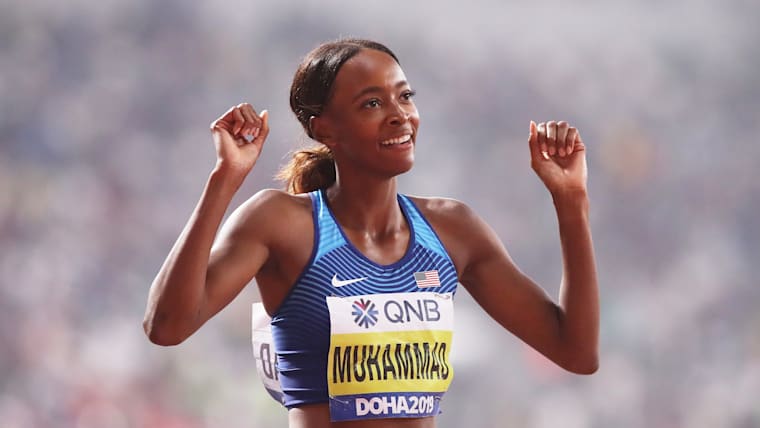
Dalilah Muhammad was born on February 7, 1990 in Jamaica, New York, and began training as a runner when a local coach saw her running through the streets at age 7. When she was 17, she won the World Youth Championship in the 400m hurdles, then after graduating from high school, moved across the country to attend USC.
While at USC, she competed in the 2012 US Olympic trials, but failed to make the team. The next year, she took silver in the World Championships in the hurdles, but injuries slowed her down over the next couple of years, and she returned to competition just before the 2016 Olympic trials, where she won, earning her place on the team heading to Rio.
When she got to the Olympics, the favorite was Zuzana Hejnova of Czechia, who had won the last 2 World Championships, but Muhammad started to get noticed after running the fastest time in the semifinal round. By the fourth hurdle in the final, Muhammad had a clear lead, and she never let anyone else make it close, winning the race by 0.42 seconds to become the first American woman to ever win the event.
After finishing second in the 2017 World Championships, she set a new world record at the US Championship in 2019, then added a World Championship win later that year, also setting a new world record in the process. But at the 2021 Olympic trials, she finished second behind Sydney McLaughlin, who broke the world record again, setting it at 51.9 seconds.
The pair was expected to fight it out for gold in Tokyo, and the race lived up to expectations. Muhammad took the lead early, and was a step ahead of McLaughlin and Femke Bol of the Netherlands through the 8th hurdle, but McLaughlin closed the gap by the final hurdle, then had a better finishing kick to win gold. Both runners broke the previous world record, but Muhammad lost by 0.12 seconds.
Both of them also competed in the 4x400m relay later that week, and the squad that ran in the final was one of the strongest ever assembled. McLaughlin ran the first leg, and held a slight lead when she handed off to Allyson Felix, who extended the lead to 5 meters when Muhammad took the baton and pulled away, leaving a gap of 15 meters at the final handoff. Athing Mu (#85 in this countdown) ran the anchor leg, and the USA won by nearly 4 seconds.
She tried to make the US team for the 2024 Olympics, but did not qualify after the trials. She is still running, and has even started running the 800 meters this year, possibly with an eye toward the 2028 games, but she is starting to age out of competitive running. Even with her limited Olympic experience, she had two very strong gold medal wins, plus a silver medal that was faster than the world record, and she stands today as one of the greatest Olympians of all time.
Jason Francis Kenny was born on March 23, 1988 in Bolton, England, and learned to ride a bike early like most children, then fell in love with track cycling when he was introduced to it by his uncle as a teenager. He began competing on the senior circuit in 2006, and made his first Olympic team in 2008, at the age of 20.
Kenny's first Olympic event was the team sprint, where he was the #2 racer on the British team, behind Chris Hoy (#131 in my countdown). The team beat Germany by over a second in their prelim heat, then beat the American team by over 2 seconds in the semifinal, which put them in the final round against France, who had beaten them in the most recent World Championship. Britain held the lead through the entire race, avenging their earlier loss by over half a second, and Kenny began his Olympic career with a gold medal.
His only other event in Beijing was the sprint, where Hoy was one of the favorites, and Kenny was more of an unknown. Each round before the semifinals consisted of a single winner-take-all race, but the final 3 rounds were all best-of-three. Both Kenny and Hoy won every single race on their way to an all-British showdown for gold. In the end, the favorite came through to defeat the newcomer, but Kenny still came away with an unexpected silver medal.
He was back in 2012 to compete in his home Olympics in London, and again teamed up with Hoy in the team sprint event, where they were favored to repeat as champs. The team set a new Olympic record in the first round, then a new world record in the semifinal, before breaking it again in the final against France, giving them another gold medal.
In the sprint event, Hoy was not competing, instead focusing on other events, but Kenny was still not the favorite, as Gregory Bauge of France had won the last 3 World Championships. Both Kenny and Bauge were undefeated all the way to the final, but in the final, Kenny pulled off the upset this time, winning both races against Bauge to take the gold.
In 2016, Kenny was back for more in Rio, but Hoy had retired after the London Olympics, and his space in the team sprint was filled by Callum Skinner. New Zealand was the defending world champion and the favorite, but it was Britain that set a new Olympic record in the first round, which the Kiwis broke in the semifinal, leading to a showdown for gold. New Zealand took the lead on the first lap, but Kenny was able to overtake them during his turn, after which Skinner pulled away to set another Olympic record, and give the Brits their third straight gold in the event.
In the sprint, Kenny had struggled since the previous Olympics, so he wasn't necessarily the favorite, but he set a new Olympic record in qualifying, then won all of his races up to the semifinal round, where he lost his first race to Denis Dmitriyev of Russia, then had to fight back to win two straight races to advance to the final. In the final, he faced Skinner, his new teammate, and beat him in two straight races to successfully defend his gold from London.
He also raced in the keirin for the first time in the Olympics in 2016, where Hoy had won the past two golds. He was able to reach the final after winning each of his first two heats, and in the final, he was in third place for most of the race, but when the two leaders began to fade on the final lap, Kenny came around them on the outside to beat them both to the gold, tying Hoy for the most gold medals ever for a British Olympian in the process.
Kenny came back for one final Olympic run in Tokyo, where both of his teammates in the team sprint had been replaced, and their longtime coach had left to coach the Dutch team. The Dutch ended up setting new Olympic records in all 3 rounds, while the British were able to make it to the finals, but were no match for the Netherlands, who beat them by over 3 seconds, leaving a silver for the Brits.
In the sprint, where Kenny was 2-time defending champion, he was able to win his first two races, but lost in round 3 to Dmitriyev, forcing him into the repechage pool. He won that race to advance into the quarterfinal, but there he lost again, to Harrie Lavreysen of the Netherlands, who went on to win the gold medal, while Kenny missed out on a medal for the first time in his Olympic career.
In the keirin, Kenny was back to defend his gold as well, but came in 4th in his first round heat, dropping him into the repechage. He won that heat to get back into the field in the quarterfinal, where he advanced after finishing #2 in his heat. He ran his strongest race in the semifinal to get back to the final, where he changed strategies, sprinting ahead as soon as the pace bike was removed, and the change worked, as his surprised opponents didn't follow soon enough, and Kenny was able to finish his career off with one final gold medal.
Kenny married fellow British track cyclist Laura Trott in 2016, and she is a 5-time Olympic gold medalist herself. Kenny retired after Tokyo, and now coaches the British track cycling team. His 7 gold and 9 medals overall are both British records, as well as records for cyclists, making him easily one of the greatest Olympians of all time.
William Oscar Guernsey Grut was born on September 17, 1914 in Stockholm, Sweden, the son of Torben Grut, the architect who designed the Olympic stadium in Stockholm for the 1912 Games. His father had also been a very good tennis player, but Wille became a swimmer and won several national championships. He even made the 1936 Olympic team as a relay alternate, but didn't end up competing.
While he was in Berlin, he saw the modern pentathlon, and decided to switch events. World War II cancelled the next two Olympics, but in 1948, Grut was ready to compete. The first part of the modern pentathlon is the equestrian steeplechase, and Grut had experience riding horses in the army. He mastered the course, never missing a jump, and finishing in the fastest time to receive the top score for that portion.
The next part was a round-robin epee fencing tournament, where placement was determined by number of wins against the field. There were 44 competitors, so this took a couple of days, but in the end, Grut had won 28 matches, the most of anyone, and he again earned the top score.
The third portion was rapid-fire pistol shooting, with a total of 200 points possible per competitor. Grut hit 190, which put him in 5th place out of the field, while his nearest competition through the earlier events finished in 21st, dropping him way behind the lead. Next was a 300m freestyle swimming race, which again played to Grut's strength, and he easily won that portion, by more than 4 seconds over anyone else.
The final event was a 4000 meter cross country race. Grut was far from the lead in this portion, finishing more than a minute behind the leader, but he still came in 8th among 42 racers who finished, giving him the gold medal by a mile over anyone else. No other competitor finished in the top 10 in more than three portions, while Grut was top 10 in all of them, and won three parts outright. It remains the most dominant modern pentathlon performance in history, and makes him one of the greatest Olympians of all time.