Showing posts with label Swimming. Show all posts

Monday, November 23, 2026

Top 150 Olympic Athletes: #1 - Michael Phelps


Michael Phelps

USA

Swimming


Overall Ranks

#1 among all Olympians


Olympic Results

2004

200m Freestyle - Bronze

4x100m Freestyle Relay - Bronze

4x200m Freestyle Relay - Gold

100m Butterfly - Gold

200m Butterfly - Gold

200m Individual Medley - Gold

400m Individual Medley - Gold

4x100m Medley Relay - Gold

2008

200m Freestyle - Gold

4x100m Freestyle Relay - Gold

4x200m Freestyle Relay - Gold

100m Butterfly - Gold

200m Butterfly - Gold

200m Individual Medley - Gold

400m Individual Medley - Gold

4x100m Medley Relay - Gold

2012

4x100m Freestyle Relay - Silver

4x200m Freestyle Relay - Gold

100m Butterfly - Gold

200m Butterfly - Silver

200m Individual Medley - Gold

4x100m Medley Relay - Gold

2016

4x100m Freestyle Relay - Gold

4x200m Freestyle Relay - Gold

100m Butterfly - Silver

200m Butterfly - Gold

200m Individual Medley - Gold

4x100m Medley Relay - Gold

Total

Events - 30

Gold - 23

Silver - 3

Bronze - 2


Michael Fred Phelps II was born on June 30, 1985 in Baltimore, Maryland, to a mother who was a middle school principal and a father who was a state trooper and former college football player. He learned to swim at age 7, and by the time he was 11, he had set many national records for his age group. 

He was such a phenom that he qualified for the US Olympic team in 2000, when he was just 15 years old, the youngest swimmer to make the US team in 68 years. He swam well enough to make it to the final in the 200m butterfly, his only event, where he was in last place for most of the race, but had the fastest final lap of any swimmer to move up to 5th at the finish, just 0.33 seconds short of a medal. It would be the worst finish of his Olympic career.

The next year, at the World Championships, he set a new world record in the same event, becoming the youngest swimmer ever to set a world record, breaking Ian Thorpe's record by 13 months. The next year, he was part of a world record in the 4x100m medley relay, and set a new world record in the 400m individual medley. He set 7 world records in 2003, and by the time the 2004 Olympics came around, he was probably the top swimmer in the world, without having yet won an Olympic medal.

He qualified to compete in 8 events in Athens, and was aiming to break Mark Spitz's record of 7 gold medals in a single Olympics. He started out with the 400m IM, which was probably his strongest event, and he ran away with it early. He was 1.5 seconds ahead after the butterfly, and almost 3.5 seconds ahead after the backstroke. That narrowed to 2.3 seconds after the breaststroke, which was his weakest stroke, but he pulled away again on the freestyle, winning by 3.55 seconds and setting another world record in the event.

Next was the 4x100m freestyle relay, where the Americans always won. This time, the result would be different. Phelps swam the second leg, but the USA was in last place when he entered the pool. He was able to pull them up into 6th place, but they were still 2.3 seconds behind South Africa, who led. The next two swimmers continued to cut into the deficit, but it wasn't enough in the end, and they had to settle for a bronze medal, 1.45 seconds behind the winners.

Next was the 200m freestyle, which was not one of his usual events, but he entered it specifically to face Ian Thorpe. Pieter van den Hoogenband of the Netherlands was the defending champ, and he set off fast, ahead of world record pace through 150m, but with Thorpe right behind him. He faced badly down the stretch, and Thorpe got his revenge by winning, while Phelps nearly caught him as well, but ended up taking the bronze.

His next event was the 200m butterfly, where he held the world record, and he finally broke out of the doldrums, leading the race from start to finish, and setting a new Olympic record while winning his second gold medal in the second-fastest time in history. The same day, he swam the opening leg of the 4x200m relay, where Australia had upset the USA 4 years earlier. He gave the Americans a lead of just over a second after his swim, which slowly shrunk the rest of the way, but Klete Keller was able to hold off Thorpe on the anchor leg to win the race by 0.13 seconds, earning Phelps a third gold.

Next was the 200m IM, where he was also the world record holder. He again led the entire race, and nobody else was really even close, and he finished it off in world record time, while 3 others finished together about 1.6 seconds later, with Ryan Lochte ending up with the silver. 

He then swam in the 100m butterfly, where he had lost to Ian Crocker at the Olympic trials, and was hoping for revenge. Crocker had a great start, and was 0.77 seconds ahead of Phelps at the turn, but Phelps swam an amazing last lap, catching Crocker at the wall and outtouching him by 0.04 seconds to win his 5th gold medal.

His final event was the 4x100m medley relay, where he swam the butterfly leg in the prelim, but gave up his spot in the final to Crocker, who helped the USA win gold in world record time. That win gave Phelps his 6th gold medal of the games, and his 8th medal overall, making him only the second man in history to win 8 medals at a single Olympics, after Aleksandr Dityatin of the USSR.

At the 2005 World Championships, Phelps decided to skip his two signature events, the 400m IM and the 200m butterfly, to experiment with a couple more freestyle events, and still managed to walk away with 5 gold medals and a silver. He went back to his usual set of events in 2007, and won 7 gold medals, 5 of them in world record time.

He went to Beijing in 2008 with the goal to beat Spitz's record of 7 gold medals in a single Olympics, which he had failed to do in Athens. He started again with the 400m IM, where Lochte was expected to challenge him, but Phelps had other ideas. Early on, Laszlo Cseh Jr of Hungary was keeping pace with him, and Lochte briefly had the lead at the 150m mark, but then Phelps pulled away from both of them, and ended up breaking his own world record from the previous month by more than a second, and beating Cseh by more than 2 seconds for the gold.

Next was the 4x100m freestyle relay, where America had been disappointing 4 years earlier. Phelps swam first, and was slightly behind the Australian swimmer after his leg, but the USA took the lead after the second leg. Unfortunately, France had a great third leg, and took the lead by 0.59 seconds, which required Jason Lezak to swim the leg of his life, which he did to make up the gap, and he ended up touching the wall first by 0.08 seconds to win the gold medal, and keep alive Phelps' drive for 8 golds, while also setting a world record.

Next was the 200m freestyle, where he held the world record, but had come in third in 2004, and hadn't won either of his prelim heats in Beijing. It turns out that he was just conserving his strength, as he left the field in the dust, winning in world record time, nearly 2 seconds ahead of his nearest competitor. He now had 3 golds in 3 events, and had gotten through 2 of his 3 toughest events.

Next was the 200m butterfly, where he had held the world record for 7 years, so he was expected to win easily. Moss Burmester of New Zealand led out early, but Phelps caught up by the midway point, then pulled away despite water leaking into his goggles, breaking another world record in the process while winning by more than half a second.

Next was the 4x200m relay, where there was no doubt that the Americans would win. Phelps led off with the second-fastest leg in history, giving them a lead of more than 2.5 seconds, and his teammates kept it up, finishing the race more than 5 seconds ahead of Russia, as well as more than 5 seconds under the previous world record, becoming the first team ever to break 7 minutes in that relay.

He then swam in the 200m IM, where Cseh and Lochte were expected to challenge him, but he didn't care about that, he just took the lead early, and kept it throughout the race, winning by 2.29 seconds and setting his 6th world record of the games while winning his 6th gold.

Next was his toughest event the 100m butterfly, the only one where he wasn't the current world record holder, and one that he barely won in 2004. At the turn, Phelps was in 7th place, and it seemed like his chance at 8 golds was over, but he turned on the burners on the last lap, and reached the wall simultaneously with Milorad Cavic of Serbia, but his final stroke allowed him to touch first, and he won the gold medal by 0.01 seconds, the closest finish possible. It was also an Olympic record, and was the only event where he did not set a world record that year.

He finished up with the 4x100m medley relay, swimming the butterfly leg, as usual. America started out in the lead after the backstroke, but had fallen to 3rd after the breaststroke, nearly half a second behind. Phelps was up next, and he got the lead back, putting them up by 0.25 seconds over Japan, but Japan faded, and Jason Lezak was able to hold off an Australian charge to win the gold medal by 0.7 seconds, while setting another world record.

After finally achieving his dream of 8 gold medals, Phelps scaled back a little going forward. At the 2009 World Championships, he only competed in 6 events, winning 5, and setting 4 world records. He won another 4 gold medals at the 2011 World Championships, but that was out of 7 events. He was starting to show his age somewhat, but was still among the best in the world.

He chose to swim in only 7 events at the 2012 Olympics, dropping the 200m freestyle from his program. He started off with the 400m IM, which he had previously said he would not race again, but he had changed his mind a year earlier, and was able to qualify for the final, but just barely. Lochte, who had beaten him in the Olympic trials, dominated the race, winning by more than 3.5 seconds, while Phelps was in medal position for most of the race, but ended up finishing in 4th, just 0.34 seconds short of a medal, the first time since he was a teenager that he hadn't won a medal.

Next was the 4x100m relay, where the USA had barely won in 2008. Phelps swam the second leg this time, and he helped them extend their lead to 0.76 seconds at the halfway point. They were still up by half a second going into the anchor, but Lochte was passed on the last lap, and the USA ended up with the silver medal.

His third event was the 200m butterfly, where he was attempting to become the first swimmer to win individual gold in the same event 3 times. He led for almost the entire race, but Chad le Clos of South Africa was able to chase him down on the final lap, and Phelps ended up finishing in second place by a margin of only 0.05 seconds. Even though it was a loss, he had won his 18th Olympic medal overall, tying him with Larisa Latynina for the most ever.

Next was the 4x200m relay, which America had dominated last time, and they were nearly as good this time. Phelps swam anchor, and was given a lead of nearly 4 seconds to work with, so he didn't push too hard, and still won the race by more than 3 seconds, while again breaking the 7 minute mark, though not the world record. At that point, Phelps broke the record for most total Olympic medals.

The 200m IM was Phelps' third attempt to become the first swimmer to win 3 straight in an individual event, and he was finally able to succeed. Lochte stayed with him for a little while, but was unable to match him after the first leg, and Phelps won the gold medal by 0.63 seconds over his teammate.

He was trying to do the same in the 100m butterfly, which he had won by a fingertip in 2008. This race was somewhat similar to the one in Beijing, with Phelps sitting in 7th at the turn, and Cavic in the lead, but Phelps caught up faster this time, and by the end, he had won by 0.23 seconds over le Clos, who had charged to the front with Phelps but was unable to overtake him.

He finished up again with the 4x100m medley relay, which the USA never lost. They were slightly behind Japan when Phelps jumped in, but he took back the lead, as usual, and they pulled away on the freestyle leg to win by almost 2 seconds, getting Phelps yet another gold medal, his 4th in London, and 18th overall.

He retired right after the London Olympics, but changed his mind 2 years later, and started training again. He did not compete in the 2015 World Championships after a DUI arrest, but still made the team for 2016 in Rio, competing in 6 events, the same ones as before, without the 400m IM.

He started out this time with the 4x100m relay, where France was favored. The USA was in a virtual tie with France after leg one, when Phelps started, and he gave the Americans a lead of more than a second after his swim, which ended up being enough, as the US finished the race more than half a second ahead of the favorites to win the gold medal.

Next was the 200m butterfly, where Phelps started out just behind Cseh in the final, but overtook his soon after that, and was able to withstand a late charge from Masato Sakai of Japan to win the gold medal. His gold medal total was now 20, more than double any other athlete's total at that time.

Next was the 4x200m relay, where Phelps swam the anchor leg for the USA. They had the lead the whole way, and it kept getting bigger as they went, so Phelps didn't have to do much on the final leg, coasting home as the USA won the gold medal by almost 2.5 seconds over Great Britain.

In the 200m IM, he was looking to become the first swimmer ever to four-peat, after becoming the first to win 3 in a row in London. He wasn't able to take the lead until just after the halfway point, but no one was able to come close to him once he did, and he ran away to win the gold medal by nearly 2 seconds.

He would try to repeat that feat the next day in the 100m butterfly, but that event had always been close. This time, it wasn't close, but not in Phelps' favor. Joseph Schooling of Singapore led the entire way and set a new Olympic record, winning Singapore's first-ever Olympic gold medal, while Phelps ended up in a 3-way tie with le Clos and Cseh for the silver medal, with all 3 touching the wall at the exact same moment.

His final event was the 4x100m medley relay, where he swam the butterfly leg, as usual. The Americans dominated the event, as they always had, leading from start to finish, and setting a new Olympic record in the process, beating Great Britain by more than a second to earn Phelps his 5th gold in Rio, and his 23rd of his career. 

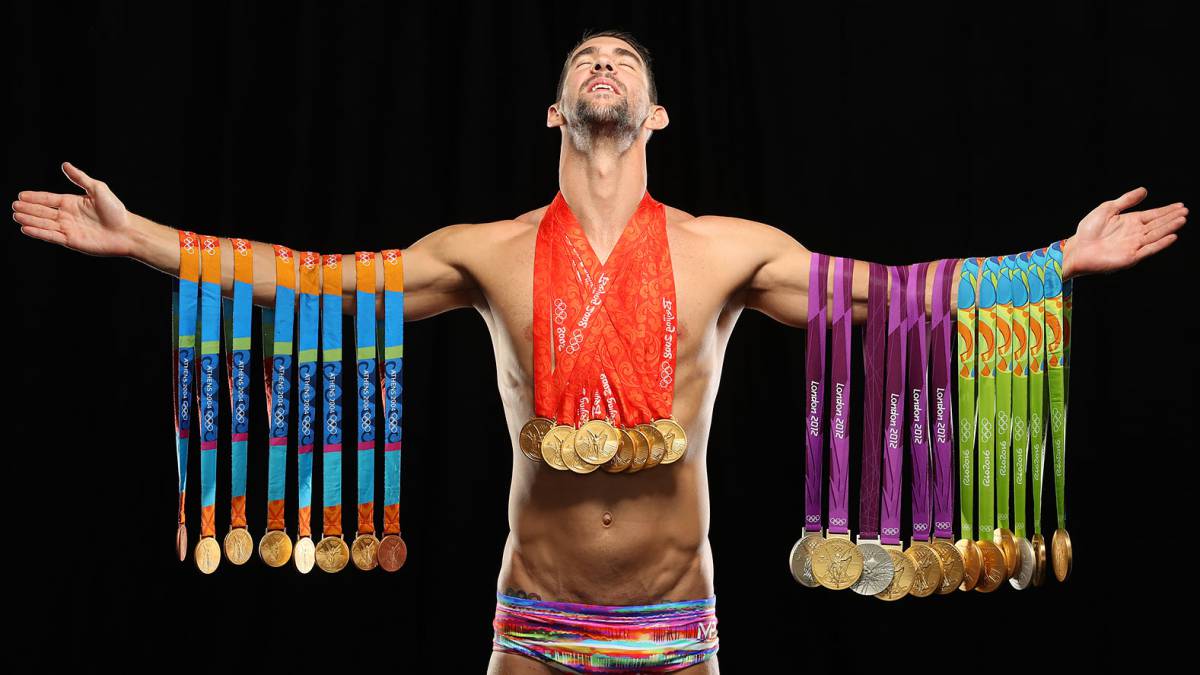
Phelps retired for good after the 2016 Olympics, moving to Arizona, where he is raising 4 sons and coaching swimming at Arizona State University. His 23 gold medals are more than double the total for any other Olympian ever, and his 28 total medals are 10 more than any other Olympian. He had the most total medals at 4 different Olympics, the only athlete ever to do that, and his 8 golds in a single Olympics is still the standard as well. He is the greatest Olympian of all time.



Saturday, October 24, 2026

Top 150 Olympic Athletes: #22 - Mark Spitz


Mark Spitz

USA

Swimming


Overall Ranks

#6 among American Olympians

#4 among Male American Olympians

#2 among Swimmers


Olympic Results

1968

100m Freestyle - Bronze

4x100m Freestyle Relay - Gold

4x200m Freestyle Relay - Gold

100m Butterfly - Silver

1972

100m Freestyle - Gold

200m Freestyle - Gold

4x100m Freestyle Relay - Gold

4x200m Freestyle Relay - Gold

100m Butterfly - Gold

200m Butterfly - Gold

4x100m Medley Relay - Gold

Total

Events - 12

Gold - 9

Silver - 1

Bronze - 1


Mark Andrew Spitz was born on February 10, 1950 in Modesto, California, and moved with his family to Honolulu as a small child, where he learned to swim in the ocean. They returned to California when he was 6, and by the time he was 9, he was training to become a competitive swimmer. He set his first world record at age 17 in the 400m freestyle.

By the next year, he held 10 world records, and predicted that he would win 6 gold medals at that year's Olympics in Mexico City. He started out in the 4x100m relay, where he would race third. The USA started strong, with a lead of almost a second after the first leg, which ballooned to 2.5 seconds at the midway point. Spitz pushed the lead to 2.7 seconds, and the final swimmer coasted home to win by 2.5 seconds and give the USA the gold, and Spitz his first.

His second event was the 100m Freestyle, and he started out well, winning his initial heat to advance to the semifinal. In that round, he came in second, behind Mike Wenden of Australia, who tied the Olympic record with his time. In the final, Wenden was even better, breaking the world record, while Spitz only managed to finish in 3rd place, earning a bronze, and ending his quest for 6 golds.

His next event was the 100m Butterfly, where he was the world record holder. He started off the race well, holding the lead at the turn, but on the back half, teammate Doug Russell pulled ahead of Spitz and beat him to the wall by half a second, setting an Olympic record in the process, and leaving Spitz with a silver medal.

He swam in the 4x200m relay final on the same day, also swimming the third leg. The US was slightly behind East Germany after the initial leg, but Steve Rerych gave them a big lead of 2.5 seconds by the time Spitz went into the pool. He swam the slowest leg of the team, but still held the lead at 1.7 seconds when Don Schollander jumped in for the anchor, and he was able to hold the lead as well, giving them a 1.4 second win over the Soviet Union for Spitz' second gold in Mexico City.

His final event ended up being the 200m butterfly, as he was left off the medley relay team after losing in the 100m butterfly. Whether from fatigue or disappointment, Spitz had a terrible race, falling behind early and staying in last place throughout the final, finishing nearly 5 seconds after the winner. He had managed to win 4 medals in Mexico City, but it was far below what he had expected.

After the 1968 Olympics, Spitz decided to attend college at the University of Indiana, where his Olympic coach worked. While there, he won 8 NCAA titles, and rebuilt his confidence in preparation for the 1972 Olympics, where he again set a goal to win 6 gold medals.

He started out competing in the 200m butterfly, where he had set 8 world records in the past 5 years. He had the fastest time in the prelim by far, and never gave anyone else a chance in the final, leading by 0.81 seconds at the first turn, and extending that lead throughout, finishing 2.16 seconds ahead of Gary Hall for the gold medal and a new world record.

40 minutes later, he swam the anchor leg in the 4x100m relay. The B team had already broken the world record in the prelim round, and now they were racing with a stronger team. The Soviets held a slight lead after the first leg, but the USA pulled slightly ahead by midway. The lead was over 2.5 seconds when Spitz got his turn, and he swam a great leg to break the world record by more than 2 seconds, while winning the gold medal by 3.3 seconds.

His third event, the 200m freestyle, was the next day. He went out fast in this one, hoping to pull away from the field, but held a lead of only 0.12 seconds at the first turn, and was passed on the second lap by Steve Genter, also of the USA, who held a small lead over Spitz through the final turn. At that point, Spitz turned it on, and he ended up beating Genter by almost a full second, while setting another world record, his third in just two days.

Two days later, he swam in the 100m butterfly final, where he had set the last 7 world records, including 2 at the Olympic Trials a month earlier. It was more of the same in the final, with Spitz going out very fast, and coming home in world record time again, beating the silver medalist by 1.29 seconds in a short race.

His fifth event was just an hour later, where he would swim anchor in the 4x200m relay. The USA was pretty much considered unbeatable in this event, and they lived up to expectations. They were slightly behind the home team, West Germany, at the midway point, but Genter swam an amazing third leg to give the USA a lead of more than 4 seconds before Spitz had to swim. He swam a solid leg, and extended the lead to 5.91 seconds by the end, earning his 5th gold medal of the games, all in world record times.

His next event was the 100m freestyle, which was his weakest event, and he even considered skipping the event to avoid missing out on a perfect Olympics, as he was confident in the medley relay that was coming the next day, but he decided to race anyway. He took off quickly again, hoping to put distance between himself and Jerry Heidenreich, his chief opposition, and it worked, as he had a lead of 0.36 seconds at the turn, and was able to hold off a charge at the end to win gold by 0.43 seconds, again setting a world record.

He finished up his Olympics with the 4x100m medley relay final, where he swam the third leg, the butterfly. East Germany led after the backstroke by over 1.5 seconds, but that was no surprise, as they had the best in the world at that stroke. The USA caught up and took the lead after the breaststroke by 0.13 seconds, and then Spitz put it away in his leg, extending the lead to 2.21 seconds. Heidenreich swam the freestyle to finish it off, and he pushed the lead clear out to 3.96 seconds by the end, and Spitz had his 7th gold medal, every one of them in world record time.

The following day was the Munich Massacre, where 2 Israeli athletes were killed and several more taken hostage by Palestinian militants, so Spitz, who is Jewish, was escorted to London overnight for his protection. He retired soon after his historic Olympic performance, despite being only 22 years old. He briefly attempted a comeback in 1991, but it was more of a publicity stunt, and he did not qualify for the 1992 games.

Even though his first Olympics were somewhat of a disappointment, he did win 4 medals as an 18-year-old, which is no small feat. His performance is Munich is one of the greatest single performances by an athlete in a single Olympics in history, and was enough alone to put him on this list, but when adding together his full career, including 9 total gold medals, he is obviously one of the greatest Olympians of all time.


Tuesday, October 20, 2026

Top 150 Olympic Athletes: #25 - Ryan Lochte


Ryan Lochte

USA

Swimming


Overall Ranks

#7 among American Olympians

#5 among Male American Olympians

#3 among Swimmers


Olympic Results

2004

4x200m Freestyle Relay - Gold

200m Individual Medley - Silver

2008

4x200m Freestyle Relay - Gold

200m Backstroke - Gold

200m Individual Medley - Bronze

400m Individual Medley - Bronze

2012

4x100m Freestyle Relay - Silver

4x200m Freestyle Relay - Gold

200m Backstroke - Bronze

200m Individual Medley - Silver

400m Individual Medley - Gold

2016

4x200m Freestyle Relay - Gold

Total

Events - 14

Gold - 6

Silver - 3

Bronze - 3


Ryan Steven Lochte was born on August 3, 1984 in Rochester, New York, to a father who was a swimming coach, and when Ryan was in junior high school, he started seriously trying to be the best swimmer he could. After graduating from high school in 2002, he attended the University of Florida.

He qualified for his first Olympics in 2004 after coming in second to Michael Phelps in the 200m Individual Medley at the Olympic Trials. He started out by competing in the 4x200m relay, where he swam the second leg in both rounds. Phelps led off the final, giving the Americans a full second lead over Australia, the defending champs, and Lochte held off a charge from Italy to keep a lead of 0.39 seconds after his leg. Peter Vanderkaay stretched the lead to over a second after leg 3, but Ian Thorpe made a huge push in the anchor leg, nearly making the comeback, but America held on to win by 0.13 seconds, getting Lochte his first gold medal.

He made the final in the 200m Individual Medley after coming in a second behind Phelps in the semifinal, but Phelps was even better in the final, setting a new Olympic record, while Lochte was in a group of 3 more than 1.5 seconds behind that touched the wall almost simultaneously. As it turned out, Lochte took the silver by 0.02 seconds over George Bovell of Trinidad and Tobago, while Laszlo Cseh Jr. of Hungary missed a medal by 0.04 seconds.

At the 2007 World Championships, he won 2 golds and 3 silvers as he prepared for another Olympic run. He qualified for 3 individual events and a relay in Beijing, starting out with the 400m individual medley, where he was expected to challenge Phelps. That wouldn't happen, as Phelps beat his own world record by almost 1.5 seconds, and Lochte finished more than 4 seconds behind, taking the bronze medal behind Phelps and Cseh.

In the 4x200m relay, the B team set a new Olympic record in the heats, then were replaced in the final by Lochte and the stars, who were expected to break the world record. Phelps gave them a lead of over 2.5 seconds on the first leg, then Lochte stretched it to almost 4. The lead was over 5 seconds when the final swimmer jumped in, and they finished 5.14 seconds ahead of Russia, and broke the world record by nearly 4.5 seconds.

Next was the 200m Backstroke, where Aaron Peirsol was the defending champ, but Lochte was the defending world champ. At the Olympic trials, Peirsol had beaten Lochte and broken his world record, so this one was expected to be a tough battle. In the final, Arkady Vyatchanin of Russia took an early lead and held it through 150m, with Lochte and Peirsol tied at the final turn, but Vyatchanin faded down the stretch, and Lochte pulled ahead of both to win the gold medal and break the world record by 0.38 seconds.

He finished up in Beijing with the 200m Individual Medley. Many felt that Phelps was in danger of tiring out, but in the final, he set another world record and won the event by more than 2 seconds. Lochte was in third place for most of the race, behind Cseh, but fell to 4th at the final turn, but he turned in a strong finish, and ended up coming in third to take the bronze medal, just 0.02 seconds behind Cseh.

At the 2009 World Championships, he won 4 golds and a bronze, but lost his backstroke world record back to Peirsol, who has held it ever since. He won 5 golds and a bronze in 2011, and qualified to swim in 6 events in 2012 in London. 

He started out in London with the 400m individual medley, where Phelps was the 2-time defending champ, but Lochte was the favorite, thanks to his defeats of Phelps at the world championships and the Olympic Trials. In the final, Chad le Clos of South Africa led at the first turn, just ahead of Lochte and Phelps, but Lochte took the lead by the end of the butterfly, then proceeded to pull away for the rest of the race, winning by 3.58 seconds in the second-fastest time in history to take the gold medal.

The next day he swam the anchor leg in the 4x100m relay, his first time competing in that event. The USA had a slight lead after the first leg, which Phelps extended to 0.76 seconds at the midway point. The lead was still half a second when Lochte started, but Yannick Agnel of France swam the fastest leg of the competition and caught and passed Lochte, leaving the Americans a silver medal.

His next event was the 200m freestyle, where he was the defending world champion and the favorite to win, but Agnel had different ideas. He led from the start, and finished 1.79 seconds ahead of anyone else, while Lochte fell from 2nd to 4th on the final lap, missing out on a medal for the first time in his Olympic career.

One day later, he swam the opening leg in the final of the 4x200m relay, where the USA had won 2 straight golds. He gave the Americans a lead of 0.98 seconds after the opening leg, and the next two swimmers stretched it to almost 4 seconds for Phelps, who easily brought it home for a gold medal by 3.07 seconds over France.

Next was the 200m backstroke, where he was the defending champ, and the favorite after Peirsol's retirement in 2010. He led through the final turn, but Ryosuke Irie of Japan and Tyler Clary of the USA were just behind him, and both were able to pass him on the final lap, with Clary setting a new Olympic record in winning gold, while Lochte took a disappointing bronze.

He finished up 30 minutes later in the 200m individual medley, where he was the defending world champion, but Phelps was going for a third straight gold. Phelps had a tiny lead over Lochte after the butterfly, Phelps' specialty, but pulled further ahead on the backstroke, which was Lochte's best stroke usually. He held on to the lead through the breaststroke, then held on as Lochte made a late charge in the freestyle, but fell 0.63 seconds short, and had to settle for silver.

By 2016, he was starting to age, but still qualified to compete in 2 events in Rio. The first was the 4x200m relay, which they had won 3 straight times, and they led the entire way in this one. Lochte swam the third leg, and was given a 2 second lead, and he kept that lead at 1.76 seconds when Phelps took the anchor leg, where he stretched it to 2.47 seconds to win the event for the 4th straight time.

He finished up with the 200m individual medley, where Phelps was the 3-time defending Olympic champ, while Lochte was the 4-time defending world champ. Lochte held a 0.01 second lead over Phelps after the backstroke, but faded after that, finishing in 5th place, the worst of his Olympic career in his final race.

During those Olympics, Lochte claimed that he and some teammates had been robbed at a gas station in Rio, but when more details came out, it turns out that the Americans had actually drunkenly vandalized the restroom at the gas station. Two years later, he received a 14-month suspension for taking a banned substance. He attempted to make the 2020 Olympic team, and reached several finals at the Olympic trials, but ultimately failed to qualify and retired from competitive swimming.

Though he was largely overshadowed by Phelps throughout his career, and won 4 of his gold medals in relays with Phelps, Lochte was a legitimately great swimmer in his own right. He set a world record in winning his backstroke gold, and won his individual medley gold very convincingly. His 12 total medals are the third-most ever for a swimmer behind only Phelps and Ledecky, making him one of the greatest Olympians of all time.


Friday, October 16, 2026

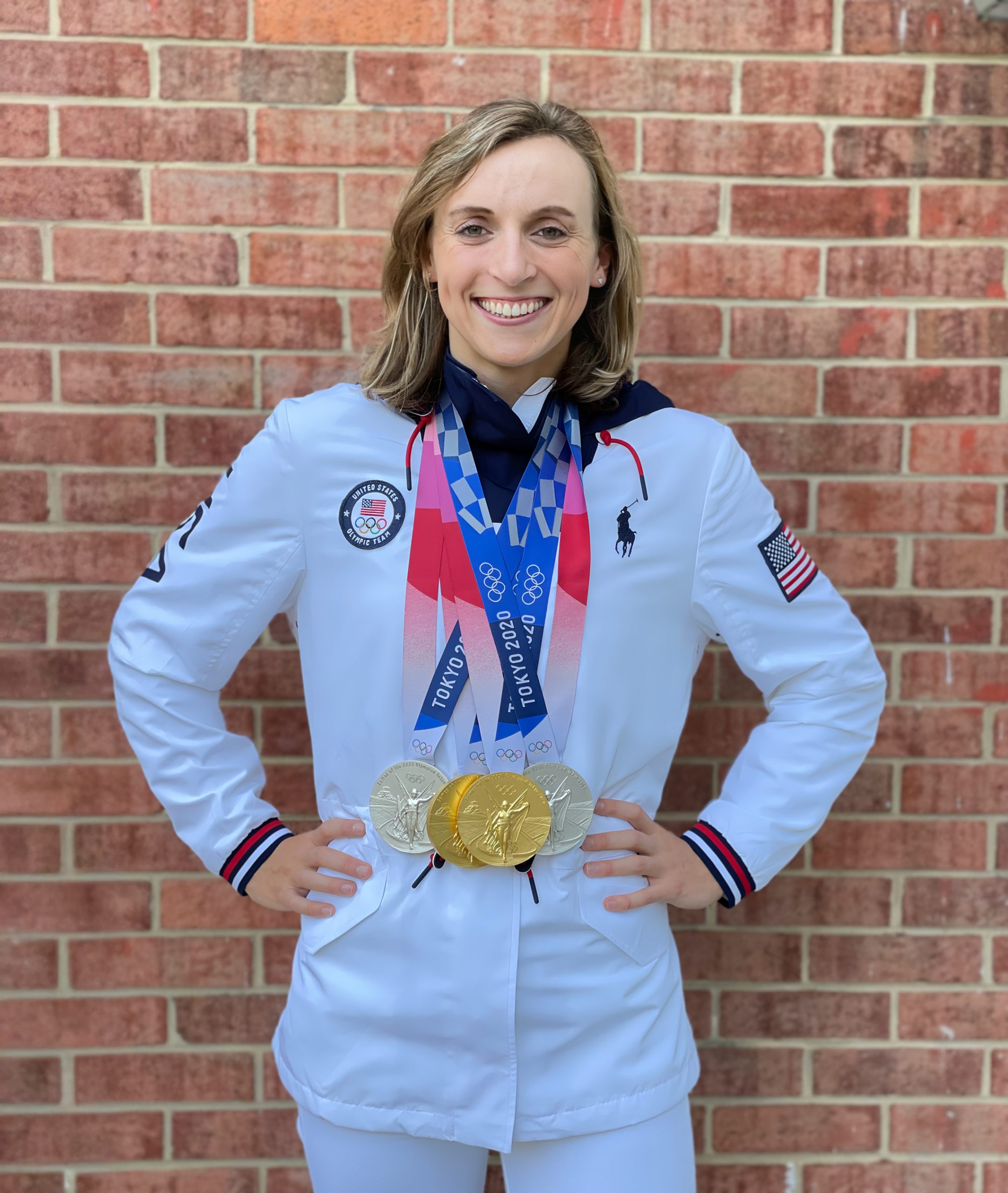
Top 150 Olympic Athletes: #29 - Katie Ledecky


Katie Ledecky

USA

Swimming


Overall Ranks

#9 among American Olympians

#4 among Swimmers

#3 among Female American Olympians

#1 among Female Swimmers


Olympic Results

2012

800m Freestyle - Gold

2016

200m Freestyle - Gold

400m Freestyle - Gold

800m Freestyle - Gold

4x100m Freestyle Relay - Silver

4x200m Freestyle Relay - Gold

2020

400m Freestyle - Silver

800m Freestyle - Gold

1500m Freestyle - Gold

4x200m Freestyle Relay - Silver

2024

400m Freestyle - Bronze

800m Freestyle - Gold

1500m Freestyle - Gold

4x200m Freestyle Relay - Silver

Total

Events - 15

Gold - 9

Silver - 4

Bronze - 1


Kathleen Genevieve Ledecky was born on March 17, 1997 in Washington, DC, and was raised in nearby Bethesda, Maryland. Her mother was a swimmer in college, and Katie started when she was 6. Her first senior competition was the 2012 US Olympic Trials, where she made the Olympic team by winning the 800m freestyle by more than 2 seconds.

She went to the London Olympics as a relative unknown, and was not considered likely to win. Becky Adlington, the British world record holder and defending champion, was expected to win again. Ledecky had the third-fastest time in qualifying, but she absolutely dominated the final, taking the lead right away, and increasing it until she couldn't be caught, before coasting in for the victory. She ended up just 0.53 seconds short of the world record, and won the event by 4.13 seconds, giving her a dominant gold medal at just 15 years of age.

The next year, she dominated the world championships, winning gold in all 4 of her events, and setting world records in each of her three individual events, the 400m, 800m, and 1500m, all before her junior year of high school. In 2015, she won gold medals in 5 events, the same 4 from 2013, plus the 200m, and she also set new world records in the two longest events again.

By the time she arrived in Rio in 2016, she was already recognized as one of the greatest swimmers in the world. She was competing in 5 events, with the first being the 4x100m freestyle relay. Australia was the big favorite in this event, and even with Ledecky swimming the anchor leg, the Americans weren't able to keep up, losing by 1.2 seconds, but still managing to take the silver medal.

Her first individual event was the 400m freestyle, where she was a massive favorite. She had the fastest time in qualifying by over 4 seconds, and was even better in the final, winning by almost 5 seconds and breaking her own world record by nearly two seconds to win her first gold in Rio.

Her next event was the 200m freestyle, which was the one where she was most vulnerable. She won her first heat, but came in second in her semifinal to Sarah Sjostrom of Sweden, who was expected to be her top challenger entering the event. In the final, she was in 5th at the first turn, but closed the gap and was nearly tied at the halfway point. She took the lead soon afterward, and held on as Sjostrom made a strong final push, but Ledecky still won by 0.35 seconds to take another gold medal.

The next event was the 4x200m freestyle relay, where the USA was a big favorite, with the past 2 Olympic champions on the team, but it didn't turn out to be easy. Sweden was ahead of them by 0.01 seconds at the first exchange, but both were passed by Australia on the second leg, with America still in second, now by 0.31 seconds. That deficit increased to 0.89 seconds by the time that Ledecky entered the pool as the anchor, but she swam the fastest leg of the competition by nearly a full second, and by the end she was nearly 2 seconds ahead of the Australian swimmer and had her third straight gold.

She finished up with the 800m, her strongest event. She won her heat by more than 6.5 seconds, in a time that was nowhere near her best. In the final, she put it out of reach almost immediately, leading by over 2 seconds after just 100m, then increasing her lead after every split, leading to her eventual win by 11.38 seconds, the second-largest margin in the history of the event. She also broke her world record again by almost 2 seconds, and now owned the 12 fastest times in the history of the event.

After the Olympics, she enrolled in college at Stanford, where she had no trouble with the competition, setting 12 NCAA records as a freshman. In 2017, she won 5 golds and a silver at the world championships, falling only in the 200m. She set 3 more NCAA records as a sophomore, then decided to turn pro, skipping her final 2 years. At the 2019 World Championships, she was sick and dropped out of most of her events, but still managed to win the 800m freestyle. She graduated from Stanford in 2020 with a degree in psychology.

She competed in 5 events again at the 2020 Tokyo Olympics in 2021, this time adding the new 1500m freestyle, while dropping the 4x100m relay, which was never her specialty. She started with the 400m freestyle, where Ariarne Titmus of Australia was expected to challenge her, and she did. Ledecky took the lead early in the final, and held it through 300m, but Titmus was always close behind, and pulled ahead before 350m, then had a strong finish to beat Ledecky by 0.67 seconds, the first individual Olympic loss of Ledecky's career, but still a silver medal and her second-fastest time ever.

Next was the 200m freestyle, her shortest event, and Titmus was the favorite in this one, as Ledecky was generally better at the longer distances. Ledecky had the best time in the prelim, and third-best in the semi, but was no match for Titmus in the final, and ended up coming in 5th, more than 1.5 seconds behind the gold medal time. It was the first, and so far only, time in Ledecky's career that she failed to win an Olympic medal.

Just over an hour later, she was competing in the 1500m final, the first time the event had been held in the Olympics. She had the 23 fastest times in history at that point, and even though she didn't attempt to beat her world record time, she had a comfortable lead for the entire race, and won by just over 4 seconds to win her first gold in Tokyo.

Next up, in the 4x200m relay, Ledecky was hoping for a repeat of her 2016 performance, but China's team was too strong. The Americans were nearly 2 seconds behind after the first leg, and remained around that point through the next two legs as well, leaving Ledecky a tough chore as the anchor. She again swam the fastest leg of anyone in the event, good enough to pass Australia for silver medal position, but she came up 0.4 seconds short of catching up to China, and had to settle for second this time.

She finished up with the 800m freestyle, where she was the 2-time defending champion, but this time Titmus was expected to challenge her. Ledecky ended up leading the entire race, with Titmus keeping herself in contention most of the way, but Ledecky never let her catch up, and won the race by 1.26 seconds, and the pair finished more than 4.5 seconds ahead of anyone else. This made Ledecky the first swimmer ever to win a distance event 3 times, and made her both the youngest and oldest winner of the event ever.

At the 2022 World Championships, she was back to form, winning gold in all 4 of her events. In 2023, it was 2 golds and 2 silvers in the same events, losing in the relay and the 400m, with Titmus winning that one. She qualified to swim in her 4th Olympics in Paris in 2024, this time competing in just 4 events.

Her first event was the 400m freestyle, where she had lost in 2021, but was still one of the top competitors. Titmus was back, and they were joined by Summer McIntosh of Canada, who had broken the world record the year before. In the final, Titmus took off fast, and by the halfway point, Ledecky was too far behind to catch up. McIntosh kept close for a while, but eventually fell back, and Titmus won the gold easily, with Ledecky finishing in third and winning her first-ever Olympic bronze.

Next was the 1500m, where she was the best ever by far. She easily qualified for the final, then easily beat her Olympic record from Toyko in the final, posting the 8th-best time in history and winning the event by over 10 seconds. That medal was the 12th of her career, which tied her for the most ever by a female swimmer.

She swam in the 4x200m relay next, this time being assigned the third leg. Australia jumped out to a big lead early, and was never really challenged, but Ledecky was able to erase a full second deficit to China during her leg to put the Americans in second place, which they held through the final leg to win the silver medal.

Her final event was the 800m, where she was the 3-time defending champ, but she had lost a race in the event for the first time ever just a few months earlier. In the final, Titmus again attempted to challenger her, keeping it close through the first 500m, but then she fell off the pace, and Ledecky pulled away to win the event for the 4th straight time at the Olympics, making her one of only 6 athletes to ever win the same individual event 4 times in a row.

Ledecky won 2 more gold medals at the 2025 World Championships, and earlier this year swam the second-fastest time ever in the 1500m, and has her eye on competing in her 5th Olympics in Los Angeles in 2028. Though it seems like she has been around forever, she is still only 29 years old, and is already one of the greatest Olympians of all time, and who knows how much higher she may climb.


Wednesday, September 30, 2026

Top 150 Olympic Athletes: #45 - Don Schollander


Don Schollander

USA

Swimming


Overall Ranks

#14 among American Olympians

#10 among Male American Olympians

#5 among Swimmers

#4 among Male Swimmers


Olympic Results

1964

100m Freestyle - Gold

400m Freestyle - Gold

4x100m Freestyle Relay - Gold

4x200m Freestyle Relay - Gold

1968

200m Freestyle - Silver

4x100m Freestyle Relay - Gold*

4x200m Freestyle Relay - Gold

4x100m Medley Relay - Gold*

Total

Events - 8

Gold - 7*

Silver - 1

*Medals weren't awarded to swimmers who only competed in heats of relays at the time


Donald Arthur Schollander was born on April 30, 1946 in Charlotte, North Carolina, where his uncle taught him to swim, before the family moved to Lake Oswego, Oregon. He originally wanted to play football, but was too small to make the team, so he joined the swim team instead, winning the state championship as a freshman.

When he was 18, he qualified for the American Olympic team in 4 events. His first event was the 100m Freestyle, and he was considered one of the favorites despite his age. He won both of his heats to advance to the final, where fellow American Mike Austin led at the midway point. Schollander took the lead right after the turn, then gave himself a solid lead before he was nearly caught by Bobby McGregor of Great Britain at the end. Schollander still ended up winning by 0.1 seconds, and his time was also a new Olympic record.

His next event was the 4x100m freestyle relay, which was being contested for the first time in the Olympics, and the Americans were big favorites. Steve Clark started them out by tying the world record on the first leg, and by the time Schollander jumped in on the anchor leg, their lead was 4.6 seconds, and Schollander only needed to swim a decent time to win, which he did, while the team set a new world record in the event.

Up next was the 400m, where he had recently broken the world record, so he was again favored to win. He actually trailed by 0.1 seconds after the first 100m, but pulled ahead slightly by the halfway point. He was still slightly ahead at the 300m mark, but then he turned on the jets, and by the end of the race, he had won by 2.7 seconds, and set another world record.

His final event was the 4x200m freestyle relay, where there was no doubt that the Americans would win. They were ahead by a full second after the first leg, then 3.5 seconds at the midway point. The lead was nearly 5 seconds before Schollander entered the pool on the anchor leg, and he extended the lead to 7.2 seconds by the end, destroying the old world record. Previously, no team had ever beaten 8 minutes in the event, but the Americans new record was 7:52.1. Schollander also became the first swimmer ever to win 4 golds in the same Olympics.

He wasn't able to train quite as much in the ensuing years, as he came down with mononucleosis, and later the Asian flu, which sapped his energy somewhat. He still made the Olympic team for 1968, where he would again compete in 4 events. His first was the 4x100m freestyle relay, where he swam anchor in the heats, giving America the best time of the round, before being replaced in the final, where America won easily. At the time, you weren't awarded a medal if you only competed in the heats, so he wasn't given a gold medal, but under today's rules, it would have been his 5th gold medal.

Next was the 4x200m freestyle relay, he was chosen to swim the anchor leg in the final. They were slightly behind East Germany after the first leg, but had pulled far ahead at the midway point. Mark Spitz kept the lead at 1.7 seconds before giving it to Schollander, who also kept the lead, giving America the gold by 1.4 seconds.

His next event was the 200m freestyle, which was his best event, but had not been contested in the Olympics before. He had set the world record 9 times over the past few years, most recently at the Olympic trials, so he was expected to win easily. Mike Wenden of Australia took a lead of 0.7 seconds in the first half of the race, then Schollander closed the gap somewhat during the next section, but Wenden closed it out down the stretch, upsetting Schollander by 0.6 seconds and setting a new Olympic record, while Schollander won his first-ever silver.

His final event was the 4x100m medley relay, where he again swam only in the initial heat. He swam the anchor leg, and the Americans had the best time, and then they went on to win gold by more than 2 seconds in the final leg with a different team of swimmers, meaning Schollander wasn't awarded a gold because of the old rules.

He retired after the 1968 Olympics, having already been inducted into the Hall of Fame 3 years earlier. He later wrote a couple of books about swimming, and eventually started a real estate development company. In his Olympic career, he swam in 8 events, and was only beaten once. Being the first swimmer to win 4 golds was huge, and helped make him one of the greatest Olympians of all time.


Tuesday, September 29, 2026

Top 150 Olympic Athletes: #46 - Ian Thorpe


Ian Thorpe

Australia

Swimming


Overall Ranks

#6 among Swimmers

#5 among Male Swimmers

#1 among Australian Olympians


Olympic Results

2000

200m Freestyle - Silver

400m Freestyle - Gold

4x100m Freestyle Relay - Gold

4x200m Freestyle Relay - Gold

4x100m Medley Relay - Silver

2004

100m Freestyle - Bronze

200m Freestyle - Gold

400m Freestyle - Gold

4x200m Freestyle Relay - Silver

Total

Events - 10

Gold - 5

Silver - 3

Bronze - 1


Ian James Thorpe was born on October 13, 1982 in Milperra, Australia, and began swimming at age 5. By the time he was 13, he was winning youth championships and trying out for the Olympic team, which didn't happen at that point, but it gave him good experience. 2 years later, at age 15, he won the 400m freestyle at the World Championships, and expectations were huge for his first Olympics at home in Sydney.

He was just 17 in his first Olympic appearance, but he was also the favorite, as the defending world champion in the 400m. He had the fastest time in the heats to advance to the final, where he took the lead by more than a second at the first turn, and kept extending his lead throughout the race, which he won in world record time, nearly 3 seconds ahead of his nearest competitor, to start off his Olympic career with a gold medal.

He swam in the final of the 4x100m Freestyle relay that same night, and the USA was the favorite, as they nearly always won this race, but the Aussies were expected to challenge them. Michael Klim of Australia broke the world record in the first leg, but in both the second and third legs, the USA caught up by the midpoint, then lost the lead to Australia before the end. Thorpe swam the anchor leg, starting with a lead of only 0.25 seconds, which Gary Hall Jr quickly overcame, but Thorpe chased him down in the final stretch and won the race by 0.19 seconds, again in world record time.

His third event was the 200m freestyle, where he was the world record holder, but in the semifinal round, Pieter van den Hoogenband of the Netherlands broke his world record. Thorpe nearly matched it in his semi a few minutes later, falling 0.02 seconds short, and they were set for a showdown in the final. Three swimmers broke away early in the final, and Thorpe was in third but only down by 0.06 seconds at the first turn, then closed it to 0.05 seconds at the halfway point, and by the final turn, he and Hoogenband were tied, but Hoogenband turned it up on the homestretch, and finished in a tie with his earlier world record, while Thorpe ended up with the silver medal, 0.48 seconds behind.

Next up was the 4x200m freestyle relay, where Thorpe swam leadoff in the final. He pretty much put the race out of reach on his own, giving his team a lead of 3.5 seconds after the first leg, and they were never challenged, beating the USA by 5.59 seconds and setting yet another world record in the process, earning Thorpe his third gold of the games.

Thorpe also swam the freestyle leg in the heats of the 4x100m medley relay, which they won to advance to the final, but he was replaced by Klim in the final, where the Australians lost by 1.54 seconds to the Americans, leaving Thorpe with a second silver to finish off his first Olympic games.

The next year, he won 6 gold medals at the World Championships, 4 of them coming in world record time. He switched coaches in 2002, then won 5 medals at the 2003 World Championships, but only 3 of them were gold, and none of them were world records. He was still among the best in the world, but appeared to have fallen off somewhat.

He was still considered the top 400m swimmer in the world heading into the 2004 Olympics, but he false started at the Olympic trials, meaning he wouldn't get to compete, but one of the other swimmers gave up his spot to allow Thorpe to swim the event in Athens. In the Olympic final, Grant Hackett of Australia and Klete Keller of the USA both held the lead over Thorpe during the first half of the race, but by the midway point, Thorpe had pulled ahead of them both, and he kept the lead the rest of the way, although Hackett made a strong push toward the end. He won by 0.26 seconds, giving him a repeat gold medal.

In the 4x100m relay, Australia was missing one of their best swimmers due to illness, and another had just returned from injury, so when Thorpe jumped in on the anchor leg, they were in 6th place, and with no chance of winning, he didn't push too hard, keeping that spot at the finish.

The 200m was expected to be a great race, with Thorpe and Hoogenband coming back after their showdown in Sydney, this time with a new challenger named Michael Phelps to worry about. Hoogenband took off at a blistering pace, and was ahead of world record pace up to the final turn, but he was already starting to fade by that point, and Thorpe pulled ahead early in the homestretch and brought it home for a gold medal in Olympic record time, while Phelps nearly caught Hoogenband for the silver.

Next, the Aussies tried to defend their 4x200m freestyle relay gold medal, with Thorpe again swimming the anchor leg. Phelps swam first for the USA, giving them a full second lead, which was up to nearly 1.5 seconds when Thorpe jumped in. He swam the fastest time of the event by more than a second, but it wasn't quite enough, as the USA held on to win by 0.13 seconds, leaving Australia with the silver.

His final event in Athens was the 100m, which was not usually his strongest event. He qualified for the final, but was in a distant 6th place at the turn, but a strong second half helped him move up and narrowly grab the bronze medal, his ninth overall Olympic medal.

Thorpe took a break after the 2004 Olympics, returning late in 2005, but after a couple of disappointing meets, he retired in 2006. He came out of retirement in 2011, hoping to qualify for the 2012 Olympics, but failed to make the team. He planned to keep competing, but a shoulder injury kept him out of major competitions, and by 2014 he had permanently retired.

He only competed in the Olympic Games twice, both when he was 21 years or younger, but he medaled in 9 of his 10 events, with 5 gold medals, all of which broke either world or Olympic records. His career may have been short, but he was great in nearly every race he swam, making him one of the greatest Olympians of all time.


Saturday, September 26, 2026

Top 150 Olympic Athletes: #49 - Caeleb Dressel


Caeleb Dressel

USA

Swimming


Overall Ranks

#16 among American Olympians

#12 among Male American Olympians

#7 among Swimmers

#6 among American Swimmers

#6 among Male Swimmers

#5 among Male American Swimmers


Olympic Results

2016

4x100m Freestyle Relay - Gold

4x100m Medley Relay - Gold

2020

50m Freestyle - Gold

100m Freestyle - Gold

4x100m Freestyle Relay - Gold

100m Butterfly - Gold

4x100m Medley Relay - Gold

2024

4x100m Freestyle Relay - Gold

4x100m Mixed Medley Relay - Gold

4x100m Medley Relay - Silver

Total

Events - 14

Gold - 9

Silver - 1


Caeleb Remel Dressel was born on August 16, 1996 in Green Cove Springs, Florida, into a family of swimmers. He learned to swim at age 4, and by age 8 was swimming competitively while training daily. He competed in the 2012 Olympic Trials when he was just 15 years old, but wasn't close to making the team, but he made it a goal to get there by 2016.

The following year, he earned 6 medals at the World Junior Championships, then began attending the University of Florida the next year, and when the 2016 Olympic Trials came around, he placed 2nd in the 100m freestyle, which earned him a spot on the team, where he was also included on 2 relay teams.

In the 4x100m Freestyle Relay, the French were the favorites, as they were defending world and Olympic champions. In the final, Dressel swam the first leg, and finished just .02 seconds behind the French swimmer to put the USA in a great spot. The next swimmer was Michael Phelps, who gave the Americans a lead of more than a second, which the French were able to cut in half, but never overcome, and the USA ended up winning by 0.61 seconds, earning Dressel his first gold medal.

In the 100m Freestyle, Dressel finished just behind Kyle Chalmers of Australia in his first heat, then came in third in his semifinal, but still qualified through to the final. In that race, he was in third place at the turn, but slowed down a bit on the back half, and ended up finishing in 6th place. He also swam the freestyle anchor leg in the heats of the 4x100m Medley relay, which the USA won to advance to the final, where a new set of swimmers won the gold by over a second, getting Dressel his second gold at just 19 years of age.

In the NCAA Championships the next year, he won 3 golds and 2 silvers, and then won 7 gold medals in the World Championships the same year. He followed that up with 6 golds and 2 silvers in 2019, and he looked primed for a breakthrough in the 2020 Olympics, which ended up being postponed by a year. 

His first event in Tokyo was the 4x100m Freestyle relay. The held him out until the finals to preserve his energy, as he was competing in 6 events, and he swam the first leg of the final, finishing with a lead of 0.26 seconds, which remained steady through the next two legs, before Zach Apple pulled away on the final leg to give the Americans a win by 1.14 seconds, and Dressel his third gold medal.

In the 100m Freestyle, he was a co-favorite with defending champion Kyle Chalmers, and in the semifinal round, he had the second-fastest time, giving him one of the prime lanes for the final. He had a great start, and led by 0.1 seconds at the turn, but Chalmers came charging from third place on the back half, and nearly caught him, but Dressel was slightly too fast for him, winning by 0.06 seconds to set a new Olympic record and win another gold medal.

His next event was the 100m Butterfly, where he put on a show. In the preliminary heat, he tied the Olympic record with a time of 50.39 seconds, they destroyed that in the semifinal with a new record of 49.71 seconds. In the final, he took a huge lead early, leading by 0.65 seconds at the turn, then he cruised to the finish in a time of 49.45 seconds, which was a new world record.

His next event was the final of the mixed 4x100m Medley relay, where he swam the anchor freestyle leg. Ryan Murphy was tied for the lead on the opening leg, but the next two Americans were much slower, and they had fallen to last place by the time Dressel entered the water. He swam the fastest split in the freestyle, but it was only enough to get them up to 5th, as he was 8 seconds behind at the start.

He next swam in the 50m freestyle, where he was the favorite, and he didn't disappoint. He had the best time in each of the first two rounds, and even after a slow reaction time in the final, he took the lead quickly, and pulled away from the field, winning by 0.48 seconds and setting a new Olympic record while also getting his 4th gold medal of the games.

His final event was the 4x100m medley relay, where he swam the third leg, the butterfly. Ryan Murphy again gave the USA the lead after the first leg, but they dropped back to third after the breaststroke, which is when Dressel jumped in. He was the fastest swimmer in his leg by far, and gave a lead of 0.6 seconds to the anchor, who brought home the gold by 0.73 seconds, and set a new world record by more than a full second. It was Dressel's fifth gold medal in Tokyo, and 7th overall.

He won 2 gold medals in the 2022 World Championships before withdrawing from his other events for medical reasons, but he still performed well enough in the Olympic trials to make his third straight Olympic team, competing in 5 events. 

His first event in Paris was again the 4x100m relay, where he swam the anchor leg in the final, but he really wasn't needed. The Americans were second after the first leg, behind China by 0.75 seconds, but they had a lead of nearly half a second at the midway point, which exploded to more than 2 seconds before Dressel entered the water. He swam a very controlled leg to bring home the gold by more than a second over Australia.

Because he was just returning from more than a year off dealing with injuries, people were unsure how he would perform in his first individual event, the 50m freestyle, where he was the defending champ. He made it to the final, but in that race, the two leaders had pulled away from the pack, while the other 6 were all practically even to the end, all finishing within 0.08 seconds of each other, and after it was all reviewed, Dressel ended up being the 6th to touch the wall.

He then swam in the 100m Butterfly, but came in 5th in his semifinal and failed to make the final for the first time in his Olympic career. He then swam in the prelim of the 4x100m mixed medley relay, where the USA won its heat to advance to the final, where they won gold narrowly over China, which earned Dressel his 9th overall gold medal.

His final event was the 4x100m medley relay, where he swam the butterfly third leg in the final. The Americans had never lost this event when they had competed, but they were in 4th place when Dressel entered the pool. He swam the fastest butterfly leg, moving the Americans up to 2nd place, just 0.03 seconds behind France, but the Chinese anchor swam an insanely fast final leg to jump from third to first and beat the Americans by 0.55 seconds, giving Dressel his first-ever silver medal.

Dressel is still actively swimming and hopes to qualify for his 4th Olympic games in 2028 in Los Angeles, but whether he makes that team or not, he has already shown his greatness by winning 9 gold medals in the past decade, which makes him one of the greatest Olympians of all time.


Monday, September 7, 2026

Top 150 Olympic Athletes: #68 - Jenny Thompson


Jenny Thompson

USA

Swimming


Overall Ranks

#22 among American Olympians

#8 among Swimmers

#7 among Female American Olympians

#7 among American Swimmers

#2 among Female American Swimmers


Olympic Results

1992

100m freestyle - Silver

4x100m freestyle relay - Gold

4x100m medley relay - Gold

1996

4x100m freestyle relay - Gold

4x200m freestyle relay - Gold

4x100m medley relay - Gold

2000

100m freestyle - Bronze

4x100m freestyle relay - Gold

4x200m freestyle relay - Gold

4x100m medley relay - Gold

2004

4x100m freestyle relay - Silver

4x100m medley relay - Silver

Total

Events - 17

Gold - 8

Silver - 3

Bronze - 1


Jennifer Beth Thompson was born on February 26, 1973 in Danvers, Massachusetts, and began swimming when she was 7 years old. At age 13, she moved to Dover, New Hampshire for training, and by the time she was 19, she held the world record in both the 50m and 100m freestyle races, just in time for the Barcelona Olympics.

Going into the 100m race in 1992, she was the favorite going into the event, thanks to her world record at the Olympic trials. In the prelim, she set a new Olympic record of 54.69 seconds, but in the final Zhuang Yong of China took the lead early and was able to hold off Thompson clear to the end, winning by 0.2 seconds and beating Thompson's new Olympic record, while leaving her with the silver medal.

She next competed in the 200m freestyle, and she was able to qualify for the B final, but decided not to race in order to focus on other events where she could win a medal. The next day, she swam the anchor leg in the 4x100m freestyle relay final. China took the lead on the first leg behind a great split from Zhuang, with the USA in third, but Dara Torres pulled them into second after her leg. When Thompson entered the pool, China was still ahead, but it was close. Thompson went out and swam the fastest relay leg in history to bring home the gold medal for the Americans, who finished 0.66 seconds ahead of China.

Next up was the 4x100m Medley Relay, where she again swam the freestyle anchor leg in the final. Germany and the Unified Team kept it close through the first half of the race, but the USA pulled away during the butterfly, and then Thompson swam the third-fastest split of all time to bring home another gold in world record time.

Her final event in Barcelona was the 50m, where she was also the world record holder. She won her prelim heat, but in the final, she came in 5th place, which was a major disappointment, but she still left her first Olympics with 2 golds and a silver.

In 1996, she failed to qualify for any of the individual events, but was still added to the Olympic team to compete in relays. In the 4x100m freestyle relay, she again had the honor of swimming the anchor leg in the final, and after Amy Van Dyken gave the USA the lead on the second leg, Thompson put it away at the end, giving the Americans the gold medal by more than a second over China.

In the 4x100m medley relay, Thompson swam the butterfly leg in the prelim, in which America had the bets time, and then they went on to win gold in the final without Thompson, instead using gold medalist Angel Martino in that slot. She also swam the anchor leg in the 4x200m relay final, where she was given a 1.5 second lead, which she held through the finish, as the Americans won the gold medal in world record time, beating the world record set in the prelim by 4.5 seconds.

Over the next three years, she won 3 straight world championships in the 100m freestyle, so she went to Sydney in 2000 expecting big things. She started again with the 4x100m freestyle relay, where she swam the anchor in the final, and stretched a 1.8 second lead to 3.2 seconds to set another Olympic record and win another relay gold.

She then swam in the 100m butterfly, and she won both of her heats to qualify for the final, but in the final, she was never really in contention, finishing 5th, more than 2 seconds behind the winner. She then swam anchor in the 4x200m freestyle relay, and the Americans trailed for most of the final, before Thompson pulled ahead of Australia at the final turn, and ended up winning by 0.7 seconds, again setting an Olympic record.

Next up was the 100m freestyle, where she was 3-time defending world champion, but she came in second in the semifinal round behind eventual gold medalist Inge de Bruijn, and ended up finishing in a tie for 3rd with Dara Torres of the USA for the bronze medal. In the 4x100m medley relay, she swam the butterfly leg in the final, and all 4 Americans had the fastest split for their stroke, and they easily beat Australia by over 3 seconds and set a world record.

She retired after the Olympics to pursue a medical degree, but decided to begin training again in 2002 for a possible Olympic return, and she ended up making the team. For the 4th straight Olympics, she swam the anchor leg in the final of the 4x100m freestyle, but unlike the last three times, she was passed on the final stretch by Jodie Henry of Australia, and the USA had to settle for a silver medal.

She qualified for the final in both the 100m butterfly and the 50m freestyle, but she ended up finishing 5th in the fly and 7th in the freestyle, ending her quest for an individual Olympic gold. She also swam the butterfly leg in the 4x100m medley relay final, where she was again passed during her leg, and the Americans finished with another silver medal. 

She retired again after the Olympics to return to finish medical school, graduating in 2006, and she has worked since then as a pediatric anesthesiologist. Even though she never won individual gold in the Olympics, her 8 gold medals in the relays are a record, and only 1 behind Katie Ledecky for the most golds for an American woman, making her one of the greatest Olympians of all time.


Monday, July 13, 2026

Top 150 Olympic Athletes: #124 - Matt Biondi


Matt Biondi

USA

Swimming


Overall Ranks

#36 among American Olympians

#9 among Swimmers

#8 among American Swimmers

#7 among Male Swimmers

#6 among American Male Swimmers


Olympic Results

1984

4x100 Freestyle Relay - Gold

1988

50m Freestyle - Gold

100m Freestyle - Gold

200m Freestyle - Bronze

4x100m Freestyle Relay - Gold

4x200 Freestyle Relay - Gold

100m Butterfly - Silver

4x100m Medley Relay - Gold

1992

50m Freestyle - Silver

4x100m Freestyle Relay - Gold

4x100 Medley Relay - Gold

Total

Events - 12

Gold - 8

Silver - 2

Bronze - 1


Matthew Nicholas Biondi was born on October 8, 1965 in Moraga, California, and began swimming at a young age. He was a standout swimmer and water polo player in high school, and earned a scholarship for both to Cal. 

As a freshman, he helped Cal win the national water polo title, but was not as successful in his races, only earning a medal in a relay, but he surprised everyone by finishing 4th in the 100m at the US Olympic Trials, which earned him a spot on the relay team in Los Angeles. He swam the 3rd leg of the 4x100 freestyle relay, and entered the pool just slightly behind Australia for the lead, but by the time he handed it off to anchor Rowdy Gaines, the USA was ahead by 0.4 seconds, and they ended up winning by 0.65 seconds and set a new world record.

Buoyed by his performance at the Olympics, Biondi went on a run over the next 3 years, winning every NCAA freestyle sprint title but one in that span, plus all of the freestyle relays, for a total of 14 NCAA titles. He also set numerous world records, becoming the first man to swim 100m in less than 49 seconds, and at one point he held the top 10 times of all time in that event. Heading into the 1988 Olympics, he qualified for 7 events, attempting to match Mark Spitz's record of 7 golds from the 1972 Olympics.

His dream of 7 gold medals didn't last long. His first event was the 200m freestyle, and he led the final through the final turn, but didn't have as much left in the tank as Duncan Armstrong of Australia, who sprinted out of third at the turn to win in world record time, with Biondi falling to bronze. In his next event, the 100m butterfly, he led the entire race, but was passed on the final stroke by Anthony Nesty of Suriname, losing by .01 seconds, the closest margin possible, leaving him with a silver.

Later that day, he swam the anchor leg of the 4x200 freestyle relay, entering the pool nearly a full second behind East Germany, but he quickly made up the difference, taking the lead before he was halfway done, and he ended up more than a second ahead after swimming the fastest relay split in history, while also setting a team world record in the event.

The next day was the 100m freestyle, his best event, and he finally won his first individual gold medal by setting a new Olympic record of 48.63 seconds, which was just short of his own world record from the Olympic trials. The next day he swam an even faster 100m as the anchor in the 4x100m freestyle relay, and the USA beat the USSR by nearly 2 seconds as they set another world record.

Next up was the 50m freestyle, where Biondi was a former world record holder, but he was facing the current record holder, Tom Jager, also American, in the final. Biondi got a great start off the blocks, and led the entire way across the pool, setting another world record of 22.14 in winning his 4th straight gold of the games.

The next day he finished off his Olympic run with the 4x100 medley relay, swimming the butterfly third leg. The US was a huge favorite in this one, and they lived up to it, winning by more than 2 seconds and setting yet another world record, the 4th Biondi was a part of in Seoul. Even though he didn't get his 7 golds, he did win 7 medals, a huge accomplishment.

He returned for one final hurrah in 1992, qualifying in 4 events for Barcelona. He started out with the 100m, his signature event, and led at the turn, but swam one of the slowest back halves of his career coming back, and he fell to 5th, the first time he had ever failed to medal in the Olympics.

He made up for it the next day in the 4x100m freestyle relay final, where he swam the second leg. The US was in 4th place after the first swimmer, but Biondi passed the field to give them a lead of more than half a second at the midway point, and they never gave up the lead, finishing nearly a second ahead of the Unified Team for gold, just short of their world record from 4 years earlier.

The 50m freestyle was supposed to be a rematch between Biondi and Jager, the only 2 swimmers to hold the world record in the past 7 years, but Aleksandr Popov of the Unified Team surprised everyone by winning the event, after he had also pulled off an upset in the 100m. Biondi still came in second ahead of Jager, but had to settle for the silver. The next day he swam the anchor leg in the 4x100 medley relay heat, which qualified the USA for the final, where he was replaced by Jon Olsen, and the USA went on to win another gold in world record time, giving Biondi his 8th gold medal overall.

He retired right after the 1992 Olympics, having won 11 medals in 12 events, 8 of them gold, though 6 of the golds came in relays. He later went on to become a math teacher and swimming coach. He made a valiant attempt at winning 7 events in Seoul, and even though he didn't quite get there, his impressive haul over 3 Olympics makes him one of the greatest Olympians of all time.


Wednesday, June 24, 2026

Top 150 Olympic Athletes: #143 - Amy Van Dyken


Amy Van Dyken

USA

Swimming


Overall Rankings

#43 among American Olympians

#10 among Swimmers

#9 among American Swimmers

#3 among Female Swimmers


Olympic Results

1996

50m Freestyle - Gold

4x100m Freestyle Relay - Gold

100m Butterfly - Gold

4x100m Medley Relay - Gold

2000

4x100m Freestyle Relay - Gold

4x100m Medley Relay - Gold

Total

Events - 8

Gold - 6


Amy Deloris Van Dyken was born on February 15, 1973 in Englewood, Colorado, and attempted to make the Olympic team right out of high school, but fell just short of making the team for the 1992 Olympics in the 50m Freestyle.

In 1994, she set a national record in the 50 yard freestyle at the NCAA Championships, and also took second place in two other events. In 1995 she broke the world record in the 50m butterfly, which had stood for nearly 3 years, but she held it for only 12 days before it was broken by Angela Kennedy of Australia.

She easily made the 1996 Olympic team, and after finishing in a close 4th place in her first event, she rattled off 4 consecutive gold medals, beginning with the 4x100m relay, where she swam the fastest leg as the USA beat China by more than a second. She followed that with an upset over the favored Liu Limin in the 100m Butterfly, which she won by one hundredth of a second.

Next, she swam the anchor freestyle leg in the 4x100m Medley Relay, starting out with a full second lead and extending it to more than two seconds by the time she finished. Her final event was the 50m Freestyle, where she came from behind in the final 5 meters to overtake Le Jingyi to win by 3 hundredths of a second. That win made her the first American woman ever to win 4 gold medals in a single Olympics.

She suffered a shoulder injury not long after her Olympic breakthrough, and multiple surgeries caused her to lose more than a year of training, but she worked hard to make it back and earned a spot on the 2000 Olympic team.

She started off with the 4x100m freestyle relay, where she swam the leadoff leg. She had the USA in second place behind Australia at the handoff, but each of her 3 teammates swam faster times as the Americans set a new Olympic record and won by more than 3 seconds. In the 4x100m Medley Relay, she swam the anchor leg in the heat round, which qualified the Americans for the final, where Dara Torres took the freestyle leg and the USA set a World Record and again won by more than 3 seconds. 

In her final event, the 50m Freestyle, she caused some controversy in the semifinal heat when she finished second to eventual champion Inge de Bruijn, then spit in her opponents lane and accused her of being a man, which, unfortunately, is the same kind of crap that we still hear today from sore losers. She ended up finishing in 4th place in the final, just short of another medal.

She retired after the 2000 Olympics, and afterward has spent time competing in triathlons, coaching high school swimming, and hosting radio shows. She was in a serious ATV accident in 2014, which left her temporarily paralyzed, but she was able walk again after several months of rehab. Based on her performance in the pool, where she earned 6 gold medals and two 4th place finishes in her 8 events, she is obviously one of the greatest Olympians of all time.