Showing posts with label 2012 Olympics. Show all posts

Tuesday, October 20, 2026

Top 150 Olympic Athletes: #25 - Ryan Lochte


Ryan Lochte

USA

Swimming


Overall Ranks

#7 among American Olympians

#5 among Male American Olympians

#3 among Swimmers


Olympic Results

2004

4x200m Freestyle Relay - Gold

200m Individual Medley - Silver

2008

4x200m Freestyle Relay - Gold

200m Backstroke - Gold

200m Individual Medley - Bronze

400m Individual Medley - Bronze

2012

4x100m Freestyle Relay - Silver

4x200m Freestyle Relay - Gold

200m Backstroke - Bronze

200m Individual Medley - Silver

400m Individual Medley - Gold

2016

4x200m Freestyle Relay - Gold

Total

Events - 14

Gold - 6

Silver - 3

Bronze - 3


Ryan Steven Lochte was born on August 3, 1984 in Rochester, New York, to a father who was a swimming coach, and when Ryan was in junior high school, he started seriously trying to be the best swimmer he could. After graduating from high school in 2002, he attended the University of Florida.

He qualified for his first Olympics in 2004 after coming in second to Michael Phelps in the 200m Individual Medley at the Olympic Trials. He started out by competing in the 4x200m relay, where he swam the second leg in both rounds. Phelps led off the final, giving the Americans a full second lead over Australia, the defending champs, and Lochte held off a charge from Italy to keep a lead of 0.39 seconds after his leg. Peter Vanderkaay stretched the lead to over a second after leg 3, but Ian Thorpe made a huge push in the anchor leg, nearly making the comeback, but America held on to win by 0.13 seconds, getting Lochte his first gold medal.

He made the final in the 200m Individual Medley after coming in a second behind Phelps in the semifinal, but Phelps was even better in the final, setting a new Olympic record, while Lochte was in a group of 3 more than 1.5 seconds behind that touched the wall almost simultaneously. As it turned out, Lochte took the silver by 0.02 seconds over George Bovell of Trinidad and Tobago, while Laszlo Cseh Jr. of Hungary missed a medal by 0.04 seconds.

At the 2007 World Championships, he won 2 golds and 3 silvers as he prepared for another Olympic run. He qualified for 3 individual events and a relay in Beijing, starting out with the 400m individual medley, where he was expected to challenge Phelps. That wouldn't happen, as Phelps beat his own world record by almost 1.5 seconds, and Lochte finished more than 4 seconds behind, taking the bronze medal behind Phelps and Cseh.

In the 4x200m relay, the B team set a new Olympic record in the heats, then were replaced in the final by Lochte and the stars, who were expected to break the world record. Phelps gave them a lead of over 2.5 seconds on the first leg, then Lochte stretched it to almost 4. The lead was over 5 seconds when the final swimmer jumped in, and they finished 5.14 seconds ahead of Russia, and broke the world record by nearly 4.5 seconds.

Next was the 200m Backstroke, where Aaron Peirsol was the defending champ, but Lochte was the defending world champ. At the Olympic trials, Peirsol had beaten Lochte and broken his world record, so this one was expected to be a tough battle. In the final, Arkady Vyatchanin of Russia took an early lead and held it through 150m, with Lochte and Peirsol tied at the final turn, but Vyatchanin faded down the stretch, and Lochte pulled ahead of both to win the gold medal and break the world record by 0.38 seconds.

He finished up in Beijing with the 200m Individual Medley. Many felt that Phelps was in danger of tiring out, but in the final, he set another world record and won the event by more than 2 seconds. Lochte was in third place for most of the race, behind Cseh, but fell to 4th at the final turn, but he turned in a strong finish, and ended up coming in third to take the bronze medal, just 0.02 seconds behind Cseh.

At the 2009 World Championships, he won 4 golds and a bronze, but lost his backstroke world record back to Peirsol, who has held it ever since. He won 5 golds and a bronze in 2011, and qualified to swim in 6 events in 2012 in London. 

He started out in London with the 400m individual medley, where Phelps was the 2-time defending champ, but Lochte was the favorite, thanks to his defeats of Phelps at the world championships and the Olympic Trials. In the final, Chad le Clos of South Africa led at the first turn, just ahead of Lochte and Phelps, but Lochte took the lead by the end of the butterfly, then proceeded to pull away for the rest of the race, winning by 3.58 seconds in the second-fastest time in history to take the gold medal.

The next day he swam the anchor leg in the 4x100m relay, his first time competing in that event. The USA had a slight lead after the first leg, which Phelps extended to 0.76 seconds at the midway point. The lead was still half a second when Lochte started, but Yannick Agnel of France swam the fastest leg of the competition and caught and passed Lochte, leaving the Americans a silver medal.

His next event was the 200m freestyle, where he was the defending world champion and the favorite to win, but Agnel had different ideas. He led from the start, and finished 1.79 seconds ahead of anyone else, while Lochte fell from 2nd to 4th on the final lap, missing out on a medal for the first time in his Olympic career.

One day later, he swam the opening leg in the final of the 4x200m relay, where the USA had won 2 straight golds. He gave the Americans a lead of 0.98 seconds after the opening leg, and the next two swimmers stretched it to almost 4 seconds for Phelps, who easily brought it home for a gold medal by 3.07 seconds over France.

Next was the 200m backstroke, where he was the defending champ, and the favorite after Peirsol's retirement in 2010. He led through the final turn, but Ryosuke Irie of Japan and Tyler Clary of the USA were just behind him, and both were able to pass him on the final lap, with Clary setting a new Olympic record in winning gold, while Lochte took a disappointing bronze.

He finished up 30 minutes later in the 200m individual medley, where he was the defending world champion, but Phelps was going for a third straight gold. Phelps had a tiny lead over Lochte after the butterfly, Phelps' specialty, but pulled further ahead on the backstroke, which was Lochte's best stroke usually. He held on to the lead through the breaststroke, then held on as Lochte made a late charge in the freestyle, but fell 0.63 seconds short, and had to settle for silver.

By 2016, he was starting to age, but still qualified to compete in 2 events in Rio. The first was the 4x200m relay, which they had won 3 straight times, and they led the entire way in this one. Lochte swam the third leg, and was given a 2 second lead, and he kept that lead at 1.76 seconds when Phelps took the anchor leg, where he stretched it to 2.47 seconds to win the event for the 4th straight time.

He finished up with the 200m individual medley, where Phelps was the 3-time defending Olympic champ, while Lochte was the 4-time defending world champ. Lochte held a 0.01 second lead over Phelps after the backstroke, but faded after that, finishing in 5th place, the worst of his Olympic career in his final race.

During those Olympics, Lochte claimed that he and some teammates had been robbed at a gas station in Rio, but when more details came out, it turns out that the Americans had actually drunkenly vandalized the restroom at the gas station. Two years later, he received a 14-month suspension for taking a banned substance. He attempted to make the 2020 Olympic team, and reached several finals at the Olympic trials, but ultimately failed to qualify and retired from competitive swimming.

Though he was largely overshadowed by Phelps throughout his career, and won 4 of his gold medals in relays with Phelps, Lochte was a legitimately great swimmer in his own right. He set a world record in winning his backstroke gold, and won his individual medley gold very convincingly. His 12 total medals are the third-most ever for a swimmer behind only Phelps and Ledecky, making him one of the greatest Olympians of all time.


Friday, October 16, 2026

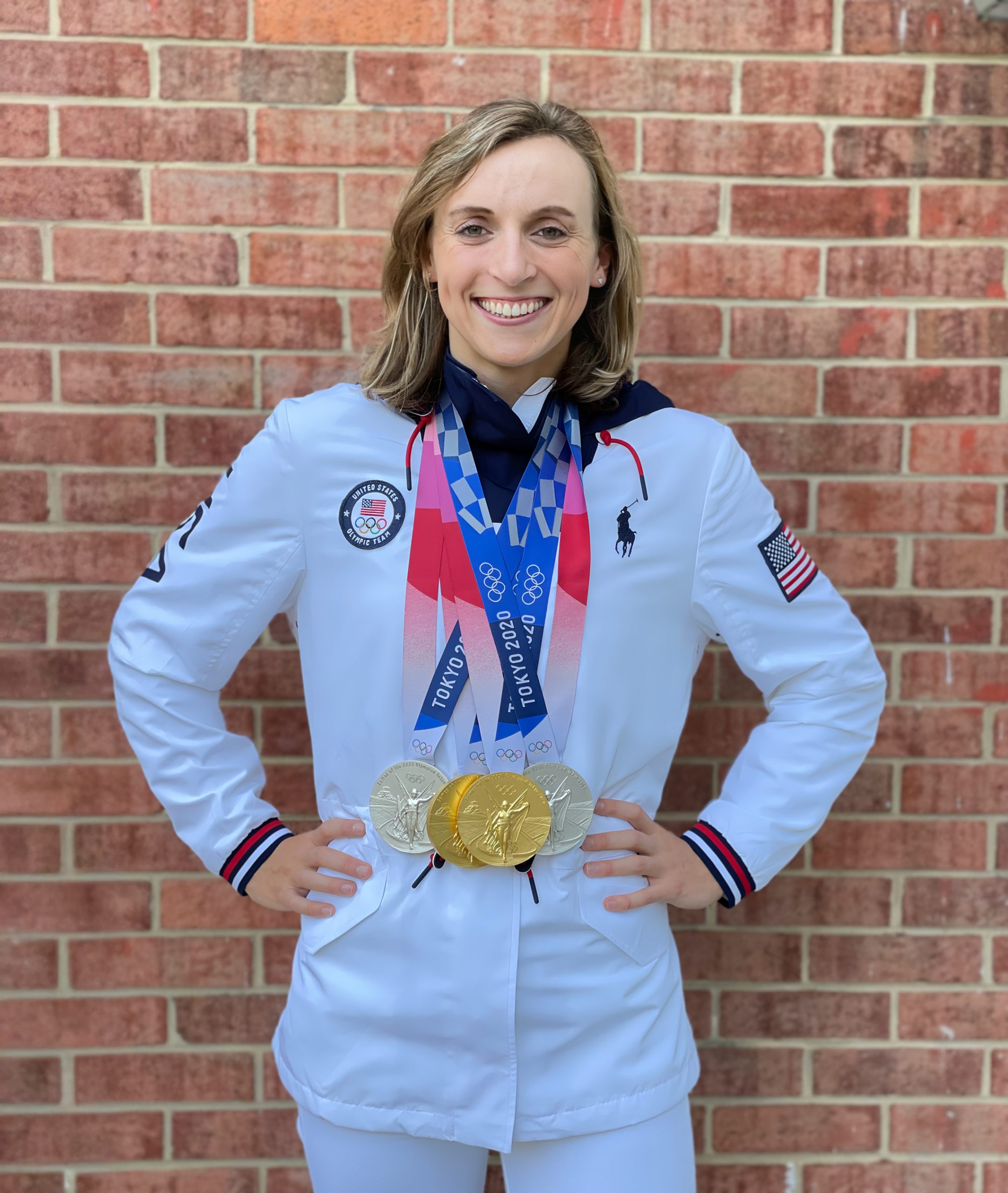
Top 150 Olympic Athletes: #29 - Katie Ledecky


Katie Ledecky

USA

Swimming


Overall Ranks

#9 among American Olympians

#4 among Swimmers

#3 among Female American Olympians

#1 among Female Swimmers


Olympic Results

2012

800m Freestyle - Gold

2016

200m Freestyle - Gold

400m Freestyle - Gold

800m Freestyle - Gold

4x100m Freestyle Relay - Silver

4x200m Freestyle Relay - Gold

2020

400m Freestyle - Silver

800m Freestyle - Gold

1500m Freestyle - Gold

4x200m Freestyle Relay - Silver

2024

400m Freestyle - Bronze

800m Freestyle - Gold

1500m Freestyle - Gold

4x200m Freestyle Relay - Silver

Total

Events - 15

Gold - 9

Silver - 4

Bronze - 1


Kathleen Genevieve Ledecky was born on March 17, 1997 in Washington, DC, and was raised in nearby Bethesda, Maryland. Her mother was a swimmer in college, and Katie started when she was 6. Her first senior competition was the 2012 US Olympic Trials, where she made the Olympic team by winning the 800m freestyle by more than 2 seconds.

She went to the London Olympics as a relative unknown, and was not considered likely to win. Becky Adlington, the British world record holder and defending champion, was expected to win again. Ledecky had the third-fastest time in qualifying, but she absolutely dominated the final, taking the lead right away, and increasing it until she couldn't be caught, before coasting in for the victory. She ended up just 0.53 seconds short of the world record, and won the event by 4.13 seconds, giving her a dominant gold medal at just 15 years of age.

The next year, she dominated the world championships, winning gold in all 4 of her events, and setting world records in each of her three individual events, the 400m, 800m, and 1500m, all before her junior year of high school. In 2015, she won gold medals in 5 events, the same 4 from 2013, plus the 200m, and she also set new world records in the two longest events again.

By the time she arrived in Rio in 2016, she was already recognized as one of the greatest swimmers in the world. She was competing in 5 events, with the first being the 4x100m freestyle relay. Australia was the big favorite in this event, and even with Ledecky swimming the anchor leg, the Americans weren't able to keep up, losing by 1.2 seconds, but still managing to take the silver medal.

Her first individual event was the 400m freestyle, where she was a massive favorite. She had the fastest time in qualifying by over 4 seconds, and was even better in the final, winning by almost 5 seconds and breaking her own world record by nearly two seconds to win her first gold in Rio.

Her next event was the 200m freestyle, which was the one where she was most vulnerable. She won her first heat, but came in second in her semifinal to Sarah Sjostrom of Sweden, who was expected to be her top challenger entering the event. In the final, she was in 5th at the first turn, but closed the gap and was nearly tied at the halfway point. She took the lead soon afterward, and held on as Sjostrom made a strong final push, but Ledecky still won by 0.35 seconds to take another gold medal.

The next event was the 4x200m freestyle relay, where the USA was a big favorite, with the past 2 Olympic champions on the team, but it didn't turn out to be easy. Sweden was ahead of them by 0.01 seconds at the first exchange, but both were passed by Australia on the second leg, with America still in second, now by 0.31 seconds. That deficit increased to 0.89 seconds by the time that Ledecky entered the pool as the anchor, but she swam the fastest leg of the competition by nearly a full second, and by the end she was nearly 2 seconds ahead of the Australian swimmer and had her third straight gold.

She finished up with the 800m, her strongest event. She won her heat by more than 6.5 seconds, in a time that was nowhere near her best. In the final, she put it out of reach almost immediately, leading by over 2 seconds after just 100m, then increasing her lead after every split, leading to her eventual win by 11.38 seconds, the second-largest margin in the history of the event. She also broke her world record again by almost 2 seconds, and now owned the 12 fastest times in the history of the event.

After the Olympics, she enrolled in college at Stanford, where she had no trouble with the competition, setting 12 NCAA records as a freshman. In 2017, she won 5 golds and a silver at the world championships, falling only in the 200m. She set 3 more NCAA records as a sophomore, then decided to turn pro, skipping her final 2 years. At the 2019 World Championships, she was sick and dropped out of most of her events, but still managed to win the 800m freestyle. She graduated from Stanford in 2020 with a degree in psychology.

She competed in 5 events again at the 2020 Tokyo Olympics in 2021, this time adding the new 1500m freestyle, while dropping the 4x100m relay, which was never her specialty. She started with the 400m freestyle, where Ariarne Titmus of Australia was expected to challenge her, and she did. Ledecky took the lead early in the final, and held it through 300m, but Titmus was always close behind, and pulled ahead before 350m, then had a strong finish to beat Ledecky by 0.67 seconds, the first individual Olympic loss of Ledecky's career, but still a silver medal and her second-fastest time ever.

Next was the 200m freestyle, her shortest event, and Titmus was the favorite in this one, as Ledecky was generally better at the longer distances. Ledecky had the best time in the prelim, and third-best in the semi, but was no match for Titmus in the final, and ended up coming in 5th, more than 1.5 seconds behind the gold medal time. It was the first, and so far only, time in Ledecky's career that she failed to win an Olympic medal.

Just over an hour later, she was competing in the 1500m final, the first time the event had been held in the Olympics. She had the 23 fastest times in history at that point, and even though she didn't attempt to beat her world record time, she had a comfortable lead for the entire race, and won by just over 4 seconds to win her first gold in Tokyo.

Next up, in the 4x200m relay, Ledecky was hoping for a repeat of her 2016 performance, but China's team was too strong. The Americans were nearly 2 seconds behind after the first leg, and remained around that point through the next two legs as well, leaving Ledecky a tough chore as the anchor. She again swam the fastest leg of anyone in the event, good enough to pass Australia for silver medal position, but she came up 0.4 seconds short of catching up to China, and had to settle for second this time.

She finished up with the 800m freestyle, where she was the 2-time defending champion, but this time Titmus was expected to challenge her. Ledecky ended up leading the entire race, with Titmus keeping herself in contention most of the way, but Ledecky never let her catch up, and won the race by 1.26 seconds, and the pair finished more than 4.5 seconds ahead of anyone else. This made Ledecky the first swimmer ever to win a distance event 3 times, and made her both the youngest and oldest winner of the event ever.

At the 2022 World Championships, she was back to form, winning gold in all 4 of her events. In 2023, it was 2 golds and 2 silvers in the same events, losing in the relay and the 400m, with Titmus winning that one. She qualified to swim in her 4th Olympics in Paris in 2024, this time competing in just 4 events.

Her first event was the 400m freestyle, where she had lost in 2021, but was still one of the top competitors. Titmus was back, and they were joined by Summer McIntosh of Canada, who had broken the world record the year before. In the final, Titmus took off fast, and by the halfway point, Ledecky was too far behind to catch up. McIntosh kept close for a while, but eventually fell back, and Titmus won the gold easily, with Ledecky finishing in third and winning her first-ever Olympic bronze.

Next was the 1500m, where she was the best ever by far. She easily qualified for the final, then easily beat her Olympic record from Toyko in the final, posting the 8th-best time in history and winning the event by over 10 seconds. That medal was the 12th of her career, which tied her for the most ever by a female swimmer.

She swam in the 4x200m relay next, this time being assigned the third leg. Australia jumped out to a big lead early, and was never really challenged, but Ledecky was able to erase a full second deficit to China during her leg to put the Americans in second place, which they held through the final leg to win the silver medal.

Her final event was the 800m, where she was the 3-time defending champ, but she had lost a race in the event for the first time ever just a few months earlier. In the final, Titmus again attempted to challenger her, keeping it close through the first 500m, but then she fell off the pace, and Ledecky pulled away to win the event for the 4th straight time at the Olympics, making her one of only 6 athletes to ever win the same individual event 4 times in a row.

Ledecky won 2 more gold medals at the 2025 World Championships, and earlier this year swam the second-fastest time ever in the 1500m, and has her eye on competing in her 5th Olympics in Los Angeles in 2028. Though it seems like she has been around forever, she is still only 29 years old, and is already one of the greatest Olympians of all time, and who knows how much higher she may climb.


Thursday, October 15, 2026

Top 150 Olympic Athletes: #30 - Ma Long


Ma Long

China

Table Tennis


Overall Ranks

#1 among Chinese Olympians

#1 among Table Tennis Players


Olympic Results

2012

Team - Gold

2016

Individual - Gold

Team - Gold

2020

Individual - Gold

Team - Gold

2024

Team - Gold

Total

Events - 6

Gold - 6


Ma Long was born on October 20, 1988 in Anshan, China, and won the World Junior Championship singles event when he was just 15. When he was 17, he won a team gold medal in the adult World Championships, the youngest ever to win gold there. He became the #1 player in the world just after turning 21, but fell from that ranking prior to the 2012 Olympics, and was selected to play only in the team event.

China was heavily favored in the team event, so it was a bit of a surprise when Russia beat Ma and Wang Hao in a doubles match, 3 games to 2. China swept their 3 singles matches, however, including one by Ma, so they still advanced 3 matches to 1. They had no trouble with Singapore in the next round, but in the semifinal, world #1 Zhang Jike lost his match to Germany's Timo Boll, but Ma won both of his, and China advanced to the final 3-1.

In the final, they faced South Korea, and won all 3 of their matches easily, only dropping 2 games, and China won the gold medal, though they had a little more trouble than expected along the way, and Ma had the first gold medal of what would become a legendary career.

He really started to put it all together in 2015. He started winning nearly every tournament he entered, including his first singles world championship, and he moved back to #1 in the world in March, a spot he wouldn't relinquish until early 2018. As a result, he finally got a chance to compete in singles at the Olympics.

He was given a bye to the third round thanks to his #1 ranking, and he won his first match easily, 4 games to none. He fell behind 2-0 in his next match, but won the next four games in a row to advance to the quarterfinals. He pulled off another sweep there, then took a 3-0 lead in his semifinal before having to battle it out to win in 6 games. He faced Zhang in the final, and this time he didn't let up, winning in 4 straight games to win his first individual Olympic gold.

That pair was joined by Xu Xin in the team event, and this time, they didn't allow their opponents to have a chance, unlike their run 4 years earlier. They did not lose a match in their first 3 rounds, winning 27 out of 33 total games, which put them in the final against Japan. In the final, Xu lost his singles match, but China won their other 3, including two singles wins from Ma, to take the team gold.

He successfully defended his world championship twice before the next Olympics, making him an easy choice to represent China in the singles event again, even though he was only ranked #3 in the world and the country at the time. He was joined by world #1 Fan Zhendong (#73). Both got byes into the third round due to their ranking.

Ma actually lost a game in each of his first 3 matches, but came through to win each one 4 games to 1. In the semifinal, he faced Dimitrij Ovtcharov of Germany, and the match ended up taking more than an hour, as it kept going back and forth. Ma won the first two games, then Ovtcharov tied it up, Ma won the fifth game, then lost the 6th, and ended up winning 11-9 in the decisive 7th game to reach the final.

Fan had had just as much trouble in his semifinal, but he also won to make the final an All-China event once again. Ma and Fan split the first two games, but then Ma took a 3-1 lead before Fan won another to make it 3-2. In the sixth game, Ma finally got the victory with an 11-7 score to make him the first man ever to repeat as singles Olympic champion.

In the team event, they were joined again by Xu, and looked to dominate with the world's three best players, which is exactly what they did. They won every match, and lost only 7 total games in the tournament, with the win coming when Ma beat Boll 3 games to 1 in the third match of the final, which gave him his fifth Olympic gold, one more than any other table tennis player in history.

By 2024, Ma was no longer the player he had been in his youth, but was selected to compete in his 4th Olympics, this time just in the team event. Ma competed only in the doubles matches throughout the event, paired with Wang Chuqin, and the pair never lost a game on their way to the final, where China faced Sweden. The Swedish were a surprise, coming from the 7th seed to reach the final, but they put up a fight, losing all 3 matches 3-2, by far the closest China had ever come to losing the event, but it was enough for Ma to earn his unprecedented 6th gold medal.

Ma is still playing in tournaments, and even winning some, but he withdrew from the world rankings at the end of 2024, meaning that he is most likely done with Olympic competition, not that he needs to compete again. He has participated in 6 Olympic events, and won gold in all 6, two more gold medals than any other table tennis player in history, and he is the only man to win the singles title twice. He is definitely one of the greatest Olympians of all time.


Thursday, September 24, 2026

Top 150 Olympic Athletes: #51 - Serena Williams


Serena Williams

USA

Tennis


Overall Ranks

#17 among American Olympians

#5 among Female American Olympians

#1 among Tennis Players


Olympic Results

2000

Doubles - Gold

2008

Doubles - Gold

2012

Doubles - Gold

Singles - Gold

Total

Events - 7

Gold - 4


Serena Jamika Williams was born on September 26, 1981 in Saginaw, Michigan, and began playing tennis when she was 4 years old. She played in her first professional tournament when she had just turned 16, and upset two of the top 10 players in the world, Mary Pierce and Monica Seles, reaching the top 100 before the end of the year.

In 1999, she won the US Open singles and doubles titles, becoming just the 5th woman in history to do that, and she was still just 17 years old. The next year, she went to Sydney to compete in her first Olympics, but only in the doubles with her sister Venus, as only the top 3 players from each country could qualify for singles.

In the Olympic doubles tournament, the Williams sisters completely dominated, losing only one set in the entire tournament. In the gold medal match, they beat Boogert and Oremans of the Netherlands 6-1, 6-1 to cruise to the gold medal. Venus became the first woman in 76 years to win gold in both tennis events, and Serena had her first gold medal.

Between 2002 and 2003, she won all 4 Grand Slam finals in a row, defeating her sister Venus in the final in each, becoming just the 5th woman ever to hold all 4 titles at once. Late in 2003, she injured her knee, which required surgery, and ended up not qualifying for the 2004 Olympics as a result.

She battles through several other injuries in the ensuing years, but was finally healthy in time for the 2008 Olympics. She was seeded 4th in the singles event, and made it to the quarterfinals with only one set lost, but she lost to Yelena Dementyeva, the #5 seed, in that round, ending her first Olympic singles run a little early.

In the doubles, she and Venus were the #2 seeds, and they lost their very first set, before turning it around and winning the match, then winning the next 2 matches in straight sets. In the semifinal, they lost one set to the Ukrainians, but won the final set 6-1 to advance to the final, which they won 6-2, 6-0 to win their second gold medal as a pair.

By the time 2012 came around, she had reestablished herself as one of the best women's tennis players in the world, and she showed it at the Olympics. She went through the entire singles tournament without losing a set, and only giving up 17 total games in 6 matches, including a 6-1, 6-2 win over world #1 Vika Azarenka in the semifinal, and a 6-0, 6-1 demolition of Maria Sharapova in the gold medal match. It was the most dominant performance in the history of Olympic tennis.

In the doubles tournament, the Williams sisters were almost as dominant, again winning every single match without losing a set, and not a single set went to a tiebreaker, though some of them were a little closer than Serena's singles run, like their 6-4, 6-4 win in the gold medal match. Either way, it was a great performance, and the third gold medal won by the pair at the Olympics.

Between 2014 and 2015, Serena again won all 4 Grand Slam titles in a row making her the first woman ever to achieve the feat twice. She competed once more in the Olympics, in Rio in 2016, but was surprisingly upset in the third round of the singles event, and then even more shockingly knocked out in the first round of the doubles. 

She has not competed in the Olympics since, and took nearly 4 years off from tennis completely before making a return earlier this year. It's unlikely that she will qualify to compete in the Olympics again, but with the 4 gold medals she has already won, and the dominant way that she earned each of them, she has shown that she is one of the greatest Olympians of all time.


Tuesday, September 22, 2026

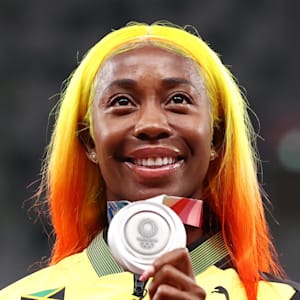
Top 150 Olympic Athletes: #53 - Shelly-Ann Fraser-Pryce


Shelly-Ann Fraser-Pryce

Jamaica

Athletics


Overall Ranks

#13 among Track & Field Athletes

#4 among Female Track & Field Athletes

#3 among Jamaican Olympians

#2 among Female Jamaican Olympians


Olympic Results

2008

100m - Gold

2012

100m - Gold

200m - Silver

4x100m Relay - Silver

2016

100m - Bronze

4x100m Relay - Silver

2020

100m - Silver

4x100m Relay - Gold

Total

Events - 11

Gold - 3

Silver - 4

Bronze - 1


Shelly-Ann Fraser was born on December 27, 1986 in Waterhouse, Jamaica, and was a good sprinter from the time she was a small girl. As a young adult, she was somewhat nervous about competing in big competitions, and wasn't super dedicated to training, but after going to the World Championships in 2007 as a relay alternate, she realized that she enjoyed the experience, and became more focused on her craft, and the results were almost immediate.

The next year, she finished second in the Jamaican Olympic trials in the 100m, earning a coveted spot on the team headed to Beijing. Once there, Fraser won each of her 3 heats to advance to the final, along with her two Jamaican teammates. In the final, Sherone Simpson of Jamaica had a slight lead on Fraser early, but Fraser pulled away in the second half to win easily by 0.2 seconds, with Simpson and Kerron Stewart of Jamaica tying for the silver medal, giving Jamaica all 3 medals, and Fraser her first gold in her first Olympic event.

With the top three 100m runners on the team, Jamaica was expected to cruise to victory in the 4x100m relay, and they had the fastest time in the semifinal heat, but in the final, after Fraser had given them the lead on the first leg, they missed the second handoff and were disqualified.

She won the 100m World Championship the next year, becoming just the second woman ever to win the two major titles in back-to-back years. The following year, she was suspended for 6 months for testing positive for oxycodone, which is not performance-enhancing, but required to be disclosed, which she failed to do. She was married in early 2011, and changed her last name to Fraser-Pryce, then spent much of the year recovering from a calf injury. 

Because of the rough couple of years she had endured, it was a bit of a surprise when Fraser-Pryce won both the 100m and the 200m at the Jamaican Olympic trials, earning her spot on the team headed to London. In the 100m, she won both of her heats to get back to the final, and she had the best start in the final, but by the halfway point, Carmelita Jeter of the USA had pulled even, and the two remained tied right through the finish, where Fraser-Pryce was able to win the gold with a lean at the line, triumphing by .03 seconds to become the third woman ever to repeat as 100m champion.

In the 200m, she won her first heat, but came in second to Sanya Richards-Ross of the USA in her semifinal, though both advanced to the final. In the final race, Allyson Felix of the USA took a slight lead by the end of the turn over Jeter, then pulled away down the stretch to win gold, while Fraser-Pryce came from behind to pass Jeter at the finish to end up with a silver medal.

Her final event in London was the 4x100m relay, which was expected to come down to Jamaica and the USA, who had the top five 100m runners between them. Fraser-Pryce gave Jamaica a small lead after her lead-off leg, but on the second leg, Felix pulled away from Simpson, and the USA had a solid lead the rest of the way, beating Jamaica by 0.59 seconds in world record time, giving Fraser-Pryce another silver medal.

She had graduated from college just before the London Olympics, and felt that she was able to focus more fully on her training after that. In 2013, she won all 3 of her events at the World Championship, the first woman ever to do that. She also became the first woman ever to own the Olympic and WC 100m titles at the same time twice. 

In early 2016, she injured her toe, which made running difficult, so she didn't run in many events, but she still was able to qualify for the Olympic team. She was attempting to become the first woman ever to win the 100m three straight times, and she won both of her heats to reach the final, but in the last race, her teammate, Elaine Thompson, got off to a better start and would not be caught, while Fraser-Pryce finished third to take the bronze medal.

She also ran the anchor leg for Jamaica in the 4x100m relay. It was again expected to be a battle between Jamaica and the USA, but the Americans held the lead the entire way, despite Jamaica's efforts to catch up on the middle legs. Fraser-Pryce was behind by a bit when she took the baton, and was unable to catch up, and Jamaica ended up 0.35 seconds behind and took another silver medal in the event.

In 2017, Fraser-Pryce gave birth to her first child via emergency C-section, which took her away from training for a long time, but she started training again 11 weeks after giving birth, and ran in her first meet in Jamaica in May 2018. By 2019, she was back to form, and even won the 100m World Championship, becoming the oldest woman ever to win the event, and the first mother to win it in 24 years.

In early 2021, she ran a new personal best in the 100m, then won the Jamaican Olympic trials in both the 100m and the 200m, despite being 34 years old. She went to Tokyo for her 4th Olympics, where she and Thompson, now Elaine Thompson-Herah, were the favorites in the 100m. Both won their heats to advance to the final, and they were even early, but Thompson-Herah maintained her top speed longer, and Fraser-Pryce finished 0.13 seconds behind to take silver, her fourth straight medal in the event, making her the first athlete ever to win four 100m medals, regardless of gender.

In the 200m, the first half went almost the same as the 100m, with an even start, followed by Thompson-Herah pulling away by the end of the turn. On the straightaway, she pulled away to win in the second-fastest time ever, while Fraser-Pryce was passed twice on the way home, finishing 0.07 seconds short of a medal in 4th place.

Jamaica had swept the medals in the 100m, making them clear favorites in the 4x100m relay. Fraser-Pryce ran the third leg, and Jamaica had the lead through the first half, though just barely ahead of the USA. Fraser-Pryce was also unable to pull away, handing off to Shericka Jackson with a tiny lead, but the USA had a rough handoff, and that enabled Jamaica to finally create some space, and they won by 0.43 seconds, finally getting Fraser-Pryce her first relay gold.

She considered retirement after the Olympics, but decided to keep competing since she had run personal bests in both of her events in 2021, and she made history again in 2022 when she won her 5th 100m World Championship, becoming the first ever to win 5, and the oldest athlete ever to win a track world championship. She suffered a knee injury in 2023, which hampered her training over the next year, but she still qualified for her 5th Olympics.

She went to Paris in 2024 to try for a fifth medal in the 100m, and she got off to a good start, leading early in her first heat, but she injured her hamstring late in the race and finished second, which advanced her to the semifinal, but she was unable to continue and withdrew from the competition.

She competed through the world championship in 2025, after which she retired at age 38. Her longevity was legendary, and she won medals at 4 straight Olympic games, finishing her career with 8 total medals, including the pair of 100m golds she won to kick off her career. She is obviously one of the greatest Olympians of all time.


Friday, September 18, 2026

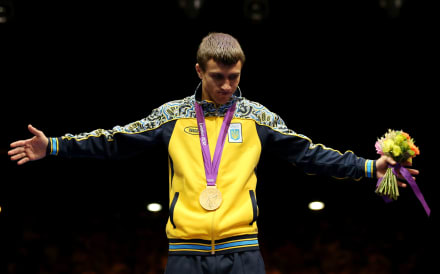
Top 150 Olympic Athletes: #57 - Vasyl Lomachenko


Vasyl Lomachenko

Ukraine

Boxing


Overall Ranks

#1 among Ukrainian Olympians

#1 among Boxers


Olympic Results

2008

Featherweight - Gold

2012

Lightweight - Gold

Total

Events - 2

Gold - 2


Vasyl Anatoliyovych Lomachenko was born on February 17, 1988 in Bilhorod-Dnistrovskyi, USSR, which is now part of Ukraine. His father was a boxing coach, but he didn't allow Vasyl to box until he had trained in dancing and gymnastics. His first major competition was the 2007 World Championships, where he made it all the way to the final before losing, in what would be the only loss of his amateur career.

He made his Olympic debut in 2008 in Beijing, fighting in the featherweight division, and because Olympic boxing does not seed its athletes, Lomachenko had his first bout against Albert Selimov of Russia, the man who had beaten him the year before. It was his closest match of the tournament, ending up with a 14-7 win to avenge his previous loss. His next three matches were all blowouts, with margins of at least 9 in each, and the gold medal match was headed that way, with a score of 9-1, when he scored a TKO to end the match. Along with his gold medal, he was named outstanding boxer of the Olympics.

He won the 2009 World Championship, then, after the featherweight division was discontinued, he moved up to lightweight and won the 2011 World Championship in his new division. He competed at lightweight in the 2012 Olympics, and after a huge win in his first bout, he had a couple of slightly closer matches, winning by 5 and 3, before a 19-9 win in the gold medal match, earning him a second straight gold, and the very rare feat of winning gold in two different weight classes. 

He turned pro in 2013, and didn't compete in the Olympics again, but compiled an 18-3 record as a pro over 11 years, and was the quickest to ever win a world title, which he achieved in his third pro fight. His second Olympic gold was very strong, but his first was legendary, with big margins in every fight, making him the greatest Olympic boxer ever, and one of the greatest Olympians of all time.


Saturday, September 12, 2026

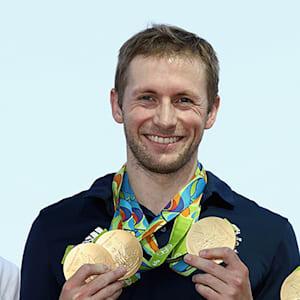
Top 150 Olympic Athletes: #63 - Jason Kenny


Jason Kenny

Great Britain

Track Cycling


Overall Ranks

#2 among British Olympians

#1 among Track Cyclists


Olympic Results

2008

Sprint - Silver

Team Sprint - Gold

2012

Sprint - Gold

Team Sprint - Gold

2016

Sprint - Gold

Keirin - Gold

Team Sprint - Gold

2020

Keirin - Gold

Team Sprint - Silver

Total

Events - 10

Gold - 7

Silver - 2


Jason Francis Kenny was born on March 23, 1988 in Bolton, England, and learned to ride a bike early like most children, then fell in love with track cycling when he was introduced to it by his uncle as a teenager. He began competing on the senior circuit in 2006, and made his first Olympic team in 2008, at the age of 20.

Kenny's first Olympic event was the team sprint, where he was the #2 racer on the British team, behind Chris Hoy (#131 in my countdown). The team beat Germany by over a second in their prelim heat, then beat the American team by over 2 seconds in the semifinal, which put them in the final round against France, who had beaten them in the most recent World Championship. Britain held the lead through the entire race, avenging their earlier loss by over half a second, and Kenny began his Olympic career with a gold medal.

His only other event in Beijing was the sprint, where Hoy was one of the favorites, and Kenny was more of an unknown. Each round before the semifinals consisted of a single winner-take-all race, but the final 3 rounds were all best-of-three. Both Kenny and Hoy won every single race on their way to an all-British showdown for gold. In the end, the favorite came through to defeat the newcomer, but Kenny still came away with an unexpected silver medal.

He was back in 2012 to compete in his home Olympics in London, and again teamed up with Hoy in the team sprint event, where they were favored to repeat as champs. The team set a new Olympic record in the first round, then a new world record in the semifinal, before breaking it again in the final against France, giving them another gold medal.

In the sprint event, Hoy was not competing, instead focusing on other events, but Kenny was still not the favorite, as Gregory Bauge of France had won the last 3 World Championships. Both Kenny and Bauge were undefeated all the way to the final, but in the final, Kenny pulled off the upset this time, winning both races against Bauge to take the gold.

In 2016, Kenny was back for more in Rio, but Hoy had retired after the London Olympics, and his space in the team sprint was filled by Callum Skinner. New Zealand was the defending world champion and the favorite, but it was Britain that set a new Olympic record in the first round, which the Kiwis broke in the semifinal, leading to a showdown for gold. New Zealand took the lead on the first lap, but Kenny was able to overtake them during his turn, after which Skinner pulled away to set another Olympic record, and give the Brits their third straight gold in the event.

In the sprint, Kenny had struggled since the previous Olympics, so he wasn't necessarily the favorite, but he set a new Olympic record in qualifying, then won all of his races up to the semifinal round, where he lost his first race to Denis Dmitriyev of Russia, then had to fight back to win two straight races to advance to the final. In the final, he faced Skinner, his new teammate, and beat him in two straight races to successfully defend his gold from London.

He also raced in the keirin for the first time in the Olympics in 2016, where Hoy had won the past two golds. He was able to reach the final after winning each of his first two heats, and in the final, he was in third place for most of the race, but when the two leaders began to fade on the final lap, Kenny came around them on the outside to beat them both to the gold, tying Hoy for the most gold medals ever for a British Olympian in the process.

Kenny came back for one final Olympic run in Tokyo, where both of his teammates in the team sprint had been replaced, and their longtime coach had left to coach the Dutch team. The Dutch ended up setting new Olympic records in all 3 rounds, while the British were able to make it to the finals, but were no match for the Netherlands, who beat them by over 3 seconds, leaving a silver for the Brits.

In the sprint, where Kenny was 2-time defending champion, he was able to win his first two races, but lost in round 3 to Dmitriyev, forcing him into the repechage pool. He won that race to advance into the quarterfinal, but there he lost again, to Harrie Lavreysen of the Netherlands, who went on to win the gold medal, while Kenny missed out on a medal for the first time in his Olympic career.

In the keirin, Kenny was back to defend his gold as well, but came in 4th in his first round heat, dropping him into the repechage. He won that heat to get back into the field in the quarterfinal, where he advanced after finishing #2 in his heat. He ran his strongest race in the semifinal to get back to the final, where he changed strategies, sprinting ahead as soon as the pace bike was removed, and the change worked, as his surprised opponents didn't follow soon enough, and Kenny was able to finish his career off with one final gold medal.

Kenny married fellow British track cyclist Laura Trott in 2016, and she is a 5-time Olympic gold medalist herself. Kenny retired after Tokyo, and now coaches the British track cycling team. His 7 gold and 9 medals overall are both British records, as well as records for cyclists, making him easily one of the greatest Olympians of all time.


Saturday, September 5, 2026

Top 150 Olympic Athletes: #70 - Yohan Blake


Yohan Blake

Jamaica

Athletics


Overall Ranks

#18 among Track & Field Athletes

#13 among Male Track & Field Athletes

#4 among Jamaican Olympians

#2 among Male Jamaican Olympians


Olympic Results

2012

100m - Silver

200m - Silver

4x100m Relay - Gold

2016

4x100m Relay - Gold

Total

Events - 8

Gold - 2

Silver - 2


Yohan Blake was born on December 26, 1989 in Saint James, Jamaica, and grew up playing cricket, but after a coach saw how fast he could run, he was encouraged to become a sprinter. In 2009, he became the youngest sprinter ever to break 10 seconds in the 100m, though his record was broken 6 months later. In 2011, he became the youngest-ever World Champion in the 100m, a record he still holds.

He made the Jamaican Olympic team in 2012 by beating Usain Bolt in the Olympic trials, and in the 100m event, he won both of his heats to advance to the final, where he was joined by Bolt, along with Tyson Gay and Justin Gatlin from the USA. Bolt was the defending Olympic champion and world record holder, while Blake was the defending world champion, but in the final, Bolt came from behind early to pass the field and finish in 9.63 seconds, while Blake finished just behind in 9.75 seconds, the fastest Olympic time ever not by Bolt, winning the silver medal.

In the 200m, Blake had also beaten Bolt in the Olympic trials, but Bolt was healthier now, and was the favorite after winning the 100m. Blake again won both of his heats to advance to the final, but Bolt ran a blistering curve and was 2 meters ahead of Blake entering the straightaway. He was not able to make up any distance, but he finished in 19.44 seconds, 0.12 behind Bolt, to win another silver medal, again in the fastest Olympic time ever not by Bolt.

The two medalists teamed up with Nesta Carter and Michael Frater in the 4x100m relay a couple of days later, and they were the favorites, with only the USA given any chance to beat them. Carter gave Jamaica a slight lead on the first leg, which Frater and Blake were able to maintain, and then Bolt took the baton and pulled away slightly to beat the Americans by 0.2 seconds to set a new world record and take home the gold.

He returned to the Olympics in 2016 in Rio, after recovering from multiple hamstring injuries since 2012, competing in the same 3 events. In the 100m, he won his prelim heat, but came in 2nd in his next heat, behind Justin Gatlin, who had won silver at the World Championships the year before, but he still reached the final. In the final, Bolt made his patented move during the middle of the race, while Blake was left chasing, and this time he finished just short of a medal, 0.02 second short of taking the bronze.

In the 200m, he had the third-fastest time in the prelim, but after finishing 6th in his semifinal race, he failed to reach the final. The Jamaicans were still heavy favorites in the 4x100m relay, and Blake was given the second leg in the final, which they won for the third straight Olympics, this time by 0.33 seconds, but not in world record time this time.

Blake returned to compete in Tokyo in 2021, but wasn't as successful this time. He advanced out of the first round of the 100m, but came in 6th in his semifinal, which kept him out of the final for the first time. He also ran in the 4x100m relay, but with Bolt retired, they were no longer favored. He ran the third leg, and they won their heat, but in the final they ended up in 4th place, falling short of a medal by 0.05 seconds.

Blake retired in 2022, and has started a new career as a track coach. Even though both of his Olympic gold medals came in relays, his two silver medals were the fastest losing times in history, and he was always in contention, which makes him one of the greatest Olympians of all time.


Friday, September 4, 2026

Top 150 Olympic Athletes: #71 - Zou Kai


Zou Kai

China

Artistic Gymnastics


Overall Ranks

#15 among Gymnasts

#9 among Male Gymnasts

#5 among Chinese Olympians

#1 among Chinese Gymnasts


Olympic Results

2008

Team - Gold

Floor Exercise - Gold

Horizontal Bar - Gold

2012

Team - Gold

Floor Exercise - Gold

Horizontal Bar - Bronze

Total

Events - 8

Gold - 5

Bronze - 1


Zou Kai was born on February 25, 1988 in Luzhou, China, and trained as a gymnast from a young age. He made his international debut at age 18 at the World Championships, where he won a gold medal in the team event. He specializes in the floor exercise and horizontal bar, rarely competing on any other apparatus.

He made the Chinese Olympic team in 2008, which took place in Beijing. The first event was the team competition, where China took first place in qualifying, having the highest score as a team on 3 of the six apparatuses. Zou was China's high scorer in his two best events. In the final, he only participated in those two parts, but he scored the highest score of anybody on both, and the Chinese team beat Japan by more than 7 points for the gold medal.

Because of those performances, he qualified for both event finals. Even with his high scores in the team event, he was not expected to medal in the floor exercise, but after falls from the two favorites, and a flawless performance with the most difficult routine, Zou won the gold medal by 0.275 points over his nearest competitor, which is a massive differential in gymnastics.

In the horizontal bar, the favorite was German Fabian Hambuchen, and Zou was not really considered a contender, but he again put on a perfect performance, scoring a 16.2, more than 0.3 ahead of Hambuchen, who finished third, with Jonathan Horton of the USA also surprising many by taking a medal. Zou became only the second Chinese Olympian ever to win 3 gold medals in a single Olympics.

In the next two World Championships, Zou showed that his performances in Beijing were not a fluke. He won silver in the floor exercise both times, and gold in the horizontal bar in each. He returned to compete in the 2012 Olympics in London, once again focusing on his two specialties.

China and Japan were considered co-favorites in the team event, but in qualifying they ended up in 6th and 5th place, respectively, which was luckily for them still enough to qualify for the final. In the final, Zou again had the highest score of any gymnast in both the horizontal bar and the floor exercise, and China was able to successfully defend their title, beating Japan by 4 points to take the gold.

He again qualified for both of his specialty finals. In the floor exercise, he and Kohei Uchimura were co-favorites, as defending Olympic champion and World champion. Zou had the slightly higher score in the qualifying round, then improved upon it in the final round, scoring a 15.933 to beat Uchimura by .133 points to win another gold medal, the fifth of his career.

In the horizontal bar, Zou was the favorite, having won the last Olympics and the past 2 World Championships. He was only in 7th after qualifying, but that was just a formality for him. In the final, he was the 4th to perform, and his routine was tied for the toughest in the competition. His execution score was high enough to put him into the lead, but Hambuchen and Epke Zonderland of the Netherlands both eclipsed his score later, leaving Zou to take home his first-ever bronze medal.

He continued competing for a couple more years, winning some medals at the 2014 Asian Games before retiring as an athlete. He technically competed in two other Olympic events, the vault and pommel horse, once each, but just to fill a spot more than to actually compete. In the events in which he was invested, he was near-perfect, with his 5 gold medals ranking #2 in Chinese Olympic history, and making him one of the greatest Olympians of all time.


Sunday, August 30, 2026

Top 150 Olympic Athletes: #76 - Angelo Taylor


Angelo Taylor

USA

Athletics


Overall Ranks

#24 among American Olympians

#20 among Track & Field Athletes

#17 among Male American Olympians

#15 among Male Track & Field Athletes

#12 among American Male Track & Field Athletes


Olympic Results

2000

400m Hurdles - Gold

4x400m Relay - Gold*

2008

400m Hurdles - Gold

4x400m Relay - Gold

2012

4x400m Relay - Silver

Total

Events - 7

Gold - 4*

Silver - 1

*1 Gold medal stripped due to positive drug test by teammate


Angelo F Taylor Jr was born on December 29, 1978 in Albany, Georgia, and began running the hurdles in high school, then went to Georgia Tech, where he won the NCAA title in 1998 after finishing as runner-up the year before. He won a gold medal at the 1999 World Championships in the 4x400m relay, but the medal was later stripped when teammate Antonio Pettigrew was caught using PEDs.

Taylor qualified for his first Olympic team in 2000, running the best time in the world that year at the Olympic trials. He was a co-favorite entering the 400m hurdles, along with Llewellyn Herbert of South Africa, and after winning his prelim heat, he came in second to Herbert in their semifinal, but both qualified for the final. Taylor ran the final on the inside lane, and was in the middle of the pack halfway through, but sped up to get into second place by the 8th hurdle, then sprinted to the finish to beat Hadi Soua'an Al-Somaily of Saudi Arabia by .03 seconds in a photo finish for the gold.

He also ran the second leg in the first two rounds of the 4x400m relay that year, helping the American team qualify for the final, where they were big favorites, and they won the final by more than 2 seconds over Nigeria. That gold medal was later rescinded in 2008 when Pettigrew admitted to using PEDs at the time, and it has since been revealed that every runner on that team but Taylor and Michael Johnson was cheating at the time.

He also lost his 4x400m gold medal from the 2001 World Championships due to the same issue. He failed to qualify for the 2003 World Championships, but still made the 2004 Olympic team to defend his hurdle gold. He won his prelim heat, but came in 4th in his semifinal heat, and missed out on making the final by about half a second.

In 2007, he won a World Championship bronze in the regular 400m, along with another gold in the 4x400m relay, and this one he got to keep. He made the 2008 Olympic team, but his teammate, Kerron Clement, was considered the favorite in the 400m hurdles. Taylor had the fastest time in the semifinal round, and didn't give anyone else a chance in the final, pulling away early, and by the time Clement made his move, it was too late, and Taylor had won by 0.73 seconds.

He also ran in the 4x400m relay, where the USA was expected to win big, as they had swept the medals in both the 400m and the 400m hurdle events. Taylor ran the anchor leg in the prelim, but had such a huge lead that he just coasted to the finish. In the final, he ran the second leg, and was given a full second lead, which he held, and the Americans ended up winning by more than 2.5 seconds, giving him a relay gold that was not taken away.

He won a couple more relay golds at the World Championships before heading to his 4th Olympics in 2012, where he was team captain. In the 400m hurdles, he won his prelim and barely lost in his semi, but still made the final. In the final, he led through the 7th hurdle, but he switched legs over the next hurdle, and it threw off his rhythm, and he ended up finishing in 5th.

In the 4x400m relay, the Americans were not the favorites for the first time in memory, due to having a couple of their best runners unavailable due to injury. Taylor was asked to run the anchor leg in the final, and after Tony McQuay ran an amazing leg to pull the US into the lead by a half second, Taylor took the baton. He ran a good leg, but Ramon Miller of the Bahamas was faster, and passed him on the homestretch, leaving the US to take home the silver medal.

He retired after the Olympics and became a youth track coach, which was unfortunately illegal, because he had been convicted in 2006 of molesting multiple 15-year-old girls. When the US Center for SafeSport finally noticed, he was given a lifetime ban from participating in any capacity with events involving minors. Even though he is not a good person, he was a great athlete, winning 4 gold medals, two of them individually, and was one of the greatest Olympians of all time.


Saturday, August 29, 2026

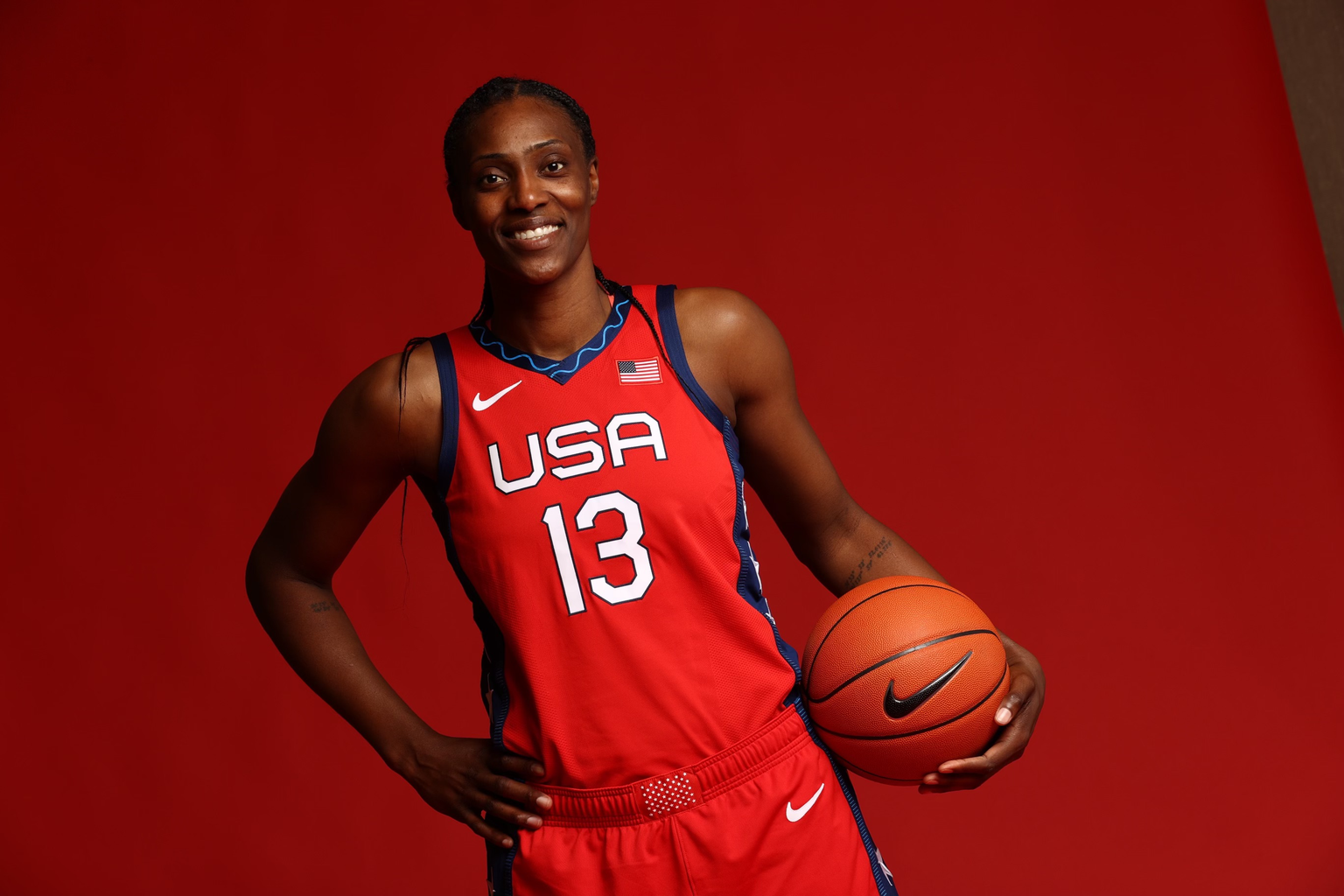
Top 150 Olympic Athletes: #77 - Diana Taurasi


Diana Taurasi

USA

Basketball


Overall Ranks

#25 among American Olympians

#8 among Female American Olympians

#1 among Basketball Players


Olympic Results

2004

Women - Gold

2008

Women - Gold

2012

Women - Gold

2016

Women - Gold

2020

Women - Gold

2024

Women - Gold

Total

Events - 6

Gold - 6


Diana Lorena Taurasi was born on June 11, 1982 in Glendale, California, to parents who had emigrated from Argentina. She was named the National Player of the Year in high school, then attended UConn, where she won 3 consecutive national championships, and won 2 straight NCAA Player of the Year awards as well as 2 awards for Most Outstanding Player in the NCAA Tournament. 

She was the #1 overall draft pick by the Phoenix Mercury in 2004, and was also named to the USA Olympic team. She was a starter on that team, which won its 8 games by an average of 25 points each, with only Russia getting close, losing by 4 in the semifinal. They cruised to the gold medal, and then she made her WNBA debut, and won Rookie of the Year.

She led the WNBA in scoring in 2006, then won a championship in 2007. She was again a starter on the 2008 Olympic team, where she started every game and was 3rd on the team in scoring, and the team was even more dominant than before, winning by an average of 38 points per game, with their closest win again coming against Russia, this time by 15 points in the semifinal.

Taurasi led the WNBA in scoring in each of the next 4 seasons, and in 2009 was the regular season and Finals MVP as she won her second championship. In 2012, she was the leading scorer for the American Olympic team, which won its 8 games by an average of 35 points per game, with a 13-point win over Australia in the semifinal the closest they came to a loss.

In 2014 Taurasi won her third WNBA championship, leading the league in assists that year, and winning her second Finals MVP award. In 2016, she again led the American Olympic team in scoring, with 15.6 per game, the highest of her Olympic career, and the team again dominated everybody, winning by 37 points per game, with France coming within 19 in the semifinal as the closest result.

She competed in the Olympics again in 2021, though she took on a lesser role, but it didn't really matter. The Americans won their games by an average of 16 points, with only one opponent coming within single digits, and she and Sue Bird together became the first to win 5 gold medals in the same team event.

She played in one final Olympics in 2024, though she hardly saw the court, and only scored 5 total points throughout the tournament, but they didn't really need her on the court as much as they needed her veteran presence. They again won their games by an average of 16 points, though they nearly lost in the final, beating France by a single point. With that victory, Taurasi became the first Olympian ever to win 6 gold medals in a single team event.

She retired after the 2024 season, and is the WNBA's all-time scoring leader, a three-time champion in both the pros and in college, a two-time Championship MVP in both the pros and college, two-time college player of the year, one-time WNBA MVP, and the only 6-time Olympic basketball champion. There is no doubt that she is one of the greatest Olympians of all time.


Friday, August 28, 2026

Top 150 Olympic Athletes: #78 - Valentina Vezzali


Valentina Vezzali

Italy

Fencing


Overall Ranks

#5 among Fencers

#5 among Italian Olympians

#2 among Italian Fencers

#1 among Female Fencers

#1 among Female Italian Olympians


Olympic Results

1996

Individual Foil - Silver

Team Foil - Gold

2000

Individual Foil - Gold

Team Foil - Gold

2004

Individual Foil - Gold

2008

Individual Foil - Gold

Team Foil - Bronze

2012

Individual Foil - Bronze

Team Foil - Gold

Total

Events - 9

Gold - 6

Silver - 1

Bronze - 2


Maria Valentina Vezzali was born on February 14, 1974 in Jesi, Italy, and began her fencing training with her father when she was a young girl, and quickly proved to be talented at it. She competed in her first world championship at age 19, finishing 6th, which would be the worst finish in any event in her entire career.

She finished 2nd in the World Championships in 1994, and 3rd in 1995, so she was one of the main medal contenders heading to Atlanta in 1996 for her first Olympics. The individual foil event was contested as a single-elimination tournament, with each bout going to 15 touches. As the #1 seed, Vezzali had a bye in the first round, then had a couple of close early matches before winning 15-10 in the quarterfinal and 15-7 in the semifinal. In the final, she faced Laura Badea of Romania, the defending world champion, and she ended up falling 15-10, leaving her with a silver medal.

The team event was also single-elimination, and Italy was the #1 seed, as they had two of the top 3 in the individual event. They destroyed China 45-24 in the quarterfinal, then had a close call against Hungary before beating Romania in the final 45-33, avenging their losses to Badea in the individual event and taking home the gold.

In 1999, she finally won her first World Championship gold in individual foil, after getting other medals in the previous three, and she was the favorite in Sydney in 2000, again starting as the #1 seed. This time, she made easy work of the entire competition, never allowing an opponent to score more than 8 touches, and winning the final 15-5 to take home a dominant gold medal, her first individual Olympic gold.

In the team event, Italy was again the top seed, thanks to again having two medalists on the team. They won all three of their matches without much trouble, scoring at least 6 points more than each opponent, and they successfully defended their gold medal from Atlanta.

She won the next two World Championships, running her total to 3 in a row, and was again the favorite in Athens. The team events are held on a rotating basis, so there was no team event that year, so she made the most of her time in the individual. She made it back to the final again without allowing an opponent to score more than 8, but her final match was closer, facing teammate and 2-time bronze medalist Giovanna Trillini. The score went back and forth, but Vezzali pulled away at the end to win 15-11 for a repeat gold.

She won 2 more World Championships before the Olympics headed to Beijing in 2008, and she was the #1 seed for the 4th straight time in the individual foil. She once again dominated all the way to the final, where she faced Nam Hyeon-Hui of South Korea. The bout was a defensive struggle, and was tied at 5 with just a few seconds left when Vezzali scored the winning touch to take her third straight gold medal, becoming the first athlete ever to win the event three times in a row.

The Italians were again heavy favorites in the team event, with 3 of the top 4 individuals, and they beat the Chinese hosts easily to reach the semifinal, but they were surprised by the Russians in the semifinal, losing a low-scoring battle 22-21, with Vezzali scoring 13 of her team's points. They rebounded to beat Hungary 32-23 in the bronze medal match, but it was still a disappointment for the favorites.

In the 2009 World Championships, she failed to medal for the first time since 1993, when she was a rookie. She bounced back to win again in 2011, but she was starting to show a little weakness. In London in 2012, she was the #2 seed, behind Nam, but it didn't matter much in the early rounds, as she easily reached the semifinals again. In the semifinal, however, she was upset by Arianna Errigo, also from Italy, losing 15-12, and was forced to face Nam again, this time for bronze rather than gold. She would take care of business, winning another close match 13-12, giving her a fifth straight medal in the individual foil event.

Italy won all 3 medals in the individual event, so they were heavy favorites in the team foil. They destroyed the host Brits 42-14, then did the same to the French, 45-22, to advance to the final. They faced Russia in the final, and they got their revenge, beating them 45-31, giving Vezzali a third gold medal in the team event, and a 6th overall. 

She was elected to the Italian Parliament in 2013, but continued to compete, winning several medals in the World Championships, but after she failed to make the Olympic team in 2016, she retired from competition. She competed in 9 Olympic events over 5 Games, and won medals in every single one, six of them gold, and she is one of only 5 athletes in history to win a medal in the same individual event at 5 straight Olympics, making her easily one of the greatest Olympians of all time.


Saturday, August 22, 2026

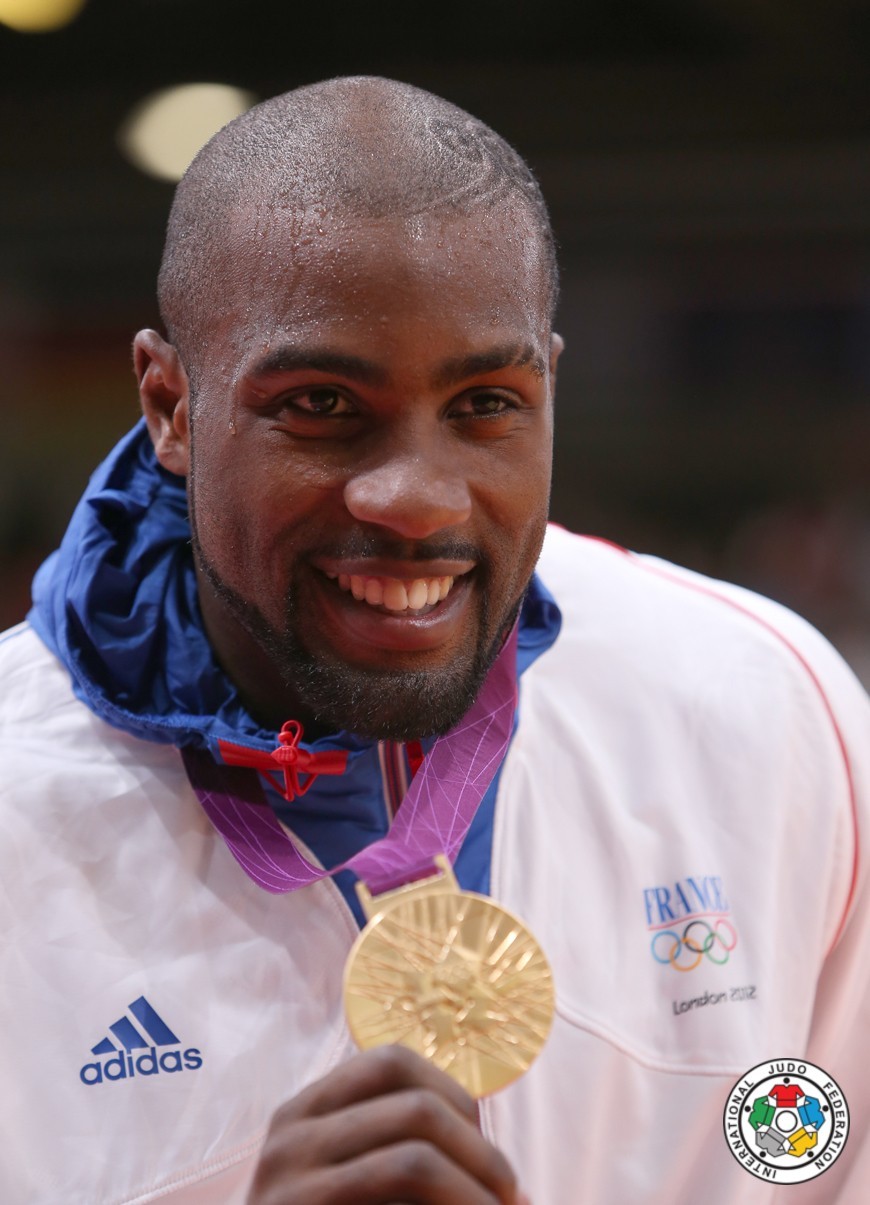
Top 150 Olympic Athletes: #84 - Teddy Riner


Teddy Riner

France

Judo


Overall Ranks

#2 among Judoka

#2 among French Olympians

#1 among French Judoka


Olympic Results

2008

Heavyweight - Bronze

2012

Heavyweight - Gold

2016

Heavyweight - Gold

2020

Heavyweight - Bronze

Mixed Team - Gold

2024

Heavyweight - Gold

Mixed Team - Gold

Total

Events - 7

Gold - 5

Bronze - 2


Teddy Pierre-Marie Riner was born on April 7, 1989 in Pointe-a-Pitre, Guadeloupe, a Caribbean island that is a territory of France, and moved with his family to Paris while he was still a toddler. He grew up playing multiple sports, but preferred judo because it was all up to him. In 2007, the day after he turned 18, he won the European judo championship, then won the World Championship later that year, the youngest ever to do so, and he repeated as champion in 2008.

He competed in the heavyweight division in the 2008 Olympics in Beijing, where he was expected to win. He won his first two bouts to advance to the semifinal round, but lost in sudden death to Abdullo Tangriyev of Uzbekistan. This put him into the repechage pool, where he won all 3 of his bouts easily, which earned him a bronze medal.

After the Olympic disappointment, he went back and won the World Championship 3 times in a row, and went into 2012 in London as a huge favorite. He competed in 5 bouts, with all 5 either ending in ippon (the highest score possible), or waza-ari (the second-highest score), and finally had his Olympic gold medal to go with all of his World Championships.

After the Olympic win, he went and won 3 more World Championships in a row, stretching his streak to 8 in a row, so he was obviously the huge favorite to take gold in Rio in 2016. As the top seed, he got a first-round bye, then won 3 straight bouts by ippon or waza-ari, which put him in the final, against Hisayoshi Harasawa of Japan, who had won 3 straight by ippon. The final ended in a tie, which was broken by total penalties, with Riner winning 1-2, giving him a repeat gold medal.

Between 2010 and 2020, Riner had a streak of nearly 10 years without losing a single bout in any competition, which was broken in the Paris Grand Slam that year. The next year, in Tokyo, he was still a favorite, but was upset in the quarterfinal round by Tamerlan Bashayev of Russia, requiring him to win a repechage bout to make it to a bronze medal bout. He won the repechage and bronze medal bouts by ippon, which earned him another bronze medal, 13 years after his first.

A mixed team event was also introduced in the 2020 Olympics, where each team had up to 12 judoka competing, which 6 taking the mat in each round, and the round ending when a country reached 4 wins. Riner won by ippon in his first bout, with France winning 4-3 over Israel after a tiebreaker bout, then wasn't needed in a 4-0 win over the Netherlands in the semifinal, before winning by waza-ari in the final round, as France beat host Japan 4-1, giving him his third Olympic gold medal.

He won another World Championship in 2023, and hoped to win another Olympic gold at home in Paris in 2024. He dominated his way to the gold medal, winning all four of his bouts by ippon, becoming the second judoka in history to win 3 individual gold medals.

In the mixed team event, Riner wasn't needed in France's 4-0 sweep of Israel in the first round, then he had the decisive ippon in their quarterfinal 4-1 with over South Korea. They also dominated Italy 4-1 in the semifinal, with another ippon from Riner, leading to a final rematch with Japan, this time with the home team switched. In the final, Riner won by ippon to give France its first win, then after France tied the match at 3-3, the heavyweights were randomly selected to battle for the gold in the tiebreaker, where Riner completed another ippon to give his team the repeat gold medal, his fifth overall.

Riner had elbow surgery shortly after the 2024 Olympics, but has not retired and plans to compete again in 2028, hoping to add to his medal collection. He has competed in 7 Olympic events so far, and has won his final bout every time, leading to a record of 5 golds and 2 bronzes so far. He has already established himself as one of the greatest Olympians of all time, but he may still improve his standing in the future.


Friday, August 14, 2026

Top 150 Olympic Athletes: #92 - Sylvia Fowles


Sylvia Fowles

USA

Basketball


Overall Ranks

#29 among American Olympians

#10 among Female American Olympians

#2 among Basketball Players


Olympic Results

2008

Women - Gold

2012

Women - Gold

2016

Women - Gold

2020

Women - Gold

Total

Events - 4

Gold - 4


Sylvia Shaqueria Fowles was born on October 6, 1985 in Miami, Florida, which is also where she grew up, and led her high school teams to 3 state championships and was MVP of the high school All-American game. She then attended college at LSU, where she led the Tigers to the Final Four in each of her 4 seasons.

She was the #2 draft pick in the 2008 WNBA Draft by the Chicago Sky, and made her Olympic debut that same year. She shot 64.3% from the field for the tournament, and led the USA in scoring with 13.4 points per game, as the Americans swept their way to an easy gold medal, with a 27-point win over Australia in the gold medal game.

In 2012, she was again chosen for the USA team, and played a slightly smaller role, but still averaged 6.0 points per game while shooting 61.1% from the field as the USA again went through the tourney without a loss, and beat France by 36 in the final game. She shot 69.0% in the 2016 Olympics, and the USA won another gold medal with a 29-point win over Spain.

She was selected for her 4th Olympic team in 2020, and again had an enormous shooting percentage of 63.2% for the tournament. This time, the games were a little closer, and the Americans only managed to beat the host Japanese team by 15 in the gold medal game, but Fowles had earned her 4th gold medal.

She retired after the 2022 WNBA season as the league's all-time leader in field goal percentage, at 59.9%, and rebounds per game, at 9.8. She led the league in blocks twice, rebounding twice, and field goal percentage 7 times, and won 2 championships, in 2015 and 2017. Four gold medals in separate Olympics is a rare feat, and Fowles was a large part of those teams, which makes her one of the greatest Olympians of all time.


Thursday, August 13, 2026

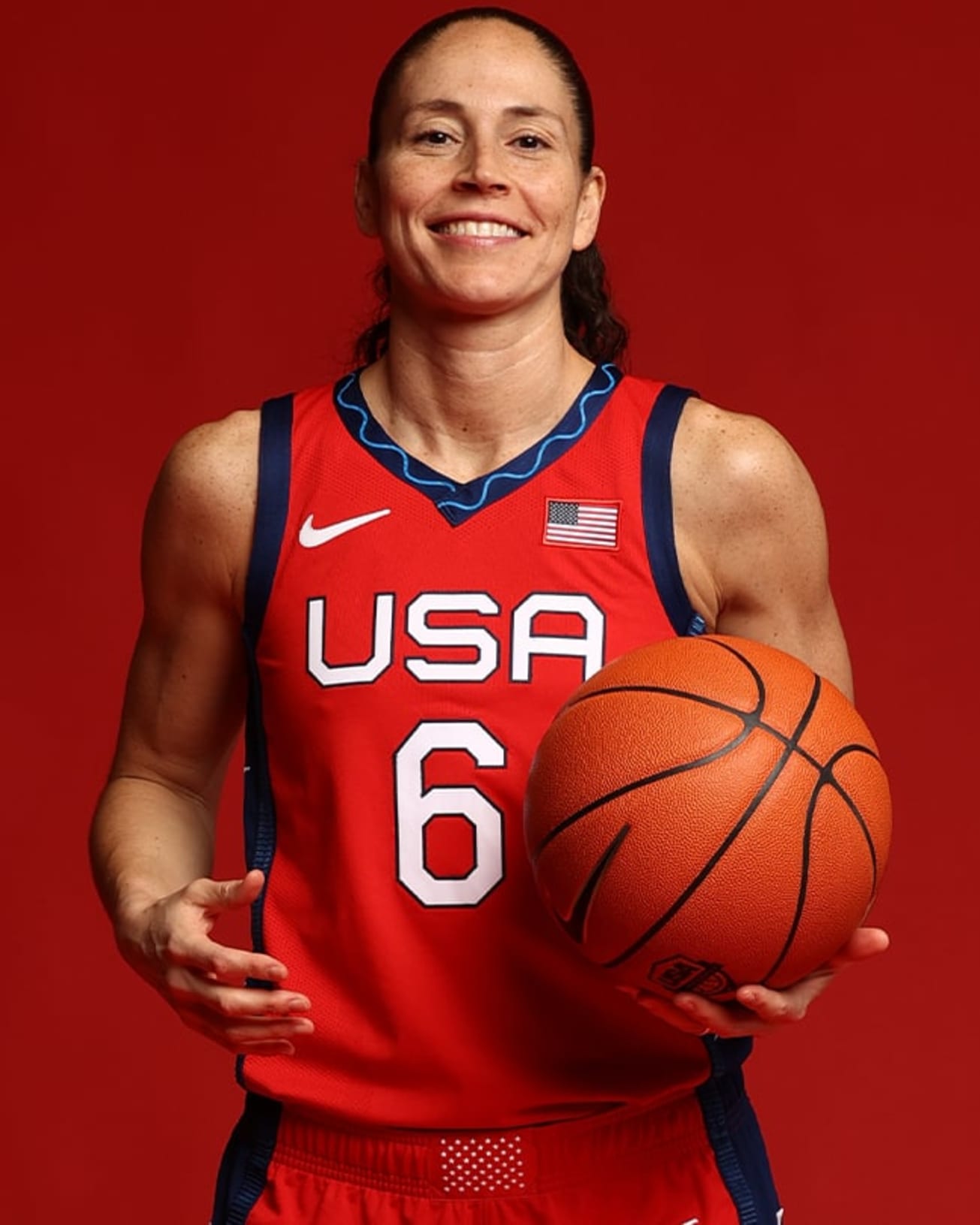
Top 150 Olympic Athletes: #93 - Sue Bird


Sue Bird

USA

Basketball


Overall Ranks

#30 among American Olympians

#11 among Female American Olympians

#3 among Basketball Players


Olympic Results

2004

Women - Gold

2008

Women - Gold

2012

Women - Gold

2016

Women - Gold

2020

Women - Gold

Overall

Events - 5

Gold - 5


Suzanne Brigit Bird was born on Oct 16, 1980 in Syosset, New York, and began playing AAU basketball in sixth grade. By the time she reached high school, she was a big star, and in her senior season, she led her team to an undefeated season and a state and national championship.

She attended the University of Connecticut, and after missing most of her freshman season to a torn ACL, she led the Huskies to a 36-1 record as a sophomore and a national championship. After a disappointing junior season where they lost 3 games and didn't win a title, her senior season was perfect, with a 39-0 record and another national title. She was drafted by the Seattle Storm with the #1 pick in the 2002 WNBA Draft. 

For her entire time as a pro, which covered 20 seasons, she was also a member of the US national team, starting with the 2002 World Championships, and stretching clear until the Tokyo Olympics in 2021. She wasn't one of the big stars on the 2004 Olympic team, averaging only about 3 points per game, but she came out of that year with both a gold medal and a WNBA championship.

By 2008, she had become the national team's starting point guard, and in the 2008 Olympic tournament, she led the team with 14 steals in 8 games, and they team went undefeated again en route to the gold medal. In 2012, she raised her scoring average to 6.1 per game and her assists to 4.5 while helping guide the US to its fifth straight gold medal, and her third.

She led the USA team in assists in each of the next two Olympics as well, tying the old record with 4 Olympic gold basketball medals in 2016, then breaking it in 2020, along with Diana Taurasi, when the pair won their fifth. Though she was never a big scorer, especially in the Olympics, her mastery at distributing the ball made her a very important piece of all of those gold medals.

In her professional career, she won 4 WNBA titles, 5 Euro League titles, and 5 Russian league championships. Add in her high school championship and 2 NCAA championships to her 5 Olympic gold medals, and you have one of the greatest champions ever in any sport, and one of the greatest Olympians of all time.


Wednesday, August 12, 2026

Top 150 Olympic Athletes: #94 - Christian Taylor


Christian Taylor

USA

Athletics


Overall Ranks

#31 among American Olympians

#28 among Track & Field Athletes

#22 among Male Track & Field Athletes

#19 among American Track & Field Athletes

#15 among American Male Track & Field Athletes


Olympic Results

2012

Triple Jump - Gold

2016

Triple Jump - Gold

Total

Events - 2

Gold - 2


Christian Taylor born on June 18, 1990 in Fayetteville, Georgia, and learned how to triple jump in elementary school. In high school, he set Georgia state records in the long jump, triple jump, and 400m. He then attended the University of Florida, and while there, won his first World Championship in the triple jump in 2011.

He and Will Claye took turns winning each meet through 2011 and 2012, with Taylor winning in the 2012 Olympic Trials, and they were co-favorites heading into the London Olympics. Taylor led the qualifying round with a jump of 17.21 meters, but in the 12-man final, he fouled on his first two jumps, giving him one more chance to get into the top 8 or be eliminated. He jumped 17.15, which earned him 3 more jumps, and on his very next jump he got 17.81, which ended up winning him the gold medal, leaving Claye to take the silver.

The following year he moved to England to train, and in 2015 he won the World Championship again, this time with a jump of 18.21, the second-longest in history. He was the favorite to win gold again in Rio, and he again led after qualifying. In the final, he hit 17.86 with his first jump, which was longer than any of the others had ever jumped, and it ended up winning him the gold. He also jumped 17.77 twice in the final round, which gave him the three longest jumps of the competition.

He repeated as World Champion in both 2017 and 2019, but an Achilles injury prevented him from competing in the Tokyo Olympics. When he returned in 2022 for the World Championships, he only managed to finish in 18th place, and in 2024 he officially retired. He owns the American record, 3 of the 10 best jumps in history, and two Olympic gold medals, making him one of the greatest Olympians of all time.