Showing posts with label Fencing. Show all posts

Friday, August 28, 2026

Top 150 Olympic Athletes: #78 - Valentina Vezzali


Valentina Vezzali

Italy

Fencing


Overall Ranks

#5 among Fencers

#5 among Italian Olympians

#2 among Italian Fencers

#1 among Female Fencers

#1 among Female Italian Olympians


Olympic Results

1996

Individual Foil - Silver

Team Foil - Gold

2000

Individual Foil - Gold

Team Foil - Gold

2004

Individual Foil - Gold

2008

Individual Foil - Gold

Team Foil - Bronze

2012

Individual Foil - Bronze

Team Foil - Gold

Total

Events - 9

Gold - 6

Silver - 1

Bronze - 2


Maria Valentina Vezzali was born on February 14, 1974 in Jesi, Italy, and began her fencing training with her father when she was a young girl, and quickly proved to be talented at it. She competed in her first world championship at age 19, finishing 6th, which would be the worst finish in any event in her entire career.

She finished 2nd in the World Championships in 1994, and 3rd in 1995, so she was one of the main medal contenders heading to Atlanta in 1996 for her first Olympics. The individual foil event was contested as a single-elimination tournament, with each bout going to 15 touches. As the #1 seed, Vezzali had a bye in the first round, then had a couple of close early matches before winning 15-10 in the quarterfinal and 15-7 in the semifinal. In the final, she faced Laura Badea of Romania, the defending world champion, and she ended up falling 15-10, leaving her with a silver medal.

The team event was also single-elimination, and Italy was the #1 seed, as they had two of the top 3 in the individual event. They destroyed China 45-24 in the quarterfinal, then had a close call against Hungary before beating Romania in the final 45-33, avenging their losses to Badea in the individual event and taking home the gold.

In 1999, she finally won her first World Championship gold in individual foil, after getting other medals in the previous three, and she was the favorite in Sydney in 2000, again starting as the #1 seed. This time, she made easy work of the entire competition, never allowing an opponent to score more than 8 touches, and winning the final 15-5 to take home a dominant gold medal, her first individual Olympic gold.

In the team event, Italy was again the top seed, thanks to again having two medalists on the team. They won all three of their matches without much trouble, scoring at least 6 points more than each opponent, and they successfully defended their gold medal from Atlanta.

She won the next two World Championships, running her total to 3 in a row, and was again the favorite in Athens. The team events are held on a rotating basis, so there was no team event that year, so she made the most of her time in the individual. She made it back to the final again without allowing an opponent to score more than 8, but her final match was closer, facing teammate and 2-time bronze medalist Giovanna Trillini. The score went back and forth, but Vezzali pulled away at the end to win 15-11 for a repeat gold.

She won 2 more World Championships before the Olympics headed to Beijing in 2008, and she was the #1 seed for the 4th straight time in the individual foil. She once again dominated all the way to the final, where she faced Nam Hyeon-Hui of South Korea. The bout was a defensive struggle, and was tied at 5 with just a few seconds left when Vezzali scored the winning touch to take her third straight gold medal, becoming the first athlete ever to win the event three times in a row.

The Italians were again heavy favorites in the team event, with 3 of the top 4 individuals, and they beat the Chinese hosts easily to reach the semifinal, but they were surprised by the Russians in the semifinal, losing a low-scoring battle 22-21, with Vezzali scoring 13 of her team's points. They rebounded to beat Hungary 32-23 in the bronze medal match, but it was still a disappointment for the favorites.

In the 2009 World Championships, she failed to medal for the first time since 1993, when she was a rookie. She bounced back to win again in 2011, but she was starting to show a little weakness. In London in 2012, she was the #2 seed, behind Nam, but it didn't matter much in the early rounds, as she easily reached the semifinals again. In the semifinal, however, she was upset by Arianna Errigo, also from Italy, losing 15-12, and was forced to face Nam again, this time for bronze rather than gold. She would take care of business, winning another close match 13-12, giving her a fifth straight medal in the individual foil event.

Italy won all 3 medals in the individual event, so they were heavy favorites in the team foil. They destroyed the host Brits 42-14, then did the same to the French, 45-22, to advance to the final. They faced Russia in the final, and they got their revenge, beating them 45-31, giving Vezzali a third gold medal in the team event, and a 6th overall. 

She was elected to the Italian Parliament in 2013, but continued to compete, winning several medals in the World Championships, but after she failed to make the Olympic team in 2016, she retired from competition. She competed in 9 Olympic events over 5 Games, and won medals in every single one, six of them gold, and she is one of only 5 athletes in history to win a medal in the same individual event at 5 straight Olympics, making her easily one of the greatest Olympians of all time.




Tuesday, August 11, 2026

Top 150 Olympic Athletes: #95 - Nedo Nadi


Nedo Nadi

Italy

Fencing


Overall Ranks

#6 among Fencers

#6 among Italian Olympians

#5 among Male Fencers

#5 among Male Italian Olympians

#3 among Italian Fencers

#2 among Male Italian Fencers


Olympic Results

1912

Individual Foil - Gold

1920

Individual Foil - Gold

Team Foil - Gold

Team Epee - Gold

Individual Sabre - Gold

Team Sabre - Gold

Total

Events - 8

Gold - 6


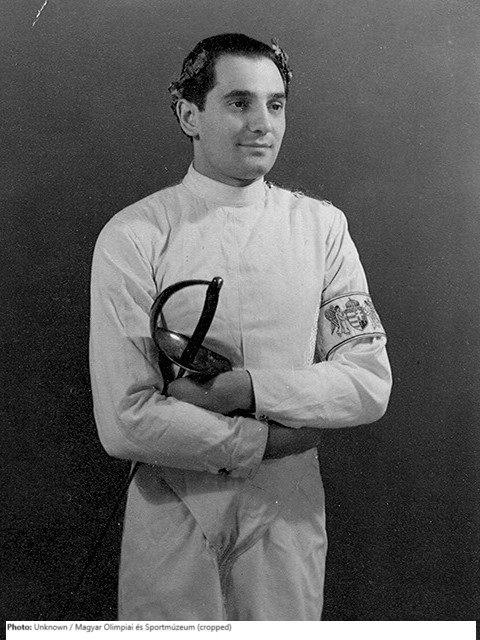
Nedo Nadi was born on June 9, 1894 in Livorno, Italy, the son of Beppe Nadi, a famous Italian fencing master, who began training his two sons as fencers from the age of 7. His father trained him on the foil and the sabre, but refused to teach the epee, as he considered it "undisciplined," so Nedo and his brother Aldo trained together in secret on the epee.

He made his Olympic debut in Stockholm in 1912, just after his 18th birthday. His first event was the individual foil, which was made easier due to a French boycott over a rule disagreement. Nadi dominated the event, losing only 1 bout the entire way, during the quarterfinal round, and he finished it off with a perfect 7-0 romp in the finals to become the youngest fencing gold medalist in history, a distinction he still holds over 100 years later.

The sabre events were up next, but they didn't go quite as well. Italy lost in the semifinal pool of the team event, which left them tied for 5th place. In the individual event, the Hungarians had already begun their dominance 4 years earlier, and 1912 may have been their peak. Nadi lost only 3 bouts through the 3 rounds leading up to the final, in which he was the lone competitor not from Hungary in the field of 8. He fought well, winning 4 of 7 bouts, which was good enough for 5th place, but not enough for a medal.

Nadi served in the Italian army during World War I, then returned to fencing after the war concluded. Hungary was not allowed to compete in 1920 due to their role in the war, leaving some events more open than usual, so Nadi entered 5 events, competing with all 3 weapons in Antwerp.

His first event was the team foil. The Italians had 8 matches total, and won all 8 of them, with the only close match in the final coming against France, but they came out ahead 9-7 to win the gold medal. Next up was the individual foil, where he was the defending champion, and he crushed the competition, winning 22 out of 23 bouts to take his third career gold medal easily.

The next event was the team epee, the weapon that his father hated. Italy advanced to the final with just a single loss, against Portugal, but then swept the final pool, beating all 5 of their opponents to walk away with another gold medal. In the team sabre event, there were only 8 countries competing, so the event was a single round-robin to determine the winner. Italy won all 7 of their matches very easily, with the closest score of 12-4 against both Belgium and the Netherlands, giving Nadi a 4th gold in 1920.

In the individual sabre event, Nadi was once again dominant, losing only a single bout in the entire tournament and dominating the final pool without a loss, giving him another gold medal, his fifth in Antwerp and 6th overall. Notably, his younger brother, Aldo, won the silver medal, which went along with his 3 golds in the team events with his brother.

Nadi retired right after the 1920 Olympics, and became a fencing coach who travelled all over the world. He later coached the Italian fencing team at the 1936 Olympics, then passed away in 1940 at the age of 45. His 1920 Olympic performance alone would have been enough to make him one of the greatest Olympians of all time, but add in his earlier gold as the youngest fencer to win and you have an undoubtable great.


Monday, August 10, 2026

Top 150 Olympic Athletes: #96 - Laszlo Rajcsanyi


Laszlo Rajcsanyi

Hungary

Fencing


Overall Ranks

#7 among Fencers

#6 among Male Fencers

#3 among Hungarian Olympians

#3 among Hungarian Fencers


Olympic Results

1936

Team Sabre - Gold

1948

Team Sabre - Gold

1952

Team Sabre - Gold

Total

Events - 4

Gold - 3


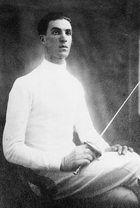
Laszlo Rajcsanyi was born on February 16, 1907 in Budapest, Austria-Hungary, and began fencing when he was 17 years old. He won the World University Championship in 1928, and the Hungarian national championship in 1934, and qualified for his first Olympics in 1936 at Berlin.

His first event was the team sabre, which Hungary had been dominating for a decade, and would dominate for a few more decades. He participated in one match each in the quarterfinals and semifinals, winning all 4 of his bouts in each round. He was used in matches against Poland and Italy in the final round, going 2-1 against Poland, the only bout lost by Hungary in that match, and finishing 2-2 against Italy in a close-fought 9-6 finale that gave Hungary the gold. Overall, Rajcsanyi won 12 of his 15 bouts.

The individual sabre was contested over the next couple of days. In each of the first two rounds, he finished second in his pool, with the top 3 advancing. He finished 3rd in his semifinal pool, and was one of 3 Hungarians to reach the final pool, out of 9 total fencers. He went 5-3 in the final round-robin, with two of his losses coming against the gold and silver medalists, but it wasn't quite enough, and he finished in 4th place, just short of a medal.

The next two Olympics, which would have been during his prime, were cancelled due to World War II, so by the time he got to compete again, he was 41 years old. He only competed in the team event in 1948, going 6-1 on the way to the final pool. In the final pool, he went 5-2 in bouts against Belgium and the USA, but wasn't used against silver-medalist Italy as the Hungarians won another easy gold, with Rajcsanyi going 11-3 overall, nearly identical to his performance 12 years earlier.

He returned for one final Olympic run in 1952, as a 45 year old. Again just competing in the team event, he went 7-1 in the first round as Hungary easily won their pool. He won both of his bouts in round 2, but went 8-4 in the semifinals, where he was used in all 3 matches. In the final, they only used him against France, the eventual bronze medalist, where he went 2-2, while Hungary won a close match against Italy to keep their gold medal streak alive, getting Rajcsanyi a third gold medal to end his career.

He had earned a degree in mechanical engineering in 1930, and worked as a chief engineer throughout his entire fencing career, and he continued to do so after retiring from fencing. Even though all 3 of his gold medals came in team competitions, he was a big part of all 3, and nearly won an individual medal as well. All things considered, he was one of the greatest Olympians of all time.


Friday, August 7, 2026

Top 150 Olympic Athletes: #99 - Rudolf Karpati


Rudolf Karpati

Hungary

Fencing


Overall Ranks

#8 among Fencers

#7 among Male Fencers

#4 among Hungarian Olympians

#4 among Hungarian Fencers


Olympic Results

1948

Team Sabre - Gold

1952

Team Sabre - Gold

1956

Sabre - Gold

Team Sabre - Gold

1960

Sabre - Gold

Team Sabre - Gold

Total

Events - 6

Gold - 6


Rudolf Klein was born on July 17, 1920 in Budapest, Hungary, and later changed his surname to Karpati in order to hide the fact that he was Jewish from the Nazis. Following World War II, he joined the Hungarian national fencing team, which had dominated the sabre events for the decade prior to the war, and would continue to do so for the duration of Karpati's career.

His first Olympic experience came in London in 1948, where he competed in the team sabre event. Hungary got a bye in the first round, then had an easy victory over Egypt in the quarterfinals, where Karpati didn't compete, but he won 6 of his 8 matches in the semifinal pool as Hungary cruised into the final pool of 4 teams. Hungary beat all 3 of its opponents in the final pool, though Karpati struggled against runner-up Italy, losing 3 of his 4 matches, finishing with 5 wins in 10 tries in the final, but he still earned a gold medal as part of the dominant team.

He was again on the Hungarian team in Helsinki in 1952, and again competed in just the team event. This time he went 13-1 in his matches as Hungary went undefeated on their way to the final pool, and they also went undefeated in the final pool, though they were trailing Italy 7-6 with only two bouts left. After Tibor Berczelly won his bout, it was up to Karpati to determine the color of Hungary's medal, and he came through, keeping their streak of gold medals alive.

In 1956, Hungary was advanced straight to the semifinals, where they only needed a quick 9-1 victory over the USA to advance to another final. The toughest match of the final came against the USSR, who had just invaded Hungary a couple of weeks earlier, and they were able to pull out a hard-fought 9-7 victory, with Karpati supplying 3 of the victories, and Hungary won another gold without a loss.

He also competed in the individual event for the first time in 1956, alongside the past two champions of the event, Kovacs and Gerevich of Hungary. Karpati won both of his pools on his way to the final, where he was joined by his two countrymen in the field of 8, and after a round-robin among them all, Karpati came out on top, with a 6-1 record, and kept Hungary's gold medal streak alive, even though it was a bit of a surprise. After the Olympics, the other 3 Hungarian sabre fencers fled to the United States rather than return to Soviet-controlled Hungary, but Karpati, Kovacs, and Gerevich returned home.

He returned to defend his gold medals in 1960 in Rome, even though he was now 40 years old. This time, the individual event was held first, and he went 15-3 through the first 4 rounds of round robin pools, each of which he won, to advance easily to another final. In the final pool, he won 5 of his 7 bouts, which turned out to be enough, as 4 others tied at 4-3, so Karpati was able to walk away with another individual gold medal.

The Hungarian team was weaker than normal headed into the team event, after the defections of 1956. The three holdovers were all over 40 years old, but all were still very skilled. Karpati didn't need to compete in the first round win, which advanced them to the quarterfinals, where they beat Romania easily, 9-3, with 3 wins from Karpati. In the semifinals against Italy and the final against Poland, they were carried by their new younger teammates, and won both in close contests, 9-6 and 9-7 to successfully win another team gold.

Karpati retired in 1961, having competed in 6 Olympic fencing events, and winning gold in all 6. Four of his 6 gold medals came in team events, with Karpati making big contributions to two of them, and his two individual golds were closely contested and somewhat surprising, but he made it through each time, which makes him one of the greatest Olympians of all time.


Friday, June 26, 2026

Top 150 Olympic Athletes: #141 - Giulio Gaudini


Giulio Gaudini

Italy

Fencing


Overall Rankings

#9 among Fencers

#8 among Italian Olympians

#8 among Male Fencers

#4 among Italians Fencers

#3 among Male Italian Fencers


Olympic Results

1928

Individual Foil - Bronze

Team Foil - Gold

1932

Individual Foil - Bronze

Team Foil - Silver

Individual Sabre - Silver

Team Sabre - Silver

1936

Individual Foil - Gold

Team Foil - Gold

Team Sabre - Silver

Total

Events - 11

Gold - 3

Silver - 4

Bronze - 2


Giulio Gaudini was born on September 28, 1904 in Rome, Italy. He began fencing at a young age, and immediately showed promise, so much so that he made Italy's very competitive Olympic fencing team when he was just 19 years old.

In his first Olympics, he was only entered in the team foil event. The team made it through pool play and the quarterfinals with no issue, reaching the final group of 4, but in their first match, against France, they disagreed with the final point that was awarded to the French and left the competition in protest, which gave the team a 4th place finish by default.

By 1928, he was one of the stars of the Italian team, and there would be no repeat of their 1924 result, as they won every match en route to a dominant gold medal. He then competed in the individual foil event for the first time, and advanced easily into the final group of 12, where he finished with a 9-2 record, which put him in a 3-way tie for first. The tie was broken by scoring margin, which earned Gaudini the bronze medal.

In 1932, he returned to compete in the foil events, but added the sabre events as well. The Italian team was favored to repeat their title in the team foil event, but after a 3-way tie in the final pool, Italy was awarded the silver medal based on having fewer overall touches than France. In the individual foil, he repeated his bronze medal performance from 4 years earlier.

Hungary was the defending champion in the team sabre and was the heavy favorite, and they did not disappoint, wiping out every opponent in the tournament. Gaudini and the Italians won silver, easily defeating Poland and the USA in the final pool, but falling 9-2 against Hungary. Hungary was expected to take all 3 individual sabre medals, but Gaudini surprised everyone by taking the silver after losing only 2 matches in the final pool, leaving him with 3 silvers and a bronze in 1932.

Gaudini qualified for the same 4 events in 1936, and this time Italy would return to form, going undefeated through the tournament and beating France 9-4 in the decisive match to take back the gold medal. In the individual foil, Gaudini came in first place in his pool in every round of the tournament, and won all 7 matches in the final pool to finally earn his first individual gold medal.

The team sabre event was a repeat of the 1932 event, except that Italy made their final match with Hungary a bit closer this time, losing 9-6 to earn a repeat silver. In the individual sabre, Gaudini reached the final pool, just as he always had, but finished 3-5 among that group and ended up in 6th place, the worst finish of his Olympic career.

The next two Olympic games were not held due to World War II, and before he could compete again, Gaudini passed away from cancer on January 6, 1948 in his hometown of Rome. He was undoubtedly one of the greatest fencers of his time, reaching the final pool in all 11 events in which he competed, and earning a total of 9 medals, 3 of which were gold, capped off with his first and only individual gold in 1936.