Showing posts with label 1956 Olympics. Show all posts

Sunday, August 23, 2026

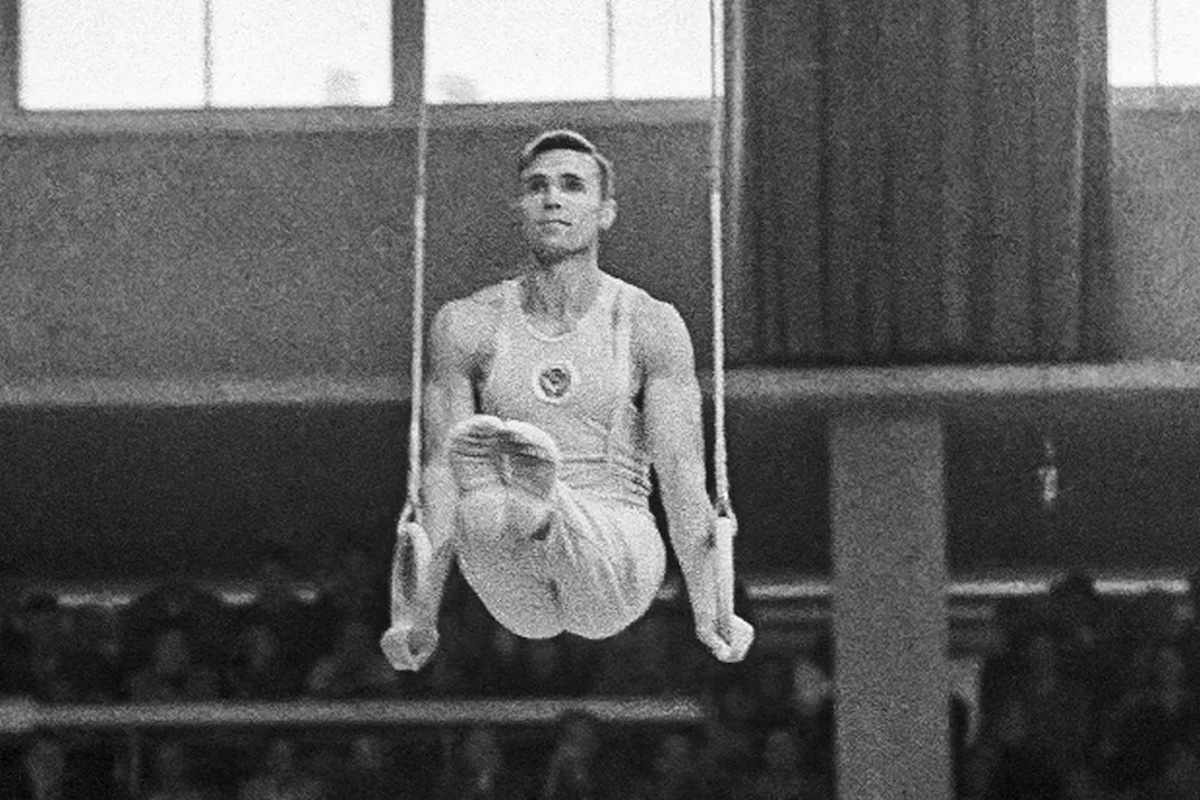
Top 150 Olympic Athletes: #83 - Viktor Chukarin


Viktor Chukarin

USSR

Artistic Gymnastics


Overall Ranks

#16 among Gymnasts

#10 among Male Gymnasts

#7 among Soviet Olympians

#3 among Male Soviet Gymnasts


Olympic Results

1952

Individual All-Around - Gold

Team - Gold

Vault - Gold

Parallel Bars - Silver

Rings - Silver

Pommel Horse - Gold

1956

Individual All-Around - Gold

Team - Gold

Floor Exercise - Silver

Parallel Bars - Gold

Pommel Horse - Bronze

Total

Events - 16

Gold - 7

Silver - 3

Bronze - 1


Viktor Ivanovich Chukarin was born on November 9, 1921 in Krasnoarmeyskoye, USSR, which is now part of Ukraine. He began training in gymnastics as a young child, then joined the Soviet army during World War II, and ended up spending nearly 4 years as a Prisoner of War, finally being released when the war ended.

He was only 88 pounds when he returned from war, but he began training again, and by 1949, he was the Soviet national champion, a feat he repeated in both 1950 and 1951. When the Soviets appeared in the Olympics for the first time in 1952, he was the top member of the national team, and it showed in Helsinki, even though he was already 30 years old.

All gymnastics events were held simultaneously at the time, with the scores in the individual events added together for the all-around score, and the all-arounds scores added together for the team score. The only event in which he didn't contend for a medal was the floor exercise, where he finished 29th. He won gold in the vault, where he was only 4th in the compulsory portion, but had the top score by far in the optional section, which gave him the best overall score by 0.05.

In the parallel bars, he came in second to Hans Eugster of Switzerland, who was also the defending world champion in the event, but he only lost by 0.05 points, so it was a close silver. In the horizontal bar, he had the #2 score in the optional portion, but was far enough behind in the compulsory that he ended up in 5th place overall, falling short of a medal.

In the rings, he had a very good score of 19.55, which earned him silver, but he wasn't close to the gold medal score of 19.75 posted by his teammate, Hrant Shahinyan. In the pommel horse, he was #3 in the compulsory, but had the top score by far in the optional again, which earned him another individual gold medal, his second of the events.

When the scores from all of the individual events were tallied, Chukarin had run away with the individual all-around gold medal, 0.75 points ahead of Shahinyan, who took the silver. The Soviets had 7 of the top 11 scorers in the individual all-around, and the top 5 scores on each apparatus were counted in the team event, so the Soviets won gold easily, 6.85 points ahead of Switzerland. Chukarin ended his first Olympics with 6 medals, 4 of them gold.

After winning the all-around World Championship in 1954, Chukarin led the Soviets into the 1956 Olympics in Melbourne as well, just after his 35th birthday. The format was the same as it had been 4 years earlier, but this time, Chukarin finished in the top 7 of all six individual events, making up for his weak performance in the floor exercise in Helsinki by taking home the silver this time.

His vault and rings scores were both lower than usual, and he finished in 7th place in each event, but he was stronger than usual in the parallel bars, where he managed to win the gold in a close competition, just ahead of 3 Japanese gymnasts. He came up just short of a medal in the horizontal bar, with a 4th place finish, but he managed to slip in and grab a bronze in the pommel horse to get his third individual medal of 1956, one of each color.

Because his event scores were all so good, he managed to repeat as the individual all-around champion, a very difficult feat to accomplish, and this time Takashi Ono of Japan made it close, losing by 0.05 points to the Soviet. Japan had also closed the gap in the team event, but the USSR still managed to win gold, beating Japan by 1.85 points.

He retired soon after the 1956 Olympics, becoming a gymnastics coach for several years, and he passed away in 1984 in Lviv, USSR, which is also part of Ukraine today. Even though he didn't appear in the Olympics until he was 30 years old, he still managed to win the individual all-around twice, with 3 other individual golds, and 11 medals overall, so the late start didn't prevent him from becoming one of the greatest Olympians of all time.


Sunday, August 16, 2026

Top 150 Olympic Athletes: #90 - Yury Titov


Yury Titov

USSR

Artistic Gymnastics


Overall Ranks

#18 among Gymnasts

#12 among Male Gymnasts

#9 among Soviet Olympians

#5 among Soviet Male Gymnasts


Olympic Results

1956

Individual All-Around - Bronze

Team - Gold

Vault - Bronze

Horizontal Bar - Silver

1960

Individual All-Around - Bronze

Team - Silver

Floor Exercise - Silver

1964

Team - Silver

Horizontal Bar - Silver

Total

Events - 24

Gold - 1

Silver - 5

Bronze - 3


Yury Yevlampiyevich Titov was born on November 27, 1935 on Omsk, USSR, and took up grymnastics at age 14. By the time he was 19 years old, he had been named to the Soviet national team, and his first major international competition was the 1956 Olympics in Melbourne.

That year, all of the gymnastic events were held at once, with each gymnast's score counting toward the individual event, the all-around, and the team event at the same time. Titov's best individual event was the horizontal bar, where he scored a 19.4, good enough for the silver medal, but 0.2 points behind Takashi Ono of Japan, who won the gold.

He won another individual medal in the vault, this one a bronze. He was only 0.1 points behind the gold medalists, so his overall score was still very good. He came in 5th place in two of the other individual events, and finished in the top 10 in all 6, which helped him earn the bronze medal in the individual all-around, though he was more than 0.4 points behind the other medalists, Ono and Viktor Chukarin, his Soviet teammate.

The team event was close. The USSR had won gold in 1952, and Chukarin had won his second straight all-around gold, and with Titov as a strong second scorer on the team, the Soviets were able to defeat the Japanese team by 1.85 points, earning a gold medal for the team. This would be the last time Japan lost the team event until 1980, when they didn't compete.

In 1960, the format had been updated so that the individual events had a final round after the team and all-around events had been completed. In the individual all-around, Titov finished third again, earning a repeat bronze, with Ono again taking the silver, and a new Soviet teammate, Boris Shakhlin, taking the gold.

In the team event, the 6 Japanese gymnasts all finished among the top 9 overall, making them very hard to beat. With Shakhlin and Titov's impressive individual scores, they were able to make it close, but the Soviets still lost by 2.5 points, but were 13.65 points ahead of Italy, who won bronze.

Titov qualified for all 6 event finals, but only managed to medal in one, the floor exercise. In that event, he qualified in second, and managed to hold on to it after the final performance, though the third place finisher closed the gap a little, but he still managed to take silver. He had qualified third in both the rings and the pommel horse, but poor final performances dropped him out of the medals in each, but it was still very impressive that he qualified for all 6 finals.

The format remained the same in 1964, when Titov returned for his third Olympics. By that time, he had been surpassed by several of his teammates, and finished 13th overall in the individual all-around, fifth among the Soviets, and a full point short of the medals. In the team event, there were still just two teams competing for gold, but the Soviets lost to Japan again by an identical 2.5 point margin to repeat as silver medalists.

Titov qualified for only one event final that year, the horizontal bar, where he had earned his first medal back in 1956. He qualified #2 behind Shakhlin, then scored a 9.8 in his final performance, which allowed him to hold onto his spot and earn another silver medal. He remained on the national team for two more years, then retired after the 1966 World Championships, with 9 Olympic medals to his name.

After competing in the Olympics 3 different times, Titov ended his career with only 1 gold medal, which came in the team event in 1956, but he won 5 silvers and 3 bronzes as well, and was in the top six 7 other times. While he was never the best in the world, or even in his own country, he was near the top so often and for so long, that he has earned a spot as one of the greatest Olympians of all time.


Friday, August 7, 2026

Top 150 Olympic Athletes: #99 - Rudolf Karpati


Rudolf Karpati

Hungary

Fencing


Overall Ranks

#8 among Fencers

#7 among Male Fencers

#4 among Hungarian Olympians

#4 among Hungarian Fencers


Olympic Results

1948

Team Sabre - Gold

1952

Team Sabre - Gold

1956

Sabre - Gold

Team Sabre - Gold

1960

Sabre - Gold

Team Sabre - Gold

Total

Events - 6

Gold - 6


Rudolf Klein was born on July 17, 1920 in Budapest, Hungary, and later changed his surname to Karpati in order to hide the fact that he was Jewish from the Nazis. Following World War II, he joined the Hungarian national fencing team, which had dominated the sabre events for the decade prior to the war, and would continue to do so for the duration of Karpati's career.

His first Olympic experience came in London in 1948, where he competed in the team sabre event. Hungary got a bye in the first round, then had an easy victory over Egypt in the quarterfinals, where Karpati didn't compete, but he won 6 of his 8 matches in the semifinal pool as Hungary cruised into the final pool of 4 teams. Hungary beat all 3 of its opponents in the final pool, though Karpati struggled against runner-up Italy, losing 3 of his 4 matches, finishing with 5 wins in 10 tries in the final, but he still earned a gold medal as part of the dominant team.

He was again on the Hungarian team in Helsinki in 1952, and again competed in just the team event. This time he went 13-1 in his matches as Hungary went undefeated on their way to the final pool, and they also went undefeated in the final pool, though they were trailing Italy 7-6 with only two bouts left. After Tibor Berczelly won his bout, it was up to Karpati to determine the color of Hungary's medal, and he came through, keeping their streak of gold medals alive.

In 1956, Hungary was advanced straight to the semifinals, where they only needed a quick 9-1 victory over the USA to advance to another final. The toughest match of the final came against the USSR, who had just invaded Hungary a couple of weeks earlier, and they were able to pull out a hard-fought 9-7 victory, with Karpati supplying 3 of the victories, and Hungary won another gold without a loss.

He also competed in the individual event for the first time in 1956, alongside the past two champions of the event, Kovacs and Gerevich of Hungary. Karpati won both of his pools on his way to the final, where he was joined by his two countrymen in the field of 8, and after a round-robin among them all, Karpati came out on top, with a 6-1 record, and kept Hungary's gold medal streak alive, even though it was a bit of a surprise. After the Olympics, the other 3 Hungarian sabre fencers fled to the United States rather than return to Soviet-controlled Hungary, but Karpati, Kovacs, and Gerevich returned home.

He returned to defend his gold medals in 1960 in Rome, even though he was now 40 years old. This time, the individual event was held first, and he went 15-3 through the first 4 rounds of round robin pools, each of which he won, to advance easily to another final. In the final pool, he won 5 of his 7 bouts, which turned out to be enough, as 4 others tied at 4-3, so Karpati was able to walk away with another individual gold medal.

The Hungarian team was weaker than normal headed into the team event, after the defections of 1956. The three holdovers were all over 40 years old, but all were still very skilled. Karpati didn't need to compete in the first round win, which advanced them to the quarterfinals, where they beat Romania easily, 9-3, with 3 wins from Karpati. In the semifinals against Italy and the final against Poland, they were carried by their new younger teammates, and won both in close contests, 9-6 and 9-7 to successfully win another team gold.

Karpati retired in 1961, having competed in 6 Olympic fencing events, and winning gold in all 6. Four of his 6 gold medals came in team events, with Karpati making big contributions to two of them, and his two individual golds were closely contested and somewhat surprising, but he made it through each time, which makes him one of the greatest Olympians of all time.


Saturday, August 1, 2026

Top 150 Olympic Athletes: #105 - Andy Stanfield


Andy Stanfield

USA

Athletics


Overall Ranks

#32 among American Olympians

#30 among Track & Field Athletes

#24 among Male Track & Field Athletes

#20 among American Track & Field Athletes

#16 among American Male Track & Field Athletes


Olympic Results

1952

200m - Gold

4x100m Relay - Gold

1956

200m - Silver

Total

Events - 3

Gold - 2

Silver - 1


Andrew William Stanfield was born on December 29, 1927 in Washington, DC, and was raised in New Jersey. He competed in the sprint events and the long jump in high school, then spent 2 years in the army before attending Seton Hall University, where he won 6 AAU titles before graduating in 1952.

Prior to the 1952 Olympics, he had set the world record in the 200m at 20.6 seconds, so he was a heavy favorite heading into that event. He easily won all 4 of his races, and tied the Olympic record of 20.7 seconds in the final while running with an injured thigh to win his first gold medal.

He also ran the anchor leg in the 4x100m relay, where the USA and USSR were the two favorites. The Soviet team led through the first half of the race, but 100m gold medalist Lindy Remigino caught up on the final curve, handing Stanfield the baton in a virtual tie, and then Stanfield pulled away to win by 0.2 seconds to take a second gold medal.

He returned to defend his gold medal in the 200m in 1956, along with silver medalist Thane Baker. Those two, along with fellow American Bobby Joe Morrow, who had beaten both of them at the Olympic trials, were expected to challenge for the gold. Stanfield ran the best time in the quarterfinals, then Baker set the pace in the semifinals, but in the final, it would be Morrow taking the gold to go along with his 100m gold earlier in the Games, with Stanfield coming in silver with the same time that had earned him gold 4 years earlier. 

By that time, he had already begun a career as a PE teacher, and he retired from racing to focus on that full-time after the 1956 Olympics ended. His Olympic career was short but strong, winning two tough races and nearly winning another, and he deserves to be remembered as one of the greatest Olympians of all time.


Monday, July 27, 2026

Top 150 Olympic Athletes: #110 - Agnes Keleti


Agnes Keleti

Hungary

Artistic Gymnastics


Overall Ranks

#23 among Gymnasts

#10 among Female Gymnasts

#5 among Hungarian Olympians

#1 among Hungarian Gymnasts


Olympic Results

1952

Team - Silver

Team Portable Apparatus - Bronze

Floor Exercise - Gold

Uneven Bars - Bronze

1956

Individual All-Around - Silver

Team - Silver

Team Portable Apparatus - Gold

Floor Exercise - Gold

Uneven Bars - Gold

Balance Beam - Gold

Total

Events - 14

Gold - 5

Silver - 3

Bronze - 2


Agnes Edit Klein was born on January 9, 1921 in Budapest, Hungary, and began training in gymnastics at the age of 4. By age 16, she was the Hungarian National Champion, and was expected to compete in the 1940 Olympics, but those and the 1944 Olympics were not held due to World War II. Also as a result of the war, Agnes changed her surname to Keleti in order to sound less Jewish, and she lost her father in the Auschwitz concentration camp.

After the war, she returned to competition, and qualified for the 1948 Olympics, but was injured shortly before the games started and was forced to sit out again. By the time 1952 came around, Keleti was already 31 years old, far older than most Olympic gymnasts, but she still made the team and went to Helsinki to finally make her Olympic debut.

In her first Olympics, Keleti won her best event, the floor exercise, which gave her her first gold medal, and she also finished in bronze position in the uneven bars, giving her a pair of individual medals. She also came in 4th in the balance beam, all of which combined to put her in 6th place in the individual all-around, with her poor score in the vault dragging her down.

In the team all-around event, the Soviet Union won in their first ever Olympic appearance as a nation, and they would never lose the event in an Olympics in which they participated. Hungary, led by Keleti and Margit Korondi, won the silver medal. They had the best overall score in the floor exercise, and were #2 in the other 3 events, behind the USSR in each.

The final event that year was the team portable apparatus, which is similar to what is known as rhythmic gymnastics today, with the full team dancing around with ribbons, balls, hoops, etc. The Hungarian team performed well, finishing with the bronze medal, giving Keleti 4 total medals at her first Olympics.

Though she was already beyond the normal age for a gymnast, Keleti continued to compete, and again made the team for the 1956 Olympics. This time, she won gold in 3 individual events, the floor exercise, uneven bars, and balance beam, but finished 23rd in the vault, always her worst event, which meant that she finished with the silver medal in the individual all-around, even though she was the best in 3 of the 4 events.

Just as in the previous Olympics, the USSR took the gold medal in the team event, but this time Hungary made it really close, losing by just over a point, with Keleti contributing the highest score. After that, the team portable apparatus event was held for the final time, and this time Hungary was able to take the gold, just ahead of Sweden, who had won 4 years earlier. This gave Keleti 4 golds and 2 silvers at age 35, making her the oldest female gymnast ever to win gold.

Just before the 1956 Olympics, the USSR invaded Hungary, and as a result, Keleti decided not to return from Melbourne. The next year, she emigrated to Israel, where she competed for a couple more years before retiring and becoming a coach for the next 30+ years. She eventually returned to Hungary in 2015. 

In 2019, she became the oldest living Olympic champion, then celebrated her 100th birthday in 2021. In 2023, she became the oldest Olympic champion in history, and she finally passed away on January 2, 2025 in her hometown of Budapest, just a week short of her 104th birthday. Even though she got a late start to her Olympic career, she was amazing when she finally competed, winning 5 golds and 10 total medals, and she is definitely one of the greatest Olympians of all time.


Saturday, July 25, 2026

Top 150 Olympic Athletes: #112 - Iolanda Balas


Iolanda Balas

Romania

Athletics


Overall Ranks

#33 among Track & Field Athletes

#8 among Female Track & Field Athletes

#1 among Romanian Olympians


Olympic Results

1960

High Jump - Gold

1964

High Jump - Gold

Total

Events - 3

Gold - 2


Iolanda Balas was born on December 12, 1936 in Timisoara, Romania, to Hungarian parents. Her father served in the Hungarian army during World War II and was captured by the Soviets, who eventually returned him to Hungary, where he was forced to stay. Balas and her mother tried to return to Hungary to reunite the family after the war, but were not allowed to leave by the Romanian government.

She began jumping at age 13, and by 1955, when she was 18 years old, she had set the world record with a jump of 1.75 meters (5'9"). She went to the 1956 Olympics in Melbourne as the favorite as a result, and easily cleared both heights in qualifying, along with 17 others jumpers. She was one of 6 jumpers to clear 1.64 meters without missing a jump, and one of 10 to clear the height eventually.

Only 7 jumpers were able to succeed at 1.67 meters, with 4 doing it on the first try, while Balas needed a second attempt. and 2 others made in on the third and final try. When the bar went up to 1.7 meters, only Millie McDaniel of the USA was successful, giving her the gold medal. She then had the bar raised to 1.76 meters, which she cleared on her second attempt to break Balas' world record. Because she had missed a jump on the previous height, Balas was awarded 5th place behind the jumpers who didn't need an extra attempt.

Balas took the world record back in 1958, becoming the first woman to reach 1.8 meters, and she was once again the favorite in 1960 in Rome. She was the last to start jumping that year, waiting until the bar was at 1.6 meters to take her first attempt, which she made easily. 15 jumpers cleared 1.65 meters to advance to the final round, but only 6 had made it without a miss.

The entire field cleared 1.65 again in the final, but 10 jumpers were unable to get to 1.68, leaving 5 jumpers, none of whom had missed yet. Three jumpers were successful on the first jump at 1.71, with another making it on her final attempt, but at 1.73, only Balas was successful, and she had her first gold, but she didn't stop there, going over at 1.77, then 1.81, and then 1.85, before failing at 1.87. Her new Olympic record jump was about 6'1", 6 inches higher than any other jumper in the competition.

The next year, she set another new world record of 1.91 meters (6'3"), which would not be broken for 10 years. She had a torn ankle tendon when the 1964 Olympics came around, but competed anyway. At that point she hadn't lost a single competition in 8 years, since her failure in her first Olympics, but she was seen as possibly vulnerable due to the injury.

15 jumpers cleared 1.68 meters to qualify for the final, but 3 dropped when attempting that height again in the final. One more was lost at 1.71, but the field really narrowed at 1.74, with 7 missing at that height. Balas skipped that height to nurse her injury, but made it over 1.76 on her first jump, along with Michele Mason Brown of Australia, with one other jumper making it on the final attempt. 

All 3 were successful again at 1.78, but the Soviet challenger dropped off at 1.8. At 1.82, Mason-Brown was unable to clear, giving Balas a second straight gold medal, but she kept going despite her injury, clearing both 1.86 and 1.90 on the first try, setting a new Olympic record. She then attempted to break her world record by jumping 1.92, but missed on all 3 attempts. She had again beaten all of her competition by a big margin.

She sat out for the next few years due to injury before officially retiring in 1967, at which point she married her coach, Ioan Soter, and became a physical education teacher. If she had performed up to her potential in her first Olympics, she would have been much higher on this list, but as it stands, her two dominant gold medal wins still make her one of the greatest Olympians of all time.


Friday, July 24, 2026

Top 150 Olympic Athletes: #113 - Paul Elvstrom


Paul Elvstrom

Denmark

Sailing


Overall Ranks

#1 among Sailers

#1 among Danish Olympians


Olympic Results

1948

One-Person Heavyweight Dinghy - Gold

1952

One-Person Heavyweight Dinghy - Gold

1956

One-Person Heavyweight Dinghy - Gold

1960

One-Person Heavyweight Dinghy - Gold

Total

Events - 8

Gold - 4


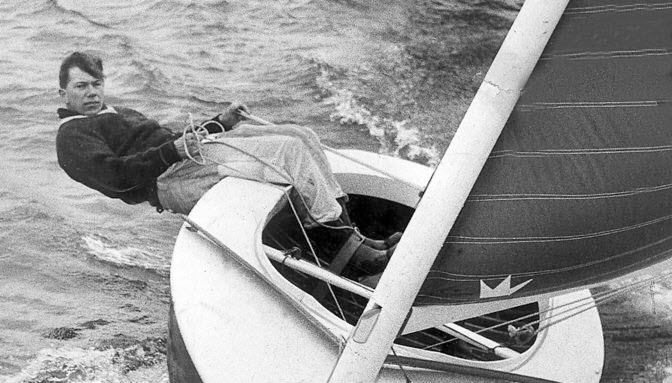
Paul Bert Elvstrom was born on February 25, 1928 in Hellerup, Denmark. His father was a sea captain who died when Paul was young. He lived right along the strait between Denmark and Sweden, and became obsessed with sailing from a very young age. A neighbor who recognized his talent and interest gave him his first boat.

His first Olympic appearance came in 1948, when he was just 20 years old. He competed in the one-person heavyweight dinghy, which used a boat called the Firefly that year, which was usually manned by two sailors. All competitors sailed in 7 races, with scores given after each race based on order of finish, and each sailor's worst race not counted. 

Elvstrom got his worst race out of the way early, as he failed to finish the first race, resulting in no points scored. He improved over the next several races, and was in 8th place after the fifth race, but after winning the final two races, he pulled into the lead and walked away with a gold medal.

After the 1948 Olympics, 4th-place finisher Rickard Sarby of Sweden designed a new ship which he called the Finn, which was designed for a single sailor, and became the model used in the event starting in 1952. Elvstrom returned to defend his gold medal, and had an easy time of it, winning 3 of the first 4 races outright, which gave him a big enough lead that he could have skipped the final 3 races and still won the gold. Instead, he finished 3rd, 4th, and 1st in those three races and ended up with the largest win ever in the event.

He was expected to win again in 1956, and he started out well, winning the first race, but he struggled in the next two races, finishing in the middle of the pack in each, which left him in second place nearly halfway through. After that point, he figured it out, winning 4 straight races to run away with the gold medal yet again.

He returned in 1960 looking to make history. No Olympian had ever won the same individual event 4 straight times, and he was favored to be the first. He won 3 of the first 6 races, and finished in the top 5 in the others, leaving him with a large enough lead that he didn't need to compete in the final race, so he sat out and took the easy gold. 

He skipped the 1964 Olympics, then made his return in 1968, but in a different event, the two-person keelboat, sailing with partner Poul Mik-Meyer. The pair remained in contention for a medal throughout the competition, and was in third place entering the final race, but they already couldn't reach gold at that point. Unfortunately, they finished 5th in that race, which put them in 4th place overall, leaving them just short of a medal.

In 1968, he competed in the three-person keelboat, which was shortened to 6 races due to the hostage situation in the Olympic village, but his team finished around the middle in the first two races, leaving them far behind the pack. They won the third race, which put them in 5th overall, but they dropped to 12th after race four, and after they bumped another boat in race five, resulting in a disqualification, and they refused to finish the event in protest.

He skipped the next two Olympic games, but returned in 1984 to compete in Los Angeles in the Multihull event, partnering with his daughter, Trine. They kept themselves in third place through the first four races, but then fell to 4th place after finishing #14 in race five, and remained there for the rest of the event, falling just short of a medal again.

The father-daughter pair returned for one final attempt at a medal in 1988, but they only finished in the top 5 in one race, and were never in medal contention. His Olympic career spanned 40 years, and he competed in 8 different games, and while he was in contention for medals late in his career, winning 4 straight gold medals in the same event made his one of the greatest Olympians of all time.


Thursday, July 23, 2026

Top 150 Olympic Athletes: #114 - Laszlo Papp


Laszlo Papp

Hungary

Boxing


Overall Ranks

#6 among Hungarian Olympians

#2 among Boxers

#1 among Hungarian Boxers


Olympic Results

1948

Middleweight - Gold

1952

Light-Middleweight - Gold

1956

Light-Middleweight - Gold

Total

Events - 3

Gold - 3


Laszlo Papp was born on Mar 25, 1926 in Budapest, Hungary, and began boxing at the age of 16. His training was interrupted soon afterward by World War II, but as soon as the war ended, he picked up his gloves again, and became one of the greatest boxers ever.

He made his Olympic debut in 1948 in London, and he made a big splash immediately. He knocked out his first opponent in the second round, then won on a TKO early in his next match, followed by a first-round knockout in the quarterfinals. His next two fights were a little tougher, but he still won both in unanimous decisions, with the final coming over Johnny Wright, who was in front of his home crowd.

In 1952, new weight classes were added to the Olympic boxing schedule, allowing Papp to fight in the light middleweight division instead of middleweight, where he had won in 1948. He started out dominant again in Helsinki, with two straight second-round knockouts to open the tournament, followed by 3 straight unanimous decisions to give him his second straight gold medal.

The field in Melbourne in 1956 was much smaller, and Papp was a big favorite to win again, which would make him the first boxer ever to win 3 gold medals. After a first-round bye, he knocked out his first opponent in the third round, then defeated the defending European champion by unanimous decision in the semifinal. He faced Jose Torres, an American from Puerto Rico, in the final, and won again by decision, but for the first time it was not unanimous, but it didn't matter, as Papp had made history with his 3rd gold medal.

Turning pro was not allowed in communist Hungary, so when Papp turned pro in 1957, he did all of his training and fighting in Austria. He fought 29 professional fights over the next 7 years, never losing a single fight, before Hungary revoked his visa, ending his pro career, making him one of the few fighters to ever retire without a loss.

It may have been a long time ago, but Papp was completely dominant right up until his final Olympic bout, winning nearly half of his bouts by KO or TKO. He was the first boxer ever, and one of only 3 so far, to win 3 Olympic gold medals, and is definitely one of the greatest Olympians of all time.


Thursday, July 16, 2026

Top 150 Olympic Athletes: #121 - Emil Zatopek


Emil Zatopek

Czechoslovakia

Athletics


Overall Ranks

#35 among Track & Field Athletes

#26 among Male Track & Field Athletes

#2 among Czechoslovakian Olympians

#1 among Male Czechoslovakian Olympians


Olympic Results

1948

5000m - Silver

10000m - Gold

1952

5000m - Gold

10000m - Gold

Marathon - Gold

Total

Events - 6

Gold - 4

Silver - 1


Emil Zatopek was born on September 19, 1922 in Koprivnice, Czechoslovakia, the seventh child in a large family, and started working at the local show factory when he was 16. One day, a coach picked out a few of the young workers at the factory and ordered them to run in a local race. Zatopek came in second, but he caught the running bug.

In 1944, he broke the national records in the 2000, 3000, and 5000 meter races. He continued improving, and by 1948 was expected to challenge for Olympic medals. His first event was the 10000m, where the favorite was Viljo Heino of Finland, the world record holder, and Heino led for the first 3000 meters before Zatopek overtook him. The two remained close for the next 3000 meters, but after Heino made a push to take back the lead, Zatopek pushed harder and pulled away, and Heino dropped out soon after. By the finish, Zatopek was ahead of the next racer by 48 seconds, and had lapped all but two other runners.

His next race was the 5000m, which took place in a heavy rainstorm. He took the lead early, with a pack of three other runners keeping pace behind him, but Gaston Reiff of Belgium made a move at the start of the ninth lap and pulled away from the others. He was ahead by 30 meters at the start of the final lap, and Zatopek made a hard push through the entire lap, but ended up falling short by 0.2 seconds and had to take the silver.

He broke the world record in the 10000m five times over the next four years, and didn't lose a single race over that time, so he was a big favorite to repeat in Helsinki in 1952. It was his first event, and once he took the lead in the 6th lap, he never looked back, beating the runner-up by more than 15 seconds and setting a new Olympic record, though he was still nearly 15 seconds short of his own world record.

Next up was the 5000m, where he was also the favorite, but this one would be much closer. Zatopek took the lead early, with 4 others keeping pace for several laps, and by the final lap, there was still a group of 4 runners led by Zatopek all together. The others all moved past him early in the final lap, but as the rounded the final corner, Zatopek shifted gears and passed all 3, winning the event by 0.8 seconds over Alain Mimoun of France, who had been runner-up to Zatopek in all 3 of his gold medal wins.

A few hours after winning that race, Zatopek watched his wife win the gold medal in the javelin throw, bringing yet another Olympic victory to the family. A few days later, Zatopek decided to try running the marathon, a race he had never run before. Jim Peters of Great Britain, the pre-race favorite, shot out fast, while Zatopek hung back with a couple of other runners. About halfway through, Peters started to slow down, and was passed by Zatopek and Gustaf Jansson of Sweden, but Zatopek never slowed down, eventually pulling away from Jansson and winning the race by over 2.5 minutes and setting a new Olympic record. He was the first to ever win all 3 distance events in the same Olympics, and so far the only one.

He planned to defend his Olympic titles in 1956, but suffered a hernia not long before the Olympics, which required surgery. He began training again as soon as he was allowed, but decided to only run the marathon in Melbourne, finishing in 6th place, about 4.5 minutes behind Mimoun, the winner. After finishing, Mimoun waited for Zatopek at the finish line, excited to share his victory, and Zatopek responded by saluting Mimoun.

He retired the next year, though his wife kept competing, winning the silver medal in 1960 before she hung it up. Zatopek had a falling out with the Communist Party in 1968, and was forced to work in menial jobs for the remainder of his life, but he deserves to be remembered as one of the greatest Olympians of all time.