Showing posts with label 1960 Olympics. Show all posts

Monday, September 14, 2026

Top 150 Olympic Athletes: #61 - Yukio Endo


Yukio Endo

Japan

Artistic Gymnastics


Overall Ranks

#14 among Gymnasts

#8 among Male Gymnasts

#6 among Japanese Olympians

#5 among Japanese Gymnasts


Olympic Results

1960

Team - Gold

1964

Individual All-Around - Gold

Team - Gold

Floor Exercise - Silver

Parallel Bars - Gold

1968

Team - Gold

Vault - Silver

Total

Events - 24

Gold - 5

Silver - 2


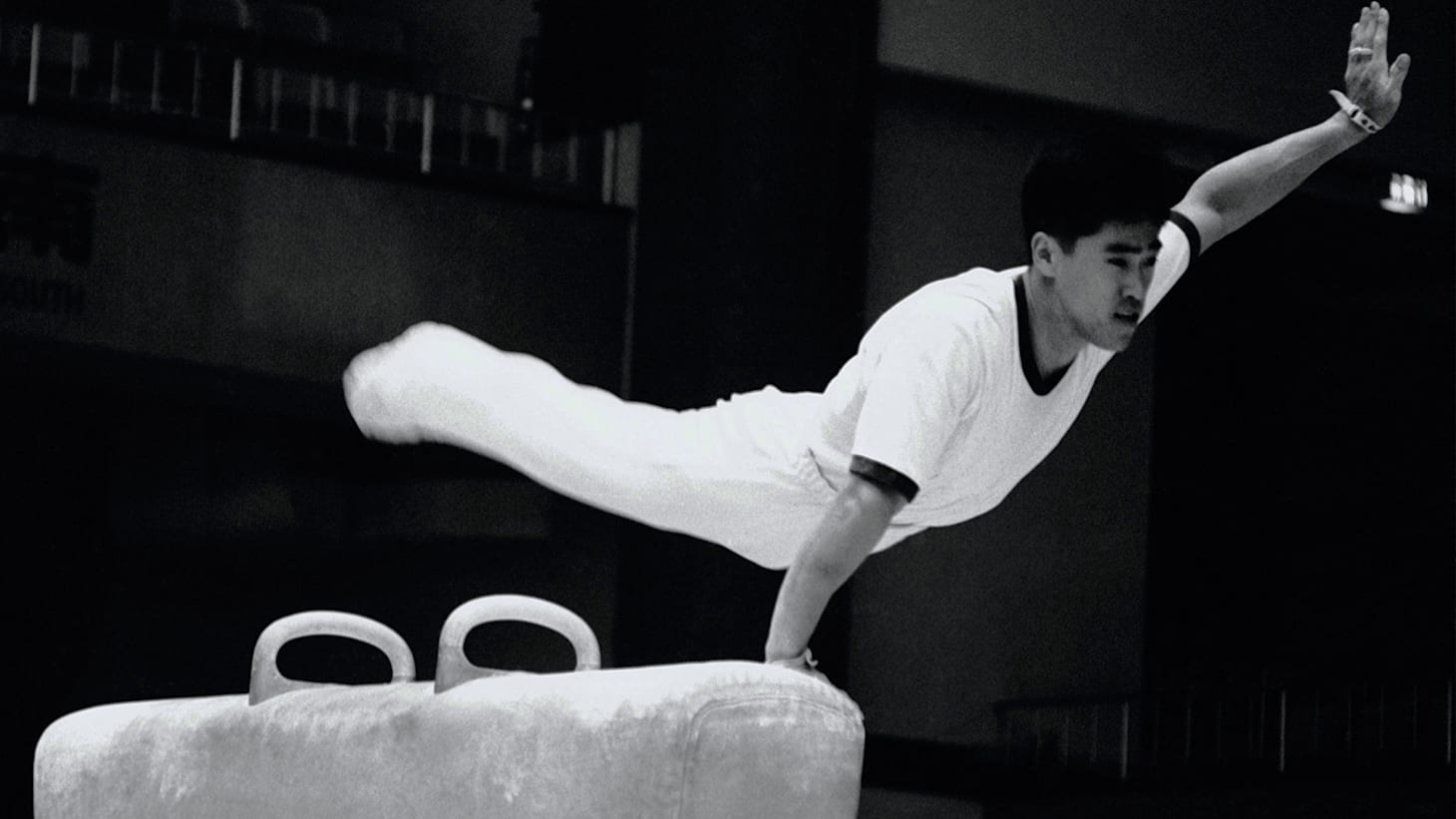
Yukio Endo was born on January 18, 1937 in Yanaisado, Japan, the son of a pharmacist, and participated in gymnastics as a youth, but graduated from college before he made the Japanese Olympic team for the first time in 1960.

When they arrived in Rome, the Soviet team had won the past 2 team gold medals, with the Japanese taking silver in 1956. Endo was the 3rd-highest-scoring member of the team during the team event in Rome, and for the first time in their history, the Japanese won team gold, beating the Soviets by 2.5 points.

The individual all-around medals were determined based on performances during the team event, and Endo finished in 5th place among all participants, falling behind 2 of his teammates, and 2 members of the Soviet team. The top 6 in each individual apparatus qualified for the event finals, and Endo qualified for 2, the vault and the horizontal bar. He was tied for 6th on the parallel bars, but the tiebreaker went to Yury Titov of the USSR. He ended up finishing 4th in the horizontal bar and 5th in the vault, putting him in the top 5 in four events, but he earned only the team medal that year.

In 1962, he won the World Championship in the floor exercise, his only individual win in the world championships. By 1964, he had become the strongest member of the Japanese team, and when they went to defend their gold medal in Tokyo, they were successful, once again beating the Soviets by 2.5 points.

When the individual all-around scored were tabulated, Endo had pulled off a gold medal victory that was a small surprise. He had taken all-around silver at the last world championship, but he dominated this time, winning by 0.55 points, which was more than the gap between 2nd and 8th place. He also qualified for 5 of the 6 event finals, failing only in the pommel horse.

Endo was the top qualifier in floor exercise, and was the defending world champion, but in the final, he had his worst performance, and fell down to silver, while Franco Menichelli of Italy leapfrogged him for gold. He was the #3 qualifier in the vault, but another poor performance dropped him to 6th after the final.

The parallel bars were different, however. He was the top qualifier once again, but barely ahead of 3 others. He put up a 9.9 score in the final to run away with the gold, while nobody else exceeded 9.7. He was third qualifier in the horizontal bar, but fell to 5th after the final, and finished 6th in the rings despite qualifying at the top. He finished his home Olympics with 3 golds and a silver, but he could have had so much more.

Endo was back for his 3rd Olympics in 1968, but he was no longer the star of the Japanese team. He still performed well in the team event, but was 5th best on the strong Japanese team, as they won their third straight gold medal, this time beating the Soviets by 4.8 points.

Even though he was the 5th-best member of the Japanese team, that still was good enough to place him 8th overall in the individual all-around, and he qualified for 2 event finals, the vault and the horizontal bar. Endo was tied for second after qualifying in the vault, but after teammate Takeshi Kato struggled in the final, Mikhail Voronin of the USSR moved up to gold, while Endo stayed in silver medal position. Endo was put in the horizontal bar final after Sawao Kato decided not to compete, but he didn't improve from his 6th place entry into the final.

He retired after the 1968 Olympics, and became a coach and professor. He coached the Japanese team at the 1972 Olympics, where they again won gold, and was later president of the Japanese Olympic Committee. He died of cancer in Tokyo on March 25, 2009. With his qualifying scores, especially in 1964, he could easily have ended up with 11 Olympic medals, but he did end up with 7, five of them gold, including a dominant all-around win, making him one of the greatest Olympians of all time.


Sunday, August 16, 2026

Top 150 Olympic Athletes: #90 - Yury Titov


Yury Titov

USSR

Artistic Gymnastics


Overall Ranks

#18 among Gymnasts

#12 among Male Gymnasts

#9 among Soviet Olympians

#5 among Soviet Male Gymnasts


Olympic Results

1956

Individual All-Around - Bronze

Team - Gold

Vault - Bronze

Horizontal Bar - Silver

1960

Individual All-Around - Bronze

Team - Silver

Floor Exercise - Silver

1964

Team - Silver

Horizontal Bar - Silver

Total

Events - 24

Gold - 1

Silver - 5

Bronze - 3


Yury Yevlampiyevich Titov was born on November 27, 1935 on Omsk, USSR, and took up grymnastics at age 14. By the time he was 19 years old, he had been named to the Soviet national team, and his first major international competition was the 1956 Olympics in Melbourne.

That year, all of the gymnastic events were held at once, with each gymnast's score counting toward the individual event, the all-around, and the team event at the same time. Titov's best individual event was the horizontal bar, where he scored a 19.4, good enough for the silver medal, but 0.2 points behind Takashi Ono of Japan, who won the gold.

He won another individual medal in the vault, this one a bronze. He was only 0.1 points behind the gold medalists, so his overall score was still very good. He came in 5th place in two of the other individual events, and finished in the top 10 in all 6, which helped him earn the bronze medal in the individual all-around, though he was more than 0.4 points behind the other medalists, Ono and Viktor Chukarin, his Soviet teammate.

The team event was close. The USSR had won gold in 1952, and Chukarin had won his second straight all-around gold, and with Titov as a strong second scorer on the team, the Soviets were able to defeat the Japanese team by 1.85 points, earning a gold medal for the team. This would be the last time Japan lost the team event until 1980, when they didn't compete.

In 1960, the format had been updated so that the individual events had a final round after the team and all-around events had been completed. In the individual all-around, Titov finished third again, earning a repeat bronze, with Ono again taking the silver, and a new Soviet teammate, Boris Shakhlin, taking the gold.

In the team event, the 6 Japanese gymnasts all finished among the top 9 overall, making them very hard to beat. With Shakhlin and Titov's impressive individual scores, they were able to make it close, but the Soviets still lost by 2.5 points, but were 13.65 points ahead of Italy, who won bronze.

Titov qualified for all 6 event finals, but only managed to medal in one, the floor exercise. In that event, he qualified in second, and managed to hold on to it after the final performance, though the third place finisher closed the gap a little, but he still managed to take silver. He had qualified third in both the rings and the pommel horse, but poor final performances dropped him out of the medals in each, but it was still very impressive that he qualified for all 6 finals.

The format remained the same in 1964, when Titov returned for his third Olympics. By that time, he had been surpassed by several of his teammates, and finished 13th overall in the individual all-around, fifth among the Soviets, and a full point short of the medals. In the team event, there were still just two teams competing for gold, but the Soviets lost to Japan again by an identical 2.5 point margin to repeat as silver medalists.

Titov qualified for only one event final that year, the horizontal bar, where he had earned his first medal back in 1956. He qualified #2 behind Shakhlin, then scored a 9.8 in his final performance, which allowed him to hold onto his spot and earn another silver medal. He remained on the national team for two more years, then retired after the 1966 World Championships, with 9 Olympic medals to his name.

After competing in the Olympics 3 different times, Titov ended his career with only 1 gold medal, which came in the team event in 1956, but he won 5 silvers and 3 bronzes as well, and was in the top six 7 other times. While he was never the best in the world, or even in his own country, he was near the top so often and for so long, that he has earned a spot as one of the greatest Olympians of all time.


Sunday, August 9, 2026

Top 150 Olympic Athletes: #97 - Herb Elliott


Herb Elliott

Australia

Athletics


Overall Ranks

#29 among Track & Field Athletes

#23 among Male Track & Field Athletes

#2 among Australian Olympians

#1 among Australian Track & Field Athletes


Olympic Results

1960

1500m - Gold

Total

Events - 1

Gold - 1


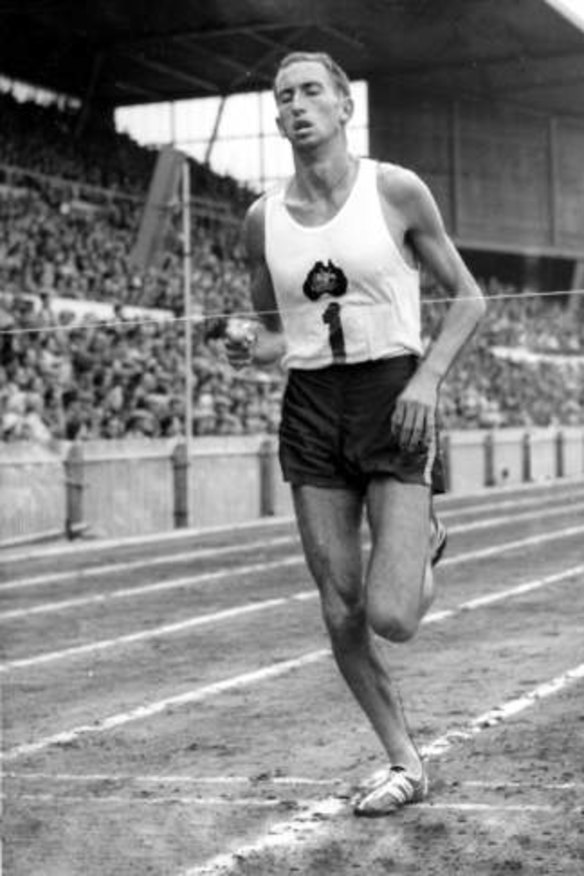
Herbert James Elliott was born on February 25, 1938 in Subiaco, Australia, near Perth, and began running in high school, and did most of his training in his youth on sand dunes, which made running on a track easier by comparison. In August, 1958, he set his first world record in the mile, at 3:54.5, and later that month, he set the world record in the 1500m, at 3:36.

He attended the University of Melbourne while also preparing for the 1960 Olympics in Rome. His only event was the 1500m, and after easily qualifying for the final as the overwhelming favorite, he was content to sit behind Michel Bernard of France for the first half of the race. When there was about 600m remaining, he made his move, sprinting away from the field and cruising to an easy victory, only slowing down near the end when he knew he had the world record in hand. He won by nearly 3 seconds, and dropped the world record to 3:35.6.

After the Olympics, he transferred to the University of Cambridge in England, and though he still raced a bit over the next two years, he decided to retire in 1962 to focus on his studies. He only competed actively for about 5 years, and never lost a single race during that time. He held the world record in the 1500m until 1967, a span of 9 years from the first time he set it, and his dominant performance in his only Olympic event made him one of the greatest Olympians of all time.


Friday, August 7, 2026

Top 150 Olympic Athletes: #99 - Rudolf Karpati


Rudolf Karpati

Hungary

Fencing


Overall Ranks

#8 among Fencers

#7 among Male Fencers

#4 among Hungarian Olympians

#4 among Hungarian Fencers


Olympic Results

1948

Team Sabre - Gold

1952

Team Sabre - Gold

1956

Sabre - Gold

Team Sabre - Gold

1960

Sabre - Gold

Team Sabre - Gold

Total

Events - 6

Gold - 6


Rudolf Klein was born on July 17, 1920 in Budapest, Hungary, and later changed his surname to Karpati in order to hide the fact that he was Jewish from the Nazis. Following World War II, he joined the Hungarian national fencing team, which had dominated the sabre events for the decade prior to the war, and would continue to do so for the duration of Karpati's career.

His first Olympic experience came in London in 1948, where he competed in the team sabre event. Hungary got a bye in the first round, then had an easy victory over Egypt in the quarterfinals, where Karpati didn't compete, but he won 6 of his 8 matches in the semifinal pool as Hungary cruised into the final pool of 4 teams. Hungary beat all 3 of its opponents in the final pool, though Karpati struggled against runner-up Italy, losing 3 of his 4 matches, finishing with 5 wins in 10 tries in the final, but he still earned a gold medal as part of the dominant team.

He was again on the Hungarian team in Helsinki in 1952, and again competed in just the team event. This time he went 13-1 in his matches as Hungary went undefeated on their way to the final pool, and they also went undefeated in the final pool, though they were trailing Italy 7-6 with only two bouts left. After Tibor Berczelly won his bout, it was up to Karpati to determine the color of Hungary's medal, and he came through, keeping their streak of gold medals alive.

In 1956, Hungary was advanced straight to the semifinals, where they only needed a quick 9-1 victory over the USA to advance to another final. The toughest match of the final came against the USSR, who had just invaded Hungary a couple of weeks earlier, and they were able to pull out a hard-fought 9-7 victory, with Karpati supplying 3 of the victories, and Hungary won another gold without a loss.

He also competed in the individual event for the first time in 1956, alongside the past two champions of the event, Kovacs and Gerevich of Hungary. Karpati won both of his pools on his way to the final, where he was joined by his two countrymen in the field of 8, and after a round-robin among them all, Karpati came out on top, with a 6-1 record, and kept Hungary's gold medal streak alive, even though it was a bit of a surprise. After the Olympics, the other 3 Hungarian sabre fencers fled to the United States rather than return to Soviet-controlled Hungary, but Karpati, Kovacs, and Gerevich returned home.

He returned to defend his gold medals in 1960 in Rome, even though he was now 40 years old. This time, the individual event was held first, and he went 15-3 through the first 4 rounds of round robin pools, each of which he won, to advance easily to another final. In the final pool, he won 5 of his 7 bouts, which turned out to be enough, as 4 others tied at 4-3, so Karpati was able to walk away with another individual gold medal.

The Hungarian team was weaker than normal headed into the team event, after the defections of 1956. The three holdovers were all over 40 years old, but all were still very skilled. Karpati didn't need to compete in the first round win, which advanced them to the quarterfinals, where they beat Romania easily, 9-3, with 3 wins from Karpati. In the semifinals against Italy and the final against Poland, they were carried by their new younger teammates, and won both in close contests, 9-6 and 9-7 to successfully win another team gold.

Karpati retired in 1961, having competed in 6 Olympic fencing events, and winning gold in all 6. Four of his 6 gold medals came in team events, with Karpati making big contributions to two of them, and his two individual golds were closely contested and somewhat surprising, but he made it through each time, which makes him one of the greatest Olympians of all time.


Saturday, July 25, 2026

Top 150 Olympic Athletes: #112 - Iolanda Balas


Iolanda Balas

Romania

Athletics


Overall Ranks

#33 among Track & Field Athletes

#8 among Female Track & Field Athletes

#1 among Romanian Olympians


Olympic Results

1960

High Jump - Gold

1964

High Jump - Gold

Total

Events - 3

Gold - 2


Iolanda Balas was born on December 12, 1936 in Timisoara, Romania, to Hungarian parents. Her father served in the Hungarian army during World War II and was captured by the Soviets, who eventually returned him to Hungary, where he was forced to stay. Balas and her mother tried to return to Hungary to reunite the family after the war, but were not allowed to leave by the Romanian government.

She began jumping at age 13, and by 1955, when she was 18 years old, she had set the world record with a jump of 1.75 meters (5'9"). She went to the 1956 Olympics in Melbourne as the favorite as a result, and easily cleared both heights in qualifying, along with 17 others jumpers. She was one of 6 jumpers to clear 1.64 meters without missing a jump, and one of 10 to clear the height eventually.

Only 7 jumpers were able to succeed at 1.67 meters, with 4 doing it on the first try, while Balas needed a second attempt. and 2 others made in on the third and final try. When the bar went up to 1.7 meters, only Millie McDaniel of the USA was successful, giving her the gold medal. She then had the bar raised to 1.76 meters, which she cleared on her second attempt to break Balas' world record. Because she had missed a jump on the previous height, Balas was awarded 5th place behind the jumpers who didn't need an extra attempt.

Balas took the world record back in 1958, becoming the first woman to reach 1.8 meters, and she was once again the favorite in 1960 in Rome. She was the last to start jumping that year, waiting until the bar was at 1.6 meters to take her first attempt, which she made easily. 15 jumpers cleared 1.65 meters to advance to the final round, but only 6 had made it without a miss.

The entire field cleared 1.65 again in the final, but 10 jumpers were unable to get to 1.68, leaving 5 jumpers, none of whom had missed yet. Three jumpers were successful on the first jump at 1.71, with another making it on her final attempt, but at 1.73, only Balas was successful, and she had her first gold, but she didn't stop there, going over at 1.77, then 1.81, and then 1.85, before failing at 1.87. Her new Olympic record jump was about 6'1", 6 inches higher than any other jumper in the competition.

The next year, she set another new world record of 1.91 meters (6'3"), which would not be broken for 10 years. She had a torn ankle tendon when the 1964 Olympics came around, but competed anyway. At that point she hadn't lost a single competition in 8 years, since her failure in her first Olympics, but she was seen as possibly vulnerable due to the injury.

15 jumpers cleared 1.68 meters to qualify for the final, but 3 dropped when attempting that height again in the final. One more was lost at 1.71, but the field really narrowed at 1.74, with 7 missing at that height. Balas skipped that height to nurse her injury, but made it over 1.76 on her first jump, along with Michele Mason Brown of Australia, with one other jumper making it on the final attempt. 

All 3 were successful again at 1.78, but the Soviet challenger dropped off at 1.8. At 1.82, Mason-Brown was unable to clear, giving Balas a second straight gold medal, but she kept going despite her injury, clearing both 1.86 and 1.90 on the first try, setting a new Olympic record. She then attempted to break her world record by jumping 1.92, but missed on all 3 attempts. She had again beaten all of her competition by a big margin.

She sat out for the next few years due to injury before officially retiring in 1967, at which point she married her coach, Ioan Soter, and became a physical education teacher. If she had performed up to her potential in her first Olympics, she would have been much higher on this list, but as it stands, her two dominant gold medal wins still make her one of the greatest Olympians of all time.


Friday, July 24, 2026

Top 150 Olympic Athletes: #113 - Paul Elvstrom


Paul Elvstrom

Denmark

Sailing


Overall Ranks

#1 among Sailers

#1 among Danish Olympians


Olympic Results

1948

One-Person Heavyweight Dinghy - Gold

1952

One-Person Heavyweight Dinghy - Gold

1956

One-Person Heavyweight Dinghy - Gold

1960

One-Person Heavyweight Dinghy - Gold

Total

Events - 8

Gold - 4


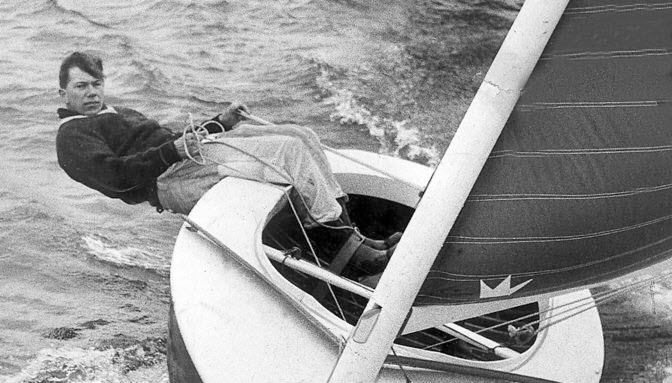
Paul Bert Elvstrom was born on February 25, 1928 in Hellerup, Denmark. His father was a sea captain who died when Paul was young. He lived right along the strait between Denmark and Sweden, and became obsessed with sailing from a very young age. A neighbor who recognized his talent and interest gave him his first boat.

His first Olympic appearance came in 1948, when he was just 20 years old. He competed in the one-person heavyweight dinghy, which used a boat called the Firefly that year, which was usually manned by two sailors. All competitors sailed in 7 races, with scores given after each race based on order of finish, and each sailor's worst race not counted. 

Elvstrom got his worst race out of the way early, as he failed to finish the first race, resulting in no points scored. He improved over the next several races, and was in 8th place after the fifth race, but after winning the final two races, he pulled into the lead and walked away with a gold medal.

After the 1948 Olympics, 4th-place finisher Rickard Sarby of Sweden designed a new ship which he called the Finn, which was designed for a single sailor, and became the model used in the event starting in 1952. Elvstrom returned to defend his gold medal, and had an easy time of it, winning 3 of the first 4 races outright, which gave him a big enough lead that he could have skipped the final 3 races and still won the gold. Instead, he finished 3rd, 4th, and 1st in those three races and ended up with the largest win ever in the event.

He was expected to win again in 1956, and he started out well, winning the first race, but he struggled in the next two races, finishing in the middle of the pack in each, which left him in second place nearly halfway through. After that point, he figured it out, winning 4 straight races to run away with the gold medal yet again.

He returned in 1960 looking to make history. No Olympian had ever won the same individual event 4 straight times, and he was favored to be the first. He won 3 of the first 6 races, and finished in the top 5 in the others, leaving him with a large enough lead that he didn't need to compete in the final race, so he sat out and took the easy gold. 

He skipped the 1964 Olympics, then made his return in 1968, but in a different event, the two-person keelboat, sailing with partner Poul Mik-Meyer. The pair remained in contention for a medal throughout the competition, and was in third place entering the final race, but they already couldn't reach gold at that point. Unfortunately, they finished 5th in that race, which put them in 4th place overall, leaving them just short of a medal.

In 1968, he competed in the three-person keelboat, which was shortened to 6 races due to the hostage situation in the Olympic village, but his team finished around the middle in the first two races, leaving them far behind the pack. They won the third race, which put them in 5th overall, but they dropped to 12th after race four, and after they bumped another boat in race five, resulting in a disqualification, and they refused to finish the event in protest.

He skipped the next two Olympic games, but returned in 1984 to compete in Los Angeles in the Multihull event, partnering with his daughter, Trine. They kept themselves in third place through the first four races, but then fell to 4th place after finishing #14 in race five, and remained there for the rest of the event, falling just short of a medal again.

The father-daughter pair returned for one final attempt at a medal in 1988, but they only finished in the top 5 in one race, and were never in medal contention. His Olympic career spanned 40 years, and he competed in 8 different games, and while he was in contention for medals late in his career, winning 4 straight gold medals in the same event made his one of the greatest Olympians of all time.


Tuesday, July 14, 2026

Top 150 Olympic Athletes: #123 - Shuji Tsurumi


Shuji Tsurumi

Japan

Artistic Gymnastics


Overall Ranks

#24 among Gymnasts

#14 among Male Gymnasts

#7 among Japanese Olympians

#6 among Japanese Gymnasts


Olympic Results

1960

Team - Gold

Pommel Horse - Bronze

1964

Individual All-Around - Silver

Team - Gold

Parallel Bars - Silver

Pommel Horse - Silver

Total

Events - 16

Gold - 2

Silver - 3

Bronze - 1


Shuji Tsurumi was born on January 29, 1938 in Tokyo, Japan, and made the Japanese Olympic gymnastic team just as they were rising. The Japanese had won the team silver medal in 1956, the first time they had won a team gymnastics medal.

Tsurumi contributed immediately upon making the team, taking 4th place in the Individual All-Around competition in Rome in 1960, falling one point short of winning a medal. All 6 Japanese team members finished among the top 9 in the Individual All-Around, with Tsurumi the second-highest scorer on the team behind Takashi Ono. Those performances led to the Japanese winning the team gold for the first time, 2.5 points ahead of the defending champion Soviets.

Tsurumi qualified for the event finals in two events, the vault and the pommel horse. He was the sixth and final qualifier in the vault, with a 9.5, which he improved to 9.65 in the final, but he still finished 6th. He was also the final qualifier in the pommel horse, but his final routine pushed him ahead of 3 other finalists, earning him a bronze medal.

In 1964, the Olympics went to Tokyo for the first time, and the Japanese were excited to compete in front of their home fans. In the Individual All-Around, the gold went to Tsurumi's teammate, Yukio Endo, by just over half a point, but Tsurumi took the silver in his hometown. This time all 6 Japanese team members were in the top 11, and they again won the team gold by 2.5 points ahead of the USSR.

This time Tsurumi qualified for 4 individual event finals, the same two as before, plus rings and parallel bars. He qualified 5th in the rings, and didn't improve in the final. He was the #3 qualifier in the pommel horse, where he had won bronze 4 years earlier, but this time he improved to win the silver, losing only to Miroslav Cerar of Yugoslavia, considered by many to be the greatest pommel horse athlete of all time.

Just like 4 years earlier, he was the final qualifier in the vault, but unlike last time, he was able to improve his standing, moving up to 4th place, falling less than one tenth of a point short of another medal. He was #2 in qualifying in the parallel bars, behind Endo, but after Endo had a nearly flawless routine to clinch the gold, Tsurumi was forced to settle for the silver, his third individual silver of 1964.

He continued competing for a couple more years, winning all-around individual silver in the 1966 World Championships, but he retired before the 1968 Olympics came around. He was a big part of the first two team championships of the Japanese gymnastics dynasty, and was in the top 4 of the individual competition both times. That, plus his 6 total Olympic medals, make him one of the greatest Olympians of all time.


Wednesday, July 8, 2026

Top 150 Olympic Athletes: #129 - Laurie Morgan


Laurie Morgan

Australia

Equestrian Eventing


Overall Ranks

#3 among Australian Olympians

#1 among Equestrian Event riders


Olympic Results

1960

Individual - Gold

Team - Gold

Total

Events - 2

Gold - 2


Lawrence Robert Morgan was born on February 5, 1915 in Yea, Australia, and grew up riding horses out in the country. As an adult, he became an Australian rules football player, playing 3 seasons for Fitzroy in the AFL, and was named one of the top rookies in the league in his first season. After retiring from football, he became a cattle rancher for many years.

He suddenly reappeared on the sporting scene in 1960, when he was chosen as the captain of the Australian Equestrian Event team for the Rome Olympics. Equestrian Eventing is a 3-day event, with dressage on day one, where the horse and rider must perform specific movements with minimal prodding from the rider, then a cross-country portion on day two, where the horse must complete a long course with obstacles with as few penalties as possible, followed by show jumping on the third day.

In the individual event, Morgan finished 18th out of 73 in dressage on day 1, which kept him in the running. The Cross Country portion is always the most important, with the most opportunities to score points, and it this competition it was separated into 5 sections. Morgan, on his horse Salad Days, had the best time in 3 of the 5 sections. Only 41 horses completed day two, and two even died during the process, which overshadowed Morgan's performance somewhat.

35 riders completed the show jumping portion, with Morgan near the middle, but he had few enough mistakes during the jumping phase that his cross country score wasn't beaten, finishing 23 points ahead of silver medalist Neale Lavis, also from Australia, who finished more than 35 points ahead of the bronze medalist.

In the team event, 4 riders from each country compete in the same process as in the individual event, with the top 3 in each phase counting toward the team score, meaning that at least 3 must finish each section in order for the team to qualify for a medal. The Aussies were in 6th place out of 18 teams heading into the super important second day. 

Morgan again posted the best score in the cross country phase, with his two teammates ending up with the next two best scores, but their 4th rider failed to finish, making him ineligible to participate in the final day. Another Australian rider, Bill Roycroft, managed to finish, but had been severely injured in a fall during the course, suffering a concussion and a broken collarbone, and was admitted to the hospital that evening.

The Australian lead was so large after day two that all they had to do was finish the jumping portion to guarantee themselves the gold medal, but that required 3 riders, and with one rider out, Roycroft checked himself out of the hospital and carefully ran the course in order to earn his team the gold medal. 

Morgan never competed in the Olympics again, maintaining his perfect record of winning every event, and eventually passed away on August 15, 1997 in Castlemaine, Australia. His two gold medals in the 1960 Olympics were the two largest victories in those events in history, making him one of the greatest Olympians of all time.