Showing posts with label Gold Medal. Show all posts

Monday, October 19, 2026

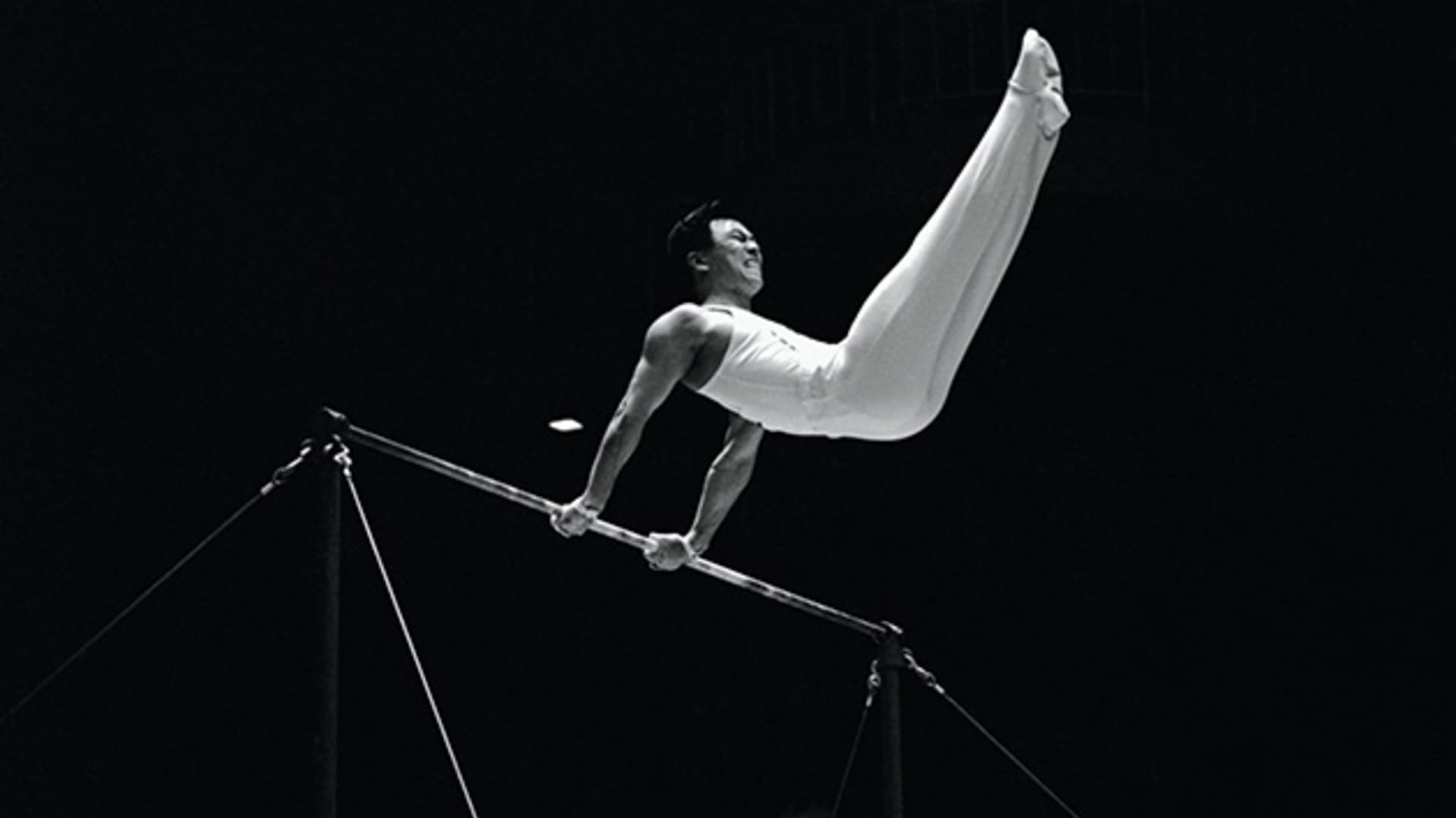
Top 150 Olympic Athletes: #26 - Takashi Ono


Takashi Ono

Japan

Artistic Gymnastics


Overall Ranks

#7 among Gymnasts

#5 among Male Gymnasts

#3 among Japanese Olympians


Olympic Results

1952

Vault - Bronze

1956

Individual All-Around - Silver

Team - Silver

Parallel Bars - Bronze

Horizontal Bar - Gold

Pommel Horse - Silver

1960

Individual All-Around - Silver

Team - Gold

Vault - Gold

Parallel Bars - Bronze

Horizontal Bar - Gold

Rings - Bronze

1964

Team - Gold

Total

Events - 32

Gold - 5

Silver - 4

Bronze - 4


Takashi Ono was born on July 26, 1931 in Noshiro, Japan, and was an only child who was taught gymnastics at a young age, and he ended up having one of the longest careers of any male gymnast ever. His first international competition came at the 1952 Olympics in Helsinki.

The Japanese team had not yet established themselves as a world power in gymnastics at the time, and in those Olympics, they came in 5th in the team competition, with the Soviets taking the gold in their first Olympics as a nation. Japan came in more than 7 points behind Finland, who had won the bronze medal.

Back then, the medals in all of the individual events were determined by the scores in the team event. Ono came in 12th in the all-around that year, and was the top scorer for the Japanese team, 2.55 points away from the medals. His best two individual events were the floor exercise, where he finished 4th, 0.1 away from a medal, and vault, where he tied for the bronze medal with Tadao Uesako, his teammate. He was far from the medals in the other 4 events.

By 1956, the Japanese had built up a much stronger team, and they put up a good challenge against the USSR in the team competition, finishing only 1.85 points behind as they won the silver medal. His scores in that competition were good enough for 2nd place in the individual all-around, just 0.05 points behind Viktor Chukarin (#83), who took the gold.

He also won 3 individual event medals that year, with a bronze medal in the parallel bars, 0.1 points behind Chukarin, and a silver medal in the pommel horse, where he was 0.1 ahead of Chukarin, but came in behind Boris Shakhlin of the USSR. He won the gold medal in the horizontal bar, finishing 0.2 points ahead of anyone else, to earn his first Olympic gold, and the first ever for a Japanese gymnast.

He was nearly as good at the 1958 World Championships, winning 4 silver medals and a bronze, but he was still getting better, and he would show his full potential in Rome in 1960. That year, he finally led Japan to a gold medal in the team event, as they upset the Soviets by 2.5 points, a result that started decades of Japanese dominance in mens gymnastics.

He once again came up just short of the individual all-around gold, however, again finishing 0.05 points behind a Soviet gymnast, this time Shakhlin. That year, the individual events had a separate final round whose score was averaged with the athlete's qualifying score from the team event, with the top 6 on each apparatus competing in the final, and Ono qualified for all 6 finals.

He was tied for 4th in qualifying for the floor exercise, and remained in that spot after the final performance. In the vault, he was the top qualifier, but in the final, Shakhlin had a slightly better score, and the result was a tie between the two, with each being awarded a gold medal. He was also the top qualifier in the parallel bars, but was outperformed in the final by two others, dropping down to the bronze medal.

He was the defending champ in the horizontal bar, and had the top qualifying score as well, and he followed that up by posting the highest final score as well, giving him a repeat gold medal, the third that he earned in Rome. He qualified in third for the rings, and was able to maintain that spot for another bronze medal. He was #4 going into the pommel horse final, but scored only an 8.95 in that round to fall to 6th place.

In 1962, he won his first and only individual World Championship gold medal, in his specialty, the horizontal bar. The Olympics came to Tokyo in 1964, and even though his skills were diminishing, he was chosen as team captain for the home team, and also recited the Olympic Oath at the opening ceremonies.

The Japanese repeated as gold medalists in the team event that year, earning Ono his 5th career gold medal, and 13 medal overall, which is still a record for any Japanese Olympian. He was the lowest-scoring member of the 6-man Japanese team, but that was still good enough for 11th place in the all-around.

He only qualified for one event final this time, in the horizontal bar, and he was in 3rd place after qualifying, but only scored a 9.3 in the final, finishing in 6th place. He retired soon afterward and began raising a family with his wife, Kiyoko, who had an Olympic bronze medal of her own in gymnastics. He won 2 silver medals in the individual all-around, coming up just short of gold both times, but won 8 other individual medals, and was the best gymnast on the team that started the Japanese dynasty, all of which makes him one of the greatest Olympians of all time.


Sunday, October 18, 2026

Top 150 Olympic Athletes: #27 - Vitali Shcherba


Vitali Shcherba

Belarus

Artistic Gymnastics


Overall Ranks

#8 among Gymnasts

#6 among Male Gymnasts

#1 among Belarusian Olympians


Olympic Results

1992

Individual All-Around - Gold

Team - Gold

Vault - Gold

Parallel Bars - Gold

Rings - Gold

Pommel Horse - Gold

1996

Individual All-Around - Bronze

Vault - Bronze

Parallel Bars - Bronze

Horizontal Bar - Bronze

Total

Events - 16

Gold - 6

Bronze - 4


Vitali Veniadziktavich Shcherba (also spelled Scherbo) was born on January 13, 1972 in Minsk, USSR, now part of Belarus. He was trained in the Soviet gymnastic schools as a child, and made his international debut when he was 19 years old at the World Championships, where he won all-around silver, plus 2 more individual silvers and a bronze to go along with team gold.

By the next year, the Soviet Union no longer existed, but he was selected to be part of the Unified Team that represented the former Soviet Union in Barcelona. In the team event, the Unified Team had the highest overall score in all 6 apparatus, and they easily won the gold medal by just more than 5 points over China, giving Shcherba his first gold medal.

Shcherba was the top qualifier in the individual all-around based on his scores from the team event, with the highest score on 4 apparatus. Those scores no longer counted toward the individual all-around, just qualifying, but he had the best score on 3 apparatus in the final, which enabled him to beat his Ukrainian teammate, Hryhoriy Misiutin, for the gold medal by 0.1 points, reversing their places from the previous world championship.

The top 8 on each apparatus in the team event advanced to the individual event finals, with a maximum of 2 per country, and Shcherba qualified for 5 of the 6 event finals, only missing out on the horizontal bar. Previously, final scores were the average of the qualifying and the final performance, but by this point, that had been changed to only count the final performance toward the medal. 

He was the top qualifier in the floor exercise, but on his final pass in his final performance, he stepped out of bounds, and the deduction landed him in 6th place, causing him to miss out on a medal. In the vault, he was the #2 qualifier behind Misiutin, and the final score was determined by the average of 2 vaults in the final. Shcherba had the 2 best vaults of the final, and won the gold medal over Misiutin by 0.75 points, which is a pretty large margin for an individual event.

Shcherba was the top qualifier on the parallel bars, but the favorite was Li Jing of China, who was the two-time world champion, but on his dismount, Li took a step, while Shcherba was able to nail his, scoring a 9.9 to pull off the upset and win his 4th gold medal in Barcelona. He was also the top qualifier on the rings, and after a 9.937 in the final, he took another gold medal, also over Li, this one by 0.62 points.

Shcherba was also the top qualifier in the pommel horse, along with teammate Valery Belenky, but Belenky faltered in the final, and Shcherba posted a 9.925, which ended up tying for the top score in the final with Pae Gil-Su of North Korea, so the two shared the gold medal, with no silver awarded. It was Shcherba's sixth gold medal of the games, and he is still the only gymnast ever to win 6 golds at a single Olympics.

After the Olympics, Shcherba moved to the United State, settling in State College, Pennsylvania, but at that point began competing for his homeland of Belarus, newly independent after the breakup of the Soviet Union. He won 8 gold medals at the World Championships over the next 3 years, including all-around gold in 1993, but he took bronze and silver in the all-around the next two years. He was still an easy choice to represent Belarus in the 1996 Olympics in Atlanta.

In the 1996 team event, the former Soviet republics had most of the best teams, with Russia taking the gold medal, China repeating as silver medalist, and Ukraine coming in bronze. Belarus, despite being much smaller, still managed a 4th place finish, and came in just 0.16 points behind Ukraine for the bronze medal.

Shcherba was the #2 overall qualifier for the individual all-around, thanks to 4 scores among the top 4 in an apparatus. He ended up matching those placements almost exactly in the final, but Li Xiaoshuang of China finished among the top 7 in every apparatus, and moved ahead of everyone else for the gold, and Shcherba ended up winning the bronze medal.

He qualified for 4 of the event finals, all but the rings and the pommel horse, both of which he had won at the last Olympics. He was the number 2 qualifier in the floor exercise, but again had a big mistake in his final routine, and ended up finishing in 7th place. He qualified 4th in the vault, but had won the last gold and 2 recent world championships, so he was a threat to medal. In the final, he had two very good vaults, but was only able to finish in third place, winning another bronze medal.

He was also 4th in qualifying in the parallel bars, but was the defending Olympic and world champion in the event. He received a 9.8 for his final routine, but two others beat that score, and he ended up winning his third bronze. He was the #2 qualifier in the horizontal bar, and again scored a 9.8 in the final, which was again good enough for just a bronze medal.

In 1997, he broke his hand in a motorcycle accident, and retired soon afterward. 20 years later, Tatiana Gutsu, who had been his teammate on the Unified Team in 1992 and had won the women's all-around, accused him of raping her when they were training together in 1991, when he was 19 and she was 15. He has denied the allegations, and no charges were ever filed. 

Shcherba's performance at the 1992 Olympics alone would be enough to put him on this list, as the only gymnast ever to win 6 gold medals at the same Olympics, but coming back to win 4 bronzes in 1996, including one in the all-around, helped move him much higher on the list of the greatest Olympians of all time.


Saturday, October 17, 2026

Top 150 Olympic Athletes: #28 - Jeremy Wariner


Jeremy Wariner

USA

Athletics


Overall Ranks

#8 among American Olympians

#6 among Track & Field Athletes

#6 among Male American Olympians

#4 among American Track & Field Athletes

#4 among Male Track & Field Athletes

#3 among American Male Track & Field Athletes


Olympic Results

2004

400m - Gold

4x400m Relay - Gold

2008

400m - Silver

4x400m - Gold

Total

Events - 4

Gold - 3

Silver - 1


Jeremy Matthew Wariner was born on January 31, 1984 in Irving, Texas, and was an excellent multi-sport athlete in high school, and was the state champion in both the 200m and 400m sprints. He enrolled at Baylor University after graduation, and as a sophomore won the NCAA championship in the 400m, then qualified for the Olympics in the same event that summer.

He was considered the favorite in Athens in the 400m, even though it was his first-ever international competition. The others in contention were fellow Americans Otis Harris (#48) and Derrick Brew (#80). Harris led the race through the first half, but Wariner had caught up by the end of the final curve, and he finished stronger down the stretch, beating Harris by 0.16 seconds to win the gold medal.

The three medalists joined forces a few days later in the 4x400m relay, joined by Darold Williamson in the final. Harris led off and gave the Americans a lead of almost a second, Brew extended it to 2.5 seconds, Wariner made it 3.5 during his leg, and they finished 4.69 seconds ahead of Australia to win the gold in the most dominant 4x400m relay in Olympic history.

In 2005 and 2007, Wariner won gold at the world championships in the same two events, giving him a perfect 4-year run of the 400m. He switched coaches early in 2008, and it seemed to have a negative impact, as he ended up losing two races to LaShawn Merritt early that year, including at the Olympic Trials, but he still got to compete again in Beijing.

In the 400m in 2008, Wariner and Merritt had the two fastest times in the semifinal, separated by only 0.03 seconds, so the final looked like it would be a great battle, and it was for a while. The pair was far ahead and close together through the final curve, but on the homestretch, Merritt turned on the burners and pulled away, winning by almost a full second as Wariner slowed down once he knew he had the silver.

In the 4x400m relay, the Americans again had all 3 medalists from the individual event competing, along with Angelo Taylor (#76), the hurdle champ at that distance. Merritt led off and gave them a lead of more than a second, then Taylor maintained that lead on his leg. Bronze medalist David Neville extended the lead to 1.28 seconds before handing off to Wariner, who pulled away and gave the Americans a win by more than 2.5 seconds and set a new Olympic record.

He returned to his original coach after the loss, but it didn't change anything. He came in second to Merritt again at the 2009 World Championships, then failed to qualify for the 2012 Olympics in the 400m, but was still added to the team to run in the relay. Unfortunately, he tore a hamstring shortly before the Olympics and was forced to withdraw. 

He continued competing for a few more years, but never got close to making the Olympics again, and ended up retiring by 2016. His two relay golds included the biggest margin in Olympic history, and an Olympic record in the other. He also beat two more of the athletes on this list to win his 400m gold, and wasn't far from winning another before fading down the stretch, but his dominance over a short period makes him one of the greatest Olympians of all time.


Friday, October 16, 2026

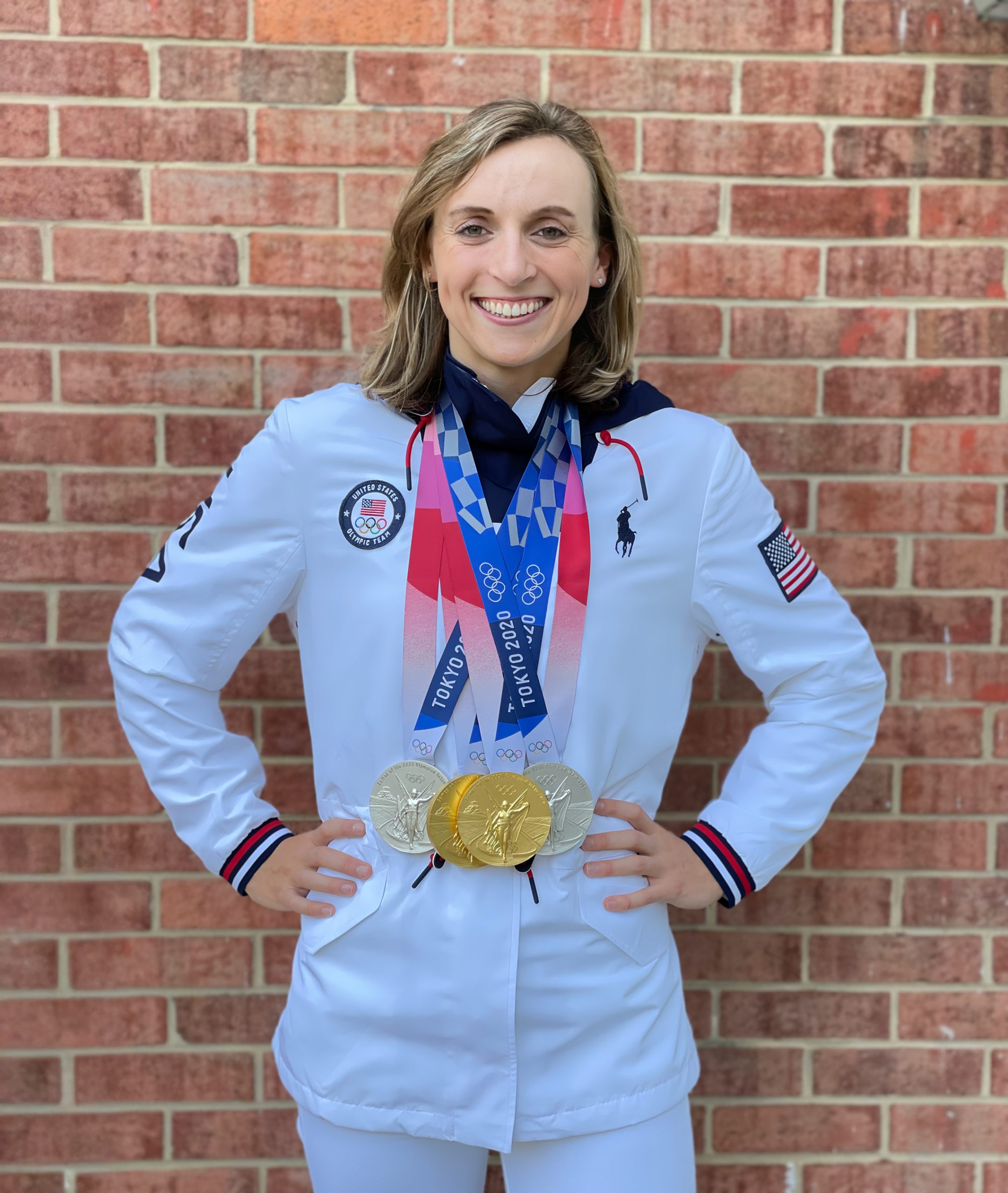
Top 150 Olympic Athletes: #29 - Katie Ledecky


Katie Ledecky

USA

Swimming


Overall Ranks

#9 among American Olympians

#4 among Swimmers

#3 among Female American Olympians

#1 among Female Swimmers


Olympic Results

2012

800m Freestyle - Gold

2016

200m Freestyle - Gold

400m Freestyle - Gold

800m Freestyle - Gold

4x100m Freestyle Relay - Silver

4x200m Freestyle Relay - Gold

2020

400m Freestyle - Silver

800m Freestyle - Gold

1500m Freestyle - Gold

4x200m Freestyle Relay - Silver

2024

400m Freestyle - Bronze

800m Freestyle - Gold

1500m Freestyle - Gold

4x200m Freestyle Relay - Silver

Total

Events - 15

Gold - 9

Silver - 4

Bronze - 1


Kathleen Genevieve Ledecky was born on March 17, 1997 in Washington, DC, and was raised in nearby Bethesda, Maryland. Her mother was a swimmer in college, and Katie started when she was 6. Her first senior competition was the 2012 US Olympic Trials, where she made the Olympic team by winning the 800m freestyle by more than 2 seconds.

She went to the London Olympics as a relative unknown, and was not considered likely to win. Becky Adlington, the British world record holder and defending champion, was expected to win again. Ledecky had the third-fastest time in qualifying, but she absolutely dominated the final, taking the lead right away, and increasing it until she couldn't be caught, before coasting in for the victory. She ended up just 0.53 seconds short of the world record, and won the event by 4.13 seconds, giving her a dominant gold medal at just 15 years of age.

The next year, she dominated the world championships, winning gold in all 4 of her events, and setting world records in each of her three individual events, the 400m, 800m, and 1500m, all before her junior year of high school. In 2015, she won gold medals in 5 events, the same 4 from 2013, plus the 200m, and she also set new world records in the two longest events again.

By the time she arrived in Rio in 2016, she was already recognized as one of the greatest swimmers in the world. She was competing in 5 events, with the first being the 4x100m freestyle relay. Australia was the big favorite in this event, and even with Ledecky swimming the anchor leg, the Americans weren't able to keep up, losing by 1.2 seconds, but still managing to take the silver medal.

Her first individual event was the 400m freestyle, where she was a massive favorite. She had the fastest time in qualifying by over 4 seconds, and was even better in the final, winning by almost 5 seconds and breaking her own world record by nearly two seconds to win her first gold in Rio.

Her next event was the 200m freestyle, which was the one where she was most vulnerable. She won her first heat, but came in second in her semifinal to Sarah Sjostrom of Sweden, who was expected to be her top challenger entering the event. In the final, she was in 5th at the first turn, but closed the gap and was nearly tied at the halfway point. She took the lead soon afterward, and held on as Sjostrom made a strong final push, but Ledecky still won by 0.35 seconds to take another gold medal.

The next event was the 4x200m freestyle relay, where the USA was a big favorite, with the past 2 Olympic champions on the team, but it didn't turn out to be easy. Sweden was ahead of them by 0.01 seconds at the first exchange, but both were passed by Australia on the second leg, with America still in second, now by 0.31 seconds. That deficit increased to 0.89 seconds by the time that Ledecky entered the pool as the anchor, but she swam the fastest leg of the competition by nearly a full second, and by the end she was nearly 2 seconds ahead of the Australian swimmer and had her third straight gold.

She finished up with the 800m, her strongest event. She won her heat by more than 6.5 seconds, in a time that was nowhere near her best. In the final, she put it out of reach almost immediately, leading by over 2 seconds after just 100m, then increasing her lead after every split, leading to her eventual win by 11.38 seconds, the second-largest margin in the history of the event. She also broke her world record again by almost 2 seconds, and now owned the 12 fastest times in the history of the event.

After the Olympics, she enrolled in college at Stanford, where she had no trouble with the competition, setting 12 NCAA records as a freshman. In 2017, she won 5 golds and a silver at the world championships, falling only in the 200m. She set 3 more NCAA records as a sophomore, then decided to turn pro, skipping her final 2 years. At the 2019 World Championships, she was sick and dropped out of most of her events, but still managed to win the 800m freestyle. She graduated from Stanford in 2020 with a degree in psychology.

She competed in 5 events again at the 2020 Tokyo Olympics in 2021, this time adding the new 1500m freestyle, while dropping the 4x100m relay, which was never her specialty. She started with the 400m freestyle, where Ariarne Titmus of Australia was expected to challenge her, and she did. Ledecky took the lead early in the final, and held it through 300m, but Titmus was always close behind, and pulled ahead before 350m, then had a strong finish to beat Ledecky by 0.67 seconds, the first individual Olympic loss of Ledecky's career, but still a silver medal and her second-fastest time ever.

Next was the 200m freestyle, her shortest event, and Titmus was the favorite in this one, as Ledecky was generally better at the longer distances. Ledecky had the best time in the prelim, and third-best in the semi, but was no match for Titmus in the final, and ended up coming in 5th, more than 1.5 seconds behind the gold medal time. It was the first, and so far only, time in Ledecky's career that she failed to win an Olympic medal.

Just over an hour later, she was competing in the 1500m final, the first time the event had been held in the Olympics. She had the 23 fastest times in history at that point, and even though she didn't attempt to beat her world record time, she had a comfortable lead for the entire race, and won by just over 4 seconds to win her first gold in Tokyo.

Next up, in the 4x200m relay, Ledecky was hoping for a repeat of her 2016 performance, but China's team was too strong. The Americans were nearly 2 seconds behind after the first leg, and remained around that point through the next two legs as well, leaving Ledecky a tough chore as the anchor. She again swam the fastest leg of anyone in the event, good enough to pass Australia for silver medal position, but she came up 0.4 seconds short of catching up to China, and had to settle for second this time.

She finished up with the 800m freestyle, where she was the 2-time defending champion, but this time Titmus was expected to challenge her. Ledecky ended up leading the entire race, with Titmus keeping herself in contention most of the way, but Ledecky never let her catch up, and won the race by 1.26 seconds, and the pair finished more than 4.5 seconds ahead of anyone else. This made Ledecky the first swimmer ever to win a distance event 3 times, and made her both the youngest and oldest winner of the event ever.

At the 2022 World Championships, she was back to form, winning gold in all 4 of her events. In 2023, it was 2 golds and 2 silvers in the same events, losing in the relay and the 400m, with Titmus winning that one. She qualified to swim in her 4th Olympics in Paris in 2024, this time competing in just 4 events.

Her first event was the 400m freestyle, where she had lost in 2021, but was still one of the top competitors. Titmus was back, and they were joined by Summer McIntosh of Canada, who had broken the world record the year before. In the final, Titmus took off fast, and by the halfway point, Ledecky was too far behind to catch up. McIntosh kept close for a while, but eventually fell back, and Titmus won the gold easily, with Ledecky finishing in third and winning her first-ever Olympic bronze.

Next was the 1500m, where she was the best ever by far. She easily qualified for the final, then easily beat her Olympic record from Toyko in the final, posting the 8th-best time in history and winning the event by over 10 seconds. That medal was the 12th of her career, which tied her for the most ever by a female swimmer.

She swam in the 4x200m relay next, this time being assigned the third leg. Australia jumped out to a big lead early, and was never really challenged, but Ledecky was able to erase a full second deficit to China during her leg to put the Americans in second place, which they held through the final leg to win the silver medal.

Her final event was the 800m, where she was the 3-time defending champ, but she had lost a race in the event for the first time ever just a few months earlier. In the final, Titmus again attempted to challenger her, keeping it close through the first 500m, but then she fell off the pace, and Ledecky pulled away to win the event for the 4th straight time at the Olympics, making her one of only 6 athletes to ever win the same individual event 4 times in a row.

Ledecky won 2 more gold medals at the 2025 World Championships, and earlier this year swam the second-fastest time ever in the 1500m, and has her eye on competing in her 5th Olympics in Los Angeles in 2028. Though it seems like she has been around forever, she is still only 29 years old, and is already one of the greatest Olympians of all time, and who knows how much higher she may climb.


Thursday, October 15, 2026

Top 150 Olympic Athletes: #30 - Ma Long


Ma Long

China

Table Tennis


Overall Ranks

#1 among Chinese Olympians

#1 among Table Tennis Players


Olympic Results

2012

Team - Gold

2016

Individual - Gold

Team - Gold

2020

Individual - Gold

Team - Gold

2024

Team - Gold

Total

Events - 6

Gold - 6


Ma Long was born on October 20, 1988 in Anshan, China, and won the World Junior Championship singles event when he was just 15. When he was 17, he won a team gold medal in the adult World Championships, the youngest ever to win gold there. He became the #1 player in the world just after turning 21, but fell from that ranking prior to the 2012 Olympics, and was selected to play only in the team event.

China was heavily favored in the team event, so it was a bit of a surprise when Russia beat Ma and Wang Hao in a doubles match, 3 games to 2. China swept their 3 singles matches, however, including one by Ma, so they still advanced 3 matches to 1. They had no trouble with Singapore in the next round, but in the semifinal, world #1 Zhang Jike lost his match to Germany's Timo Boll, but Ma won both of his, and China advanced to the final 3-1.

In the final, they faced South Korea, and won all 3 of their matches easily, only dropping 2 games, and China won the gold medal, though they had a little more trouble than expected along the way, and Ma had the first gold medal of what would become a legendary career.

He really started to put it all together in 2015. He started winning nearly every tournament he entered, including his first singles world championship, and he moved back to #1 in the world in March, a spot he wouldn't relinquish until early 2018. As a result, he finally got a chance to compete in singles at the Olympics.

He was given a bye to the third round thanks to his #1 ranking, and he won his first match easily, 4 games to none. He fell behind 2-0 in his next match, but won the next four games in a row to advance to the quarterfinals. He pulled off another sweep there, then took a 3-0 lead in his semifinal before having to battle it out to win in 6 games. He faced Zhang in the final, and this time he didn't let up, winning in 4 straight games to win his first individual Olympic gold.

That pair was joined by Xu Xin in the team event, and this time, they didn't allow their opponents to have a chance, unlike their run 4 years earlier. They did not lose a match in their first 3 rounds, winning 27 out of 33 total games, which put them in the final against Japan. In the final, Xu lost his singles match, but China won their other 3, including two singles wins from Ma, to take the team gold.

He successfully defended his world championship twice before the next Olympics, making him an easy choice to represent China in the singles event again, even though he was only ranked #3 in the world and the country at the time. He was joined by world #1 Fan Zhendong (#73). Both got byes into the third round due to their ranking.

Ma actually lost a game in each of his first 3 matches, but came through to win each one 4 games to 1. In the semifinal, he faced Dimitrij Ovtcharov of Germany, and the match ended up taking more than an hour, as it kept going back and forth. Ma won the first two games, then Ovtcharov tied it up, Ma won the fifth game, then lost the 6th, and ended up winning 11-9 in the decisive 7th game to reach the final.

Fan had had just as much trouble in his semifinal, but he also won to make the final an All-China event once again. Ma and Fan split the first two games, but then Ma took a 3-1 lead before Fan won another to make it 3-2. In the sixth game, Ma finally got the victory with an 11-7 score to make him the first man ever to repeat as singles Olympic champion.

In the team event, they were joined again by Xu, and looked to dominate with the world's three best players, which is exactly what they did. They won every match, and lost only 7 total games in the tournament, with the win coming when Ma beat Boll 3 games to 1 in the third match of the final, which gave him his fifth Olympic gold, one more than any other table tennis player in history.

By 2024, Ma was no longer the player he had been in his youth, but was selected to compete in his 4th Olympics, this time just in the team event. Ma competed only in the doubles matches throughout the event, paired with Wang Chuqin, and the pair never lost a game on their way to the final, where China faced Sweden. The Swedish were a surprise, coming from the 7th seed to reach the final, but they put up a fight, losing all 3 matches 3-2, by far the closest China had ever come to losing the event, but it was enough for Ma to earn his unprecedented 6th gold medal.

Ma is still playing in tournaments, and even winning some, but he withdrew from the world rankings at the end of 2024, meaning that he is most likely done with Olympic competition, not that he needs to compete again. He has participated in 6 Olympic events, and won gold in all 6, two more gold medals than any other table tennis player in history, and he is the only man to win the singles title twice. He is definitely one of the greatest Olympians of all time.


Wednesday, October 14, 2026

Top 150 Olympic Athletes: #31 - Jesse Owens


Jesse Owens

USA

Athletics


Overall Ranks

#10 among American Olympians

#7 among Track & Field Athletes

#7 among Male American Olympians

#5 among American Track & Field Athletes

#5 among Male Track & Field Athletes

#4 among American Male Track & Field Athletes


Olympic Results

1936

100m - Gold

200m - Gold

4x100m Relay - Gold

Long Jump - Gold

Total

Events - 4

Gold - 4


James Cleveland Owens was born on September 12, 1913 in Oakville, Alabama, and moved to Cleveland with his family when he was 9 years old. He went by his initials, JC, when he was young, but his new teacher in Cleveland misunderstood his southern accent when he gave his name, and from then on he was known as Jesse.

He grew up in a poor family, so he had to work after school to help support his family, but the junior high track coach allowed him to practice before school. During his senior year of high school, he tied the world record in the 100 yard dash. He later went to Ohio State, where he won 8 NCAA titles in just 2 years, which is still the most NCAA titles by any athlete in history.

While at Ohio State, he also had what has been called the greatest 45 minutes in sports history. At the Big Ten Championships, he set 6 world records in less than an hour, going straight from one event to the next, including the 100 yard dash, long jump, 220 yard dash, 220 yard hurdles, 200 meters, and 200 meter hurdles.

The next year, he represented the USA at the Berlin Olympics. His first event was the 100m, where he showed his skill by outrunning the entire competition, with teammate Ralph Metcalfe coming in just 0.1 second behind, but Owens' time tied the Olympic record, and earned him his first gold medal.

He was the favorite in the long jump, where he was the world record holder. He had the best qualifying jump at 7.64 meters, then took the lead immediately in the final with a jump of 7.74 meters. His next jump of 7.87 would have been enough to win gold by itself, but he beat that jump 2 more times, finishing up with a leap of 8.06 meters, destroying the old Olympic record of 7.76 meters and winning a second gold medal.

The next day, he competed in the 200m, where he was now the favorite after what he had done the previous 2 days. He broke the Olympic record by 0.5 seconds, and set a new world record as well, finishing 0.4 seconds ahead of Mack Robinson, who is best known as the older brother of Jackie Robinson. This was his third gold medal in 3 days.

He was initially not expected to run in the 4x100m relay, but the coach decided to switch up the lineup at the last minute by removing a couple of Jewish athletes from the event. Jesse ran the lead-off leg in both the heats and the final, and they set world records in both rounds, finishing with 39.8 seconds in the final, and they beat Italy by 1.3 seconds to take an easy gold.

Owens faced a lot of struggles after returning to America. Despite being honored by a parade and reception on his return, he was still forced to enter the hotel where the banquet was held by the back entrance due to his race. He later had to resort to racing against horses, motorcycles, and cars in exhibitions in order to earn money. He began smoking during the 1940s, and it eventually led to his early death of lung cancer in 1980.

In his lone Olympic appearance, Owens won gold in all 4 events he entered, and he did the whole thing right in front of Adolf Hitler, who considered black athletes to be inferior to whites. Not only did he win gold in each event, but he set Olympic records in each event, and world records in two of them. His cultural impact may be the largest of any Olympic athlete ever, but his athletic achievements easily make him one of the greatest Olympians of all time.


Tuesday, October 13, 2026

Top 150 Olympic Athletes: #32 - Toyokazu Nomura


Toyokazu Nomura

Japan

Judo


Overall Ranks

#4 among Japanese Olympians

#1 among Judoka


Olympic Results

1972

Half-Middleweight - Gold

Total

Events - 1

Gold - 1


Toyokazu Nomura was born on July 14, 1949 in Koryo, Japan, into a family of judoka. His father owned a local judo dojo, and his brother was a coach. He won silver medals in the lightweight division at the World Championships in both 1969 and 1971, then won the Japanese championship in half-middleweight in 1972, which earned him their spot on the Olympic team.

It was only the second time that judo was being contested at the Olympics, after it debuted 8 years earlier in Tokyo. Some people weren't sure whether he would be able to win the gold, as he had recently moved up a weight class, and had never won the world title at the lower weight. 

He was given a first-round bye, and in his first match, he beat his Taiwanese opponent by ippon, the highest score possible in judo, in just 57 seconds. His next two matches each took over 3 minutes each, but he won each by ippon as well. That moved him to the semifinal, where he scored his 4th straight ippon, this time in 3:39, which put him in the final. The final wasn't even a contest, as he threw his opponent in just 27 seconds to secure the gold medal to earn his first major international title and his first Olympic gold medal.

He won the world championship the next year, further legitimizing his Olympic gold, then retired to become a schoolteacher. He is the only judoka in Olympic history with a perfect record of winning every bout by ippon, the equivalent of winning every boxing match by knockout, which makes him one of the greatest Olympians of all time.


Monday, October 12, 2026

Top 150 Olympic Athletes: #33 - Sun Yingsha


Sun Yingsha

China

Table Tennis


Overall Ranks

#2 among Chinese Olympians

#2 among Table Tennis Players

#1 among Female Table Tennis Players


Olympic Results

2020

Individual - Silver

Team - Gold

2024

Individual - Silver

Team - Gold

Mixed Doubles - Gold

Total

Events - 5

Gold - 3

Silver - 2


Sun Yingsha was born on November 4, 2000 in Shijiazhuang, China, and was trained in table tennis from an early age in a Chinese sports school. She made the national team at age 16, and competed in the 2018 Youth Olympic Games the next year, where she won gold in both the singles and team events. 

By the time the 2020 Olympics came around in 2021, she was ranked #2 in the world behind Chen Meng (#39), so the pair were selected to represent China in the singles event. After receiving a bye to the third round, Sun swept 4 straight opponents 4-0 to reach the final, but after beating Chen in the first game of their match, she lost 4 of the next 5 and ended up with the silver medal.

The medalists were joined by Wang Manyu, ranked #4 in the world, for the team event, where China had never lost. Out of 40 games played in 4 rounds, the trio lost only 4 games, a win percentage of 90%, and they easily won the gold medal over Japan, who was responsible for 2 of the games lost by China. It was the first Olympic gold medal for Sun.

In February 2022, Sun surpassed Chen to take over the world #1 ranking for the first time. She maintained that ranking long enough to be the #1 seed in the 2024 Olympics, and she was chosen to represent China in the mixed doubles event, along with Wang Chuqin, the #1 ranked male player. The pair had competed together for a while, and were the #1 ranked pair in the world as well.

The doubles competition was closer than they would have liked. After an easy sweep of Egypt in the first round, they fell behind Taiwan 2-1 in the quarterfinals, before winning 3 games in a row to advance. Their semifinal match against South Korea was the same story, with China rallying from 2-1 down in games to win 4-2 to advance to the final. They faced a surprising North Korean team in the final, and this time they never fell behind, but still needed 6 games to win the gold medal.

In the singles event, she was the #1 seed, but there were no longer byes for higher seeds. Instead, she had to face 5 rounds to reach the final, which she did again with 5 straight sweeps, leading to a rematch with Chen. She won the first game against Chen, then fell behind 2-1 before tying it up at 2-2, but Chen finished stronger, and repeated as gold medalist 4-2, while Sun had to settle for another silver.

The same trio returned for the team event, with Wang now ranked #3 in the world, and the top 3 players didn't let anyone else have a chance. This time, they won 36 of 41 total games to sweep every match, defeating Japan 9-3 in the final to repeat as gold medalists.

Sun remained the #1 ranked player in the world until 3 weeks ago, when she was surpassed by Wang, her teammate. She is still in position to compete in the 2028 Olympics, and she would definitely like to finally win an individual gold medal, but with the medals she has already earned, she is one of the greatest Olympians of all time regardless.


Sunday, October 11, 2026

Top 150 Olympic Athletes: #34 - Ryan Crouser


Ryan Crouser

USA

Athletics


Overall Ranks

#11 among American Olympians

#8 among Track & Field Athletes

#8 among Male American Olympians

#6 among American Track & Field Athletes

#6 among Male Track & Field Athletes

#5 among American Male Track & Field Athletes


Olympic Results

2016

Shot Put - Gold

2020

Shot Put - Gold

2024

Shot Put - Gold

Total

Events - 3

Gold - 3


Ryan Crouser was born on December 18, 1992 in Portland, Oregon, and raised in nearby Boring, and came from a family of great throwers. His father was an alternate on the 1984 Olympic team in discus, his uncle Brian competed twice in the Olympic javelin event, and his cousin Sam also competed in Olympic javelin.

He started throwing competitively in fifth grade, and by his sophomore year, he set a national sophomore record in the discus, which was broken the next year by his cousin, Sam. During his senior year, he broke the national high school records in both discus and shot put, then went to the University of Texas, where he won 4 straight NCAA titles in shot put.

At the 2016 Olympic Trials, Crouser upset defending world champion Joe Kovacs to earn a spot on the team in Rio, where Kovacs joined him. Crouser led after qualifying with a throw of 21.59 meters on his only throw, passing on his final 2 attempts since he already knew he would make the final. 

After the first round of throws in the final, Crouser was in third place, with Kovacs in the lead, but on his second throw, he cleared 22.22 meters, which would be enough to win the gold medal. He beat that distance twice more during the competition, and set a new Olympic record with his 5th throw, which went 22.52 meters, and ended up winning the gold easily, by 0.74 meters (more than 2 feet), after posting the 4 best throws of the competition.

He finished 6th in the world championships the next year, and finished #2 in 2019, .01 meters behind Kovacs. Early in 2021, he set a new world record of 22.82 meters, then broke it again at the Olympic Trials, where he threw 23.37 meters, earning the right to defend his gold medal in Tokyo.

In that event, the three medalists were all returning, but Crouser was the favorite after his amazing spring. He led after qualifying again, and again used only 1 throw in that round, to advance to the final. He broke his own Olympic record on his first throw of the final, throwing 22.83 meters, then beat the old record on the next 5 throws as well, finishing up with a new record of 23.3 meters, just short of his own world record. This time, in winning the gold medal, he had the 5 best throws of the competition, and he won by 0.65 meters.

He finally won his first World Championship in 2022, then repeated in 2023, while also setting a new world record of 23.56 meters in 2023. He again won the Olympic Trials, earning him the right to represent the USA at his third straight Olympics.

At the Olympics in Paris, he was the favorite to become the first ever to threepeat in the shot put. He qualified easily for the final on a single throw again, but this time it was only the #4 throw in qualifying. In the final, he threw 22.64 on his first throw, which would be enough for the gold medal. He beat that distance on each of his next two throws, eventually finishing with 22.90 before the rain started to fall and he faulted or passed on his final 3 throws. He ended up winning by 0.75 meters, his largest margin of victory yet, and became the first to win three in a row.

He also won his third straight world championship in 2025, and is still actively competing and is still the best in the world. He has 6 of the 8 best throws in history, and has a real chance to win an unprecedented 4th gold medal in the event in 2028. Even if he were done today, he would have already established himself as one of the greatest Olympians of all time.


Saturday, October 10, 2026

Top 150 Olympic Athletes: #35 - Soslan Ramonov


Soslan Ramonov

Russia

Wrestling


Overall Ranks

#2 among Russian Olympians

#2 among Wrestlers


Olympic Results

2016

Freestyle Welterweight - Gold

Total

Events - 1

Gold - 1


Soslan Lyudvikovich Ramonov was born on January 1, 1991 in Tskhinvali, USSR, which is now part of Georgia, but he has always competed for Russia. In 2014, he won the World Championship in Freestyle Welterweight wrestling, and 2 years later, he made his only appearance in the Olympics.

There was no clear favorite heading into his event in the 2016 Olympics, as the event included the defending Olympic gold and bronze medalists, plus the current #1 wrestler in the world, plus Ramonov, a recent world champion. There were 21 wrestlers competing, so 10 had to compete in the first round by random draw, and Ramonov was one of them, and he won his first bout 7-1.

The rest of the tournament was even more dominant for Ramonov, who won his next match 11-3, then posted a 6-0 shutout in the quarterfinal. In the semifinal, the match was ended after just 3:33 after Ramonov built an 18-7 advantage, winning on superiority. That put him through to the final, where he faced the defending gold medalist Togrul Asgarov of Azerbaijan, and that match was even shorter, lasting just 2:06 before Ramonov was declared winner by great superiority in an 11-0 shutout. 

His overall score in his 5 Olympic matches came out to 53-11, an absolutely dominant performance, and his two biggest wins were the ones he saved for last. He competed for several more years, but did not make the Olympic team in 2021, and has since retired. In his lone Olympic appearance, he destroyed every competitor in his way, winning each match by at least 6 points, and shutting out the defending champion to take the gold, which makes him one of the greatest Olympians of all time.


Friday, October 9, 2026

Top 150 Olympic Athletes: #36 - Justin Rose


Justin Rose

Great Britain

Golf


Overall Ranks

#1 among British Olympians

#1 among Golfers


Olympic Results

2016

Men - Gold

Total

Events - 1

Gold - 1


Justin Peter Rose was born on July 30, 1980 in Johannesburg, South Africa, to British parents, and they returned to England when he was 5 years old. He took up golf at an early age, and at age 11, he shot a round under 70 for the first time. He competed in the British Open just before his 18th birthday as an amateur, and after a 4th place finish, he turned pro.

It took a while for him to get comfortable as a pro, and he missed the cut in his first 21 events after making the jump. He finally started to break through in the early 2010s, finishing 3rd in the PGA Championship in 2012, then winning the US Open in 2013. He finished tied for second in the 2015 Masters, and was selected to represent Great Britain in the 2016 Olympics, when golf was added back to the program after more than a century away.

On the first day of competition, Rose made history as the first golfer ever to record a hole-in-one at the Olympics, on the 4th hole. He was tied for 4th and 4 strokes off the lead after day one, and was in 4th place by himself after day two. He shot a 6-under 65 on day three, while the two leaders both shot over par for the day, catapulting himself into the lead going into the final day, one stroke ahead of Henrik Stenson of Sweden.

On the final day, Matt Kuchar of the USA shot an incredible 63 to move up into third place, but he had started from 7 strokes behind, and didn't have enough to catch up. Stenson and Rose battled back and forth throughout the day, and were tied going to the final hole, each 15 under par. Rose hit his approach shot just feet from the hole, while Stenson hit his well short, and a short birdie putt clinched the win for Rose, while Stenson finished off with a bogey, and Rose won by 2 strokes.

His overall score for the tournament was 16 under par, which has been beaten in subsequent Olympics twice, but is still far ahead when compared to the average score. The average score in 2016 was just 2 under par, and it has been at least 6 under par in the two most recent events. He was also one of only 3 golfers to break 10-under in 2016, while there were 26 and 16 in the more recent games.

Rose has not competed in the Olympics since his gold medal win, but he has finished 2nd in four more major golf tournaments, and held the world #1 ranking for 13 weeks starting in 2018. Even though it was just a single event, Rose had such a great tournament, shooting at least 2-under-par each day, that he made himself one of the greatest Olympians of all time.


Thursday, October 8, 2026

Top 150 Olympic Athletes: #37 - Sydney McLaughlin-Levrone


Sydney McLaughlin-Levrone

USA

Athletics


Overall Ranks

#12 among American Olympians

#9 among Track & Field Athletes

#7 among American Track & Field Athletes

#4 among Female American Olympians

#3 among Female Track & Field Athletes

#2 among Female American Track & Field Athletes


Olympic Results

2020

400m Hurdles - Gold

4x400m Relay - Gold

2024

400m Hurdles - Gold

4x400m Relay - Gold

Total

Events - 5

Gold - 4


Sydney Michelle McLaughlin was born on August 7, 1999 in New Brunswick, New Jersey, into a family of track stars. Her father was a 3-time All-American and competed at the Olympic trials in 1984, and her mother ran the 800m in 2:12 in high school, so it was no surprise that she started running at an early age, and excelling at it.

When she was 15, she won the 400m Hurdles at the World Youth Championships, then the next year took third place in the US Olympic Trials, earning her a spot on the team at age 16, the youngest American track Olympian in more than 30 years. Her first Olympic experience ended with a 5th place finish in her semifinal heat, but there was a lot more to come.

In 2019, she came in 2nd at the World Championships, just 0.07 seconds behind defending gold medalist Dalilah Muhammad (#62), and in 2021, she not only beat her at the US Olympic Trials, she broke her world record as well, lowering it to 51.9 seconds, making her the first woman ever to break 52 seconds. 

The two would face off again a couple months later at the Tokyo Olympics, where both easily advanced to the final. In that race, Muhammad took the early lead, and was a step ahead of McLaughlin at the 8th hurdle, but McLaughlin caught up by the final hurdle, then had a stronger finishing kick to beat her rival for gold, while also lowering the world record again, this time to 51.46 seconds.

She also ran in the 4x400m relay later that week, with a powerhouse team expected to dominate. She ran the first leg in 50.2 seconds, handing off to Allyson Felix with a tiny lead over Poland. Felix, Muhammad, and Athing Mu (#85), stretched the lead throughout the rest of the race, and by the end, the Americans had won by 3.68 seconds.

In 2022, she won her first World Championship gold medal, and broke her own world record again, setting it down to 50.68 seconds, making her the first to ever break 51 seconds as well. She injured her knee shortly before the 2023 World Championships, and was unable to defend the title, but she was healthy before the 2024 Olympic Trials, where she broke the record again, this time by just 0.03 seconds.

In Paris, she was the clear favorite to win the 400m hurdles again. She reached the final easily, then after a brief early challenge from Femke Bol of the Netherlands, she pulled away before the halfway point, and came across the finish line 1.5 seconds ahead of anyone else, and setting a new world record for the 6th time in just over 3 years. 

She also competed again in the 4x400m relay, where they were again favored. She took the second leg, and was given a lead of 0.77 seconds when she started, which she expanded to 2.63 seconds by the end of her lap, which was the fastest of the entire competition by almost a full second. The final two runners also ran great times, and the USA won by 4.23 seconds in another dominant showing for gold.

McLaughlin was married in 2024, and now competes under the hyphenated name Sydney McLaughlin-Levrone. She gave birth to her first child less than 3 months ago, and is naturally taking a break from competing, but she expects to be back on the track next year, aiming for more gold medals in Los Angeles in 2028. Even if she doesn't get there, her performances at the last 2 Olympics have already made her one of the greatest Olympians of all time.


Wednesday, October 7, 2026

Top 150 Olympic Athletes: #38 - Lyubov Yegorova


Lyubov Yegorova

Russia

Cross Country Skiing


Overall Ranks

#3 among Russian Olympians

#2 among Cross Country Skiers

#1 among Female Russian Olympians

#1 among Russian Cross Country Skiers


Olympic Results

1992

5 km - Silver

15 km - Gold

30 km - Silver

Skiathlon - Gold

Relay - Gold

1994

5 km - Gold

15 km - Silver

Skiathlon - Gold

Relay - Gold

Total

Events - 12

Gold - 6

Silver - 3


Lyubov Ivanovna Yegorova was born on May 5, 1966 in Seversk, USSR, which is now part of Russia, and began competing internationally in cross country skiing when she was 17 years old. It took her several years to get to the level where she could compete in the Olympics, but once she did, she was dominant.

She made her first Olympic team in 1992, competing for the Unified Team shortly after the breakup of the Soviet Union. Her first event was the 15 km, and she destroyed the field, leading at every checkpoint on the course, and she ended up winning the gold medal by a minute and 9 seconds, a sign of what was to come.

The next event was the shortest, the 5 km, and this one was raced in a heavy snowstorm. She was slightly behind the leader at the midway checkpoint, and was able to close the gap a bit, but not quite enough, as she ended up losing by 0.9 seconds, and had to be content with a silver medal.

The next event was the skiathlon, where skiers took off based on their finish in the 5 km race the previous day. Since she was less than a second behind, she started at the same time as the leader, and both were quickly overtaken by Stefania Belmondo of Italy, who had started just 12 seconds later. She led for 6.5 km of the 10 km race, at which point Yegorova was able to take the lead, which she extended to 24 seconds by the finish, earning her a second gold medal.

A few days later she competed in the relay, skiing the anchor leg for the favored Unified Team. They held a decent lead after the first leg, but Norway caught them on leg 2, taking the lead by 9 seconds at the next exchange. Larisa Lazutina (#67) gave them back the lead by 2 seconds before Yegorova took off, and she close the door on Norway, bringing home the gold by over 21 seconds.

The final event was the longest, the 30 km, which was being contested by women for the first time. Yegorova started off a little slowly, but picked up the pace after the first checkpoint, and ended up spending nearly the entire race in second place, but she was never able to get closer than 8 seconds behind Belmondo, who would take the gold, while Yegorova ended up with another silver.

The next Olympics would happen just 2 years later, thanks to the schedule change to stagger the Winter and Summer Games. She competed in the same 5 events, this time representing Russia, starting with the 15 km, where she was the defending champ. This time, she would stay in second place for the entire race, unable to catch up to Manuela Di Centa of Italy, who built a lead of more than 37 seconds at the final checkpoint, then coasted in for an easy win, finishing 18.5 seconds ahead of Yegorova.

In the 5 km, which she had narrowly lost 2 years earlier, Yegorova changed the script. She had a slight lead at the midpoint, just under 4 seconds, but then pulled away in the second half, ending up 19.5 seconds ahead of Di Centa to take her first gold in Lillehammer, and 4th overall.

The skiathlon was held later that afternoon, and Yegorova got a nice headstart thanks to winning the 5 km. Belmondo skied the fastest time of the competition, 13 seconds faster than Yegorova, but she started out nearly a minute behind, and never truly challenged. Di Centa was able to close the gap slightly, but Yegorova still won the race by just over 8 seconds to win another gold medal.

The relay was next, and it was again a close competition between Russia and Norway. Russia held the lead by 8 seconds after the initial leg, but Norway had pulled ahead by nearly the same amount after leg 2. Russia close the gap to just one second after the third leg, then Yegorova took over for the anchor leg, and left no doubt who would win the gold medal, as she finished 30 seconds ahead of her Norwegian foe.

Her final event was the 30 km, and up to that point she had never finished worse than second in an Olympic race, but that would change in this one. She was in 8th place at the first checkpoint, and made steady progress upward throughout the race, reaching 4th place at the final checkpoint, but she was still 20 seconds behind the medalists, and was unable to close the gap, finishing up in 5th place.

In 1997, she won the gold medal in the 5 km race at the World Championships, but afterward she failed her drug test, testing positive for bromantan, a stimulant. Her medal was stripped, and she was banned from competition for two years. She retired at that point, but did decide to attempt a comeback for the 2002 Olympics. 

She competed in 2 events in the 2002 Olympics, starting with the 10 km. She was one of the faster skiers in the event, but was still nowhere near the medalists, at least 30 seconds behind the entire time, and finished in 7th, though that was eventually moved up to 5th after 2 of her teammates were disqualified for failed drug tests. She also competed in the sprint event, but failed to advance out of the quarterfinal round, ending up ranked 11th. She retired for good in 2003.

Though she was caught doping after her Olympic successes, there is no evidence that she was cheating while winning all of those Olympic medals, although the history of Russian Olympians suggests that she may have. Still, it was never proven, and the fact that she won 9 total gold and silver medals between the 1992 and 1994 games makes her one of the greatest Olympians of all time.


Tuesday, October 6, 2026

Top 150 Olympic Athletes: #39 - Chen Meng


Chen Meng

China

Table Tennis


Overall Ranks

#3 among Chinese Olympians

#3 among Table Tennis Players

#2 among Female Table Tennis Players


Olympic Results

2020

Singles - Gold

Team - Gold

2024

Singles - Gold

Team - Gold

Total

Events - 4

Gold - 4


Chen Meng was born on January 15, 1994 in Qingdao, China, and made her provincial team at age 9, and the national team when she was 13 in table tennis. She first reached the world #1 ranking in 2018. She finally earned one of the coveted spots on the Chinese Olympic table tennis team in 2020, and she finally made her Olympic debut in 2021, at age 27.

She was the #1 seed in the singles tournament, which meant that she got a bye to the third round. All matches were best of 7, and she started out strong, sweeping the first match, then winning 4-1 in the next. In the quarterfinal against Doo Hoi Kem of Hong Kong, she had a scare as she lost the first two games before rebounding to win 4 straight to move on to the semifinal. She swept her semifinal opponent to move on to the final, against Sun Yingsha, the other Chinese competitor, who was ranked #2 in the world. This match was very close, with Sun winning the 1st and 4th games, before Chen won the next two to end it and take home the gold medal.

In the team event Sun and Chen were joined by Wang Manyu, ranked #4 in the world, so they were the obvious favorites, and they destroyed the competition, winning 36 of 40 total games, and all 12 of their matches, as they swept their way to another gold medal for China in an event that they have never lost.

At the 2023 World Championships, Chen ended up winning the silver medal, with Sun defeating her for the gold. Both were back for the 2024 Olympics, with Sun as the top seed and Chen #2. This time there were no byes for top seeds, so they had to get through all 6 rounds, and Sun got to the final without losing a single game, while Chen lost 2 games early, but still made the final easily. The final went exactly as it had 3 years earlier in Tokyo, with Sun winning the first and 4th games, but Chen coming through by winning 2 in a row at the end to win the gold medal.

The team event featured the same three Chinese players, with Wang ranked #3 by that time, meaning that China had the three best players in the world all competing together. The result was almost exactly the same as in Tokyo as well, with China losing only 5 games out of 41, with 3 of those coming in the final against Japan, but the end result was another gold medal for China.

Chen, like Fan Zhendong (#73), has withdrawn from participation in international table tennis since the Olympics in protest of a new policy penalizing top players for skipping tournaments. She is not retired, and hopes to make the 2028 Olympic team, but it's unclear whether she will be allowed due to her current status. Even if she doesn't compete again, her 4 gold medals in the past 2 Olympics, both of which required a tough win over a top-2 player in the final, have already made her one of the greatest Olympians of all time.


Monday, October 5, 2026

Top 150 Olympic Athletes: #40 - Johann Olav Koss


Johann Olav Koss

Norway

Speed Skating


Overall Ranks

#2 among Norwegian Olympians

#1 among Speed Skaters


Olympic Results

1992

1500m - Gold

10000m - Silver

1994

1500m - Gold

5000m - Gold

10000m - Gold

Total

Events - 6

Gold - 4

Silver - 1


Johann Olav Koss was born on October 29, 1968 in Drammen, Norway, and grew up skating. He was Norway's national junior champion in 1987, but struggled for a few years after moving up to senior races. He finally started to see some success in 1990, and by the time the 1992 Olympics came around, he was one of the better speed skaters in the world.

The week before the Olympics, he had to undergo surgery due to an inflamed pancreas, but he still pushed through it and competed. His first event was the 5000m, where the ice was impacted by rainfall earlier in the day, and he was one of the first skaters to go, resulting in a slower time than he wanted on the soft ice. After the first several pairs had finished, they touched up the ice, and the later skaters had more success, while Koss ended up finishing 7th, which would end up being the worst finish of his career.

His next event was the 1500m, and though he should have been the favorite, it was unclear how healthy he was after the surgery and his last race. Two Dutch skaters had the top times when Koss took the ice in the 8th pair, with Leo Visser in the lead. Koss matched Visser's pace exactly through the entire race, then sped up slightly on the final lap to take the lead by 0.09 seconds. Another Norwegian skater threatened that time in the next pair, but came up 0.04 seconds short, and none of the remaining 28 skaters came very close, and he was able to hold on for his first gold medal.

In the 10000m race, the top time kept getting lowered by one skater in each successive pair. Robert Vunderink of the Netherlands set the time to beat in the second pair, but that time was immediately beaten by Geir Karlstad of Norway, who skated nearly 5 seconds faster. Koss was up next, and he beat his teammate's time by 3.5 seconds, but then Bart Veldkamp of the Netherlands beat his time by 2.46 seconds in the next pair. There were still 20 skaters to go, but none got within 10 seconds of a medal, and Koss was able to take home the silver.

The next Olympics were held just two years later, due to an adjustment made to stagger the years for the Summer and Winter Games, and they were held in Lillehammer, in his native Norway. Just before the 1994 Olympics, Koss had broken the world record in the 5000m, which was his first event that year. His teammate, Kjell Storelid, broke the Olympic record while racing in the second pair, but after Koss went in the 4th pair, it was all over. Koss beat Storelid's time by 7.72 seconds, and broke his own world record by more than half a second, and no other skater came close the rest of the way.

Next up was the 1500m, where Rintje Ritsma of the Netherlands had just broken the world record the month before, so when Koss took the ice in the second pair, he had that in mind. He needed a final lap that was nearly a full second better than anyone else to pull it off, but he was able to break the world record by 0.31 seconds. Only 2 more skaters were able to get within a second of his time, including Ritsma himself, but none was able to defeat him, and he took his second gold of the games.

He was also the world record holder going into the 10000m race, and he was the first of the favorites to take the ice, skating in the 5th pair. He kept a steady pace throughout the entire race, and by the end, he had obliterated his own world record by 13 seconds, and left everyone else to compete for the other medals. Storelid ended up coming in second for silver, but he was 18.7 seconds behind Koss, who won an absolutely dominant 3rd gold medal of the games.

He abruptly retired right after his record-setting performance to attend medical school. Many years later, accusations were made that he had been using PEDs during his triple gold performance, and that that had been the reason for his early retirement, but there has still not been any proof of this. He won 4 gold medals in only 6 Olympic events, and set new world records in all 3 events in 1994, which makes him the greatest speed skater of all time, and one of the greatest Olympians.


Sunday, October 4, 2026

Top 150 Olympic Athletes: #41 - Vera Caslavska


Vera Caslavska

Czechoslovakia

Artistic Gymnastics


Overall Ranks

#9 among Gymnasts

#3 among Female Gymnasts

#1 among Czechoslovakian Olympians


Olympic Results

1960

Team - Silver

1964

Individual All-Around - Gold

Team - Silver

Vault - Gold

Balance Beam - Gold

1968

Individual All-Around - Gold

Team - Silver

Floor Exercise - Gold

Vault - Gold

Uneven Bars - Gold

Balance Beam - Silver

Total

Events - 18

Gold - 7

Silver - 4


Vera Caslavska was born on May 3, 1942 in Prague, Czechoslovakia, which at the time was part of Nazi-controlled Bohemia and Moravia. She began figure skating at an early age, but switched to gymnastics as a teenager, making her international debut in 1958 at the world championships, where she won a team silver medal.

She was again part of the team for the 1960 Olympic Games in Rome, where the competition started with the team event. The Soviets had won the past two team golds, and they were able to continue that streak, beating the Czechoslovakians by 9 points, but it earned Caslavska her first Olympic medal, a silver. 

The individual all-around event was decided based on the individual scores in the team event, and Caslavska was her country's highest scorer, finishing 8th overall in her Olympic debut at 18 years old. She qualified for just one event final, the balance beam, where she was the 6th qualifier, and didn't improve on her position in the final.

In the 1962 World Championships, she took the all-around silver, along with a gold in the vault and a bronze in the floor exercise, and she was definitely ascending. When she returned to the Olympics in Tokyo, she very nearly led her team to an upset of the Soviets for the gold medal, but they ended up less than a point behind in the end, taking another silver.

The individual all-around was again determined by scores in the team event, and this time, Caslavska came out on top, beating Larisa Latynina of the USSR, the two-time defending champion, by 0.566 points to take the gold medal. She also qualified for all 4 of the event finals.

She was the #3 qualifier in the floor exercise, but she had a poor routine in the final, scoring only 9.466, and she ended up falling to sixth place. She was the top qualifier in the vault, and was also the defending world champion, and she had the highest score in the final round to win the gold by 0.2 points, a significant margin in gymnastics.

She was the top qualifier in the uneven bars as well, but scored only an 8.7 in the final, which dropped her to 5th place and outside the medals. She was also the top qualifier in the balance beam, and she again had the highest score in the final, which earned her her third gold medal of the 1964 Games, to go along with the team silver.

In the 1966 World Championships, she won the vault title again, but also managed to win the individual all-around and the team gold, a huge upset in an era of Soviet dominance. Just prior to the 1968 Olympics, the USSR invaded Czechoslovakia, and she was forced into hiding due to her vocal opposition to the occupation, but she did manage to get permission to go to Mexico City for the Olympics.

At those Olympics, she once again attempted to break the Soviet stranglehold on the team event, but they again fell short, this time by only 0.65 points, but the result was the same, a third straight team Olympic silver. The individual all-around was still scored the same way, and Caslavska won in a blowout, 1.4 points ahead of anyone else, which was the largest win in this event until 2016, after the scoring system had been changed.

She again qualified for all 4 event finals. She was the #2 qualifier in the floor exercise, and after posting a 9.9 in the final, she won the gold medal. However, after she had won the event, the judges decided to adjust the qualifying round score of Larisa Petrik of the USSR, which gave her enough points to tie for the gold medal. She turned her head down and to the side during the Soviet national anthem, in protest of both the unfair scoring change and the occupation of her country.

The vault had always been her best event, and she showed it again in Mexico City, qualifying in first place, the posting a 9.9 in the final to take the gold medal by 0.15 points. She did the exact same thing in the uneven bars final, coming in as the top qualifier, scoring a 9.9 in the final, and winning the event by 0.15 points.

In the balance beam, she was unable to defend her gold medal, as she was #2 in qualifying, but matched the score of the Soviet gymnast ahead of her in the final, meaning that she was unable to make up the gap and ended up with the silver medal. It was the only individual event she didn't win in Mexico City, and she repeated her protest during the Soviet national anthem afterward.

After the Olympics, her government told her to withdraw her opposition to the Soviet occupation, but she refused, and was therefore banned from leaving the country, which forced her into retirement at her athletic peak. She spent the next 20 years as an outcast, before Soviet rule was finally overthrown in 1989, and she was finally recognized as a hero.

She was the second woman in history to win the individual all-around gold medal twice, after Latynina, a feat that has since been matched by Simone Biles. She won medals in all 6 events in the 1968 Olympics, all gold or silver, and led her team to three straight silver team medals, each time inching closer to winning. Who knows how much more she could have achieved if she had been allowed, but she accomplished more than enough in the time she had to prove herself as one of the greatest Olympians of all time.


Saturday, October 3, 2026

Top 150 Olympic Athletes: #42 - Paavo Nurmi


Paavo Nurmi

Finland

Athletics


Overall Ranks

#10 among Track & Field Athletes

#7 among Male Track & Field Athletes

#2 among Finnish Olympians

#1 among Finnish Track & Field Athletes


Olympic Results

1920

5000m - Silver

10000m - Gold

Cross Country - Gold

Cross Country Team - Gold

1924

1500m - Gold

5000m - Gold

Team Race - Gold

Cross Country - Gold

Cross Country Team - Gold

1928

5000m - Silver

10000m - Gold

Steeplechase - Silver

Total

Events - 12

Gold - 9

Silver - 3


Paavo Johannes Nurmi was born on June 13, 1897 in Turku, Finland, into a poor family, where running was just a part of everyday life. He dropped out of school at age 12 to help support his family, and began training as a runner after hearing about the successes of Hannes Kolehmainen, a fellow Finn, at the 1912 Olympics. After a stint in the army during the Finnish civil war, he qualified to compete in the 1920 Olympics.

His first Olympic event was the 5000m, where he was one of 12 runners to qualify for the final. In the final race, he and Joseph Guillemot of France pulled away from the field after just two laps, and the two ran together for the rest of the race, until just 200m remained, at which point Guillemot had a finishing kick that left him 4.4 seconds ahead of Nurmi, who took the silver medal. It would be the only race in his career in which he lost to a runner from another country.

The 10000m was next, and since the world record holder had been killed in World War I, the two leaders from the 5000m were the favorites. Those two, along with James Wilson of Great Britain, led the way for most of the race, and when the pack nearly caught them with 5 laps to go, they picked up the pace and pulled away. Nurmi took the lead at the beginning of the final lap, and didn't allow the others a chance to pass him, and he won the race by 4.7 seconds to earn his first gold medal.

Next was the cross country race, which was supposed to be 10000m, but ended up closer to 8000m. Medals were awarded for the top 3 individuals, as well as the top 3 teams, which were scored based on the finishing order of their top 3 runners. Guillemot sprained his ankle halfway through the race, and Nurmi only had one real challenger, Eric Backman of Sweden, but he came through and won by 2.6 seconds to take another gold medal. Since the next two Finns finished 3rd and 6th, the team won gold solidly, as their placements added up to 10, far ahead of the Brits, with 21.

After the Olympics, Nurmi was able to afford to get electric lighting and running water for his family. He also began experimenting with his pace, running with a stopwatch for the rest of his career, in an attempt to make himself impossible to beat. Over the next 2 years, he set world records in the mile, the 1500m, 2000m, 3000m, 5000m, and 10000m. He is still the only athlete in history to hold world records in the mile, 5000m, and 10000m at the same time. He also graduated with an engineering degree in 1923.

He suffered a knee injury early in 1924, but was able to recover in time for the Olympic trials, where he qualified while setting new world records in the 1500m and 5000m just an hour apart. In the Olympics, which were contested on a 500m track, rather than today's familiar 400m version, he started with the 1500m. Ray Watson of the USA was able to keep pace with him through 2 laps, but fell back at the start of the last lap, and Nurmi coasted to the finish to conserve energy, still setting a new Olympic record in the process by 3 seconds.

42 minutes later, he competed in the 5000m. Ville Ritola (#89), and Edvin Wide of Sweden tried to tire him out by setting a fast pace early, so Nurmi abandoned his stopwatch and pushed to catch the leaders at the 2000m mark. Wide fell behind by 3000m, and Nurmi pulled ahead at 4000m, then held off his teammate for the last 2 laps and won the race by 0.2 seconds.

The cross country race was next, and the temperature that day was over 100 degrees, which caused most of the runners to drop out before the end of the race. Nurmi and Ritola took the lead early, but Ritola could not keep pace, and Nurmi won easily, by almost a minute and a half. He ended up getting the team gold as well, when his other teammate, Heikki Liimatainen, was able to cross the finish line after becoming disoriented near the finish, spending nearly two minutes stumbling toward the line before he finally made it.

His Olympics concluded the next day with the 3000m team race, which was run on the track with the same scoring system as the cross country team event. Nurmi and Ritola finished in the top 2 spots easily, and when their teammate, Elias Katz, finished in 5th, they won the gold medal in a runaway. This was Nurmi's fifth gold medal in Paris, which is still the most ever won by a track athlete in a single Olympics.

Nurmi spent 5 months touring the United States the next year, competing in 55 races in that time, which wore him down, and he slowed his training schedule over the next year. In 1926, he set a new 3000m world record in Sweden, but one of the Swedish runners spent the whole race interfering with his pace, and he vowed to never compete against him again, which came back to bite him later in his career.

He threatened not to compete in the 1928 Olympics, but he and the Finnish Olympic committee were finally able to make peace over his refusal to compete against the Swedish runners in recent years, and he made the team. He started his Olympics that year with the 10000m, his favorite race, and it started with himself, Ritola, and Wide running away from the field, then Wide dropping behind at 8000m. Ritola led the entire race up to 9000m, but then Nurmi pulled ahead of him and held him off down the stretch, winning by 0.6 seconds for his 9th career gold medal.

In the 5000m, the same three runners pulled away from the field again, and again, Wide fell behind late in the race, while the pair of Finns stayed together. This time, Ritola was the one who was able to pull away late, beating Nurmi for the only time in his career, by a margin of 2 seconds, while Nurmi was able to hold off a late charge from Wide to win the silver.

His final event was the steeplechase, which he hadn't run before, and in the heats, he fell on the first water jump, spraining his ankle and hip, but still finished fast enough to make the final. The day after the 5000m final, he ran in the steeplechase final, and after Ritola wore out early and dropped out, it was down to Nurmi and Toivo Loukola of Finland, but Loukola was able to leave Nurmi behind, and Nurmi had to settle for finishing with another silver.

He decided that he would compete in one final Olympics in 1932, planning to compete in just the 10000m and the marathon, but his plans were foiled when he was suspended by the IAAF for competing as a professional, which he hadn't. Finland's Olympic committee investigated and found that the allegations were untrue, and he went to Los Angeles to compete, but the ruling was upheld 3 days before the Olympics started, and he was forced to sit out. It turns out that the IAAF chairman was from Sweden, and that he had forced Germany to lie about making payments to Nurmi for a race in 1931, still holding a grudge from the 1926 incident.

Nurmi continued to run, refusing to turn pro, while he appealed the IAAF decision, but he lost his appeal in 1934, and his ban became permanent, even though it was based on lies. At that point, he retired from competition. He competed in 12 events over 3 Olympic Games, and never finished worse than 2nd place, winning 9 gold medals and 3 silvers in all. His record of 5 track gold medals in a single Olympics still stands, and he is obviously one of the greatest Olympians of all time.