Showing posts with label Finland. Show all posts

Sunday, November 1, 2026

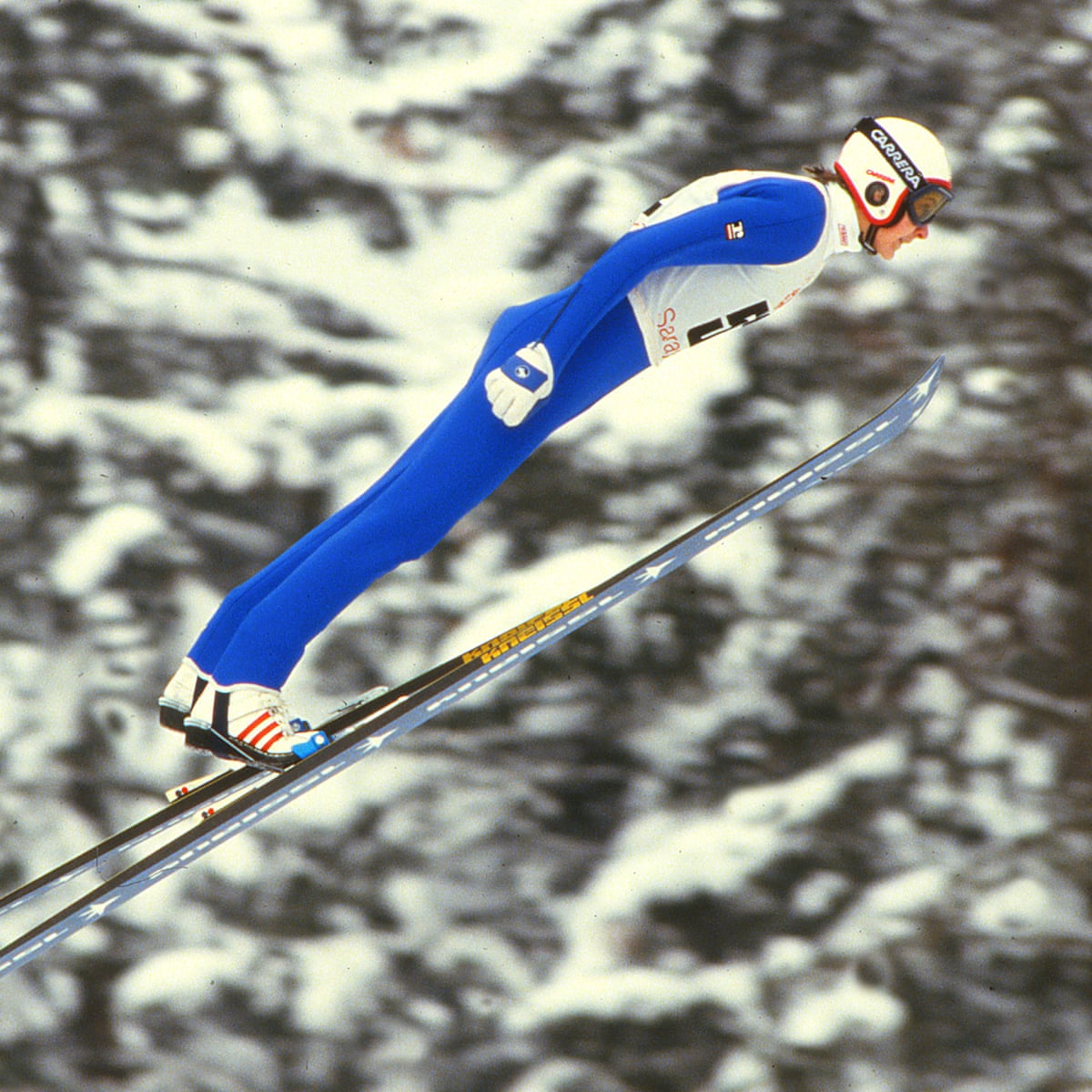
Top 150 Olympic Athletes: #15 - Matti Nykanen


Matti Nykanen

Finland

Ski Jumping


Overall Ranks

#1 among Finnish Olympians

#1 among Ski Jumpers


Olympic Results

1984

Normal Hill - Silver

Large Hill - Gold

1988

Normal Hill - Gold

Large Hill - Gold

Large Hill Team - Gold

Total

Events - 5

Gold - 4

Silver - 1


Matti Ensio Nykanen was born on July 17, 1963 in Jyvaskyla, Finland, and made the national ski jumping team as soon as he turned 18. While he was still 18, he won the gold medal in the large hill at the World Championships, and by the time he was first eligible for the Olympics, he was already well-established as a great ski jumper.

His 1984 Olympics began with the normal hill event, where his chief competition was expected to be Jens Weissflog of East Germany, who was a year younger than Nykanen. The winner was determined by the combined score of two jumps, which were judged by distance and style. After the first jump, Nykanen had the lead with a score of 114.1, with Weissflog at 110.5 sitting in second.

Weather conditions weren't as good for the second round of jumps. Nykanen was the 57th of 58 jumpers to go, so he got to see exactly what was required of him to win. Weissflog took the lead on his jump, giving himself a final score of 215.2, so Nykanen just needed a 101.1 to win, but he came up just a couple of meters short on his jump, and ended up losing by 1.2 points and settling for the silver medal.

In the large hill event, Nykanen didn't allow the same thing to happen again. He took a huge lead in the first round, scoring a 119.1 on his first jump, 13.1 points ahead of Weissflog in second. In the second round, Weissflog took the lead over the nearest jumper by more than 10 points, but Nykanen was once again the penultimate jumper, and he only needed a 93.9 to win. Instead of playing it safe, he again posted the best jump of the round, and won the gold medal by a margin of 17.5 points, the largest margin in the history of ski jumping.

He returned to compete in Calgary in 1988, and he continued his dominance there. He started again with the normal hill, and this time, he left no doubt. He had a lead of 7.9 points after his first jump, then nearly matched his score on his second jump, giving him a dominant gold medal by a margin of 17 points, the second-largest in the history of the normal hill.

He was expected to repeat the performance in the large hill event, which he did. His first jump scored a 120.8, giving him a lead of 7.1 points after his first jump, and he basically just needed to land the second jump in order to win. Again, he posted the best score on the second jump, and came away with a win by 16.1 points, and another dominant gold.

That year, a new event was added to the Olympic program, the team large hill event. Each team had 4 jumpers, and each jumped twice, with the top 3 jumps from each round counting toward the country's score. Nykanen had the best jump of anyone in each round, and his teammates were good enough that the Finns won the gold medal by 8.9 points over Yugoslavia. With that win, Nykanen became the first ski jumper ever to win 3 gold medals at the same Olympics, just a day after becoming the first to win two.

He retired from ski jumping in 1990, and moved on to a singing career. Over the next three decades, he was married and divorced 6 times, and was charged with or found guilty of domestic violence or assault on at least half a dozen occasions. He also battled alcoholism through the rest of his life, and passed away in 2019 at the age of 55 due to pancreatitis and pneumonia.

Nykanen's personal life may have been a huge mess, but his athletic career was phenomenal. He is still the only ski jumper to win three gold medals at the same Olympics, and still holds the record for largest margin of victory in an Olympic ski jump event. His 4 career gold medals are the most ever for a ski jumper, leaving no doubt that he is one of the greatest Olympians of all time.


Saturday, October 3, 2026

Top 150 Olympic Athletes: #42 - Paavo Nurmi


Paavo Nurmi

Finland

Athletics


Overall Ranks

#10 among Track & Field Athletes

#7 among Male Track & Field Athletes

#2 among Finnish Olympians

#1 among Finnish Track & Field Athletes


Olympic Results

1920

5000m - Silver

10000m - Gold

Cross Country - Gold

Cross Country Team - Gold

1924

1500m - Gold

5000m - Gold

Team Race - Gold

Cross Country - Gold

Cross Country Team - Gold

1928

5000m - Silver

10000m - Gold

Steeplechase - Silver

Total

Events - 12

Gold - 9

Silver - 3


Paavo Johannes Nurmi was born on June 13, 1897 in Turku, Finland, into a poor family, where running was just a part of everyday life. He dropped out of school at age 12 to help support his family, and began training as a runner after hearing about the successes of Hannes Kolehmainen, a fellow Finn, at the 1912 Olympics. After a stint in the army during the Finnish civil war, he qualified to compete in the 1920 Olympics.

His first Olympic event was the 5000m, where he was one of 12 runners to qualify for the final. In the final race, he and Joseph Guillemot of France pulled away from the field after just two laps, and the two ran together for the rest of the race, until just 200m remained, at which point Guillemot had a finishing kick that left him 4.4 seconds ahead of Nurmi, who took the silver medal. It would be the only race in his career in which he lost to a runner from another country.

The 10000m was next, and since the world record holder had been killed in World War I, the two leaders from the 5000m were the favorites. Those two, along with James Wilson of Great Britain, led the way for most of the race, and when the pack nearly caught them with 5 laps to go, they picked up the pace and pulled away. Nurmi took the lead at the beginning of the final lap, and didn't allow the others a chance to pass him, and he won the race by 4.7 seconds to earn his first gold medal.

Next was the cross country race, which was supposed to be 10000m, but ended up closer to 8000m. Medals were awarded for the top 3 individuals, as well as the top 3 teams, which were scored based on the finishing order of their top 3 runners. Guillemot sprained his ankle halfway through the race, and Nurmi only had one real challenger, Eric Backman of Sweden, but he came through and won by 2.6 seconds to take another gold medal. Since the next two Finns finished 3rd and 6th, the team won gold solidly, as their placements added up to 10, far ahead of the Brits, with 21.

After the Olympics, Nurmi was able to afford to get electric lighting and running water for his family. He also began experimenting with his pace, running with a stopwatch for the rest of his career, in an attempt to make himself impossible to beat. Over the next 2 years, he set world records in the mile, the 1500m, 2000m, 3000m, 5000m, and 10000m. He is still the only athlete in history to hold world records in the mile, 5000m, and 10000m at the same time. He also graduated with an engineering degree in 1923.

He suffered a knee injury early in 1924, but was able to recover in time for the Olympic trials, where he qualified while setting new world records in the 1500m and 5000m just an hour apart. In the Olympics, which were contested on a 500m track, rather than today's familiar 400m version, he started with the 1500m. Ray Watson of the USA was able to keep pace with him through 2 laps, but fell back at the start of the last lap, and Nurmi coasted to the finish to conserve energy, still setting a new Olympic record in the process by 3 seconds.

42 minutes later, he competed in the 5000m. Ville Ritola (#89), and Edvin Wide of Sweden tried to tire him out by setting a fast pace early, so Nurmi abandoned his stopwatch and pushed to catch the leaders at the 2000m mark. Wide fell behind by 3000m, and Nurmi pulled ahead at 4000m, then held off his teammate for the last 2 laps and won the race by 0.2 seconds.

The cross country race was next, and the temperature that day was over 100 degrees, which caused most of the runners to drop out before the end of the race. Nurmi and Ritola took the lead early, but Ritola could not keep pace, and Nurmi won easily, by almost a minute and a half. He ended up getting the team gold as well, when his other teammate, Heikki Liimatainen, was able to cross the finish line after becoming disoriented near the finish, spending nearly two minutes stumbling toward the line before he finally made it.

His Olympics concluded the next day with the 3000m team race, which was run on the track with the same scoring system as the cross country team event. Nurmi and Ritola finished in the top 2 spots easily, and when their teammate, Elias Katz, finished in 5th, they won the gold medal in a runaway. This was Nurmi's fifth gold medal in Paris, which is still the most ever won by a track athlete in a single Olympics.

Nurmi spent 5 months touring the United States the next year, competing in 55 races in that time, which wore him down, and he slowed his training schedule over the next year. In 1926, he set a new 3000m world record in Sweden, but one of the Swedish runners spent the whole race interfering with his pace, and he vowed to never compete against him again, which came back to bite him later in his career.

He threatened not to compete in the 1928 Olympics, but he and the Finnish Olympic committee were finally able to make peace over his refusal to compete against the Swedish runners in recent years, and he made the team. He started his Olympics that year with the 10000m, his favorite race, and it started with himself, Ritola, and Wide running away from the field, then Wide dropping behind at 8000m. Ritola led the entire race up to 9000m, but then Nurmi pulled ahead of him and held him off down the stretch, winning by 0.6 seconds for his 9th career gold medal.

In the 5000m, the same three runners pulled away from the field again, and again, Wide fell behind late in the race, while the pair of Finns stayed together. This time, Ritola was the one who was able to pull away late, beating Nurmi for the only time in his career, by a margin of 2 seconds, while Nurmi was able to hold off a late charge from Wide to win the silver.

His final event was the steeplechase, which he hadn't run before, and in the heats, he fell on the first water jump, spraining his ankle and hip, but still finished fast enough to make the final. The day after the 5000m final, he ran in the steeplechase final, and after Ritola wore out early and dropped out, it was down to Nurmi and Toivo Loukola of Finland, but Loukola was able to leave Nurmi behind, and Nurmi had to settle for finishing with another silver.

He decided that he would compete in one final Olympics in 1932, planning to compete in just the 10000m and the marathon, but his plans were foiled when he was suspended by the IAAF for competing as a professional, which he hadn't. Finland's Olympic committee investigated and found that the allegations were untrue, and he went to Los Angeles to compete, but the ruling was upheld 3 days before the Olympics started, and he was forced to sit out. It turns out that the IAAF chairman was from Sweden, and that he had forced Germany to lie about making payments to Nurmi for a race in 1931, still holding a grudge from the 1926 incident.

Nurmi continued to run, refusing to turn pro, while he appealed the IAAF decision, but he lost his appeal in 1934, and his ban became permanent, even though it was based on lies. At that point, he retired from competition. He competed in 12 events over 3 Olympic Games, and never finished worse than 2nd place, winning 9 gold medals and 3 silvers in all. His record of 5 track gold medals in a single Olympics still stands, and he is obviously one of the greatest Olympians of all time.


Monday, August 17, 2026

Top 150 Olympic Athletes: #89 - Ville Ritola


Ville Ritola

Finland

Athletics


Overall Ranks

#27 among Track & Field Athletes

#21 among Male Track & Field Athletes

#3 among Finnish Olympians

#2 among Finnish Track & Field Athletes


Olympic Results

1924

5000m - Silver

10000m - Gold

Steeplechase - Gold

Team Race - Gold

Cross Country - Silver

Cross Country Team - Gold

1928

5000m - Gold

10000m - Silver

Total

Events - 9

Gold - 5

Silver - 3


Vilho Eino Ritola, known as Ville, was born on January 18, 1896 in Peraseinajoki, Finland, which at the time was part of the Russian Empire. He was the 14th of 20 children, and he joined 7 of them in emigrating to the United States in 1913 to find work as a carpenter. He didn't begin training as a runner until he was 23 years old.

In 1922, he won a couple of gold medals in the AAU Championship, and came in second in the Boston Marathon, after which he felt he was ready to try to make the Olympics, competing for his home country of Finland. Some other American Finns helped raise money to send him home to Finland to compete in the Olympic trials, where he set a world record in the 10000m, breaking the record previously held by fellow Finn Paavo Nurmi.

Ritola went to Paris to compete in 6 events. His first was the 10000m, where he was a heavy favorite, thanks partly to his new world record, and partly due to Nurmi choosing to sit out to conserve his energy for other events. He pulled away early, with only Edvin Wide of Sweden keeping pace, but after 4000m, Wide dropped back, and Ritola continued his pace, winning the race by 32 seconds, nearly half a lap, and breaking his own world record by 12 seconds, giving him a dominant gold medal in his first event.

His next event was the steeplechase, which he had never run before. He didn't have the technique down, but his speed and endurance were enough as he won the race by over 11 seconds, setting a new Olympic record, and coming up just 0.2 seconds short of the world record. 

Up next was the 5000m, in which he would finally face Nurmi. Nurmi had just won the gold medal in the 1500m less than an hour earlier, so Ritola and Wide took off early, hoping that Nurmi would be too tired to catch them, but at the 2000m mark, Nurmi had caught up to the leaders, and by 3000m, Wide had dropped off the pace, leaving the two Finns to battle for gold. Nurmi passed Ritola at the 4000m mark, then held him off the rest of the way, winning the gold, and leaving Ritola with a silver by 0.2 seconds.

The cross country event was next, which covered nearly 10000m on one of the hottest days in Paris history. Nurmi and Ritola took off ahead of the pack again, but Ritola was unable to keep pace, and ended up losing by almost a minute and a half, though he still won silver by over a minute. More than half of the racers were unable to finish due to the heat.

The cross country team event scoring was based on placement of the top 3 runners from each country in the individual event, so Finland was a massive favorite due to having the top 2 finishers. Heikki Liimatainen was the third Finnish runner, and he was stumbling toward the finish, then stepped off the course thinking that he had finished, but he was still 30 meters short. After the crowd let him know that he hadn't finished, he returned to the course, and staggered for two minutes toward the line, finally crossing just in time to earn Finland the gold ahead of the USA.

The final event was the team 3000m race, in which the places of the top 3 finishers counted toward each country's score. Nurmi and Ritola again finished in first and second, but they didn't have to wait as long this time, as teammate Elias Katz came in fifth, earning the Finns an easy gold medal, the fourth for Ritola at his first Olympics. His 6 total medals are still the record for a track athlete at a single Olympics, and his 4 golds only trail Nurmi's 5 from the same Olympics.

He returned to the US after the Olympics and returned to work in construction, rarely training, but still competing in some meets. He decided to compete in the Olympics again in 1928, heading to Amsterdam, where he would go head to head with Nurmi in 3 events again.

The first event was the 10000m, where Ritola was the defending champ, but Nurmi was now the world record holder, and the two of them, along with Wide, left the field behind early again, with Ritola in front. Wide kept up with the Finns until 8000m, then fell behind, leaving the two favorites to fight for gold again. Nurmi stayed right behind Ritola until the final straightaway, when he passed his teammate and pulled away slightly to win by 0.6 seconds in Olympic record time, both more than 40 seconds ahead of Wide, the bronze medalist.

In the 5000m final, the same three runners pulled away from the pack again, with Ritola taking the lead around the halfway point. Wide fell behind with 600m left, while Ritola started to pull away from Nurmi, and ended up winning the race by 2 seconds, while Nurmi held on for the silver.

His final event was the steeplechase, where he was the defending champ. He qualified for the final, but hurt his ankle in the process, and while he still ran, he was unable to finish the race, the first time he had ever failed to win a medal in an Olympic event.

He retired soon after the 1928 Olympics, returning to the United States, where he spent the next 30 years working construction until he was old enough to retire. A few years later, he returned to Finland, where he passed away a decade later in Helsinki on April 24, 1982. He was overshadowed by his teammate Nurmi through his whole career, but he finally beat him head-to-head in his final Olympic win, and he was so much better than anyone else at the time, that he is obviously one of the greatest Olympians of all time.