Showing posts with label Russia. Show all posts

Tuesday, September 8, 2026

Top 150 Olympic Athletes: #67 - Larisa Lazutina


Larisa Lazutina

Russia

Cross Country Skiing


Overall Ranks

#5 among Cross Country Skiers

#4 among Russian Olympians

#2 among Female Russian Olympians

#2 among Russian Cross Country Skiers


Olympic Results

1992

Relay - Gold

1994

Relay - Gold

1998

5 km - Gold

15 km - Silver

30 km - Bronze

Skiathlon - Gold

Relay - Gold

2002

15 km - Silver*

30 km - Gold*

Skiathlon - Silver*

Total

Events - 17

Gold - 6*

Silver - 4*

Bronze - 1

*Medals later rescinded due to failed drug test


Larisa Yevgenyevna Ptitsyna was born on June 1, 1965 in Kondopoga, USSR, which is now part of Russia. She first competed internationally in cross country skiing when she was 18 years old, and won her first World Championship medals in 1987, then won the World Cup in 1990. She made her first Olympic team in 1992, competing for the Unified Team shortly after the breakup of the Soviet Union.

She first competed in the 5 km race in Albertville, and finished in a respectable 7th place out of 62 skiers who finished the race, though she was 19 seconds short of the bronze medalist. The next day was the skiathlon, where they started in the order in which they finished the 5 km, based on how many seconds behind they finished, so Lazutina started 27 seconds after the leaders. She finished 8th in that race, more than a minute and a half behind the gold medalist.

Her next event was the relay, where she was asked to ski the third leg. Russia had fallen behind Norway at the midway point by 9 seconds, but Lazutina was able to overtake the Norwegian skier and handed off with a 2.5 second lead, which was stretched to more than 21 seconds by the end, which earned Lazutina her first Olympic gold.

Her final event was the 30 km, the first time women had competed at that distance in the Olympics. She came in 5th, but there was a gap of over 2 minutes between the medalists and the next group of skiers, which included Lazutina. She won her first individual world championship gold the next year in the 5 km race, just in time for another Olympic Games in 1994.

She was considered one of the favorites in the 15 km race in Lillehammer, but finished in 5th place, 47 seconds behind the medalists. She came in 6th in the 5 km, then moved up to 4th in the skiathlon, but still didn't have an individual medal. She also competed in the relay, running the second leg, where she was handed an 8 second lead, but fell behind Norway during her run, before Lyubov Yegorova took the lead back on the anchor leg and won the gold for Russia.

She won 4 gold medals at the 1995 World Championships, 3 in individual events, and had higher hopes for the 1998 Olympics. She started out with the 15km race, where she was a favorite, and she led almost the entire race, but she was passed on the homestretch by her teammate, Olga Danilova, who won the race by 5.6 seconds, leaving a silver for Lazutina, who was more than 51 seconds ahead of the bronze medalist.

Next she competed in the 5 km race, in the final time it would be contested at the Olympics, and she was expected to win, and she finally came through, winning the gold by 4.8 seconds, her first individual Olympic gold. That gave her a 5-second head start in the skiathlon, and she was able to hold her lead through that entire race, winning by 6.5 seconds to take her second gold of the games.

She skied the anchor leg in the relay that year, and by the time she took off, Russia had a huge lead, which she maintained for her entire leg, giving the Russians a gold medal by 24.5 seconds over the Norwegians. Her final event was the 30 km, where her teammate, Yuliya Chepalova, took the lead early, and led nearly the entire race, while Lazutina skied on her own a good distance behind. In the end, she won the bronze medal, more than a minute behind the silver medalist, but more than a second ahead of 4th place, giving her medals in all 5 events in Nagano.

She returned for her 4th Olympics in 2002 in Salt Lake City, starting again with the 15 km race. Chepalova had the lead early, then was passed by Stefania Belmondo of Italy, but her pole broke with just over 4 km to go, and Lazutina took the lead at that point. Belmondo got a replacement pole and made a hard push, and was able to pass Lazutina just before the finish, and Lazutina ended up with a silver medal.

In the 10 km, which was now the shortest race, Lazutina was in contention throughout, but ended up falling behind and finishing in 4th place, 12 seconds short of the bronze medal. The skiathlon was next, but was different this time, since the 5km was no longer a separate event. Instead, they held a 5km race to determine the order for the second half of the race, held the same afternoon. Lazutina finished #2 in both halves, taking home another silver medal.

Her final race was the 30 km, which had never been her strongest race, but this time, she took the lead early, and never gave it up, ending up almost 2 minutes ahead at the end as she won her first gold medal of the Salt Lake games. The next year, Olga Danilova, her teammate, was disqualified for using PEDs, and Lazutina moved up to gold in the skiathlon and bronze in the 10 km. Two months later, however, Lazutina was also disqualified for using the exact same substance, forfeiting all of her medals from the 2002 Games.

She was given a 2-year ban for the failed drug test, and decided to retire at that point. She went on to become a sports advisor to Putin after retiring from competition. Even though she was caught cheating, and there is a chance that she wasn't clean in 1998, her 5 medals in those games were very impressive, and she had 11 medals overall briefly, though only 7 are still recognized. Even with all of that, she had a long and strong Olympic career, and was one of the greatest Olympians of all time.


Friday, July 17, 2026

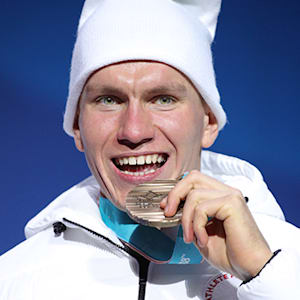
Top 150 Olympic Athletes: #120 - Aleksandr Bolshunov


Aleksandr Bolshunov

Russia

Cross Country Skiing


Overall Ranks

#6 among Cross Country Skiers

#5 among Russian Olympians

#3 among Male Russian Olympians

#3 among Russian Cross Country Skiers

#1 among Male Russian Cross Country Skiers


Olympic Results

2018

Sprint - Bronze

50 km - Silver

Relay - Silver

Team Sprint - Silver

2022

15 km - Silver

50 km - Gold

Skiathlon - Gold

Relay - Gold

Team Sprint - Bronze

Total

Events - 9

Gold - 3

Silver - 4

Bronze - 2


Aleksandr Aleksandrovich Bolshunov was born on December 31, 1996 in Podyvotye, Russia, near the borders with Ukraine and Belarus. His father coached and trained him in skiing from a young age, then took him to Bryansk Sports School for further training when he was 14 years old. 

After several years racing as a junior, he advanced to the senior circuit in 2017, and climbed the rankings quickly, becoming good enough to make the Russian Olympic team in 2018, though not competing under the Russian flag due to the country's Olympic ban due to widespread doping.

Bolshunov's first event was the Sprint, the shortest event in Cross Country, and he finished 3rd in qualifying, then easily advanced through two rounds to make it to the final. Johannes Hosflot Klaebo won the final by a little more than a second, with Bolshunov finishing third by .02 seconds behind Federico Pellegrino in a photo finish, earning a bronze medal in his first Olympic event.

His next event was the relay, with each skier covering 10 km. Bolshunov skied the second leg, starting out just barely in second place, but quickly taking a big lead, which he held throughout his portion, giving his team a 25 second lead heading into the second half of the event. Unfortunately, the Norwegians dominated the second half of the race, and the Russians had to settle for silver, nearly 10 seconds behind the winners.

The team sprint was next, with Bolshunov teamed up with Denis Spitsov, each running 3 legs of about 1500 meters each. A little more than halfway through the final, with Bolshunov running his second leg and holding a slight lead, Klaebo took off from behind him, and Bolshunov was not able to keep up, instead staying with the trailing pack. Not much changed the rest of the way, and the Russians took another silver medal.

The final race of the Olympics was the 50 km, the longest of all the races. Bolshunov stayed with the lead pack as it dwindled from 15 to 7 down to just 3 at the halfway point. Bolshunov chose to change his skis early in the race, while Iivo Niskanen of Finland waited until they reached 42km, allowing Bolshunov to take a lead of 14 seconds at one point. Niskanen started his attach with 1 km to go, and Bolshunov didn't have enough left to keep up, and took his third straight silver medal of the games after losing by 18 seconds.

In 2021, he won his first World Championship gold in the 30 km skiathlon, just in time for a return to the Olympics. The skiathlon combines the two forms of cross-country skiing, classical (straight line) and freestyle (skating style). The skiathlon was his first event at the 2022 Olympics, and he led the entire way, leading Niskanen by a second at the pit stop before speeding away in the freestyle portion, winning the gold medal by a minute and 11 seconds, his first Olympic win.

He decided to skip the sprint event a couple of days later, so his next event was the 15 km classical, which was Niskanen's specialty, and he was not able to keep up with the Finn, trailing the entire way and coming in second by a margin of 23 seconds. Next up was the relay, where he again ran the second leg, and this time he was given a 34 second lead to begin with, which he extended to a full minute, a margin his teammates were able to maintain on their way to an upset gold over Norway.

In the team sprint, he was paired with Aleksandr Terentyev this time, and in the final the top three teams, Russia, Norway, and Finland, stayed close together through the first 5 sections, but at the beginning of the final leg, Klaebo pulled away, giving Norway the gold, while Russia ended up a couple of seconds behind Finland to end up in bronze position.

The final race was the 50km, though it was actually shortened to 30km due to weather. The entire field stayed together for the first 10km, with Bolshunov and 14 others pulling away at that point. The leaders dwindled down to 8 in the final section, when Bolshunov pulled away on his own with 6 km to go, finishing the race 5.5 seconds ahead of anyone else, winning his third silver in Beijing.

Right after the Olympics, Russia invaded Ukraine, resulting in the country and its athletes being banned from the Olympics, instead of just the country like before. Bolshunov is a vocal supporter of the invasion, and has called the most recent Olympics illegitimate due to the exclusion of his country. Despite all of this, he has shown already that he is one of the greatest Olympic athletes of all time.


Saturday, June 27, 2026

Top 150 Olympic Atheletes: #140 - Davit Chakvetadze


Davit Chakvetadze

Russia

Wrestling


Overall Rankings

#6 among Russian Olympians

#4 among Wrestlers

#3 among Russian Wrestlers


Olympic Results

2016

Greco-Roman Light-Heavyweight - Gold

Total

Events - 1

Gold - 1


Davit Gochaevich Chakvetadze was born on October 18, 1992 in Kutaisi, Georgia (the country, not the state), and while he learned to wrestle in his home country, he moved to Russia in 2013 due to the stronger Greco-Roman wrestling program.

In 2015, he took first place at the European Championships, and second place in the World Championships, in addition to winning the Russian National Championship, thus earning himself a spot on the Russian Olympic team for 2016.

Competing in the Light-Heavyweight class, he entered the Olympics ranked #3 in the world in his weight class, but didn't receive a first-round bye, as these were decided randomly. After winning his first match 3-0, he achieved a pin in the second round, the only one in the entire tournament for his weight class.

He then shut out his third opponent as well, before winning his semifinal match 7-1 to move on to the final against Zhan Beleniuk of Ukraine, who was the defending world champion and was ranked #1 in the world. Beleniuk took a 2-0 lead in the first period, but Chakvetadze shut him out in the second period, scoring 9 consecutive points to win the gold medal.

He suffered through multiple injuries in the years after winning his gold medal, but still attempted to compete again in 2021, but he did not qualify after losing in the European championships. Though he only competed in one Olympic event, he was completely dominant throughout, only trailing in the final match, which he ended up winning decisively, and that makes him one of the greatest Olympians of all time.


Friday, June 19, 2026

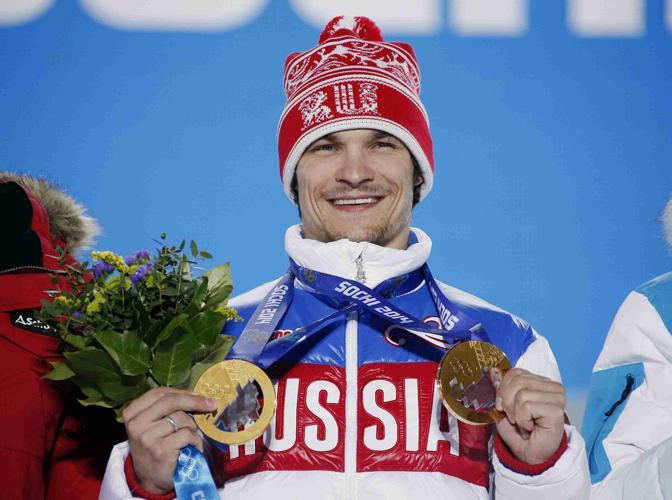
Top 150 Olympic Athletes: #148 - Vic Wild


Vic Wild 

Russia

Snowboard


Overall Ranks

#7 among Russian Olympians

#1 among Snowboarders


Olympic Results

2014

Parallel Giant Slalom - Gold

Parallel Slalom - Gold

2022

Parallel Giant Slalom - Bronze

Total

Events - 4

Gold - 2

Bronze - 1


Victor Ivan Wild was born in White Salmon, Washington on August 23, 1986, and originally competed for the United States in international competitions, but after the US Olympic Committee decided to stop funding snowboard racing in 2010, and after his marriage to Russian snowboarder Alyona Zavarzina in 2011, he moved to Russia and applied for citizenship.

He made his Olympic debut in 2014, competing in the Parallel Slalom and Parallel Giant Slalom. He posted the second-best qualifying time in the Parallel Giant, which moved him to the round of 16. Starting in that round, matches consisted of 2 snowboarders racing at the same time, with the best overall time after 2 races determining the winner. Wild won all but one race in the competition, taking the gold medal just hours after his wife won the bronze medal in the same event.

He earned the best qualifying time in the Parallel Slalom a few days later, getting him the top seed in the 16-man field, and again he won the competition while losing only a single race, a loss which came by 0.04 of a second to a 2-time world champion in the event. His win made him the first snowboarder ever to win multiple gold medals at the same Olympics, and he is still the only one to do it in 2 individual events.

The Parallel Slalom did not return after the 2014 Olympics, but Wild came back to defend his title in the Parallel Giant in 2018, but after placing 9th in qualifying, he lost in his first race and was eliminated.

Despite getting divorced in 2021, he decided to continue living in and competing for Russia, and he again competed in the Parallel Giant Slalom in 2022, again taking 9th place in the qualifying round. After upsetting fellow Russian Dmitry Loginov in the first round, he took down the #1 seed in the next, advancing to the semifinals. He lost his next race, then finished off the tournament with one final upset to earn himself a bronze medal.

Though Wild has only competed in 4 Olympic events in his career, and failed to medal in one of them, he dominated in both of his events in 2014, and another strong performance in 2022 earned him the title of best Olympic snowboarder of all time so far.


Thursday, June 18, 2026

Top 150 Olympic Athletes: #149 - Aleksandr Karelin


Aleksandr Karelin

USSR - Unified Team - Russia

Wrestling


Overall Ranks

#8 among Russian Olympians

#5 among Wrestlers

#4 among Russian Wrestlers


Olympic Results

1988

Greco-Roman Super Heavyweight - Gold

1992

Greco-Roman Super Heavyweight - Gold

1996

Greco-Roman Super Heavyweight - Gold

2000

Greco-Roman Super Heavyweight - Silver

Total

Events - 4

Gold - 3

Silver - 1


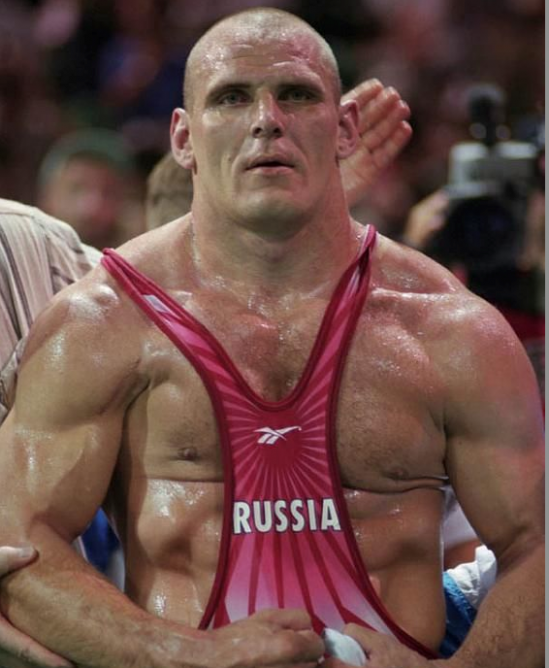
Aleksandr Aleksandrovich Karelin was born on September 19th, 1967 in Novosibirsk, USSR. His father was a boxer, but Aleksandr decided at age 13 to train as a wrestler, and at that point he already stood 5'10" and weighed 174 pounds. 

He scored his first major victory in 1988, when he won the USSR Olympic trial against the nation's defending champion, after which he went on to win every match in the Olympics on the way to his first gold medal, becoming the youngest-ever champion in the super heavyweight class, just 2 days after his 21st birthday.

Over the next 3 years, he ran undefeated through the World Championships each time, then returned to the Olympics as a heavy favorite, this time representing the Unified Team after the breakup of the USSR the previous year. He once again flew through the tournament undefeated, even winning his 4th match in only 14 seconds on his way to gold medal number two.

He won 3 more World Championships from 1993 to 1995, never losing a match, but injured his shoulder and had to have surgery, returning just before the 1996 Olympics. He was considered vulnerable for the first time due to this, but swept through the Olympics undefeated, not even giving up a single point on his way to a third straight gold medal, this time representing Russia.

From 1997-1999, he ran his streak of World Championships up to 9, never surrendering a point in any of those matches, and was expected to continue his streak at the 2000 Olympics. He made it to the final match without giving up a point, but lost in the final to Rulon Gardner of the USA by a score of 1-0. It was the first point he had given up in 6 years, and his first loss in 13 years, and he went home with a silver medal.

He retired after that loss, turning to his new career in politics, where he had been elected to the Russian Duma in 1999, and he has served in Russian politics in some role ever since. Even with his long post-athletic career, he is still best-known as one of the most dominant wrestlers of all time, and one of the greatest Olympians of all time.