Showing posts with label 2022 Olympics. Show all posts

Wednesday, September 9, 2026

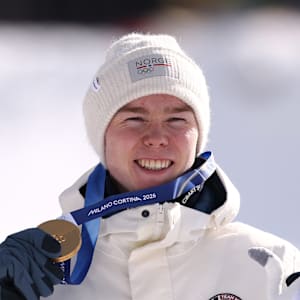
Top 150 Olympic Athletes: #66 - Johannes Hosflot Klaebo


Johannes Hosflot Klaebo

Norway

Cross Country Skiing


Overall Ranks

#5 among Norwegian Olympians

#4 among Cross Country Skiers

#4 among Male Norwegian Olympians

#3 among Norwegian Cross Country Skiers

#2 among Male Norwegian Cross Country Skiers


Olympic Results

2018

Sprint - Gold

Relay - Gold

Team Sprint - Gold

2022

Sprint - Gold

15 km - Bronze

Relay - Silver

Team Sprint - Gold

2026

Sprint - Gold

10 km - Gold

50 km - Gold

Skiathlon - Gold

Relay - Gold

Team Sprint - Gold

Total

Events - 16

Gold - 11

Silver - 1

Bronze - 1


Johannes Hosflot Klaebo was born on October 22, 1996 in Oslo, Norway, and grew up in Trondheim, where he learned to ski, being coached by his grandfather, who still coaches him today. He made his international debut at age 18. He earned his first bronze medal in the world championships in 2017 in the sprint event, just before his Olympic debut in 2018.

His first Olympic event was the skiathlon, which was 15 km of classical skiing, followed by 15 km of freestyle after a change of skis. The leaders all remained together for nearly the entire race, but in the final 5 km, one of his teammates broke away, and a few other soon took pursuit, but Klaebo remained behind in the pack, and finished in 10th place.

The next event was the sprint, his strongest event, and he was favored to win. He was #2 in qualifying, then won both of his heats to advance to the final race, where he led almost the entire race, and finished 1.3 seconds ahead of the other medalists to win his first Olympic gold, and in the process he became the youngest gold medalist in cross country skiing ever.

In the relay, Klaebo was given the anchor leg. Norway was in 5th place after the first leg, and 4th at the halfway point, but Simen Hegstad Kruger, who had won the skiathlon, ran the fastest leg of the competition to give Norway a 1-second lead before the final leg. Klaebo allowed the French skier to pass him, and eventually the Russian as well, and was content to draft off of them for most of his leg, before sprinting past them on a late downhill stretch and running away to win the gold by 10 seconds.

In the team sprint, two skiers take turns running 3 legs each in a relay, and Klaebo was paired with Martin Johnsrud Sundby, who had 4 previous Olympic medals. They easily qualified for the final, then stayed with the main pack for the first half of the race, when Klaebo took off ahead of the group, and no one immediately followed. On Sundby's final leg, a couple of teams closed the gap early on, but then he pulled away near the end, and Klaebo put it away on his final leg, winning the gold by almost 2 seconds over the Russians. He finished his first Olympics with 3 gold medals.

In 2019 and 2021, he won World Championship gold medals in those exact 3 events both times, cementing himself as one of the best in the world. At the 2022 Olympics, he again started with the skiathlon, and once again the result was disappointment, as he could never get out of the pack, and ended up finishing in 40th place.

His next event was the sprint, where he was the defending champ and favorite. He qualified in third, won his first heat, then finished 6 seconds behind Federico Pellegrino of Italy, the defending silver medalist, in the semifinal, but both made the final. Those two led the final from the start, with Terentyev from Russia just behind, but they ditched him on the home stretch, and then Klaebo finished strong, beating Pellegrino by 0.26 seconds to repeat as gold medalist, the first to ever do so in that event.

Next was the 15 km race, and he started off slowly, sitting in 20th place a quarter of the way through, but then he shifted into another gear and started passing people, and by the end of the race, he had moved up to take the bronze medal, 14 seconds behind the silver, and 12 seconds ahead of the next skier.

In the relay, Klaebo was again assigned the anchor leg. The Russian team took a huge lead early, and never allowed anyone to get near them, winning the race by just over a minute. Norway was in second place through the entire race, but Klaebo had to hold off a serious push from France on the final lap to earn the team a silver medal, which he did by 9 seconds.

In the team sprint, Klaebo was paired with newcomer Erik Valnes, and through the first 5 legs, the race was very tight, with less than a second separating Norway, Russia, and Finland, but Klaebo was able to create a gap on the final leg, then sprint to the finish, and won the race by 2.5 seconds over the Russians to win his fourth medal and second gold of the games.

He also competed in the 50 km race, which ended up being shortened to 30 km due to weather, but after falling far behind halfway through, he dropped out and didn't finish the race. It was something he wouldn't let happen again. In 2023, he won his same 3 golds at the World Championship, giving him a triple three-peat, plus two silver in the longer events, and then in 2025, he won gold in all 6 World Championship events, foreshadowing the 2026 Olympics.

Klaebo was favored in every event in Milan-Cortina, even the skiathlon, where he had struggled in his previous two tries. In this one, he was in second place at the halfway point, where they switch skis, then sat behind Hugo Lapalus of France for most of the second half before finally passing him with just over a kilometer to go and holding the lead the rest of the way, winning the gold by 2 seconds in the end.

In his favorite event, the sprint, he led after qualifying for the first time, then won both of his heats to advance to the final, where his only real competition ended up being American Ben Ogden, who was a complete surprise. The pair stayed together for nearly the entire race, before Klaebo took the lead on a late hill and pulled away for a victory of 0.87 seconds.

In the 10 km race, Klaebo started out a little behind, sitting in 12 at the quarter mark, but had moved up to 2nd place behind teammate Einar Hedegart with 2.5 km to go. At that point, Hedegart didn't have much left in the tank, and Klaebo pulled ahead in the last kilometer and ended up winning by nearly 5 seconds to take his third straight gold and 10th career medal overall.

Klaebo skied the anchor leg in the relay for the third straight Olympics, and this time Norway was a huge favorite, thanks to Russia not being allowed to compete, and Klaebo being so dominant. His part of the race hardly mattered, as Norway led from start to finish, with Klaebo taking a 12 second lead to start his leg and stretching it to 22 by the end as they won gold easily.

Klaebo was paired with Hedegart in the team sprint, and they nearly didn't make it out of qualifying, as Hedegart finished his leg in 25th place, but then Klaebo dominated his leg, and moved Norway up to 2nd to reach the final. In the final, they were in 3rd after Hedegart's first leg, but then Klaebo took the lead on his first leg, and they never gave it back. Finland and Italy both challenged for the lead at some point, but neither could take it, and Norway won by 1.37 seconds.

The final event was the longest, the 50 km. Klaebo had failed to finish it at the previous Olympics, but this time, he and two Norwegian teammates skied in a group ahead of everyone else throughout the entire race, before Klaebo pulled ahead on the final climb and won the gold by 8.9 seconds, becoming the first Winter Olympian ever to win 6 golds in the same Olympics.

Klaebo is still the best cross country skier in the world, and is sure to compete for more gold medals in the future, but right now, he is #2 in Olympic history with 11 gold medals, and has 13 medals overall, and only a few poor performances in previous Olympics have kept him from being among the top 25 of all time, but he has a good chance to get into that range going forward. As it is now, he is already one of the greatest Olympians of all time.


Tuesday, August 4, 2026

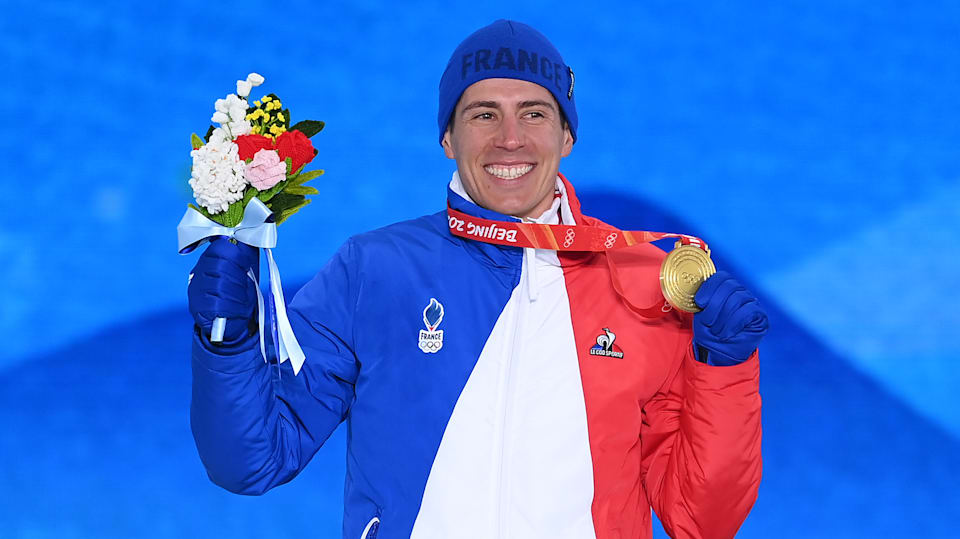
Top 150 Olympic Athletes: #102 - Quentin Fillon Maillet


Quentin Fillon Maillet

France

Biathlon


Overall Ranks

#3 among French Olympians

#2 among Biathletes

#1 among French Winter Olympians


Olympic Results

2022

Sprint - Silver

Mixed Relay - Silver

Pursuit - Gold

Individual - Gold

Relay - Silver

2026

Sprint - Gold

Mixed Relay - Gold

Mass Start - Bronze

Relay - Gold

Total

Events - 15

Gold - 5

Silver - 3

Bronze - 1


Quentin Denis Fillon Maillet was born on August 16, 1992 in Champagnole, France, and grew up in the French Alps near the Swiss border. He took up cross country skiing when he was 10, then transitioned into biathlon at age 14. From 2015 to 2017, he won medals in every world championship, but only in the relay events.

He was still able to make the French Olympic team for the 2018 Olympics in PyeongChang, but didn't do anything of note. He finished 48th in the sprint, 44th in the pursuit, and 29th out of 30 in the mass start. It was an ignominious start to what would become a great career.

In 2019, he won his first individual World Championship medal, a bronze in the sprint. He won several more over the next few years, but was by no means a star headed into the 2022 Olympics. He entered all 6 biathlon events in Beijing, and by the time he finished, he had become a star.

He started out in the mixed relay, which was raced by 4 skiers, each of whom covered 6 km. The women went first, and at the halfway point, they held a slight lead. After the third leg, they had fallen to third place, 17 seconds behind the leaders, but Fillon Maillet skied an incredible leg, getting through without missing a shot and skiing the second-fastest time of the day. In the end, he fell just short, losing by less than a second to the Norwegian team, but it earned him his first Olympic medal, a silver.

Next up was the individual 20km race, where each miss carried a one minute penalty applied at the end. Fillon Maillet was the best skier of the event, finishing 31 seconds ahead of Johannes Thingnes Bo, who had beaten him at the end of the mixed relay, and since each missed 2 shots, he remained ahead of Bo. Anton Smolski of Belarus finished without a missed shot, but since he was more than 2 minutes behind Quentin, he ended up taking the silver, with Fillon Maillet earning his first gold.

The third event was the 10km sprint, where each missed shot added a 150m penalty loop to the course. Fillon Maillet had one miss on the first round of shooting, which allowed Bo to build a big lead. Fillon Maillet was the fastest skier the rest of the way, and Bo missed a shot in the second shooting portion, but his lead was too big, and Fillon Maillet came in 25 seconds behind to take the silver, 13 seconds ahead of Bo's older brother, Tarjei, who took bronze.

The next event was the 12.5 km pursuit, where each skier started out based on the results of the sprint event the day before, so Bo started out with a big head start, but he struggled in the shooting portion, missing 7 times, which added 1050 meters to his race. Fillon Maillet was perfect on his shooting, and ended up beating Tarjei Bo by 28.5 seconds for another gold medal.

Up next was the relay, where Fillon Maillet again took the anchor leg. The Russian athletes took a big lead early and built it up throughout the race, with a lead of over 40 seconds when the final leg started. France was in second the entire way up to that point and looked to be fighting for silver when the final Russian skier missed two shots at the final stop, allowing Germany, France, and Norway to catch up. Despite being the only country that didn't miss a shot, the French ended up getting another silver after the final Norwegian skier turned on the jets to win the race by 27 seconds.

In the final event, the mass start, it appeared that Fillon Maillet was going to win his 6th medal of the games, but on the final shooting portion, the wind kicked up, causing him to miss 3 shots, which added 450 meters to his race, and he ended up 13 seconds out of third place, just one place away from the medal. Even without it, he was the first biathlete ever to win 5 medals in a single Olympics, 3 days before Bo matched him.

He returned to compete again in the 2026 Olympics, again qualifying for all 6 events. In the mixed relay, which went first, the race started with the men's legs first, and Fillon Maillet handed off to the first female skier in third place, but after she posted the best time by a woman in the entire race, the French had a 19 second lead, which they extended to 26 seconds by the end to earn the gold medal.

He was the defending champion in the individual 20km, and was the favorite to repeat, but despite having the fastest time, he missed 4 shots, which added 4 penalty minutes, causing him to drop to 8th place at the end. He made up for it in the sprint, where he was one of the favorites since both Bo brothers had retired, leaving him as the only returning medalist. He was one of 5 skiers to shoot perfectly, then passed teammate Emilien Jacquelin on the home stretch to take home a gold medal.

That gave him a 16 second lead to start the next event, the pursuit, but he struggled with his shooting again, with 5 total missed, which caused him to fall to 7th place at the end. In the relay, Norway was expected to win, and started with a 50 second lead after the first leg, with France clear back in 13th place. 3 misses by the next Norwegian skier brought them back to the pack, and a perfect leg by Jacquelin gave France a slight lead at the halfway point. Fillon Maillet held that slight lead through his leg, and the final French skier was able to pull away to give them an upset victory by 10 seconds.

In the final event, the mass start, Fillon Maillet struggled again with his shooting, missing once in the first section, which put him way behind. He moved up to 9th by the second shooting section, where he didn't miss, and was in 5th by the next time he shot. He missed twice, which slowed his progress, but he still pushed through to get to 4th at the final shooting spot, then passed Philipp Horn of Germany on the home stretch to steal the bronze medal, despite having 4 missed shots, 3 more than any of the other top 4.

He has recently announced that he will continue to compete and plans to ski again in the 2030 Olympics. Even though his first Olympics did not go well, he earned 9 medals in the past 2 Olympic games, 5 of which were golds, and has already established himself as one of the greatest Olympians of all time, with more possibly to come.


Friday, July 17, 2026

Top 150 Olympic Athletes: #120 - Aleksandr Bolshunov


Aleksandr Bolshunov

Russia

Cross Country Skiing


Overall Ranks

#6 among Cross Country Skiers

#5 among Russian Olympians

#3 among Male Russian Olympians

#3 among Russian Cross Country Skiers

#1 among Male Russian Cross Country Skiers


Olympic Results

2018

Sprint - Bronze

50 km - Silver

Relay - Silver

Team Sprint - Silver

2022

15 km - Silver

50 km - Gold

Skiathlon - Gold

Relay - Gold

Team Sprint - Bronze

Total

Events - 9

Gold - 3

Silver - 4

Bronze - 2


Aleksandr Aleksandrovich Bolshunov was born on December 31, 1996 in Podyvotye, Russia, near the borders with Ukraine and Belarus. His father coached and trained him in skiing from a young age, then took him to Bryansk Sports School for further training when he was 14 years old. 

After several years racing as a junior, he advanced to the senior circuit in 2017, and climbed the rankings quickly, becoming good enough to make the Russian Olympic team in 2018, though not competing under the Russian flag due to the country's Olympic ban due to widespread doping.

Bolshunov's first event was the Sprint, the shortest event in Cross Country, and he finished 3rd in qualifying, then easily advanced through two rounds to make it to the final. Johannes Hosflot Klaebo won the final by a little more than a second, with Bolshunov finishing third by .02 seconds behind Federico Pellegrino in a photo finish, earning a bronze medal in his first Olympic event.

His next event was the relay, with each skier covering 10 km. Bolshunov skied the second leg, starting out just barely in second place, but quickly taking a big lead, which he held throughout his portion, giving his team a 25 second lead heading into the second half of the event. Unfortunately, the Norwegians dominated the second half of the race, and the Russians had to settle for silver, nearly 10 seconds behind the winners.

The team sprint was next, with Bolshunov teamed up with Denis Spitsov, each running 3 legs of about 1500 meters each. A little more than halfway through the final, with Bolshunov running his second leg and holding a slight lead, Klaebo took off from behind him, and Bolshunov was not able to keep up, instead staying with the trailing pack. Not much changed the rest of the way, and the Russians took another silver medal.

The final race of the Olympics was the 50 km, the longest of all the races. Bolshunov stayed with the lead pack as it dwindled from 15 to 7 down to just 3 at the halfway point. Bolshunov chose to change his skis early in the race, while Iivo Niskanen of Finland waited until they reached 42km, allowing Bolshunov to take a lead of 14 seconds at one point. Niskanen started his attach with 1 km to go, and Bolshunov didn't have enough left to keep up, and took his third straight silver medal of the games after losing by 18 seconds.

In 2021, he won his first World Championship gold in the 30 km skiathlon, just in time for a return to the Olympics. The skiathlon combines the two forms of cross-country skiing, classical (straight line) and freestyle (skating style). The skiathlon was his first event at the 2022 Olympics, and he led the entire way, leading Niskanen by a second at the pit stop before speeding away in the freestyle portion, winning the gold medal by a minute and 11 seconds, his first Olympic win.

He decided to skip the sprint event a couple of days later, so his next event was the 15 km classical, which was Niskanen's specialty, and he was not able to keep up with the Finn, trailing the entire way and coming in second by a margin of 23 seconds. Next up was the relay, where he again ran the second leg, and this time he was given a 34 second lead to begin with, which he extended to a full minute, a margin his teammates were able to maintain on their way to an upset gold over Norway.

In the team sprint, he was paired with Aleksandr Terentyev this time, and in the final the top three teams, Russia, Norway, and Finland, stayed close together through the first 5 sections, but at the beginning of the final leg, Klaebo pulled away, giving Norway the gold, while Russia ended up a couple of seconds behind Finland to end up in bronze position.

The final race was the 50km, though it was actually shortened to 30km due to weather. The entire field stayed together for the first 10km, with Bolshunov and 14 others pulling away at that point. The leaders dwindled down to 8 in the final section, when Bolshunov pulled away on his own with 6 km to go, finishing the race 5.5 seconds ahead of anyone else, winning his third silver in Beijing.

Right after the Olympics, Russia invaded Ukraine, resulting in the country and its athletes being banned from the Olympics, instead of just the country like before. Bolshunov is a vocal supporter of the invasion, and has called the most recent Olympics illegitimate due to the exclusion of his country. Despite all of this, he has shown already that he is one of the greatest Olympic athletes of all time.


Friday, July 10, 2026

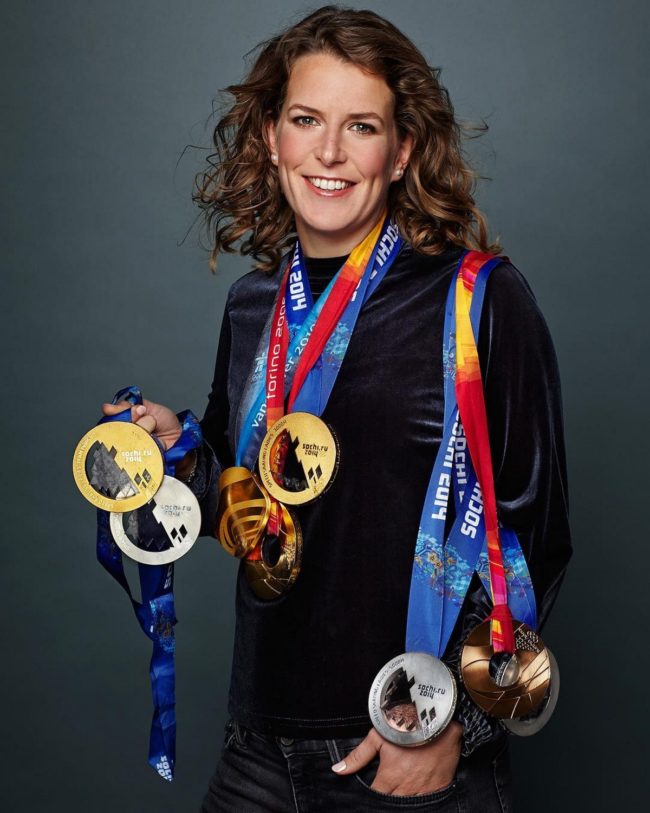
Top 150 Olympic Athletes: #127 - Ireen Wust


Ireen Wust

Netherlands

Speed Skating


Overall Ranks

#4 among Speed Skaters

#3 among Dutch Olympians

#2 among Dutch Speed Skaters

#2 among Female Speed Skaters

#1 among Dutch Female Speed Skaters


Olympic Results

2006

1500m - Bronze

3000m - Gold

2010

1500m - Gold

2014

1000m - Silver

1500m - Silver

3000m - Gold

5000m - Silver

Team Pursuit - Gold

2018

1500m - Gold

3000m - Silver

Team Pursuit - Silver

2022

1500m - Gold

Team Pursuit - Bronze

Total

Events - 20

Gold - 6

Silver - 5

Bronze - 2


Irene Karlijn Wust was born on April 1, 1986 at Goirle, Netherlands, and began skating at age 11. By the time she was 17, she had won silver at the World Junior Championships, and the next year she won the all-around gold. This led to her Olympic debut in 2006, when she was 19 years old.

Her Olympic debut came in the 3000m, which featured the past 3 World Champions and the world record holder, so Wust was an afterthought beforehand. Once she took the ice, though, people took notice, as she set a new track record, more than 7 seconds faster than any of the 18 athletes who had raced already. All of the favorites ran after her, but none was able to match her time, and she ended up taking the gold medal by just over a second, becoming the youngest Dutch Olympic champion ever.

Her next event was the 1000m, and she put herself in bronze medal position with just one pair to go, but she was edged out by Anni Friesinger of Germany in the final race, leaving her in 4th. In the next event, the 1500m, the roles were reversed, with Wust skating in the final pair and knocking Friesinger out of bronze medal position to take her second medal of 2006.

When 2010 came around, her first event was again the 3000m, where she was the defending champion. She was in the final pairing, but didn't run her best race, and ended up in 7th place. Her second event, the 1000m, went about the same, but in the 1500m, she was able to change her luck. She started out as fast as possible, then held on at the end to record the best time of the event so far by over a second, and when none of the 6 remaining skaters was able to match her time, she took home her second gold medal.

Her best Olympic performance came in Sochi in 2014. The 3000m came first, and featured the past 3 Olympic champions, two of whom were the most recent World Champions as well. Defending champion Martina Sablikova of Czechia had the time to beat when Wust took the ice, and Wust started out fast as always, but didn't slow down until the final quarter of the race, and by that time she had built a big enough lead that she was able to still win by more than 1.5 seconds.

In the 1000m, which came next, Zhang Hong of China set the time to beat early, more the 1.5 seconds ahead of any of the earlier racers, and nobody came within a second of her until the final 3 pairs, when Margot Boer and Wust, both Dutch, managed to get somewhat close, but neither was able to surpass the Chinese skater, leaving Wust with a silver.

The 1500m event was very similar. Jorien ter Mors, a fellow Dutchwoman, set a new Olympic record at the halfway point of the event, and the only skater in the second half to get within a second of her was Wust, who finished just more than half a second behind to take another silver medal.

Her next event was the 5000m, which she had not previously entered in the Olympics, and she was paired with Sablikova, the defending champion and overwhelming favorite. Wust started fast as usual, and led the race through 3800m, but then Sablikova made her move and left Wust in the dust, winning by more than 2.5 seconds, though Wust's performance was still good enough for her third straight silver of the games.

The final event of 2014 was the team pursuit, which the Dutch had not done well in during the previous 2 Olympics, but with the top 4 skaters from the 1500m all forming a team, they came in favored to win, and they made sure to leave no doubt, setting a new Olympic record in qualifying, then again in the semifinals, and then beating the record again in the gold medal race, which they won over Poland by more than 7 seconds.

She returned to defend her 3000m medal in 2018, but she had been battling injuries, so she wasn't regarded as the favorite. Carlijn Achtereekte, another Dutch athlete, set the early pace, and Wust started strong as usual, sitting 1.5 seconds ahead of the pace with 2 laps left, but she slowed down considerably toward the end, and ended up losing by 0.08 seconds, leaving her with yet another silver medal.

She was assigned to one of the earliest pairs in the 1000m, and she had the lead by more than a second when she left the ice, but it didn't hold up, as 8 other skaters ran faster, leaving her far behind the eventual winner. In the 1500m, defending champion ter Mors failed to qualify at the Dutch trials, so Wust was one of the favorites, and she again left the ice with a lead of more than a second, but this time her time stood up, with Miho Takagi of Japan making it close in the final pairing, but just falling short by 0.2 seconds to give Wust another gold medal.

The Dutch and Japanese were co-favorites heading into the team pursuit, and the Dutch set a new Olympic record in qualifying, just ahead of Japan. They took it a little easy in the semifinals, and the USA team was nowhere near their quality, earning a spot in the gold medal match against Japan. The race was as good as expected, with the two teams alternating the lead for most of the race, before Japan pulled away in the final laps to win by 1.5 seconds, while the Dutch still beat their earlier Olympic record in the losing effort.

She came back for one final Olympics in 2022. She raced in the 1000m again, which had never been her strongest event, finishing in 6th place. Up next was her best event, the 1500m, where she was the defending champion, and it went almost exactly as it had 4 years earlier, with Wust building up a 1.5 second lead, then watching Takagi get close but fall short again. This made Wust the first athlete in Olympic history to win an individual gold medal in 5 straight Olympics.

She closed out her Olympic career with one final medal, a bronze in the team pursuit, giving her 13 total, the most of any speed skater in Olympic history. Though there were several times where she came up just short of the gold, or failed to medal at all, her longevity and ability to compete and so many distances made her one of the greatest Olympic athletes of all time.


Thursday, July 9, 2026

Top 150 Olympic Athletes: #128 - Thorsten Margis


Thorsten Margis

Germany

Bobsled


Overall Ranks

#4 among German Olympians

#1 among Bobsledders


Olympic Results

2018

Two Man - Gold

Four Man - Gold

2022

Two Man - Gold

Four Man - Gold

2026

Four Man - Gold

Total

Events - 6

Gold - 5


Thorsten Margis was born on August 14, 1989 in Bad Honnef, West Germany, not long before the reunification of Germany. Germany has dominated the bobsled events for a long time, especially on the men's side, so making one of the teams is no small feat.

His first Olympic appearance came in 2014, when he joined the sled piloted by Francesco Friedrich, another Olympic newcomer. He only raced in the four-man event that year, and the team finished in 8th place overall, a pretty nondescript start to a stellar career.

By the time the Olympics returned in 2018, the team had improved quite a bit, having won the past 3 World Championships in the two-man, and the previous year's four-man as well. They still weren't considered the favorites in the two-man, and were in 5th place after the first two runs, but they set a new track record in their third run to move into 2nd place with one run to go. Their final run was enough to put them in first place with only the Canadian favorites left to run, and after they finished, they ended up with the exact same time, down to .01 of a second, and a tie for the gold medal was declared.

Riding their high from winning gold, they moved on to the 4-man event, where they posted the fastest time in each of the first three runs, giving them a lead of almost half a second headed into the final run, which is an eternity in bobsled. They ran a safe, controlled final run to take an easy second gold medal of the games.

Friedrich and Margis won two more World Championships in the two-man after their Olympic triumph, making them the favorites in 2022, and they didn't disappoint. The pair had the best time in 3 of their 4 runs, with the eventual silver medalists led by Johannes Lochner beating them by .09 seconds on the second run. Overall, they beat the other German team by 0.49 seconds for an easy gold.

The 4-man event was the same story. Margis' sled was best in 3 of the 4 runs, with Lochner's sled beating them one the other run, with Margis' team winning the event by 0.37 seconds, pulling them into a tie for most golds in bobsled history.

In 2024, Margis announced that he was switching bobsled teams from the one led by Friedrich to the one piloted by Lochner, who had finished right behind them in both events in 2022. The new team also included Georg Fleischhauer, who was #138 on my list, though Margis only competed in the four-man sled. They won the gold by more than half a second over his old teammate, Friedrich, in 2026, making Margis the first bobsledder to win 5 Olympic gold medals.

Margis announced his retirement after winning that final gold medal earlier this year, and with a perfect record in the past 3 Olympic games, he has established himself as one of the greatest Olympic athletes of all time.


Sunday, July 5, 2026

Top 150 Olympic Athletes: #132 - Jens Luras Oftebro


Jens Luras Oftebro

Norway

Nordic Combined


Overall Ranks

#6 among Norwegian Olympians

#1 among Nordic Combined athletes


Olympic Results

2022

Team - Gold

Sprint - Silver

2026

Team - Gold

Individual - Gold

Sprint - Gold

Total

Events - 6

Gold - 4

Silver - 1


Jens Christian Luras Oftebro was born on July 21, 2000 in Oslo, Norway. His older brother, Einar, won a silver medal at the 2016 Winter Youth Olympics, and Jens followed his brother into the sport. He competed in the 2017 and 2018 Junior World Championships, earning a bronze medal in the relay in 2018.

By 2021, he was competing in the adult World Championships, earning an individual bronze and a team gold, and had surpassed his brother by making his first Olympic team in 2022. His first event was the Individual, in which the competitors ski jump off the normal hill, then run a 10 km cross-country ski race, with the ski jump leaders getting a head start. He was 20th after the ski jump, but finished in 10th place after the race, the first and only time so far that he has failed to medal in an Olympic event.

His next event was the Sprint, which is just like the Individual, but with the ski jump taking place on the large hill instead. He was in 10th place heading into the race portion, nearly 2 minutes behind the leader, who had a 44 second lead over the field to start the race. That lead was erased by a wrong turn at the end of the first lap, and by the start of the final lap, Oftebro and his countryman Jorgen Graabak were only 12 second behind the leaders. Both made a strong push on the final straightaway, with Graabak edging out Oftebro by 0.4 seconds, giving the 21-year-old a silver medal.

In the team event, Norway was one of the favorites after winning the previous year's World Championship, and they were in second place after the jumping portion. The top 4 teams remained in a tight pack through the first two laps, but Oftebro posted the fastest time of the day to give Norway a 10 second lead heading into the final lap, which was run by Graabak, who extended the lead to give Norway an easy gold medal.

He won the World Cup Best Skier Trophy in both 2023 and 2025, and was expected to contend for medals in 2026. He started again with the Individual, landing in 7th place after the ski jump, then surging to the lead with a lap to go before holding on to upset Johannes Lamparter of Austria, the pre-race favorite, to win his first solo gold medal.

Next up was the Sprint, where he was defending silver medalist, and since Graabak had retired, he was the top returning competitor. He was #5 after the ski jump, but he caught up to the leaders and passed them before the halfway point, and was never seriously challenged for the rest of the race, ending up nearly 6 seconds ahead of Lamparter at the end.

The team event came last, and it was shortened from a 4x5km relay to a 2x7.5km for the first time. Oftebro and Andreas Skoglund competed for Norway, coming in #2 in the ski jump portion, which put them 13 seconds behind Germany heading into the skiing. Skoglund took the lead early and maintained it through the handoff, and Oftebro led for most of his lap, though he was challenged by the Finnish skier at the end, but was able to hold him off to win by 0.5 seconds, giving him a slim win for his third gold medal.

By winning all 3 events, Oftebro became the second Nordic Combined competitor in history to earn 3 golds in the same Olympics. Add in his previous gold and silver, and he has shown that he is already one of the greatest Olympians of all time, and at 25 years old, he probably has plenty of time to continue to climb the rankings.


Friday, June 19, 2026

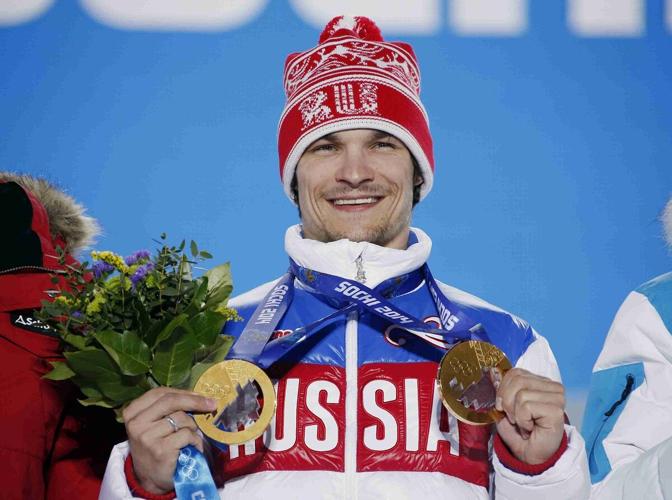
Top 150 Olympic Athletes: #148 - Vic Wild


Vic Wild 

Russia

Snowboard


Overall Ranks

#7 among Russian Olympians

#1 among Snowboarders


Olympic Results

2014

Parallel Giant Slalom - Gold

Parallel Slalom - Gold

2022

Parallel Giant Slalom - Bronze

Total

Events - 4

Gold - 2

Bronze - 1


Victor Ivan Wild was born in White Salmon, Washington on August 23, 1986, and originally competed for the United States in international competitions, but after the US Olympic Committee decided to stop funding snowboard racing in 2010, and after his marriage to Russian snowboarder Alyona Zavarzina in 2011, he moved to Russia and applied for citizenship.

He made his Olympic debut in 2014, competing in the Parallel Slalom and Parallel Giant Slalom. He posted the second-best qualifying time in the Parallel Giant, which moved him to the round of 16. Starting in that round, matches consisted of 2 snowboarders racing at the same time, with the best overall time after 2 races determining the winner. Wild won all but one race in the competition, taking the gold medal just hours after his wife won the bronze medal in the same event.

He earned the best qualifying time in the Parallel Slalom a few days later, getting him the top seed in the 16-man field, and again he won the competition while losing only a single race, a loss which came by 0.04 of a second to a 2-time world champion in the event. His win made him the first snowboarder ever to win multiple gold medals at the same Olympics, and he is still the only one to do it in 2 individual events.

The Parallel Slalom did not return after the 2014 Olympics, but Wild came back to defend his title in the Parallel Giant in 2018, but after placing 9th in qualifying, he lost in his first race and was eliminated.

Despite getting divorced in 2021, he decided to continue living in and competing for Russia, and he again competed in the Parallel Giant Slalom in 2022, again taking 9th place in the qualifying round. After upsetting fellow Russian Dmitry Loginov in the first round, he took down the #1 seed in the next, advancing to the semifinals. He lost his next race, then finished off the tournament with one final upset to earn himself a bronze medal.

Though Wild has only competed in 4 Olympic events in his career, and failed to medal in one of them, he dominated in both of his events in 2014, and another strong performance in 2022 earned him the title of best Olympic snowboarder of all time so far.