Showing posts with label 2026 Olympics. Show all posts

Tuesday, August 4, 2026

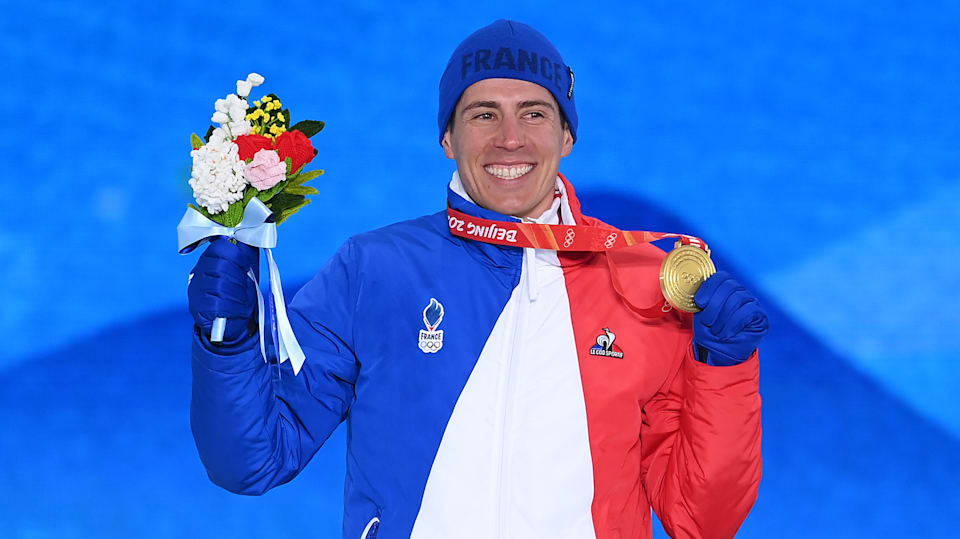
Top 150 Olympic Athletes: #102 - Quentin Fillon Maillet


Quentin Fillon Maillet

France

Biathlon


Overall Ranks

#3 among French Olympians

#2 among Biathletes

#1 among French Winter Olympians


Olympic Results

2022

Sprint - Silver

Mixed Relay - Silver

Pursuit - Gold

Individual - Gold

Relay - Silver

2026

Sprint - Gold

Mixed Relay - Gold

Mass Start - Bronze

Relay - Gold

Total

Events - 15

Gold - 5

Silver - 3

Bronze - 1


Quentin Denis Fillon Maillet was born on August 16, 1992 in Champagnole, France, and grew up in the French Alps near the Swiss border. He took up cross country skiing when he was 10, then transitioned into biathlon at age 14. From 2015 to 2017, he won medals in every world championship, but only in the relay events.

He was still able to make the French Olympic team for the 2018 Olympics in PyeongChang, but didn't do anything of note. He finished 48th in the sprint, 44th in the pursuit, and 29th out of 30 in the mass start. It was an ignominious start to what would become a great career.

In 2019, he won his first individual World Championship medal, a bronze in the sprint. He won several more over the next few years, but was by no means a star headed into the 2022 Olympics. He entered all 6 biathlon events in Beijing, and by the time he finished, he had become a star.

He started out in the mixed relay, which was raced by 4 skiers, each of whom covered 6 km. The women went first, and at the halfway point, they held a slight lead. After the third leg, they had fallen to third place, 17 seconds behind the leaders, but Fillon Maillet skied an incredible leg, getting through without missing a shot and skiing the second-fastest time of the day. In the end, he fell just short, losing by less than a second to the Norwegian team, but it earned him his first Olympic medal, a silver.

Next up was the individual 20km race, where each miss carried a one minute penalty applied at the end. Fillon Maillet was the best skier of the event, finishing 31 seconds ahead of Johannes Thingnes Bo, who had beaten him at the end of the mixed relay, and since each missed 2 shots, he remained ahead of Bo. Anton Smolski of Belarus finished without a missed shot, but since he was more than 2 minutes behind Quentin, he ended up taking the silver, with Fillon Maillet earning his first gold.

The third event was the 10km sprint, where each missed shot added a 150m penalty loop to the course. Fillon Maillet had one miss on the first round of shooting, which allowed Bo to build a big lead. Fillon Maillet was the fastest skier the rest of the way, and Bo missed a shot in the second shooting portion, but his lead was too big, and Fillon Maillet came in 25 seconds behind to take the silver, 13 seconds ahead of Bo's older brother, Tarjei, who took bronze.

The next event was the 12.5 km pursuit, where each skier started out based on the results of the sprint event the day before, so Bo started out with a big head start, but he struggled in the shooting portion, missing 7 times, which added 1050 meters to his race. Fillon Maillet was perfect on his shooting, and ended up beating Tarjei Bo by 28.5 seconds for another gold medal.

Up next was the relay, where Fillon Maillet again took the anchor leg. The Russian athletes took a big lead early and built it up throughout the race, with a lead of over 40 seconds when the final leg started. France was in second the entire way up to that point and looked to be fighting for silver when the final Russian skier missed two shots at the final stop, allowing Germany, France, and Norway to catch up. Despite being the only country that didn't miss a shot, the French ended up getting another silver after the final Norwegian skier turned on the jets to win the race by 27 seconds.

In the final event, the mass start, it appeared that Fillon Maillet was going to win his 6th medal of the games, but on the final shooting portion, the wind kicked up, causing him to miss 3 shots, which added 450 meters to his race, and he ended up 13 seconds out of third place, just one place away from the medal. Even without it, he was the first biathlete ever to win 5 medals in a single Olympics, 3 days before Bo matched him.

He returned to compete again in the 2026 Olympics, again qualifying for all 6 events. In the mixed relay, which went first, the race started with the men's legs first, and Fillon Maillet handed off to the first female skier in third place, but after she posted the best time by a woman in the entire race, the French had a 19 second lead, which they extended to 26 seconds by the end to earn the gold medal.

He was the defending champion in the individual 20km, and was the favorite to repeat, but despite having the fastest time, he missed 4 shots, which added 4 penalty minutes, causing him to drop to 8th place at the end. He made up for it in the sprint, where he was one of the favorites since both Bo brothers had retired, leaving him as the only returning medalist. He was one of 5 skiers to shoot perfectly, then passed teammate Emilien Jacquelin on the home stretch to take home a gold medal.

That gave him a 16 second lead to start the next event, the pursuit, but he struggled with his shooting again, with 5 total missed, which caused him to fall to 7th place at the end. In the relay, Norway was expected to win, and started with a 50 second lead after the first leg, with France clear back in 13th place. 3 misses by the next Norwegian skier brought them back to the pack, and a perfect leg by Jacquelin gave France a slight lead at the halfway point. Fillon Maillet held that slight lead through his leg, and the final French skier was able to pull away to give them an upset victory by 10 seconds.

In the final event, the mass start, Fillon Maillet struggled again with his shooting, missing once in the first section, which put him way behind. He moved up to 9th by the second shooting section, where he didn't miss, and was in 5th by the next time he shot. He missed twice, which slowed his progress, but he still pushed through to get to 4th at the final shooting spot, then passed Philipp Horn of Germany on the home stretch to steal the bronze medal, despite having 4 missed shots, 3 more than any of the other top 4.

He has recently announced that he will continue to compete and plans to ski again in the 2030 Olympics. Even though his first Olympics did not go well, he earned 9 medals in the past 2 Olympic games, 5 of which were golds, and has already established himself as one of the greatest Olympians of all time, with more possibly to come.



Thursday, July 9, 2026

Top 150 Olympic Athletes: #128 - Thorsten Margis


Thorsten Margis

Germany

Bobsled


Overall Ranks

#4 among German Olympians

#1 among Bobsledders


Olympic Results

2018

Two Man - Gold

Four Man - Gold

2022

Two Man - Gold

Four Man - Gold

2026

Four Man - Gold

Total

Events - 6

Gold - 5


Thorsten Margis was born on August 14, 1989 in Bad Honnef, West Germany, not long before the reunification of Germany. Germany has dominated the bobsled events for a long time, especially on the men's side, so making one of the teams is no small feat.

His first Olympic appearance came in 2014, when he joined the sled piloted by Francesco Friedrich, another Olympic newcomer. He only raced in the four-man event that year, and the team finished in 8th place overall, a pretty nondescript start to a stellar career.

By the time the Olympics returned in 2018, the team had improved quite a bit, having won the past 3 World Championships in the two-man, and the previous year's four-man as well. They still weren't considered the favorites in the two-man, and were in 5th place after the first two runs, but they set a new track record in their third run to move into 2nd place with one run to go. Their final run was enough to put them in first place with only the Canadian favorites left to run, and after they finished, they ended up with the exact same time, down to .01 of a second, and a tie for the gold medal was declared.

Riding their high from winning gold, they moved on to the 4-man event, where they posted the fastest time in each of the first three runs, giving them a lead of almost half a second headed into the final run, which is an eternity in bobsled. They ran a safe, controlled final run to take an easy second gold medal of the games.

Friedrich and Margis won two more World Championships in the two-man after their Olympic triumph, making them the favorites in 2022, and they didn't disappoint. The pair had the best time in 3 of their 4 runs, with the eventual silver medalists led by Johannes Lochner beating them by .09 seconds on the second run. Overall, they beat the other German team by 0.49 seconds for an easy gold.

The 4-man event was the same story. Margis' sled was best in 3 of the 4 runs, with Lochner's sled beating them one the other run, with Margis' team winning the event by 0.37 seconds, pulling them into a tie for most golds in bobsled history.

In 2024, Margis announced that he was switching bobsled teams from the one led by Friedrich to the one piloted by Lochner, who had finished right behind them in both events in 2022. The new team also included Georg Fleischhauer, who was #138 on my list, though Margis only competed in the four-man sled. They won the gold by more than half a second over his old teammate, Friedrich, in 2026, making Margis the first bobsledder to win 5 Olympic gold medals.

Margis announced his retirement after winning that final gold medal earlier this year, and with a perfect record in the past 3 Olympic games, he has established himself as one of the greatest Olympic athletes of all time.


Sunday, July 5, 2026

Top 150 Olympic Athletes: #132 - Jens Luras Oftebro


Jens Luras Oftebro

Norway

Nordic Combined


Overall Ranks

#6 among Norwegian Olympians

#1 among Nordic Combined athletes


Olympic Results

2022

Team - Gold

Sprint - Silver

2026

Team - Gold

Individual - Gold

Sprint - Gold

Total

Events - 6

Gold - 4

Silver - 1


Jens Christian Luras Oftebro was born on July 21, 2000 in Oslo, Norway. His older brother, Einar, won a silver medal at the 2016 Winter Youth Olympics, and Jens followed his brother into the sport. He competed in the 2017 and 2018 Junior World Championships, earning a bronze medal in the relay in 2018.

By 2021, he was competing in the adult World Championships, earning an individual bronze and a team gold, and had surpassed his brother by making his first Olympic team in 2022. His first event was the Individual, in which the competitors ski jump off the normal hill, then run a 10 km cross-country ski race, with the ski jump leaders getting a head start. He was 20th after the ski jump, but finished in 10th place after the race, the first and only time so far that he has failed to medal in an Olympic event.

His next event was the Sprint, which is just like the Individual, but with the ski jump taking place on the large hill instead. He was in 10th place heading into the race portion, nearly 2 minutes behind the leader, who had a 44 second lead over the field to start the race. That lead was erased by a wrong turn at the end of the first lap, and by the start of the final lap, Oftebro and his countryman Jorgen Graabak were only 12 second behind the leaders. Both made a strong push on the final straightaway, with Graabak edging out Oftebro by 0.4 seconds, giving the 21-year-old a silver medal.

In the team event, Norway was one of the favorites after winning the previous year's World Championship, and they were in second place after the jumping portion. The top 4 teams remained in a tight pack through the first two laps, but Oftebro posted the fastest time of the day to give Norway a 10 second lead heading into the final lap, which was run by Graabak, who extended the lead to give Norway an easy gold medal.

He won the World Cup Best Skier Trophy in both 2023 and 2025, and was expected to contend for medals in 2026. He started again with the Individual, landing in 7th place after the ski jump, then surging to the lead with a lap to go before holding on to upset Johannes Lamparter of Austria, the pre-race favorite, to win his first solo gold medal.

Next up was the Sprint, where he was defending silver medalist, and since Graabak had retired, he was the top returning competitor. He was #5 after the ski jump, but he caught up to the leaders and passed them before the halfway point, and was never seriously challenged for the rest of the race, ending up nearly 6 seconds ahead of Lamparter at the end.

The team event came last, and it was shortened from a 4x5km relay to a 2x7.5km for the first time. Oftebro and Andreas Skoglund competed for Norway, coming in #2 in the ski jump portion, which put them 13 seconds behind Germany heading into the skiing. Skoglund took the lead early and maintained it through the handoff, and Oftebro led for most of his lap, though he was challenged by the Finnish skier at the end, but was able to hold him off to win by 0.5 seconds, giving him a slim win for his third gold medal.

By winning all 3 events, Oftebro became the second Nordic Combined competitor in history to earn 3 golds in the same Olympics. Add in his previous gold and silver, and he has shown that he is already one of the greatest Olympians of all time, and at 25 years old, he probably has plenty of time to continue to climb the rankings.


Monday, June 29, 2026

Top 150 Olympic Athletes: #138 - Georg Fleischhauer


Georg Fleischhauer

Germany

Bobsled


Overall Rankings

#5 among German Olympians

#2 among Bobsledders


Olympic Results

2026

Two Man - Gold

Four Man - Gold

Totals

Events - 2

Gold - 2


Georg Fleischhauer was born on October 21, 1988 in Halberstadt, East Germany, a few years before Germany was reunified. He began his athletic career as a hurdler, and won the German championship twice, but never qualified for the Olympics.

He switched his focus to bobsled in the early 2020s, and won his first world championship in the two-man sled in 2023. He was chosen for the German Olympic team in 2026, competing as a brakeman in both the two-man and four-man events. He was paired with experienced pilot Johannes Lochner in the 2-man, and the pair was the fastest in all four runs, and was the only team to break 55 seconds in a run, which they did 3 times. Overall, they won by 1.34 seconds, the largest margin in that event since 1980.

In the 4-man event, the winning pair added Thorsten Margis and Jorn Wenzel, and had an easy time, winning the competition by just over half a second over another German foursome, posting the fastest time in 3 of their 4 runs, coming in #2 in their second run by .01 of a second. Their margin of victory was the largest since 1998.

Since Fleischhauer was the newcomer on both sleds, his presence has to be viewed as a large part of the reason that they were so dominant in both events, and therefore he has already established himself as one of the greatest Olympians of all time.