Showing posts with label Germany. Show all posts

Saturday, November 7, 2026

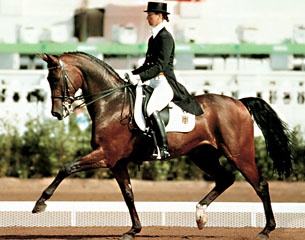
Top 150 Olympic Athletes: #11 - Isabell Werth


Isabell Werth

Germany

Equestrian Dressage


Overall Ranks

#1 among German Olympians

#1 among Equestrians


Olympic Results

1992

Individual - Silver

Team - Gold

1996

Individual - Gold

Team - Gold

2000

Individual - Silver

Team - Gold

2008

Individual - Silver

Team - Gold

2016

Individual - Silver

Team - Gold

2020

Individual - Silver

Team - Gold

2024

Individual - Silver

Team - Gold

Total

Events - 14

Gold - 8

Silver - 6


Isabell Regina Werth was born on July 21, 1969 in Issum, West Germany, and competed in her first international event, the European Championships, in 1989, right around her 20th birthday, and she remains active to this day. 

Her first Olympic experience came in Barcelona in 1992, riding Gigolo. In the team event, each team used 4 riders, with the top 3 scores counting toward the final team score. Germany had the top 4 overall riders, but only got to count the top 3, including Werth, who was #2 overall, and they won the gold medal by 482 points, more than 10% more than their nearest opponent, the Netherlands.

The top 16 riders from the team event were entered into the individual event, with a max of 3 per nation. Werth was only 6 points behind defending champ Nicole Uphoff-Becker going into the final, but in the final performance, Uphoff-Becker had a dominant performance, winning the gold by 75 points over Werth, who took the silver in her first Olympics.

She was back to compete in Atlanta in 1996, but Uphoff-Becker failed to make the team that year, so Werth was now the top rider. She led the German team to another gold medal in the team event, though the final score was much closer, with a margin of only 116 points over the Netherlands, who had the #2 and #3 overall riders in the event, only behind Werth.

The individual event was a little different that year. The top 25 riders were advanced into a semifinal round, with the top 14 then advanced to the final round, which had music added. The winner was determined by adding the scores from all 3 rounds together. Werth was #1 after the team event, but fell to #2 behind Anky van Grunsven of the Netherlands after the semifinal round. In the final, she and Gigolo performed to the song "Just a Gigolo", and got the highest score by more than 3 points, which moved them back into first and earned Werth her first individual gold medal.

She was once again back to perform in Sydney in 2000, in Gigolo's last performance before retirement. She again led Germany to the team gold medal and was the highest scorer in the event, but this time the margin had shrunk again, to only 53 points. It was the 5th straight Olympics where Germany or West Germany had won the gold, and the third straight gold in the event for Werth.

She was the top qualifier into the individual event, which followed the same format as 1996, but after the semifinal round, she had again fallen behind van Grunsven. This time, van Grunsven would have the highest score of the final round by far, and Werth was unable to overcome the deficit, and ended up taking the silver medal.

After Gigolo's retirement, Werth rode a horse named Antony for the next few years, but failed to see the same success as she had on Gigolo. She performed in the 2004 World Cup on Apache, but only finished 9th, and was not selected for the 2004 Olympic team. Over the next couple of years, she switched back and forth between two horses name Warum Nicht and Satchmo, and began to start seeing success again, and was put back on the Olympic team for 2008 riding Satchmo.

Germany had managed to keep their gold medal streak alive without her in 2004, but having her back in 2008 was definitely a big help. The scoring system was different now, but Werth still had the top score in the team event, and again led Germany to the gold medal, again edging out the Netherlands, this time by 1.167 points in the new scoring system.

Werth was leading at the beginning of the individual event thanks to her strong performance in the team event, then had the highest score in the semifinal round, which put her into the final with the lead. Van Grunsven, however, dominated the final round again, winning her third straight individual gold medal, leaving Werth with the silver for the third time in her career.

In 2009, her horse tested positive for a banned substance at a local event, resulting in a 6-month suspension for Werth. By 2012, Satchmo had retired, and she was again trying to find the right horse, resulting in her missing the Olympic team again. In 2013, she was suspended again when her new horse, El Santo, tested positive for another banned substance. 

She continued to ride after her suspension, and in 2016 she made the Olympic team again, this time on Weihegold Old. In her absence, the Germans had been upset in 2012 by Great Britain, so they were happy to have her back. She had the second-highest score in the team event, behind Charlotte Dujardin of Great Britain, but Germany was stronger overall, and won the gold by 3.341 points over the Brits, the fifth team gold and 6th overall of Werth's career.

This time, the scoring in the individual event was determined only by the score in the final round event set to music, without the previous round scores being added on. Dujardin's specialty was the music section, and she beat Werth by 4.786 points, leaving Werth with her 4th individual silver medal.

She switched horses again in 2019, this time to Bella Rose 2, and continued to see success on her new steed, making her 6th Olympic team in 2020. In the team event that took place in Toyko in 2021, Germany won easily by 431 points in a return to the old style of scoring, with Werth having the second-highest score, behind Jessica von Bredow-Werndl, a new teammate.

The individual event was competely separate this year, with 60 riders competing in groups of 10, with the top 2 from each group, plus the 6 next-highest scorers advancing to the final round of 18. Werth won her group with the #2 score overall, behind only Bredow-Werndl, and the pair finished in the same places after the final round as well, with Werth losing by 2.075 points to take a fifth silver medal. She also became only the third Olympian in history to win medals at 6 different Olympic Games.

Bella Rose 2 retired after the Tokyo Olympics, so Werth again had to change horses, this time to Wendy de Fontaine, and she qualified again for the Olympic team to compete in Paris in 2024. In the team event, von Bredow-Werndl had the highest score again, and Werth was #3 overall, and Germany won another gold medal, this one in a very close fight against Denmark, with the final margin being just 0.121 points under a return to the 2016 scoring system.

Werth was #2 in her group in the first part of the individual event, but that still meant automatic advancement to the final round. In the final, she made it much closer than she had in 2020, but she still lost to von Bredow-Werndl, who took her second straight gold medal, this time by 0.479 points over Werth, who won silver for the 6th time. 

Werth is still actively competing, and it is very likely that she will compete in Los Angeles in 2028, which would be her 8th Olympic games. She is the only Olympian ever to medal in 7 different Olympics, and also the only Olympian to win gold in the same event 7 times. She also has competed in the most events of any Olympian ever to medal in every event, making her an easy choice to include among the greatest Olympians of all time.


Wednesday, September 16, 2026

Top 150 Olympic Athletes: #59 - Nicole Uphoff


Nicole Uphoff

Germany

Equestrian Dressage


Overall Ranks

#2 among Dressage Riders

#2 among German Olympians


Olympic Results

1988

Individual - Gold

Team - Gold

1992

Individual - Gold

Team - Gold

Total

Events - 5

Gold - 4


Nicole Uphoff was born on January 25, 1967 in Duisburg, West Germany, and began riding in competitions with her horse, Rembrandt, when she was 18 years old, and by the time she was 21, she was recognized as one of the best in the world, and made her first Olympic team, riding for West Germany.

In the 1988 Olympics in Seoul, her first event was the team competition, where up to 4 riders from each nation went through the process, and the three highest scores counted toward the overall score. Uphoff was the highest scorer of any competitor overall, and with one of her teammates finishing in 3rd, the German team won easily, 138 points above the Swiss, who came in second.

The top 18 riders advanced to the final in the individual event, with only 3 per nation allowed to compete, leaving one West German out. Uphoff had scored 1458 in the team round, just 3 points ahead of the next qualifier, but in the final, she was nearly perfect, and raised the bar to 1521 points, which allowed her to run away with the gold by 59 points.

She followed up her pair of Olympic golds with 2 pairs of World Championship golds, and she was the favorite heading to Barcelona in 1992, competing for the newly reunified Germany. In the team event, she again had the highest score, with 1768 under a different scoring system than before, and she was 6 points ahead of Isabell Werth, her teammate, which helped them win the team gold by nearly 500 points.

The top 16 riders advanced to the individual final, except that the 4th German rider was left out again, even though they were #4 in qualifying. In the final, the German trio again finished at the top, sweeping the medals, with Uphoff finishing 75 points ahead of Werth to successfully defend her gold medal, becoming just the second rider in history to win twice in a row, while Rembrandt became the first horse ever to repeat as champion. 

In the next World Championship, she ended up only in second place, and by 1996, she failed to make the German team for the Atlanta Olympics, but as defending individual champion, she had the right to compete in the individual event, which she accepted. That event was expanded by a round that year, and she was in 9th after qualifying and 8th after the first round of the final, but dropped out before the final round, which was won by Werth, her teammate.

Rembrandt retired after the 1996 Olympics, and Uphoff spent a few years looking for a new horse. She won a competition in 1999 on a new horse, Borbet Rubinstein, but again failed to make the Olympic team in 2000, and never again attempted to return to the Olympics, though she didn't officially retire until 2013. While she was at the top of her game, she was unbeatable, winning all 4 of her Olympic gold medals in blowout fashion, making her one of the greatest Olympians of all time.


Thursday, August 6, 2026

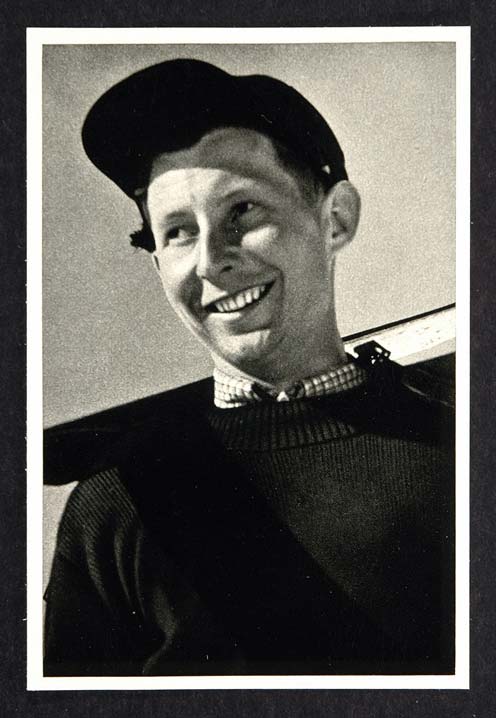
Top 150 Olympic Athletes: #100 - Franz Pfnur


Franz Pfnur

Germany

Alpine Skiing


Overall Ranks

#3 among German Olympians

#2 among Alpine Skiers

#1 among German Alpine Skiers


Olympic Results

1936

Combined - Gold

Total

Events - 1

Gold - 1


Franz Xaver Pfnur was born on November 21, 1908 in Au, Germany. Not much is known of his early life, but he competed in 3 events at the 1934 World Championships, winning gold in the slalom and silver in the combined and the downhill.

Alpine Skiing was added to the Winter Olympics in 1936, held in Garmisch-Partenkirchen, Germany, not far from Pfnur's hometown, with the Combined event being held for both men and women. Each skier ran the downhill course once, and were given a score between 0 and 100, with 100 points going to the skier with the best time. Then they ran the slalom course twice, with the two times being added together and then scored from 0 to 100 again, with a final score in the event calculated by averaging the two scores.

The first four skiers in the downhill had the 4 best times at the end, and Pfnur came in with the second-best time, 4.4 seconds behind the leader, Birger Ruud of Norway, and was awarded 98.49 points. In the slalom portion, Pfnur had the two fastest runs of any competitor, finishing with a combined 5.9 second lead over his nearest competitor. Ruud missed a gate on his first run, causing him to tumble down the rankings, though he rebounded on the second run to finish in 4th overall. Pfnur's 100 points in the slalom gave him an overall score of 99.25, 3 points ahead of the silver medalist, Gustav Lantschner, also from Germany.

After the Olympics, Pfnur joined the Nazi SS, and committed numerous war crimes over the next several years, for which he was never punished. He passed away in 1996. Even though he was a terrible human being, he was a great skier and one of the greatest Olympians of all time.


Thursday, July 9, 2026

Top 150 Olympic Athletes: #128 - Thorsten Margis


Thorsten Margis

Germany

Bobsled


Overall Ranks

#4 among German Olympians

#1 among Bobsledders


Olympic Results

2018

Two Man - Gold

Four Man - Gold

2022

Two Man - Gold

Four Man - Gold

2026

Four Man - Gold

Total

Events - 6

Gold - 5


Thorsten Margis was born on August 14, 1989 in Bad Honnef, West Germany, not long before the reunification of Germany. Germany has dominated the bobsled events for a long time, especially on the men's side, so making one of the teams is no small feat.

His first Olympic appearance came in 2014, when he joined the sled piloted by Francesco Friedrich, another Olympic newcomer. He only raced in the four-man event that year, and the team finished in 8th place overall, a pretty nondescript start to a stellar career.

By the time the Olympics returned in 2018, the team had improved quite a bit, having won the past 3 World Championships in the two-man, and the previous year's four-man as well. They still weren't considered the favorites in the two-man, and were in 5th place after the first two runs, but they set a new track record in their third run to move into 2nd place with one run to go. Their final run was enough to put them in first place with only the Canadian favorites left to run, and after they finished, they ended up with the exact same time, down to .01 of a second, and a tie for the gold medal was declared.

Riding their high from winning gold, they moved on to the 4-man event, where they posted the fastest time in each of the first three runs, giving them a lead of almost half a second headed into the final run, which is an eternity in bobsled. They ran a safe, controlled final run to take an easy second gold medal of the games.

Friedrich and Margis won two more World Championships in the two-man after their Olympic triumph, making them the favorites in 2022, and they didn't disappoint. The pair had the best time in 3 of their 4 runs, with the eventual silver medalists led by Johannes Lochner beating them by .09 seconds on the second run. Overall, they beat the other German team by 0.49 seconds for an easy gold.

The 4-man event was the same story. Margis' sled was best in 3 of the 4 runs, with Lochner's sled beating them one the other run, with Margis' team winning the event by 0.37 seconds, pulling them into a tie for most golds in bobsled history.

In 2024, Margis announced that he was switching bobsled teams from the one led by Friedrich to the one piloted by Lochner, who had finished right behind them in both events in 2022. The new team also included Georg Fleischhauer, who was #138 on my list, though Margis only competed in the four-man sled. They won the gold by more than half a second over his old teammate, Friedrich, in 2026, making Margis the first bobsledder to win 5 Olympic gold medals.

Margis announced his retirement after winning that final gold medal earlier this year, and with a perfect record in the past 3 Olympic games, he has established himself as one of the greatest Olympic athletes of all time.


Monday, June 29, 2026

Top 150 Olympic Athletes: #138 - Georg Fleischhauer


Georg Fleischhauer

Germany

Bobsled


Overall Rankings

#5 among German Olympians

#2 among Bobsledders


Olympic Results

2026

Two Man - Gold

Four Man - Gold

Totals

Events - 2

Gold - 2


Georg Fleischhauer was born on October 21, 1988 in Halberstadt, East Germany, a few years before Germany was reunified. He began his athletic career as a hurdler, and won the German championship twice, but never qualified for the Olympics.

He switched his focus to bobsled in the early 2020s, and won his first world championship in the two-man sled in 2023. He was chosen for the German Olympic team in 2026, competing as a brakeman in both the two-man and four-man events. He was paired with experienced pilot Johannes Lochner in the 2-man, and the pair was the fastest in all four runs, and was the only team to break 55 seconds in a run, which they did 3 times. Overall, they won by 1.34 seconds, the largest margin in that event since 1980.

In the 4-man event, the winning pair added Thorsten Margis and Jorn Wenzel, and had an easy time, winning the competition by just over half a second over another German foursome, posting the fastest time in 3 of their 4 runs, coming in #2 in their second run by .01 of a second. Their margin of victory was the largest since 1998.

Since Fleischhauer was the newcomer on both sleds, his presence has to be viewed as a large part of the reason that they were so dominant in both events, and therefore he has already established himself as one of the greatest Olympians of all time.