Showing posts with label 1936 Olympics. Show all posts

Monday, August 10, 2026

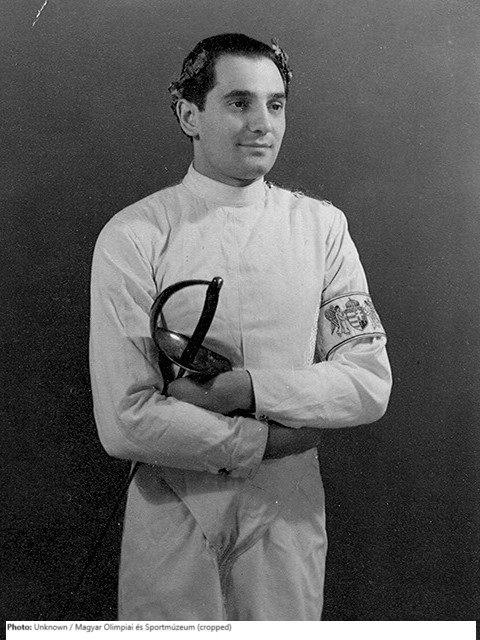
Top 150 Olympic Athletes: #96 - Laszlo Rajcsanyi


Laszlo Rajcsanyi

Hungary

Fencing


Overall Ranks

#7 among Fencers

#6 among Male Fencers

#3 among Hungarian Olympians

#3 among Hungarian Fencers


Olympic Results

1936

Team Sabre - Gold

1948

Team Sabre - Gold

1952

Team Sabre - Gold

Total

Events - 4

Gold - 3


Laszlo Rajcsanyi was born on February 16, 1907 in Budapest, Austria-Hungary, and began fencing when he was 17 years old. He won the World University Championship in 1928, and the Hungarian national championship in 1934, and qualified for his first Olympics in 1936 at Berlin.

His first event was the team sabre, which Hungary had been dominating for a decade, and would dominate for a few more decades. He participated in one match each in the quarterfinals and semifinals, winning all 4 of his bouts in each round. He was used in matches against Poland and Italy in the final round, going 2-1 against Poland, the only bout lost by Hungary in that match, and finishing 2-2 against Italy in a close-fought 9-6 finale that gave Hungary the gold. Overall, Rajcsanyi won 12 of his 15 bouts.

The individual sabre was contested over the next couple of days. In each of the first two rounds, he finished second in his pool, with the top 3 advancing. He finished 3rd in his semifinal pool, and was one of 3 Hungarians to reach the final pool, out of 9 total fencers. He went 5-3 in the final round-robin, with two of his losses coming against the gold and silver medalists, but it wasn't quite enough, and he finished in 4th place, just short of a medal.

The next two Olympics, which would have been during his prime, were cancelled due to World War II, so by the time he got to compete again, he was 41 years old. He only competed in the team event in 1948, going 6-1 on the way to the final pool. In the final pool, he went 5-2 in bouts against Belgium and the USA, but wasn't used against silver-medalist Italy as the Hungarians won another easy gold, with Rajcsanyi going 11-3 overall, nearly identical to his performance 12 years earlier.

He returned for one final Olympic run in 1952, as a 45 year old. Again just competing in the team event, he went 7-1 in the first round as Hungary easily won their pool. He won both of his bouts in round 2, but went 8-4 in the semifinals, where he was used in all 3 matches. In the final, they only used him against France, the eventual bronze medalist, where he went 2-2, while Hungary won a close match against Italy to keep their gold medal streak alive, getting Rajcsanyi a third gold medal to end his career.

He had earned a degree in mechanical engineering in 1930, and worked as a chief engineer throughout his entire fencing career, and he continued to do so after retiring from fencing. Even though all 3 of his gold medals came in team competitions, he was a big part of all 3, and nearly won an individual medal as well. All things considered, he was one of the greatest Olympians of all time.


Thursday, August 6, 2026

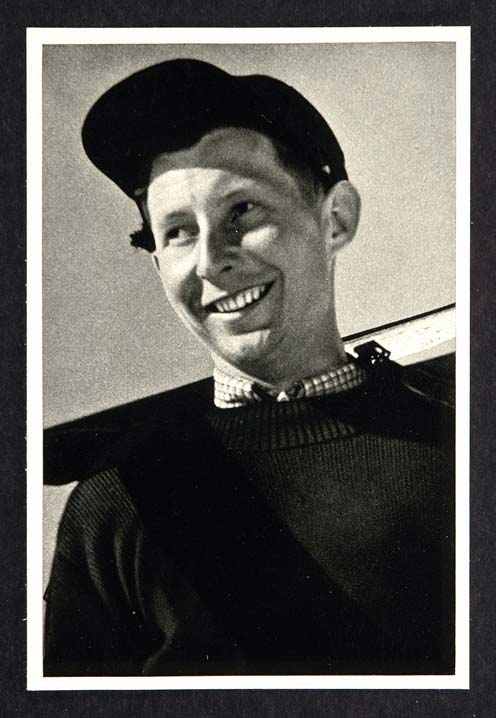
Top 150 Olympic Athletes: #100 - Franz Pfnur


Franz Pfnur

Germany

Alpine Skiing


Overall Ranks

#3 among German Olympians

#2 among Alpine Skiers

#1 among German Alpine Skiers


Olympic Results

1936

Combined - Gold

Total

Events - 1

Gold - 1


Franz Xaver Pfnur was born on November 21, 1908 in Au, Germany. Not much is known of his early life, but he competed in 3 events at the 1934 World Championships, winning gold in the slalom and silver in the combined and the downhill.

Alpine Skiing was added to the Winter Olympics in 1936, held in Garmisch-Partenkirchen, Germany, not far from Pfnur's hometown, with the Combined event being held for both men and women. Each skier ran the downhill course once, and were given a score between 0 and 100, with 100 points going to the skier with the best time. Then they ran the slalom course twice, with the two times being added together and then scored from 0 to 100 again, with a final score in the event calculated by averaging the two scores.

The first four skiers in the downhill had the 4 best times at the end, and Pfnur came in with the second-best time, 4.4 seconds behind the leader, Birger Ruud of Norway, and was awarded 98.49 points. In the slalom portion, Pfnur had the two fastest runs of any competitor, finishing with a combined 5.9 second lead over his nearest competitor. Ruud missed a gate on his first run, causing him to tumble down the rankings, though he rebounded on the second run to finish in 4th overall. Pfnur's 100 points in the slalom gave him an overall score of 99.25, 3 points ahead of the silver medalist, Gustav Lantschner, also from Germany.

After the Olympics, Pfnur joined the Nazi SS, and committed numerous war crimes over the next several years, for which he was never punished. He passed away in 1996. Even though he was a terrible human being, he was a great skier and one of the greatest Olympians of all time.


Sunday, June 28, 2026

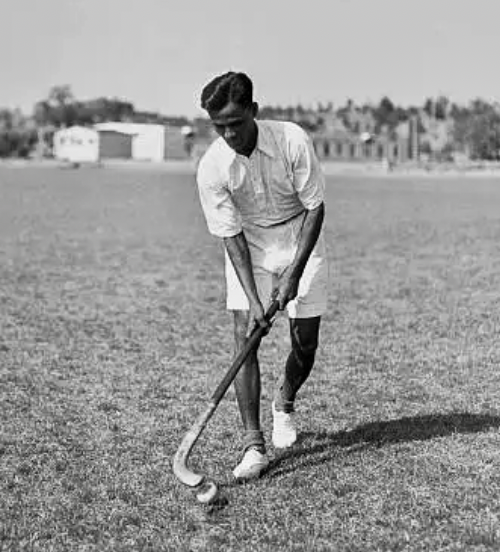
Top 150 Olympic Athletes: #139 - Dhyan Chand


Dhyan Chand

India

Field Hockey


Overall Ranks

#1 among Indian Olympians

#1 among Field Hockey players


Olympic Results

1928

Men - Gold

1932

Men - Gold

1936

Men - Gold

Total

Events - 3

Gold - 3


Dhyan Chand was born Dhyan Singh Bais in Allahabad, Indian on August 29, 1905. His father played field hockey in the British Indian army, and when Dhyan turned 17, he joined the Army as well and played field hockey for them.

Field hockey was popular in India, but they had never fielded an Olympic team before 1928, when they decided to put together the best players from 5 different teams around the country to travel to Amsterdam, and Chand was given permission by the Army to join one of those teams in order to try out. He scored a goal within 3 minutes of the first game of the national tournament, and it quickly became apparent that he would make the team.

He made his Olympic debut against Austria, scoring 4 goals in a 6-0 victory, then repeated the feat in other group games against Denmark and Switzerland, and India advanced to the championship game undefeated and unscored upon. They defeated the home Dutch team 3-0 in the gold medal game, with Chand scoring 2 more times, giving him a total of 15 goals in 5 games.

India returned to defend its title in the 1932 Olympics, but due to the Great Depression, only 3 countries were able to send teams. India beat Japan 11-1, then the host USA 24-1, to win another easy gold medal. Chand scored 12 goals between the 2 games, and his younger brother Roop scored 13.

The Indian team was just as dominant in 1936, not allowing a goal in group play, which put them in the semifinals. There they beat the French team 10-0, with Chand scoring 4 of those goals, then beat the host Germans 8-1, with another 3 goals from Chand. He scored 15 goals in the 5 games that year, giving him a total of 40 goals across 12 Olympic matches.

World War II cancelled the next 2 Olympic Games, and when they returned in 1948, Chand was offered a spot on the Indian team once again, which he declined. He appeared in the Olympics 3 times, and all 3 times led all players in goals, winning gold medals each time, and has scored more Olympic goals than any other player in history, making him the greatest Olympic field hockey player of all time, and one of the greatest Olympians.


Friday, June 26, 2026

Top 150 Olympic Athletes: #141 - Giulio Gaudini


Giulio Gaudini

Italy

Fencing


Overall Rankings

#9 among Fencers

#8 among Italian Olympians

#8 among Male Fencers

#4 among Italians Fencers

#3 among Male Italian Fencers


Olympic Results

1928

Individual Foil - Bronze

Team Foil - Gold

1932

Individual Foil - Bronze

Team Foil - Silver

Individual Sabre - Silver

Team Sabre - Silver

1936

Individual Foil - Gold

Team Foil - Gold

Team Sabre - Silver

Total

Events - 11

Gold - 3

Silver - 4

Bronze - 2


Giulio Gaudini was born on September 28, 1904 in Rome, Italy. He began fencing at a young age, and immediately showed promise, so much so that he made Italy's very competitive Olympic fencing team when he was just 19 years old.

In his first Olympics, he was only entered in the team foil event. The team made it through pool play and the quarterfinals with no issue, reaching the final group of 4, but in their first match, against France, they disagreed with the final point that was awarded to the French and left the competition in protest, which gave the team a 4th place finish by default.

By 1928, he was one of the stars of the Italian team, and there would be no repeat of their 1924 result, as they won every match en route to a dominant gold medal. He then competed in the individual foil event for the first time, and advanced easily into the final group of 12, where he finished with a 9-2 record, which put him in a 3-way tie for first. The tie was broken by scoring margin, which earned Gaudini the bronze medal.

In 1932, he returned to compete in the foil events, but added the sabre events as well. The Italian team was favored to repeat their title in the team foil event, but after a 3-way tie in the final pool, Italy was awarded the silver medal based on having fewer overall touches than France. In the individual foil, he repeated his bronze medal performance from 4 years earlier.

Hungary was the defending champion in the team sabre and was the heavy favorite, and they did not disappoint, wiping out every opponent in the tournament. Gaudini and the Italians won silver, easily defeating Poland and the USA in the final pool, but falling 9-2 against Hungary. Hungary was expected to take all 3 individual sabre medals, but Gaudini surprised everyone by taking the silver after losing only 2 matches in the final pool, leaving him with 3 silvers and a bronze in 1932.

Gaudini qualified for the same 4 events in 1936, and this time Italy would return to form, going undefeated through the tournament and beating France 9-4 in the decisive match to take back the gold medal. In the individual foil, Gaudini came in first place in his pool in every round of the tournament, and won all 7 matches in the final pool to finally earn his first individual gold medal.

The team sabre event was a repeat of the 1932 event, except that Italy made their final match with Hungary a bit closer this time, losing 9-6 to earn a repeat silver. In the individual sabre, Gaudini reached the final pool, just as he always had, but finished 3-5 among that group and ended up in 6th place, the worst finish of his Olympic career.

The next two Olympic games were not held due to World War II, and before he could compete again, Gaudini passed away from cancer on January 6, 1948 in his hometown of Rome. He was undoubtedly one of the greatest fencers of his time, reaching the final pool in all 11 events in which he competed, and earning a total of 9 medals, 3 of which were gold, capped off with his first and only individual gold in 1936.