Showing posts with label 1932 Olympics. Show all posts

Thursday, October 22, 2026

Top 150 Olympic Athletes: #24 - Aladar Gerevich


Aladar Gerevich

Hungary

Fencing


Overall Ranks

#4 among Fencers

#2 among Hungarian Olympians


Olympic Results

1932

Team Sabre - Gold

1936

Individual Sabre - Bronze

Team Sabre - Gold

1948

Individual Sabre - Gold

Team Sabre - Gold

1952

Team Foil - Bronze

Individual Sabre - Silver

Team Sabre - Gold

1956

Team Sabre - Gold

1960

Team Sabre - Gold

Total

Events - 14

Gold - 7

Silver - 1

Bronze - 2


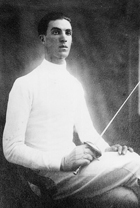
Aladar Gerevich was born on March 16, 1910 in Jaszbereny, Austria-Hungary, which is now part of Hungary. He ended up having one of the longest careers of any Olympian in history, and it all started in 1932, when he made his first Olympic team at the age of 22.

In his first Olympics, he only competed in the team sabre event, where Hungary was the defending champ and the favorite. Hungary won their opening pool easily, beating Denmark and Mexico by a total of 25 matches to 3, with Gerevich going 3-1 personally against Mexico. In the final pool, Gerevich competed in all 3 of their matches, and went 8-2 overall, while Hungary went 31-6 in winning every match to repeat as gold medalists.

In 1936, he competed in 3 events, starting with the team foil, even though he specialized in sabre. In their opening pool, they defeated Norway 10-6, with Gerevich going 2-2, and that was enough to advance to the quarterfinal. In that round, they destroyed Yugoslavia 14-2, with Gerevich winning all 4 of his bouts. In the semifinal pool, they beat only 1 country, Austria, and failed to advance to the final, with Gerevich struggling to a 2-6 record, including 4 losses to eventual champion Italy.

In the team sabre, things were very different. In their opening pool, they beat Denmark 16-0, then Uruguay 14-2 in the quarterfinal, though Gerevich didn't participate in that round. In the semifinal, they won 44 out of 48 bouts, with Gerevich winning all 8 of his. They also dominated the final, going 32-10 overall, with only Italy making it close at 9-6. Gerevich won 5 of his 7 bouts as Hungary won the gold medal again.

He also competed in the individual sabre that year, for the first time. In the first 3 rounds of the tournament, Gerevich lost only a single match, winning 13, and made the final pool easily. There were 3 Hungarians in the final pool of 9, and those other 2 accounted for both of his losses in the final pool, and he ended up with the bronze medal after going 6-2.

World War II took out a huge chunk of his prime, but he was still a top fencer when they finally returned in 1948. He competed in the team foil again, and was the only Hungarian to go 4-0 in the first round. He went 3-1 in the next round, and it was just enough for them to advance in a tiebreaker over Uruguay. They lost both of their matches in the semifinal round, which left them out of the final.

In the team sabre, he was a perfect 7-0 in the first two rounds, and Hungary advanced to the final pool easily, as expected from the 3-time defending champs. The final pool was a little more challenging, and Gerevich went only 5-3 in his bouts, but they won all 3 matches to repeat as gold medalists for the 4th time in a row, and the 3rd for Gerevich.

He also competed again in the individual sabre, where he had won the bronze before the war. He was given a bye out of the first round due to his participation in the team final, then went 12-1 over the next two rounds to reach the final easily. In the final, he went a perfect 7-0 to win the gold medal, highlighted by a 5-4 victory over teammate Pal Kovacs, who had led 4-2 before Gerevich scored three straight touches to win his first individual gold.

He competed in the same 3 events in 1952, despite being over 40 years old. He went 12-4 through the first 2 rounds in the team foil, struggling only against Argentina, who gave them their only defeat in those rounds, but they still advanced to the semifinals. He went 3-1 against Belgium in the semifinals, which earned them a spot in the final pool for the first time in his career. In the final, they only managed to beat Egypt, with Gerevich going 6-6, the best of any Hungarian, but it was still enough to take the bronze medal.

In the team foil, they were huge favorites again. They lost only 2 bouts in the first round, 1 of them by Gerevich, but 30-2 is pretty solid. He wasn't needed in the quarterfinal round, then went 6-2 in the semifinal pool as Hungary again advanced to the final easily. In the final pool, he was perfect against France, but struggled against Italy, going 1-3, but Hungary was able to pull off the victory 8-7 to win gold again, the 4th straight for Gerevich.

He also competed in the individual sabre, trying to defend his gold medal. He won 10 of his 12 bouts on the way to the final pool, which seemed like a foregone conclusion, and he was joined by the other 2 Hungarians as well. This time, he won every match but one, against Kovacs, who took away his gold medal, leaving Gerevich with the silver, and the full rainbow of medals in that event.

He returned for his 5th Olympics in 1956, this time only competing in the sabre events. In the team event, they received a bye to the semifinals, where they won 9-1, with Gerevich going 3-0. In the final pool, Hungary was dominant, winning 30 out of 45 matches, and won the gold medal for the 6th time in a row, the 5th straight for Gerevich. 

In the individual sabre, he easily made it back to the final for the 4th straight Olympics, where he had previously won one of each medal. This time, the final wouldn't go as well, as he only managed a 3-4 mark in that round, which was only good enough for 5th place, the first time he ever missed the podium in an individual event.

At the 1960 Olympic Trials, the committee told him that he was too old to make the team, so he challenged the entire team to individual matches, and he beat each and every one of them, which was enough to convince them to let the 50-year-old compete again in Rome.

In the team event, they won their pool easily to advance to the knockouts, which was a new feature that year. They were given a bye to the quarterfinals, where they beat Romania 9-3, though Gerevich only went 1-2 in that round. They faced Italy in the semifinal without him, and won 9-6 to reach the final. He again sat out the final against Poland, but watched as his teammates won 9-7, which earned him his 6th gold medal in the event, making him the first ever to achieve that.

In the individual sabre, he went 11-3 through the first 3 rounds, and made it all the way to the semifinals, but that would be where his journey ended. He finished 2-3 in that round, and missed out on advancing to the final pool on a tiebreaker, and his Olympic career was over. 

There were 28 years between his first and last gold medals, and he was the first athlete ever to win gold in the same event 6 times in a row, a feat since matched by Diana Taurasi. Isabell Werth has now won 7 golds in the same event, but hers were not consecutive. With his longevity, his trio of individual medals, plus his 6 team golds, Gerevich is definitely one of the greatest Olympians of all time.


Saturday, July 18, 2026

Top 150 Olympic Athletes: #119 - Renzo Morigi


Renzo Morigi

Italy

Shooting


Overall Ranks

#7 among Italian Olympians

#6 among Male Italian Olympians

#1 among Shooters


Olympic Results

1932

Rapid-Fire Pistol - Gold

Total

Events - 1

Gold - 1


Lorenzo Mario Morigi was born on Dec 28, 1895 in Ravenna, Italy. He fought in World War I with the Italian Army, where he was known as a marksman, and joined the Italian Fascist Party soon afterward. He rose through the ranks of the party, and even killed a would-be assassin of his party leader in 1927. 

He was selected to travel to Los Angeles for the 1932 Olympics, where he participated in the Rapid-Fire Pistol event. The event began with 3 rounds of 6 targets, which were visible for a total of 8 seconds. Shots were fired from 25 meters away, and all shooters to hit all 18 targets advanced to the next round. 12 of the 18 shooters made it through round one.

After the first round, the time was reduced for each round, so the 6 targets were only visible for 6 total seconds in the next round. Only 1 shooter failed in that round, and the other 11 moved on. It was reduced to 4 seconds in the next round, which knocked the field down to 6, followed by a 3-second round, which cut the field in half again.

The final round consisted of just the final 3 shooters, who were given only 2 seconds to hit all 6 targets. Domenico Matteucci, also of Italy, was only able to hit 3 in that round, with Heinz Hax of Germany hitting 4. Morigi stepped up and hit all 6 targets once again, hitting the final one just as it turned away, making him the winner with a perfect 42 shots out of 42 attempts in only 39 seconds.

He remained active in the Fascist Party after the Olympics, serving in the legislature for years. He never competed again in the Olympics, and eventually passed away on April 13, 1962 in Bologna, Italy. Though he only competed in a single event in his career, he never missed a single shot, making him one of the greatest Olympians of all time.


Sunday, June 28, 2026

Top 150 Olympic Athletes: #139 - Dhyan Chand


Dhyan Chand

India

Field Hockey


Overall Ranks

#1 among Indian Olympians

#1 among Field Hockey players


Olympic Results

1928

Men - Gold

1932

Men - Gold

1936

Men - Gold

Total

Events - 3

Gold - 3


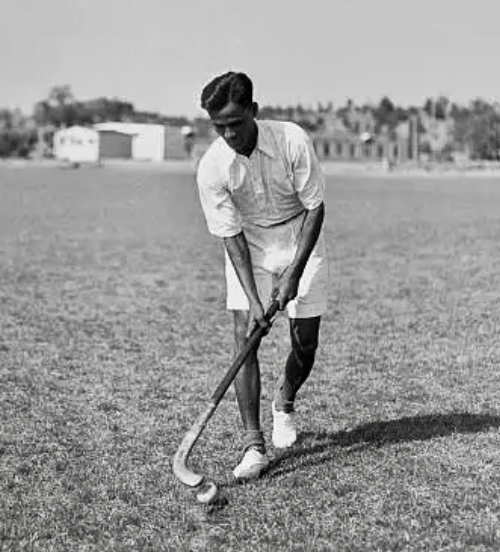
Dhyan Chand was born Dhyan Singh Bais in Allahabad, Indian on August 29, 1905. His father played field hockey in the British Indian army, and when Dhyan turned 17, he joined the Army as well and played field hockey for them.

Field hockey was popular in India, but they had never fielded an Olympic team before 1928, when they decided to put together the best players from 5 different teams around the country to travel to Amsterdam, and Chand was given permission by the Army to join one of those teams in order to try out. He scored a goal within 3 minutes of the first game of the national tournament, and it quickly became apparent that he would make the team.

He made his Olympic debut against Austria, scoring 4 goals in a 6-0 victory, then repeated the feat in other group games against Denmark and Switzerland, and India advanced to the championship game undefeated and unscored upon. They defeated the home Dutch team 3-0 in the gold medal game, with Chand scoring 2 more times, giving him a total of 15 goals in 5 games.

India returned to defend its title in the 1932 Olympics, but due to the Great Depression, only 3 countries were able to send teams. India beat Japan 11-1, then the host USA 24-1, to win another easy gold medal. Chand scored 12 goals between the 2 games, and his younger brother Roop scored 13.

The Indian team was just as dominant in 1936, not allowing a goal in group play, which put them in the semifinals. There they beat the French team 10-0, with Chand scoring 4 of those goals, then beat the host Germans 8-1, with another 3 goals from Chand. He scored 15 goals in the 5 games that year, giving him a total of 40 goals across 12 Olympic matches.

World War II cancelled the next 2 Olympic Games, and when they returned in 1948, Chand was offered a spot on the Indian team once again, which he declined. He appeared in the Olympics 3 times, and all 3 times led all players in goals, winning gold medals each time, and has scored more Olympic goals than any other player in history, making him the greatest Olympic field hockey player of all time, and one of the greatest Olympians.


Friday, June 26, 2026

Top 150 Olympic Athletes: #141 - Giulio Gaudini


Giulio Gaudini

Italy

Fencing


Overall Rankings

#9 among Fencers

#8 among Italian Olympians

#8 among Male Fencers

#4 among Italians Fencers

#3 among Male Italian Fencers


Olympic Results

1928

Individual Foil - Bronze

Team Foil - Gold

1932

Individual Foil - Bronze

Team Foil - Silver

Individual Sabre - Silver

Team Sabre - Silver

1936

Individual Foil - Gold

Team Foil - Gold

Team Sabre - Silver

Total

Events - 11

Gold - 3

Silver - 4

Bronze - 2


Giulio Gaudini was born on September 28, 1904 in Rome, Italy. He began fencing at a young age, and immediately showed promise, so much so that he made Italy's very competitive Olympic fencing team when he was just 19 years old.

In his first Olympics, he was only entered in the team foil event. The team made it through pool play and the quarterfinals with no issue, reaching the final group of 4, but in their first match, against France, they disagreed with the final point that was awarded to the French and left the competition in protest, which gave the team a 4th place finish by default.

By 1928, he was one of the stars of the Italian team, and there would be no repeat of their 1924 result, as they won every match en route to a dominant gold medal. He then competed in the individual foil event for the first time, and advanced easily into the final group of 12, where he finished with a 9-2 record, which put him in a 3-way tie for first. The tie was broken by scoring margin, which earned Gaudini the bronze medal.

In 1932, he returned to compete in the foil events, but added the sabre events as well. The Italian team was favored to repeat their title in the team foil event, but after a 3-way tie in the final pool, Italy was awarded the silver medal based on having fewer overall touches than France. In the individual foil, he repeated his bronze medal performance from 4 years earlier.

Hungary was the defending champion in the team sabre and was the heavy favorite, and they did not disappoint, wiping out every opponent in the tournament. Gaudini and the Italians won silver, easily defeating Poland and the USA in the final pool, but falling 9-2 against Hungary. Hungary was expected to take all 3 individual sabre medals, but Gaudini surprised everyone by taking the silver after losing only 2 matches in the final pool, leaving him with 3 silvers and a bronze in 1932.

Gaudini qualified for the same 4 events in 1936, and this time Italy would return to form, going undefeated through the tournament and beating France 9-4 in the decisive match to take back the gold medal. In the individual foil, Gaudini came in first place in his pool in every round of the tournament, and won all 7 matches in the final pool to finally earn his first individual gold medal.

The team sabre event was a repeat of the 1932 event, except that Italy made their final match with Hungary a bit closer this time, losing 9-6 to earn a repeat silver. In the individual sabre, Gaudini reached the final pool, just as he always had, but finished 3-5 among that group and ended up in 6th place, the worst finish of his Olympic career.

The next two Olympic games were not held due to World War II, and before he could compete again, Gaudini passed away from cancer on January 6, 1948 in his hometown of Rome. He was undoubtedly one of the greatest fencers of his time, reaching the final pool in all 11 events in which he competed, and earning a total of 9 medals, 3 of which were gold, capped off with his first and only individual gold in 1936.