Showing posts with label Speed Skating. Show all posts

Monday, October 5, 2026

Top 150 Olympic Athletes: #40 - Johann Olav Koss


Johann Olav Koss

Norway

Speed Skating


Overall Ranks

#2 among Norwegian Olympians

#1 among Speed Skaters


Olympic Results

1992

1500m - Gold

10000m - Silver

1994

1500m - Gold

5000m - Gold

10000m - Gold

Total

Events - 6

Gold - 4

Silver - 1


Johann Olav Koss was born on October 29, 1968 in Drammen, Norway, and grew up skating. He was Norway's national junior champion in 1987, but struggled for a few years after moving up to senior races. He finally started to see some success in 1990, and by the time the 1992 Olympics came around, he was one of the better speed skaters in the world.

The week before the Olympics, he had to undergo surgery due to an inflamed pancreas, but he still pushed through it and competed. His first event was the 5000m, where the ice was impacted by rainfall earlier in the day, and he was one of the first skaters to go, resulting in a slower time than he wanted on the soft ice. After the first several pairs had finished, they touched up the ice, and the later skaters had more success, while Koss ended up finishing 7th, which would end up being the worst finish of his career.

His next event was the 1500m, and though he should have been the favorite, it was unclear how healthy he was after the surgery and his last race. Two Dutch skaters had the top times when Koss took the ice in the 8th pair, with Leo Visser in the lead. Koss matched Visser's pace exactly through the entire race, then sped up slightly on the final lap to take the lead by 0.09 seconds. Another Norwegian skater threatened that time in the next pair, but came up 0.04 seconds short, and none of the remaining 28 skaters came very close, and he was able to hold on for his first gold medal.

In the 10000m race, the top time kept getting lowered by one skater in each successive pair. Robert Vunderink of the Netherlands set the time to beat in the second pair, but that time was immediately beaten by Geir Karlstad of Norway, who skated nearly 5 seconds faster. Koss was up next, and he beat his teammate's time by 3.5 seconds, but then Bart Veldkamp of the Netherlands beat his time by 2.46 seconds in the next pair. There were still 20 skaters to go, but none got within 10 seconds of a medal, and Koss was able to take home the silver.

The next Olympics were held just two years later, due to an adjustment made to stagger the years for the Summer and Winter Games, and they were held in Lillehammer, in his native Norway. Just before the 1994 Olympics, Koss had broken the world record in the 5000m, which was his first event that year. His teammate, Kjell Storelid, broke the Olympic record while racing in the second pair, but after Koss went in the 4th pair, it was all over. Koss beat Storelid's time by 7.72 seconds, and broke his own world record by more than half a second, and no other skater came close the rest of the way.

Next up was the 1500m, where Rintje Ritsma of the Netherlands had just broken the world record the month before, so when Koss took the ice in the second pair, he had that in mind. He needed a final lap that was nearly a full second better than anyone else to pull it off, but he was able to break the world record by 0.31 seconds. Only 2 more skaters were able to get within a second of his time, including Ritsma himself, but none was able to defeat him, and he took his second gold of the games.

He was also the world record holder going into the 10000m race, and he was the first of the favorites to take the ice, skating in the 5th pair. He kept a steady pace throughout the entire race, and by the end, he had obliterated his own world record by 13 seconds, and left everyone else to compete for the other medals. Storelid ended up coming in second for silver, but he was 18.7 seconds behind Koss, who won an absolutely dominant 3rd gold medal of the games.

He abruptly retired right after his record-setting performance to attend medical school. Many years later, accusations were made that he had been using PEDs during his triple gold performance, and that that had been the reason for his early retirement, but there has still not been any proof of this. He won 4 gold medals in only 6 Olympic events, and set new world records in all 3 events in 1994, which makes him the greatest speed skater of all time, and one of the greatest Olympians.


Monday, September 28, 2026

Top 150 Olympic Athletes: #47 - Karin Enke-Kania


Karin Enke-Kania

East Germany

Speed Skating


Overall Ranks

#2 among Speed Skaters

#1 among Female Speed Skaters

#1 among East German Olympians


Olympic Results

1980

500m - Gold

1984

500m - Silver

1000m - Gold

1500m - Gold

3000m - Silver

1988

500m - Bronze

1000m - Silver

1500m - Silver

Total

Events - 10

Gold - 3

Silver - 4

Bronze - 1


Karin Enke was born on June 20, 1961 in Dresden, East Germany, and was a competitive figure skater when she was growing up. After finishing 9th in the European Championships when she was 15, she decided to change sports, becoming a speed skater, and it was a good move.

She went into the 1980 Olympics in Lake Placid as a relative unknown, but that changed fast. In the first pair of the 500m event, Ann-Sofie Jarnstrom of Sweden set a new Olympic record of 42.47 seconds, setting a high bar. Enke skated in the second pair, and she finished in 41.78 seconds to break the Olympic record that had only stood for a few minutes. 26 more skaters took their turn on the ice, but none got under 42 seconds, and Enke had a gold medal in her first race.

In the 1000m event, the Olympic record was broken twice as well, also in the first two pairings. Enke, unfortunately, was in the sixth pairing, and though she beat the old Olympic record time, she was more than 2 seconds behind the time to beat, and was sitting in 4th place, 0.2 seconds behind the medals, and that is where she would finish, as none of the remaining 25 skaters beat her time. She was very close to winning two medals in her first Olympics.

By 1984, she was no longer an unknown. She was known as the best female figure skater in the world, and was the favorite to win all 4 Olympic events. She started with the 1500m, where her teammate, Andrea Schone, broke the Olympic record in the first pairing by more than 5 seconds. A couple of skaters got close in the next couple of pairs, but when Enke skated in the 5th pair, her time was ahead of Schone's pace throughout, and by the end, she had broken the world record, and was nearly 2 seconds ahead of Schone. No one else got within 4 seconds of her, and she easily won the gold.

In the 500m, her major challenger was expected to be Christa Rothenburger, also from East Germany, who had set the world record the year before. Rothenburger skated in the 5th pair, and broke Enke's Olympic record, lowering it to 41.02. Enke was in the next pair, and she got off to a slightly slow start, and was unable to make up for it, finishing in 41.28, which ended up being enough for silver, but not the gold she expected.

In the 1000m, her biggest challengers were Schone and Nataliya Petrusyova of the USSR, who was the defending champ and world record holder. Rothenburger set a new Olympic record in the first pair, which Schone then broke in the second pair. Enke was in the third pair, and she was able to drop the Olympic record again, this time by over a second, and nobody else was able to come close as she won another gold medal.

She finished up with the 3000m, where Schone was again a big challenger, along with another East German, Gabi Schonbrunn, who held the world record. Schone was in the first pair, and she set a new Olympic record by more than 7 seconds, making it tough on everyone else. Enke was in the third pair, and she was ahead of pace up to the 600m mark, but was unable to keep it up, and she finished 1.52 seconds behind, but nearly 7 seconds ahead of anyone else who took the ice, which got her her second silver medal in Sarajevo.

Later that year, she married her trainer, Rudolf Kania, and began competing with his surname. In the 1988 Olympics in Calgary, the 500m was the first event. The world record had been passed back and forth between Kania, Rothenburger, and Bonnie Blair over the past several years, and those three were expected to medal, which is exactly what happened. Rothenburger went first among them, and set a new world record, but then Blair broke it again a few minutes later. Kania had her usual slow start, and it was just enough to keep her from catching the others, leaving her with a bronze medal, 0.14 seconds short of the gold.

Next was the 3000m, where the same 3 medalists from the previous Olympics were the favorites, though all 3 were now competing under new surnames, as all 3 had married since the last Olympics. Schone was now Ehrig, and she went out first, setting a new world record to start off the event, while Kania finished more than 6 seconds behind in the same pair after starting too fast to try to destroy the world record. Sange, formerly Schonbrunn, was in the third pair, and finished between the two other East Germans. In the next pair, Yvonne Van Gennip of the Netherlands was behind the pace clear up to the final lap, then had an amazing final lap to pull ahead and take the gold medal in world record time, knocking Kania off the podium and into 4th place, where she finished.

She was the favorite in her best event, the 1000m, a couple of days later. Bonnie Blair set a new Olympic record in the third pair, beating Kania's old time, but Kania went under that in the very next pair to set a new world record. Rothenburger was in the next pair, and she skated ahead of Kania's pace throughout most of the race, but started to fade in the final lap, though she still had enough left to finish just ahead of Kania, winning the event by 0.05 seconds, another new world record, which left Kania with the silver medal.

She was also the favorite in the 1500m, where she held the world record and was the only woman ever to break 2 minutes. Ehrig set a new Olympic record in the second pair, but Kania had a strong final lap in the 4th pairing to lower the Olympic record again. In the next pair, Von Gennip surprised everybody again, beating Kania's time with a very strong second lap, taking her second gold in Calgary, and leaving Kania to take another silver.

Kania retired after those Olympics, finishing her Olympic career with 8 medals in 10 events, with two 4th place finishes in her only medal failures. Allegations came out decades later that she had been doping during her career, particularly during the 1984 Olympics, but drug testing was not as advanced at the time, so it remains only an accusation. She had the most speed skating medals when she retired, though that has now been broken, but she never finished worse than 4th in an Olympic event, making her one of the greatest Olympians of all time.


Saturday, August 8, 2026

Top 150 Olympic Athletes: #98 - Jochem Uytdehaage


Jochem Uytdehaage

Netherlands

Speed Skating


Overall Ranks

#3 among Speed Skaters

#2 among Male Speed Skaters

#1 among Dutch Olympians


Olympic Results

2002

1500m - Silver

5000m - Gold

10000m - Gold

Total

Events - 3

Gold - 2

Silver - 1


Jochem Simon Uytdehaage was born on July 9, 1976 in Utrecht, Netherlands, and was among the best Dutch speed skaters for years before he finally broke through in 2001, performing well enough at the Olympic trials to make his first Olympic team, heading to Salt Lake City for the 2002 Games.

He qualified for the 3 longest events in speed skating, starting with the 5000m, the second-longest event. The Dutch had won this event 3 straight times, but it wasn't a sure thing this time, as the defending Olympic champ had missed the Olympic team due to being ill at the trials, and Uytdehaage was relatively unknown. The previous world record of 6:22.2 was broken twice before he took the ice in the penultimate pair, and he crushed the new record by over 3 seconds, lowering it to 6:14.66 and surprising everyone with a gold medal in his first Olympic race.

Even though he had just obliterated a world record, he still wasn't expected to compete for a medal in the 1500m, where the two men who had won the last 4 World Championships and the last Olympic gold were both competing. Uytdehaage was in the 9th pair out of 24, and he skated the race of his life, beating the world record by 3.3 seconds. He held onto the top spot for a long time, until Derek Parra of the USA finally beat his time by just over half a second in one of the final pairings, dropping Uytdehaage to a silver, which was still great due to coming in without expectations.

His final event was the 10000m, which the Dutch had also dominated recently, winning all 3 medals at the last Olympics, and each of the past 4 World Championships. The world record was 13:15.33 prior to this event, but it was lowered by Gianni Romme, another Dutch skater who held the record, in the second pair, down to 13:10.03. Uytdehaage raced in the 4th pair, and kept up a blistering pace throughout, finishing in 12:58.92, breaking the world record by over 11 seconds, and becoming the first to ever break 13 minutes. Nobody else came close to his time, and he won his second gold medal.

He won the 5000m at the 2003 World Championships, but that was his last major win. He failed to make the Olympic team in 2006, and retired in 2007. Even though he only ran 3 total Olympic races, all 3 set Olympic records, two of them by a lot, and both world records stood for nearly 4 years. All of that makes him one of the greatest Olympians of all time.


Friday, July 10, 2026

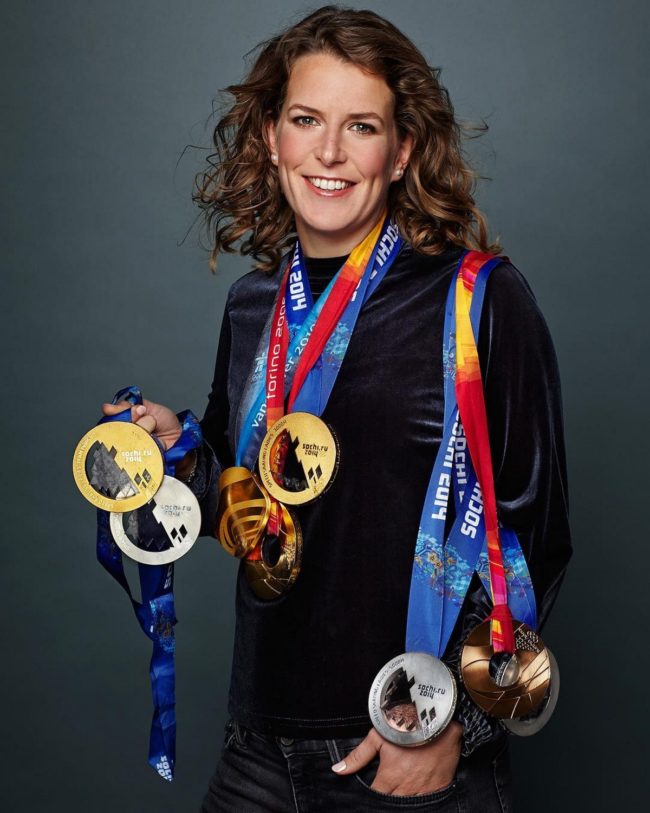
Top 150 Olympic Athletes: #127 - Ireen Wust


Ireen Wust

Netherlands

Speed Skating


Overall Ranks

#4 among Speed Skaters

#3 among Dutch Olympians

#2 among Dutch Speed Skaters

#2 among Female Speed Skaters

#1 among Dutch Female Speed Skaters


Olympic Results

2006

1500m - Bronze

3000m - Gold

2010

1500m - Gold

2014

1000m - Silver

1500m - Silver

3000m - Gold

5000m - Silver

Team Pursuit - Gold

2018

1500m - Gold

3000m - Silver

Team Pursuit - Silver

2022

1500m - Gold

Team Pursuit - Bronze

Total

Events - 20

Gold - 6

Silver - 5

Bronze - 2


Irene Karlijn Wust was born on April 1, 1986 at Goirle, Netherlands, and began skating at age 11. By the time she was 17, she had won silver at the World Junior Championships, and the next year she won the all-around gold. This led to her Olympic debut in 2006, when she was 19 years old.

Her Olympic debut came in the 3000m, which featured the past 3 World Champions and the world record holder, so Wust was an afterthought beforehand. Once she took the ice, though, people took notice, as she set a new track record, more than 7 seconds faster than any of the 18 athletes who had raced already. All of the favorites ran after her, but none was able to match her time, and she ended up taking the gold medal by just over a second, becoming the youngest Dutch Olympic champion ever.

Her next event was the 1000m, and she put herself in bronze medal position with just one pair to go, but she was edged out by Anni Friesinger of Germany in the final race, leaving her in 4th. In the next event, the 1500m, the roles were reversed, with Wust skating in the final pair and knocking Friesinger out of bronze medal position to take her second medal of 2006.

When 2010 came around, her first event was again the 3000m, where she was the defending champion. She was in the final pairing, but didn't run her best race, and ended up in 7th place. Her second event, the 1000m, went about the same, but in the 1500m, she was able to change her luck. She started out as fast as possible, then held on at the end to record the best time of the event so far by over a second, and when none of the 6 remaining skaters was able to match her time, she took home her second gold medal.

Her best Olympic performance came in Sochi in 2014. The 3000m came first, and featured the past 3 Olympic champions, two of whom were the most recent World Champions as well. Defending champion Martina Sablikova of Czechia had the time to beat when Wust took the ice, and Wust started out fast as always, but didn't slow down until the final quarter of the race, and by that time she had built a big enough lead that she was able to still win by more than 1.5 seconds.

In the 1000m, which came next, Zhang Hong of China set the time to beat early, more the 1.5 seconds ahead of any of the earlier racers, and nobody came within a second of her until the final 3 pairs, when Margot Boer and Wust, both Dutch, managed to get somewhat close, but neither was able to surpass the Chinese skater, leaving Wust with a silver.

The 1500m event was very similar. Jorien ter Mors, a fellow Dutchwoman, set a new Olympic record at the halfway point of the event, and the only skater in the second half to get within a second of her was Wust, who finished just more than half a second behind to take another silver medal.

Her next event was the 5000m, which she had not previously entered in the Olympics, and she was paired with Sablikova, the defending champion and overwhelming favorite. Wust started fast as usual, and led the race through 3800m, but then Sablikova made her move and left Wust in the dust, winning by more than 2.5 seconds, though Wust's performance was still good enough for her third straight silver of the games.

The final event of 2014 was the team pursuit, which the Dutch had not done well in during the previous 2 Olympics, but with the top 4 skaters from the 1500m all forming a team, they came in favored to win, and they made sure to leave no doubt, setting a new Olympic record in qualifying, then again in the semifinals, and then beating the record again in the gold medal race, which they won over Poland by more than 7 seconds.

She returned to defend her 3000m medal in 2018, but she had been battling injuries, so she wasn't regarded as the favorite. Carlijn Achtereekte, another Dutch athlete, set the early pace, and Wust started strong as usual, sitting 1.5 seconds ahead of the pace with 2 laps left, but she slowed down considerably toward the end, and ended up losing by 0.08 seconds, leaving her with yet another silver medal.

She was assigned to one of the earliest pairs in the 1000m, and she had the lead by more than a second when she left the ice, but it didn't hold up, as 8 other skaters ran faster, leaving her far behind the eventual winner. In the 1500m, defending champion ter Mors failed to qualify at the Dutch trials, so Wust was one of the favorites, and she again left the ice with a lead of more than a second, but this time her time stood up, with Miho Takagi of Japan making it close in the final pairing, but just falling short by 0.2 seconds to give Wust another gold medal.

The Dutch and Japanese were co-favorites heading into the team pursuit, and the Dutch set a new Olympic record in qualifying, just ahead of Japan. They took it a little easy in the semifinals, and the USA team was nowhere near their quality, earning a spot in the gold medal match against Japan. The race was as good as expected, with the two teams alternating the lead for most of the race, before Japan pulled away in the final laps to win by 1.5 seconds, while the Dutch still beat their earlier Olympic record in the losing effort.

She came back for one final Olympics in 2022. She raced in the 1000m again, which had never been her strongest event, finishing in 6th place. Up next was her best event, the 1500m, where she was the defending champion, and it went almost exactly as it had 4 years earlier, with Wust building up a 1.5 second lead, then watching Takagi get close but fall short again. This made Wust the first athlete in Olympic history to win an individual gold medal in 5 straight Olympics.

She closed out her Olympic career with one final medal, a bronze in the team pursuit, giving her 13 total, the most of any speed skater in Olympic history. Though there were several times where she came up just short of the gold, or failed to medal at all, her longevity and ability to compete and so many distances made her one of the greatest Olympic athletes of all time.