Showing posts with label 1980 Olympics. Show all posts

Monday, November 9, 2026

Top 150 Olympic Athletes: #9 - Nikolay Andrianov


Nikolay Andrianov

USSR

Artistic Gymnastics


Overall Ranks

#4 among Gymnasts

#2 among Male Gymnasts

#2 among Soviet Olympians

#1 among Male Soviet Olympians


Olympic Results

1972

Team - Silver

Floor Exercise - Gold

Vault - Bronze

1976

Individual All-Around - Gold

Team - Silver

Floor Exercise - Gold

Vault - Gold

Parallel Bars - Silver

Rings - Gold

Pommel Horse - Bronze

1980

Individual All-Around - Silver

Team - Gold

Floor Exercise - Silver

Vault - Gold

Horizontal Bar - Bronze

Total

Events - 24

Gold - 7

Silver - 5

Bronze - 3


Nikolay Yefimovich Andrianov was born on October 14, 1952 in Vladimir, USSR, now part of Russia. He was enrolled in a Soviet gymnastics school when he was 11, and by age 18 he had won a couple of gold medals at the European championships, and by the next year, he was on the Soviet Olympic team.

The Munich Olympics began with the team competition, which had been dominated by Japan for more than a decade, and 1972 was no different. Japan won the gold medal by 7.2 points, and the USSR was left with the silver, just like the past 3 Olympics. Andrianov, though only 19, was the highest-scoring member of the Soviet team.

That year, the top 36 athletes in the team competition advanced to the individual all-around, and the medals were determined by adding their scores from each half of the competition together. He was #5 in qualifying, behind 4 Japanese gymnasts, but posted the top score of anyone in the final, which was enough to move him up to 4th, but not quite into the medals, just 0.125 points short.

He qualified for the event finals in 4 events, and missed out on the rings final due to a tiebreaker. He was #2 in qualifying for the floor exercise, behind Sawao Kato of Japan, but Kato had a poor final performance, while Andrianov's 9.65 was the highest, moving him up to win the gold medal.

He was the #1 qualifier in the vault, but he only scored a 9.2 in the final, which allowed him to be passed by two others, and he ended up having to settle for the bronze medal. He got into the parallel bars final through a tiebreaker, and only scored an 8.45 in the final, which left him far behind the others in 6th place. He was also the final qualifier in the horizontal bar, and was unable to improve his standing. His first Olympics ended with 3 medals, one of each color, while coming somewhat close to 4 others.

In the 1974 World Championships, he won a gold medal in the rings, and 5 silver medals to go with it, and he was still improving, so that by 1976 he was the top gymnast in the world. Starting out with the team event again in Montreal, he gave it his all, but the Soviet Union fell just short, losing to Japan by 0.4 points, their closest margin in the 5 straight Olympic losses.

This time, the individual all-around limited each nation to 3 gymnasts, but that didn't affect Andrianov, who was the top qualifier from the team event. In the final, just as he had 4 years earlier, he had the best overall score, leading to a dominant gold medal win by a full point over Kato.

He qualified for 5 of the event finals, only missing out on the horizontal bar. He was the defending champ in the floor exercise, but came into the final tied for third. After scoring a 9.8 in the final, he was able to overcome the deficit and move up to the top, repeating as the gold medalist.

In the vault, he was #2 after qualifying, behind Imre Molnar of Hungar, but Molnar faltered in the final, and Andrianov posted the top score again, allowing him to move up to win his third gold medal of the games. In the parallel bars, Kato was the defending champ and the top qualifier, and he followed it up with the top final score as well, leaving Andrianov no chance to move up from second, so he earned the silver in that event.

In the rings, he was on top after qualifying, and with a 9.8 in the final, he was able to win his 4th gold medal in Montreal, and 5th overall. On the pommel horse, he was tied for third entering the final, and he again scored a 9.8 in that round, but it wasn't enough this time to move up, and he ended up with the bronze medal.

At the 1978 World Championships, he repeated his gold medal in the rings, and took the individual all-around gold as well, further validating his win in Montreal. The 1980 Olympics would be held in Moscow in his home nation, and he was chosen to recite the Olympic Oath at the opening ceremonies.

Japan joined the USA-led boycott of the 1980 Games, taking away the Soviet Union's chief rival in the team event, and as a result, the Soviets won gold in the event by 8.45 points, with Andrianov #2 on the Soviet team in scoring, behind Aleksandr Dityatin, who would go on to win medals in all 8 events in Moscow, the first Olympian ever to win 8 medals in the same Olympics. 

Those two were the top two in qualifying for the individual all-around, and they remained in the same places afterward, leaving Andrianov with the silver medal and his third straight top 4 finish in the event. He qualified for 5 individual event finals, everything but the pommel horse, but elected to sit out of the parallel bars and rings to allow younger teammates the chance to compete.

In the floor exercise, he was the 2-time defending champ, and the top qualifier, and he scored a 9.85 in the final, which would usually have been enough to win, but Roland Bruckner of East Germany scored a 9.9 to leapfrog him, leaving him just short of the three-peat in silver position.

He was also the top qualifier in the vault, in addition to being the defending champion, and a 9.925 in the final was enough to hold off Dityatin, earning Andrianov his 6th individual gold medal, and 7th overall in his career. He was #3 in qualifying for the horizontal bar, and was able to hold his position in the final, which earned him the bronze medal in the only event he hadn't won a medal in before.

He retired soon after his home Olympics, and went on to become a coach, coaching the national Junior team for several years, and later becoming the final coach of the national team before the fall of the Soviet Union. Later, he would develop MSA, a neurological disorder that caused him to lose the ability to speak or use his arms or legs, and he passed away in 2011 at age 58.

At the time of his retirement, he had the most Olympic medals of any man in history, trailing only Larisa Latynina overall, and currently is #3 in overall medals, as he has also been passed by Michael Phelps. He still holds the records for most gold and overall medals for a male gymnast, and he was easily the best performer at the 1976 Olympics, and he is easily one of the best Olympians of all time.


Monday, September 28, 2026

Top 150 Olympic Athletes: #47 - Karin Enke-Kania


Karin Enke-Kania

East Germany

Speed Skating


Overall Ranks

#2 among Speed Skaters

#1 among Female Speed Skaters

#1 among East German Olympians


Olympic Results

1980

500m - Gold

1984

500m - Silver

1000m - Gold

1500m - Gold

3000m - Silver

1988

500m - Bronze

1000m - Silver

1500m - Silver

Total

Events - 10

Gold - 3

Silver - 4

Bronze - 1


Karin Enke was born on June 20, 1961 in Dresden, East Germany, and was a competitive figure skater when she was growing up. After finishing 9th in the European Championships when she was 15, she decided to change sports, becoming a speed skater, and it was a good move.

She went into the 1980 Olympics in Lake Placid as a relative unknown, but that changed fast. In the first pair of the 500m event, Ann-Sofie Jarnstrom of Sweden set a new Olympic record of 42.47 seconds, setting a high bar. Enke skated in the second pair, and she finished in 41.78 seconds to break the Olympic record that had only stood for a few minutes. 26 more skaters took their turn on the ice, but none got under 42 seconds, and Enke had a gold medal in her first race.

In the 1000m event, the Olympic record was broken twice as well, also in the first two pairings. Enke, unfortunately, was in the sixth pairing, and though she beat the old Olympic record time, she was more than 2 seconds behind the time to beat, and was sitting in 4th place, 0.2 seconds behind the medals, and that is where she would finish, as none of the remaining 25 skaters beat her time. She was very close to winning two medals in her first Olympics.

By 1984, she was no longer an unknown. She was known as the best female figure skater in the world, and was the favorite to win all 4 Olympic events. She started with the 1500m, where her teammate, Andrea Schone, broke the Olympic record in the first pairing by more than 5 seconds. A couple of skaters got close in the next couple of pairs, but when Enke skated in the 5th pair, her time was ahead of Schone's pace throughout, and by the end, she had broken the world record, and was nearly 2 seconds ahead of Schone. No one else got within 4 seconds of her, and she easily won the gold.

In the 500m, her major challenger was expected to be Christa Rothenburger, also from East Germany, who had set the world record the year before. Rothenburger skated in the 5th pair, and broke Enke's Olympic record, lowering it to 41.02. Enke was in the next pair, and she got off to a slightly slow start, and was unable to make up for it, finishing in 41.28, which ended up being enough for silver, but not the gold she expected.

In the 1000m, her biggest challengers were Schone and Nataliya Petrusyova of the USSR, who was the defending champ and world record holder. Rothenburger set a new Olympic record in the first pair, which Schone then broke in the second pair. Enke was in the third pair, and she was able to drop the Olympic record again, this time by over a second, and nobody else was able to come close as she won another gold medal.

She finished up with the 3000m, where Schone was again a big challenger, along with another East German, Gabi Schonbrunn, who held the world record. Schone was in the first pair, and she set a new Olympic record by more than 7 seconds, making it tough on everyone else. Enke was in the third pair, and she was ahead of pace up to the 600m mark, but was unable to keep it up, and she finished 1.52 seconds behind, but nearly 7 seconds ahead of anyone else who took the ice, which got her her second silver medal in Sarajevo.

Later that year, she married her trainer, Rudolf Kania, and began competing with his surname. In the 1988 Olympics in Calgary, the 500m was the first event. The world record had been passed back and forth between Kania, Rothenburger, and Bonnie Blair over the past several years, and those three were expected to medal, which is exactly what happened. Rothenburger went first among them, and set a new world record, but then Blair broke it again a few minutes later. Kania had her usual slow start, and it was just enough to keep her from catching the others, leaving her with a bronze medal, 0.14 seconds short of the gold.

Next was the 3000m, where the same 3 medalists from the previous Olympics were the favorites, though all 3 were now competing under new surnames, as all 3 had married since the last Olympics. Schone was now Ehrig, and she went out first, setting a new world record to start off the event, while Kania finished more than 6 seconds behind in the same pair after starting too fast to try to destroy the world record. Sange, formerly Schonbrunn, was in the third pair, and finished between the two other East Germans. In the next pair, Yvonne Van Gennip of the Netherlands was behind the pace clear up to the final lap, then had an amazing final lap to pull ahead and take the gold medal in world record time, knocking Kania off the podium and into 4th place, where she finished.

She was the favorite in her best event, the 1000m, a couple of days later. Bonnie Blair set a new Olympic record in the third pair, beating Kania's old time, but Kania went under that in the very next pair to set a new world record. Rothenburger was in the next pair, and she skated ahead of Kania's pace throughout most of the race, but started to fade in the final lap, though she still had enough left to finish just ahead of Kania, winning the event by 0.05 seconds, another new world record, which left Kania with the silver medal.

She was also the favorite in the 1500m, where she held the world record and was the only woman ever to break 2 minutes. Ehrig set a new Olympic record in the second pair, but Kania had a strong final lap in the 4th pairing to lower the Olympic record again. In the next pair, Von Gennip surprised everybody again, beating Kania's time with a very strong second lap, taking her second gold in Calgary, and leaving Kania to take another silver.

Kania retired after those Olympics, finishing her Olympic career with 8 medals in 10 events, with two 4th place finishes in her only medal failures. Allegations came out decades later that she had been doping during her career, particularly during the 1984 Olympics, but drug testing was not as advanced at the time, so it remains only an accusation. She had the most speed skating medals when she retired, though that has now been broken, but she never finished worse than 4th in an Olympic event, making her one of the greatest Olympians of all time.


Saturday, August 15, 2026

Top 150 Olympic Athletes: #91 - Aleksandr Dityatin


Aleksandr Dityatin

USSR

Artistic Gymnastics


Overall Ranks

#19 among Gymnasts

#13 among Male Gymnasts

#10 among Soviet Olympians

#6 among Soviet Male Gymnasts


Olympic Results

1976

Team - Silver

Rings - Silver

1980

Individual All-Around - Gold

Team - Gold

Floor Exercise - Silver

Vault - Silver

Parallel Bars - Silver

Horizontal Bar - Silver

Rings - Gold

Pommel Horse - Silver

Total

Events - 16

Gold - 3

Silver - 6

Bronze - 1


Aleksandr Nikolayevich Dityatin was born on August 7, 1957 in Saint Petersburg, USSR (then known as Leningrad). He trained in gymnastics from a young age, and when he was 15, he received a special exception to be allowed to compete with adults in the senior division of the national championships.

He was selected to the national team when he was just 18, competing in his first Olympics in Montreal that year. The team competition came first, and the Japanese had won 4 straight golds at that point, and were favored to win again. The Soviets, however, didn't listen, and beat Japan in both the floor exercise and the rings, but ended up losing overall by 0.4 points, earning them a silver medal.

The top 36 competitors from the team event advanced to the individual all-around final, with a max of 3 per nation, and Dityatin was the third Soviet to qualify, in sixth place overall. In that event, he tied for the best score on the rings, and was second place in floor exercise overall, and had top 5 scores in three of the other events, but he came in 20th in the horizontal bar, which dropped his score enough that he ended up in 4th place, just outside the medals.

He qualified for two event finals, the rings and the pommel horse. The rings were his best event, and he was third after qualifying, but after his teammate, Vladimir Markelov, dropped out, he was able to move up to 2nd after posting the best score in his final performance, giving him a silver medal. In the pommel horse, he was the 6th and final qualifier, and he didn't improve his standing in the final. He still walked away with 2 silver medals at his first Olympics.

In 1980, he was again on the Soviet team, this time competing at home in Moscow. The Japanese team had joined the American boycott, so the home team was a big favorite in the team event, and they left no doubt, as they posted the highest score in each of the 6 parts of the competition, winning the gold medal by 8.45 points over East Germany.

In the individual all-around, Dityatin was the #1 qualifier, just ahead of his teammate, Nikolay Andrianov, who was the defending champion. Dityatin beat or tied his teammate in all 6 disciplines, and with no other major challengers, the gold medal went to Dityatin by 0.425 points, a pretty decent margin for an individual event.

He qualified for all 6 of the individual event finals. He was the #4 qualifier for the floor exercise, but after earning a 9.9 in his final performance, he moved up to third and took the bronze medal. He had tied for #2 in qualifying for the vault, but after a 9.925 in the final, tied for best score in that round, he earned the silver medal alone.

He was #3 in qualifying for the parallel bars, but after a poor performance from Stoyan Delchev of Bulgaria, the leader, plus a 9.9 score from Dityatin, he moved up to take another silver. In the horizontal bar, he was again behind Delchev in qualifying, and was unable to pass him in the final, instead settling for another silver medal.

He was the top qualifier in the rings, where he had won the silver in 1976, and this time he scored an impressive 9.5 in the final to put it out of reach for everyone else, giving him his first individual event gold by 0.15 points over his nearest competitor. In the pommel horse, he scored a 9.9 in all three rounds, but it wasn't enough to overcome Zoltan Magyar of Hungary, who finished with a perfect 10 and left the silver to Dityatin.

In all, Dityatin had earned 8 medals in Moscow, the first Olympian ever to win 8 in a single Olympics, a feat that has only been matched by Michael Phelps twice. Soon after the 1980 Olympics, he was severely injured in training, and was forced to retire as a result, spending the next decade plus as a coach. Though he was the first to win 8 medals at one Olympics, only 3 were gold, but it was still an impressive achievement, and made him one of the greatest Olympians of all time.


Wednesday, July 15, 2026

Top 150 Olympic Athletes: #122 - Siegfried Brietzke


Siegfried Brietzke

East Germany

Rowing


Overall Ranks

#3 among East German Olympians

#1 among Rowers


Olympic Results

1972

Coxless Pairs - Gold

1976

Coxless Fours - Gold

1980

Coxless Fours - Gold

Total

Events - 3

Gold - 3


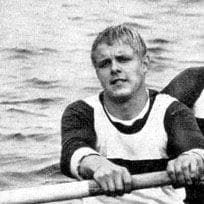
Siegfried Brietzke was born on June 12, 1952 in Rostock, East Germany. He started rowing when he was 15 years old after seeing a TV commercial that was recruiting tall boys to become competitive rowers. Within 3 years, he had taken gold in the coxless pairs at the World Junior Rowing Championships with Wolfgang Mager, his longtime rowing partner.

The pair qualified for the 1972 Olympics in Munich, and were considered to be one of the favorites, since another East German pair had won the event in the previous Olympics. They won their heat by more than 5.5 seconds, which advanced them to the semifinals, where they again posted the best time to advance to the final race. They were in 6th place halfway through the final, more than 6 seconds behind the leaders, but then they turned on the jets, outpacing all of the other boats by at least 9 seconds down the backstretch, giving them a victory by nearly 4 seconds.

After coming in 4th place at the 1973 European championships, the pair switched events to the coxless fours, adding Stefan Semmler and Andreas Decker to the team. They went on to win the World Championship in 1974 and 1975, making them big favorites to win gold in Montreal in 1976. They followed through with ease, setting Olympic records in all 3 of their races, and winning in the final over a surprising team from Norway by almost 4 seconds.

Before the next Olympics, the same team won two more World Championships, but had been upset by the USSR team in 1978, so it was bad news when Brietzke's longtime partner Mager injured his hand just before the Olympics and had to be replaced by Jurgen Thiele as the headed to Moscow. Both the East Germans and the Soviets won their heats by more than 13 seconds, setting up a showdown for the gold, but it wasn't really a contest, as the East German team led by at least 2 seconds the entire way, winning Brietzke his third straight gold medal. 

Brietzke stopped rowing competitively after Moscow, and since East Germany boycotted 1984 anyway, he wouldn't have been able to compete again anyway, so his Olympic career ended with 3 gold medals in 3 attempts, and none of them was particularly close. The fact that he never lost and was never challenged makes him one of the greatest Olympians of all time.


Sunday, June 21, 2026

Top 150 Olympic Athletes: #146 - Teofilo Stevenson


Teofilo Stevenson

Cuba

Boxing


Overall Rankings

#6 among Boxers

#3 among Cuban Olympians

#2 among Cuban boxers


Olympic Results

1972

Heavyweight - Gold

1976

Heavyweight - Gold

1980

Heavyweight - Gold

Total

Events - 3

Gold - 3


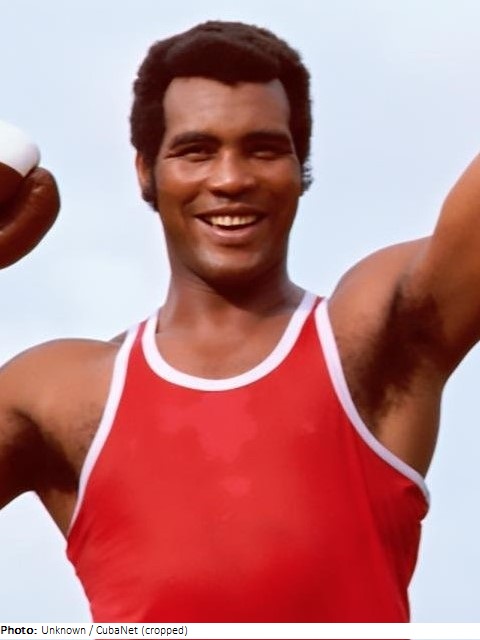
Teofilo Stevenson Lawrence was born on March 29, 1952 in Puerto Padre, Cuba. His father was an immigrant from Saint Vincent, and his mother's parents had immigrated from Saint Kitts. His father had boxed briefly as a young man, and Teofilo began training at the age of 9, and began his career at age 17.

In 1972, at age 20, he made the Cuban Olympic team, and he won each of his first three bouts by TKO, including an opening bout that only lasted 3 minutes. He advanced to the final, where he was to face Ion Alexe of Romania, but he was unable to fight due to an injury from his previous fight, and Stevenson won the gold medal by default.

After winning the World Championship in 1974, he returned to defend his title in 1976 in Montreal, and he was even more dominant, winning two bouts by knockout and one by TKO on his way to the final, where he faced another Romanian, Mircea Simon, who bowed out in the third round, earning Stevenson his second straight gold medal.

After that win, he was offered $5 million to face Muhammad Ali for the world heavyweight title, but it would mean giving up his amateur status, which would make him ineligible for the Olympics, so he declined, saying that the love of 8 million Cubans was worth more than a million dollars.

He began the 1980 Olympics with a pair of knockouts, after which he won his semifinal by unanimous decision, the first time in his Olympic career that a match had gone the full length. He advanced to the final, where he faced Soviet Pyotr Zayev in front of the Soviet crowd, but still managed to win the bout by split decision, becoming the second man in history to win 3 gold medals in boxing.

Stevenson lost in the 1982 World Championships, ending an 11-year unbeaten streak, and then lost another bout in 1983, but was still expected to contend for the gold medal in 1984, until Cuba decided to join the Soviet boycott of the Olympics. He continued fighting, winning another World Championship in 1986, but after Cuba decided to boycott the 1988 Olympics as well, Stevenson retired from boxing.

Following his retirement, Stevenson worked as a boxing trainer and as Vice President of the Cuban Boxing Federation, before passing away in 2012 of a heart attack. He is considered by many to be the greatest boxer to never turn pro, and his three dominant gold medal runs through the Olympics make him one of the greatest Olympians of all time.