Showing posts with label 1976 Olympics. Show all posts

Friday, November 13, 2026

Top 150 Olympic Athletes: #7 - Sawao Kato


Sawao Kato

Japan

Artistic Gymnastics


Overall Ranks

#3 among Gymnasts

#1 among Male Gymnasts

#1 among Japanese Olympians


Olympic Results

1968

Individual All-Around - Gold

Team - Gold

Floor Exercise - Gold

Rings - Bronze

1972

Individual All-Around - Gold

Team - Gold

Parallel Bars - Gold

Horizontal Bar - Silver

Pommel Horse - Silver

1976

Individual All-Around - Silver

Team - Gold

Parallel Bars - Gold

Total

Events - 24

Gold - 8

Silver - 3

Bronze - 1


Sawao Kato was born on October 11, 1946 in Gosen, Japan, and grew up training in gymnastics, following in the footsteps of his older brother, Takeshi. Both brothers rose through the ranks to make the national team, with Takeshi competing at the 1966 World Championships, and Sawao joining him on the team for the 1968 Mexico City Olympics.

Sawao quickly showed that he was the better gymnast of the two brothers. In the team event, where they both competed, Japan won their third straight gold medal, with Sawao the highest-scoring member of the team, and his brother 4th. They won the gold by 4.8 points over the USSR, who came in right behind the Japanese nearly every Olympics for two decades.

The individual all-around was determined by scores in the team event, and Kato came out on top as a result, just 0.05 points ahead of Mikhail Voronin of the USSR, the closest margin possible at the time. He qualified for the event finals on 5 apparatus, but chose to give up his spot in 3 of them to teammates, allowing him to focus on two events.

He was the top qualifier by far in the floor exercise, so he was able to skate through with a 9.65 in the final and still win the gold medal by 0.075 points over Akinori Nakayama, his teammate. He was also the top qualifier on the rings, but only scored a 9.45 in the final, which dropped him to the bronze, while Nakayama took the gold from him. 

4 years later, he returned to lead the team in Munich, and was once again the highest-scoring member of the Japanese squad that took the gold medal, this time by 7.2 points over the USSR. In the individual all-around, there was now a separate final round for the top 36 gymnasts from the team event, and Kato was the top qualifier again. In the final, he was outscored by 3 of the other top qualifiers, but his overall score was still the best, and he won a repeat all-around gold medal by 0.175 points over Eizo Kenmotsu of Japan.

He qualified for all 6 event finals that year, and this time he competed in all 6. He was the defending champion and top qualifier in the floor exercise, so he was expected to win again, but he only scored a 9.2 in the final, which dropped him all the way to 6th place at the end. He started out 2nd in the vault, but another poor performance dropped him to 4th, and out of the medals.

In the parallel bars, however, he didn't choke. He started out with the highest score, and had the highest score in the final, a 9.8, which gave him the win by a full tenth of a point. In the horizontal bar, he was #2 in qualifying behind Mitsuo Tsukahara, his teammate, who posted a 9.9 in the final to hold off all challengers, and Kato remained in second place for the silver medal.

On the rings, he was #3 in qualifying, and he had won the bronze medal 4 years earlier, but he was edged out by Tsukahara again and dropped to 4th place. On the pommel horse, he started out in 4th place, the only event where he was not in medal position at the start, and in the final, he had a strong score that moved him up to second place and a second silver medal.

By 1976 in Montreal, he was just about to turn 30 years old, but he still wasn't slowing down. For the third straight Olympics, he led the Japanese team in scoring, and led them to the gold medal, though they barely held off the Soviet Union, who fell short by only 0.4 points, the closest result in Japan's 5 straight wins in the event.

In the individual all-around, he did not enter as the top qualifier for the first time. Nikolay Andrianov had a better score in the team round, and he was even better in the final, leaving no chance for Kato to win an unprecedented 3rd straight gold in the event, and he had to settle for a silver medal. He qualified for 5 event finals, all except for the vault, but chose to skip the horizontal bar final.

He was 5th after qualifying in the floor exercise, and was not able to move up, ending up stuck in 5th. On the parallel bars, he was the defending champion and the top qualifier, and had a 9.9 in the final to secure his only individual gold of the Montreal games. He was the last qualifier on the rings, and stayed in last place after the final, and on the pommel horse, he wasn't able to improve on 5th place after qualifying either.

He retired after those Olympics, with the most gold medals for a man in gymnastics, and 12 medals overall. He is one of only 4 men to win the all-around twice, and came very close to being the first to do it 3 times. He has the most gold medals of any Japanese Olympian, and has the second-most total medals for a male gymnast, only behind Takashi Ono. He is definitely one of the greatest Olympians of all time.


Monday, November 9, 2026

Top 150 Olympic Athletes: #9 - Nikolay Andrianov


Nikolay Andrianov

USSR

Artistic Gymnastics


Overall Ranks

#4 among Gymnasts

#2 among Male Gymnasts

#2 among Soviet Olympians

#1 among Male Soviet Olympians


Olympic Results

1972

Team - Silver

Floor Exercise - Gold

Vault - Bronze

1976

Individual All-Around - Gold

Team - Silver

Floor Exercise - Gold

Vault - Gold

Parallel Bars - Silver

Rings - Gold

Pommel Horse - Bronze

1980

Individual All-Around - Silver

Team - Gold

Floor Exercise - Silver

Vault - Gold

Horizontal Bar - Bronze

Total

Events - 24

Gold - 7

Silver - 5

Bronze - 3


Nikolay Yefimovich Andrianov was born on October 14, 1952 in Vladimir, USSR, now part of Russia. He was enrolled in a Soviet gymnastics school when he was 11, and by age 18 he had won a couple of gold medals at the European championships, and by the next year, he was on the Soviet Olympic team.

The Munich Olympics began with the team competition, which had been dominated by Japan for more than a decade, and 1972 was no different. Japan won the gold medal by 7.2 points, and the USSR was left with the silver, just like the past 3 Olympics. Andrianov, though only 19, was the highest-scoring member of the Soviet team.

That year, the top 36 athletes in the team competition advanced to the individual all-around, and the medals were determined by adding their scores from each half of the competition together. He was #5 in qualifying, behind 4 Japanese gymnasts, but posted the top score of anyone in the final, which was enough to move him up to 4th, but not quite into the medals, just 0.125 points short.

He qualified for the event finals in 4 events, and missed out on the rings final due to a tiebreaker. He was #2 in qualifying for the floor exercise, behind Sawao Kato of Japan, but Kato had a poor final performance, while Andrianov's 9.65 was the highest, moving him up to win the gold medal.

He was the #1 qualifier in the vault, but he only scored a 9.2 in the final, which allowed him to be passed by two others, and he ended up having to settle for the bronze medal. He got into the parallel bars final through a tiebreaker, and only scored an 8.45 in the final, which left him far behind the others in 6th place. He was also the final qualifier in the horizontal bar, and was unable to improve his standing. His first Olympics ended with 3 medals, one of each color, while coming somewhat close to 4 others.

In the 1974 World Championships, he won a gold medal in the rings, and 5 silver medals to go with it, and he was still improving, so that by 1976 he was the top gymnast in the world. Starting out with the team event again in Montreal, he gave it his all, but the Soviet Union fell just short, losing to Japan by 0.4 points, their closest margin in the 5 straight Olympic losses.

This time, the individual all-around limited each nation to 3 gymnasts, but that didn't affect Andrianov, who was the top qualifier from the team event. In the final, just as he had 4 years earlier, he had the best overall score, leading to a dominant gold medal win by a full point over Kato.

He qualified for 5 of the event finals, only missing out on the horizontal bar. He was the defending champ in the floor exercise, but came into the final tied for third. After scoring a 9.8 in the final, he was able to overcome the deficit and move up to the top, repeating as the gold medalist.

In the vault, he was #2 after qualifying, behind Imre Molnar of Hungar, but Molnar faltered in the final, and Andrianov posted the top score again, allowing him to move up to win his third gold medal of the games. In the parallel bars, Kato was the defending champ and the top qualifier, and he followed it up with the top final score as well, leaving Andrianov no chance to move up from second, so he earned the silver in that event.

In the rings, he was on top after qualifying, and with a 9.8 in the final, he was able to win his 4th gold medal in Montreal, and 5th overall. On the pommel horse, he was tied for third entering the final, and he again scored a 9.8 in that round, but it wasn't enough this time to move up, and he ended up with the bronze medal.

At the 1978 World Championships, he repeated his gold medal in the rings, and took the individual all-around gold as well, further validating his win in Montreal. The 1980 Olympics would be held in Moscow in his home nation, and he was chosen to recite the Olympic Oath at the opening ceremonies.

Japan joined the USA-led boycott of the 1980 Games, taking away the Soviet Union's chief rival in the team event, and as a result, the Soviets won gold in the event by 8.45 points, with Andrianov #2 on the Soviet team in scoring, behind Aleksandr Dityatin, who would go on to win medals in all 8 events in Moscow, the first Olympian ever to win 8 medals in the same Olympics. 

Those two were the top two in qualifying for the individual all-around, and they remained in the same places afterward, leaving Andrianov with the silver medal and his third straight top 4 finish in the event. He qualified for 5 individual event finals, everything but the pommel horse, but elected to sit out of the parallel bars and rings to allow younger teammates the chance to compete.

In the floor exercise, he was the 2-time defending champ, and the top qualifier, and he scored a 9.85 in the final, which would usually have been enough to win, but Roland Bruckner of East Germany scored a 9.9 to leapfrog him, leaving him just short of the three-peat in silver position.

He was also the top qualifier in the vault, in addition to being the defending champion, and a 9.925 in the final was enough to hold off Dityatin, earning Andrianov his 6th individual gold medal, and 7th overall in his career. He was #3 in qualifying for the horizontal bar, and was able to hold his position in the final, which earned him the bronze medal in the only event he hadn't won a medal in before.

He retired soon after his home Olympics, and went on to become a coach, coaching the national Junior team for several years, and later becoming the final coach of the national team before the fall of the Soviet Union. Later, he would develop MSA, a neurological disorder that caused him to lose the ability to speak or use his arms or legs, and he passed away in 2011 at age 58.

At the time of his retirement, he had the most Olympic medals of any man in history, trailing only Larisa Latynina overall, and currently is #3 in overall medals, as he has also been passed by Michael Phelps. He still holds the records for most gold and overall medals for a male gymnast, and he was easily the best performer at the 1976 Olympics, and he is easily one of the best Olympians of all time.


Thursday, October 1, 2026

Top 150 Olympic Athletes: #44 - Lyudmila Turishcheva


Lyudmila Turishcheva

USSR

Artistic Gymnastics


Overall Ranks

#10 among Gymnasts

#4 among Female Gymnasts

#4 among Soviet Olympians

#2 among Female Soviet Olympians


Olympic Results

1968

Team - Gold

1972

Individual All-Around - Gold

Team - Gold

Floor Exercise - Silver

Vault - Bronze

1976

Individual All-Around - Bronze

Team - Gold

Floor Exercise - Silver

Vault - Silver

Total

Events - 18

Gold - 4

Silver - 3

Bronze - 2


Lyudmila Ivanovna Turishcheva was born on October 7, 1952 in Grozny, USSR, now part of Russia. She began training in gymnastics at age 13, and by the time she was 16, she made the Soviet Olympic team competing in Mexico City.

At the time, the USSR had won 4 straight team gold medals at the Olympics, and 1968 would be no different, although it was they closest they came to losing during their existence. Czechoslovakia had a very strong team, and had actually beaten the USSR at the last world championships, but the Soviets were able to pull off the victory by 0.65 points, and Turishcheva had her first gold medal.

The individual all-around rankings were determined by each athlete's scores in the team event, and Turishcheva was one of the lowest-scoring members of the Soviet team, and only placed 24th in the all-around, and failed to qualify for any of the event finals, so her first Olympics ended with just a single gold medal.

By 1972, things were very different. Turishcheva had won the all-around world championship when she was 17, and was the overall favorite heading to Munich. She, along with Olga Korbut (#50) and Tamara Lazakovich (#106) led the Soviets to their 6th straight gold medal in the team event, this time defeating East Germany by 3.95 points.

As the highest-scoring member of her team, she qualified for the individual all-around, which was obvious because she was also the top overall qualifier, tied with Karin Janz (#103). Only Lazakovich had a higher score in the final round, but she was too far behind to catch up, and Turishcheva ended up as the individual gold medalist.

She qualified for all 4 individual event finals, and was the top qualifier in the floor exercise, but even after a 9.8 in the final, she was passed by Korbut and dropped down to the silver medal. She was also the top qualifier in the vault, but only scored a 9.6 in the final, which dropped her to bronze medal placement.

She was the #4 qualifier in the uneven bars, and scored a 9.8 in the final, but that wasn't enough to move up, and she stayed in 4th place. She dropped from 4th to 5th in the balance beam after a 9.4 in the final routine. Overall, she won 4 medals, including the biggest one of all, the all-around, but I'm sure she expected a little more.

She repeated as world all-around champion in 1974, and at that point was undefeated in the all-around in the decade. The competition started to get tougher the next year, though, and she only came in 4th in the European championship in 1975, though she was still considered one of the Olympic favorites in 1976 in Montreal.

That year, she helped the Soviets with their 7th team gold medal in a row, this time beating Romania by 3.2 points to come out on top. She was the #2 qualifier in the all-around, behind Nadia Comaneci, but her teammate, Nelli Kim, slipped ahead of her in the final round, dropping Turishcheva down to the bronze medal.

She qualified for 3 of the individual finals, but not the uneven bars. She was again the top qualifier in the floor exercise, but was again the victim of a teammate's great performance in the final, as Kim scored a perfect 10 to leapfrog her, leaving her with the silver in the event once again.

She was the #2 qualifier in the vault, with Kim starting ahead of her, and even a 9.85 in the final wasn't enough, as Kim scored a 9.95 to take another gold, while Turishcheva took another silver. She was the 4th qualifier in the balance beam, but everyone ahead of her was nearly perfect, and she was left without a medal in the event again.

She retired after the 1976 Olympics, and married Soviet sprinter Valery Borzov, who had 5 Olympic medals himself, two of them gold. She spent many years coaching and judging gymnastics, including coaching the Soviet Olympic team for many years. Though her first Olympics only earned her a single team medal, she later won 8 more, including a gold and a bronze in the all-around, making her one of the greatest Olympians of all time.


Friday, September 25, 2026

Top 150 Olympic Athletes: #50 - Olga Korbut


Olga Korbut

USSR

Artistic Gymnastics


Overall Ranks

#11 among Gymnasts

#5 among Female Gymnasts

#5 among Soviet Olympians

#3 among Female Soviet Olympians


Olympic Results

1972

Team - Gold

Floor Exercise - Gold

Uneven Bars - Silver

Balance Beam - Gold

1976

Team - Gold

Balance Beam - Silver

Total

Events - 12

Gold - 4

Silver - 2


Olga Valentinovna Korbut was born on May 16, 1955 in Hrodna, USSR, which is now part of Belarus. She began training at age 8, and enrolled in a sports school the next year, and by age 14 was participating in national competitions. In 1969, she was the first gymnast ever to complete a backflip followed by a catch on the uneven bars, and she made her Olympic debut in 1972, when she was 17 years old.

The Soviet Union had won the team gold in each of the past 5 Olympics, and they were expected to do it again, with only East Germany considered a threat at all. Korbut was the #2 scorer on the Soviet team, behind Lyidmila Turishcheva, and they won their 6th straight team gold by 3.95 points over the East Germans.

She was the #3 qualifier headed into the individual all-around, and she had the top score on the balance beam during the final, along with the #2 score in floor exercise and vault, but she fell twice during her very difficult uneven bar routine, which dropped her down to 7th place overall, and leaving her without a medal.

She did qualify for all 4 of the individual event finals due to her high scores in the team event. In the floor exercise, she was the #2 qualifier behind Turishcheva, who had a great score of 9.8 in the final, but Korbut put on a great show in her performance, and her score of 9.9 pushed her ahead of her teammate and earned her the gold medal.

She went into the vault final tied for 4th, but was unable to move up, and scored lower than the other 4th place starter, so she ended up in 5th place. In the uneven bars, she started out tied for 2nd, and performed the same routine she tried in the individual all-around, and this time avoided any falls, earning a 9.8, but it wasn't enough to catch Karin Janz of East Germany, who scored a 9.9, and Korbut ended up with a silver.

In the balance beam, she was also the #2 qualifier, behind Tamara Lazakovich (#106), her Soviet teammate. Lazakovich scored a 9.8 in the final, but Korbut again amazed everybody, scoring a 9.9 and passing her teammate to take her second individual gold and third overall of the games.

In the 1974 World Championships, she won medals in all 6 events, with 2 golds and 4 silvers, and was again selected for the Soviet Olympic team in 1976. They won the team event again in Montreal, for the 7th time in a row, with Korbut as the 3rd-highest scorer on the team, as they overcame Nadia Comaneci and Romania by 3.2 points in the end.

She was the #5 qualifier in the individual all-around, and she looked like she might move up and possibly even earn a medal, but a score of 9.5 on the balance beam ended her chances, and she ended up finishing in 5th place, again short of the medals in the all-around. She did, however, qualify for two event finals, the balance beam and uneven bars.

In the uneven bars, she had qualified in second place, but she was competing hurt, and ended up scoring only a 9.4, which dropped her to 5th place at the end. She had also been the #2 qualifier in the balance beam, but a 9.9 in the final wasn't enough to overcome Comaneci's perfect score, and she ended up with a silver medal.

She retired from gymnastics the next year, even though she was only 22 years old, and became a teacher. In 1991, she and her family emigrated to the United States, first living in New Jersey, and finally moving to Atlanta, where she coached gymnastics. Her performances helped usher in the more modern acrobatic style of gymnastics, and her 6 medals helped make her one of the greatest Olympians of all time.


Saturday, September 19, 2026

Top 150 Olympic Athletes: #56 - Eizo Kenmotsu


Eizo Kenmotsu

Japan

Artistic Gymnastics


Overall Ranks

#13 among Gymnasts

#7 among Male Gymnasts

#5 among Japanese Olympians

#4 among Japanese Gymnasts


Olympic Results

1968

Team - Gold

Horizontal Bar - Bronze

1972

Individual All-Around - Silver

Team - Gold

Parallel Bars - Bronze

Pommel Horse - Bronze

1976

Team - Gold

Horizontal Bar - Silver

Pommel Horse - Silver

Total

Events - 24

Gold - 3

Silver - 3

Bronze - 3


Eizo Kenmotsu was born on February 13, 1948 in Okayama, Japan, and was a phenom at gymnastics, as he was the youngest Japanese gymnast to win an Olympic gold medal at the time, a mark he held for 48 years. He made his Olympic debut when he was just 20 years old.

He started out with the team event in Mexico City in 1968, where the Japanese had won the past 2 gold medals, and he helped to keep that streak alive, as Japan came out 4.8 points ahead of the USSR, and Kenmotsu was the third-highest scoring member of the team. This was the win that made him the youngest Japanese gold medal gymnast for so many years.

The individual all-around was determined by each gymnast's scores in the team event, and even though he was #3 on the Japanese team, he was #4 overall, missing out on a medal by 0.75 points. He qualified for the event finals in every event except the rings, which was quite a feat at his age.

In the floor exercise, he was 4th after qualifying, but only scored a 9.3 in the final, dropping him to 6th. The vault was exactly the same story, except that his final score was a 9.18. He was the 5th qualifier in the parallel bars, and he held that position after the final as well, and the exact same thing happened in the pommel horse.

He also qualified 5th in the horizontal bar, but a strong final performance earned him a 9.7, which moved him up to the bronze medal, his first individual Olympic gold. While he qualified for five finals, he wasn't in medal position in any of them beforehand, so the fact that he was able to take one anyway was impressive.

In the 1970 World Championships, he won the individual all-around gold, along with three individual event silvers, so he was one of the big stars to watch in Munich in 1972. He was a big part of the Japanese winning their 4th straight team gold, and this time they beat the Soviets by 7.2 points.

For the first time, the individual all-around held a final round, with the top 36 gymnasts from the team event qualifying. Kenmotsu qualified in 2nd place, behind Sawao Kato, his teammate, by 0.35 points. In the final, he finished in the top 7 in every apparatus, and had the high score on the pommel horse, but he only outscored Kato by 0.1 overall, so he remained in 2nd and took the silver medal.

This time, he qualified for all 6 event finals. In the floor exercise, he was part of a 5-way tie for second after qualifying, but a 9.4 in the final left him in 4th place, 0.1 short of a medal. In the vault, he started out in 4th, and held his position after the final, again leaving him short of a medal, this one by 0.25 points.

He was #2 in qualifying in the parallel bars, and had a good performance that earned him a 9.6 in the final, but his teammate, Shigeru Kasamatsu, scored 9.75 in the final to pass him, dropping Kenmotsu down to the bronze. In the horizontal bar, he was again unable to move up from 4th place after qualifying, leaving him with his 3rd close call of the games.

In the rings, he had been tied for third after qualifying, but had the worst performance of the final, and finished in 5th. He had been the top qualifier in the pommel horse, but a final score of 9.4 allowed two others to pass him, and he ended up finishing with yet another bronze medal, his second of the games and third overall.

In the 1974 World Championships, he won all-around bronze, along with a gold and 2 bronzes in the individual events. In the 1976 Olympic in Montreal, he helped the Japanese win their 5th straight gold medal, but this time it was close, with the USSR coming up just 0.4 short of overtaking their long-time rivals.

That year, the individual all-around was updated again, this time allowing only 3 competitors from each country, so even though he was 6th in qualifying, he was 4th among the Japanese gymnasts, and didn't get to compete. He did, however, qualify to compete in 4 of the individual event finals.

The individual finals now only allowed 2 gymnasts per nation, which allowed Kenmotsu to compete in the floor exercise, where he was 7th in qualifying, but since 3 Soviets ahead of him were left out, he was #4 going into the final. His final score was lower than the other 5, however, leaving him with a 6th place finish.

In the horizontal bar, he was #2 in qualifying behind Mitsuo Tsukahara, who ended up having a great final score, so Kenmotsu was forced to accept the silver, his first in an individual event final. He was the lowest qualifier in the rings, and only moved up one spot in the final. In the pommel horse, he had qualified #2, and scored a 9.8 in the final, but a 9.9 from Zoltan Magyar of Hungary prevented him from moving up, leaving him to take another silver.

He won 4 more World Championship medals in 1978, but retired in 1979, before the 1980 Olympics in Moscow, which Japan ended up boycotting anyway. He went on to coach gymnastics for many years. Even though he never won an individual gold, he won three silvers and three bronzes, and reached 15 of a possible 18 event finals during his Olympic career, making him one of the greatest Olympians of all time.


Saturday, August 15, 2026

Top 150 Olympic Athletes: #91 - Aleksandr Dityatin


Aleksandr Dityatin

USSR

Artistic Gymnastics


Overall Ranks

#19 among Gymnasts

#13 among Male Gymnasts

#10 among Soviet Olympians

#6 among Soviet Male Gymnasts


Olympic Results

1976

Team - Silver

Rings - Silver

1980

Individual All-Around - Gold

Team - Gold

Floor Exercise - Silver

Vault - Silver

Parallel Bars - Silver

Horizontal Bar - Silver

Rings - Gold

Pommel Horse - Silver

Total

Events - 16

Gold - 3

Silver - 6

Bronze - 1


Aleksandr Nikolayevich Dityatin was born on August 7, 1957 in Saint Petersburg, USSR (then known as Leningrad). He trained in gymnastics from a young age, and when he was 15, he received a special exception to be allowed to compete with adults in the senior division of the national championships.

He was selected to the national team when he was just 18, competing in his first Olympics in Montreal that year. The team competition came first, and the Japanese had won 4 straight golds at that point, and were favored to win again. The Soviets, however, didn't listen, and beat Japan in both the floor exercise and the rings, but ended up losing overall by 0.4 points, earning them a silver medal.

The top 36 competitors from the team event advanced to the individual all-around final, with a max of 3 per nation, and Dityatin was the third Soviet to qualify, in sixth place overall. In that event, he tied for the best score on the rings, and was second place in floor exercise overall, and had top 5 scores in three of the other events, but he came in 20th in the horizontal bar, which dropped his score enough that he ended up in 4th place, just outside the medals.

He qualified for two event finals, the rings and the pommel horse. The rings were his best event, and he was third after qualifying, but after his teammate, Vladimir Markelov, dropped out, he was able to move up to 2nd after posting the best score in his final performance, giving him a silver medal. In the pommel horse, he was the 6th and final qualifier, and he didn't improve his standing in the final. He still walked away with 2 silver medals at his first Olympics.

In 1980, he was again on the Soviet team, this time competing at home in Moscow. The Japanese team had joined the American boycott, so the home team was a big favorite in the team event, and they left no doubt, as they posted the highest score in each of the 6 parts of the competition, winning the gold medal by 8.45 points over East Germany.

In the individual all-around, Dityatin was the #1 qualifier, just ahead of his teammate, Nikolay Andrianov, who was the defending champion. Dityatin beat or tied his teammate in all 6 disciplines, and with no other major challengers, the gold medal went to Dityatin by 0.425 points, a pretty decent margin for an individual event.

He qualified for all 6 of the individual event finals. He was the #4 qualifier for the floor exercise, but after earning a 9.9 in his final performance, he moved up to third and took the bronze medal. He had tied for #2 in qualifying for the vault, but after a 9.925 in the final, tied for best score in that round, he earned the silver medal alone.

He was #3 in qualifying for the parallel bars, but after a poor performance from Stoyan Delchev of Bulgaria, the leader, plus a 9.9 score from Dityatin, he moved up to take another silver. In the horizontal bar, he was again behind Delchev in qualifying, and was unable to pass him in the final, instead settling for another silver medal.

He was the top qualifier in the rings, where he had won the silver in 1976, and this time he scored an impressive 9.5 in the final to put it out of reach for everyone else, giving him his first individual event gold by 0.15 points over his nearest competitor. In the pommel horse, he scored a 9.9 in all three rounds, but it wasn't enough to overcome Zoltan Magyar of Hungary, who finished with a perfect 10 and left the silver to Dityatin.

In all, Dityatin had earned 8 medals in Moscow, the first Olympian ever to win 8 in a single Olympics, a feat that has only been matched by Michael Phelps twice. Soon after the 1980 Olympics, he was severely injured in training, and was forced to retire as a result, spending the next decade plus as a coach. Though he was the first to win 8 medals at one Olympics, only 3 were gold, but it was still an impressive achievement, and made him one of the greatest Olympians of all time.


Monday, July 20, 2026

Top 150 Olympic Athletes: #117 - Darrell Pace


Darrell Pace

USA

Archery


Overall Ranks

#35 among American Olympians

#2 among Archers

#1 among American Archers


Olympic Results

1976

Individual - Gold

1984

Individual - Gold

1988

Team - Silver

Total

Events - 4

Gold - 2

Silver - 1


Darrell Owen Pace was born on October 23, 1956 in Cincinnati, Ohio, and took up archery at the age of 13, and quickly became an expert, being named to the national team for the World Championships at age 16. After that, he won the national archery championship 4 years in a row., and won the World Championship in 1975, when he was 18.

Even though he was only 19 years old, he was the favorite to win gold in 1976 in Montreal. At the time, archery events consisted of 72 shots each at 4 different distances, ranging from 30 meters to 90 meters, with the highest overall score winning gold. Pace had the best score at each of the 4 distances to run away with the gold medal by 69 points, an absolutely dominant performance.

Pace won the American title again in both 1978 and 1980, and another World Championship in 1979, and was the favorite to repeat as gold medalist in Moscow, but America's boycott of those games prevented him from getting a second gold medal at the time.

By 1984, Pace had a challenger in Rick McKinney, a fellow American, who had beaten him for the World Championship in 1977 and 1983. It was expected to be a close competition, but Pace had a repeat of his previous Olympic performance, shooting the best score at each distance, and winning the gold by 52 points over McKinney, who took silver on his final shot.

Pace competed again in 1988 in Seoul, where the format for the event was changed. It began with a round of 36 arrows from each distance, with the top 24 advancing to the next round. After that, each round consisted of 9 arrows from each distance, with the field cut down to 18, then 12, then down to 8 for the final. 

Pace took it easy in the first round, qualifying in 19th place, then squeaked through to the next round in 18th place. He tried harder in the quarterfinals, shooting the top score, but in the semifinals he came in 9th, just 2 points short of making the final, the first time he had failed to win the event. The eventual winner was a surprise: Jay Barrs, a fellow American.

He also competed in the team event in 1988, which was a new addition to the Olympics. 3 archers represented each country, with Pace being joined by Barrs and McKinney. The individual qualifying scores were used to rank the teams, with the USA entering the event seeded #2 behind the home team, South Korea.

12 teams competed in the first round, with each archer shooting 9 arrows at each distance, and the top 8 teams advancing to the final. America shot the best score in that round, while Korea took it easy, knowing they would make the final easily. In the final, the US had the best score in the 30m by 3 points over Korea, and held on to the lead over the next 2 distances, leading by 2 entering the 90m portion, but the Koreans outscored America by 16 in the final distance to take the gold, leaving the Americans with a silver.

Pace retired from competition after his 3rd Olympics. He was so far ahead of everyone else in the world during his two Olympic title runs that you can't help but wonder if he should have had a third gold medal, but even without it, he is one of the greatest Olympians of all time.


Wednesday, July 15, 2026

Top 150 Olympic Athletes: #122 - Siegfried Brietzke


Siegfried Brietzke

East Germany

Rowing


Overall Ranks

#3 among East German Olympians

#1 among Rowers


Olympic Results

1972

Coxless Pairs - Gold

1976

Coxless Fours - Gold

1980

Coxless Fours - Gold

Total

Events - 3

Gold - 3


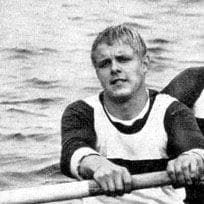
Siegfried Brietzke was born on June 12, 1952 in Rostock, East Germany. He started rowing when he was 15 years old after seeing a TV commercial that was recruiting tall boys to become competitive rowers. Within 3 years, he had taken gold in the coxless pairs at the World Junior Rowing Championships with Wolfgang Mager, his longtime rowing partner.

The pair qualified for the 1972 Olympics in Munich, and were considered to be one of the favorites, since another East German pair had won the event in the previous Olympics. They won their heat by more than 5.5 seconds, which advanced them to the semifinals, where they again posted the best time to advance to the final race. They were in 6th place halfway through the final, more than 6 seconds behind the leaders, but then they turned on the jets, outpacing all of the other boats by at least 9 seconds down the backstretch, giving them a victory by nearly 4 seconds.

After coming in 4th place at the 1973 European championships, the pair switched events to the coxless fours, adding Stefan Semmler and Andreas Decker to the team. They went on to win the World Championship in 1974 and 1975, making them big favorites to win gold in Montreal in 1976. They followed through with ease, setting Olympic records in all 3 of their races, and winning in the final over a surprising team from Norway by almost 4 seconds.

Before the next Olympics, the same team won two more World Championships, but had been upset by the USSR team in 1978, so it was bad news when Brietzke's longtime partner Mager injured his hand just before the Olympics and had to be replaced by Jurgen Thiele as the headed to Moscow. Both the East Germans and the Soviets won their heats by more than 13 seconds, setting up a showdown for the gold, but it wasn't really a contest, as the East German team led by at least 2 seconds the entire way, winning Brietzke his third straight gold medal. 

Brietzke stopped rowing competitively after Moscow, and since East Germany boycotted 1984 anyway, he wouldn't have been able to compete again anyway, so his Olympic career ended with 3 gold medals in 3 attempts, and none of them was particularly close. The fact that he never lost and was never challenged makes him one of the greatest Olympians of all time.


Sunday, July 12, 2026

Top 150 Olympic Athletes: #125 - Edwin Moses


Edwin Moses

USA

Athletics


Overall Ranks

#37 among American Olympians

#36 among Track & Field Athletes

#27 among Male Track & Field Athletes

#22 among American Track & Field Athletes

#17 among American Male Track & Field Athletes


Olympic Results

 1976

400m Hurdles - Gold

1984

400m Hurdles - Gold

1988

400m Hurdles - Bronze

Total

Events - 3

Gold - 2

Bronze - 1


Edwin Corley Moses was born on August 31, 1955 in Dayton, Ohio, to parents who were both educators. He attended Morehouse College to study physics, and also competed on the track team, mostly in the 400 m dash and the 110m hurdles. Before 1976, he had only run the 400m hurdles once, but when he switched his focus to it that year, he quickly became unstoppable.

Just a few months after beginning to run the 400m hurdles, he qualified for the US Olympic team in that event, and his very first international race was at the Montreal Olympics. He had the fastest time in all 3 rounds of the event, and won the final by more than a second, breaking the world record in the process, with a time of 47.63 seconds. He came into the race as an unknown and left a star.

One year later, he lost a race to Harald Schmid of West Germany. That race is only notable because it was the last one that Moses lost for nearly 10 years. He easily qualified for the 1980 Olympics, and would have been a heavy favorite to win another gold medal if the USA hadn't boycotted the games.

By the time the 1984 Olympics rolled around, Moses had won 89 races in a row, and was asked to recite the Olympic Oath at the opening ceremony of the games in Los Angeles. When the racing started, he was a machine as usual, posting the best time in every round and winning the gold medal easily, though 2 runners finished within half a second of him.

When he finally lost a race, in 1987, it was to Danny Harris, who had won the silver medal behind him in 1984. After that, he won his next 10 races, including the US Olympic Trials over Harris, and went to Seoul looking for a third gold. Even though his time was better than it had been during his two gold medal runs, it still wasn't enough that time, as Andre Phillips, another American, set a new Olympic record of 47.19 seconds to take the gold, while Moses finished with the bronze. 

He retired soon after that Olympic defeat, but was still involved in the sports world. He helped develop new drug testing programs that helped reduce cheating in sports, which added another layer to his greatness. He should have been a three-time gold medalist, but even with the two he did win, he is one of the greatest Olympic athletes of all time.


Tuesday, June 30, 2026

Top 150 Olympic Athletes: #137 - Mitsuo Tsukahara


Mitsuo Tsukahara

Japan

Artistic Gymnastics


Overall Ranks

#25 among Gymnasts

#15 among Male Gymnasts

#8 among Japanese Olympians

#7 among Japanese Gymnasts


Olympic Results

1968

Team - Gold

1972

Team - Gold

Horizontal Bar - Gold

Rings - Bronze

1976

Individual All-Around - Bronze

Team - Gold

Vault - Silver

Parallel Bars - Bronze

Horizontal Bar - Gold

Total

Events - 24

Gold - 5

Silver - 1

Bronze - 3


Mitsuo Tsukahara was born on December 22, 1947 in Tokyo, Japan. He didn't begin training in gymnastics until he was 13 years, old, which is considered old in gymnastics, but he picked it up quick, and by the time he was 21, he made the Japanese national team, which was no small feat, as they had won the past 2 Olympic Team gold medals.

The Japanese team was again victorious in 1968, winning their third consecutive gold medal in the team event. It was the only medal Tsukahara would earn in Mexico City, but he came close in two individual events, coming in 4th in the Floor Exercise, behind 3 of his teammates, and also coming in 4th in the Rings.

During the 1970 World Championships, he became a gymnastics legend when he invented his own move on the vault, which is now named the Tsukahara after him. He entered the vault with a backward somersault with a half twist, then did a 1.5 twist on dismount. The move is still used today.

He made a bigger impact at the 1972 Olympics, first earning another gold medal in the team event, the 4th straight for Japan, then earning his first individual medal with a bronze in the rings. His biggest accomplishment came in the Horizontal Bar, where he had the highest score in both the qualifying and the final round, dismounting with a double somersault with a full twist to earn the gold medal, with 4 teammates coming in right behind him.

He was one of the biggest stars at the 1976 Olympics, leading the Japanese team to a 5th straight gold medal in the team event, and taking the bronze medal in the Individual All-Around, his best finish in that event. He successfully defended his gold medal in the horizontal bar, and also earned a silver in the vault and a bronze in the parallel bars. That gave him 5 total medals in Montreal, and 9 for his Olympic career.

Tsukahara married fellow Japanese gymnast Chieko Oda, and they had a son named Naoya, who was born in 1977. Naoya followed his parents into gymnastics, also representing Japan in 3 Olympics, and he also won a team gold medal in 2004 in Athens. Tsukahara won 5 gold medals in his 3 Olympic appearances, but only 2 came in individual events, which puts him a bit behind several of his teammates, but still makes him one of the greatest Olympians of all time.


Sunday, June 21, 2026

Top 150 Olympic Athletes: #146 - Teofilo Stevenson


Teofilo Stevenson

Cuba

Boxing


Overall Rankings

#6 among Boxers

#3 among Cuban Olympians

#2 among Cuban boxers


Olympic Results

1972

Heavyweight - Gold

1976

Heavyweight - Gold

1980

Heavyweight - Gold

Total

Events - 3

Gold - 3


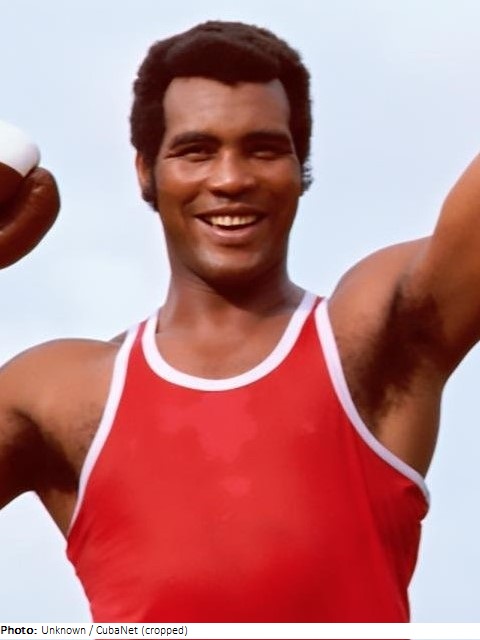
Teofilo Stevenson Lawrence was born on March 29, 1952 in Puerto Padre, Cuba. His father was an immigrant from Saint Vincent, and his mother's parents had immigrated from Saint Kitts. His father had boxed briefly as a young man, and Teofilo began training at the age of 9, and began his career at age 17.

In 1972, at age 20, he made the Cuban Olympic team, and he won each of his first three bouts by TKO, including an opening bout that only lasted 3 minutes. He advanced to the final, where he was to face Ion Alexe of Romania, but he was unable to fight due to an injury from his previous fight, and Stevenson won the gold medal by default.

After winning the World Championship in 1974, he returned to defend his title in 1976 in Montreal, and he was even more dominant, winning two bouts by knockout and one by TKO on his way to the final, where he faced another Romanian, Mircea Simon, who bowed out in the third round, earning Stevenson his second straight gold medal.

After that win, he was offered $5 million to face Muhammad Ali for the world heavyweight title, but it would mean giving up his amateur status, which would make him ineligible for the Olympics, so he declined, saying that the love of 8 million Cubans was worth more than a million dollars.

He began the 1980 Olympics with a pair of knockouts, after which he won his semifinal by unanimous decision, the first time in his Olympic career that a match had gone the full length. He advanced to the final, where he faced Soviet Pyotr Zayev in front of the Soviet crowd, but still managed to win the bout by split decision, becoming the second man in history to win 3 gold medals in boxing.

Stevenson lost in the 1982 World Championships, ending an 11-year unbeaten streak, and then lost another bout in 1983, but was still expected to contend for the gold medal in 1984, until Cuba decided to join the Soviet boycott of the Olympics. He continued fighting, winning another World Championship in 1986, but after Cuba decided to boycott the 1988 Olympics as well, Stevenson retired from boxing.

Following his retirement, Stevenson worked as a boxing trainer and as Vice President of the Cuban Boxing Federation, before passing away in 2012 of a heart attack. He is considered by many to be the greatest boxer to never turn pro, and his three dominant gold medal runs through the Olympics make him one of the greatest Olympians of all time.