Showing posts with label 1968 Olympics. Show all posts

Saturday, September 19, 2026

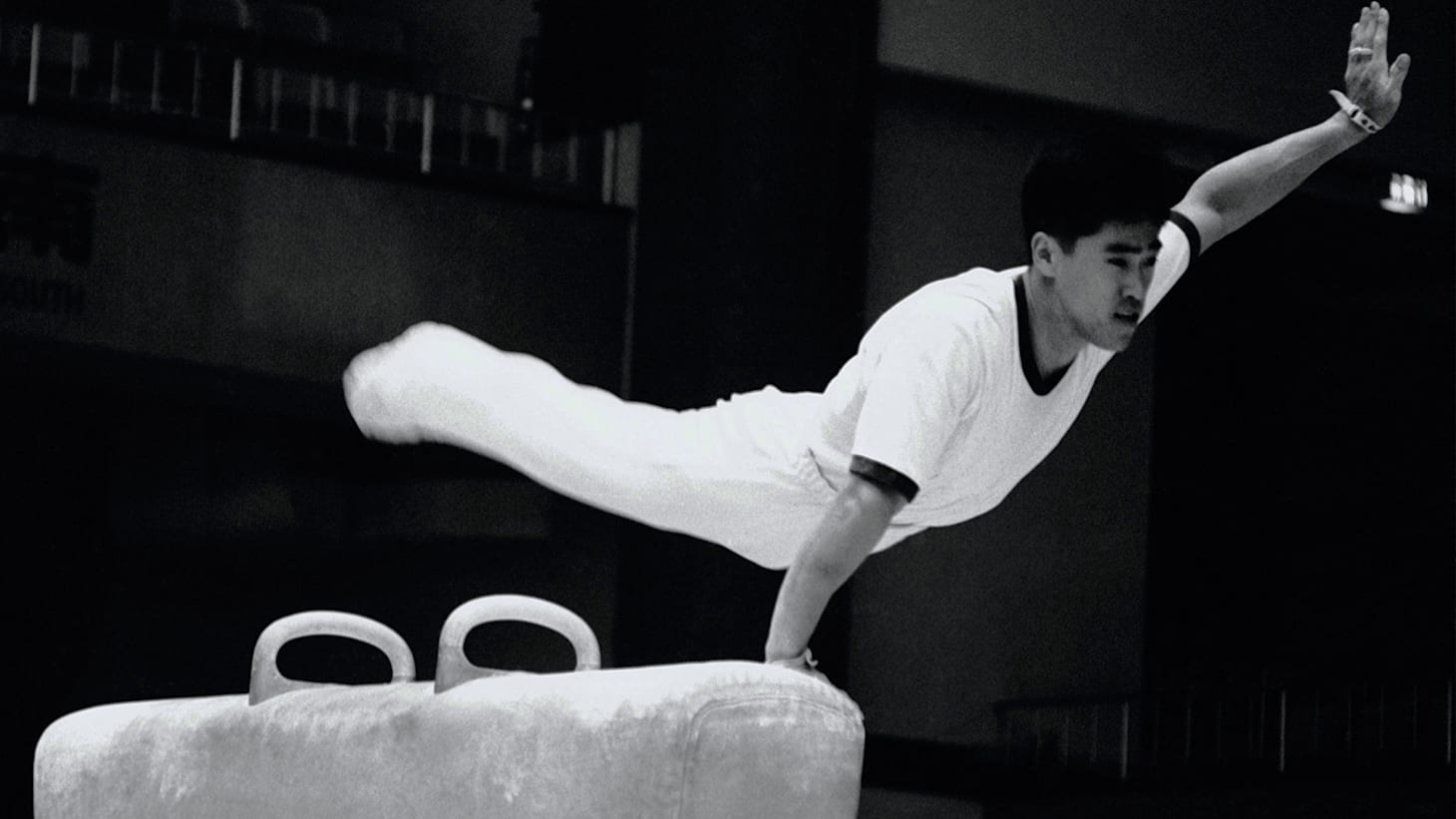
Top 150 Olympic Athletes: #56 - Eizo Kenmotsu


Eizo Kenmotsu

Japan

Artistic Gymnastics


Overall Ranks

#13 among Gymnasts

#7 among Male Gymnasts

#5 among Japanese Olympians

#4 among Japanese Gymnasts


Olympic Results

1968

Team - Gold

Horizontal Bar - Bronze

1972

Individual All-Around - Silver

Team - Gold

Parallel Bars - Bronze

Pommel Horse - Bronze

1976

Team - Gold

Horizontal Bar - Silver

Pommel Horse - Silver

Total

Events - 24

Gold - 3

Silver - 3

Bronze - 3


Eizo Kenmotsu was born on February 13, 1948 in Okayama, Japan, and was a phenom at gymnastics, as he was the youngest Japanese gymnast to win an Olympic gold medal at the time, a mark he held for 48 years. He made his Olympic debut when he was just 20 years old.

He started out with the team event in Mexico City in 1968, where the Japanese had won the past 2 gold medals, and he helped to keep that streak alive, as Japan came out 4.8 points ahead of the USSR, and Kenmotsu was the third-highest scoring member of the team. This was the win that made him the youngest Japanese gold medal gymnast for so many years.

The individual all-around was determined by each gymnast's scores in the team event, and even though he was #3 on the Japanese team, he was #4 overall, missing out on a medal by 0.75 points. He qualified for the event finals in every event except the rings, which was quite a feat at his age.

In the floor exercise, he was 4th after qualifying, but only scored a 9.3 in the final, dropping him to 6th. The vault was exactly the same story, except that his final score was a 9.18. He was the 5th qualifier in the parallel bars, and he held that position after the final as well, and the exact same thing happened in the pommel horse.

He also qualified 5th in the horizontal bar, but a strong final performance earned him a 9.7, which moved him up to the bronze medal, his first individual Olympic gold. While he qualified for five finals, he wasn't in medal position in any of them beforehand, so the fact that he was able to take one anyway was impressive.

In the 1970 World Championships, he won the individual all-around gold, along with three individual event silvers, so he was one of the big stars to watch in Munich in 1972. He was a big part of the Japanese winning their 4th straight team gold, and this time they beat the Soviets by 7.2 points.

For the first time, the individual all-around held a final round, with the top 36 gymnasts from the team event qualifying. Kenmotsu qualified in 2nd place, behind Sawao Kato, his teammate, by 0.35 points. In the final, he finished in the top 7 in every apparatus, and had the high score on the pommel horse, but he only outscored Kato by 0.1 overall, so he remained in 2nd and took the silver medal.

This time, he qualified for all 6 event finals. In the floor exercise, he was part of a 5-way tie for second after qualifying, but a 9.4 in the final left him in 4th place, 0.1 short of a medal. In the vault, he started out in 4th, and held his position after the final, again leaving him short of a medal, this one by 0.25 points.

He was #2 in qualifying in the parallel bars, and had a good performance that earned him a 9.6 in the final, but his teammate, Shigeru Kasamatsu, scored 9.75 in the final to pass him, dropping Kenmotsu down to the bronze. In the horizontal bar, he was again unable to move up from 4th place after qualifying, leaving him with his 3rd close call of the games.

In the rings, he had been tied for third after qualifying, but had the worst performance of the final, and finished in 5th. He had been the top qualifier in the pommel horse, but a final score of 9.4 allowed two others to pass him, and he ended up finishing with yet another bronze medal, his second of the games and third overall.

In the 1974 World Championships, he won all-around bronze, along with a gold and 2 bronzes in the individual events. In the 1976 Olympic in Montreal, he helped the Japanese win their 5th straight gold medal, but this time it was close, with the USSR coming up just 0.4 short of overtaking their long-time rivals.

That year, the individual all-around was updated again, this time allowing only 3 competitors from each country, so even though he was 6th in qualifying, he was 4th among the Japanese gymnasts, and didn't get to compete. He did, however, qualify to compete in 4 of the individual event finals.

The individual finals now only allowed 2 gymnasts per nation, which allowed Kenmotsu to compete in the floor exercise, where he was 7th in qualifying, but since 3 Soviets ahead of him were left out, he was #4 going into the final. His final score was lower than the other 5, however, leaving him with a 6th place finish.

In the horizontal bar, he was #2 in qualifying behind Mitsuo Tsukahara, who ended up having a great final score, so Kenmotsu was forced to accept the silver, his first in an individual event final. He was the lowest qualifier in the rings, and only moved up one spot in the final. In the pommel horse, he had qualified #2, and scored a 9.8 in the final, but a 9.9 from Zoltan Magyar of Hungary prevented him from moving up, leaving him to take another silver.

He won 4 more World Championship medals in 1978, but retired in 1979, before the 1980 Olympics in Moscow, which Japan ended up boycotting anyway. He went on to coach gymnastics for many years. Even though he never won an individual gold, he won three silvers and three bronzes, and reached 15 of a possible 18 event finals during his Olympic career, making him one of the greatest Olympians of all time.


Monday, September 14, 2026

Top 150 Olympic Athletes: #61 - Yukio Endo


Yukio Endo

Japan

Artistic Gymnastics


Overall Ranks

#14 among Gymnasts

#8 among Male Gymnasts

#6 among Japanese Olympians

#5 among Japanese Gymnasts


Olympic Results

1960

Team - Gold

1964

Individual All-Around - Gold

Team - Gold

Floor Exercise - Silver

Parallel Bars - Gold

1968

Team - Gold

Vault - Silver

Total

Events - 24

Gold - 5

Silver - 2


Yukio Endo was born on January 18, 1937 in Yanaisado, Japan, the son of a pharmacist, and participated in gymnastics as a youth, but graduated from college before he made the Japanese Olympic team for the first time in 1960.

When they arrived in Rome, the Soviet team had won the past 2 team gold medals, with the Japanese taking silver in 1956. Endo was the 3rd-highest-scoring member of the team during the team event in Rome, and for the first time in their history, the Japanese won team gold, beating the Soviets by 2.5 points.

The individual all-around medals were determined based on performances during the team event, and Endo finished in 5th place among all participants, falling behind 2 of his teammates, and 2 members of the Soviet team. The top 6 in each individual apparatus qualified for the event finals, and Endo qualified for 2, the vault and the horizontal bar. He was tied for 6th on the parallel bars, but the tiebreaker went to Yury Titov of the USSR. He ended up finishing 4th in the horizontal bar and 5th in the vault, putting him in the top 5 in four events, but he earned only the team medal that year.

In 1962, he won the World Championship in the floor exercise, his only individual win in the world championships. By 1964, he had become the strongest member of the Japanese team, and when they went to defend their gold medal in Tokyo, they were successful, once again beating the Soviets by 2.5 points.

When the individual all-around scored were tabulated, Endo had pulled off a gold medal victory that was a small surprise. He had taken all-around silver at the last world championship, but he dominated this time, winning by 0.55 points, which was more than the gap between 2nd and 8th place. He also qualified for 5 of the 6 event finals, failing only in the pommel horse.

Endo was the top qualifier in floor exercise, and was the defending world champion, but in the final, he had his worst performance, and fell down to silver, while Franco Menichelli of Italy leapfrogged him for gold. He was the #3 qualifier in the vault, but another poor performance dropped him to 6th after the final.

The parallel bars were different, however. He was the top qualifier once again, but barely ahead of 3 others. He put up a 9.9 score in the final to run away with the gold, while nobody else exceeded 9.7. He was third qualifier in the horizontal bar, but fell to 5th after the final, and finished 6th in the rings despite qualifying at the top. He finished his home Olympics with 3 golds and a silver, but he could have had so much more.

Endo was back for his 3rd Olympics in 1968, but he was no longer the star of the Japanese team. He still performed well in the team event, but was 5th best on the strong Japanese team, as they won their third straight gold medal, this time beating the Soviets by 4.8 points.

Even though he was the 5th-best member of the Japanese team, that still was good enough to place him 8th overall in the individual all-around, and he qualified for 2 event finals, the vault and the horizontal bar. Endo was tied for second after qualifying in the vault, but after teammate Takeshi Kato struggled in the final, Mikhail Voronin of the USSR moved up to gold, while Endo stayed in silver medal position. Endo was put in the horizontal bar final after Sawao Kato decided not to compete, but he didn't improve from his 6th place entry into the final.

He retired after the 1968 Olympics, and became a coach and professor. He coached the Japanese team at the 1972 Olympics, where they again won gold, and was later president of the Japanese Olympic Committee. He died of cancer in Tokyo on March 25, 2009. With his qualifying scores, especially in 1964, he could easily have ended up with 11 Olympic medals, but he did end up with 7, five of them gold, including a dominant all-around win, making him one of the greatest Olympians of all time.


Tuesday, August 18, 2026

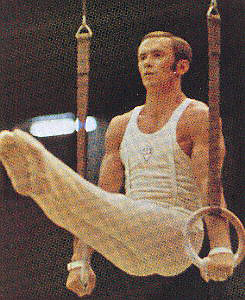
Top 150 Olympic Athletes: #88 - Mikhail Voronin


Mikhail Voronin

USSR

Artistic Gymnastics


Overall Ranks

#17 among Gymnasts

#11 among Male Gymnasts

#8 among Soviet Olympians

#4 among Soviet Male Gymnasts


Olympic Results

1968

Individual All-Around - Silver

Team - Silver

Vault - Gold

Parallel Bars - Silver

Horizontal Bar - Gold

Rings - Silver

Pommel Horse - Bronze

1972

Team - Silver

Rings - Silver

Total

Events - 16

Gold - 2

Silver - 6

Bronze - 1


Mikhail Yakovlevich Voronin was born on March 26, 1945 in Moscow, USSR, and trained at the main Soviet gymnastics school in Moscow while growing up. He made the national team in 1966, and at that year's world championship, he won the rings and the individual all-around, plus 3 silvers, making him one of the top medal competitors heading to Mexico City in 1968.

Voronin was the favorite to win the individual all-around, thanks to his recent world championship, and he was definitely the best on the Soviet team, but he was edged out for the gold medal by Sawao Kato of Japan, who took gold by 0.05 points. The day before, Voronin's wife, Zinaida, had also won silver in the individual all-around.

The top 8 in the individual all-around were all from either Japan or the USSR, but since 5 of them were from Japan, the Japanese won by 4.8 points to continue their streak of team golds. The Soviets finished nearly 14 points ahead of the East Germans for silver, so there was never any doubt that they would get a medal, just a question as to the color.

Voronin qualifed for all 6 event finals, but decided to sit out of the floor exercise final, where he was 4th after qualifying. In the vault, he was tied for #2 with Yukio Endo of Japan going into the final, behind Kato, but Kato faltered on his final vault, and Voronin had the best vault of the round, which moved him up to gold.

He was also #2 in the parallel bars heading into the final, behind Akinori Nakayama of Japan by 0.1 points. The two scored identical 9.7s in the final performance, so they kept their standing, with Voronin taking another silver. He and Nakayama were tied after qualifying in the horizontal bar, and they again posted identical scores in the final, leading to the pair sharing the gold medal.

In the rings, Voronin had qualified third, but after Kato had another poor final performance, Voronin was able to move up and take his 4th silver medal in Mexico City. On the pommel horse, he was #2 after qualifying, but was outperformed by Olli Laiho of Finland in the final and fell to third, content to take home a bronze.

After the 1970 World Championship, where he only earned two individual bronze medals, he remained on the national team for the 1972 Olympics in Munich. This time the team competition was first, and the result was just like 4 years earlier, except that the Japanese won by 7.2 points this time, while the Soviets were still 14 points ahead of the East Germans for silver.

The top 36 in the team event were advanced to the individual all-around final, with Voronin in 7th at that point. Unfortunately, he struggled in the final performances, coming in among the bottom 7 in 3 events, and fell to 12th overall by the end of the event.

He qualified for only 2 event finals, the rings and the pommel horse. In the rings, he qualified in second, but with a large gap both behind and in front of him, he was unlikely to move, and he didn't, finishing with a silver medal in rings for the second straight time. He had the same gaps around him in the pommel horse, except that he started in 5th, which is also where he ended up.

He retired from competition after the 1972 Olympics, moving on to become a gymnastics coach. He was a good performer in his second Olympics, but his 7 overall medals in 1968 was tied for the record for a single games at the time, since broken by Aleksandr Dityatin and Michael Phelps, and finishing in the top four in all 8 events alone is enough to make him one of the greatest Olympians of all time.


Monday, August 3, 2026

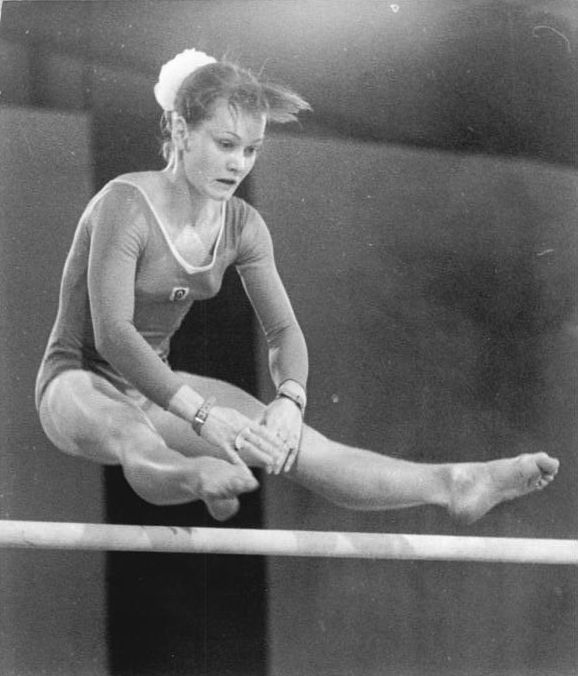
Top 150 Olympic Athletes: #103 - Karin Janz


Karin Janz

East Germany

Artistic Gymnastics


Overall Ranks

#20 among Gymnasts

#7 among Female Gymnasts

#2 among East German Olympians

#1 among East German Gymnasts


Olympic Results

1968

Team - Bronze

Uneven Bars - Silver

1972

Individual All-Around - Silver

Team - Silver

Vault - Gold

Uneven Bars - Gold

Balance Beam - Bronze

Total

Events - 12

Gold - 2

Silver - 3

Bronze - 2


Karin Janz was born on February 17, 1952 in Lubben, East Germany, and began training in gymnastics at age 5, with her father coaching her, and by age 10, she had been moved into a sports training school. She became national champion at age 14, and made her first Olympic team at age 16.

In the 1968 Mexico City games, she started out in the individual all-around competition, where she performed well, but finished in 6th place, though only 0.3 points behind the silver medalist. In the team event, she was the second-highest scoring member of the East German team that won the bronze medal, but they were more than 3 points behind Czechoslovakia for the silver.

She qualified for the individual finals in the uneven bars and the balance beam. In the balance beam, she was #4 heading into the final, and she improved on her qualifying score, but not as much as the other finalists, so she ended up staying in 4th place. In the uneven bars, she had a very good performance, but she was competing against Vera Caslavska of Czechoslovakia, who won 4 golds in 1968, so Janz ended up having to settle for silver.

In 1970, she was the world champion in the uneven bars and the runner-up in the vault, which positioned her well for the 1972 Olympics across the border in Munich. This time the competition started with the team event. The Soviets were in the middle of their dominant 40-year run, but East Germany put up a fight, finishing 3.95 points behind the USSR overall, but beating them in the uneven bars, and they took home the silver medal.

Janz was tied with Lyudmila Turishcheva of the USSR as the top qualifier for the individual all-around, but after going through each of the apparatuses again, Janz had fallen to second, thanks to Turishcheva's winning margin of 0.2 points on the floor exercise. It was her second silver medal of 1972, and her third overall.

She qualified for all 4 individual event finals this time, and the only one where she didn't medal was the floor exercise, where she was 4th before the final, and remained in 4th afterward, behind 3 members of the Soviet team. Janz was #2 in qualifying for the vault, behind Turishcheva, but after she put up a 9.9 on her final vault, she vaulted to the gold medal.

In the uneven bars, she had a big lead after qualifying, and she posted another 9.9 in that final, giving her a very comfortable gold medal victory. In the balance beam, she started out slightly behind Turishcheva and Olga Korbut, and the two Soviets increased their lead in the final, leaving Janz to take the bronze medal.

After the 1972 Olympics, she announced her retirement from gymnastics in order to attend medical school. She became a world-renowned orthopedic surgeon, and was one of the inventors of the first artificial spinal disc. Though she was somewhat average in her first Olympics, she finished in the top 4 of every event in 1972, which helped make her one of the greatest Olympians of all time.


Friday, July 24, 2026

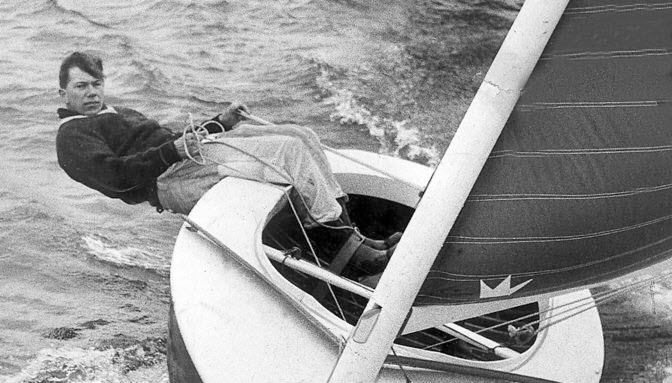
Top 150 Olympic Athletes: #113 - Paul Elvstrom


Paul Elvstrom

Denmark

Sailing


Overall Ranks

#1 among Sailers

#1 among Danish Olympians


Olympic Results

1948

One-Person Heavyweight Dinghy - Gold

1952

One-Person Heavyweight Dinghy - Gold

1956

One-Person Heavyweight Dinghy - Gold

1960

One-Person Heavyweight Dinghy - Gold

Total

Events - 8

Gold - 4


Paul Bert Elvstrom was born on February 25, 1928 in Hellerup, Denmark. His father was a sea captain who died when Paul was young. He lived right along the strait between Denmark and Sweden, and became obsessed with sailing from a very young age. A neighbor who recognized his talent and interest gave him his first boat.

His first Olympic appearance came in 1948, when he was just 20 years old. He competed in the one-person heavyweight dinghy, which used a boat called the Firefly that year, which was usually manned by two sailors. All competitors sailed in 7 races, with scores given after each race based on order of finish, and each sailor's worst race not counted. 

Elvstrom got his worst race out of the way early, as he failed to finish the first race, resulting in no points scored. He improved over the next several races, and was in 8th place after the fifth race, but after winning the final two races, he pulled into the lead and walked away with a gold medal.

After the 1948 Olympics, 4th-place finisher Rickard Sarby of Sweden designed a new ship which he called the Finn, which was designed for a single sailor, and became the model used in the event starting in 1952. Elvstrom returned to defend his gold medal, and had an easy time of it, winning 3 of the first 4 races outright, which gave him a big enough lead that he could have skipped the final 3 races and still won the gold. Instead, he finished 3rd, 4th, and 1st in those three races and ended up with the largest win ever in the event.

He was expected to win again in 1956, and he started out well, winning the first race, but he struggled in the next two races, finishing in the middle of the pack in each, which left him in second place nearly halfway through. After that point, he figured it out, winning 4 straight races to run away with the gold medal yet again.

He returned in 1960 looking to make history. No Olympian had ever won the same individual event 4 straight times, and he was favored to be the first. He won 3 of the first 6 races, and finished in the top 5 in the others, leaving him with a large enough lead that he didn't need to compete in the final race, so he sat out and took the easy gold. 

He skipped the 1964 Olympics, then made his return in 1968, but in a different event, the two-person keelboat, sailing with partner Poul Mik-Meyer. The pair remained in contention for a medal throughout the competition, and was in third place entering the final race, but they already couldn't reach gold at that point. Unfortunately, they finished 5th in that race, which put them in 4th place overall, leaving them just short of a medal.

In 1968, he competed in the three-person keelboat, which was shortened to 6 races due to the hostage situation in the Olympic village, but his team finished around the middle in the first two races, leaving them far behind the pack. They won the third race, which put them in 5th overall, but they dropped to 12th after race four, and after they bumped another boat in race five, resulting in a disqualification, and they refused to finish the event in protest.

He skipped the next two Olympic games, but returned in 1984 to compete in Los Angeles in the Multihull event, partnering with his daughter, Trine. They kept themselves in third place through the first four races, but then fell to 4th place after finishing #14 in race five, and remained there for the rest of the event, falling just short of a medal again.

The father-daughter pair returned for one final attempt at a medal in 1988, but they only finished in the top 5 in one race, and were never in medal contention. His Olympic career spanned 40 years, and he competed in 8 different games, and while he was in contention for medals late in his career, winning 4 straight gold medals in the same event made his one of the greatest Olympians of all time.


Tuesday, June 30, 2026

Top 150 Olympic Athletes: #137 - Mitsuo Tsukahara


Mitsuo Tsukahara

Japan

Artistic Gymnastics


Overall Ranks

#25 among Gymnasts

#15 among Male Gymnasts

#8 among Japanese Olympians

#7 among Japanese Gymnasts


Olympic Results

1968

Team - Gold

1972

Team - Gold

Horizontal Bar - Gold

Rings - Bronze

1976

Individual All-Around - Bronze

Team - Gold

Vault - Silver

Parallel Bars - Bronze

Horizontal Bar - Gold

Total

Events - 24

Gold - 5

Silver - 1

Bronze - 3


Mitsuo Tsukahara was born on December 22, 1947 in Tokyo, Japan. He didn't begin training in gymnastics until he was 13 years, old, which is considered old in gymnastics, but he picked it up quick, and by the time he was 21, he made the Japanese national team, which was no small feat, as they had won the past 2 Olympic Team gold medals.

The Japanese team was again victorious in 1968, winning their third consecutive gold medal in the team event. It was the only medal Tsukahara would earn in Mexico City, but he came close in two individual events, coming in 4th in the Floor Exercise, behind 3 of his teammates, and also coming in 4th in the Rings.

During the 1970 World Championships, he became a gymnastics legend when he invented his own move on the vault, which is now named the Tsukahara after him. He entered the vault with a backward somersault with a half twist, then did a 1.5 twist on dismount. The move is still used today.

He made a bigger impact at the 1972 Olympics, first earning another gold medal in the team event, the 4th straight for Japan, then earning his first individual medal with a bronze in the rings. His biggest accomplishment came in the Horizontal Bar, where he had the highest score in both the qualifying and the final round, dismounting with a double somersault with a full twist to earn the gold medal, with 4 teammates coming in right behind him.

He was one of the biggest stars at the 1976 Olympics, leading the Japanese team to a 5th straight gold medal in the team event, and taking the bronze medal in the Individual All-Around, his best finish in that event. He successfully defended his gold medal in the horizontal bar, and also earned a silver in the vault and a bronze in the parallel bars. That gave him 5 total medals in Montreal, and 9 for his Olympic career.

Tsukahara married fellow Japanese gymnast Chieko Oda, and they had a son named Naoya, who was born in 1977. Naoya followed his parents into gymnastics, also representing Japan in 3 Olympics, and he also won a team gold medal in 2004 in Athens. Tsukahara won 5 gold medals in his 3 Olympic appearances, but only 2 came in individual events, which puts him a bit behind several of his teammates, but still makes him one of the greatest Olympians of all time.


Thursday, June 25, 2026

Top 150 Olympic Athletes: #142 - Lee Evans


Lee Evans

USA

Athletics


Overall Rankings

#42 among American Olympians

#38 among Track & Field Athletes

#29 among Males Track & Field Athletes

#24 among American Track & Field Athletes

#19 among Male American Track & Field Athletes


Olympic Results

1968

400m - Gold

4x400m Relay - Gold

Total

Events - 2

Gold - 2


Lee Edward Evans was born on February 25, 1947 in Madera, California. He was undefeated in high school, then won 4 straight AAU championships in the 440 yard race, and also won the 400m NCAA title in 1968.

His first world record came as part of a 4x400m relay team in 1966, the first team to break 3 minutes in the event. In 1967, he set a world record in the 400m at the Pan Am Games, becoming the first man to break 45 seconds.

He qualified for both events in the 1968 Olympics, setting a world record of 44.06 seconds in the 400m at the Olympic trials. After his teammates Tommie Smith and John Carlos were kicked out of the Olympics for raising their fists during the 200m medal ceremony, Evans wanted to withdraw in protest, but they convinced him to stay, and he set another new world record in winning the gold medal, finishing in 43.8 seconds, a record that would stand for 20 years.

A couple of days later, in the 4x400m relay, he anchored the team that tied the Olympic record in the preliminary round, then they shattered the record in the final, finishing in 2 minutes, 56.1 seconds, 3.5 seconds ahead of the silver medalists from Kenya, which was about 30 meters on the track. That record stood until 1992.

He won the AAU title again in 1972, then qualified for the Olympic team as part of the relay, having just fallen short in the trials for the individual event. However, he never got to run in those Olympics, as two other members of the team were kicked out after refusing to pay attention to the flag during the medal ceremony of the 400m a couple of days earlier.

He turned pro after the 1972 Olympics, and even set the world record in the indoor 600m race, but he would never race again in the Olympics. He went on to become the head of track programs for 6 different African nations before returning to the US to coach college track. He later went to Nigeria to coach, and it was there that he passed away on May 19, 2021 at age 74.

Evans only competed in two Olympic events in his career, but in both he set new world records that would stand for decades, and for that he deserves to be remembered as one of the greatest Olympic athletes of all time.