Showing posts with label 2002 Olympics. Show all posts

Wednesday, October 7, 2026

Top 150 Olympic Athletes: #38 - Lyubov Yegorova


Lyubov Yegorova

Russia

Cross Country Skiing


Overall Ranks

#3 among Russian Olympians

#2 among Cross Country Skiers

#1 among Female Russian Olympians

#1 among Russian Cross Country Skiers


Olympic Results

1992

5 km - Silver

15 km - Gold

30 km - Silver

Skiathlon - Gold

Relay - Gold

1994

5 km - Gold

15 km - Silver

Skiathlon - Gold

Relay - Gold

Total

Events - 12

Gold - 6

Silver - 3


Lyubov Ivanovna Yegorova was born on May 5, 1966 in Seversk, USSR, which is now part of Russia, and began competing internationally in cross country skiing when she was 17 years old. It took her several years to get to the level where she could compete in the Olympics, but once she did, she was dominant.

She made her first Olympic team in 1992, competing for the Unified Team shortly after the breakup of the Soviet Union. Her first event was the 15 km, and she destroyed the field, leading at every checkpoint on the course, and she ended up winning the gold medal by a minute and 9 seconds, a sign of what was to come.

The next event was the shortest, the 5 km, and this one was raced in a heavy snowstorm. She was slightly behind the leader at the midway checkpoint, and was able to close the gap a bit, but not quite enough, as she ended up losing by 0.9 seconds, and had to be content with a silver medal.

The next event was the skiathlon, where skiers took off based on their finish in the 5 km race the previous day. Since she was less than a second behind, she started at the same time as the leader, and both were quickly overtaken by Stefania Belmondo of Italy, who had started just 12 seconds later. She led for 6.5 km of the 10 km race, at which point Yegorova was able to take the lead, which she extended to 24 seconds by the finish, earning her a second gold medal.

A few days later she competed in the relay, skiing the anchor leg for the favored Unified Team. They held a decent lead after the first leg, but Norway caught them on leg 2, taking the lead by 9 seconds at the next exchange. Larisa Lazutina (#67) gave them back the lead by 2 seconds before Yegorova took off, and she close the door on Norway, bringing home the gold by over 21 seconds.

The final event was the longest, the 30 km, which was being contested by women for the first time. Yegorova started off a little slowly, but picked up the pace after the first checkpoint, and ended up spending nearly the entire race in second place, but she was never able to get closer than 8 seconds behind Belmondo, who would take the gold, while Yegorova ended up with another silver.

The next Olympics would happen just 2 years later, thanks to the schedule change to stagger the Winter and Summer Games. She competed in the same 5 events, this time representing Russia, starting with the 15 km, where she was the defending champ. This time, she would stay in second place for the entire race, unable to catch up to Manuela Di Centa of Italy, who built a lead of more than 37 seconds at the final checkpoint, then coasted in for an easy win, finishing 18.5 seconds ahead of Yegorova.

In the 5 km, which she had narrowly lost 2 years earlier, Yegorova changed the script. She had a slight lead at the midpoint, just under 4 seconds, but then pulled away in the second half, ending up 19.5 seconds ahead of Di Centa to take her first gold in Lillehammer, and 4th overall.

The skiathlon was held later that afternoon, and Yegorova got a nice headstart thanks to winning the 5 km. Belmondo skied the fastest time of the competition, 13 seconds faster than Yegorova, but she started out nearly a minute behind, and never truly challenged. Di Centa was able to close the gap slightly, but Yegorova still won the race by just over 8 seconds to win another gold medal.

The relay was next, and it was again a close competition between Russia and Norway. Russia held the lead by 8 seconds after the initial leg, but Norway had pulled ahead by nearly the same amount after leg 2. Russia close the gap to just one second after the third leg, then Yegorova took over for the anchor leg, and left no doubt who would win the gold medal, as she finished 30 seconds ahead of her Norwegian foe.

Her final event was the 30 km, and up to that point she had never finished worse than second in an Olympic race, but that would change in this one. She was in 8th place at the first checkpoint, and made steady progress upward throughout the race, reaching 4th place at the final checkpoint, but she was still 20 seconds behind the medalists, and was unable to close the gap, finishing up in 5th place.

In 1997, she won the gold medal in the 5 km race at the World Championships, but afterward she failed her drug test, testing positive for bromantan, a stimulant. Her medal was stripped, and she was banned from competition for two years. She retired at that point, but did decide to attempt a comeback for the 2002 Olympics. 

She competed in 2 events in the 2002 Olympics, starting with the 10 km. She was one of the faster skiers in the event, but was still nowhere near the medalists, at least 30 seconds behind the entire time, and finished in 7th, though that was eventually moved up to 5th after 2 of her teammates were disqualified for failed drug tests. She also competed in the sprint event, but failed to advance out of the quarterfinal round, ending up ranked 11th. She retired for good in 2003.

Though she was caught doping after her Olympic successes, there is no evidence that she was cheating while winning all of those Olympic medals, although the history of Russian Olympians suggests that she may have. Still, it was never proven, and the fact that she won 9 total gold and silver medals between the 1992 and 1994 games makes her one of the greatest Olympians of all time.




Monday, September 21, 2026

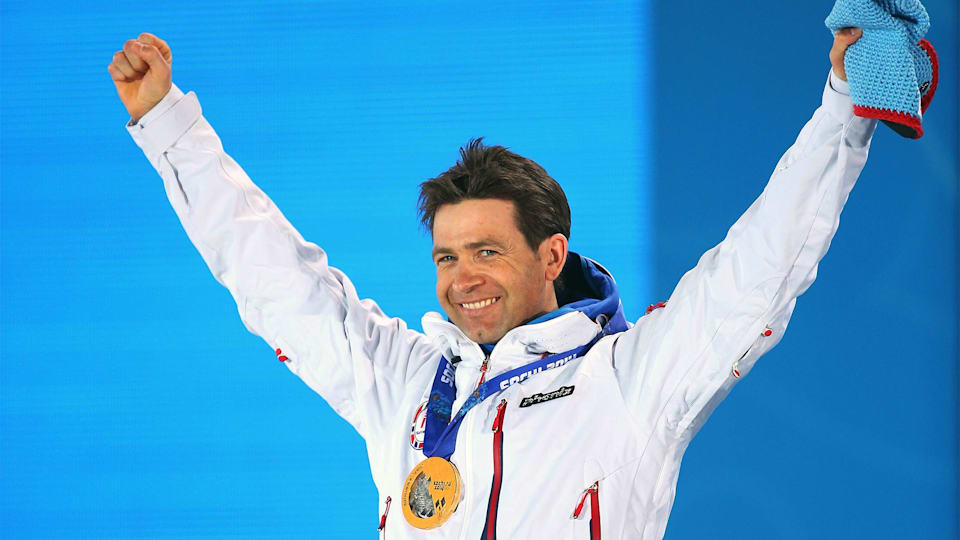
Top 150 Olympic Athletes: #54 - Ole Einar Bjorndalen


Ole Einar Bjorndalen

Norway

Biathlon


Overall Ranks

#3 among Norwegian Olympians

#1 among Biathletes


Olympic Results

1998

Sprint - Gold

Relay - Silver

2002

Sprint - Gold

Pursuit - Gold

Individual - Gold

Relay - Gold

2006

Pursuit - Silver

Mass Start - Bronze

Individual - Silver

2010

Individual - Silver

Relay - Gold

2014

Sprint - Gold

Mixed Relay - Gold

Relay - Bronze

Total

Events - 27

Gold - 8

Silver - 4

Bronze - 2


Ole Einar Bjorndalen was born on January 27, 1974 in Drammen, Norway, and left home at 16 to study at a sports academy, where he specialized in cross country skiing and biathlon, eventually shifting his focus completely to biathlon. At age 19, he won 3 gold medals at the Junior World Championships, and that helped him earn a spot on the Olympic team in 1994, just after his 20th birthday.

His first event was the relay, where he took the first leg, and even though he didn't miss a shot, he still was in 10th place at the end of his turn. His teammates were also perfect in shooting, but weren't able to get any higher than 7th place, which is where they finished. He also competed in the individual 20 km and the 10 km sprint, but wasn't close to the top in either, a disappointing start to his Olympic career.

He kept working hard, and by 1997, he won a bronze medal in the pursuit at the World Championships, and again made the Olympic team heading to Nagano in 1998, competing in the same 3 events. His first event that year was the 20 km individual, and he had the fastest skiing time in the event, but he missed 4 shots, which were each assigned a 1-minute penalty, which dropped him to 7th place overall.

Next was the sprint event, which had to be postponed by a day after heavy fog made the shooting impossible. With better conditions the next day, Bjorndalen dominated, with the fastest time at both shooting checkpoints, and no misses, and he ended up winning the race by over a minute, making his first gold medal one of his most dominant.

Norway and Germany were expected to battle for gold in the relay, but Norway got off to a rough start, sitting in 6th place after the first leg. The next two skiers moved them up to 4th, but they were still a minute and 43 seconds behind the Germans when Bjorndalen started his anchor leg. He flew past Russia and Belarus, and made up a lot of ground on Germany, but there just wasn't enough time, and Norway ended up taking the silver medal, 20 seconds behind Germany.

He won several more world championship medals over the next few years, but no individual golds, so what happened in Salt Lake City was a bit of a surprise. He started out by doing a cross-country skiing event, the 30 km. In that event Johann Muhlegg of Spain was far ahead of the field, winning by over 2 minutes, with Bjorndalen leading the rest of the pack heading into the final lap, but he was passed by 4 others before the finish. He originally finished in 6th place, but was moved up to 5th when Muhlegg failed a drug test, meaning that Bjorndalen finished only 13.5 seconds behind the true champion while racing in an event that wasn't even his main sport.

After that, he never skied another Olympic cross-country race, but he was about to make history in the biathlon. He started with the 20 km individual, where he was again the fastest skier in the event. He did miss 2 shots, down from 4 in the previous Olympics, and luckily this time, the two athletes that were within a minute of him on the skiing portion also missed at least 2 shots, so Bjorndalen won gold by 36 seconds over Frank Luck of Germany, who hadn't missed a shot but skied slower.

Next, he attempted to defend his gold medal in the sprint. He was one of the final athletes to start, and Sven Fischer of Germany held the lead for most of the race, but a miss at the final shooting station forced him to ski a penalty loop, and Bjorndalen made it through without a miss, which enabled him to win by 29 seconds, which was almost exactly the time Fischer lost to the penalty loop, giving him his second gold medal of 2002.

The next event was the pursuit, which was being contested for the first time in the Olympics. Skiers started according to their finish in the sprint, so Bjorndalen started with a 29 second lead. He missed two shots during the event, and was only the 6th fastest skier, but his head start was enough that noone was ever able to catch him, and he ended up winning by 43 seconds to become the first biathlete ever to win 3 golds in a single Olympics.

He finished up his Olympics with the relay, where his team was favored. They started out 18 seconds behind Russia after the first leg, but they took the lead early in the second leg, and never gave it up. They led by 21 seconds at the midway point, and by just over a minute when Bjorndalen started the anchor leg, and he was able to race without pushing too hard, bringing home the gold medal by just over 45 seconds. He thus became the only man ever to win ever biathlon event in a single Olympics.

At the 2005 World Championships, he won 4 golds, only missing out in the individual 20 km, which was his first event in Torino in 2006. For the third straight Olympics, he was the fastest skier in the event, but Michael Greis of Germany had missed only one shot, while Bjorndalen missed 2, dropping him behind by 16 seconds and leaving him with the silver medal.

Next was the sprint, which he had won twice in a row, both times without missing a shot, but he was unable to repeat that again. He missed 3 shots this time, and the 3 resulting penalty loops dropped him out of contention, finishing in 11th place, though he was probably fast enough to win if he had shot cleanly.

He started 1:14 behind in the pursuit, but was again the fastest skier in the event, which allowed him to make up a lot of ground, but he was again betrayed by his shooting. He missed 3 shots, and the penalty loops caused him to end up losing by 2.7 seconds, but he still ended up with a silver medal, which was impressive when you consider where he started.

He was again the anchor on the relay team, but his teammates all struggled with their shooting, and Norway was in 10th place by the time he got on the course. He skied the fastest leg of anyone by over 30 seconds, but was only able to move his team up to 5th place by the finish.

After that was an event new to the Olympics, the mass start 15 km race. Bjorndalen led the entire race until the final shooting station, where he missed twice, and the ensuing penalty loops caused him to lose his lead, and he was unable to catch back up before the finish, and he ended up with a bronze medal, 12 seconds behind the winner.

He again won 4 gold medals at the 2009 World Championships, giving him good momentum heading to Vancouver in 2010. The first event that year was the sprint, and the weather got worse throughout the event, and Bjorndalen started near the middle of the event. After 3 missed at the first shooting station, he was basically out of the running, and he finished in 16th place.

This meant that he started the pursuit 1:41 behind the leader, and despite a good race time and only 2 misses, he was only able to move up to 7th by the end of the event. In the 20 km individual, he was the fastest skier in the event for the 4th Olympics in a row, but Emil Hegle Svendsen, also of Norway, missed 1 less shot, and Bjorndalen ended up with a silver medal.

He also competed in the mass start, but with 7 missed shots out of 20, the worst in the competition, he only managed to finish in 26th place. He was assigned to the anchor leg in the relay again, and this time, despite a slow start, Norway was able to take a small lead after 2 legs, which was a virtual tie with Austria when Bjorndalen started. He had a really good ski time, and missed only 2 shots, while his rival missed 4, allowing him to have a comfortable victory by 38 seconds to finish with his only gold of the games.

He returned for another Olympic run in 2014, when he was 40 years old. He started out with the sprint event, where he was in 5th place for most of the race, but thanks to missing only a single shot, he was in position to sprint to the finish with a chance at a medal, and he ended up pulling it off, winning the gold medal by 1.3 seconds, which was his 12 total Olympic medal, which tied him for the most ever for a Winter Olympian at the time.

He took that tiny lead into the pursuit, but he missed 3 total shots over the course of the event, and ended up finishing 4th, just 1.7 seconds away from earning a record-breaking medal. In the individual 20 km, he missed 4 shots, one at each station, and the 4 penalty minutes dropped him from 6th to 33rd place.

He struggled again in the mass start, missing 6 shots, the most in the event, and he finished 21st out of 26 who finished the event. Next was a new event, the mixed relay, with 2 women doing a 6 km leg, followed by 2 men skiing 7.5 km each. Norway was only a second behind when Bjorndalen took off on the third leg, and he gave them a huge lead of 43 seconds, and it was more than enough for the anchor to bring home for another gold, making him the most decorated Winter Olympian ever.

His final event was the relay, where he again took the third leg. The Bo brothers took the first two legs, and had Norway in the lead for the entire first half, and they gave Bjorndalen a 20 second lead. He didn't miss a shot, but his skiing was slower than usual, and by the time he finished, the lead was down to 2 seconds. On the final leg, his teammate missed 4 times, and the Norwegians ended up in 4th place. That would change in 2020, when it was discovered that the Russians had been doping, and Norway was moved up to the bronze medal position, giving Bjorndalen his 14 medal overall.

He tried to make the team again in 2018, but was chosen for the team, so his Olympic career ended after 6 trips to the Olympics. He retired later that year, but by then he was no longer the most decorated Winter Olympian, as Marit Bjorgen had surpassed him by winning her 15th Olympic medal that year. He is known as the King of Biathlon, and it is well-deserved, as he is the greatest Olympic biathlete in history, and one of the greatest Olympians ever.


Tuesday, September 15, 2026

Top 150 Olympic Athletes: #60 - Marit Bjorgen


Marit Bjorgen

Norway

Cross Country Skiing


Overall Ranks

#4 among Norwegian Olympians

#3 among Cross Country Skiers

#2 among Norwegian Cross Country Skiers

#1 among Female Norwegian Olympians


Olympic Results

2002

Relay - Silver

2006

10 km - Silver

2010

Sprint - Gold

10 km - Bronze

30 km - Silver

Skiathlon - Gold

Relay - Gold

2014

30 km - Gold

Skiathlon - Gold

Team Sprint - Gold

2018

10 km - Bronze

30 km - Gold

Skiathlon - Silver

Relay - Gold

Team Sprint - Bronze

Total

Events - 24

Gold - 8

Silver - 4

Bronze - 3


Marit Bjorgen was born on March 21, 1980 in Trondheim, Norway, and though her Olympic career started slowly, by the time she retired she was undoubtedly one of the all-time greats. She made her first Olympic team in 2002, when she was 21 years old, competing in Salt Lake City.

Her first Olympic event was the 15 km race, where she finished in 50th place, more than 7 minutes behind the gold medalist. She then took the first leg for Norway in the relay, where they were expected to win due to Russia losing a couple of their best skiers to doping. Bjorgen had Norway in 4th place after her leg, 14 seconds behind Germany, but the next skier took the lead back late in her leg, and they held it until the final 100 meters, when the final German skier shot ahead and took the gold, leaving Norway to take silver after losing by 1.3 seconds.

She also competed in the 30km, where she finished in 14 place, just over 6 minutes behind the official champion, but nearly 8 minutes behind the original champion, who lost her medal to doping. In 2003, she broke through at the World Championship, winning gold in the sprint, then followed that up with 3 golds, a silver, and a bronze in 2005. 

Expectations were high for Bjorgen heading to Turin, but she got bronchitis the week before the games, and it affected her performance. She withdrew halfway through her first event, the skiathlon, where she was a pre-race favorite. In the team sprint, the Canadian skier snapped a pole early in the final, and the Norwegian coach gave her a new one, enabling her to stay with the leaders. Norway never took the lead, but remained close for most of the race, eventually finishing in 4th. Many were angry at the coach for helping an opponent, but the Canadians, who finished 2nd, were very grateful.

She was the favorite in the 10km race, but Sara Renner of Canada led most of the race, until she dropped off in the final quarter of the race. At that point, Kristina Smigun of Estonia took the lead, and she pulled away from the pack to win easily. Bjorgen had her best finish of the Olympics though, outskiing the rest of the pack to come in second and earn a silver medal.

In the relay, Bjorgen was assigned to the anchor leg, and they were one of the favorites. They stayed near the front for the entire race, and Bjorgen was in 2nd place when she took off for her leg, but she didn't ski well, and the team dropped to 5th and out of the medals. She failed to advance out of the quarterfinal round in the sprint, and left Turin before the 30km, which would have been her final event.

She didn't perform well in the next two world championships, but returned for the 2010 Olympics, where she would finally perform up to her potential. She started out in the 10km race, where she was able to finished in 3rd place, earning a bronze medal to open the games. 

Her second event was the sprint, and she was the fastest qualifier this time, then went on to win both of her heats to advance easily to the final. In the final, Justyna Kowalczyk of Poland kept it close for a while, but in the final 300 meters, Bjorgen pulled away to win by over a second, and she finally had her first Olympic gold medal.

Next up was the 15 km skiathlon, and Bjorgen was able to stay with the lead pack for most of the race, which consisted of 7 skiers at the halfway point, when they switched out their skis. The lead pack was down to 4 by the final section of the race, when Bjorgen pulled away from the others to win gold by 9 seconds, while the other three finished within half a second of each other.

She was again assigned the anchor leg in the relay. Sweden led them by 2 seconds after the first leg, then Italy took the lead in the second leg, with Norway 8 seconds back, but their third skier took the lead right at the switch-over point, barely ahead of Italy, but Bjorgen left Italy in the dust, and by the end, she coasted to the finish line and won the race by over 25 seconds.

Before her final event, the 30 km, her chief competitor, Kowalczyk, questioned her use of an asthma drug, which was normally banned, but for which Bjorgen had a valid exemption. There were several skiers close together through 20 km, but at that point Bjorgen and Kowalczyk pulled away from the field, with Bjorgen eventually gaining a 6-second advantage with just a few kilometers to go. On the final climb, Kowalczyk caught up, and it came down to a final sprint to the finish, with Bjorgen coming up just short, losing by 0.3 seconds and finishing up her great Olympics with a silver.

She won 4 golds and a silver in each of the next 2 World Championships, meaning that expectations were still high in Sochi. She started out with the skiathlon, where she was the defending champ. A group of 6 reached the midway point together, and five of them remained together for the entire second half. On the final climb, Charlotte Kalla of Sweden tried to break away, but Bjorgen kept pace, and the pair ended up in a sprint for the finish, which Bjorgen won by 1.8 seconds.

In the sprint, she qualified in third, and advanced to the semifinal, but in that race she finished last and failed to make the final. In the 10km, Bjorgen was in second place for the majority of the race, behind Kowalczyk's time, but she faded over the final 2 km and finished in 5th. They were also expected to win the relay, but fell behind early and were never able to make up group, spending nearly the entire race in 5th place.

After a few disappointing finishes, she finally put it back together in the team sprint. Norway was in second when she started her first leg, but she took the lead quickly, and they never gave it back, extending it each time that Bjorgen was on the course, and they ended up winning the gold medal by over 9 seconds over Finland.

In the final event, the 30km, Bjorgen and two Norwegian teammates pulled away from the field after 10 km, extending their lead to a full minute and maintaining it for the remainder of the race. The three took turns in the lead, working as a team until the final 2 km, when Bjorgen and Therese Johaug left their teammate behind, then sprinted it out for the finish, which Bjorgen took by 2.6 seconds to win her 3rd gold of the games.

She came back for one final run at the Olympics in 2018. She entered 5 events, the first of which was the skiathlon, which she had won the last two times. She was in the back of the lead pack of 9 with 3 km to go when Kalla pulled away from the pack, and she had to fight her way through the pack before pursuing Kalla, and by that point it was too late, though Bjorgen was able to come through with a silver medal.

Bjorgen was one of the favorites in the 10km, and she was the first of the favorites to compete, setting the mark to beat. Unfortunately, two were able to beat it, and Bjorgen ended up having to settle for bronze. In the relay Bjorgen skied the anchor leg again. Norway was behind early, 30 seconds behind Russia at the midway point, but the third skier closed the gap, and Bjorgen was only 3 seconds behind when she took over, and she soon took the lead over Sweden and their sprint champion. She maintained the lead, never allowing a chance to get passed, and ended up winning the gold medal by 2 seconds.

In the team sprint, Norway, Sweden, and the USA were together heading into the final downhill, with Sweden leading and Norway in second heading into the final sprint, when Jessie Diggins of the USA passed Falla of Norway, then caught Nilsson of Sweden at the finish line to take the gold, while Norway ended up with a bronze medal.

In her final Olympic event, the 30 km, Bjorgen left no doubt who would win from the start. She broke away from the pack at the 10 km mark, and was 51 seconds ahead by the midway point, and 80 seconds ahead with 10 km to go. Her lead ballooned to over 2 minutes in the final kilometers, when she finally slowed down to celebrate, which cost her some time, leaving her a win by "only" 1 minute and 50 seconds.

She retired after the 2018 Olympics as the most decorated Winter Olympian of all time, with 15 total medals, which is #3 among all Olympians ever. She also had the most Winter Olympic golds of all time until this year, when she was passed by Johannes Hosflot Klaebo, also of Norway, who currently has 11. Even though she only won a single medal at each of her first two Olympics, she overcame and retired as one of the greatest Olympians of all time.


Tuesday, September 8, 2026

Top 150 Olympic Athletes: #67 - Larisa Lazutina


Larisa Lazutina

Russia

Cross Country Skiing


Overall Ranks

#5 among Cross Country Skiers

#4 among Russian Olympians

#2 among Female Russian Olympians

#2 among Russian Cross Country Skiers


Olympic Results

1992

Relay - Gold

1994

Relay - Gold

1998

5 km - Gold

15 km - Silver

30 km - Bronze

Skiathlon - Gold

Relay - Gold

2002

15 km - Silver*

30 km - Gold*

Skiathlon - Silver*

Total

Events - 17

Gold - 6*

Silver - 4*

Bronze - 1

*Medals later rescinded due to failed drug test


Larisa Yevgenyevna Ptitsyna was born on June 1, 1965 in Kondopoga, USSR, which is now part of Russia. She first competed internationally in cross country skiing when she was 18 years old, and won her first World Championship medals in 1987, then won the World Cup in 1990. She made her first Olympic team in 1992, competing for the Unified Team shortly after the breakup of the Soviet Union.

She first competed in the 5 km race in Albertville, and finished in a respectable 7th place out of 62 skiers who finished the race, though she was 19 seconds short of the bronze medalist. The next day was the skiathlon, where they started in the order in which they finished the 5 km, based on how many seconds behind they finished, so Lazutina started 27 seconds after the leaders. She finished 8th in that race, more than a minute and a half behind the gold medalist.

Her next event was the relay, where she was asked to ski the third leg. Russia had fallen behind Norway at the midway point by 9 seconds, but Lazutina was able to overtake the Norwegian skier and handed off with a 2.5 second lead, which was stretched to more than 21 seconds by the end, which earned Lazutina her first Olympic gold.

Her final event was the 30 km, the first time women had competed at that distance in the Olympics. She came in 5th, but there was a gap of over 2 minutes between the medalists and the next group of skiers, which included Lazutina. She won her first individual world championship gold the next year in the 5 km race, just in time for another Olympic Games in 1994.

She was considered one of the favorites in the 15 km race in Lillehammer, but finished in 5th place, 47 seconds behind the medalists. She came in 6th in the 5 km, then moved up to 4th in the skiathlon, but still didn't have an individual medal. She also competed in the relay, running the second leg, where she was handed an 8 second lead, but fell behind Norway during her run, before Lyubov Yegorova took the lead back on the anchor leg and won the gold for Russia.

She won 4 gold medals at the 1995 World Championships, 3 in individual events, and had higher hopes for the 1998 Olympics. She started out with the 15km race, where she was a favorite, and she led almost the entire race, but she was passed on the homestretch by her teammate, Olga Danilova, who won the race by 5.6 seconds, leaving a silver for Lazutina, who was more than 51 seconds ahead of the bronze medalist.

Next she competed in the 5 km race, in the final time it would be contested at the Olympics, and she was expected to win, and she finally came through, winning the gold by 4.8 seconds, her first individual Olympic gold. That gave her a 5-second head start in the skiathlon, and she was able to hold her lead through that entire race, winning by 6.5 seconds to take her second gold of the games.

She skied the anchor leg in the relay that year, and by the time she took off, Russia had a huge lead, which she maintained for her entire leg, giving the Russians a gold medal by 24.5 seconds over the Norwegians. Her final event was the 30 km, where her teammate, Yuliya Chepalova, took the lead early, and led nearly the entire race, while Lazutina skied on her own a good distance behind. In the end, she won the bronze medal, more than a minute behind the silver medalist, but more than a second ahead of 4th place, giving her medals in all 5 events in Nagano.

She returned for her 4th Olympics in 2002 in Salt Lake City, starting again with the 15 km race. Chepalova had the lead early, then was passed by Stefania Belmondo of Italy, but her pole broke with just over 4 km to go, and Lazutina took the lead at that point. Belmondo got a replacement pole and made a hard push, and was able to pass Lazutina just before the finish, and Lazutina ended up with a silver medal.

In the 10 km, which was now the shortest race, Lazutina was in contention throughout, but ended up falling behind and finishing in 4th place, 12 seconds short of the bronze medal. The skiathlon was next, but was different this time, since the 5km was no longer a separate event. Instead, they held a 5km race to determine the order for the second half of the race, held the same afternoon. Lazutina finished #2 in both halves, taking home another silver medal.

Her final race was the 30 km, which had never been her strongest race, but this time, she took the lead early, and never gave it up, ending up almost 2 minutes ahead at the end as she won her first gold medal of the Salt Lake games. The next year, Olga Danilova, her teammate, was disqualified for using PEDs, and Lazutina moved up to gold in the skiathlon and bronze in the 10 km. Two months later, however, Lazutina was also disqualified for using the exact same substance, forfeiting all of her medals from the 2002 Games.

She was given a 2-year ban for the failed drug test, and decided to retire at that point. She went on to become a sports advisor to Putin after retiring from competition. Even though she was caught cheating, and there is a chance that she wasn't clean in 1998, her 5 medals in those games were very impressive, and she had 11 medals overall briefly, though only 7 are still recognized. Even with all of that, she had a long and strong Olympic career, and was one of the greatest Olympians of all time.


Saturday, August 8, 2026

Top 150 Olympic Athletes: #98 - Jochem Uytdehaage


Jochem Uytdehaage

Netherlands

Speed Skating


Overall Ranks

#3 among Speed Skaters

#2 among Male Speed Skaters

#1 among Dutch Olympians


Olympic Results

2002

1500m - Silver

5000m - Gold

10000m - Gold

Total

Events - 3

Gold - 2

Silver - 1


Jochem Simon Uytdehaage was born on July 9, 1976 in Utrecht, Netherlands, and was among the best Dutch speed skaters for years before he finally broke through in 2001, performing well enough at the Olympic trials to make his first Olympic team, heading to Salt Lake City for the 2002 Games.

He qualified for the 3 longest events in speed skating, starting with the 5000m, the second-longest event. The Dutch had won this event 3 straight times, but it wasn't a sure thing this time, as the defending Olympic champ had missed the Olympic team due to being ill at the trials, and Uytdehaage was relatively unknown. The previous world record of 6:22.2 was broken twice before he took the ice in the penultimate pair, and he crushed the new record by over 3 seconds, lowering it to 6:14.66 and surprising everyone with a gold medal in his first Olympic race.

Even though he had just obliterated a world record, he still wasn't expected to compete for a medal in the 1500m, where the two men who had won the last 4 World Championships and the last Olympic gold were both competing. Uytdehaage was in the 9th pair out of 24, and he skated the race of his life, beating the world record by 3.3 seconds. He held onto the top spot for a long time, until Derek Parra of the USA finally beat his time by just over half a second in one of the final pairings, dropping Uytdehaage to a silver, which was still great due to coming in without expectations.

His final event was the 10000m, which the Dutch had also dominated recently, winning all 3 medals at the last Olympics, and each of the past 4 World Championships. The world record was 13:15.33 prior to this event, but it was lowered by Gianni Romme, another Dutch skater who held the record, in the second pair, down to 13:10.03. Uytdehaage raced in the 4th pair, and kept up a blistering pace throughout, finishing in 12:58.92, breaking the world record by over 11 seconds, and becoming the first to ever break 13 minutes. Nobody else came close to his time, and he won his second gold medal.

He won the 5000m at the 2003 World Championships, but that was his last major win. He failed to make the Olympic team in 2006, and retired in 2007. Even though he only ran 3 total Olympic races, all 3 set Olympic records, two of them by a lot, and both world records stood for nearly 4 years. All of that makes him one of the greatest Olympians of all time.