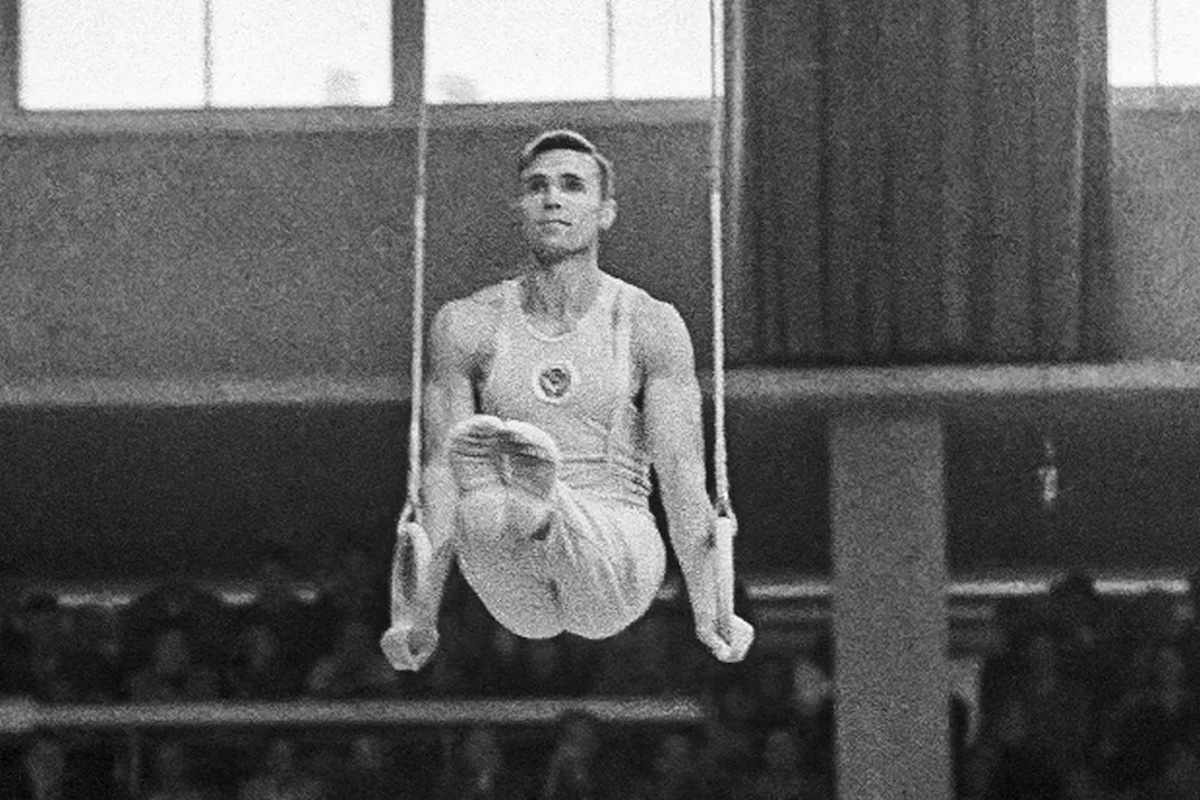
Viktor Chukarin
USSR
Artistic Gymnastics
Overall Ranks
#16 among Gymnasts
#10 among Male Gymnasts
#7 among Soviet Olympians
#3 among Male Soviet Gymnasts
Olympic Results
1952
Individual All-Around - Gold
Team - Gold
Vault - Gold
Parallel Bars - Silver
Rings - Silver
Pommel Horse - Gold
1956
Individual All-Around - Gold
Team - Gold
Floor Exercise - Silver
Parallel Bars - Gold
Pommel Horse - Bronze
Total
Events - 16
Gold - 7
Silver - 3
Bronze - 1
Viktor Ivanovich Chukarin was born on November 9, 1921 in Krasnoarmeyskoye, USSR, which is now part of Ukraine. He began training in gymnastics as a young child, then joined the Soviet army during World War II, and ended up spending nearly 4 years as a Prisoner of War, finally being released when the war ended.
He was only 88 pounds when he returned from war, but he began training again, and by 1949, he was the Soviet national champion, a feat he repeated in both 1950 and 1951. When the Soviets appeared in the Olympics for the first time in 1952, he was the top member of the national team, and it showed in Helsinki, even though he was already 30 years old.
All gymnastics events were held simultaneously at the time, with the scores in the individual events added together for the all-around score, and the all-arounds scores added together for the team score. The only event in which he didn't contend for a medal was the floor exercise, where he finished 29th. He won gold in the vault, where he was only 4th in the compulsory portion, but had the top score by far in the optional section, which gave him the best overall score by 0.05.
In the parallel bars, he came in second to Hans Eugster of Switzerland, who was also the defending world champion in the event, but he only lost by 0.05 points, so it was a close silver. In the horizontal bar, he had the #2 score in the optional portion, but was far enough behind in the compulsory that he ended up in 5th place overall, falling short of a medal.
In the rings, he had a very good score of 19.55, which earned him silver, but he wasn't close to the gold medal score of 19.75 posted by his teammate, Hrant Shahinyan. In the pommel horse, he was #3 in the compulsory, but had the top score by far in the optional again, which earned him another individual gold medal, his second of the events.
When the scores from all of the individual events were tallied, Chukarin had run away with the individual all-around gold medal, 0.75 points ahead of Shahinyan, who took the silver. The Soviets had 7 of the top 11 scorers in the individual all-around, and the top 5 scores on each apparatus were counted in the team event, so the Soviets won gold easily, 6.85 points ahead of Switzerland. Chukarin ended his first Olympics with 6 medals, 4 of them gold.
After winning the all-around World Championship in 1954, Chukarin led the Soviets into the 1956 Olympics in Melbourne as well, just after his 35th birthday. The format was the same as it had been 4 years earlier, but this time, Chukarin finished in the top 7 of all six individual events, making up for his weak performance in the floor exercise in Helsinki by taking home the silver this time.
His vault and rings scores were both lower than usual, and he finished in 7th place in each event, but he was stronger than usual in the parallel bars, where he managed to win the gold in a close competition, just ahead of 3 Japanese gymnasts. He came up just short of a medal in the horizontal bar, with a 4th place finish, but he managed to slip in and grab a bronze in the pommel horse to get his third individual medal of 1956, one of each color.
Because his event scores were all so good, he managed to repeat as the individual all-around champion, a very difficult feat to accomplish, and this time Takashi Ono of Japan made it close, losing by 0.05 points to the Soviet. Japan had also closed the gap in the team event, but the USSR still managed to win gold, beating Japan by 1.85 points.
He retired soon after the 1956 Olympics, becoming a gymnastics coach for several years, and he passed away in 1984 in Lviv, USSR, which is also part of Ukraine today. Even though he didn't appear in the Olympics until he was 30 years old, he still managed to win the individual all-around twice, with 3 other individual golds, and 11 medals overall, so the late start didn't prevent him from becoming one of the greatest Olympians of all time.


No comments:
Post a Comment