Showing posts with label Charles Barkley. Show all posts

Tuesday, September 28, 2021

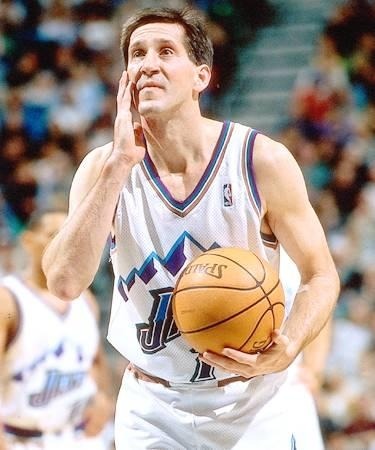
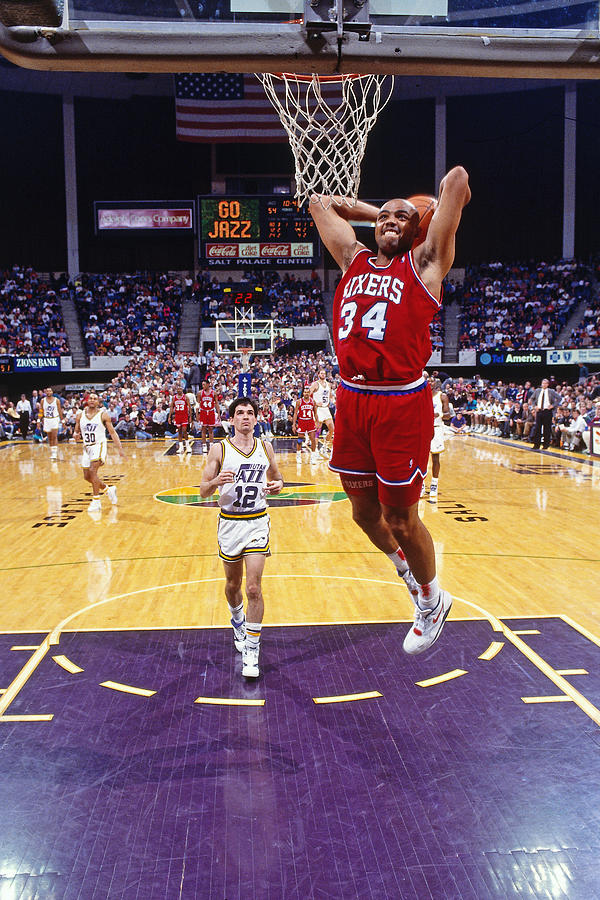
Top 100 NBA Players: #33 - Charles Barkley


Charles Barkley

Teams

Philadelphia 76ers - 1984-92

Phoenix Suns - 1992-96

Houston Rockets - 1996-00


Playoffs

Appearances - 13 (1985,1986,1987,1989,1990,1991,1993,1994,1995,1996,1997,1998,1999)

Conference Finals - 3 (1985,1993,1997)

NBA Finals - 1 (1993)

Championships - 0


Awards and Honors

MVP - 1 (1993)

All-NBA First Team - 5 (1988,1989,1990,1991,1993)

All-NBA Second Team - 5 (1986,1987,1988,1989,1991,1992,1994,1995)

All-NBA Third Team - 1 (1987,1990,1992,1994,1996)

Hall of Fame - 2006

*(actual in bold, deserved in italics)


All-Time Ranks

Total Rebounds - #20

Rebounds Per Game - #23

Total Steals - #28

Total Points - #32

Field Goal Percentage - #34

Points Per Game - #35

Steals Per Game - #80


League Leads

Total Rebounds (#2-1986, #3-1987,1989, #4-1990, #5-1988,1996)

Rebounds Per Game (#1-1987, #2-1986,1989,1999, #3-1990, #4-1996)

Field Goal Percentage (#2-1989,1990, #3-1987,1988, #4-1991)

Points Per Game (#4-1988,1991, #5-1993)

Total Steals (#5-1986)

Total Points (#5-1988)


After playing 3 years of basketball at Auburn as a center, averaging 14.1 points, 9.6 rebounds, and shooting .626, Charles Barkley entered the NBA Draft, where he was picked by the Philadelphia 76ers with the #5 overall pick.

Barkley joined a 76ers team that had won the championship just 1 year before and featured Moses Malone, Maurice Cheeks, and Julius Erving, but he was able to work his way into the starting lineup as a rookie, and he finished the season with averages of 14.0 points and 8.6 rebounds, which earned him a spot on the All-Rookie First Team that also included Hakeem Olajuwon and Michael Jordan. The 76ers were already a good team, and they advanced all the way to the Conference Finals that year, where they lost to Boston in 5 games, with Barkley averaging 14.9 points and 11.1 rebounds in the playoff run.

The next year Barkley started a streak of 11 straight seasons where he averaged at least 20 points and 10 rebounds per game. In just his second season, he averaged 20 points and 12.8 rebounds, then raised those numbers again the next year to 23.0 points and 14.6 rebounds, which was the best in the league, making him the shortest player in history to lead the league in rebounds.

The next season Barkley had the highest scoring average of his career, pouring in 28.3 points per game after Julius Erving had retired before the season. The 76ers missed the playoffs for the first time in Barkley's career that year, but he made the All-NBA First Team for the first time, something he would do in each of the next 3 years as well.

Barkley averaged at least 25 points and 10 rebounds in each of the next 3 seasons, and he averaged a career high .600 shooting percentage in 1989-90, but he wasn't able to get the 76ers past the second round of the playoffs, falling twice in the second round to the Bulls during that time. Both Philly and Barkley saw a dip in performance the next year, and after missing the playoffs, Barkley demanded a trade from the 76ers.

He was traded to the Phoenix Suns during the summer, and after leading the Dream Team in scoring during the Olympics, he arrived in Phoenix and had his best overall season, averaging 25.6 points, 12.2 rebounds, and a career-high 5.1 assists, which earned him the MVP. Phoenix had the league's best record, and made it all the way to the NBA Finals, but they weren't able to finish if off, losing to the Bulls in 6 games after an historic performance by Michael Jordan.

Barkley missed at least 10 games due to injury in each of the next 3 seasons, but was still highly effective when he played, averaging over 21 points and 11 rebounds in each season, but Phoenix was not able to get back to the Finals, blowing series leads to the Houston Rockets in back-to-back seasons along the way.

After 4 years with Phoenix, Barkley requested a trade again, and was sent to the Houston Rockets, who had won 2 championships just a couple years earlier, and with Olajuwon and Drexler to help with the scoring load, Barkley averaged less than 20 points per game for the first time since his rookie season, but he did grab 13.5 rebounds per game that year. The Rockets were able to reach the Conference Finals, but were knocked out by the Utah Jazz one step short of the Finals.

Barkley played a few more seasons with the Rockets, but they were not able to make another deep playoff run. In 1999-00, Barkley suffered a severe injury in December, and it looked like it might end his career, but he rehabbed hard and was able to make a brief appearance in the final game of the season to grab a rebound and put it back in the basket, allowing him to retire without having to be carried off the court in his final game.

Barkley was listed at 6'6" throughout his career, but has confirmed that he is only 6'4", making his rebounding numbers even more amazing. He averaged at least 10 rebounds per game in 15 straight seasons, won a rebounding title, and is #20 on the all time list. He was never able to win a championship, but he won an MVP and led his team to the Finals during his best season, and he is one of the greatest players of all time.


Friday, September 16, 2016

Top 100 NBA Players: #12 - Hakeem Olajuwon


Hakeem Olajuwon

Hakeem Olajuwon is undoubtedly one of the greatest centers of all time and easily the best modern defensive center the NBA has seen. He is the best player who was not born as a United States citizen, and he peaked at exactly the right time, which allowed him to win a couple of championships and cement his place as one of the all-time greats.

Hakeem grew up primarily playing soccer in his native Nigeria, but when he was introduced to basketball as a teenager, he knew he had found his calling in life. He was only offered a spot on one college team, at the University of Houston, and after a couple of years training with local pro and NBA MVP Moses Malone, Olajuwon led the Cougars to two consecutive national championship games before being drafted by the Houston Rockets as the #1 pick in the NBA Draft, two spots ahead of Michael Jordan.

The Rockets started seeing success pretty quickly, making it to the NBA Finals in Hakeem's second season, where they lost to the Boston Celtics, whose 1986 team is regarded as one of the greatest teams in history. It looked like the Rockets were going to be a force for years to come, but because of a series of injuries to Ralph Sampson and their inability to get any decent players to play with Olajuwon, Houston suffered through several disappointing seasons.

Everything finally came together in 1993-94, beginning with the retirement of Michael Jordan in the offseason. Olajuwon took advantage of the hole left at the top of the league and had one of the most impressive seasons in history, becoming the only player ever to win the regular season MVP, Finals MVP, and Defensive Player of the Year Award in the same season.

The next year, things didn't look quite as good, with David Robinson and the Spurs dominating the regular season and Olajuwon dealing with some health issues near the end of the year, but with a late-season trade that brought college teammate Clyde Drexler to town, the Rockets were able to become the lowest-seeded team in history to win the NBA Finals, and Olajuwon repeated as Finals MVP.

Olajuwon is well-known as a great shot-blocker, and he still holds the record for most shots blocked in a career, although they have only been recorded for half of the league's history. Not only was he great at blocking shots, he was always among the leaders in steals as well, and in 1989 he became the only player in history to record more than 200 blocks and 200 steals in the same season. In fact, there have only been 8 seasons in which a player reached 150-150, and four of those belong to Olajuwon. He is definitely one of the greatest defensive players of all time.

Olajuwon was also great on the offensive end of the court, averaging over 20 points per game for 13 consecutive seasons to start his career, and his moves in the low post have become legendary, especially his patented "Dream Shake," which involved numerous fakes and spins and allowed him to get a ton of easy shots near the hoop. He now hosts a camp each summer where he teaches footwork in the paint, and many NBA stars have trained with him, including Yao Ming, Kobe Bryant, and LeBron James.

What really made Olajuwon great is that he stepped up his game when it mattered most, especially against the toughest competition. During his two championship seasons, he outplayed David Robinson, Shaquille O'Neal, and Patrick Ewing in the playoffs, and also beat teams led by Karl Malone and Charles Barkley. When Robinson won the regular season MVP in 1995, Olajuwon made a point of completely dismantling him in the Western Conference Finals, and Robinson was never the same player again.

The thing that held him back from making the all-time top 10 was that his three-year peak was relatively short for a great player, and happened to coincide nicely with Jordan's first retirement, then abruptly ended when Jordan returned. He played in an era with many other great centers, and he was the best of any of them during his peak years, but he was only one of the top 5 players in the league for 5 seasons, which was a relatively short period, especially when compared to the players that make up my top 10.

Tuesday, September 6, 2016

Top 100 NBA Players: #23 - Charles Barkley


Charles Barkley

No player in the top 25 did more with less than Charles Barkley, who earned the nickname "The Round Mound of Rebound" because of his short, pudgy stature that didn't seem to lend itself to being a great rebounder. Barkley didn't let that stop him, and he ended his career as one of the greatest rebounders under 6-6 in league history.

In his third season in the NBA, Barkley, generously listed at 6-6, led the entire league in rebounding, the shortest player ever to do so, with an average of 14.6 per game. But that wasn't all he did. He was also scoring 23 points per game and handing out nearly 5 assists while shooting nearly 60% from the field on a team that already featured a superstar by the name of Julius Erving.

In 1990, there was a bit of controversy when Barkley came in second in the MVP voting to Magic Johnson despite getting more first-place votes than the Lakers star. Even though those two were the ones that finished at the top of the voting the true MVP that year should have been Michael Jordan, with Barkley placed correctly at #2. Here are those three players' stats for that season:

Jordan - 33.6 pts, 6.9 reb, 6.3 ast, 2.8 stl, .526 FG%, .848 FT%
Barkley - 25.2 pts, 11.5 reb, 3.9 ast, 1.9 stl, .600 FG%, .749 FT%
Johnson - 22.3 pts, 6.6 reb, 11.5 ast, 1.7 stl, .480 FG%, .890 FT%

Looking at these three great players, it's tough to say which is best. Magic was among the league leaders in free throw percentage and assists, and Barkley was among the leaders in field goal percentage and rebounds. The difference is that Jordan was the league leader in both scoring and steals, and finished second among these three in the other four categories.

Three years later Barkley moved to the Phoenix Suns and became the third player ever to win the MVP in his first season after being traded as he led the Suns to the league's best record and their second trip ever to the NBA Finals. Once again that season, Barkley was really the second-best player, because Michael Jordan was still on the court. Here are those two player's stats from 1993:

Jordan - 32.6 pts, 6.7 reb, 5.5 ast, 2.8 stl, .495 FG%, .352 3P%, .837 FT%
Barkley - 25.6 pts, 12.2 reb, 5.1 ast, 1.6 stl, 1.0 blk, .520 FG%, .765 FT%

Once again, Jordan led the league in both scoring and steals, and by this time he had developed a reliable 3-point shot as well. The kicker was when the Bulls defeated the top-seeded Suns in the Finals as Jordan took home his 3rd straight Finals MVP award, while Barkley would never return to the Finals.

Two events that happened while Barkley was with his final team, the Houston Rockets, helped cement his legacy of always giving a little more than most would have normally expect of him. In his first game in Houston, he grabbed a career-high 33 rebounds, acknowledging the fact that he was no longer his team's primary scoring option and settling into a role as the guy who had to do the dirty work.

The other memorable happening was the way he ended his career. Early in the 1999-00 season, he suffered a major injury that most assumed would end his career, but Barkley worked very hard on rehabbing his injured quadriceps and returned for one final game in April, in which he was put into the game long enough to grab an offensive rebound and put it back in, after which he walked off the court to a standing ovation and retired immediately, ending his career on a positive rather than a negative note.

The biggest thing that prevented Barkley from progressing farther into the rankings was that he is one of only 3 players remaining that never won an NBA championship, and he is the only retired member of the top 25 that played in the Finals only once. Despite his best efforts, which included a triple-double in the Finals against Chicago and 56 points in a first-round game against Golden State, he was never able to become a champion.

Monday, September 5, 2016

Top 100 NBA Players: #24 - Elgin Baylor


Elgin Baylor

If you don't know who Elgin Baylor is, you're not alone. He is easily the least recognizable or remembered player remaining, and a big part of that is the era in which he played. Games were not televised, so the only chance fans got to see him was live at the game. Baylor is also one of only four players remaining on this list that never won a championship, but it isn't for lack of trying.

Elgin played 12 full seasons in the NBA, with 8 of those seasons ending in the NBA Finals, 7 against the Boston Celtics. Baylor was the best player on 4 of those teams, #2 on two others, and still the third best player on the team in his 12th season in the NBA. The players who ranked ahead of him on those teams were Jerry West and Wilt Chamberlain, so it's not like he was taking a back seat to a flash in the pan. There was one other season in which the Lakers lost to Boston in the Finals with Baylor sitting on the bench with a knee injury.

Baylor was not only a good player on a good team for all those years, he was one of the top 10 players in the league for 10 of his 12 full seasons. As a rookie, he was already the second-best player in the NBA, behind only Bob Pettit, and he only got better from there. Even though he was only 6-5, he averaged 24.9 points, 15.0 rebounds, and 4.1 assists that season, and he was known as the first player to play above the rim, showing hang time that had never been seen before.

His fourth season was 1961-62, the season of incomprehensible stats, and Baylor's numbers that season were yet another example. He had been called to active military duty during the season, so he was only able to play on weekends, but he still managed to participate in 48 games and average 38.3 points, 18.6 rebounds, and 4.6 assists, all during his weekend breaks from the military.

Baylor averaged over 24 points and 10 rebounds for 11 seasons, making him one of the greatest scorer/rebounders under 6-6 in league history, along with Charles Barkley, another player who was never able to win a title. Baylor, however, may have allowed the Lakers to win a title. In 1971-72, he was returning from a major knee injury that had cost him almost a full season, and after nine games he felt that he was holding back a team that could be historically good, so he retired, and the very next game was the beginning of Los Angeles' record 33-game winning streak, and the Lakers also went on to win the title that season. There are not many players who would step aside in order to allow their team to reach their full potential, let alone one as great as Baylor, so that gesture was huge.

Friday, September 2, 2016

Top 100 NBA Players: #29 - Julius Erving


Julius Erving

When Julius Erving finally made his NBA debut in 1976, he was already an established superstar, having spent five seasons in the ABA and winning the final 3 MVP awards that league gave out. If I was doing a ranking of the top professional basketball players of all time, and not just NBA players, Erving would definitely jump up much closer to the top 10, but when you consider only the NBA portion of his career, it's still quite impressive.

Erving started out his time in the NBA as the second-best player in the entire league, with only Kareem playing at a higher level than the 76ers' new star. Each led his team to the top seed in his conference entering the playoffs, but Erving went a step beyond Kareem there, advancing to the NBA Finals in his "rookie" season, where they lost to Bill Walton and the Trail Blazers in Walton's only healthy season.

The next season Philadelphia once again took the top seed in the East, but they lost in the Eastern Conference Finals to the eventual champion Washington Bullets. Two years later, it was Philadelphia pulling off the conference final upset, taking down Larry Bird and the Celtics 4 games to 1, setting up a huge Finals showdown with the Los Angeles Lakers, who were led by another young star named Magic Johnson, who eventually led them to the championship and left Erving ringless still.

In 1981, Erving won his first and only NBA MVP award, although I feel that it should have gone to Moses Malone, while I will explain in more detail in a later profile. Malone ended up taking the Rockets all the way to the Finals, where they lost to Boston, while Erving lost to those same Celtics one round earlier. Even at age 30, there was no denying that Dr. J was still one of the league's premier players.

In 1982, Erving led the 76ers to the Finals for the third time in his NBA career, but they once again were no match for Magic Johnson and the Lakers. One of the reasons that Erving is not rated higher is that he was never quite good enough to lead a team all the way to the championship without more help, and that help came the next season in the form of Moses Malone.

With Malone as a teammate rather than an opponent, Erving and the 76ers returned to the NBA Finals, this time sweeping the Lakers and posting a total record of 12-1 during their dominant playoff run. Erving was finally an NBA Champion, but he wasn't the star of the show anymore. That was Moses, who won both the regular season and Finals MVP awards in the only championship season for either player.

Erving hung on for a few more seasons, but he was obviously on the downside of his career, and he was never one of the top 10 players again. In 11 NBA seasons, Erving never missed the playoffs, and he led his team to the NBA Finals 3 times and the conference finals twice before he was replaced by Malone. With Malone leading the way, he won a championship, and saw the conference finals one more time, but at that point he had also been surpassed by a young Charles Barkley. Overall, he was one of the league's most dynamic and exciting stars, and he saw quite a bit of success despite the fact that he never led a title run himself.

Sunday, August 28, 2016

Top 100 NBA Players: #34 - Patrick Ewing


Patrick Ewing

Patrick Ewing is remembered for never having won an NBA title, but he was one of the top centers in the entire league for a decade, and he never missed more than 6 games in a season over that span, during which the New York Knicks made the playoffs every year with Ewing as their star player.

Ewing hit his peak in 1989-90, when he ranked as the third-best player in the entire league and the top center, falling behind only Michael Jordan and Charles Barkley in overall value. He was 27 years old at the time, and he appeared to be the next dominant center, although he never did dominate the game the way many expected. Here are his stats from his best season:

Ewing - 28.6 pts, 10.9 reb, 2.2 ast, 1.0 stl, 4.0 blk, .551 FG%, .775 FT%

You read that right. Besides averaging over 28 points and 10 rebounds every night, he was blocking 4 shots on average in every game. From there he kind of plateaued, maintaining his standing as one of the top 10 players in the league, but falling behind fellow centers David Robinson, Hakeem Olajuwon, and Shaquille O'Neal in production. Overall, he was still very impressive over the six seasons from 1989-1995, and those stats are below:

Ewing - 25.3 pts, 11.3 reb, 2.3 ast, 1.0 stl, 2.8 blk, .515 FG%, .749 FT%

That is what the Knicks were able to expect from Ewing every night for 6 straight years, quite impressive considering that no center today comes close to those numbers in a single season. For all the numbers he put up and all the seasons that they made the playoffs, Ewing still never saw big playoff success. The Knicks won their first round series nearly every season, but lost in the second round almost every time. The only two exceptions were 1993 and 1994, when they made the Eastern Conference Finals once and the NBA Finals after that, where they were beaten in 7 games by Houston.

Ewing hung around for a long time after his peak, but became less and less effective and was no longer the focal point of the Knicks' team, so when he finally made it back to the NBA Finals in 1999, he was more of an afterthought on a team featuring Latrell Sprewell, Allan Houston, and Marcus Camby. He never did get that elusive ring, which is the biggest reason that he's only at #34 all time.

Monday, July 4, 2016

Top 100 NBA Players: #94 - Kevin Johnson


Kevin Johnson

Kevin Johnson may be remembered most for the injury-plagued seasons that filled the latter half of his career, but many may have forgotten that, once upon a time, he was one of the greatest point guards to ever take the court. Don't believe me? Let's look at a few of the things KJ did that few others have ever done.

Kevin Johnson is one of only three players ever to average over 20 points and 10 assists in three straight seasons. The other two players are guys you've probably heard of: Oscar Robertson and Isiah Thomas. He is one of only two players to average over 20 points and 12 assists while shooting over 50% from the field in a season. The other is Magic Johnson (no relation).

There are all sorts of variations of these stats that you can come up with that only those four players had ever accomplished, and the only players in the past 20 years to come close to those numbers are Chris Paul and Russell Westbrook. During just his second season in the NBA, he was named the league's Most Improved Player and made the All-NBA Second Team because of these numbers:

Johnson - 20.4 pts, 4.2 reb, 12.2 ast, 1.7 stl, .505 FG%, .882 FT%

You have to remember that KJ was not a big man, only 6-1 and 190 pounds, but he was still grabbing 4 rebounds and shooting over 50% from the field. But if KJ was so great, why is he ranked this low? The problem started in the 1992-93 season, when he missed 33 games with various injuries, mostly to his hamstrings. From then on, he never played more than 70 games in a season, and he only reached the 20-ppg plateau two more times.

Johnson saw his teams make it at least to the Conference Finals three times during his career, including two trips to the Western Conference Finals in his second and third seasons, when he was either the best or second-best Sun. In 1993 the Suns made it to the NBA Finals, and he was probably the #3 player on that team, behind Dan Majerle and Charles Barkley. He did set a Finals record during game 3, when he played 62 minutes (out of 63 possible) in the triple overtime victory over Chicago.

What KJ accomplished early in his career was truly historic, and that alone would be enough for me to put him in this top 100, but it's sad that it didn't continue for longer. If he had just had the durability of Steve Nash, we might be talking about him as one of the top 3 point guards of all time, but instead he has to settle for a spot closer to the bottom of the top 100.

Monday, April 23, 2012

Top 100 NBA Players: #11


Hakeem Olajuwon

(Kalb: #16, Simmons: #10, BBR: #9)

Hakeem Olajuwon is undoubtedly one of the greatest centers of all time and easily the best modern defensive center the NBA has seen. He is the best player who was not born as a United States citizen, and he peaked at exactly the right time, which allowed him to win a couple of championships and cement his place as one of the all-time greats.

Hakeem grew up primarily playing soccer in his native Nigeria, but when he was introduced to basketball as a teenager, he knew he had found his calling in life. He was only offered a spot on one college team, at the University of Houston, and after a couple of years training with local pro and NBA MVP Moses Malone, Olajuwon led the Cougars to two consecutive national championship games before being drafted by the Houston Rockets as the #1 pick in the NBA Draft, two spots ahead of Michael Jordan.

The Rockets started seeing success pretty quickly, making it to the NBA Finals in Hakeem's second season, where they lost to the Boston Celtics, whose 1986 team is regarded as one of the greatest teams in history. It looked like the Rockets were going to be a force for years to come, but because of a series of injuries to Ralph Sampson and their inability to get any decent players to play with Olajuwon, Houston suffered through several disappointing seasons.

Everything finally came together in 1993-94, beginning with the retirement of Michael Jordan in the offseason. Olajuwon took advantage of the hole left at the top of the league and had one of the most impressive seasons in history, becoming the only player ever to win the regular season MVP, Finals MVP, and Defensive Player of the Year Award in the same season.

The next year, things didn't look quite as good, with David Robinson and the Spurs dominating the regular season and Olajuwon dealing with some health issues near the end of the year, but with a late-season trade that brought college teammate Clyde Drexler to town, the Rockets were able to become the lowest-seeded team in history to win the NBA Finals, and Olajuwon repeated as Finals MVP.

Olajuwon is well-known as a great shot-blocker, and he still holds the record for most shots blocked in a career, although they have only been recorded for half of the league's history. Not only was he great at blocking shots, he was always among the leaders in steals as well, and in 1989 he became the only player in history to record more than 200 blocks and 200 steals in the same season. In fact, there have only been 8 seasons in which a player reached 150-150, and four of those belong to Olajuwon. He is definitely one of the greatest defensive players of all time.

Olajuwon was also great on the offensive end of the court, averaging over 20 points per game for 13 consecutive seasons to start his career, and his moves in the low post have become legendary, especially his patented "Dream Shake," which involved numerous fakes and spins and allowed him to get a ton of easy shots near the hoop. He now hosts a camp each summer where he teaches footwork in the paint, and many NBA stars have trained with him, including Yao Ming, Kobe Bryant, and LeBron James.

What really made Olajuwon great is that he stepped up his game when it mattered most, especially against the toughest competition. During his two championship seasons, he outplayed David Robinson, Shaquille O'Neal, and Patrick Ewing in the playoffs, and also beat teams led by Karl Malone and Charles Barkley. When Robinson won the regular season MVP in 1995, Olajuwon made a point of completely dismantling him in the Western Conference Finals, and Robinson was never the same player again.

The thing that held him back from making the all-time top 10 was that his three-year peak was relatively short for a great player, and happened to coincide nicely with Jordan's first retirement, then abruptly ended when Jordan returned. He played in an era with many other great centers, and he was the best of any of them during his peak years, but he was only one of the top 5 players in the league for 5 seasons, which was a relatively short period, especially when compared to the players that make up my top 10.


Hakeem Olajuwon was only the best player in the NBA for one season, while LeBron has already done it 6 times, but Hakeem has a couple of advantages over James. One is that he has won a couple of NBA Championships as the best player on his team, while LeBron has lost a couple of NBA Finals as his team's best player. Olajuwon also made one other trip to the penultimate series, so he also holds the edge in Finals appearances. The other thing that puts Olajuwon ahead is that he had a very long career, and was among the NBA's best for the majority of it, so LeBron needs to keep up his current level of play for a little longer in order to pass the best foreign player ever.

Thursday, April 12, 2012

Top 100 NBA Players: #13


Elgin Baylor

(Kalb: #13, Simmons: #14, BBR: #20)

If you don't know who Elgin Baylor is, you're not alone. He is easily the least recognizable or remembered player among the top 20, and a big part of that is the era in which he played. Games were not televised, so the only chance fans got to see him was live at the game. Baylor is also one of only three players remaining on this list that never won a championship, but it isn't for lack of trying.

Elgin played 12 full seasons in the NBA, with 8 of those seasons ending in the NBA Finals, 7 against the Boston Celtics. Baylor was the best player on 4 of those teams, #2 on two others, and still the third best player on the team in his 12th season in the NBA. The players who ranked ahead of him on those teams were Jerry West and Wilt Chamberlain, so it's not like he was taking a back seat to a flash in the pan. There was one other season in which the Lakers lost to Boston in the Finals with Baylor sitting on the bench with a knee injury.

Baylor was not only a good player on a good team for all those years, he was one of the top 10 players in the league for 10 of his 12 full seasons. As a rookie, he was already the second-best player in the NBA, behind only Bob Pettit, and he only got better from there. Even though he was only 6-5, he averaged 24.9 points, 15.0 rebounds, and 4.1 assists that season, and he was known as the first player to play above the rim, showing hang time that had never been seen before.

His fourth season was 1961-62, the season of incomprehensible stats, and Baylor's numbers that season were yet another example. He had been called to active military duty during the season, so he was only able to play on weekends, but he still managed to participate in 48 games and average 38.3 points, 18.6 rebounds, and 4.6 assists, all during his weekend breaks from the military.

Baylor averaged over 24 points and 10 rebounds for 11 seasons, making him the greatest scorer/rebounder under 6-6 in league history, narrowly edging out Charles Barkley, another player who was never able to win a title. Baylor, however, may have allowed the Lakers to win a title. In 1971-72, he was returning from a major knee injury that had cost him almost a full season, and after nine games he felt that he was holding back a team that could be historically good, so he retired, and the very next game was the beginning of Los Angeles' record 33-game winning streak, and the Lakers also went on to win the title that season. There are not many players who would step aside in order to allow their team to reach their full potential, let alone one as great as Baylor, so that gesture was huge.


While Baylor did not win the championships that Russell did, mostly because of Russell, he did make it to the Finals 8 times, not far behind Russell's 12, and their careers covered almost the exactly same timeframe. Russell was a slightly better rebounder, but he was also at least 6 inches taller, so that's to be expected, but Baylor's worst scoring season was still 6 points per game better than Russell's best. What really puts Baylor ahead here is that he did more with less, since he took the Lakers to all those Finals with only one other star for the majority of his career, while Russell always had at least two, whether it was Cousy, Jones, or Havlicek helping him out.

Saturday, February 25, 2012

Top 100 NBA Players: #19


Kevin Garnett

(Kalb: #40, Simmons: #22, BBR: #27)

Kevin Garnett is the first of five active players to appear among the top 20 players of all time, and even though he is built like a praying mantis, he has been a force in professional basketball for 16 seasons, and he is still playing well in his 17th season, even though there are just a handful of players more experienced remaining in the league.

Garnett was a major trail blazer for the current generation of NBA stars, jumping straight to the league from high school, the first player in 20 years to do so, but his success caused many to follow in his footsteps, from future stars like Kobe, LeBron, and Amare to busts like Korleone Young, DeSagana Diop, and Kwame Brown. Four of the 5 active players among my top 20 did not attend college, and who knows if that wouldn't have happened without Garnett taking a risk in 1995.

Garnett was drafted by the Minnesota Timberwolves, and it is because of him that the franchise even has any history to celebrate. They made the playoffs for the first time in Garnett's second year, which started a string of 8 consecutive playoff appearances, since which they have not returned to the postseason. Garnett was the team's best player every time they made the playoffs, and during that run he missed a total of 11 games, an incredible feat for a player who looks so fragile.

The eighth year of that run was a magical one for Garnett and the Timberwolves. It was the only time in franchise history that the Wolves won a playoff series, and they actually won two of them, advancing clear to the Western Conference Finals, where the Lakers dispatched them on their way to a three-peat. Garnett was named the MVP that season, and there is absolutely no doubt in my mind that he deserved it. In my opinion, the only more dominant season in the last 20 years was Shaq's 2000 campaign. Here is a comparison of Garnett and Kobe Bryant, his nearest competitor, from that season:

Garnett - 24.2 pts, 13.9 reb, 5.0 ast, 1.5 stl, 2.2 blk, .499 FG%, .791 FT%
Bryant - 24.0 pts, 5.5 reb, 5.1 ast, 1.7 stl, 0.4 blk, .438 FG%, .852 FT%

I don't think I even need to do any explanation as to why Garnett was the MVP, because the numbers do the talking. In NBA history, there have only been six times that a player has bested Garnett's scoring, rebounding, and assists numbers from that season in any single year. It was done by Wilt three times, Kareem twice, and Elgin Baylor once. The most recent of those seasons was Kareem in 1976, and it hasn't been done by anyone but Garnett since.

After that season the Timberwolves sank back into mediocrity, with Garnett toiling away as a superstar on a bad team, until the summer of 2007, when he was rescued by the Boston Celtics, who had decided they wanted to pursue a championship, since it had been over a decade since they had really tried, and with Garnett leading the way, Boston won their first title in over two decades. Paul Pierce was named the Finals MVP, but I think the award should have gone to Garnett, and here are the stats from the playoffs to back up my point:

Garnett - 20.4 pts, 10.5 reb, 3.3 ast, 1.3 stl, 1.1 blk, .495 FG%, .810 FT%
Pierce - 19.7 pts, 5.0 reb, 4.6 ast, 1.1 stl, 0.3 blk, .441 FG%, .802 FT%

Okay, now I'm no expert (well, maybe I am), but when one player is better in 6 of 7 statistical categories, and the other is reasonably close, that player is better, especially since being teammates eliminates the pace factor from the argument. Garnett was the MVP of the 2008 Finals, but Celtics fans helped select Pierce because he stuck with the team through the tough times.

Two years later, Boston returned to the NBA Finals, but this time Garnett was no longer the star, his body having finally worn down after playing over 1100 games in the NBA, but he was still one of the team's leaders, and he earned that second trip to the Finals, something very few superstars have gone without. In his career, Garnett won a championship, an MVP, and a Defensive Player of the Year award. He's a great all-around player, and he finally got to prove he was a winner while he was still a relevant superstar.


Barkley had a bit of a faster start to his career than Garnett, but the big man had caught up by his prime, and each peaked at the same level in his ninth season in the NBA. Overall, the chart of the two players is incredibly similar, and both had 16 years (not including the current one) in which to earn their spot on this list. There's one thing that separates Garnett from Barkley: the ring on his finger.

Wednesday, February 8, 2012

Top 100 NBA Players: #20


Charles Barkley

(Kalb: #21, Simmons: #19, BBR: #13)

No player in the top 20 did more with less than Charles Barkley, who earned the nickname "The Round Mound of Rebound" because of his short, pudgy stature that didn't seem to lend itself to being a great rebounder, but Barkley didn't let that stop his, and he ended his career as the greatest rebounder under 6-6 in league history.

In his third season in the NBA, Barkley, generously listed at 6-6, led the entire league in rebounding, the shortest player ever to do so, with an average of 14.6 per game. But that wasn't all he did. He was also scoring 23 points per game and handing out nearly 5 assists while shooting nearly 60% from the field on a team that already featured a superstar by the name of Julius Erving.

In 1990, there was a bit of controversy when Barkley came in second in the MVP voting to Magic Johnson despite getting more first-place votes than the Lakers star. Even though those two were the ones that finished at the top of the voting the true MVP that year should have been Michael Jordan, with Barkley placed correctly at #2. Here are those three players' stats for that season:

Jordan - 33.6 pts, 6.9 reb, 6.3 ast, 2.8 stl, .526 FG%, .848 FT%
Barkley - 25.2 pts, 11.5 reb, 3.9 ast, 1.9 stl, .600 FG%, .749 FT%
Johnson - 22.3 pts, 6.6 reb, 11.5 ast, 1.7 stl, .480 FG%, .890 FT%

Looking at these three great players, it's tough to say which is best. Magic was among the league leaders in free throw percentage and assists, and Barkley was among the leaders in field goal percentage and rebounds. The difference is that Jordan was the league leader in both scoring and steals, and finished second among these three in the other four categories.

Three years later Barkley moved to the Phoenix Suns and became the third player ever to win the MVP in his first season after being traded as he led the Suns to the league's best record and their second trip ever to the NBA Finals. Once again that season, Barkley was really the second-best player, because Michael Jordan was still on the court. Here are those two player's stats from 1993:

Jordan - 32.6 pts, 6.7 reb, 5.5 ast, 2.8 stl, .495 FG%, .352 3P%, .837 FT%
Barkley - 25.6 pts, 12.2 reb, 5.1 ast, 1.6 stl, 1.0 blk, .520 FG%, .765 FT%

Once again, Jordan led the league in both scoring and steals, and by this time he had developed a reliable 3-point shot as well. The kicker was when the Bulls defeated the top-seeded Suns in the Finals as Jordan took home his 3rd straight Finals MVP award, while Barkley would never return to the penultimate series.

Two events that happened while Barkley was with his final team, the Houston Rockets, helped cement his legacy of always giving a little more than most would have normally expect of him. In his first game in Houston, he grabbed a career-high 33 rebounds, acknowledging the fact that he was no longer his team's primary scoring option and settling into a role as the guy who had to do the dirty work.

The other memorable happening was the way he ended his career. Early in the 1999-00 season, he suffered a major injury that most assumed would end his career, but Barkley worked very hard on rehabbing his injured quadriceps and returned for one final game in April, in which he was put into the game long enough to grab an offensive rebound and put it back in, after which he walked off the court to a standing ovation and retired immediately, ending his career on a positive rather than a negative note.

The biggest thing that prevented Barkley from progressing farther into the top 20 was that he is one of only 4 players remaining that never won an NBA championship, and he is the only member of the top 20 that played in the Finals only once. Despite his best efforts, which included a triple-double in the Finals against Chicago and 56 points in a first-round game against Golden State, he was never able to become a champion.


Barkley and Pettit had very similar career trajectories, so it is not easy to separate the two. Pettit won a championship, something that eluded Barkley, and led his team to a few other Finals, but Barkley's peak season was superior to Pettit's, and he remained a star-level player for several years after Pettit had called it quits.

Saturday, October 22, 2011

Top 100 NBA Players - #25


Julius Erving

(Kalb: #15, Simmons: #16, BBR: #12)

When Julius Erving finally made his NBA debut in 1976, he was already an established superstar, having spent five seasons in the ABA and winning the final 3 MVP awards that league gave out. If I was doing a ranking of the top professional basketball players of all time, and not just NBA players, Erving would definitely jump up much closer to the top 10, but when you consider only the NBA portion of his career, it's still quite impressive.

Erving started out his time in the NBA as the second-best player in the entire league, with only Kareem playing at a higher level than the 76ers' new star. Each led his team to the top seed in his conference entering the playoffs, but Erving went a step beyond Kareem there, advancing to the NBA Finals in his "rookie" season, where they lost to Bill Walton and the Trail Blazers in Walton's only healthy season.

The next season Philadelphia once again took the top seed in the East, but they lost in the Eastern Conference Finals to the eventual champion Washington Bullets. Two years later, it was Philadelphia pulling off the conference final upset, taking down Larry Bird and the Celtics 4 games to 1, setting up a huge Finals showdown with the Los Angeles Lakers, who were led by another young star named Magic Johnson, who eventually led them to the championship and left Erving ringless still.

In 1981, Erving won his first and only NBA MVP award, although I feel that it should have gone to Moses Malone, an opinion I outlined in my previous player profile. Malone ended up taking the Rockets all the way to the Finals, where they lost to Boston, while Erving lost to those same Celtics one round earlier. Even at age 30, there was no denying that Dr. J was still one of the league's premier players.

In 1982, Erving led the 76ers to the Finals for the third time in his NBA career, but they once again were no match for Magic Johnson and the Lakers. One of the reasons that Erving is not rated higher is that he was never quite good enough to lead a team all the way to the championship without more help, and that help came the next season in the form of Moses Malone.

With Malone as a teammate rather than an opponent, Erving and the 76ers returned to the NBA Finals, this time sweeping the Lakers and posting a total record of 12-1 during their dominant playoff run. Erving was finally an NBA Champion, but he wasn't the star of the show anymore. That was Moses, who won both the regular season and Finals MVP awards in the only championship season for either player.

Erving hung on for a few more seasons, but he was obviously on the downside of his career, and he was never one of the top 10 players again. In 11 NBA seasons, Erving never missed the playoffs, and he led his team to the NBA Finals 3 times and the conference finals twice before he was replaced by Malone. With Malone leading the way, he won a championship, and saw the conference finals one more time, but at that point he had also been surpassed by a young Charles Barkley. Overall, he was one of the league's most dynamic and exciting stars, and he saw quite a bit of success despite the fact that he never led a title run himself.


Erving and Malone's careers followed very similar trajectories, except for the fact that Malone hung on a lot longer than Erving, as he was more willing to accept a reserve role. Both started their careers in the ABA, then came over to the NBA when that league folded, although Erving came over as a superstar, and Malone as a bit of an unknown. They both had failed trips to the Finals before teaming up in 1983 to win their only championship, but Erving gets the edge because he led Philly to 3 NBA Finals before Malone arrived, while Malone had only made it there once with the Rockets.

Monday, September 12, 2011

Top 100 NBA Players: #30


Patrick Ewing

(Kalb: #38, Simmons: #39, BBR: #29)

Patrick Ewing is remembered for never having won an NBA title, but he was one of the top centers in the entire league for a decade, and he never missed more than 6 games in a season over that span, during which the New York Knicks made the playoffs every year with Ewing as their star player.

Ewing hit his peak in 1989-90, when he ranked as the third-best player in the entire league and the top center, falling behind only Michael Jordan and Charles Barkley in overall value. He was 27 years old at the time, and he appeared to be the next dominant center, although he never did dominate the game the way many expected. Here are his stats from his best season:

Ewing - 28.6 pts, 10.9 reb, 2.2 ast, 1.0 stl, 4.0 blk, .551 FG%, .775 FT%

You read that right. Besides averaging over 28 points and 10 rebounds every night, he was blocking 4 shots on average in every game. From there he kind of plateaued, maintaining his standing as one of the top 10 players in the league, but falling behind fellow centers David Robinson, Hakeem Olajuwon, and Shaquille O'Neal in production. Overall, he was still very impressive over the six seasons from 1989-1995, and those stats are below:

Ewing - 25.3 pts, 11.3 reb, 2.3 ast, 1.0 stl, 2.8 blk, .515 FG%, .749 FT%

That is what the Knicks were able to expect from Ewing every night for 6 straight years, quite impressive considering that no center today comes close to those numbers in a single season. For all the numbers he put up and all the seasons that they made the playoffs, Ewing still never saw big playoff success. The Knicks won their first round series nearly every season, but lost in the second round almost every time. The only two exceptions were 1993 and 1994, when they made the Eastern Conference Finals once and the NBA Finals after that, where they were beaten in 7 games by Houston.

Ewing hung around for a long time after his peak, but became less and less effective and was no longer the focal point of the Knicks' team, so when he finally made it back to the NBA Finals in 1999, he was more of an afterthought on a team featuring Latrell Sprewell, Allan Houston, and Marcus Camby. He never did get that elusive ring, which is the biggest reason that he's only at #30 all time.


Ewing was never as big a star as Rick Barry was, but Ewing did not cut out the prime years of his career like Barry did, so while Ewing was able to reach his peak and maintain it for a long period of time, Barry left at his peak, then had to regain momentum upon his return. Barry won a championship, but did little else in the playoffs, so Ewing's playoff failings aren't enough to drop him behind the old-time Warrior on this list.

Monday, July 25, 2011

Top 100 NBA Players: #70


Kevin Johnson

(Simmons: #93, BBR: #90)

Kevin Johnson may be remembered most for the injury-plagued seasons that filled the latter half of his career, but many may have forgotten that, once upon a time, he was one of the greatest point guards to ever take the court. Don't believe me? Let's look at a few of the things KJ did that few others have ever done.

Kevin Johnson is one of only three players ever to average over 20 points and 10 assists in three straight seasons. The other two players are guys you've probably heard of: Oscar Robertson and Isiah Thomas. He is one of only two players to average over 20 points and 12 assists while shooting over 50% from the field in a season. The other is Magic Johnson (no relation).

There are all sorts of variations of these stats that you can come up with that only those four players had ever accomplished, and the only player in the past 20 years to come close to those numbers is Chris Paul. During just his second season in the NBA, he was named the league's Most Improved Player and made the All-NBA Second Team because of these numbers:

Johnson - 20.4 pts, 4.2 reb, 12.2 ast, 1.7 stl, .505 FG%, .882 FT%

You have to remember that KJ was not a big man, only 6-1 and 190 pounds, but he was still grabbing 4 rebounds and shooting over 50% from the field. But if KJ was so great, why is he ranked this low? The problem started in the 1992-93 season, when he missed 33 games with various injuries, mostly to his hamstrings. From then on, he never played more than 70 games in a season, and he only reached the 20-ppg plateau two more times.

Johnson saw his teams make it at least to the Conference Finals three times during his career, including two trips to the Western Conference Finals in his second and third seasons, when he was either the best or second-best Sun. In 1993 the Suns made it to the NBA Finals, and he was probably the #3 player on that team, behind Dan Majerle and Charles Barkley. He did set a Finals record during game 3, when he played 62 minutes (out of 63 possible) in the triple overtime victory over Chicago.

What KJ accomplished early in his career was truly historic, and that alone would be enough for me to put him in this top 100, but it's sad that it didn't continue for longer. If he had just had the durability of Steve Nash, we might be talking about him as one of the top 3 point guards of all time, but instead he has to settle for a spot closer to the bottom of the top 100.


Johnson had almost exactly the same playoff career as Latrell Sprewell, but he had a couple of seasons early in his career that Sprewell could only have dreamed of. KJ's career ended a little bit sooner, but what he did early on was enough to put him ahead of Latrell.

Friday, July 1, 2011

Top 100 NBA Players: #95


Jeff Hornacek

(BBR: #134)

Many people are going to be surprised by this pick, not only that he made the list at all, but that I've placed him ahead of a man who was a bona fide star, while Jeff Hornacek is most remembered for being the 3-point shooter that played alongside Karl Malone and John Stockton for years in Utah. But there is more to Hornacek than that. And he was a better player than you may remember.

In his 14-year career, Jeff started for 6 Western Conference Finalists and 2 NBA Finalists, mostly with the Utah Jazz but also with the Phoenix Suns early in his career. And while he is often remembered as being in Malone and Stockton's shadow, it wasn't always that way. In 1996, when Utah made its first of 3 straight trips to the Western Conference Finals, it was Hornacek, and not Stockton, that was the #2 player for the Jazz. Consider their postseason stats:

Hornacek - 17.5 pts, 3.6 reb, 3.3 ast, .502 FG%, .586 3P%, .890 FT%
Stockton - 11.1 pts, 3.2 reb, 10.8 ast, .446 FG%, .289 3P%, .814 FT%

No argument can be made to say that Hornacek was not the better player in that postseason. Perhaps that explains why the Jazz failed to make the NBA Finals that season, but it was the single best postseason of Hornacek's career. Stockton brought the assists as always, but he was far from his usual dominant numbers that year.

You may also remember that Hornacek was the centerpiece of the trade that brought Charles Barkley to Phoenix from Philadelphia. Many thought that the trade was very one-sided, but Hornacek, the Suns' best player at the time, was just as valuable as Barkley in the season prior to the trade. Here are their numbers from 1992:

Hornacek - 20.1 pts, 5.0 reb, 5.1 ast, .512 FG%, .439 3P%, .886 FT%
Barkley - 23.1 pts, 11.1 reb, 4.1 ast, .552 FG%, .234 3P%, .695 FT%

Barkley was naturally the better rebounder, and Hornacek was a much better shooter from long distance and the free throw line. Both had excellent percentages from the field for their respective positions, and both scored at least 20 points per game. The reason that the trade is viewed as a win for the Suns is that they enjoyed a 9-game improvement while the Sixers suffered a 9-game decline. Part of this may be due to the fact that Barkley was allowed to play his natural position and was the unquestioned team leader, while Hornacek was forced to play point guard so that Hersey Hawkins could remain at shooting guard.

But was Hornacek better than Walter Davis? Let's take a look at their career values in the graph below.


Davis may have been the more talented player, but he failed to even approach his full potential. Hornacek, on the other hand, may have played at the highest level he possibly could have throughout his career, and the results show a very steady and strong career. Davis' peaks were higher, but they were too few and far between, but you could count on Hornacek to be there year after year, giving everything he had to push his teams into the playoffs. And that is why he makes this list at #95, one of the forgotten best players of all time.