Showing posts with label Minneapolis Lakers. Show all posts

Friday, October 1, 2021

Top 100 NBA Players: #30 - George Mikan


George Mikan

Teams

Minneapolis Lakers - 1948-54, 1955-56


Playoffs

Appearances - 7 (1949,1950,1951,1952,1953,1954,1956)

Conference Finals - 6 (1949,1950,1951,1952,1953,1954)

NBA Finals - 5 (1949,1950,1952,1953,1954)

Championships - 5 (1949,1950,1952,1953,1954)


Awards and Honors

MVP - 0 (1949,1950,1951,1952,1954)

Finals MVP - 0 (1949,1950,1952,1953,1954)

All-NBA First Team - 6 (1949,1950,1951,1952,1953,1954)

Hall of Fame - 1959

*(actual in bold, deserved in italics)


All-Time Ranks

Points Per Game - #27


League Leads

Total Points (#1-1949,1950,1951, #2-1952,1953, #4-1954)

Points Per Game (#1-1949,1950,1951, #2-1952,1953, #4-1954)

Total Rebounds (#1-1953, #2-1951,1954, #3-1952)

Rebounds Per Game (#1-1952,1953, #2-1951,1954)

Field Goal Percentage (#2-1949, #3-1951, #5-1950)


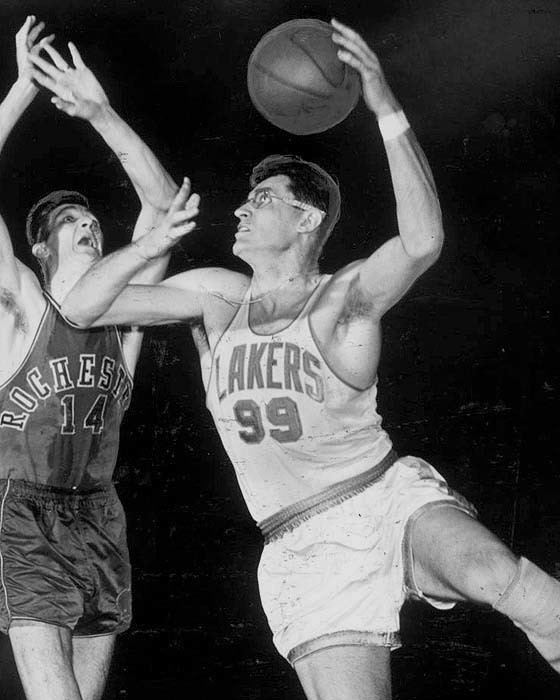
George Mikan was the back-to-back College Basketball Player of the Year at DePaul in 1944 and 1945 and led the nation in scoring in his junior and senior seasons. He signed a contract with the Chicago American Gears of the NBL, a league that later merged into the NBA, but whose statistics are not considered official. 

Chicago folded after that season, and Mikan was awarded to the Minneapolis Lakers, and he led them to the NBL championship that year. The next year, Minneapolis joined the BAA, who is considered the true forerunner of the NBA, where his statistics started to count toward the official totals, unlike his first two seasons.

During that season in the BAA, Mikan led all players by averaging 28.3 points per game, and he averaged 30.3 points in the playoffs to lead the Lakers to a championship win over the Washington Capitals.

The next season the BAA and NBL merged, officially becoming the NBA, but it was more of the same for Mikan, who led the league with 27.4 points per game, then upped that to 31.3 in the playoffs as the Lakers cruised to another title by beating Dolph Schayes and the Syracuse Nationals in the Finals.

Mikan led the league in scoring for the 3rd straight year in 1951, and also came in #2 in a new statistic called rebounds. The Lakers were on track to win a third straight title, but Mikan broke his leg in the first round of the playoffs, and played with the leg in a splint the rest of the way, and the Lakers fell in the Conference Finals, with Mikan still averaging 23.8 points per game with a very limited range of movement.

The next season, the league introduced a new rule designed to limit Mikan's effectiveness, widening the lane from 6 to 12 feet, forcing him farther away from the basket. He still averaged 23.8 points per game, a bit lower than before, but led the league with 13.5 rebounds per game, and again led the Lakers to a championship, beating the Knicks in 7 games.

He led the league in rebounding again the next year with a career high of 14.4 per game, and the Lakers beat the Knicks in the Finals for the second year in a row. He obviously started to slow down the next year, averaging only 18.1 points and 14.3 rebounds, but he still led the Lakers to a title, their 5th in 6 seasons.

The league adopted another new rule going into the next season, known as the shot clock, another rule that was meant to counteract the slow pace of play Mikan's style brought. Mikan chose to retire at that point, wanting to avoid any more serious injuries and to spend more time with his growing family. He did attempt a comeback midway through the next season, but he was not very effective with the new rule, averaging only 10.5 points and 8.3 rebounds that year.

Another new rule was introduced at that point, also due to Mikan. The league decided to ban goaltending, because Mikan would just camp out near the basket and wait until the ball was coming down, then tap it out of the cylinder. Without Mikan, the game of basketball wouldn't be anything like it is today.

Mikan had the shortest career of any player on this list, playing only 7 official NBA seasons, but he led the league in scoring 3 times, rebounding twice, and won 5 championships, failing only when he had a broken leg. The MVP and Finals MVP awards did not exist during his career, but it's likely that he would have won each of them 5 times. He was part of the very first Hall of Fame class back in 1959, and one of the greatest players of all time.


Monday, September 12, 2016

Top 100 NBA Players: #16 - George Mikan


George Mikan

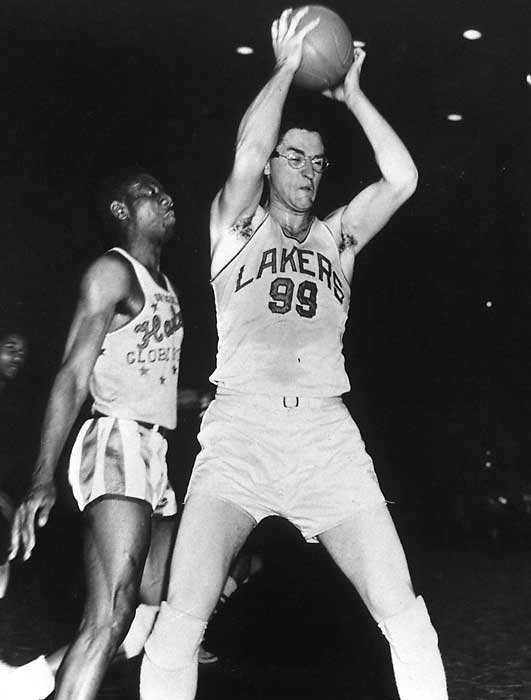
George Mikan is probably the most difficult player to place within any countdown of the greatest players of all time, but any list that doesn't contain him is absolutely flawed. Mikan dominated the league in an era where the game was played very differently, and he is the reason for many rule changes that we recognize today as integral parts of the game.

In Mikan's first three seasons, he led the NBA in scoring, scoring over 27 points per game over 3 straight seasons, while only a couple of other players were even reaching the 20-point plateau. The MVP award did not exist in his day, but if it did, his name would have been permanently etched on it. Here are his stats from his first three seasons compared to those of the second-best players in each of those seasons:

Mikan (1949) - 28.3 pts, 3.6 ast, .416 FG%, .772 FT%
Fulks (1949) - 26.0 pts, 1.2 ast, .313 FG%, .787 FT%

Mikan (1950) - 27.4 pts, 2.9 ast, .407 FG%, .779 FT%
Groza (1950) - 23.4 pts, 2.5 ast, .478 FG%, .729 FT%

Mikan (1951) - 28.4 pts, 14.1 reb, 3.1 ast, .428 FG%, .803 FT%
Schayes (1951) - 17.0 pts, 16.4 reb, 3.8 ast, .357 FG%, .752 FT%

Fulks shot free throws better than Mikan, Groza shot field goals better, and Schayes was better on the boards, but Mikan was the top player in the NBA in all of those seasons with no doubt. He would have won all 3 MVP awards easily, and would have won championships in all three seasons if he hadn't broken his leg during the playoffs. Instead of sitting out with such a major injury, he had the team doctor tape it up with a plate on each side and played through it, getting his team to the conference finals anyway. There also was no Finals MVP award yet at that point, but he would have won two in those first two seasons.

After the 1951 season, the league made a rule change to prevent Mikan from being so dominant, and that rule change was widening the three-second lane from 6 feet to twelve feet, which is much closer to what we recognize today. Mikan's scoring average and shooting percentage dropped significantly due to this change, so he focused more on rebounding, and in the next two seasons he led the league in that category instead. Here are his stats over the next two seasons, both of which would have been MVP seasons for him as well:

Mikan (1952) - 23.8 pts, 13.5 reb, 3.0 ast, .385 FG%, .780 FT%
Cousy (1952) - 21.7 pts, 6.4 reb, 6.7 ast, .369 FG%, .808 FT%

Mikan (1953) - 20.6 pts, 14.4 reb, 2.9 ast, .399 FG%, .780 FT%
Cousy (1953) - 19.8 pts, 6.3 reb, 7.7 ast, .352 FG%, .816 FT%

Mikan was still the best player in the league, but the #2 player was no longer a center or power forward, he was a point guard. The rule change had made it possible for a player to dominate the game from any position, making Mikan's grip on the best player title less sure. He did lead the Lakers to two more championships in those seasons, and would have added two more Finals MVP's to his collection.

1954 was the season in which Cousy finally displaced Mikan as the league's premier player, and Mikan knew that the end was near. Even though he wasn't the best player anymore, he still led the Lakers to one more title, giving him 5 in six seasons. He retired after the playoffs, possibly because of the aforementioned reason, or possibly to spend more time with his family, which is the reason he gave. Most likely, it was because of another rule that was implemented that summer: the 24-second shot clock. That rule prevented the Lakers from standing around waiting for Mikan to get into position before tossing him the ball for an easy inside shot. His lack of speed would have been his downfall, and he proved it by attempting a comeback a year later, averaging only 10 points and 8 rebounds during half a season of action.

Though Mikan's career was extremely short (only 7 seasons) he was the dominant player of his era, and if the awards had been thought of earlier, Mikan's trophy case would include 5 Regular Season and 5 Finals MVP awards. Also, he is the one we can thank for many of the rules today that keep the game interesting and competitive, so there is no way that he can be left out of the top section of these rankings.

Monday, September 5, 2016

Top 100 NBA Players: #24 - Elgin Baylor


Elgin Baylor

If you don't know who Elgin Baylor is, you're not alone. He is easily the least recognizable or remembered player remaining, and a big part of that is the era in which he played. Games were not televised, so the only chance fans got to see him was live at the game. Baylor is also one of only four players remaining on this list that never won a championship, but it isn't for lack of trying.

Elgin played 12 full seasons in the NBA, with 8 of those seasons ending in the NBA Finals, 7 against the Boston Celtics. Baylor was the best player on 4 of those teams, #2 on two others, and still the third best player on the team in his 12th season in the NBA. The players who ranked ahead of him on those teams were Jerry West and Wilt Chamberlain, so it's not like he was taking a back seat to a flash in the pan. There was one other season in which the Lakers lost to Boston in the Finals with Baylor sitting on the bench with a knee injury.

Baylor was not only a good player on a good team for all those years, he was one of the top 10 players in the league for 10 of his 12 full seasons. As a rookie, he was already the second-best player in the NBA, behind only Bob Pettit, and he only got better from there. Even though he was only 6-5, he averaged 24.9 points, 15.0 rebounds, and 4.1 assists that season, and he was known as the first player to play above the rim, showing hang time that had never been seen before.

His fourth season was 1961-62, the season of incomprehensible stats, and Baylor's numbers that season were yet another example. He had been called to active military duty during the season, so he was only able to play on weekends, but he still managed to participate in 48 games and average 38.3 points, 18.6 rebounds, and 4.6 assists, all during his weekend breaks from the military.

Baylor averaged over 24 points and 10 rebounds for 11 seasons, making him one of the greatest scorer/rebounders under 6-6 in league history, along with Charles Barkley, another player who was never able to win a title. Baylor, however, may have allowed the Lakers to win a title. In 1971-72, he was returning from a major knee injury that had cost him almost a full season, and after nine games he felt that he was holding back a team that could be historically good, so he retired, and the very next game was the beginning of Los Angeles' record 33-game winning streak, and the Lakers also went on to win the title that season. There are not many players who would step aside in order to allow their team to reach their full potential, let alone one as great as Baylor, so that gesture was huge.

Wednesday, July 20, 2016

Top 100 NBA Players: #78 - Jim Pollard


Jim Pollard

Jim Pollard had one of the shortest careers of any non-active player on my list, but he accomplished a lot in the short 7 seasons he spent in the NBA. He was knows as the Kangaroo Kid for his amazing jumping ability, and was known to dunk from the free throw line in warm-ups regularly.

He joined the league in 1948, when the league was in its third season and hadn't even changed its name yet from the BAA. He jumped right in, averaging 14.8 points per game in his rookie season with the Lakers, and helped Minneapolis to the #2 record in the league and a repeat of the championship they had won the season before, and he was also named to the All-NBA First Team, a rare feat for a rookie.

He was just as good the next season, getting a spot on the All-NBA First Team again while establishing himself as the definite #2 player on the Lakers behind George Mikan, a role he would play for most of the rest of his career. The two stars earned yet another title that season, making them the first team ever to three-peat.

Following a disappointing loss in the Conference Finals the next season, the Lakers went on another run of titles, taking the next 3 championships under the leadership of Mikan and Pollard to make it 6 in 7 years for the franchise, although Pollard wasn't on the first title team. He wasn't the star of any of the title teams, but he was the #2 player on 4 of those teams and #3 on another.

Mikan retired following his sixth title, but Pollard stayed on for one more season, his first as the star player, and though he was unable to get a 4th straight title for the Lakers, he did get them back to the Conference Finals, following which he retired as well.

Overall, Pollard played only 7 seasons, but reached at least the conference finals in every one of them, finishing his season with a ring 5 times, and he was a major contributor to each of those teams. Though winning 5 titles is impressive, it's not quite as impressive as it would be today, because there were fewer teams, games, and playoff rounds to fight through, but you still can't ignore the greatness of Jim Pollard.