Showing posts with label Elgin Baylor. Show all posts

Wednesday, September 29, 2021

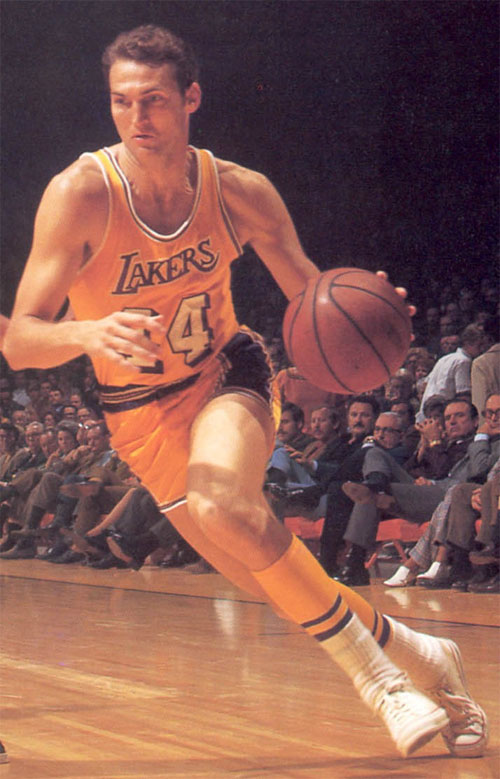
Top 100 NBA Players: #32 - Elgin Baylor


Elgin Baylor

Teams

Minneapolis/Los Angeles Lakers - 1958-72


Playoffs

Appearances - 12 (1959,1960,1961,1962,1963,1964,1965,1966,1967,1968,1969,1970)

Conference Finals - 10 (1959,1960,1961,1962,1963,1965,1966,1968,1969,1970)

NBA Finals - 7 (1959,1962,1963,1966,1968,1969,1970)

Championships - 0


Awards and Honors

Rookie of the Year - 1959

All-NBA First Team - 10 (1959,1960,1961,1962,1963,1964,1965,1967,1968,1969)

All-NBA Second Team - 0 (1964,1965,1967)

Hall of Fame - 1977

*(actual in bold, deserved in italics)


All-Time Ranks

Points Per Game - #3

Rebounds Per Game - #11

Total Rebounds - #28

Total Points - #36


League Leads

Points Per Game (#2-1961,1963, #3-1960,1968, #4-1959,1965,1967,1969)

Total Points (#2-1961,1963,1968, #3-1960, #4-1959, #5-1965,1967)

Total Rebounds (#3-1959, #4-1960,1961, #5-1963)

Rebounds Per Game (#3-1959, #4-1960,1961, #5-1963)

Total Assists (#5-1963)

Free Throw Percentage (#3-1963)


Elgin Baylor played one season at the College of Idaho, averaging 31.3 points and 18.9 rebounds per game, before his scholarship was rescinded and he was forced to move on. He enrolled at the University of Seattle, taking the first year off from playing basketball due to academics, and was drafted by the Lakers as a 14th round pick, but he decided to stay in school. He ended up playing 2 years for Seattle, and led them to the championship game for the only time in their history in 1958, before being drafted by the Lakers again, this time with the #1 overall picks, and he decided to leave school before his senior year to join the team.

Baylor was already one of the best players in the league as a rookie. He averaged 24.9 points, #4 in the league, and 15.0 rebounds, #3 in the league, making him the obvious Rookie of the Year. He also took the Lakers from last place the previous year clear to the NBA Finals, where they were swept by the Celtics in their first of 8 straight championships.

He raised his averages to 29.6 points and 16.4 rebounds in his second season, and he broke the single-game scoring record by pouring in 64, a record he would break again the next year with 71, before Wilt Chamberlain broke it one year later with 100. The Lakers lost to the Saint Louis Hawks in the Conference Finals in 7 games in each of those 2 seasons, with the team moving from Minneapolis to Los Angeles in between the two years.

In Baylor's 4th season, he was called to active duty with the Army Reserve, which kept him from playing on weekdays, so he would travel to wherever the Lakers were each weekend to play. He finished the season with a career high 38.3 points per game while also grabbing 18.6 rebounds, which was down slightly from his career high of 19.8 the year before. 

He led the Lakers back to the Finals that year, and in Game 5 he set a Finals record with 61 points, which is still the highest in history, while also grabbing 22 rebounds, but the Lakers ended up falling to Boston in 7 games. Baylor averaged 40.6 points and 17.9 rebounds in the Finals, the highest average in history at the time, though it has been surpassed twice since then.

He led the Lakers to the Finals for the third time the next year, but they lost to the Celtics again, then began to slow down a bit due to knee issues the next year. In the first game of the 1965 playoffs, he suffered a severe knee injury that required him to have surgery, and as a result he missed the team's 4th Finals loss to the Celtics.

He played most of the next season after recovering from surgery, but he was not the same player and may have come back too early. He averaged only 16.6 points, far below his previous low season of 24.9 per game as a rookie, but he was healthy by the time the playoffs came around, and he and Jerry West led the Lakers back to the Finals again, where they lost to the Celtics for the 5th time in Baylor's career.

Baylor had 4 more healthy seasons with the Lakers, averaging at least 24 points in each one, and the Lakers reached 3 more NBA Finals in a row, losing to the Celtics in each of Bill Russell's final 2 seasons, then to the Knicks the year after Russell retired. That brought Baylor's total to 8 NBA Finals in 12 years, playing in 7 of those series (he missed the 1965 series due to injury) and losing each time.

Baylor tore his Achilles just 2 games into the next season, and after spending the entire season rehabbing from the injury, he returned for the 1971-72, but after being slowed by knee problems, he decided to retire after just 9 games. The very next game after he retired was the first in the Lakers' record 33-game win streak, and the team finally won a championship that season. Baylor was given a championship ring by the team, but he never played on a winning championship team.

Baylor averaged 27.4 points per game during his career, which is currently #3 on the all-time list, behind only Michael Jordan and Wilt Chamberlain. He averaged at least 24 points and 10 rebounds per game in 11 of his 12 full seasons, and was named to the All-NBA First Team in all but the last of those seasons. He never won a championship while he was playing, but he was the reason the Lakers became a contender again, and was a huge part of teams that reached 8 Finals, and is one of the greatest players of all time.


Sunday, September 25, 2016

Top 100 NBA Players: #1 - Michael Jordan


Michael Jordan

Ask 100 people who the greatest player of all time is, and the top response will most likely be Michael Jordan, but it would be far from a landslide. Many others would get a significant number of votes, from Wilt Chamberlain, Bill Russell, and Oscar Robertson to Shaquille O'Neal, Kobe Bryant, and even LeBron James.  So what makes Michael Jordan the best player of all time?

There are five factors that I feel qualify a player to be considered one of the greatest of all time. Those are offensive and defensive prowess, regular season and playoff dominance, and longevity. By using these 5 factors, I'll show that Michael Jordan is the greatest player of all time.

First, offensive prowess. The purpose of offense is to score points, and there has never been a greater scorer than Michael Jordan. Wilt Chamberlain may own the record for points in a game and points per game for a full season, but Michael Jordan owns the record for most points per game over a full career. The five players with the highest career scoring averages are, in order:

Michael Jordan
Wilt Chamberlain
Kevin Durant
Elgin Baylor
LeBron James

Next, defensive prowess. This one is a little tougher to define, especially since the All-Defensive Team has only existed since 1969, Bill Russell's final season. Three players have appeared on the All-Defensive First Team nine times in their career, and if you add in Bill Russell and Wilt Chamberlain, both of whom were said to have blocked at least 8 shots in a game quite regularly, this is the list you come up with:

Michael Jordan
Kobe Bryant
Kevin Garnett
Bill Russell
Wilt Chamberlain

Then let's consider regular season dominance. Michael Jordan was the best player in the league for his final 9 seasons with the Chicago Bulls, and would have made it at least 11 if he hadn't kept retiring prematurely. He was the best player in 1988, and he was the best player in 1998, a feat only Kareem can match with his 1970 and 1980 seasons. The list of players who spent the longest time as the league's top star is as follows:

Wilt Chamberlain
Michael Jordan
Kareem Abdul-Jabbar
LeBron James
Larry Bird

Perhaps the most important category is playoff dominance. The whole point of playing the game is to win championships, and Jordan was the best player on more champions than anybody but Bill Russell. He made 6 trips to the NBA Finals in his career, and won all 6 times. The record for highest scoring average in a Finals series is 41.0, and it's no surprise that Jordan holds that record for his performance against the Phoenix Suns in 1993. Here is the list of the players who have led their teams to the most championships:

Bill Russell
Michael Jordan
Magic Johnson
Tim Duncan
Shaquille O'Neal
Larry Bird
LeBron James

Finally, let's look at longevity. When looking at this category, I'm looking at more than just playing for a long time. You must also play at a high level for a long period of time, and Michael Jordan fits that bill as well. In his first game after turning 40, he obliterated the old record for points by a player of that age. Kareem had held the record of 27, but Jordan poured in 43 that night, and scored at least 30 points 9 other times after his 40th birthday, meaning he owns the 10 highest-scoring games for a 40-year old player. Here are the 5 players who had the most productive seasons after the age of 35:

Karl Malone
Elgin Baylor
Kareem Abdul-Jabbar
Michael Jordan
Jerry West

There's only one player that appears on all 5 of these lists, and you've probably already guessed who that is. It's also worth noting that only two other players appear even 3 times on these lists, and those are Wilt Chamberlain and LeBron James, the two players I ranked just behind Jordan. Michael Jordan is the only player in history who has been dominant in every important facet of the game, which is what makes him the greatest of all time.

With that in mind, are there any current players that have a chance at displacing Jordan at the top? In my opinion, there are several that have a chance. The obvious one is LeBron James, who has already cracked three of these lists, and has already made the All-Defensive First Team six times, and has a head start on the longevity since he started so young. Another is Kevin Durant, who is a great offensive player and is improving on defense, and also entered the league very young, which could help his longevity. Russell Westbrook and Stephen Curry are also young and showing some promise, but do they have what it takes to be considered the greatest? It will be fun to watch and find out.

Saturday, September 24, 2016

Top 100 NBA Players: #3 - Wilt Chamberlain


Wilt Chamberlain

Every serious basketball fan has an opinion about Wilt Chamberlain. Either he is the greatest basketball player who ever lived, or he was vastly overrated and couldn't win when it mattered. The truth is somewhere between the two, and I'll explain why.

First of all, when it comes to regular season dominance, Wilt Chamberlain is the best player to ever set foot on a basketball court. Most people know about his 100-point game, but just one year earlier he also grabbed 55 rebounds in a game, which is still a record. But let's start back at the beginning.

When Wilt entered the NBA in 1959, he broke his first record before playing a game when he signed the richest contract in history, making $30,000 during his rookie season. That season turned out to be the most dominant rookie season ever in any sport, as he set new records for scoring and rebounding and won the All-Star MVP, regular season MVP, and Rookie of the Year awards. He also took a Warriors team that had missed the playoffs the previous year all the way to the Conference Finals, where they lost to the Boston Celtics, which would be a recurring theme throughout his career.

Two years later he had the most dominant season in history, even by today's standards. That year he averaged 50.4 points, 25.7 rebounds, and 2.4 assists while playing 48.5 minutes per game. That season represents two records which will never be broken, and his rebounding record (27.2 per game) from the previous season is just as unreachable today. The fact that games have only 48 minutes make his minutes record the most solid record in sports, and it was reached by playing all but a handful of minutes during the season and having several games go into overtime.

The scoring record is also pretty impressive. During that season he reached 50 points 45 times, which is more than any other player has done it in an entire career. Michael Jordan had 37 50-point outings for second on the all-time list, but he's far behind Wilt's 122. His 100-point game is also interesting, since he could have scored more, but the game ended immediately after he scored his final basket and the fans rushed the court. The game was such a blowout that the referees decided to call off the final minute.

Throughout the process of unveiling these rankings, I have made a point of mentioning that the pace of the game was much faster in the 1960's, which caused statistics to balloon out of proportion. In 1962 alone, Wilt averaged 50 points, Oscar Robertson averaged a triple-double, and Elgin Baylor had the highest scoring season ever by anyone not named Wilt. In order to bring these numbers into perspective, I've adjusted them to the pace of today's game, and in most cases it makes those seasons become just very good, but Wilt's 1962 season still stands the test of time. Here are what his averages look like adjusted for inflation:

Chamberlain (1962) adjusted - 40.3 pts, 15.2 reb, 2.1 ast

Even adjusted, Wilt's 1962 season stands alone as the greatest season ever in the NBA. Through the 1960's, he was the best player in every single season, even if he only won 4 MVP awards. So how can a player who was the best in the league for 10 seasons (a record, by the way) not be the best player of all time? The answer lies in the other argument I mentioned in the opening paragraph, that Wilt was not a winner.

While Wilt was the best regular season player of all time, he had the misfortune of running into the best playoff player of all time 8 times in one decade, that man being Bill Russell. In those 8 seasons, the Celtics beat Wilt's teams 7 times, each time in the Conference Finals or the Finals, with Wilt and the 76ers triumphing once, in 1967. With the help of Jerry West, he was able to win a second championship in 1972.

The persistent rumor that Wilt's teams did not win was slightly overblown. In 14 seasons, his teams won two championships, reached 6 NBA Finals, and played in the Conference Finals 12 times. If Boston and Philadelphia had been in different conferences, it's likely he would have played in the Finals at least 10 times. Even in his final season, he was still a great player, averaging a league-leading 18.6 rebounds per game and setting a league record with a 72.7% field goal percentage at age 36.

Wilt had most of the factors that lead to a high ranking on this list. He was a great offensive player. He was a great defensive player. He was a great player in the regular season. He had the longevity that is needed for greatness. What he lacked, and what ultimately kept him from the #1 spot was that greatness in the playoffs, where he was good but not great. 

Tuesday, September 13, 2016

Top 100 NBA Players: #15 - Jerry West


Jerry West

What better way to kick off the top 15 than with the player after which the NBA logo was modeled? Jerry West was one of those rare players who would have been great in any era, and he may have been remembered even more fondly if his career had come just a decade later.

Among the top 15 players of all time, West has fewer championships than 13 of the others. But if you examine his career closely, you'll see that he was one of the greatest winners of all time, just not a perennial champion. He played a total of 14 seasons in the NBA, and 9 of those seasons ended in the NBA Finals. 6 times those losses came to Bill Russell's Boston Celtics, with West as Elgin Baylor's sidekick during the first three losses and as the Lakers star during the next three losses. West's dominance continued after the end of the Celtics dynasty, and the Lakers made three more trips to the Finals in the 1970's, facing the New York Knicks each time, with the Lakers finally winning a title in 1972. Wilt Chamberlain was named the MVP of that Finals, but West was the Lakers' best player and should have been given the award. Here is a comparison of their stats from that season's playoffs:

West - 22.9 pts, 4.9 reb, 8.9 ast, .376 FG%, .830 FT%
Chamberlain - 14.7 pts, 21.0 reb, 3.3 ast, .563 FG%, .492 FT%

Wilt's 21 rebounds per game were probably what caught the voters' attention, but West either scored or assisted on over 40 points per game for the Lakers, nearly double Chamberlain's average. West had won a Finals MVP before, so I guess it evened things out, but it's pretty impressive to note that when West won the Finals MVP in 1969, he was the only player in history to win the award despite playing for the losing team. He earned it with one of the greatest Finals performances of all time, which included 53 points in Game 1 and a triple-double of 42 points, 13 rebounds, and 12 assists in Game 7, which the Lakers lost by 2.

West also holds the distinction of posting the highest scoring average over the course of a playoff series, and is the only player in the top 5 besides Michael Jordan. In the 1965 Western Conference Finals, West averaged 46.3 points per game, a record which many have approached but none have surpassed in the last 47 years. His scoring average for the entire playoffs was 40.6, which is still the highest in history.

It was unfortunate for West to have played in the 1960's for multiple reasons. One obvious one was the dominance of the Celtics during that period, but there are a couple of other reasons as well. One is that steals were not recorded until West's final season, in which he only played 31 games due to a career-ending injury. In that short span, he averaged 2.6 steals per game, at the tail end of his career. He would probably have been remembered as the greatest defensive guard in NBA history if they had just kept track of them, but his opponents still remember how tough he was on both ends of the floor.

The other thing that would have helped West if he had played in a later era was the three-point line. West was well-known for his shooting range, and one of his most famous moments involved a very long shot. In Game 3 of the 1970 NBA Finals, New York took a 2-point lead with just seconds remaining, and since the Lakers were out of timeouts, West took the inbound pass and heaved a shot from 60 feet that was right on target, tying the game (since there was no three-point line) and keeping the Lakers alive. Because of that and several other big moments near the end of games, West earned the nickname "Mr. Clutch."

West was the best player on 6 NBA Finals teams, a feat that only four other players can boast of. Those players are Michael Jordan, Magic Johnson, Bill Russell, and LeBron James, and though those players seemed to win a lot more often, you cannot take away West's greatness due to the lack of rings on his fingers. It has been said that the only thing lacking in his game was the ability to play above the rim, but West would still be recognized as a star in today's NBA.

Sunday, September 11, 2016

Top 100 NBA Players: #17 - Kevin Garnett


Kevin Garnett

Kevin Garnett is one of four active players to appear among the top 20 players of all time, and even though he is built like a praying mantis, he was a force in professional basketball for 18 seasons, and he is still playing into his 22nd season, making him by far the most experienced player remaining in the league.

Garnett was a major trail blazer for the current generation of NBA stars, jumping straight to the league from high school, the first player in 20 years to do so, but his success caused many to follow in his footsteps, from future stars like Kobe, LeBron, and Amare to busts like Korleone Young, DeSagana Diop, and Kwame Brown. Three of the four active players among my top 20 did not attend college, and who knows if that would have happened without Garnett taking a risk in 1995.

Garnett was drafted by the Minnesota Timberwolves, and it is because of him that the franchise even has any history to celebrate. They made the playoffs for the first time in Garnett's second year, which started a string of 8 consecutive playoff appearances, since which they have not returned to the postseason. Garnett was the team's best player every time they made the playoffs, and during that run he missed a total of 11 games, an incredible feat for a player who looks so fragile.

The eighth year of that run was a magical one for Garnett and the Timberwolves. It was the only time in franchise history that the Wolves won a playoff series, and they actually won two of them, advancing clear to the Western Conference Finals, where the Lakers dispatched them on their way to a three-peat. Garnett was named the MVP that season, and there is absolutely no doubt in my mind that he deserved it. In my opinion, the only more dominant season in the last 20 years was Shaq's 2000 campaign. Here is a comparison of Garnett and Kobe Bryant, his nearest competitor, from that season:

Garnett - 24.2 pts, 13.9 reb, 5.0 ast, 1.5 stl, 2.2 blk, .499 FG%, .791 FT%
Bryant - 24.0 pts, 5.5 reb, 5.1 ast, 1.7 stl, 0.4 blk, .438 FG%, .852 FT%

I don't think I even need to do any explanation as to why Garnett was the MVP, because the numbers do the talking. In NBA history, there have only been six times that a player has matched Garnett's scoring, rebounding, and assists numbers from that season in any single year. It was done by Wilt three times, Kareem twice, and Elgin Baylor once. The most recent of those seasons was Kareem in 1976, and it hasn't been done by anyone but Garnett since.

After that season the Timberwolves sank back into mediocrity, with Garnett toiling away as a superstar on a bad team, until the summer of 2007, when he was rescued by the Boston Celtics, who had decided they wanted to pursue a championship, since it had been over a decade since they had really tried, and with Garnett leading the way, Boston won their first title in over two decades. Paul Pierce was named the Finals MVP, but I think the award should have gone to Garnett, and here are the stats from the playoffs to back up my point:

Garnett - 20.4 pts, 10.5 reb, 3.3 ast, 1.3 stl, 1.1 blk, .495 FG%, .810 FT%
Pierce - 19.7 pts, 5.0 reb, 4.6 ast, 1.1 stl, 0.3 blk, .441 FG%, .802 FT%

Okay, now I'm no expert (well, maybe I am), but when one player is better in 6 of 7 statistical categories, and the other is reasonably close, that player is better, especially since being teammates eliminates the pace factor from the argument. Garnett was the MVP of the 2008 Finals, but Celtics fans helped select Pierce because he stuck with the team through the tough times.

Two years later, Boston returned to the NBA Finals, but this time Garnett was no longer the star, his body having finally worn down after playing over 1100 games in the NBA, but he was still one of the team's leaders, and he earned that second trip to the Finals, something very few superstars have gone without. In his career, Garnett won a championship, an MVP, and a Defensive Player of the Year award. He's a great all-around player, and he finally got to prove he was a winner while he was still a relevant superstar.

Monday, September 5, 2016

Top 100 NBA Players: #24 - Elgin Baylor


Elgin Baylor

If you don't know who Elgin Baylor is, you're not alone. He is easily the least recognizable or remembered player remaining, and a big part of that is the era in which he played. Games were not televised, so the only chance fans got to see him was live at the game. Baylor is also one of only four players remaining on this list that never won a championship, but it isn't for lack of trying.

Elgin played 12 full seasons in the NBA, with 8 of those seasons ending in the NBA Finals, 7 against the Boston Celtics. Baylor was the best player on 4 of those teams, #2 on two others, and still the third best player on the team in his 12th season in the NBA. The players who ranked ahead of him on those teams were Jerry West and Wilt Chamberlain, so it's not like he was taking a back seat to a flash in the pan. There was one other season in which the Lakers lost to Boston in the Finals with Baylor sitting on the bench with a knee injury.

Baylor was not only a good player on a good team for all those years, he was one of the top 10 players in the league for 10 of his 12 full seasons. As a rookie, he was already the second-best player in the NBA, behind only Bob Pettit, and he only got better from there. Even though he was only 6-5, he averaged 24.9 points, 15.0 rebounds, and 4.1 assists that season, and he was known as the first player to play above the rim, showing hang time that had never been seen before.

His fourth season was 1961-62, the season of incomprehensible stats, and Baylor's numbers that season were yet another example. He had been called to active military duty during the season, so he was only able to play on weekends, but he still managed to participate in 48 games and average 38.3 points, 18.6 rebounds, and 4.6 assists, all during his weekend breaks from the military.

Baylor averaged over 24 points and 10 rebounds for 11 seasons, making him one of the greatest scorer/rebounders under 6-6 in league history, along with Charles Barkley, another player who was never able to win a title. Baylor, however, may have allowed the Lakers to win a title. In 1971-72, he was returning from a major knee injury that had cost him almost a full season, and after nine games he felt that he was holding back a team that could be historically good, so he retired, and the very next game was the beginning of Los Angeles' record 33-game winning streak, and the Lakers also went on to win the title that season. There are not many players who would step aside in order to allow their team to reach their full potential, let alone one as great as Baylor, so that gesture was huge.

Thursday, June 21, 2012

Top 100 NBA Players: #1


Michael Jordan

(Kalb: #3, Simmons: #1, BBR: #1)

Ask 100 people who the greatest player of all time is, and the top response will most likely be Michael Jordan, but it would be far from a landslide. Many others would get a significant number of votes, from Wilt Chamberlain, Bill Russell, and Oscar Robertson to Shaquille O'Neal, Kobe Bryant, and even LeBron James.  So what makes Michael Jordan the best player of all time?

There are five factors that I feel qualify a player to be considered one of the greatest of all time. Those are offensive and defensive prowess, regular season and playoff dominance, and longevity. By using these 5 factors, I'll show that Michael Jordan is the greatest player of all time.

First, offensive prowess. The purpose of offense is to score points, and there has never been a greater scorer than Michael Jordan. Wilt Chamberlain may own the record for points in a game and points per game for a full season, but Michael Jordan owns the record for most points per game over a full career. Among the top 20 players of all time, the five with the highest career scoring averages are, in order:

Michael Jordan
Wilt Chamberlain
LeBron James
Elgin Baylor
Jerry West

Next, defensive prowess. This one is a little tougher to define, especially since the All-Defensive Team has only existed since 1969, Bill Russell's final season. Three players have appeared on the All-Defensive First Team nine times in their career, and if you add in Bill Russell and Wilt Chamberlain, both of whom were said to have blocked at least 8 shots in a game quite regularly, this is the list you come up with:

Michael Jordan
Kobe Bryant
Kevin Garnett
Bill Russell
Wilt Chamberlain

Then let's consider regular season dominance. Michael Jordan was the best player in the league for his final 9 seasons with the Chicago Bulls, and would have made it at least 11 if he hadn't kept retiring prematurely. He was the best player in 1988, and he was the best player in 1998, a feat only Kareem can match with his 1970 and 1980 seasons. The list of players who spent the longest time as the league's top star is as follows:

Wilt Chamberlain
Michael Jordan
Kareem Abdul-Jabbar
LeBron James
Larry Bird

Perhaps the most important category is playoff dominance. The whole point of playing the game is to win championships, and Jordan was the best player on more champions than anybody but Bill Russell. He made 6 trips to the NBA Finals in his career, and won all 6 times. The record for highest scoring average in a Finals series is 41.0, and it's no surprise that Jordan holds that record for his performance against the Phoenix Suns in 1993. Here is the list of the players who have led their teams to the most championships:

Bill Russell
Michael Jordan
Magic Johnson
Tim Duncan
Shaquille O'Neal
Larry Bird

Finally, let's look at longevity. When looking at this category, I'm looking at more than just playing for a long time. You must also play at a high level for a long period of time, and Michael Jordan fits that bill as well. In his first game after turning 40, he obliterated the old record for points by a player of that age. Kareem had held the record of 27, but Jordan poured in 43 that night, and scored at least 30 points 9 other times after his 40th birthday, meaning he owns the 10 highest-scoring games for a 40-year old player. Here are the 5 players who had the most productive seasons after the age of 35:

Karl Malone
Elgin Baylor
Kareem Abdul-Jabbar
Michael Jordan
Jerry West

There's only one player that appears on all 5 of these lists, and you've probably already guessed who that is. It's also worth noting that only one other player appears even 3 times on these lists, and that is Wilt Chamberlain, the player I ranked as second-best all time. Michael Jordan is the only player in history who has been dominant in every important facet of the game, which is what makes him the greatest of all time.

With that in mind, are there any current players that have a chance at displacing Jordan at the top? In my opinion, there are only two that have a chance, and the two happen to be facing each other in the NBA Finals right now. The obvious one is LeBron James, who has already cracked two of these lists, and has already made the All-Defensive First Team four times, and has a head start on the longevity since he started so young. A championship would start him down the road in the fifth category as well. The other is Kevin Durant, who is a great offensive player and is improving on defense, and also entered the league very young, which could help his longevity.


While there is nobody who can measure up to what Wilt did in his first few years, Jordan became just as dominant a player after that point, even beating Wilt at the tail of of his career, when Wilt was returning from injury and Jordan from retirement. What sets Jordan apart is that he took home 6 NBA titles, while Wilt only won 2, and he wasn't even the best player during one of those playoff runs. All of this leads me to believe that Michael Jordan is still the best player ever to play the game of basketball.

Saturday, June 16, 2012

Top 100 NBA Players: #2


Wilt Chamberlain

(Kalb: #2, Simmons: #6, BBR: #2)

Every serious basketball fan has an opinion about Wilt Chamberlain. Either he is the greatest basketball player who ever lived, or he was vastly overrated and couldn't win when it mattered. The truth is somewhere between the two, and I'll explain why.

First of all, when it comes to regular season dominance, Wilt Chamberlain is the best player to ever set foot on a basketball court. Most people know about his 100-point game, but just one year earlier he also grabbed 55 rebounds in a game, which is still a record. But let's start back at the beginning.

When Wilt entered the NBA in 1959, he broke his first record before playing a game when he signed the richest contract in history, making $30,000 during his rookie season. That season turned out to be the most dominant rookie season ever in any sport, as he set new records for scoring and rebounding and won the All-Star MVP, regular season MVP, and Rookie of the Year awards. He also took a Warriors team that had missed the playoffs the previous year all the way to the Conference Finals, where they lost to the Boston Celtics, which would be a recurring theme throughout his career.

Two years later he had the most dominant season in history, even by today's standards. That year he averaged 50.4 points, 25.7 rebounds, and 2.4 assists while playing 48.5 minutes per game. That season represents two records which will never be broken, and his rebounding record (27.2 per game) from the previous season is just as unreachable today. The fact that games have only 48 minutes make his minutes record the most solid record in sports, and it was reached by playing all but a handful of minutes during the season and having several games go into overtime.

The scoring record is also pretty impressive. During that season he reached 50 points 45 times, which is more than any other player has done it in an entire career. Michael Jordan had 37 50-point outings for second on the all-time list, but he's far behind Wilt's 122. His 100-point game is also interesting, since he could have scored more, but the game ended immediately after he scored his final basket and the fans rushed the court. The game was such a blowout that the referees decided to call off the final minute.

Throughout the process of unveiling these rankings, I have made a point of mentioning that the pace of the game was much faster in the 1960's, which caused statistics to balloon out of proportion. In 1962 alone, Wilt averaged 50 points, Oscar Robertson averaged a triple-double, and Elgin Baylor had the highest scoring season ever by anyone not named Wilt. In order to bring these numbers into perspective, I've adjusted them to the pace of today's game, and in most cases it makes those seasons become just very good, but Wilt's 1962 season still stands the test of time. Here are what his averages look like adjusted for inflation:

Chamberlain (1962) adjusted - 40.3 pts, 15.2 reb, 2.1 ast

Even adjusted, Wilt's 1962 season stands alone as the greatest season ever in the NBA. Through the 1960's, he was the best player in every single season, even if he only won 4 MVP awards. So how can a player who was the best in the league for 10 seasons (a record, by the way) not be the best player of all time? The answer lies in the other argument I mentioned in the opening paragraph, that Wilt was not a winner.

While Wilt was the best regular season player of all time, he had the misfortune of running into the best playoff player of all time 8 times in one decade, that man being Bill Russell. In those 8 seasons, the Celtics beat Wilt's teams 7 times, each time in the Conference Finals or the Finals, with Wilt and the 76ers triumphing once, in 1967. With the help of Jerry West, he was able to win a second championship in 1972.

The persistent rumor that Wilt's teams did not win was slightly overblown. In 14 seasons, his teams won two championships, reached 6 NBA Finals, and played in the Conference Finals 12 times. If Boston and Philadelphia had been in different conferences, it's likely he would have played in the Finals at least 10 times. Even in his final season, he was still a great player, averaging a league-leading 18.6 rebounds per game and setting a league record with a 72.7% field goal percentage at age 36.

Wilt had most of the factors that lead to a high ranking on this list. He was a great offensive player. He was a great defensive player. He was a great player in the regular season. He had the longevity that is needed for greatness. What he lacked, and what ultimately kept him from the #1 spot was that greatness in the playoffs, where he was good but not great. Every player I've chronicled so far is lacking at least somewhat in one of those areas, but in my next post you'll see the one player who can be considered great in every one of those areas.


Kareem's numbers throughout the early part of his career were pretty incredible, but they look pretty average when compared to those of Wilt's first decade. Kareem may have won more championships, although half of those had more to do with Magic than Kareem, and Kareem didn't dominate a decade the way Wilt did the 1960's, although he is one of only two players to come close. It seems pretty clear to me that Wilt was the better overall player.

Tuesday, May 1, 2012

Top 100 NBA Players: #10


Jerry West

(Kalb: #12, Simmons: #8, BBR: #16)

What better way to kick off the top 10 than with the player that the NBA chose to model its logo after? Jerry West was one of those rare players who would have been great in any era, and may have been remembered even more fondly if his career had come just a decade later.

Among the top 10 players of all time, West has fewer championships than 8 of the others. But if you examine his career closely, you'll see that he was one of the greatest winners of all time, just not a perennial champion. He played a total of 14 seasons in the NBA, and 9 of those seasons ended in the NBA Finals. 6 times those losses came to Bill Russell's Boston Celtics, with West as Elgin Baylor's sidekick during the first three losses and as the Lakers star during the next three losses. West's dominance continued after the end of the Celtics dynasty, and the Lakers made three more trips to the Finals in the 1970's, facing the New York Knicks each time, with the Lakers finally winning a title in 1972. Wilt Chamberlain was named the MVP of that Finals, but West was the Lakers' best player and should have been given the award. Here is a comparison of their stats from that season's playoffs:

West - 22.9 pts, 4.9 reb, 8.9 ast, .376 FG%, .830 FT%
Chamberlain - 14.7 pts, 21.0 reb, 3.3 ast, .563 FG%, .492 FT%

Wilt's 21 rebounds per game were probably what caught the voters' attention, but West either scored or assisted on over 40 points per game for the Lakers, nearly double Chamberlain's average. West had won a Finals MVP before, so I guess it evened things out, but it's pretty impressive to note that when West won the Finals MVP in 1969, he was the only player in history to win the award despite playing for the losing team. He earned it with one of the greatest Finals performances of all time, which included 53 points in Game 1 and a triple-double of 42 points, 13 rebounds, and 12 assists in Game 7, which the Lakers lost by 2.

West also holds the distinction of posting the highest scoring average over the course of a playoff series, and is the only player in the top 5 besides Michael Jordan. In the 1965 Western Conference Finals, West averaged 46.3 points per game, a record which many have approached but none have surpassed in the last 47 years. His scoring average for the entire playoffs was 40.6, which is still the highest in history.

It was unfortunate for West to have played in the 1960's more multiple reasons. One obvious one was the dominance of the Celtics during that period, but there are a couple of other reasons as well. One is that steals were not recorded until West's final season, in which he only played 31 games due to a career-ending injury. In that short span, he averaged 2.6 steals per game, at the tail end of his career. He would probably have been remembered as the greatest defensive guard in NBA history if they had just kept track of them, but his opponents still remember how tough he was on both ends of the floor.

The other thing that would have helped West if he had played in a later era was the three-point line. West was well-known for his shooting range, and one of his most famous moments involved a very long shot. In Game 3 of the 1970 NBA Finals, New York took a 2-point lead with just seconds remaining, and since the Lakers were out of timeouts, West took the inbound pass and heaved a shot from 60 feet that was right on target, tying the game (since there was no three-point line) and keeping the Lakers alive. Because of that and several other big moments near the end of games, West earned the nickname "Mr. Clutch."

West was the best player on 6 NBA Finals teams, a feat that only three other players can boast of. Those players are Michael Jordan, Magic Johnson, and Bill Russell, and though those players seemed to win a lot more often, you cannot take away West's greatness from the lack of rings on his fingers. It has been said that the only thing lacking in his game was the ability to play above the rim, but West would still be recognized as a star in today's NBA.


The career paths of West and Olajuwon look pretty similar, with West starting out a little stronger, and Olajuwon coming on a little later in his career. Each was among the greatest defensive players ever at his respective position, and each led his team to a championship late in his career. While Hakeem was able to complete the trick twice, his overall Finals record of 2-1 still doesn't quite compare to West's, even though the Lakers great ended up at 1-8 in the title series, because he was there three times as often as Olajuwon.

Wednesday, April 18, 2012

Top 100 NBA Players: #12


LeBron James

(Simmons: #20, BBR: #19)

LeBron James is the third-youngest player in this entire list, yet he has somehow risen to #12 already, and the sky is the limit for him, whether you are a fan of his or not. Many try to say that LeBron is not that great, that he'll never be as great as Michael Jordan, but there are problems with that reasoning.

People say that Jordan was greater because he won 6 titles, and LeBron has yet to win one. The problem is that we are comparing 1990's Jordan with 2000's LeBron, when we should be comparing current LeBron with 1980's Jordan. At the end of last season, when these rankings were created, LeBron James was 26 years old. Here is a comparison of the career accomplishments and statistics of Jordan and LeBron at age 26:

Jordan - 6 playoffs, 2 conference finals, 0 NBA Finals, 1 MVP, 3 years as best player in the league
James - 6 playoffs, 3 conference finals, 2 NBA Finals, 2 MVP, 6 years as best player in the league

Jordan - 32.8 pts, 6.3 reb, 6.0 ast, 2.8 stl, 1.1 blk, .516 FG%, .282 3P%, .848 FT%
James - 27.7 pts, 7.1 reb, 7.0 ast, 1.7 stl, 0.8 blk, .479 FG%, .329 3P%, .744 FT%

When looking at them statistically, LeBron has more triple-double potential, but Jordan was still a little better overall. When looking at their accomplishments at age 26, LeBron is the clear-cut winner, matching or beating Jordan in every category. The fact is that back in the 1980's, people were saying the same things about Jordan that they now say about LeBron, that he's great but he'll never lead his team to a title, that he doesn't know how to involve his teammates enough, etc. At age 27, Michael Jordan won his first of six NBA Championships. If LeBron wants to eventually be remembered as equal to or greater than Jordan, and potentially as the greatest player of all time, the titles have to start coming soon.

LeBron is the only player in history to own career averages of 25 points, 7 rebounds, and 7 assists per game, and is also the holder of many "youngest" records, including youngest #1 pick, youngest Rookie of the Year, youngest to record a triple-double, any many others. He is also one of 4 players in history to lead his team in all 5 of the major statistical categories for a full season, along with Dave Cowens, Scottie Pippen, and Kevin Garnett.

He has also been the best player in the entire league for 6 of the 8 seasons he has played so far, the only exceptions being his rookie year, when he was just All-Star material, and 2008, when Kobe finally decided he needed an MVP award. In 2005, at the age of 20, LeBron was already the best player in the NBA, becoming only the third player to be the best within his first two seasons, and the other two happen to be Kareem and Wilt.


Baylor was one of the greatest talents ever at the small forward position, and LeBron is following in his footsteps. Injuries slowed down Baylor's career trajectory prematurely, while James has been able to maintain his high level of play now for 7 full seasons. James has already been the best player on 2 Finals teams, while Baylor achieved the feat 4 times in a full career. The biggest thing that separates James from Baylor is that he has been the league's best player 6 times already, while Baylor was never the very best player at any point in his career.

Thursday, April 12, 2012

Top 100 NBA Players: #13


Elgin Baylor

(Kalb: #13, Simmons: #14, BBR: #20)

If you don't know who Elgin Baylor is, you're not alone. He is easily the least recognizable or remembered player among the top 20, and a big part of that is the era in which he played. Games were not televised, so the only chance fans got to see him was live at the game. Baylor is also one of only three players remaining on this list that never won a championship, but it isn't for lack of trying.

Elgin played 12 full seasons in the NBA, with 8 of those seasons ending in the NBA Finals, 7 against the Boston Celtics. Baylor was the best player on 4 of those teams, #2 on two others, and still the third best player on the team in his 12th season in the NBA. The players who ranked ahead of him on those teams were Jerry West and Wilt Chamberlain, so it's not like he was taking a back seat to a flash in the pan. There was one other season in which the Lakers lost to Boston in the Finals with Baylor sitting on the bench with a knee injury.

Baylor was not only a good player on a good team for all those years, he was one of the top 10 players in the league for 10 of his 12 full seasons. As a rookie, he was already the second-best player in the NBA, behind only Bob Pettit, and he only got better from there. Even though he was only 6-5, he averaged 24.9 points, 15.0 rebounds, and 4.1 assists that season, and he was known as the first player to play above the rim, showing hang time that had never been seen before.

His fourth season was 1961-62, the season of incomprehensible stats, and Baylor's numbers that season were yet another example. He had been called to active military duty during the season, so he was only able to play on weekends, but he still managed to participate in 48 games and average 38.3 points, 18.6 rebounds, and 4.6 assists, all during his weekend breaks from the military.

Baylor averaged over 24 points and 10 rebounds for 11 seasons, making him the greatest scorer/rebounder under 6-6 in league history, narrowly edging out Charles Barkley, another player who was never able to win a title. Baylor, however, may have allowed the Lakers to win a title. In 1971-72, he was returning from a major knee injury that had cost him almost a full season, and after nine games he felt that he was holding back a team that could be historically good, so he retired, and the very next game was the beginning of Los Angeles' record 33-game winning streak, and the Lakers also went on to win the title that season. There are not many players who would step aside in order to allow their team to reach their full potential, let alone one as great as Baylor, so that gesture was huge.


While Baylor did not win the championships that Russell did, mostly because of Russell, he did make it to the Finals 8 times, not far behind Russell's 12, and their careers covered almost the exactly same timeframe. Russell was a slightly better rebounder, but he was also at least 6 inches taller, so that's to be expected, but Baylor's worst scoring season was still 6 points per game better than Russell's best. What really puts Baylor ahead here is that he did more with less, since he took the Lakers to all those Finals with only one other star for the majority of his career, while Russell always had at least two, whether it was Cousy, Jones, or Havlicek helping him out.

Saturday, February 25, 2012

Top 100 NBA Players: #19


Kevin Garnett

(Kalb: #40, Simmons: #22, BBR: #27)

Kevin Garnett is the first of five active players to appear among the top 20 players of all time, and even though he is built like a praying mantis, he has been a force in professional basketball for 16 seasons, and he is still playing well in his 17th season, even though there are just a handful of players more experienced remaining in the league.

Garnett was a major trail blazer for the current generation of NBA stars, jumping straight to the league from high school, the first player in 20 years to do so, but his success caused many to follow in his footsteps, from future stars like Kobe, LeBron, and Amare to busts like Korleone Young, DeSagana Diop, and Kwame Brown. Four of the 5 active players among my top 20 did not attend college, and who knows if that wouldn't have happened without Garnett taking a risk in 1995.

Garnett was drafted by the Minnesota Timberwolves, and it is because of him that the franchise even has any history to celebrate. They made the playoffs for the first time in Garnett's second year, which started a string of 8 consecutive playoff appearances, since which they have not returned to the postseason. Garnett was the team's best player every time they made the playoffs, and during that run he missed a total of 11 games, an incredible feat for a player who looks so fragile.

The eighth year of that run was a magical one for Garnett and the Timberwolves. It was the only time in franchise history that the Wolves won a playoff series, and they actually won two of them, advancing clear to the Western Conference Finals, where the Lakers dispatched them on their way to a three-peat. Garnett was named the MVP that season, and there is absolutely no doubt in my mind that he deserved it. In my opinion, the only more dominant season in the last 20 years was Shaq's 2000 campaign. Here is a comparison of Garnett and Kobe Bryant, his nearest competitor, from that season:

Garnett - 24.2 pts, 13.9 reb, 5.0 ast, 1.5 stl, 2.2 blk, .499 FG%, .791 FT%
Bryant - 24.0 pts, 5.5 reb, 5.1 ast, 1.7 stl, 0.4 blk, .438 FG%, .852 FT%

I don't think I even need to do any explanation as to why Garnett was the MVP, because the numbers do the talking. In NBA history, there have only been six times that a player has bested Garnett's scoring, rebounding, and assists numbers from that season in any single year. It was done by Wilt three times, Kareem twice, and Elgin Baylor once. The most recent of those seasons was Kareem in 1976, and it hasn't been done by anyone but Garnett since.

After that season the Timberwolves sank back into mediocrity, with Garnett toiling away as a superstar on a bad team, until the summer of 2007, when he was rescued by the Boston Celtics, who had decided they wanted to pursue a championship, since it had been over a decade since they had really tried, and with Garnett leading the way, Boston won their first title in over two decades. Paul Pierce was named the Finals MVP, but I think the award should have gone to Garnett, and here are the stats from the playoffs to back up my point:

Garnett - 20.4 pts, 10.5 reb, 3.3 ast, 1.3 stl, 1.1 blk, .495 FG%, .810 FT%
Pierce - 19.7 pts, 5.0 reb, 4.6 ast, 1.1 stl, 0.3 blk, .441 FG%, .802 FT%

Okay, now I'm no expert (well, maybe I am), but when one player is better in 6 of 7 statistical categories, and the other is reasonably close, that player is better, especially since being teammates eliminates the pace factor from the argument. Garnett was the MVP of the 2008 Finals, but Celtics fans helped select Pierce because he stuck with the team through the tough times.

Two years later, Boston returned to the NBA Finals, but this time Garnett was no longer the star, his body having finally worn down after playing over 1100 games in the NBA, but he was still one of the team's leaders, and he earned that second trip to the Finals, something very few superstars have gone without. In his career, Garnett won a championship, an MVP, and a Defensive Player of the Year award. He's a great all-around player, and he finally got to prove he was a winner while he was still a relevant superstar.


Barkley had a bit of a faster start to his career than Garnett, but the big man had caught up by his prime, and each peaked at the same level in his ninth season in the NBA. Overall, the chart of the two players is incredibly similar, and both had 16 years (not including the current one) in which to earn their spot on this list. There's one thing that separates Garnett from Barkley: the ring on his finger.