Showing posts with label Sam Jones. Show all posts

Tuesday, August 31, 2021

Top 100 NBA Players: #61 - Sam Jones


Sam Jones

Teams

Boston Celtics - 1957-69


Playoffs

Appearances - 12 (1958,1959,1960,1961,1962,1963,1964,1965,1966,1967,1968,1969)

Conference Finals - 12 (1958,1959,1960,1961,1962,1963,1964,1965,1966,1967,1968,1969)

NBA Finals - 11 (1958,1959,1960,1961,1962,1963,1964,1965,1966,1968,1969)

Championships - 10 (1959,1960,1961,1962,1963,1964,1965,1966,1968,1969)


Awards and Honors

All-NBA First Team - 0 (1965)

All-NBA Second Team - 3 (1965,1966,1967)

Hall of Fame - 1984


All-Time Ranks

none


League Leads

Points Per Game (#5-1965,1966)

Total Points (#4-1965)

Free Throw Percentage (#5-1967)


Sam Jones played 3 seasons for North Carolina Central before leaving school to join the Army. After his 2 years of military service were completed, he was drafted by the Minneapolis Lakers in the 8th round of the NBA Draft, but he decided to return to school for his senior season. After averaging 18.6 points and 10.7 rebounds as a shooting guard, Jones was drafted again, this time in the first round by the defending champion Boston Celtics.

Jones was initially pessimistic about his chances of making the team, who featured star guards Bob Cousy and Bill Sharman, and had planned to take a teaching job instead, but when they turned down his request for a higher salary, he decided to try out in Boston. The team was impressed by his hustle and made room for him on the roster.

Jones hardly played as a rookie, averaging only 4.6 points and 2.9 rebounds, and the team lost in the NBA Finals, one of only 2 times in Jones' career that he would fail to win a title. His role slowly increased each year, until he finally broke into the starting lineup in his 4th season when Sharman went down with an injury, and he never gave the starting spot back.

In 1961-62, he was named to his first All-Star team after averaging 18.4 points and 5.9 rebounds, and he earned his nickname "Mr. Clutch" in the playoffs. In Game 7 of the Eastern Conference Finals, he hit the series-winning shot over Wilt Chamberlain with 2 seconds left to send the Celtics back to the NBA Finals again, and in Game 7 of the Finals, he scored 5 of the team's 10 points in overtime to clinch another title. 

He continued to get better and better, reaching his peak in 1964-65, when he scored 25.9 points per game, #4 in the league and was named to the All-NBA Second Team, though I would have put him on the First Team that year. He also had his best playoff run that season, averaging 28.6 points while helping lead the Celtics to their 7th championship in a row.

Jones averaged at least 20 points per game in each of the next 3 seasons and picked up 2 more championships as well. In his final season, Jones again came up clutch in the Finals, when he hit the game-winning shot in Game 4 to tie the series at 2 games apiece, which prevented them from having to play on the road down 3-1, and they went on to win the championship again, #10 for Jones, after which both Jones and Russell retired.

Sam Jones reach the Conference Finals in every single season of his career, missed the NBA Finals only once, and won 10 total championships in 12 seasons, second only to his teammate, Bill Russell, in NBA history, because Russell joined the team a year earlier. Jones was the leading scorer on 3 of the Celtics' title teams, and was one of the best players in the league for several years late in his career, but the biggest reason he is on the list of the all-time greats is the way he always stepped up in the playoffs.


Thursday, September 8, 2016

Top 100 NBA Players: #21 - John Havlicek


John Havlicek

When the greatest players in Celtics history are named, most people would list Larry Bird, Bill Russell, and Bob Cousy, but John Havlicek was the player who kept the Celtics relevant after Russell's retirement and was a member of both championship teams between the Russell and Bird years.

When Havlicek came into the league, he joined the perennial champion Boston Celtics, and although he was only a role player for the first few years, he was a contributor to teams that continued to win titles throughout the 60's. He averaged 14.3 points as a rookie, which turned out to be the lowest he would average in his 16-year career. He ended his career with the third-most championships of any player, with 8, behind only Bill Russell and Sam Jones, and 38 years later he still hasn't been passed on that list.

Starting in 1966-67, Havlicek started a run of 9 straight seasons as one of the 10 best players in the NBA, hitting his peak in 1970-71 and 1971-72, when he averaged 28.2 points, 8.6 rebounds, and 7.5 assists over two seasons as he became the face of the Celtics. Unfortunately, his personal peak fell right in between the years of Celtic dominance, but he did have a huge part on several champs.

In his second, third, and fourth seasons, Havlicek worked his way up the ladder toward becoming the best player in Boston, passing Bob Cousy, then Tom Heinsohn, then Sam Jones, then finally Bill Russell as the best player on the title team. While it may seem almost sacrilegious to say that Havlicek ever surpassed Russell, he was actually the best player on Russell's final two title teams, in 1968 and 1969. Here are their stats from those two playoffs:

Havlicek (1968) - 25.9 pts, 8.6 reb, 7.5 ast, .452 FG%, .828 FT%
Russell (1968) - 14.4 pts, 22.8 reb, 5.2 ast, .409 FG%, .585 FT%

Havlicek (1969) - 25.4 pts, 9.9 reb, 5.6 ast, .445 FG%, .855 FT%
Russell (1969) - 10.8 pts, 20.5 reb, 5.4 ast, .423 FG%, .506 FT%

Russell was obviously the better rebounder, one of the two best of all time, but Havlicek was a much better scorer, shooter, and, most importantly, free throw shooter. 1968 happened to be the final season that the Finals MVP award didn't exist, and 1969 was the only season that a player from the losing team won the award, when Jerry West averaged over 40 points per game in the Finals and over 30 points per game over the entire playoffs. If you believe that the best player from the winning team should get the Finals MVP, then Havlicek should have won both of these. As it turns out, he did win one a few years later, when he led a completely new Boston team to the title. Look at his stats from those playoffs:

Havlicek (1974) - 27.1 pts, 6.4 reb, 6.0 ast, .484 FG%, .881 FT%

A quick glance will tell you that he hadn't dropped off at all, and had probably gained a step, despite the fact that he was 33 years old by this time. He had become a more efficient shooter and scorer while maintaining impressive averages in rebounds and assists. That was also the first season in which defensive stats were recorded, and he managed to average 1.3 steals per game during that playoff run as well.

Sunday, August 21, 2016

Top 100 NBA Players: #42 - Sam Jones


Sam Jones

Of all the players who have even taken the court in the NBA, only one has won more championships than the 10 that Sam Jones took home, and that player was his teammate, Bill Russell. Russell won one title before Jones arrived in town, but Jones was a big part of the reason that the Celtics continued to win titles throughout the 1960's.

Jones was the second-best player on the Celtics through a large chunk of their unmatched playoff run, but he was well-known for being their best player in the clutch. He was always good during the regular season, better during the playoffs, then unstoppable during a game 7. Below are his stats for the 1960-68 seasons, during which the Celtics won 7 titles.

Jones (Regular Season) - 20.6 pts, 5.1 reb, 2.9 ast, .812 FT%
Jones (Playoffs) - 22.6 pts, 5.1 reb, 2.7 ast, .814 FT%

Jones' numbers remained virtually unchanged during the playoffs, with one exception, which was his scoring an extra 2 points in each game. Even more impressive was his scoring average in game 7 over that same time period, which was 30.5, an additional 10 points per game more than he normally scored in the regular season.

Jones started his career playing behind Bill Sharman, so it took four seasons before he was finally able to become a starter and play much of a role in the Celtics' titles, but once he was in the starting lineup, he was always a force. He was the #2 player on four straight championship teams, then he was the third best on the next. In all, he was a top 3 player on 5 of the 10 championship teams of which he was a member.

Thursday, April 12, 2012

Top 100 NBA Players: #13


Elgin Baylor

(Kalb: #13, Simmons: #14, BBR: #20)

If you don't know who Elgin Baylor is, you're not alone. He is easily the least recognizable or remembered player among the top 20, and a big part of that is the era in which he played. Games were not televised, so the only chance fans got to see him was live at the game. Baylor is also one of only three players remaining on this list that never won a championship, but it isn't for lack of trying.

Elgin played 12 full seasons in the NBA, with 8 of those seasons ending in the NBA Finals, 7 against the Boston Celtics. Baylor was the best player on 4 of those teams, #2 on two others, and still the third best player on the team in his 12th season in the NBA. The players who ranked ahead of him on those teams were Jerry West and Wilt Chamberlain, so it's not like he was taking a back seat to a flash in the pan. There was one other season in which the Lakers lost to Boston in the Finals with Baylor sitting on the bench with a knee injury.

Baylor was not only a good player on a good team for all those years, he was one of the top 10 players in the league for 10 of his 12 full seasons. As a rookie, he was already the second-best player in the NBA, behind only Bob Pettit, and he only got better from there. Even though he was only 6-5, he averaged 24.9 points, 15.0 rebounds, and 4.1 assists that season, and he was known as the first player to play above the rim, showing hang time that had never been seen before.

His fourth season was 1961-62, the season of incomprehensible stats, and Baylor's numbers that season were yet another example. He had been called to active military duty during the season, so he was only able to play on weekends, but he still managed to participate in 48 games and average 38.3 points, 18.6 rebounds, and 4.6 assists, all during his weekend breaks from the military.

Baylor averaged over 24 points and 10 rebounds for 11 seasons, making him the greatest scorer/rebounder under 6-6 in league history, narrowly edging out Charles Barkley, another player who was never able to win a title. Baylor, however, may have allowed the Lakers to win a title. In 1971-72, he was returning from a major knee injury that had cost him almost a full season, and after nine games he felt that he was holding back a team that could be historically good, so he retired, and the very next game was the beginning of Los Angeles' record 33-game winning streak, and the Lakers also went on to win the title that season. There are not many players who would step aside in order to allow their team to reach their full potential, let alone one as great as Baylor, so that gesture was huge.


While Baylor did not win the championships that Russell did, mostly because of Russell, he did make it to the Finals 8 times, not far behind Russell's 12, and their careers covered almost the exactly same timeframe. Russell was a slightly better rebounder, but he was also at least 6 inches taller, so that's to be expected, but Baylor's worst scoring season was still 6 points per game better than Russell's best. What really puts Baylor ahead here is that he did more with less, since he took the Lakers to all those Finals with only one other star for the majority of his career, while Russell always had at least two, whether it was Cousy, Jones, or Havlicek helping him out.

Wednesday, November 30, 2011

Top 100 NBA Players - #24


John Havlicek

(Kalb: #24, Simmons: #13, BBR: #44)

When the greatest players in Celtics history are named, most people would list Larry Bird, Bill Russell, and Bob Cousy, but John Havlicek was the player who kept the Celtics relevant after Russell's retirement and was a member of both championship teams between the Russell and Bird years.

When Havlicek came into the league, he joined the perennial champion Boston Celtics, and although he was only a role player for the first few years, he was a contributor to teams that continued to win titles throughout the 60's. He averaged 14.3 points as a rookie, which turned out to be the lowest he would average in his 16-year career. He ended his career with the third-most championships of any player, behind only Bill Russell and Sam Jones, and 33 years later he still hasn't been passed on that list.

Starting in 1966-67, Havlicek started a run of 9 straight seasons as one of the 10 best players in the NBA, hitting his peak in 1970-71 and 1971-72, when he averaged 28.2 points, 8.6 rebounds, and 7.5 assists over two seasons as he became the face of the Celtics. Unfortunately, his personal peak fell right in between the years of Celtic dominance, but he did have a huge part on several champs.

In his second, third, and fourth seasons, Havlicek worked his way up the ladder toward becoming the best player in Boston, passing Bob Cousy, then Tom Heinsohn, then Sam Jones, then finally Bill Russell as the best player on the title team. While it may seem almost sacrilegious to say that Havlicek ever surpassed Russell, he was actually the best player on Russell's final two title teams, in 1968 and 1969. Here are their stats from those two playoffs:

Havlicek (1968) - 25.9 pts, 8.6 reb, 7.5 ast, .452 FG%, .828 FT%
Russell (1968) - 14.4 pts, 22.8 reb, 5.2 ast, .409 FG%, .585 FT%

Havlicek (1969) - 25.4 pts, 9.9 reb, 5.6 ast, .445 FG%, .855 FT%
Russell (1969) - 10.8 pts, 20.5 reb, 5.4 ast, .423 FG%, .506 FT%

Russell was obviously the better rebounder, one of the two best of all time, but Havlicek was a much better scorer, shooter, and, most importantly, free throw shooter. 1968 happened to be the final season that the Finals MVP award didn't exist, and 1969 was the only season that a player from the losing team won the award, when Jerry West averaged over 40 points per game in the Finals and over 30 points per game over the entire playoffs. If you believe that the best player from the winning team should get the Finals MVP, then Havlicek should have won both of these. As it turns out, he did win one a few years later, when he led a completely new Boston team to the title. Look at his stats from those playoffs:

Havlicek (1974) - 27.1 pts, 6.4 reb, 6.0 ast, .484 FG%, .881 FT%

A quick glance will tell you that he hadn't dropped off at all, and had probably gained a step, despite the fact that he was 33 years old by this time. He had become a more efficient shooter and scorer while maintaining impressive averages in rebounds and assists. That was also the first season in which defensive stats were recorded, and he managed to average 1.3 steals per game during that playoff run as well.


Havlicek and Erving had similar career peaks in both level and length, with Havlicek reaching it a little bit later as he grew up behind other superstar players, unlike Erving, who was thrust into a starring role immediately. Erving single-handedly led his team to the Conference Finals and Finals numerous times, but there's no way his playoff accomplishments can stack up with Havlicek's, who was the best player on three champions and a top-4 player on three others. The fact that Hondo was consistently able to get one step further than Erving in the playoffs is what separates these two players among the all-time greats.

Monday, August 1, 2011

Top 100 NBA Players: #63


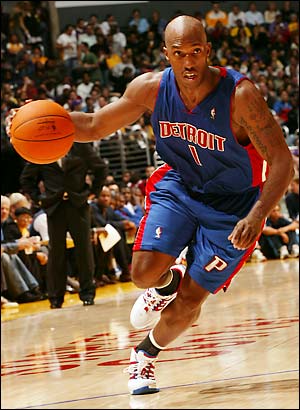
Chauncey Billups

(BBR: #65)

Chauncey Billups has been one of the most successful playoff players in modern years, leading his team to the Conference Finals in 7 straight years, a streak that has only been matched by two players in the past 30 years, Magic Johnson and Kareem Abdul-Jabbar. He may not have ever been considered a superstar, but he has been a star player for nearly a decade now, and a winner for most of that time.

On six of those 7 Conference Final teams, Billups was one of the top 3 players on his team, first for the Pistons teams that kept making deep playoff runs, then for Denver after a trade took him out west. Here are his stats for those seasons in the regular season and the playoffs.

Billups (Regular Season) - 17.1 pts, 3.3 reb, 6.4 ast
Billups (Playoffs) - 18.0 pts, 3.5 reb, 6.0 ast

You can see that he kicked it up one notch in the playoffs, but others have made more impressive jumps. When the Pistons won the NBA Finals, Billups was voted the MVP, even though Rip Hamilton was probably a better player throughout those playoffs, as you can see from these numbers:

Billups - 16.4 pts, 3.0 reb, 5.9 ast
Hamilton - 21.5 pts, 4.6 reb, 4.2 ast

Billups was definitely the best player for Detroit in their return trip to the Finals the next year, when he bumped those averages up to 18.7 points, 4.3 rebounds, and 6.5 assists, but Detroit lost to the Spurs, costing him a chance at consecutive Finals MVP's.

Billups is also one of the best free throw shooters of all time, with a career average of .894, which places him in fifth place in NBA history, behind only Steve Nash, Rick Barry, Mark Price, and Peja Stojakovic. His clutch free throw shooting has been a very important reason for his success, because his team was able to keep one of its best players on the floor at the most important times.


It's hard to argue that Billups was a better player than Jones, especially when you look at the comparison in the chart above. We also know that both were top 3 players on some of the best teams during their prime years, but Jones was able to make the NBA Finals a lot more often than Billups. One major difference that shouldn't be overlooked is the fact that the NBA Finals was only the second or third round of the playoffs during the Celtics' glory years, which Jones was a part of. Today, the Conference Finals is the third round of the playoffs, so Billups' run of playoff success is just as impressive as Jones', and Billups has the added bonus of saying he was the best player on a Finals team, which Jones never was.

Sunday, July 31, 2011

Top 100 NBA Players: #64


Sam Jones

(Kalb: #42, Simmons: #33, BBR: #111)

Of all the players who have even taken the court in the NBA, only one has won more championships than the 10 that Sam Jones took home, and that player was his teammate, Bill Russell. Russell won one title before Jones arrived in town, but Jones was a big part of the reason that the Celtics continued to win titles throughout the 1960's.

Jones was the second-best player on the Celtics through a large chunk of their unmatched playoff run, but he was well-known for being their best player in the clutch. He was always good during the regular season, better during the playoffs, then unstoppable during a game 7. Below are his stats for the 1960-68 seasons, during which the Celtics won 7 titles.

Jones (Regular Season) - 20.6 pts, 5.1 reb, 2.9 ast, .812 FT%
Jones (Playoffs) - 22.6 pts, 5.1 reb, 2.7 ast, .814 FT%

Jones' numbers remained virtually unchanged during the playoffs, with one exception, he was scoring an extra 2 points in each game. Even more impressive was his scoring average in game 7 over that same time period, which was 30.5, an additional 10 points per game more than he normally scored in the regular season.

Jones started his career playing behind Bill Sharman, so it took four seasons before he was finally able to become a starter and play much of a role in the Celtics' titles, but once he was in the starting lineup, he was always a force. He was the #2 player on four straight championship teams, then he was the third best on the next. In all, he was a top 3 player on 5 of the 10 championship teams he was a member of.


Jones was never the star of his team, like Finley was for three seasons, but Finley was never as successful as Jones was at his peak. Finley definitely rose to stardom a lot faster than Jones, but Jones remained a star for longer and peaked at a much older age, 31, than Finley's 26. Overall, they come out pretty even as far as the regular season is concerned, with a slight edge to Finley, but the contributions to all those title teams puts Jones ahead of Finley as an all-time great.