Showing posts with label Julius Erving. Show all posts

Monday, November 22, 2021

Top 25 NBA 3-Year Peaks

This is a list of the top 25 three-season peak ranges for players in NBA/ABA history, with only the top 3-year period ranked for each player, and other qualifying 3-year ranges inserted in between. This is done using the same method as my Top 100 NBA Players of All Time ranking, and most of the players who make this list were also among the top 25 players of all time. (* marks awards that didn't exist at the time) 

1. LeBron James - SF/PF - CLE - 2015-18

26.4 Pts, 8.2 Reb, 8.2 Ast, 1.3 Stl, 0.7 Blk, .537 FG%, .350 3P%, .712 FT%

Finals MVP, Championship, 2 Finals losses, 3x All-NBA First Team, 3x Top 4 in MVP voting

Led league in MPG twice, total points once


1a. LeBron James - SF - CLE - 2014-17


2. Shaquille O'Neal - C - LAL - 1999-02

28.6 Pts, 12.4 Reb, 3.5 Ast, 0.6 Stl, 2.6 Blk, .575 FG%, .529 FT%

3x Finals MVP, MVP, 3x All-NBA First Team, 2x All-Defensive Second Team, 2x #3 in MVP voting

Led League in FG% three times, scoring once


3. Michael Jordan - SG - CHI - 1990-93

31.4 Pts, 6.4 Reb, 5.7 Ast, 2.6 Stl, 0.9 Blk, .517 FG%, .324 3P%, .840 FT%

3x Finals MVP, 2x MVP, 3x All-NBA First Team, 3x All-Defensive First Team, #3 in MVP voting once

Led League in scoring three times, steals once, triple-doubles once


3a. LeBron James - SF/PF - MIA/CLE - 2013-16

3b. Michael Jordan - SG - CHI - 1989-92

3c. Shaquille O'Neal - C - LAL - 1998-01

3d. LeBron James - PF/SF - MIA - 2011-14


4. Magic Johnson - PG - LAL - 1984-87

20.4 Pts, 6.1 Reb, 12.5 Ast, 1.6 Stl, 0.3 Blk, .534 FG%, .210 3P%, .853 FT%

Finals MVP, MVP, 2x Championship, Conference Finals loss, 3x All-NBA First Team, 3x top 3 in MVP voting

Led league in assists twice, triple-doubles once


4a. Magic Johnson - PG - LAL - 1986-89

4b. LeBron James - SF/PF - MIA - 2010-13

4c. Michael Jordan - SG - CHI - 1988-91


5. Hakeem Olajuwon - C - HOU - 1992-95

27.0 Pts, 12.0 Reb, 3.6 Ast, 1.8 Stl, 3.8 Blk, .525 FG%, .256 3P%, .851 FT%

2x Finals MVP, MVP, 2x All-NBA First Team, All-NBA Third Team, 2x All-Defensive First Team, 2x Defensive POY, 3x top 5 in MVP voting, Second Round loss

Led league in blocks once


5a. Michael Jordan - SG - CHI - 1995-98

5b. Magic Johnson - PG - LAL - 1985-88


6. Stephen Curry - PG - GSW - 2014-17

26.4 Pts, 4.7 Reb, 7.0 Ast, 2.0 Stl, 0.2 Blk, .487 FG%, .436 3P%, .906 FT%

2x MVP, 2x Championship, 2x All-NBA First Team, All-NBA Second Team, Finals loss

Led league in scoring twice, free throw percentage twice, steals once


6a. Shaquille O'Neal - C - LAL - 2000-03


7. Wilt Chamberlain - C - PHI - 1965-68

28.8 Pts, 24.2 Reb, 7.2 Ast, .593 FG%, .446 FT%

3x MVP, Finals MVP*, 3x All-NBA First Team, 2x Conference Finals loss

Led league in scoring once, rebounds three times, field goal percentage three times, MPG three times


7a. Wilt Chamberlain - C - SFW/PHI - 1964-67

7b. LeBron James - PF/PG/SF - CLE/LAL - 2017-20


8. George Mikan - C - MNL - 1948-51

28.0 Pts, 14.1 Reb, 3.2 Ast, .417 FG%, .785 FT%

3x MVP*, 2x Finals MVP*, 3x All-NBA First Team, Conference Finals loss

Led league in scoring three times


8a. Wilt Chamberlain - C - PHW/SFW - 1961-64

8b. Wilt Chamberlain - C - PHI - 1966-69

8c. Hakeem Olajuwon - C - HOU - 1993-96


9. Julius Erving - SF - NYN - 1973-76

28.2 Pts, 10.9 Reb, 5.2 Ast, 2.3 Stl, 2.1 Blk, .508 FG%, .343 3P%, .789 FT%

3x MVP, 2x Finals MVP, 3x All-ABA First Team, Second Round loss

Led league in scoring twice


9a. LeBron James - PF/SF - MIA/CLE - 2012-15


10. Kobe Bryant - SG - LAL - 2007-10

27.4 Pts, 5.6 Reb, 5.1 Ast, 1.6 Stl, 0.4 Blk, .461 FG%, .349 3P%, .836 FT%

2x Finals MVP, MVP, 3x All-NBA First Team, 3x All-Defensive First Team, 3x top 3 in MVP voting, Finals loss

Led league in total points once


11. Bill Russell - C - BOS - 1962-65

15.3 Pts, 24.1 Reb, 4.8 Ast, .434 FG%, .559 FT%

3x Finals MVP*, 2x MVP, 2x All-NBA First Team, All-NBA Second Team, #3 in MVP voting once

Led league in rebounding twice, minutes once


12. Giannis Antetokounmpo - PF - MIL - 2018-21

28.5 Pts, 12.4 Reb, 5.8 Ast, 1.1 Stl, 1.3 Blk, .567 FG%, .290 3P%, .684 FT%

2x MVP, Finals MVP, 3x All-NBA First Team, 3x All-Defensive First Team, Defensive POY, #4 in MVP voting once, Conference Finals loss, Second Round loss


12a. LeBron James - SF - CLE/MIA - 2009-12

12b. Shaquille O'Neal - C - LAL - 1997-00

12c. Bill Russell - C - BOS - 1963-66


13. Larry Bird - SF/PF - BOS - 1983-86

26.2 Pts, 10.1 Reb, 6.7 Ast, 1.8 Stl, 0.9 Blk, .504 FG%, .392 3P%, .889 FT%

3x MVP, 2x Finals MVP, 3x All-NBA First Team, All-Defensive Second Team, Finals loss

Led league in free throw percentage twice, MPG once, triple-doubles once, 3PM once


13a. Michael Jordan - SG - CHI - 1991-95

13b. Magic Johnson - PG - LAL - 1983-86

13c. George Mikan - C - MNL - 1949-52

13d. Wilt Chamberlain - C - PHW - 1959-62

13e. Bill Russell - C - BOS - 1961-63

13f. Wilt Chamberlain - C - SFW/PHI - 1963-66


14. Tim Duncan - PF/C - SAS - 2002-05

22.1 Pts, 12.2 Reb, 3.3 Ast, 0.8 Stl, 2.8 Blk, .504 FG%, .256 3P%, .660 FT%

2x Finals MVP, MVP, 3x All-NBA First Team, 3x All-Defensive First Team, 3x top 4 in MVP voting, Second Round loss


14a. Wilt Chamberlain - C - SFW/PHI - 1962-65

14b. Bill Russell - C - BOS - 1961-64

14c. Magic Johnson - PG - LAL - 1982-85

14d. George Mikan - C - MNL - 1951-54

14e. Michael Jordan - SG - CHI - 1992-96

14f. LeBron James - SF/PF - CLE/LAL - 2016-19

14g. Stephen Curry - PG - GSW - 2015-18

14h. Bill Russell - C - BOS - 1959-62

14i. Magic Johnson - PG - LAL - 1987-90

14j. LeBron James - SF - CLE/MIA - 2008-11


15. Bob Cousy - PG - BOS - 1956-59

19.5 Pts, 5.1 Reb, 7.7 Ast, .372 FG%, .840 FT%

2x Finals MVP*, MVP, 3x All-NBA First Team, Finals loss, #4 in MVP voting once

Led league in assists three times, triple-doubles once


15a. Wilt Chamberlain - C - PHW/SFW - 1960-63

15b. Michael Jordan - SG - CHI - 1987-90

15c. Julius Erving - SF - NYN/PHI - 1974-77

15d. Bob Cousy - PG - BOS - 1958-61

15e. Kobe Bryant - SG - LAL - 2008-11

15f. Larry Bird - SF - BOS - 1984-87

15g. LeBron James - SF - CLE - 2007-10


16. Kevin Durant - SF/PF - OKC/GSW - 2015-18

26.6 Pts, 7.8 Reb, 5.1 Ast, 0.9 Stl, 1.5 Blk, .518 FG%, .395 3P%, .888 FT%

2x Finals MVP, All-NBA First Team, 2x All-NBA Second Team, #5 in MVP voting once, Conference Finals loss


16a. Tim Duncan - PF - SAS - 2000-03

16b. Bill Russell - C - BOS - 1958-61

16c. Stephen Curry - PG - GSW - 2013-16

16d. Tim Duncan - C - SAS - 2004-07

16e. Michael Jordan - SG - CHI - 1994-97


17. Steve Nash - PG - PHX - 2004-07

17.7 Pts, 3.7 Reb, 11.2 Ast, 0.8 Stl, 0.1 Blk, .516 FG%, .443 3P%, .903 FT%

2x MVP, 3x All-NBA First Team, MVP runner-up, 2x Conference Finals loss, Second Round loss

Led league in assists three times, free throw percentage once


17a. Stephen Curry - PG - GSW - 2016-19

17b. Kevin Durant - SF - GSW - 2016-19


18. Russell Westbrook - PG - OKC - 2015-18

26.8 Pts, 9.5 Reb, 10.3 Ast, 1.8 Stl, 0.3 Blk, .441 FG%, .318 3P%, .804 FT%

MVP, 2x All-NBA First Team, All-NBA Second Team, 3x top 5 in MVP voting, Conference Finals loss, 2x First Round loss

Led league in scoring once, assists once, triple-doubles three times


18a. LeBron James - SF - CLE - 2006-09


19. Kareem Abdul-Jabbar - C - MIL - 1969-72

31.8 Pts, 15.7 Reb, 4.0 Ast, .557 FG%, .677 FT%

2x MVP, Finals MVP, Rookie of the Year, 2x All-NBA First Team, 2x All-Defensive Second Team, All-NBA Second Team, #3 in MVP voting, 2x Conference Finals loss

Led league in scoring twice, total points three times


20. Elgin Baylor - PF - LAL - 1960-63

36.1 Pts, 17.3 Reb, 4.9 Ast, .438 FG%, .794 FT%

3x All-NBA First Team, 3x Top 4 in MVP voting, 2x Finals loss, Conference Finals loss


20a. Julius Erving - SF - NYN/PHI - 1975-78

20b. Larry Bird - SF - BOS - 1985-88


21. James Harden - PG/SG - HOU - 2016-19

31.9 Pts, 6.8 Reb, 9.2 Ast, 1.8 Stl, 0.6 Blk, .443 FG%, .361 3P%, .861 FT%

MVP, 3x All-NBA First Team, 2x MVP runner-up, Conference Finals loss, 2x Second Round loss

Led league in scoring twice, assists once, 3PM twice


21a. Shaquille O'Neal - C - LAL - 2001-04

21b. Kobe Bryant - SG - LAL - 2006-09

21c. George Mikan - C - MNL - 1950-53

21d. Bob Cousy - PG - BOS - 1957-60

21e. Michael Jordan - SG/SF - CHI/WAS - 1996-02

21f. Magic Johnson - PG - LAL - 1988-91

21g. Magic Johnson - PG - LAL - 1981-84

21h. Bill Russell - C - BOS - 1964-67

21i. Tim Duncan - PF/C - SAS - 2001-04


22. Moses Malone - C - HOU/PHI - 1980-83

27.8 Pts, 14.9 Reb, 1.6 Ast, 1.0 Stl, 1.8 Blk, .515 FG%, .760 FT%

2x MVP, Finals MVP, 2x All-NBA First Team, All-NBA Second Team, All-Defensive First Team, Finals loss, First Round loss, #4 in MVP voting once

Led league in rebounding three times, MPG once


22a. Kareem Abdul-Jabbar - C - LAL - 1979-82

22b. Hakeem Olajuwon - C - HOU - 1994-97

22c. James Harden - PG/SG - HOU - 2017-20


23. Jerry West - SG/PG - LAL - 1967-70

28.1 Pts, 4.8 Reb, 6.9 Ast, .493 FG%, .820 FT%

Finals MVP, All-NBA First Team, 2x All-NBA Second Team, All-Defensive First Team, All-Defensive Second Team, 3x Finals loss, MVP runner-up

Led league in scoring once


23a. Kareem Abdul-Jabbar - C - LAL - 1978-81

23b. Kareem Abdul-Jabbar - C - MIL - 1970-73

23c. Russell Westbrook - PG - OKC - 2014-17

23d. LeBron James - PG/SF - LAL - 2018-21

23e. Julius Erving - SF - NYN - 1971-74

23f. Kareem Abdul-Jabbar - C - LAL - 1977-80


24. Oscar Robertson - PG - CIN - 1962-65

30.0 Pts, 9.8 Reb, 10.6 Ast, .493 FG%, .835 FT%

MVP, 3x All-NBA First Team, 3x Top 3 in MVP voting, 2x Conference Finals loss, Second Round loss

Led league in assists twice, free throw shooting once, MPG once, triple-doubles three times


24a. Hakeem Olajuwon - C - HOU - 1991-94

24b. Kareem Abdul-Jabbar - C - MIL - 1971-74


25. Dwyane Wade - SG - MIA - 2004-07

26.1 Pts, 5.3 Reb, 6.9 Ast, 1.8 Stl, 1.0 Blk, .488 FG%, .235 3P%, .782 FT%

Finals MVP, 2x All-NBA Second Team, All-NBA Third Team, All-Defensive Second Team, Conference Finals loss, First Round loss


Friday, November 19, 2021

Top 25 NBA Seasons of All Time - Playoffs Included

This is a list of the top full seasons in all of NBA history using the same method I used to rank my top 100 players of all time, with one season ranked per player, and other qualifying seasons by a player already ranked inserted in between in the spot they would have ranked. Regular season stats marked RS, Playoff stats marked PS, * means award did not exist at the time, presumed winner:

1. LeBron James - SF - CLE - 2015-16

RS: 25.3 Pts (#5), 7.4 Reb, 6.8 Ast (#9), 1.4 Stl, 0.6 Blk, .520 FG% (#14), .309 3P%, .731 FT%

PS: 26.3 Pts (#5), 9.5 Reb (#8), 7.6 Ast (#3), 2.3 Stl (#5), 1.3 Blk (#11), .525 FG% (#17), .340 3P%, .661 FT%

Finals MVP, All-NBA First Team, #3 in MVP voting


1b. LeBron James - PG - LAL - 2019-20


2. Wilt Chamberlain - C - PHI - 1966-67

RS: 24.1 Pts (#5), 24.2 Reb (#1), 7.8 Ast (#3), .683 FG% (#1), .441 FT%

PS: 21.7 Pts (#7), 29.1 Reb (#1), 9.0 Ast (#2), .579 FG% (#2), .390 FT%

MVP, Finals MVP*, All-NBA First Team


3. Shaquille O'Neal - C - LAL - 1999-00

RS: 29.7 Pts (#1), 13.6 Reb (#2), 3.8 Ast, 0.5 Stl, 3.0 Blk (#3), .574 FG% (#1), .524 FT%

PS: 30.7 Pts (#1), 15.4 Reb (#1), 3.1 Ast, 0.6 Stl, 2.4 Blk (#6), .566 FG% (#2), .456 FT%

MVP, Finals MVP, All-NBA First Team, All-Defensive Second Team


4. Julius Erving - SF - NYN - 1975-76

RS: 29.3 Pts (#1), 11.0 Reb (#5), 5.0 Ast (#7), 2.5 Stl (#3), 1.9 Blk (#7), .507 FG% (#10), .330 3P% (#6), .801 FT%

PS: 34.7 Pts (#1), 12.6 Reb (#2), 4.9 Ast (#6), 1.9 Stl (#3), 2.0 Blk (#3), .533 FG% (#6), .222 3P%, .804 FT% (#14)

MVP, Finals MVP, All-ABA First Team, All-Defensive First Team


5. Michael Jordan - SG - CHI - 1990-91

RS: 31.5 Pts (#1), 6.0 Reb, 5.5 Ast, 2.7 Stl (#3), 1.0 Blk, .539 FG% (#12), .312 3P%, .851 FT%

PS: 31.1 Pts (#1), 6.4 Reb, 8.4 Ast (#7), 2.4 Stl (#5), 1.4 Blk (#7), .524 FG%, .385 3P% (#11), .845 FT%

MVP, Finals MVP, All-NBA First Team, All-Defensive First Team


6. Magic Johnson - PG - LAL - 1986-87

RS: 23.9 Pts (#10), 6.3 Reb, 12.2 Ast (#1), 1.7 Stl (#16), 0.5 Blk, .522 FG%, .205 3P%, .848 FT% (#20)

PS: 21.8 Pts (#12), 7.7 Reb (#18), 12.2 Ast (#1), 1.7 Stl (#9), 0.4 Blk, .539 FG% (#20), .200 3P%, .831 FT%

MVP, Finals MVP, All-NBA First Team


6a. Shaquille O'Neal - C - LAL - 2000-01

6b. LeBron James - SF - MIA - 2011-12


7. Kareem Abdul-Jabbar - C - LAL - 1979-80

RS: 24.8 Pts (#6), 10.8 Reb (#8), 4.5 Ast, 1.0 Stl, 3.4 Blk (#1), .604 FG% (#2), .765 FT%

PS: 31.9 Pts (#2), 12.1 Pts (#2), 3.1 Ast, 1.1 Stl (#20), 3.9 Blk (#1), .572 FG% (#3), .790 FT%

MVP, All-NBA First Team, All-Defensive First Team, Won Finals


8. Giannis Antetokounmpo - PF - MIL - 2020-21

RS: 28.1 Pts (#5), 11.0 Reb (#8), 5.9 Ast, 1.2 Stl, 1.2 Blk (#16), .569 FG% (#13), .303 3P%, .685 FT%

PS: 30.2 Pts (#7), 12.8 Reb (#1), 5.1 Ast (#17), 1.0 Stl (#19), 1.2 Blk (#6), .569 FG% (#11), .186 3P%, .587 FT%

Finals MVP, All-NBA First Team, All-Defensive First Team, #4 in MVP voting


9. Tim Duncan - PF - SAS - 2002-03

RS: 23.3 Pts (#7), 12.9 Reb (#3), 3.9 Ast, 0.7 Stl, 2.9 Blk (#3), .513 FG% (#7), .710 FT%

PS: 24.7 Pts (#8), 15.4 Reb (#4), 5.3 Ast (#12), 0.6 Stl, 3.3 Blk (#1), .529 FG% (#10), .677 FT%

MVP, Finals MVP, All-NBA First Team, All-Defensive First Team


10. Hakeem Olajuwon - C - HOU - 1994-95

RS: 27.8 Pts (#2), 10.8 Reb (#8), 3.5 Ast, 1.8 Stl (#9), 3.4 Blk (#2), .517 FG%, .756 FT%

PS: 33.0 Pts (#1), 10.3 Reb (#9), 4.5 Ast (#17), 1.2 Stl (#15), 2.8 Blk (#3), .531 FG% (#12), .681 FT%

Finals MVP, All-NBA Third Team, #5 in MVP voting


10b. Michael Jordan - SG - CHI - 1992-93


11. George Mikan - C - MNL - 1948-49

RS: 28.3 Pts (#1), 3.6 Ast (#8), .416 FG% (#2), .772 FT% (#14)

PS: 30.3 Pts (#1), 2.1 Ast, .454 FG% (#2), .802 FT% (#8)

MVP*, Finals MVP*, All-BAA First Team


11a. Hakeem Olajuwon - C - HOU - 1993-94

11b. Michael Jordan - SG - CHI - 1991-92

11c. LeBron James - PF - CLE - 2017-18

11d. Wilt Chamberlain - C - SFW - 1963-64

11e. Magic Johnson - PG - LAL - 1984-85

11f. Wilt Chamberlain - C - PHW - 1961-62

11g. LeBron James - SF - MIA - 2012-13


12. Stephen Curry - PG - GSW - 2016-17

RS: 25.3 Pts (#10), 4.5 Reb, 6.6 Ast (#12), 1.8 Stl (#7), 0.2 Blk, .468 FG%, .411 3P% (#15), .898 FT% (#6)

PS: 28.1 Pts (#5), 6.2 Reb, 6.7 Ast (#9), 2.0 Stl (#4), 0.2 Blk, .484 FG%, .419 3P%, .904 FT% (#14)

All-NBA Second Team, #6 in MVP voting, Won Finals


12a. Stephen Curry - PG - GSW - 2014-15

12b. George Mikan - C - MNL - 1949-50


13. Dwyane Wade - SG - MIA - 2005-06

RS: 27.2 Pts (#5), 5.7 Reb, 6.7 Ast (#11), 1.9 Stl (#6), 0.8 Blk, .495 FG%, .783 FT%

PS: 28.4 Pts (#4), 5.9 Reb, 5.7 Ast (#9), 2.2 Stl (#1), 1.1 Blk (#12), .497 FG%, .808 FT%

Finals MVP, All-NBA Second Team, #6 in MVP voting


13a. Shaquille O'Neal - C - LAL - 2001-02


14. Kobe Bryant - SG - LAL - 2008-09

RS: 26.8 Pts (#3), 5.2 Reb, 4.9 Ast, 1.5 Stl (#12), 0.5 Blk, .467 FG%, .351 3P%, .856 FT%

PS: 30.2 Pts (#2), 5.3 Reb, 5.5 Ast (#11), 1.7 Stl (#7), 0.9 Blk (#14), .457 FG%, .349 3P%, .883 FT% (#16)

Finals MVP, All-NBA First Team, All-Defensive First Team, #2 in MVP voting


14a. Michael Jordan - SG - CHI - 1996-97


15. George McGinnis - PF - IND - 1974-75

RS: 29.8 Pts (#1), 14.3 Reb (#5), 6.3 Ast (#3), 2.6 Stl (#2), 0.7 Blk, .451 FG%, .354 3P% (#4), .724 FT%

PS: 32.3 Pts (#2), 15.9 Reb (#4), 8.2 Ast (#2), 2.0 Stl (#5), 0.6 Blk (#13), .468 FG%, .315 3P% (#6), .688 FT%

MVP, All-ABA First Team, Won Finals


15a. Magic Johnson - PG - LAL - 1987-88

15b. LeBron James - SF - CLE - 2016-17


16. Moses Malone - C - PHI - 1982-83

RS: 24.5 Pts (#5), 15.3 Reb (#1), 1.3 Ast, 1.1 Stl, 2.0 Blk (#10), .501 FG%, .761 FT%

PS: 26.0 Pts (#3), 15.8 Reb (#1), 1.5 Ast, 1.5 Stl (#10), 1.9 Blk (#5), .536 FG% (#14), .717 FT%

MVP, Finals MVP, All-NBA First Team, All-Defensive First Team


17. Larry Bird - SF - BOS - 1983-84

RS: 24.2 Pts (#7), 10.1 Reb (#10), 6.6 Ast (#13), 1.8 Stl (#11), 0.9 Blk, .492 FG%, .247 3P%, .888 FT% (#1)

PS: 27.5 Pts (#4), 11.0 Reb (#5), 5.9 Ast (#12), 2.3 Stl (#6), 1.2 Blk (#14), .524 FG%, .412 3P% (#2), .879 FT% (#19)

MVP, Finals MVP, All-NBA First Team, All-Defensive Second Team


17a. Kareem Abdul-Jabbar - C - MIL - 1970-71


18. Bill Russell - C - BOS - 1964-65

RS: 14.1 Pts, 24.1 Reb (#1), 5.3 Ast (#5), .438 FG%, .573 FT%

PS: 16.5 Pts (#12), 25.2 Reb (#2), 6.3 Ast (#2), .527 FG% (#3), .526 FT%

MVP, Finals MVP*, All-NBA First Team


19. Bob Cousy - PG - BOS - 1958-59

RS: 20.0 Pts (#9), 5.5 Reb, 8.6 Ast (#1), .384 FG%, .855 FT% (#4)

PS: 19.5 Pts (#9), 6.9 Reb (#14), 10.8 Ast (#1), .326 FG%, .745 FT%

Finals MVP*, All-NBA First Team, #4 in MVP voting


20. Rick Barry - SF - GSW - 1974-75

RS: 30.6 Pts (#2), 5.7 Reb, 6.2 Ast (#6), 2.9 Stl (#1), 0.4 Blk, .464 FG%, .904 FT% (#1)

PS: 28.2 Pts (#2), 5.5 Reb (#20), 6.1 Ast (#5), 2.9 Stl (#3), 0.9 Blk (#11), .444 FG%, .918 FT% (#3)

Finals MVP, All-NBA First Team, #4 in MVP voting


20a. Michael Jordan - SG - CHI - 1995-96

20b. Michael Jordan - SG - CHI - 1997-98

20c. Kareem Abdul-Jabbar - C - MIL - 1973-74

20d. Larry Bird - SF - BOS - 1985-86

20e. LeBron James - SF - CLE - 2008-09


21. Russell Westbrook - PG - OKC - 2015-16

RS: 23.5 Pts (#8), 7.8 Reb, 10.4 Ast (#2), 2.0 Stl (#5), 0.3 Blk, .454 FG%, .296 3P%, .812 FT%

PS: 26.0 Pts (#6), 6.9 Reb (#17), 11.0 Ast (#1), 2.6 Stl (#1), 0.1 Blk, .405 FG%, .324 3P%, .829 FT%

All-NBA First Team, #4 in MVP voting, lost in Conference Finals


22. Kevin Durant - SF - GSW - 2017-18

RS: 26.4 Pts (#6), 6.8 Reb, 5.4 Ast, 0.7 Stl, 1.8 Blk (#5), .516 FG% (#20), .419 3P% (#18), .889 FT% (#8)

PS: 29.0 Pts (#4), 7.8 Reb (#16), 4.7 Ast (#18), 0.7 Stl, 1.2 Blk (#11), .487 FG%, .341 3P%, .901 FT% (#7)

Finals MVP, All-NBA First Team, #7 in MVP voting


22a. Julius Erving - SF - NYN - 1973-74


23. Jerry West - PG - LAL - 1971-72

RS: 25.8 Pts (#7), 4.2 Reb, 9.7 Ast (#1), .477 FG%, .814 FT% (#13)

PS: 22.9 Pts (#10), 4.9 Reb, 8.9 Ast (#1), .376 FG%, .830 FT% (#20)

All-NBA First Team, All-Defensive First Team, #2 in MVP voting, Won Finals


24. Connie Hawkins - C - PTP - 1967-68

RS: 26.8 Pts (#1), 13.5 Reb (#2), 4.6 Ast (#3), .519 FG% (#2), .764 FT%

PS: 29.9 Pts (#1), 12.3 Reb (#5), 4.6 Ast (#3), .594 FG% (#1), .729 FT%

MVP, Finals MVP, All-ABA First Team


24a. Tim Duncan - C - SAS - 2006-07

24b. Tim Duncan - C - SAS - 2004-05


25. Arnie Risen - C - ROC - 1950-51

RS: 16.3 Pts (#9), 12.0 Reb (#4), 2.4 Ast, .401 FG% (#11), .734 FT%

PD: 19.5 Pts (#3), 14.0 Reb (#2), 2.4 Ast (#13), .389 FG% (#16), .644 FT%

Finals MVP*

Sunday, October 17, 2021

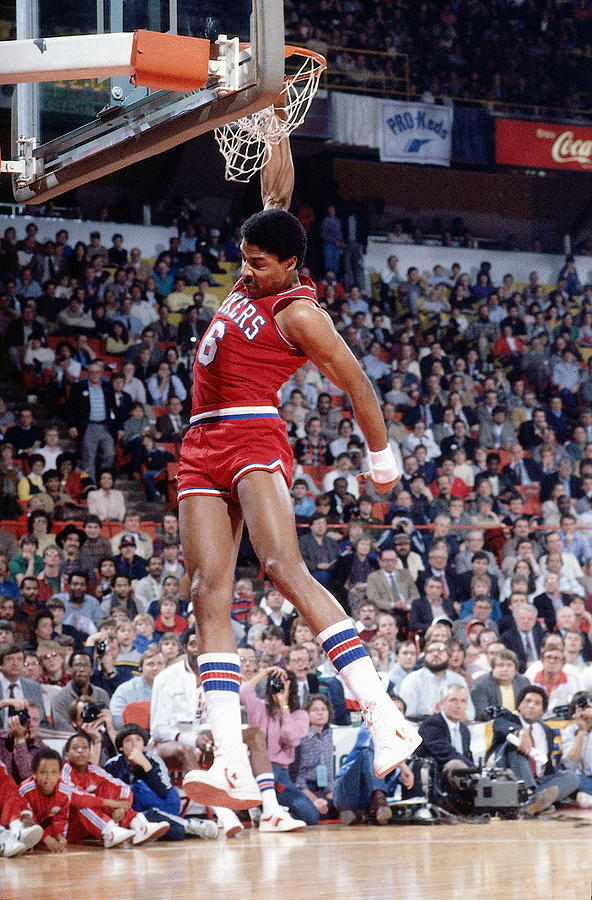
Top 100 NBA Players: #14 - Julius Erving


Julius Erving

Teams

Virginia Squires (ABA) - 1971-73

New York Nets (ABA) - 1973-76

Philadelphia 76ers - 1976-87


Playoffs

Appearances - 16 (1972,1973,1974,1975,1976,1977,1978,1979,1980,1981,1982,1983,1984,1985,1986,1987)

Conference Finals - 10 (1972,1974,1976,1977,1978,1980,1981,1982,1983,1985)

ABA/NBA Finals - 6 (1974,1976,1977,1980,1982,1983)

Championships - 3 (1974,1976,1983)


Awards and Honors

Rookie of the Year - 1972

MVP - 4 (1972,1974,1975,1976,1981)

Finals MVP - 2 (1974,1976)

All-ABA/NBA First Team - 9 (1972,1973,1974,1975,1976,1978,1980,1981,1982,1983)

All-ABA/NBA Second Team - 3 (1972,1977,1984)

Hall of Fame - 1993

*(actual in bold, deserved in italics)


All-Time Ranks

Total Points - #8

Total Steals - #8

Steals Per Game - #17

Points Per Game - #22

Total Blocks - #23

Total Rebounds - #35

Blocks Per Game - #43

Total Assists - #62


League Leads

Total Points (#1-1974,1976, #2-1973,1975, #3-1980, #5-1972,1981,1982)

Points Per Game (#1-1973,1974,1976, #2-1975, #4-1980, #5-1972,1982)

Total Steals (#2-1976, #3-1973,1974,1975)

Total Assists (#4-1974,1975, #5-1976)

Rebounds Per Game (#3-1972, #5-1973,1976)

Steals Per Game (#3-1974,1976, #4-1975)

Total Rebounds (#2-1972, #3-1976)

Total Blocks (#3-1974, #4-1975)

Blocks Per Game (#3-1974, #4-1975)

Field Goal Percentage (#4-1973)

Three-Pointers Made (#5-1976)


After playing 2 seasons of college basketball at Massachusetts and averaging 26.3 points and 20.2 rebounds per game, Julius Erving applied to be allowed to join the ABA as a hardship case, then signed as a free agent with the Virginia Squires.

Erving was the best player in the entire ABA as a rookie. He averaged 27.3 points, 15.7 rebounds, and 4.0 assists per game, but lost the Rookie of the Year and MVP awards to Artis Gilmore. He led the Squires to the Conference Finals, where they lost to Rick Barry and the Nets in 7 games, despite Erving averaging 33.3 points and 20.4 rebounds in the playoffs.

After the season, Erving discovered that his agent was a team employee who tricked him into signing for the team for less than he was worth, so he left the team to sign with the Atlanta Hawks of the NBA. At around the same time, he was drafted by the Milwaukee Bucks with the #12 pick in the NBA Draft, so both Milwaukee and Virginia disputed the validity of his contract with Atlanta, and a judge finally ruled that he would not be allowed to play for anyone but the Squires, so he returned to Virginia.

Erving averaged a career-high 31.9 points that season to lead the ABA, while also grabbing 12.2 rebounds per game. Even though he was teamed with George Gervin that year, the Squires lost in the first round of the playoffs, and Virginia sold him to the New York Nets after the season to save money.

In his first season with the Nets, Erving was named the MVP after he led the league in scoring for the second straight year with 27.4 per game while also averaging 10.7 rebounds, 5.2 assists, 2.3 steals, and 2.4 blocks. He also led the Nets all the way to the ABA Finals, where they beat the Utah Stars to win the championship, with Erving's 28.2 points and 11.4 rebounds earning him the Finals MVP.

He won the MVP in each of the next 2 seasons as well, closing out the final season of the ABA with another scoring title, his 3rd, and another championship and Finals MVP, his second of each. When the two leagues merged, the Nets appeared to be ready to contend immediately with the 3-time defending MVP on the roster, but they were forced to pay a double fee to enter the NBA because they played in the same city as the Knicks, and they couldn't afford to keep Erving, so they sold him to the 76ers in exchange for the money to pay the additional fee.

He made the All-NBA Second Team in his first season with the 76ers, averaging 21.6 points and 8.5 rebounds per game, and he led the Sixers all the way to the NBA Finals in the first year after the merger, knocking off the defending champion Celtics in the Conference Finals before falling to Bill Walton and Portland in the NBA Finals in 6 games.

He was able to take Philadelphia all the way back to the Conference Finals the next year, but without any other star teammates, he was unable to get the team any farther. As Maurice Cheeks started to grow into a star, the team started ascending again, reaching the NBA Finals in 1980 after beating Larry Bird and the Celtics in the Conference Finals, but losing to Magic, Kareem, and the Lakers in the Finals.

In 1981, Erving was named the MVP of the NBA, becoming the first and only player to win MVP in both leagues, and he did it with averages of 24.6 points and 8.0 rebounds per game. He led the 76ers back to the Conference Finals, but this time the Celtics beat them after overcoming a 3-1 deficit by winning the last 3 games by 2 points or fewer each.

In 1982 they turned the tables on the Celtics again, winning the Conference Finals in 7 games, but they met up with the Lakers in the Finals again, losing again in 6 games. After that season, the team added Moses Malone, and the pair of superstars led the 76ers to one of the most dominant seasons in history, and after sweeping the Lakers in the Finals, Erving finally had an NBA championship as well.

Erving was still a very good scorer at that point, but age was starting to catch up to him. He was able to help the Sixers to the Conference Finals once more, in 1985, and averaged over 20 points that season as well, but averaged only 18.1 and 16.8 in his final 2 seasons after exceeding 20 per game in each of his first 14 seasons. He retired at the conclusion of the 1987 season.

Erving was probably the best player in ABA history, winning 3 MVPs, 3 scoring titles, and 2 Finals MVPs in only 5 years as part of the league. His production dipped slightly in the NBA, but he still won an MVP and led his team to 3 NBA Finals before finally winning an NBA title as Moses Malone's sidekick. Erving is #8 on the all-time leaderboards for both points and steals, and is one of only 3 players in the top 100 all time in all 5 major stat categories, along with Karl Malone and Kevin Garnett, and he is definitely one of the greatest to ever play the game.


Tuesday, September 6, 2016

Top 100 NBA Players: #23 - Charles Barkley


Charles Barkley

No player in the top 25 did more with less than Charles Barkley, who earned the nickname "The Round Mound of Rebound" because of his short, pudgy stature that didn't seem to lend itself to being a great rebounder. Barkley didn't let that stop him, and he ended his career as one of the greatest rebounders under 6-6 in league history.

In his third season in the NBA, Barkley, generously listed at 6-6, led the entire league in rebounding, the shortest player ever to do so, with an average of 14.6 per game. But that wasn't all he did. He was also scoring 23 points per game and handing out nearly 5 assists while shooting nearly 60% from the field on a team that already featured a superstar by the name of Julius Erving.

In 1990, there was a bit of controversy when Barkley came in second in the MVP voting to Magic Johnson despite getting more first-place votes than the Lakers star. Even though those two were the ones that finished at the top of the voting the true MVP that year should have been Michael Jordan, with Barkley placed correctly at #2. Here are those three players' stats for that season:

Jordan - 33.6 pts, 6.9 reb, 6.3 ast, 2.8 stl, .526 FG%, .848 FT%
Barkley - 25.2 pts, 11.5 reb, 3.9 ast, 1.9 stl, .600 FG%, .749 FT%
Johnson - 22.3 pts, 6.6 reb, 11.5 ast, 1.7 stl, .480 FG%, .890 FT%

Looking at these three great players, it's tough to say which is best. Magic was among the league leaders in free throw percentage and assists, and Barkley was among the leaders in field goal percentage and rebounds. The difference is that Jordan was the league leader in both scoring and steals, and finished second among these three in the other four categories.

Three years later Barkley moved to the Phoenix Suns and became the third player ever to win the MVP in his first season after being traded as he led the Suns to the league's best record and their second trip ever to the NBA Finals. Once again that season, Barkley was really the second-best player, because Michael Jordan was still on the court. Here are those two player's stats from 1993:

Jordan - 32.6 pts, 6.7 reb, 5.5 ast, 2.8 stl, .495 FG%, .352 3P%, .837 FT%
Barkley - 25.6 pts, 12.2 reb, 5.1 ast, 1.6 stl, 1.0 blk, .520 FG%, .765 FT%

Once again, Jordan led the league in both scoring and steals, and by this time he had developed a reliable 3-point shot as well. The kicker was when the Bulls defeated the top-seeded Suns in the Finals as Jordan took home his 3rd straight Finals MVP award, while Barkley would never return to the Finals.

Two events that happened while Barkley was with his final team, the Houston Rockets, helped cement his legacy of always giving a little more than most would have normally expect of him. In his first game in Houston, he grabbed a career-high 33 rebounds, acknowledging the fact that he was no longer his team's primary scoring option and settling into a role as the guy who had to do the dirty work.

The other memorable happening was the way he ended his career. Early in the 1999-00 season, he suffered a major injury that most assumed would end his career, but Barkley worked very hard on rehabbing his injured quadriceps and returned for one final game in April, in which he was put into the game long enough to grab an offensive rebound and put it back in, after which he walked off the court to a standing ovation and retired immediately, ending his career on a positive rather than a negative note.

The biggest thing that prevented Barkley from progressing farther into the rankings was that he is one of only 3 players remaining that never won an NBA championship, and he is the only retired member of the top 25 that played in the Finals only once. Despite his best efforts, which included a triple-double in the Finals against Chicago and 56 points in a first-round game against Golden State, he was never able to become a champion.

Saturday, September 3, 2016

Top 100 NBA Players: #27 - Moses Malone


Moses Malone

Moses Malone is the greatest offensive rebounder in the history of the NBA, and was a trailblazer for many of today's players, becoming the first player to successfully jump directly from high school to the pros. He also had an incredibly long career, playing 19 NBA seasons and 21 professional seasons overall.

As I stated above, Malone was easily the best offensive rebounder to ever set foot on a basketball court. He has the three highest single season totals of all time, and is also the owner of 6 of the top 10 offensive rebounding seasons. He led the league in offensive rebounds in each of his first 7 seasons, and in total rebounding six times in his career. In 1978-79, he averaged 7.2 offensive rebounds per game, and 17.6 overall. He was truly a monster on the boards.

Malone was among the top 5 players in the league for five straight seasons early in his career, from 1978-1983. During that stretch, he was awarded the MVP three times, but he may not have been the best player during those seasons. I'm going to break down the best players from four of those seasons and show my pick for each season's MVP

Gervin (1979) - 29.6 pts, 5.0 reb, 2.7 ast, 1.7 stl, 1.1 blk, .541 FG%, .826 FT%, .585 Win%
Malone (1979) - 24.8 pts, 17.6 reb, 1.8 ast, 1.0 stl, 1.5 blk, .540 FG%, .739 FT%, .573 Win%

Gervin led the league in scoring, while Malone led the league in rebounding. Gervin was the better shooter, despite being the smaller player, and his team finished ahead of Malone's in the overall standings. They also advanced farther in the playoffs than the Rockets, all of which make a strong case for Gervin deserving that season's MVP.

Erving (1981) - 24.6 pts, 8.0 reb, 4.4 ast, 2.1 stl, 1.8 blk, .521 FG%, .787 FT%, .756 Win%
Malone (1981) - 27.8 pts, 14.8 reb, 1.8 ast, 1.0 stl, 1.9 blk, .522 FG%, .757 FT%, .488 Win%

Statistically, Malone was a much better player, but Erving had the advantage of playing for the team with the best record, which is probably why he won the MVP, but in retrospect, the 76ers fell in the Eastern Conference Finals, while Malone led the Rockets all the way to the NBA Finals, where they fell to Boston in 6 games. This one's not completely clear-cut, but I believe Malone was the better player that season.

Johnson (1982) - 18.6 pts, 9.6 reb, 9.5 ast, 2.7 stl, 0.4 blk, .537 FG%, .760 FT%, .695 Win%
Malone (1982) - 31.1 pts, 14.7 reb, 1.8 ast, 0.9 stl, 1.5 blk, .519 FG%, .762 FT%, .561 Win%

Malone had an amazing season, leading the league in rebounding again while averaging over 30 points for the only time in his career, but Magic came closer to a triple-double average than anybody since Oscar Robertson and led Los Angeles to the best record in the West and eventually an NBA Championship, while Houston lost in the first round. This should have been Johnson's first MVP.

Johnson (1983) - 16.8 pts, 8.6 reb, 10.5 ast, 2.2 stl, 0.6 blk, .548 FG%, .800 FT%, .707 Win%
Malone (1983) - 24.5 pts, 15.3 reb, 1.3 ast, 1.1 stl, 2.0 blk, .501 FG%, .761 FT%, .793 Win%

Johnson nearly matched everything he had done the year before, even upping the Lakers' winning percentage and shooting much better than big man Malone, while Moses saw a huge dip in his scoring numbers, which he made up for by winning more games with his new team, the 76ers. The two teams met in the Finals, with Malone's Rockets winning in 4 games, but I still think Magic was slightly better overall, because he could pass the ball and take it away from the other team.

It was during that championship run of 1983 when Moses famously predicted that Philly would sweep through the playoffs in "fo, fo, fo," which they came within one game of accomplishing, losing just once in the second round. Moses ran away with the Finals MVP award and took home his only championship during that season.

Most experts have Malone ranked a bit higher all-time, but there are several reasons to rank him a bit lower. The first is that he really didn't have that much playoff success. He had the one magical and dominant season in 1983, and he took his team to the Finals in 1981, but other than that, he only saw the Conference Finals two other times in 19 seasons. That equals 15 seasons of losing in the first round or missing the playoffs altogether.

Another problem with Malone is that he was traded often during the prime of his career. Usually when one of the best players in the league is traded, it's because there is some sort of problem with the player, and Malone was traded not just once, but 5 times during the best years of his career. In fact, more than half of my top 20 players played for only one team during their prime years. One mark of a truly great player is that he is untradeable.

Moses was also not a great shooter, especially for a big man. His career average was under 50%, which is unacceptable for a center, and he only shot over 50% five times in his 19 seasons. His longevity, durability, and dominance in one category for a long period of time certainly help him out here, but he is not one of history's top 25.

Friday, September 2, 2016

Top 100 NBA Players: #29 - Julius Erving


Julius Erving

When Julius Erving finally made his NBA debut in 1976, he was already an established superstar, having spent five seasons in the ABA and winning the final 3 MVP awards that league gave out. If I was doing a ranking of the top professional basketball players of all time, and not just NBA players, Erving would definitely jump up much closer to the top 10, but when you consider only the NBA portion of his career, it's still quite impressive.

Erving started out his time in the NBA as the second-best player in the entire league, with only Kareem playing at a higher level than the 76ers' new star. Each led his team to the top seed in his conference entering the playoffs, but Erving went a step beyond Kareem there, advancing to the NBA Finals in his "rookie" season, where they lost to Bill Walton and the Trail Blazers in Walton's only healthy season.

The next season Philadelphia once again took the top seed in the East, but they lost in the Eastern Conference Finals to the eventual champion Washington Bullets. Two years later, it was Philadelphia pulling off the conference final upset, taking down Larry Bird and the Celtics 4 games to 1, setting up a huge Finals showdown with the Los Angeles Lakers, who were led by another young star named Magic Johnson, who eventually led them to the championship and left Erving ringless still.

In 1981, Erving won his first and only NBA MVP award, although I feel that it should have gone to Moses Malone, while I will explain in more detail in a later profile. Malone ended up taking the Rockets all the way to the Finals, where they lost to Boston, while Erving lost to those same Celtics one round earlier. Even at age 30, there was no denying that Dr. J was still one of the league's premier players.

In 1982, Erving led the 76ers to the Finals for the third time in his NBA career, but they once again were no match for Magic Johnson and the Lakers. One of the reasons that Erving is not rated higher is that he was never quite good enough to lead a team all the way to the championship without more help, and that help came the next season in the form of Moses Malone.

With Malone as a teammate rather than an opponent, Erving and the 76ers returned to the NBA Finals, this time sweeping the Lakers and posting a total record of 12-1 during their dominant playoff run. Erving was finally an NBA Champion, but he wasn't the star of the show anymore. That was Moses, who won both the regular season and Finals MVP awards in the only championship season for either player.

Erving hung on for a few more seasons, but he was obviously on the downside of his career, and he was never one of the top 10 players again. In 11 NBA seasons, Erving never missed the playoffs, and he led his team to the NBA Finals 3 times and the conference finals twice before he was replaced by Malone. With Malone leading the way, he won a championship, and saw the conference finals one more time, but at that point he had also been surpassed by a young Charles Barkley. Overall, he was one of the league's most dynamic and exciting stars, and he saw quite a bit of success despite the fact that he never led a title run himself.

Sunday, August 7, 2016

Top 100 NBA Players: #57 - Shawn Marion


Shawn Marion

Shawn Marion is one of those guys who has been forgotten somewhat over the past 5 years, but if you saw him play in his prime, you will remember him as a great all-around player who contributed to a lot of good teams.

In just his second season, Marion showed the all-around skills that would make him a star. That year he averaged 17.3 points, 10.7 rebounds, 1.7 steals, and 1.4 blocks, and he continued to improved from there. From 2002 to 2007, he was incredibly solid, improving his numbers across the board and helping the Suns become annual contenders. His stats from that period are listed below:

Marion - 19.8 pts, 10.4 reb, 2.1 ast, 2.1 stl, 1.4 blk, .481 FG%, .831 FT%

His best season came in 2006, when Amare Stoudemire was out with an injury. Marion took on the team's starring role that season and helped keep them relevant without their best player, putting up the stat line below:

Marion - 21.8 pts, 11.8 reb, 1.8 ast, 2.0 stl, 1.7 blk, .525 FG%, .809 FT%

The points, rebounds, and field goal percentage were all career highs, and he remained their best player through that season's playoff run, which ended in the conference finals for the second straight season.

Marion has played on three teams that made deep playoff runs, and had a major part in all three. In 2004, he was the third-best player on the Suns team that made the Western Conference Finals, playing behind Amare and Steve Nash. The next season, Amare went down with an injury, so Marion stepped into his role and led the Suns to the Conference Finals again, this time as their best player. His most recent playoff run happened in 2011, as he helped the Mavericks win their first championship as the #3 player on the team.

Marion is one of only 5 players in NBA history to amass over 1500 steals and 1000 blocks in his career, and the others are all pretty recognizable names: Julius Erving, Hakeem Olajuwon, Kevin Garnett, and Karl Malone. He led the league in total steals twice, and finished in the top 10 in rebounding 6 times, despite being only 6-7. Taken all together, you have to recognize that the Matrix really was the a star player worthy of being remembered as one of the best of all time.

Wednesday, February 8, 2012

Top 100 NBA Players: #20


Charles Barkley

(Kalb: #21, Simmons: #19, BBR: #13)

No player in the top 20 did more with less than Charles Barkley, who earned the nickname "The Round Mound of Rebound" because of his short, pudgy stature that didn't seem to lend itself to being a great rebounder, but Barkley didn't let that stop his, and he ended his career as the greatest rebounder under 6-6 in league history.

In his third season in the NBA, Barkley, generously listed at 6-6, led the entire league in rebounding, the shortest player ever to do so, with an average of 14.6 per game. But that wasn't all he did. He was also scoring 23 points per game and handing out nearly 5 assists while shooting nearly 60% from the field on a team that already featured a superstar by the name of Julius Erving.

In 1990, there was a bit of controversy when Barkley came in second in the MVP voting to Magic Johnson despite getting more first-place votes than the Lakers star. Even though those two were the ones that finished at the top of the voting the true MVP that year should have been Michael Jordan, with Barkley placed correctly at #2. Here are those three players' stats for that season:

Jordan - 33.6 pts, 6.9 reb, 6.3 ast, 2.8 stl, .526 FG%, .848 FT%
Barkley - 25.2 pts, 11.5 reb, 3.9 ast, 1.9 stl, .600 FG%, .749 FT%
Johnson - 22.3 pts, 6.6 reb, 11.5 ast, 1.7 stl, .480 FG%, .890 FT%

Looking at these three great players, it's tough to say which is best. Magic was among the league leaders in free throw percentage and assists, and Barkley was among the leaders in field goal percentage and rebounds. The difference is that Jordan was the league leader in both scoring and steals, and finished second among these three in the other four categories.

Three years later Barkley moved to the Phoenix Suns and became the third player ever to win the MVP in his first season after being traded as he led the Suns to the league's best record and their second trip ever to the NBA Finals. Once again that season, Barkley was really the second-best player, because Michael Jordan was still on the court. Here are those two player's stats from 1993:

Jordan - 32.6 pts, 6.7 reb, 5.5 ast, 2.8 stl, .495 FG%, .352 3P%, .837 FT%
Barkley - 25.6 pts, 12.2 reb, 5.1 ast, 1.6 stl, 1.0 blk, .520 FG%, .765 FT%

Once again, Jordan led the league in both scoring and steals, and by this time he had developed a reliable 3-point shot as well. The kicker was when the Bulls defeated the top-seeded Suns in the Finals as Jordan took home his 3rd straight Finals MVP award, while Barkley would never return to the penultimate series.

Two events that happened while Barkley was with his final team, the Houston Rockets, helped cement his legacy of always giving a little more than most would have normally expect of him. In his first game in Houston, he grabbed a career-high 33 rebounds, acknowledging the fact that he was no longer his team's primary scoring option and settling into a role as the guy who had to do the dirty work.

The other memorable happening was the way he ended his career. Early in the 1999-00 season, he suffered a major injury that most assumed would end his career, but Barkley worked very hard on rehabbing his injured quadriceps and returned for one final game in April, in which he was put into the game long enough to grab an offensive rebound and put it back in, after which he walked off the court to a standing ovation and retired immediately, ending his career on a positive rather than a negative note.

The biggest thing that prevented Barkley from progressing farther into the top 20 was that he is one of only 4 players remaining that never won an NBA championship, and he is the only member of the top 20 that played in the Finals only once. Despite his best efforts, which included a triple-double in the Finals against Chicago and 56 points in a first-round game against Golden State, he was never able to become a champion.


Barkley and Pettit had very similar career trajectories, so it is not easy to separate the two. Pettit won a championship, something that eluded Barkley, and led his team to a few other Finals, but Barkley's peak season was superior to Pettit's, and he remained a star-level player for several years after Pettit had called it quits.

Wednesday, November 30, 2011

Top 100 NBA Players - #24


John Havlicek

(Kalb: #24, Simmons: #13, BBR: #44)

When the greatest players in Celtics history are named, most people would list Larry Bird, Bill Russell, and Bob Cousy, but John Havlicek was the player who kept the Celtics relevant after Russell's retirement and was a member of both championship teams between the Russell and Bird years.

When Havlicek came into the league, he joined the perennial champion Boston Celtics, and although he was only a role player for the first few years, he was a contributor to teams that continued to win titles throughout the 60's. He averaged 14.3 points as a rookie, which turned out to be the lowest he would average in his 16-year career. He ended his career with the third-most championships of any player, behind only Bill Russell and Sam Jones, and 33 years later he still hasn't been passed on that list.

Starting in 1966-67, Havlicek started a run of 9 straight seasons as one of the 10 best players in the NBA, hitting his peak in 1970-71 and 1971-72, when he averaged 28.2 points, 8.6 rebounds, and 7.5 assists over two seasons as he became the face of the Celtics. Unfortunately, his personal peak fell right in between the years of Celtic dominance, but he did have a huge part on several champs.

In his second, third, and fourth seasons, Havlicek worked his way up the ladder toward becoming the best player in Boston, passing Bob Cousy, then Tom Heinsohn, then Sam Jones, then finally Bill Russell as the best player on the title team. While it may seem almost sacrilegious to say that Havlicek ever surpassed Russell, he was actually the best player on Russell's final two title teams, in 1968 and 1969. Here are their stats from those two playoffs:

Havlicek (1968) - 25.9 pts, 8.6 reb, 7.5 ast, .452 FG%, .828 FT%
Russell (1968) - 14.4 pts, 22.8 reb, 5.2 ast, .409 FG%, .585 FT%

Havlicek (1969) - 25.4 pts, 9.9 reb, 5.6 ast, .445 FG%, .855 FT%
Russell (1969) - 10.8 pts, 20.5 reb, 5.4 ast, .423 FG%, .506 FT%

Russell was obviously the better rebounder, one of the two best of all time, but Havlicek was a much better scorer, shooter, and, most importantly, free throw shooter. 1968 happened to be the final season that the Finals MVP award didn't exist, and 1969 was the only season that a player from the losing team won the award, when Jerry West averaged over 40 points per game in the Finals and over 30 points per game over the entire playoffs. If you believe that the best player from the winning team should get the Finals MVP, then Havlicek should have won both of these. As it turns out, he did win one a few years later, when he led a completely new Boston team to the title. Look at his stats from those playoffs:

Havlicek (1974) - 27.1 pts, 6.4 reb, 6.0 ast, .484 FG%, .881 FT%

A quick glance will tell you that he hadn't dropped off at all, and had probably gained a step, despite the fact that he was 33 years old by this time. He had become a more efficient shooter and scorer while maintaining impressive averages in rebounds and assists. That was also the first season in which defensive stats were recorded, and he managed to average 1.3 steals per game during that playoff run as well.


Havlicek and Erving had similar career peaks in both level and length, with Havlicek reaching it a little bit later as he grew up behind other superstar players, unlike Erving, who was thrust into a starring role immediately. Erving single-handedly led his team to the Conference Finals and Finals numerous times, but there's no way his playoff accomplishments can stack up with Havlicek's, who was the best player on three champions and a top-4 player on three others. The fact that Hondo was consistently able to get one step further than Erving in the playoffs is what separates these two players among the all-time greats.

Saturday, October 22, 2011

Top 100 NBA Players - #25


Julius Erving

(Kalb: #15, Simmons: #16, BBR: #12)

When Julius Erving finally made his NBA debut in 1976, he was already an established superstar, having spent five seasons in the ABA and winning the final 3 MVP awards that league gave out. If I was doing a ranking of the top professional basketball players of all time, and not just NBA players, Erving would definitely jump up much closer to the top 10, but when you consider only the NBA portion of his career, it's still quite impressive.

Erving started out his time in the NBA as the second-best player in the entire league, with only Kareem playing at a higher level than the 76ers' new star. Each led his team to the top seed in his conference entering the playoffs, but Erving went a step beyond Kareem there, advancing to the NBA Finals in his "rookie" season, where they lost to Bill Walton and the Trail Blazers in Walton's only healthy season.

The next season Philadelphia once again took the top seed in the East, but they lost in the Eastern Conference Finals to the eventual champion Washington Bullets. Two years later, it was Philadelphia pulling off the conference final upset, taking down Larry Bird and the Celtics 4 games to 1, setting up a huge Finals showdown with the Los Angeles Lakers, who were led by another young star named Magic Johnson, who eventually led them to the championship and left Erving ringless still.

In 1981, Erving won his first and only NBA MVP award, although I feel that it should have gone to Moses Malone, an opinion I outlined in my previous player profile. Malone ended up taking the Rockets all the way to the Finals, where they lost to Boston, while Erving lost to those same Celtics one round earlier. Even at age 30, there was no denying that Dr. J was still one of the league's premier players.

In 1982, Erving led the 76ers to the Finals for the third time in his NBA career, but they once again were no match for Magic Johnson and the Lakers. One of the reasons that Erving is not rated higher is that he was never quite good enough to lead a team all the way to the championship without more help, and that help came the next season in the form of Moses Malone.

With Malone as a teammate rather than an opponent, Erving and the 76ers returned to the NBA Finals, this time sweeping the Lakers and posting a total record of 12-1 during their dominant playoff run. Erving was finally an NBA Champion, but he wasn't the star of the show anymore. That was Moses, who won both the regular season and Finals MVP awards in the only championship season for either player.

Erving hung on for a few more seasons, but he was obviously on the downside of his career, and he was never one of the top 10 players again. In 11 NBA seasons, Erving never missed the playoffs, and he led his team to the NBA Finals 3 times and the conference finals twice before he was replaced by Malone. With Malone leading the way, he won a championship, and saw the conference finals one more time, but at that point he had also been surpassed by a young Charles Barkley. Overall, he was one of the league's most dynamic and exciting stars, and he saw quite a bit of success despite the fact that he never led a title run himself.


Erving and Malone's careers followed very similar trajectories, except for the fact that Malone hung on a lot longer than Erving, as he was more willing to accept a reserve role. Both started their careers in the ABA, then came over to the NBA when that league folded, although Erving came over as a superstar, and Malone as a bit of an unknown. They both had failed trips to the Finals before teaming up in 1983 to win their only championship, but Erving gets the edge because he led Philly to 3 NBA Finals before Malone arrived, while Malone had only made it there once with the Rockets.

Friday, October 7, 2011

Top 100 NBA Players: #26


Moses Malone

(Kalb: #14, Simmons: #12, BBR: #15)

Moses Malone is the greatest offensive rebounder in the history of the NBA, and was a trailblazer for many of today's players, becoming the first player to successfully jump directly from high school to the pros. He also had an incredibly long career, playing 19 NBA seasons and 21 professional seasons overall.

As I stated above, Malone was easily the best offensive rebounder to ever set foot on a basketball court. He has the three highest single season totals of all time, and is also the owner of 6 of the top 10 offensive rebounding seasons. He led the league in offensive rebounds in each of his first 7 seasons, and in total rebounding six times in his career. In 1978-79, he averaged 7.2 offensive rebounds per game, and 17.6 overall. He was truly a monster on the boards.

Malone was among the top 5 players in the league for five straight seasons early in his career, from 1978-1983. During that stretch, he was awarded the MVP award three times, but he may not have been the best player during those seasons. I'm going to break down the best players from four of those seasons and show my pick for each season's MVP

Gervin (1979) - 29.6 pts, 5.0 reb, 2.7 ast, 1.7 stl, 1.1 blk, .541 FG%, .826 FT%, .585 Win%
Malone (1979) - 24.8 pts, 17.6 reb, 1.8 ast, 1.0 stl, 1.5 blk, .540 FG%, .739 FT%, .573 Win%

Gervin led the league in scoring, while Malone led the league in rebounding. Gervin was the better shooter, despite being the smaller player, and his team finished ahead of Malone's in the overall standings. They also advanced farther in the playoffs than the Rockets, all of which make a strong case for Gervin deserving that season's MVP.

Erving (1981) - 24.6 pts, 8.0 reb, 4.4 ast, 2.1 stl, 1.8 blk, .521 FG%, .787 FT%, .756 Win%
Malone (1981) - 27.8 pts, 14.8 reb, 1.8 ast, 1.0 stl, 1.9 blk, .522 FG%, .757 FT%, .488 Win%

Statistically, Malone was a much better player, but Erving had the advantage of playing for the team with the best record, which is probably why he won the MVP, but in retrospect, the 76ers fell in the Eastern Conference Finals, while Malone led the Rockets all the way to the NBA Finals, where they fell to Boston in 6 games. This one's not completely clear-cut, but I believe Malone was the better player that season.

Johnson (1982) - 18.6 pts, 9.6 reb, 9.5 ast, 2.7 stl, 0.4 blk, .537 FG%, .760 FT%, .695 Win%
Malone (1982) - 31.1 pts, 14.7 reb, 1.8 ast, 0.9 stl, 1.5 blk, .519 FG%, .762 FT%, .561 Win%

Malone had an amazing season, leading the league in rebounding again while averaging over 30 points for the only time in his career, but Magic came closer to a triple-double average than anybody since Oscar Robertson and led Los Angeles to the best record in the West and eventually an NBA Championship, while Houston lost in the first round. This should have been Johnson's first MVP.

Johnson (1983) - 16.8 pts, 8.6 reb, 10.5 ast, 2.2 stl, 0.6 blk, .548 FG%, .800 FT%, .707 Win%
Malone (1983) - 24.5 pts, 15.3 reb, 1.3 ast, 1.1 stl, 2.0 blk, .501 FG%, .761 FT%, .793 Win%

Johnson nearly matched everything he had done the year before, even upping the Lakers' winning percentage and shooting much better than big man Malone, while Moses saw a huge dip in his scoring numbers, which he made up for by winning more games with his new team, the 76ers. The two teams met in the Finals, with Malone's Rockets winning in 4 games, but I still think Magic was slightly better overall, because he could pass the ball and take it away from the other team.

It was during that championship run of 1983 when Moses famously predicted that Philly would sweep through the playoffs in "fo, fo, fo," which they came within one game of accomplishing, losing just once in the second round. Moses ran away with the Finals MVP award and took home his only championship during that season.

You may have noticed that most experts have Malone ranked a bit higher all-time, but there are several reasons to rank him a bit lower. The first is that he really didn't have that much playoff success. He had the one magical and dominant season in 1983, and he took his team to the Finals in 1981, but other than that, he only saw the Conference Finals two other times in 19 seasons. That equals 15 seasons of losing in the first round or missing the playoffs altogether.

Another problem with Malone is that he was traded often during the prime of his career. Usually when one of the best players in the league is traded, it's because there is some sort of problem with the player, and Malone was traded not just once, but 5 times during the best years of his career. In fact, more than half of my top 20 players played for only one team during their prime years. One mark of a truly great player is that he is untradeable.

Moses was also not a great shooter, especially for a big man. His career average was under 50%, which is unacceptable for a center, and he only shot over 50% five times in his 19 seasons. His longevity, durability, and dominance in one category for a long period of time certainly help him out here, but he is not one of history's top 25.


Malone and Wade each have one championship, one Finals MVP, and two Finals appearances in their careers. Malone had a lot fewer injury problems than Wade has had, but Wade was a better all-around player than Malone, who was more of an inside-only star. The thing that keeps Malone ahead was that he was a star player of 14 years, which is longer than Wade has been in the league so far. I'm not sure how much longer he can hold him off, though.

Sunday, August 14, 2011

Top 100 NBA Players: #50


Shawn Marion

(BBR: #79)

Shawn Marion is easily the most surprising member of my all-time top 50. Only one other member of my top 50 doesn't appear on either Elliott Kalb's top 50 or Bill Simmons' top 96, and you'll see him at #40. Marion asked out of Phoenix because he felt he wasn't getting the credit he deserved, and I have to agree, which is why he's here.

In just his second season, Marion showed the all-around skills that would make him a star. That year he averaged 17.3 points, 10.7 rebounds, 1.7 steals, and 1.4 blocks, and he continued to improved from there. From 2002 to 2007, he was incredibly solid, improving his numbers across the board and helping the Suns become annual contenders. His stats from that period are listed below:

Marion - 19.8 pts, 10.4 reb, 2.1 ast, 2.1 stl, 1.4 blk, .481 FG%, .831 FT%

Marion has played on three teams that made deep playoff runs, and had a major part in all three. In 2004, he was the third-best player on the Suns team that made the Western Conference Finals, playing behind Amare and Steve Nash. The next season, Amare went down with an injury, so Marion stepped into his role and led the Suns to the Conference Finals again, this time as their best player. His most recent playoff run happened just a few months ago, as he helped the Mavericks win their first championship as the #3 player on the team.

Marion is one of only 5 players in NBA history to amass over 1500 steals and 1000 blocks in his career, and the others are all pretty recognizable names: Julius Erving, Hakeem Olajuwon, Kevin Garnett, and Karl Malone. He led the league in total steals twice, and finished in the top 10 in rebounding 6 times, despite being only 6-7. Taken all together, you have to recognize that the Matrix really was the star he thought he was.


You may not realize it, but Marion was actually better than Webber for the majority of their playing careers. Their per-game averages were pretty similar, but Marion was a much better free throw shooter and had a lot more playoff success than Webber, not to mention the fact that he rarely missed time with injuries, which Webber did with great regularity. Marion definitely has had the kind of career that needs to be remembered.