Showing posts with label Kobe Bryant. Show all posts

Friday, December 3, 2021

Top 25 NBA 10-Year Runs

This is a list of the top 25 decades registered by players in NBA history, using the same method used to determine my all-time top 100 players. Only the top decade for each player is ranked, but any other qualifying 10-year periods are included where they would have been ranked if included (* indicates awards that didn't exist at the time, award is assumed):

1. LeBron James - SF/PF/PG - MIA/CLE/LAL - 2010-20

26.5 Pts, 7.7 Reb, 7.7 Ast, 1.5 Stl, 0.7 Blk, .528 FG%, .355 3P%, .727 FT%

Assist Leader

4x Champion, 5x Finals loss

4x Finals MVP, 2x MVP, 9x All-NBA First Team, All-NBA Third Team, 3x All-Defensive First Team, All-Defensive Second Team, 9x Top 4 in MVP voting


1a. LeBron James - SF/PF - CLE/MIA/CLE - 2008-18

1b. LeBron James - SF/PF/PG - MIA/CLE/LAL - 2011-21

1c. LeBron James - SF/PF - CLE/MIA/CLE - 2007-17

1d. LeBron James - SF/PF - CLE/MIA/CLE - 2009-19

1e. LeBron James - SF/PF - CLE/MIA/CLE - 2006-16


2. Michael Jordan - SG - CHI - 1987-98

31.4 Pts, 6.4 Reb, 5.5 Ast, 2.5 Stl, 0.8 Blk, .509 FG%, .346 3P%, .834 FT%

9x Scoring leader, 3x Steals leader

6x Champion, 2x Conference Finals loss, 2x Second Round loss

6x Finals MVP, 5x MVP, Defensive Player of the Year, 9x All-NBA First Team, 9x All-Defensive First Team, 9x Top 3 in MVP voting


2a. Michael Jordan - SG/SF - CHI/WAS - 1988-02

2b. Michael Jordan - SG - CHI - 1986-97


3. Wilt Chamberlain - C - PHW/SFW/PHI/LAL - 1959-69

34.4 Pts, 24.3 Reb, 4.5 Ast, .530 FG%, .514 FT%

7x Scoring leader, 8x Rebounding leader, 7x Field Goal Percentage leader, Assist leader

Champion, 2x Finals loss, 5x Conference Finals loss, Second Round loss

*Finals MVP, 4x MVP, Rookie of the Year, 7x All-NBA First Team, 2x All-NBA Second Team, 8x Top 5 in MVP voting


4. Magic Johnson - PG - LAL - 1981-91

19.8 Pts, 7.2 Reb, 11.9 Ast, 1.8 Stl, 0.4 Blk, .520 FG%, .303 3P%, .855 FT%

4x Assist leader, Steals leader, Free Throw Percentage Leader

4x Champion, 4x Finals loss, Conference Finals loss, Second Round loss

2x Finals MVP, 3x MVP, 9x All-NBA First Team, All-NBA Second Team, 9x Top 3 in MVP voting


4a. LeBron James - SF/PF - CLE/MIA/CLE - 2005-15

4b. Michael Jordan - SG/SF - CHI/WAS - 1989-03

4c. Wilt Chamberlain - C - PHW/SFW/PHI/LAL - 1960-70

4d. Magic Johnson - PG - LAL - 1979-89


5. Shaquille O'Neal - C - ORL/LAL - 1994-04

27.3 Pts, 11.7 Reb, 3.0 Ast, 0.7 Stl, 2.4 Blk, .576 FG%, .063 3P%, .530 FT%

2x Scoring leader, 6x Field Goal Percentage leader

3x Champion, 2x Finals loss, 2x Conference Finals loss, 3x Second Round loss

3x Finals MVP, MVP, 6x All-NBA First Team, 2x All-NBA Second Team, 2x All-NBA Third Team, 3x All-Defensive Second Team, 6x Top 5 in MVP voting


5a. Magic Johnson - PG - LAL - 1980-90

5b. Michael Jordan - SG - CHI - 1985-96

5c. Wilt Chamberlain - C - PHW/SFW/PHI/LAL - 1961-71

5d. Magic Johnson - PG/PF - LAL - 1982-96

5e. LeBron James - SF/PF - CLE/MIA - 2004-14

5f. Shaquille O'Neal - C - ORL/LAL - 1993-03

5g. Shaquille O'Neal - C - LAL/MIA - 1996-06


6. Bill Russell - C - BOS - 1958-68

15.8 Pts, 23.4 Reb, 4.5 Ast, .442 FG%, .577 FT%

3x Rebounding leader

9x Champion, Conference Finals loss

*7x Finals MVP, 4x MVP, 3x All-NBA First Team, 7x All-NBA Second Team, 9x Top 4 in MVP voting


6a. Shaquille O'Neal - C - ORL/LAL/MIA - 1995-05

6b. Bill Russell - C - BOS - 1959-69

6c. Bill Russell - C - BOS - 1956-66

6d. Shaquille O'Neal - C - ORL/LAL - 1992-02

6e. Bill Russell - C - BOS - 1957-67

6f. Shaquille O'Neal - C - LAL/MIA - 1997-07

6g. Wilt Chamberlain - C - PHW/SFW/PHI/LAL - 1962-72

6h. Michael Jordan - SG - CHI - 1984-95

6i. LeBron James - SF/PF/SG - CLE/MIA - 2003-13

6j. Wilt Chamberlain - C - SFW/PHI/LAL - 1963-73

6k. Shaquille O'Neal - C - LAL/MIA/PHX - 1998-08


7. Kareem Abdul-Jabbar - C - MIL/LAL - 1970-80

28.2 Pts, 14.4 Reb, 4.5 Ast, 1.2 Stl, 3.5 Blk, .559 FG%, .719 FT%

2x Scoring Leader, 4x Block leader, Rebounding leader, Field Goal Percentage leader

2x Champion, Finals loss, 2x Conference Finals loss, 2x Second Round loss, First Round loss

Finals MVP, 6x MVP, 7x All-NBA First Team, 2x All-NBA Second Team, 4x All-Defensive First Team, 4x All-Defensive Second Team, 10x Top 5 in MVP voting


8. Tim Duncan - PF/C - SAS - 1998-08

21.7 Pts, 11.8 Reb, 3.2 Ast, 0.8 Stl, 2.4 Blk, .503 FG%, .207 3P%, .686 FT%

4x Champion, 2x Conference Finals loss, 3x Second Round loss

3x Finals MVP, 2x MVP, 8x All-NBA First Team, 2x All-NBA Second Team, 8x All-Defensive First Team, 2x All-Defensive Second Team, 8x Top 5 in MVP voting


8a. Tim Duncan - PF/C - SAS - 1997-07

8b. Shaquille O'Neal - C - LAL/MIA/PHX - 1999-09


9. Kobe Bryant - SG - LAL - 2000-10

28.5 Pts, 5.8 Reb, 5.2 Ast, 1.7 Stl, 0.5 Blk, .456 FG%, .342 3P%, .843 FT%

2x Scoring leader

5x Champion, 2x Finals loss, Second Round loss, 2x First Round loss

2x Finals MVP, MVP, 8x All-NBA First Team, All-NBA Second Team, All-NBA Third Team, 7x All-Defensive First Team, 2x All-Defensive Second Team, 8x Top 5 in MVP voting


10. Jerry West - PG/SG - LAL - 1963-73

28.0 Pts, 5.3 Reb, 7.2 Ast, .484 FG%, .833 FT%

Scoring leader, Assist leader

Champion, 6x Finals loss, 2x Second Round loss

Finals MVP, 8x All-NBA First Team, 2x All-NBA Second Team, 4x All-Defensive First Team, All-Defensive Second Team, 6x Top 5 in MVP voting


11. Bob Cousy - PG - BOS - 1953-63

18.3 Pts, 4.8 Reb, 7.9 Ast, .380 FG%, .805 FT%

7x Assist leader

6x Champion, Finals loss, 2x Conference Finals loss, Second Round loss

*2x Finals MVP, MVP, *2x MVP, 8x All-NBA First Team, 2x All-NBA Second Team, 4x Top 4 in MVP voting


11a. Tim Duncan - PF/C - SAS - 2000-10

11b. Jerry West - PG/SG - LAL - 1962-72


12. Julius Erving - SF - VIR/NYN/PHI - 1971-81

26.1 Pts, 9.9 Reb, 4.5 Ast, 2.1 Stl, 1.7 Blk, .505 FG%, .309 3P%, .781 FT%

3x Scoring leader

2x Champion, 2x Finals loss, 3x Conference Finals loss, 3x Second Round loss

2x Finals MVP, 4x MVP, 7x All-ABA/NBA First Team, 2x All-ABA/NBA Second Team, All-Defensive First Team, 7x Top 5 in MVP voting


12a. Kareem Abdul-Jabbar - C - MIL/LAL - 1973-83

12b. Tim Duncan - PF/C - SAS - 1999-09

12c. Kareem Abdul-Jabbar - C - MIL/LAL - 1969-79

12d. Kareem Abdul-Jabbar - C - MIL/LAL - 1971-81


13. Hakeem Olajuwon - C - HOU - 1985-95

24.4 Pts, 12.4 Reb, 2.7 Ast, 2.0 Stl, 3.7 Blk, .515 FG%, .178 3P%, .720 FT%

2x Rebounding leader, 3x Blocks leader

2x Champion, Finals loss, 2x Second Round loss, 4x First Round loss

2x Finals MVP, MVP, 2x Defensive Player of the Year, 5x All-NBA First Team, 2x All-NBA Second Team, 2x All-NBA Third Team, 5x All-Defensive First Team, All-Defensive Second Team, 5x Top 5 in MVP voting


13a. Jerry West - PG/SG - LAL - 1964-74

13b. Bob Cousy - PG - BOS - 1952-62

13c. Kareem Abdul-Jabbar - C - MIL/LAL - 1972-82

13d. Kobe Bryant - SG - LAL - 2001-11

13e. Kareem Abdul-Jabbar - C - LAL - 1975-85


14. Kevin Durant - SF/PF - OKC/GSW/BKN - 2010-21

27.6 Pts, 7.4 Reb, 4.7 Ast, 1.1 Stl, 1.2 Blk, .506 FG%, .389 3P%, .883 FT%

3x Scoring leader, Free Throw Percentage leader

2x Champion, 2x Finals loss, 3x Conference Finals loss, 2x Second Round loss

2x Finals MVP, MVP, 5x All-NBA First Team, 3x All-NBA Second Team, 5x Top 5 in MVP voting


14a. Kobe Bryant - SG - LAL - 1999-09

14b. Kareem Abdul-Jabbar - C - LAL - 1976-86


15. Larry Bird - SF/PF - BOS - 1980-90

25.3 Pts, 10.1 Reb, 6.5 Ast, 1.8 Stl, 0.9 Blk, .502 FG%, .367 3P%, .888 FT%

4x Free Throw Percentage leader

3x Champion, 2x Finals loss, 2x Conference Finals loss, Second Round loss, First Round loss

2x Finals MVP, 3x MVP, 8x All-NBA First Team, All-NBA Second Team, 3x All-Defensive Second Team, 8x Top 3 in MVP voting


15a. Julius Erving - SF - VIR/NYN/PHI - 1972-82

15b. Kevin Durant - SF/PF - OKC/GSW - 2009-19

15c. Kobe Bryant - SG - LAL - 2002-12

15d. Tim Duncan - PF/C - SAS - 2001-11

15e. Jerry West - PG/SG - LAL - 1961-71

15f. Larry Bird - SF/PF - BOS - 1979-89

15g. Hakeem Olajuwon - C - HOU - 1987-97

15h. Julius Erving - SF - NYN/PHI - 1973-83

15i. Hakeem Olajuwon - C - HOU - 1986-96

15j. Jerry West - PG/SG - LAL - 1960-70

15k. Bob Cousy - PG - BOS - 1951-61

15l. Kareem Abdul-Jabbar - C - MIL/LAL - 1974-84


16. Russell Westbrook - PG - OKC/HOU - 2010-20

25.0 Pts, 7.6 Reb, 8.7 Ast, 1.8 Stl, 0.3 Blk, .442 FG%, .309 3P%, .799 FT%

2x Scoring leader, 2x Assist leader

Finals loss, 3x Conference Finals loss, Second Round loss, 4x First Round loss

MVP, 2x All-NBA First Team, 5x All-NBA Second Team, 2x All-NBA Third Team, 4x Top 5 in MVP voting


16a. Tim Duncan - PF/C - SAS - 2002-12

16b. Russell Westbrook - PG - OKC - 2009-19


17. Stephen Curry - PG - GSW - 2011-21

25.8 Pts, 4.7 Reb, 6.7 Ast, 1.7 Stl, 0.2 Blk, .478 FG%, .432 3P%, .906 FT%

2x Scoring leader, Steals leader, 3x Free Throw Percentage leader

3x Champion, 2x Finals loss, Second Round loss, First Round loss

2x MVP, 4x All-NBA First Team, 2x All-NBA Second Team, All-NBA Third Team, 4x Top 5 in MVP voting


18. James Harden - SG/PG - OKC/HOU/BKN - 2011-21

28.2 Pts, 6.0 Reb, 7.5 Ast, 1.7 Stl, 0.6 Blk, .447 FG%, .364 3P%, .861 FT%

3x Scoring leader, Assist leader

Finals loss, 2x Conference Finals loss, 4x Second Round loss, 3x First Round loss

MVP, Sixth Man of the Year, 6x All-NBA First Team, All-NBA Third Team, 6X Top 5 in MVP voting


18a. Kobe Bryant - SG - LAL - 2003-13

18b. Hakeem Olajuwon - C - HOU - 1988-98

18c. Stephen Curry - PG - GSW - 2009-19

18d. Russell Westbrook - PG - OKC/HOU/WAS - 2011-21


19. George Mikan - C - MNL - 1948-56

23.1 Pts, 13.4 Reb, 2.8 Ast, .404 FG%, .782 FT%

3x Scoring leader, 2x Rebounding leader

5x Champion, Conference Finals loss, Second Round loss

*5x Finals MVP, *5x MVP, 6x All-NBA First Team


19a. Kareem Abdul-Jabbar - C - LAL - 1977-87

19b. Kevin Durant - SF/PF - OKC/GSW - 2008-18

19c. Stephen Curry - PG - GSW - 2010-20

19d. Bob Cousy - PG - BOS - 1950-60

19e. Hakeem Olajuwon - C - HOU - 1989-99

19f. Larry Bird - SF/PF - BOS - 1981-91

19g. Russell Westbrook - PG - OKC - 2008-18


20. Oscar Robertson - PG - CIN/MIL - 1961-71

28.1 Pts, 8.0 Reb, 10.1 Ast, .491 FG%, .839 FT%

Scoring leader, 6x Assist leader, 2x Free Throw Percentage leader

Champion, 2x Conference Finals loss, 4x Second Round loss

MVP, 8x All-NBA First Team, 2x All-NBA Second Team, 8x Top 5 in MVP voting


20a. Kareem Abdul-Jabbar - C - LAL - 1978-88

20b. James Harden - SG/PG - OKC/HOU/BKN - 2010-20

20c. Shaquille O'Neal - C - LAL/MIA/PHX/CLE - 2000-10


21. John Stockton - PG - UTA - 1987-97

15.6 Pts, 2.9 Reb, 12.8 Ast, 2.6 Stl, 0.2 Blk, .524 FG%, .392 3P%, .829 FT%

9x Assist leader, 2x Steals leader

Finals loss, 3x Conference Finals loss, 2x Second Round loss, 4x First Round loss

2x All-NBA First Team, 6x All-NBA Second Team, 2x All-NBA Third Team


22. Steve Nash - PG - DAL/PHX - 2001-11

16.9 Pts, 3.3 Reb, 10.0 Ast, 0.8 Stl, 0.1 Blk, .497 FG%, .436 3P%, .910 FT%

5x Assist leader, 2x Free Throw Percentage leader

4x Conference Finals loss, 2x Second Round loss, 2x First Round loss

2x MVP, 3x All-NBA First Team, 2x All-NBA Second Team, 2x All-NBA Third Team, 3x Top 2 in MVP voting


23. Karl Malone - PF - UTA - 1990-00

26.7 Pts, 10.6 Reb, 3.8 Ast, 1.4 Stl, 0.9 Blk, .526 FG%, .260 3P%, .755 FT%

2x Finals loss, 3x Conference Finals loss, 3x Second Round loss, 2x First Round loss

2x MVP, 9x All-NBA First Team, All-NBA Second Team, 3x All-Defensive First Team, 7x Top 5 in MVP voting


23a. Steve Nash - PG - DAL/PHX - 2000-10

23b. Hakeem Olajuwon - C - HOU - 1984-94

23c. Karl Malone - PF - UTA - 1989-99


24. Dwyane Wade - SG - MIA - 2004-14

25.1 Pts, 5.1 Reb, 6.1 Ast, 1.8 Stl, 1.0 Blk, .494 FG%, .288 3P%, .766 FT%

Scoring leader

3x Champion, 2x Finals loss, Conference Finals loss, 3x First Round loss

Finals MVP, 2x All-NBA First Team, 3x All-NBA Second Team, 3x All-NBA Third Team, 3x All-Defensive Second Team, 2x Top 5 in MVP voting


24a. Kobe Bryant - SG - LAL - 1998-08

24b. Larry Bird - SF - BOS - 1982-92

24c. Steve Nash - PG - DAL/PHX - 2002-12

24d. Kobe Bryant - SG - LAL - 2004-14

24e. Julius Erving - SF - NYN/PHI - 1974-84

24f. John Stockton - PG - UTA - 1988-98

24g. Oscar Robertson - PG - CIN - 1960-70

24h. Dwyane Wade - SG/PG - MIA - 2003-13

24i. Oscar Robertson - PG - CIN/MIL - 1962-72

24j. Karl Malone - PF - UTA - 1991-01

24k. Karl Malone - PF - UTA - 1988-98

24l. Hakeem Olajuwon - C - HOU - 1990-00

24m. Tim Duncan - PF/C - SAS - 2004-14

24n. John Stockton - PG - UTA - 1989-99

24o. Kobe Bryant - SG - LAL - 2005-15

24p. Tim Duncan - PF/C - SAS - 2003-13

24q. John Stockton - PG - UTA - 1990-00

24r. Kareem Abdul-Jabbar - C - LAL - 1979-89

24s. Julius Erving - SF - NYN/PHI - 1975-85

24t. Hakeem Olajuwon - C - HOU - 1991-01

24u. John Stockton - PG - UTA - 1986-96


25. Elgin Baylor - SF - MNL/LAL - 1958-68

28.1 Pts, 14.2 Reb, 4.2 Ast, .426 FG%, .783 FT%

5x Finals loss, 3x Conference Finals loss, 2x Second Round loss

Rookie of the Year, 9x All-NBA First Team, 6x Top 5 in MVP voting

Monday, November 22, 2021

Top 25 NBA 3-Year Peaks

This is a list of the top 25 three-season peak ranges for players in NBA/ABA history, with only the top 3-year period ranked for each player, and other qualifying 3-year ranges inserted in between. This is done using the same method as my Top 100 NBA Players of All Time ranking, and most of the players who make this list were also among the top 25 players of all time. (* marks awards that didn't exist at the time) 

1. LeBron James - SF/PF - CLE - 2015-18

26.4 Pts, 8.2 Reb, 8.2 Ast, 1.3 Stl, 0.7 Blk, .537 FG%, .350 3P%, .712 FT%

Finals MVP, Championship, 2 Finals losses, 3x All-NBA First Team, 3x Top 4 in MVP voting

Led league in MPG twice, total points once


1a. LeBron James - SF - CLE - 2014-17


2. Shaquille O'Neal - C - LAL - 1999-02

28.6 Pts, 12.4 Reb, 3.5 Ast, 0.6 Stl, 2.6 Blk, .575 FG%, .529 FT%

3x Finals MVP, MVP, 3x All-NBA First Team, 2x All-Defensive Second Team, 2x #3 in MVP voting

Led League in FG% three times, scoring once


3. Michael Jordan - SG - CHI - 1990-93

31.4 Pts, 6.4 Reb, 5.7 Ast, 2.6 Stl, 0.9 Blk, .517 FG%, .324 3P%, .840 FT%

3x Finals MVP, 2x MVP, 3x All-NBA First Team, 3x All-Defensive First Team, #3 in MVP voting once

Led League in scoring three times, steals once, triple-doubles once


3a. LeBron James - SF/PF - MIA/CLE - 2013-16

3b. Michael Jordan - SG - CHI - 1989-92

3c. Shaquille O'Neal - C - LAL - 1998-01

3d. LeBron James - PF/SF - MIA - 2011-14


4. Magic Johnson - PG - LAL - 1984-87

20.4 Pts, 6.1 Reb, 12.5 Ast, 1.6 Stl, 0.3 Blk, .534 FG%, .210 3P%, .853 FT%

Finals MVP, MVP, 2x Championship, Conference Finals loss, 3x All-NBA First Team, 3x top 3 in MVP voting

Led league in assists twice, triple-doubles once


4a. Magic Johnson - PG - LAL - 1986-89

4b. LeBron James - SF/PF - MIA - 2010-13

4c. Michael Jordan - SG - CHI - 1988-91


5. Hakeem Olajuwon - C - HOU - 1992-95

27.0 Pts, 12.0 Reb, 3.6 Ast, 1.8 Stl, 3.8 Blk, .525 FG%, .256 3P%, .851 FT%

2x Finals MVP, MVP, 2x All-NBA First Team, All-NBA Third Team, 2x All-Defensive First Team, 2x Defensive POY, 3x top 5 in MVP voting, Second Round loss

Led league in blocks once


5a. Michael Jordan - SG - CHI - 1995-98

5b. Magic Johnson - PG - LAL - 1985-88


6. Stephen Curry - PG - GSW - 2014-17

26.4 Pts, 4.7 Reb, 7.0 Ast, 2.0 Stl, 0.2 Blk, .487 FG%, .436 3P%, .906 FT%

2x MVP, 2x Championship, 2x All-NBA First Team, All-NBA Second Team, Finals loss

Led league in scoring twice, free throw percentage twice, steals once


6a. Shaquille O'Neal - C - LAL - 2000-03


7. Wilt Chamberlain - C - PHI - 1965-68

28.8 Pts, 24.2 Reb, 7.2 Ast, .593 FG%, .446 FT%

3x MVP, Finals MVP*, 3x All-NBA First Team, 2x Conference Finals loss

Led league in scoring once, rebounds three times, field goal percentage three times, MPG three times


7a. Wilt Chamberlain - C - SFW/PHI - 1964-67

7b. LeBron James - PF/PG/SF - CLE/LAL - 2017-20


8. George Mikan - C - MNL - 1948-51

28.0 Pts, 14.1 Reb, 3.2 Ast, .417 FG%, .785 FT%

3x MVP*, 2x Finals MVP*, 3x All-NBA First Team, Conference Finals loss

Led league in scoring three times


8a. Wilt Chamberlain - C - PHW/SFW - 1961-64

8b. Wilt Chamberlain - C - PHI - 1966-69

8c. Hakeem Olajuwon - C - HOU - 1993-96


9. Julius Erving - SF - NYN - 1973-76

28.2 Pts, 10.9 Reb, 5.2 Ast, 2.3 Stl, 2.1 Blk, .508 FG%, .343 3P%, .789 FT%

3x MVP, 2x Finals MVP, 3x All-ABA First Team, Second Round loss

Led league in scoring twice


9a. LeBron James - PF/SF - MIA/CLE - 2012-15


10. Kobe Bryant - SG - LAL - 2007-10

27.4 Pts, 5.6 Reb, 5.1 Ast, 1.6 Stl, 0.4 Blk, .461 FG%, .349 3P%, .836 FT%

2x Finals MVP, MVP, 3x All-NBA First Team, 3x All-Defensive First Team, 3x top 3 in MVP voting, Finals loss

Led league in total points once


11. Bill Russell - C - BOS - 1962-65

15.3 Pts, 24.1 Reb, 4.8 Ast, .434 FG%, .559 FT%

3x Finals MVP*, 2x MVP, 2x All-NBA First Team, All-NBA Second Team, #3 in MVP voting once

Led league in rebounding twice, minutes once


12. Giannis Antetokounmpo - PF - MIL - 2018-21

28.5 Pts, 12.4 Reb, 5.8 Ast, 1.1 Stl, 1.3 Blk, .567 FG%, .290 3P%, .684 FT%

2x MVP, Finals MVP, 3x All-NBA First Team, 3x All-Defensive First Team, Defensive POY, #4 in MVP voting once, Conference Finals loss, Second Round loss


12a. LeBron James - SF - CLE/MIA - 2009-12

12b. Shaquille O'Neal - C - LAL - 1997-00

12c. Bill Russell - C - BOS - 1963-66


13. Larry Bird - SF/PF - BOS - 1983-86

26.2 Pts, 10.1 Reb, 6.7 Ast, 1.8 Stl, 0.9 Blk, .504 FG%, .392 3P%, .889 FT%

3x MVP, 2x Finals MVP, 3x All-NBA First Team, All-Defensive Second Team, Finals loss

Led league in free throw percentage twice, MPG once, triple-doubles once, 3PM once


13a. Michael Jordan - SG - CHI - 1991-95

13b. Magic Johnson - PG - LAL - 1983-86

13c. George Mikan - C - MNL - 1949-52

13d. Wilt Chamberlain - C - PHW - 1959-62

13e. Bill Russell - C - BOS - 1961-63

13f. Wilt Chamberlain - C - SFW/PHI - 1963-66


14. Tim Duncan - PF/C - SAS - 2002-05

22.1 Pts, 12.2 Reb, 3.3 Ast, 0.8 Stl, 2.8 Blk, .504 FG%, .256 3P%, .660 FT%

2x Finals MVP, MVP, 3x All-NBA First Team, 3x All-Defensive First Team, 3x top 4 in MVP voting, Second Round loss


14a. Wilt Chamberlain - C - SFW/PHI - 1962-65

14b. Bill Russell - C - BOS - 1961-64

14c. Magic Johnson - PG - LAL - 1982-85

14d. George Mikan - C - MNL - 1951-54

14e. Michael Jordan - SG - CHI - 1992-96

14f. LeBron James - SF/PF - CLE/LAL - 2016-19

14g. Stephen Curry - PG - GSW - 2015-18

14h. Bill Russell - C - BOS - 1959-62

14i. Magic Johnson - PG - LAL - 1987-90

14j. LeBron James - SF - CLE/MIA - 2008-11


15. Bob Cousy - PG - BOS - 1956-59

19.5 Pts, 5.1 Reb, 7.7 Ast, .372 FG%, .840 FT%

2x Finals MVP*, MVP, 3x All-NBA First Team, Finals loss, #4 in MVP voting once

Led league in assists three times, triple-doubles once


15a. Wilt Chamberlain - C - PHW/SFW - 1960-63

15b. Michael Jordan - SG - CHI - 1987-90

15c. Julius Erving - SF - NYN/PHI - 1974-77

15d. Bob Cousy - PG - BOS - 1958-61

15e. Kobe Bryant - SG - LAL - 2008-11

15f. Larry Bird - SF - BOS - 1984-87

15g. LeBron James - SF - CLE - 2007-10


16. Kevin Durant - SF/PF - OKC/GSW - 2015-18

26.6 Pts, 7.8 Reb, 5.1 Ast, 0.9 Stl, 1.5 Blk, .518 FG%, .395 3P%, .888 FT%

2x Finals MVP, All-NBA First Team, 2x All-NBA Second Team, #5 in MVP voting once, Conference Finals loss


16a. Tim Duncan - PF - SAS - 2000-03

16b. Bill Russell - C - BOS - 1958-61

16c. Stephen Curry - PG - GSW - 2013-16

16d. Tim Duncan - C - SAS - 2004-07

16e. Michael Jordan - SG - CHI - 1994-97


17. Steve Nash - PG - PHX - 2004-07

17.7 Pts, 3.7 Reb, 11.2 Ast, 0.8 Stl, 0.1 Blk, .516 FG%, .443 3P%, .903 FT%

2x MVP, 3x All-NBA First Team, MVP runner-up, 2x Conference Finals loss, Second Round loss

Led league in assists three times, free throw percentage once


17a. Stephen Curry - PG - GSW - 2016-19

17b. Kevin Durant - SF - GSW - 2016-19


18. Russell Westbrook - PG - OKC - 2015-18

26.8 Pts, 9.5 Reb, 10.3 Ast, 1.8 Stl, 0.3 Blk, .441 FG%, .318 3P%, .804 FT%

MVP, 2x All-NBA First Team, All-NBA Second Team, 3x top 5 in MVP voting, Conference Finals loss, 2x First Round loss

Led league in scoring once, assists once, triple-doubles three times


18a. LeBron James - SF - CLE - 2006-09


19. Kareem Abdul-Jabbar - C - MIL - 1969-72

31.8 Pts, 15.7 Reb, 4.0 Ast, .557 FG%, .677 FT%

2x MVP, Finals MVP, Rookie of the Year, 2x All-NBA First Team, 2x All-Defensive Second Team, All-NBA Second Team, #3 in MVP voting, 2x Conference Finals loss

Led league in scoring twice, total points three times


20. Elgin Baylor - PF - LAL - 1960-63

36.1 Pts, 17.3 Reb, 4.9 Ast, .438 FG%, .794 FT%

3x All-NBA First Team, 3x Top 4 in MVP voting, 2x Finals loss, Conference Finals loss


20a. Julius Erving - SF - NYN/PHI - 1975-78

20b. Larry Bird - SF - BOS - 1985-88


21. James Harden - PG/SG - HOU - 2016-19

31.9 Pts, 6.8 Reb, 9.2 Ast, 1.8 Stl, 0.6 Blk, .443 FG%, .361 3P%, .861 FT%

MVP, 3x All-NBA First Team, 2x MVP runner-up, Conference Finals loss, 2x Second Round loss

Led league in scoring twice, assists once, 3PM twice


21a. Shaquille O'Neal - C - LAL - 2001-04

21b. Kobe Bryant - SG - LAL - 2006-09

21c. George Mikan - C - MNL - 1950-53

21d. Bob Cousy - PG - BOS - 1957-60

21e. Michael Jordan - SG/SF - CHI/WAS - 1996-02

21f. Magic Johnson - PG - LAL - 1988-91

21g. Magic Johnson - PG - LAL - 1981-84

21h. Bill Russell - C - BOS - 1964-67

21i. Tim Duncan - PF/C - SAS - 2001-04


22. Moses Malone - C - HOU/PHI - 1980-83

27.8 Pts, 14.9 Reb, 1.6 Ast, 1.0 Stl, 1.8 Blk, .515 FG%, .760 FT%

2x MVP, Finals MVP, 2x All-NBA First Team, All-NBA Second Team, All-Defensive First Team, Finals loss, First Round loss, #4 in MVP voting once

Led league in rebounding three times, MPG once


22a. Kareem Abdul-Jabbar - C - LAL - 1979-82

22b. Hakeem Olajuwon - C - HOU - 1994-97

22c. James Harden - PG/SG - HOU - 2017-20


23. Jerry West - SG/PG - LAL - 1967-70

28.1 Pts, 4.8 Reb, 6.9 Ast, .493 FG%, .820 FT%

Finals MVP, All-NBA First Team, 2x All-NBA Second Team, All-Defensive First Team, All-Defensive Second Team, 3x Finals loss, MVP runner-up

Led league in scoring once


23a. Kareem Abdul-Jabbar - C - LAL - 1978-81

23b. Kareem Abdul-Jabbar - C - MIL - 1970-73

23c. Russell Westbrook - PG - OKC - 2014-17

23d. LeBron James - PG/SF - LAL - 2018-21

23e. Julius Erving - SF - NYN - 1971-74

23f. Kareem Abdul-Jabbar - C - LAL - 1977-80


24. Oscar Robertson - PG - CIN - 1962-65

30.0 Pts, 9.8 Reb, 10.6 Ast, .493 FG%, .835 FT%

MVP, 3x All-NBA First Team, 3x Top 3 in MVP voting, 2x Conference Finals loss, Second Round loss

Led league in assists twice, free throw shooting once, MPG once, triple-doubles three times


24a. Hakeem Olajuwon - C - HOU - 1991-94

24b. Kareem Abdul-Jabbar - C - MIL - 1971-74


25. Dwyane Wade - SG - MIA - 2004-07

26.1 Pts, 5.3 Reb, 6.9 Ast, 1.8 Stl, 1.0 Blk, .488 FG%, .235 3P%, .782 FT%

Finals MVP, 2x All-NBA Second Team, All-NBA Third Team, All-Defensive Second Team, Conference Finals loss, First Round loss


Friday, October 22, 2021

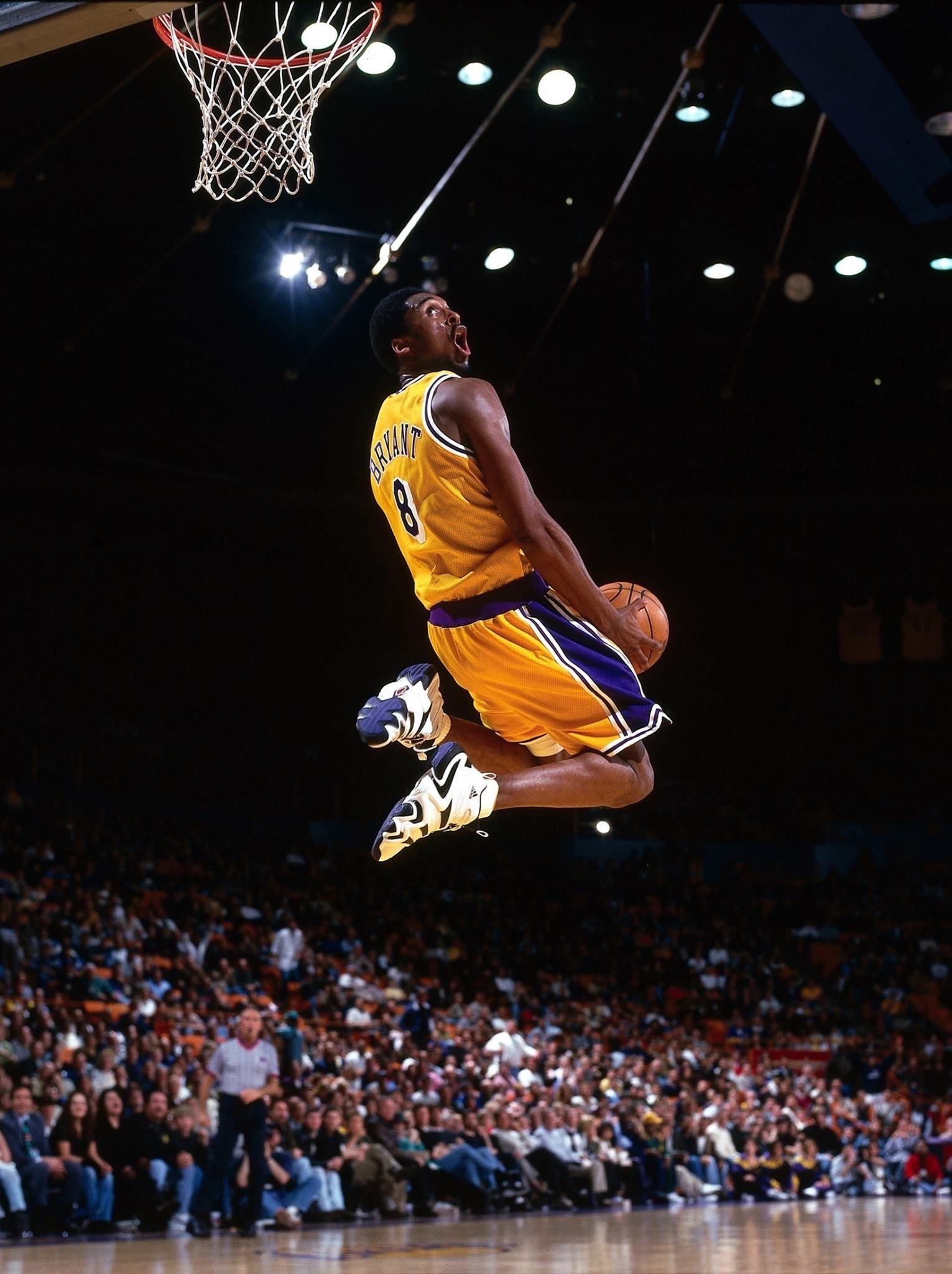
Top 100 NBA Players: #9 - Kobe Bryant


Kobe Bryant

Teams

Los Angeles Lakers - 1996-16


Playoffs

Appearances - 15 (1997,1998,1999,2000,2001,2002,2003,2004,2006,2007,2008,2009,2010,2011,2012)

Conference Finals - 8 (1998,2000,2001,2002,2004,2008,2009,2010)

NBA Finals - 7 (2000,2001,2002,2004,2008,2009,2010)

Championships - 5 (2000,2001,2002,2009,2010)


Awards and Honors

MVP - 1 (2008)

Finals MVP - 2 (2009,2010)

All-NBA First Team - 11 (2001,2002,2003,2004,2006,2007,2008,2009,2010,2011,2012,2013)

All-NBA Second Team - 2 (2000,2001,2004,2010,2011,2012,2013)

All-NBA Third Team - 2 (1999,2005)

Hall of Fame - 2020

*(actual in bold, deserved in italics)


All-Time Ranks

Total Points - #4

Points Per Game - #13

Total Steals - #17

Three-Pointers Made - #18

Total Assists - #31

Steals Per Game - #99


League Leads

Points Per Game (#1-2006,2007, #2-2003,2005,2008,2012, #3-2009,2013, #4-2001,2004,2010, #5-2011)

Total Points (#1-2003,2006,2007,2008, #2-2013, #3-2002,2009,2011,2012, #5-2010)

Total Steals (#3-2003, #5-2008)


After averaging over 30 points per game in each of his final two high school seasons, Kobe Bryant decided to skip college and enter the NBA Draft, where he was selected by the Charlotte Hornets with the #13 overall pick, who immediately traded him to the Lakers for Vlade Divac.

Kobe did not play much in his first season, and scored only 7.6 points per game, but he doubled that average to 15.4 in his second season, then raised it again in his third season to 19.9 per game in his first season as a starter. The Lakers had reached the Conference Finals in his second season, losing to Utah, while losing to the Spurs in the second round in 1999.

With the hiring of Phil Jackson to coach the Lakers after that season, the Lakers fortunes turned around overnight. Shaq became completely dominant while Kobe continued to grow into a star, averaging 22.5 points that season as the Lakers won 67 games. The Lakers reached the Finals, where they faced Indiana, winning the title in 6 games, though Kobe averaged only 15.6 per game in the series.

Kobe was named to the All-NBA Second Team for the second year in a row in 2001 after he raised his scoring average to 28.5 per game, along with 5.9 rebounds and 5.0 assists, and the Lakers completely dominated in the playoffs, sweeping through the first 3 rounds before losing a single game in the Finals, finishing the postseason with a 15-1 record and another championship. Bryant averaged 25.4 points in those Finals, much better than the season before, but Shaq was still the star of the team and the Finals MVP.

His scoring dropped to 25.2 the next season, but he was named to the All-NBA First Team for the first time in his career, an achievement that would become commonplace by the end of his career. The Lakers had a tougher path to the Finals that year, needing 7 games to beat the Kings in the Conference Finals, before sweeping the Nets in the Finals to win another title, the third straight for the Lakers.

The next year, Kobe finished second in the league in scoring with 30.0 per game, his first time beating Shaq for the team scoring lead, but the team lost to San Antonio in the second round of the playoffs. After adding Gary Payton and Karl Malone before the next year, they were favorites to win another championship, but it was a down year for Bryant, who scored only 24.0 per game, which dropped to 22.6 in the Finals as the Lakers lost to Detroit in 5 games.

Shaq was traded away after that season, largely due to problems with Kobe, and the Lakers missed the playoffs completely in Kobe's first season as the team's undisputed leader. When Phil Jackson agreed to return to coach the team the next year, Kobe had his best season, leading the league in scoring with 35.4 per game, including his famous 81-point game, the second-highest single game in history, but the Lakers lost to Phoenix in the second round of the playoffs.

He led the league in scoring again the next year, this time with 31.6 per game, but the Lakers lost to the Suns in the first round of the playoffs, ending his season earlier than he wanted yet again. After the season he demanded a trade, but nothing ever materialized, and he ended up returning to the team for his 12th season.

The Lakers traded for Pau Gasol before the season, and the addition of another star was huge for the Lakers. Bryant won the MVP after averaging 28.3 points per game, much lower than the previous 2 years, but the Lakers had the best record in the West, and they played that way in the playoffs, beating the Spurs in the Conference Finals to reach the Finals for the first time without Shaq. They faced the Celtics in that series, but fell to their longtime rivals in 6 games.

Kobe led the Lakers back to the Finals the next year, this time going through Denver to reach the final round, where they faced Dwight Howard and the Magic. Kobe averaged 32.4 points in the Finals, 5.6 higher than his regular season average, and finally won a championship as the star of the team, taking home his first Finals MVP in the process.

He averaged 27.0 per game in the regular season the next year, finishing in the top 5 in scoring again, and took the Lakers to their 3rd straight Finals, where they met up with the Celtics again. This time, they were able to get revenge for their loss 2 years earlier, and Kobe won his second straight Finals MVP after knocking off the Celtics in 7 games.

Bryant climbed into the all-time top 10 for scoring during the next season while averaging 25.3 per game, but the Lakers lost to Dallas in the second round of the playoffs. He came back with a 27.9 average the next year, but the result was another second round playoff loss. He was averaging 27.3 the next year when he tore his Achilles near the end of the season, and without their star, the Lakers fell in the first round.

After recovering from the Achilles injury, Kobe made his season debut in late December, playing in 6 games and averaging only 13.8 points per game before suffering a knee injury that ended his season. In his absence, the Lakers missed the playoffs for the first time in 9 years.

He came back healthy the next year, and averaged 22.3 points per game for the first few months of the season before suffering a shoulder injury that would once again end his season early, the third year in a row that he would not finish the season, and the second in a row that the Lakers would end up far from the playoffs.

He worked hard to come back for one final season, his 20th in the league, and though he wasn't his old self, he still averaged 17.6 points per game, and scored 60 points in his final game, becoming the oldest to ever reach that mark. The Lakers won only 17 games that season, the worst in team history, so his career ended with that final regular season game.

It took a few years for Kobe to become a star in the NBA, and his last few seasons were marred by injuries, but he was very good for those 14 years in the middle. He wasn't great when he won his first title, but was a big part of the next 2 championships in the sidekick role, before winning 2 titles late in his career as the big star. He won 2 scoring titles and is #4 on the all-time scoring list, and has the #13 scoring average in history, and he is definitely one of the best to ever play the game.


Sunday, September 25, 2016

Top 100 NBA Players: #1 - Michael Jordan


Michael Jordan

Ask 100 people who the greatest player of all time is, and the top response will most likely be Michael Jordan, but it would be far from a landslide. Many others would get a significant number of votes, from Wilt Chamberlain, Bill Russell, and Oscar Robertson to Shaquille O'Neal, Kobe Bryant, and even LeBron James.  So what makes Michael Jordan the best player of all time?

There are five factors that I feel qualify a player to be considered one of the greatest of all time. Those are offensive and defensive prowess, regular season and playoff dominance, and longevity. By using these 5 factors, I'll show that Michael Jordan is the greatest player of all time.

First, offensive prowess. The purpose of offense is to score points, and there has never been a greater scorer than Michael Jordan. Wilt Chamberlain may own the record for points in a game and points per game for a full season, but Michael Jordan owns the record for most points per game over a full career. The five players with the highest career scoring averages are, in order:

Michael Jordan
Wilt Chamberlain
Kevin Durant
Elgin Baylor
LeBron James

Next, defensive prowess. This one is a little tougher to define, especially since the All-Defensive Team has only existed since 1969, Bill Russell's final season. Three players have appeared on the All-Defensive First Team nine times in their career, and if you add in Bill Russell and Wilt Chamberlain, both of whom were said to have blocked at least 8 shots in a game quite regularly, this is the list you come up with:

Michael Jordan
Kobe Bryant
Kevin Garnett
Bill Russell
Wilt Chamberlain

Then let's consider regular season dominance. Michael Jordan was the best player in the league for his final 9 seasons with the Chicago Bulls, and would have made it at least 11 if he hadn't kept retiring prematurely. He was the best player in 1988, and he was the best player in 1998, a feat only Kareem can match with his 1970 and 1980 seasons. The list of players who spent the longest time as the league's top star is as follows:

Wilt Chamberlain
Michael Jordan
Kareem Abdul-Jabbar
LeBron James
Larry Bird

Perhaps the most important category is playoff dominance. The whole point of playing the game is to win championships, and Jordan was the best player on more champions than anybody but Bill Russell. He made 6 trips to the NBA Finals in his career, and won all 6 times. The record for highest scoring average in a Finals series is 41.0, and it's no surprise that Jordan holds that record for his performance against the Phoenix Suns in 1993. Here is the list of the players who have led their teams to the most championships:

Bill Russell
Michael Jordan
Magic Johnson
Tim Duncan
Shaquille O'Neal
Larry Bird
LeBron James

Finally, let's look at longevity. When looking at this category, I'm looking at more than just playing for a long time. You must also play at a high level for a long period of time, and Michael Jordan fits that bill as well. In his first game after turning 40, he obliterated the old record for points by a player of that age. Kareem had held the record of 27, but Jordan poured in 43 that night, and scored at least 30 points 9 other times after his 40th birthday, meaning he owns the 10 highest-scoring games for a 40-year old player. Here are the 5 players who had the most productive seasons after the age of 35:

Karl Malone
Elgin Baylor
Kareem Abdul-Jabbar
Michael Jordan
Jerry West

There's only one player that appears on all 5 of these lists, and you've probably already guessed who that is. It's also worth noting that only two other players appear even 3 times on these lists, and those are Wilt Chamberlain and LeBron James, the two players I ranked just behind Jordan. Michael Jordan is the only player in history who has been dominant in every important facet of the game, which is what makes him the greatest of all time.

With that in mind, are there any current players that have a chance at displacing Jordan at the top? In my opinion, there are several that have a chance. The obvious one is LeBron James, who has already cracked three of these lists, and has already made the All-Defensive First Team six times, and has a head start on the longevity since he started so young. Another is Kevin Durant, who is a great offensive player and is improving on defense, and also entered the league very young, which could help his longevity. Russell Westbrook and Stephen Curry are also young and showing some promise, but do they have what it takes to be considered the greatest? It will be fun to watch and find out.

Thursday, September 22, 2016

Top 100 NBA Players: #5 - Kobe Bryant


Kobe Bryant

Kobe, like most of the other recent players near the top of the all-time greats, started out with an advantage. Because he did not attend college, he had more seasons in which to pile up numbers. Of the top 7 active players on this list, none played more than 2 seasons of college basketball.

About a decade ago, there was a big uproar because Kobe Bryant had never won an MVP award, and people thought it was a travesty that one had never been awarded to him. But if you look at it, he wasn't even the best player on his own team until 2004-05, and that was the first of three straight seasons in which the Lakers didn't even win a playoff series. The fact is, until 2008, there was no way Kobe could have won an MVP, despite the fact that he was easily the best player to never have won. That season, playing with a new attitude, he won the only MVP he ever deserved. Here is a comparison of him and LeBron James from that season:

Kobe - 28.3 pts, 6.3 reb, 5.4 ast, 1.8 stl, 0.5 blk, .459 FG%, .361 3P%, .840 FT%
LeBron - 30.0 pts, 7.9 reb, 7.2 ast, 1.8 stl, 1.1 blk, .484 FG%, .315 3P%, .712 FT%

Looking strictly at the numbers, LeBron was the better player that year, but the Lakers finished 12 games ahead of Cleveland in the win column, and advanced two rounds farther in the playoffs, so Kobe was the more valuable player that season, and he was the only player from 2006 to 2013 to supplant LeBron as the best player for an entire season.

Kobe played in 7 NBA Finals and won 5 championships, and though he was not the best player the first four times he reached the Finals, he was easily the best #2 player ever on a championship team. Think about it: two of the 9 greatest players in history were on the same team at the same time during their best years. Had their egos not clashed, we may have been looking at the greatest dynasty in history. Instead, we have two great players who had their best years together but were still able to win titles later on with different supporting casts.

Kobe has the sort of resume necessary to be considered one of the greatest of all time. He has the longevity, with 15 years as a star player. He's a great offensive player, as shown by his pair of scoring titles and his 11 All-NBA First Team appearances. He's also great on defense, making First Team All-Defense 9 times, and he's a winner, with enough championships to fill up one hand. The biggest thing that held him back was that lull in the middle of his career, missing the playoffs or losing in the first round three straight times in what should have been his best years. 

Saturday, September 17, 2016

Top 100 NBA Players: #10 - Tim Duncan


Tim Duncan

Tim Duncan was one of the most consistent players in NBA history, and though his quiet demeanor makes him easy to overlook, he played at such a high level since the day he entered the league and saw so much success that he can't be left out of the top 10.

When Duncan arrived in the NBA in 1997 as the #1 overall pick, he was paired with recent MVP and fellow big man David Robinson in the frontcourt for the San Antonio Spurs, and he immediately established himself as one of the best players in the league. In fact, during his rookie season, only Karl Malone and Michael Jordan were better, and Duncan won the Rookie of the Month award every month of the season and was nearly a unanimous choice for Rookie of the Year.

The next season, with Jordan gone, Duncan took advantage of the void at the top and became the best player in the NBA in just his second season as a pro. His nearest competition that year was fellow power forward Karl Malone, and though Malone was voted MVP that season, Duncan took the more impressive trophy home that season, earning his first Finals MVP award. I believe that he should have won both awards that season, and here are the numbers for both players to show why:

Duncan - 21.7 pts, 11.4 reb, 2.4 ast, 2.5 blk, .495 FG%, .690 FT%
Malone - 23.8 pts, 9.4 reb, 4.1 ast, 0.6 blk, .493 FG%, .788 FT%

Malone was a slightly better offensive player than Duncan that year, but Duncan was easily the better defensive player, and the two teams ended up with identical records to finish the regular season, so Duncan should have been rewarded, but was overlooked because Malone was more experienced.

San Antonio was unable to repeat as champions the following season, because Duncan injured his knee right before the playoffs and the Spurs lost in the first round. After working hard for a couple seasons to get back to his peak level again, Duncan again became the league's dominant player in 2002, edging out Kobe and Shaq as the best players during the regular season and winning the MVP award. Unfortunately, he and the Spurs were no match for the Lakers in the playoffs, who knocked them out in the second round.

The next season, Duncan was once again the top player in the league and headed to the playoffs with his second MVP in hand, with different results this time. When they met up with the Lakers in the second round again, they avenged their previous losses and knocked out the 3-time defending champs in 6 games, clearing the path for Duncan to earn his second championship ring and the Finals MVP award to go with it.

Duncan remained one of the top 10 players in the league for the next several years, and the Spurs were perennial championship contenders, which is of itself a testament to his greatness. He just retired after his 19th season, and the Spurs made the playoffs in each of those seasons, winning 5 championships along the way. Duncan has won two MVP's and 3 Finals MVP's, although each of those numbers should have been increased by one, since Duncan didn't earn the MVP he deserved in 1999, and he was still the best Spur on the 2007 championship team, despite the fact that Tony Parker was awarded that season's Finals MVP.

There are only two other players who can claim that they were the best player for that many regular seasons and for that many championship teams as well: George Mikan and Michael Jordan. While Duncan lost a step over the last few years, he was still one of the best players on one of the best teams in the league in his 18th season, and still ranked as one of the top 20 players in the league at age 37. The five titles San Antonio won during the Duncan era puts San Antonio at #4 all time in total titles, behind only the Lakers, Celtics, and Bulls. About the only bad thing you can say about him is that he was never able to defend a championship the following year.

Friday, September 16, 2016

Top 100 NBA Players: #12 - Hakeem Olajuwon


Hakeem Olajuwon

Hakeem Olajuwon is undoubtedly one of the greatest centers of all time and easily the best modern defensive center the NBA has seen. He is the best player who was not born as a United States citizen, and he peaked at exactly the right time, which allowed him to win a couple of championships and cement his place as one of the all-time greats.

Hakeem grew up primarily playing soccer in his native Nigeria, but when he was introduced to basketball as a teenager, he knew he had found his calling in life. He was only offered a spot on one college team, at the University of Houston, and after a couple of years training with local pro and NBA MVP Moses Malone, Olajuwon led the Cougars to two consecutive national championship games before being drafted by the Houston Rockets as the #1 pick in the NBA Draft, two spots ahead of Michael Jordan.

The Rockets started seeing success pretty quickly, making it to the NBA Finals in Hakeem's second season, where they lost to the Boston Celtics, whose 1986 team is regarded as one of the greatest teams in history. It looked like the Rockets were going to be a force for years to come, but because of a series of injuries to Ralph Sampson and their inability to get any decent players to play with Olajuwon, Houston suffered through several disappointing seasons.

Everything finally came together in 1993-94, beginning with the retirement of Michael Jordan in the offseason. Olajuwon took advantage of the hole left at the top of the league and had one of the most impressive seasons in history, becoming the only player ever to win the regular season MVP, Finals MVP, and Defensive Player of the Year Award in the same season.

The next year, things didn't look quite as good, with David Robinson and the Spurs dominating the regular season and Olajuwon dealing with some health issues near the end of the year, but with a late-season trade that brought college teammate Clyde Drexler to town, the Rockets were able to become the lowest-seeded team in history to win the NBA Finals, and Olajuwon repeated as Finals MVP.

Olajuwon is well-known as a great shot-blocker, and he still holds the record for most shots blocked in a career, although they have only been recorded for half of the league's history. Not only was he great at blocking shots, he was always among the leaders in steals as well, and in 1989 he became the only player in history to record more than 200 blocks and 200 steals in the same season. In fact, there have only been 8 seasons in which a player reached 150-150, and four of those belong to Olajuwon. He is definitely one of the greatest defensive players of all time.

Olajuwon was also great on the offensive end of the court, averaging over 20 points per game for 13 consecutive seasons to start his career, and his moves in the low post have become legendary, especially his patented "Dream Shake," which involved numerous fakes and spins and allowed him to get a ton of easy shots near the hoop. He now hosts a camp each summer where he teaches footwork in the paint, and many NBA stars have trained with him, including Yao Ming, Kobe Bryant, and LeBron James.

What really made Olajuwon great is that he stepped up his game when it mattered most, especially against the toughest competition. During his two championship seasons, he outplayed David Robinson, Shaquille O'Neal, and Patrick Ewing in the playoffs, and also beat teams led by Karl Malone and Charles Barkley. When Robinson won the regular season MVP in 1995, Olajuwon made a point of completely dismantling him in the Western Conference Finals, and Robinson was never the same player again.

The thing that held him back from making the all-time top 10 was that his three-year peak was relatively short for a great player, and happened to coincide nicely with Jordan's first retirement, then abruptly ended when Jordan returned. He played in an era with many other great centers, and he was the best of any of them during his peak years, but he was only one of the top 5 players in the league for 5 seasons, which was a relatively short period, especially when compared to the players that make up my top 10.

Sunday, September 11, 2016

Top 100 NBA Players: #17 - Kevin Garnett


Kevin Garnett

Kevin Garnett is one of four active players to appear among the top 20 players of all time, and even though he is built like a praying mantis, he was a force in professional basketball for 18 seasons, and he is still playing into his 22nd season, making him by far the most experienced player remaining in the league.

Garnett was a major trail blazer for the current generation of NBA stars, jumping straight to the league from high school, the first player in 20 years to do so, but his success caused many to follow in his footsteps, from future stars like Kobe, LeBron, and Amare to busts like Korleone Young, DeSagana Diop, and Kwame Brown. Three of the four active players among my top 20 did not attend college, and who knows if that would have happened without Garnett taking a risk in 1995.

Garnett was drafted by the Minnesota Timberwolves, and it is because of him that the franchise even has any history to celebrate. They made the playoffs for the first time in Garnett's second year, which started a string of 8 consecutive playoff appearances, since which they have not returned to the postseason. Garnett was the team's best player every time they made the playoffs, and during that run he missed a total of 11 games, an incredible feat for a player who looks so fragile.

The eighth year of that run was a magical one for Garnett and the Timberwolves. It was the only time in franchise history that the Wolves won a playoff series, and they actually won two of them, advancing clear to the Western Conference Finals, where the Lakers dispatched them on their way to a three-peat. Garnett was named the MVP that season, and there is absolutely no doubt in my mind that he deserved it. In my opinion, the only more dominant season in the last 20 years was Shaq's 2000 campaign. Here is a comparison of Garnett and Kobe Bryant, his nearest competitor, from that season:

Garnett - 24.2 pts, 13.9 reb, 5.0 ast, 1.5 stl, 2.2 blk, .499 FG%, .791 FT%
Bryant - 24.0 pts, 5.5 reb, 5.1 ast, 1.7 stl, 0.4 blk, .438 FG%, .852 FT%

I don't think I even need to do any explanation as to why Garnett was the MVP, because the numbers do the talking. In NBA history, there have only been six times that a player has matched Garnett's scoring, rebounding, and assists numbers from that season in any single year. It was done by Wilt three times, Kareem twice, and Elgin Baylor once. The most recent of those seasons was Kareem in 1976, and it hasn't been done by anyone but Garnett since.

After that season the Timberwolves sank back into mediocrity, with Garnett toiling away as a superstar on a bad team, until the summer of 2007, when he was rescued by the Boston Celtics, who had decided they wanted to pursue a championship, since it had been over a decade since they had really tried, and with Garnett leading the way, Boston won their first title in over two decades. Paul Pierce was named the Finals MVP, but I think the award should have gone to Garnett, and here are the stats from the playoffs to back up my point:

Garnett - 20.4 pts, 10.5 reb, 3.3 ast, 1.3 stl, 1.1 blk, .495 FG%, .810 FT%
Pierce - 19.7 pts, 5.0 reb, 4.6 ast, 1.1 stl, 0.3 blk, .441 FG%, .802 FT%

Okay, now I'm no expert (well, maybe I am), but when one player is better in 6 of 7 statistical categories, and the other is reasonably close, that player is better, especially since being teammates eliminates the pace factor from the argument. Garnett was the MVP of the 2008 Finals, but Celtics fans helped select Pierce because he stuck with the team through the tough times.

Two years later, Boston returned to the NBA Finals, but this time Garnett was no longer the star, his body having finally worn down after playing over 1100 games in the NBA, but he was still one of the team's leaders, and he earned that second trip to the Finals, something very few superstars have gone without. In his career, Garnett won a championship, an MVP, and a Defensive Player of the Year award. He's a great all-around player, and he finally got to prove he was a winner while he was still a relevant superstar.

Saturday, September 10, 2016

Top 100 NBA Players: #19 - Clyde Drexler


Clyde Drexler

Clyde Drexler is considered by most experts to be a second-tier star, not an all-time superstar, but these are misconceptions due to the fact that he was never able to measure up to Michael Jordan when they faced each other in the 1992 NBA Finals, but is there anybody who could?

Drexler was a great all-around player, averaging over 20 points, 5 rebounds, and 5 assists in 6 straight seasons during his prime, and during that same period he led the Trail Blazers to some of the best seasons in their history. In 1990, he led the Blazers from the third seed in the West to the NBA Finals, where they fell to the Detroit Pistons in 5 games. The next season Portland had the best regular season record, but lost in the Western Conference Finals to the Los Angeles Lakers.

In 1992, he again led the Blazers to the Finals, but they once again lost, this time to the Chicago Bulls. Many people remember Drexler for losing in those years, but he averaged over 21 points, 7 rebounds, and 7 assists per game during all three of those playoff campaigns and was by far the best player on his team, while the teams he lost to had great supporting stars.

Drexler suffered injuries during the next season, which caused people to forget about him as other teams began to dominate in the West, and when he became healthy again, Portland was no longer a championship contender, so he requested a trade and was sent to his hometown of Houston to be reunited with college teammate Hakeem Olajuwon. That season, the two superstars led the Rockets from the sixth seed in the West to their second straight NBA title, which finally earned Drexler his ring.

Many people try to discount Clyde's NBA championship by saying that he was no longer a star player when he won his title, and while he was no longer in his prime, he was definitely still a player capable of dominating. If you look at his stats in 1992, his best season, and 1995, when he won his title, you'll see that the dropoff isn't that big:

Drexler (1992) - 25.0 pts, 6.6 reb, 6.7 ast, 1.8 stl, .470 FG%, .337 3P%, .794 FT%
Drexler (1995) - 21.8 pts, 6.3 reb, 4.8 ast, 1.8 stl, .461 FG%, .360 3P%, .824 FT%

Drexler also played much bigger than his position. He is the all-time leader for offensive rebounds among guards, and is fourth all-time in overall rebounds and fifth in blocked shots for guards. The only guards with more rebounds are Jason Kidd, Oscar Robertson, and Kobe Bryant, and the only guards with more blocks are Ron Harper, Michael Jordan, Dwyane Wade, and Vince Carter. He is also one of five players in history to reach 20,000 points, 6,000 rebounds, and 6,000 assists during his career, joining John Havlicek, Oscar Robertson, Kobe Bryant, and LeBron James.

Saturday, August 27, 2016

Top 100 NBA Players: #35 - Pau Gasol


Pau Gasol

You may not think that Pau Gasol deserves to be ranked among the all-time greats, or especially in the top 40, but there was a time that many would have said that about Scottie Pippen as well. The truth is that Pau Gasol brought about a huge change in Los Angeles after he was traded and helped the team regain its winning ways.

When Pau arrived in Los Angeles, Kobe Bryant was already an established superstar, but the Lakers weren't winning with him as their only star. Here are their playoff results in the three years Pre-Pau and Post-Trade:

Pre-Pau - missed playoffs once, lost in first round twice
Post-Trade - Lost in Finals once, won two championships

The difference between the pre- and post-trade results in each season was exactly three playoff series. The only real difference between these teams was the addition of Pau Gasol. Can you really say that he's not a great player? It's obvious to me that Gasol was the catalyst the team needed to advance.

Gasol has been a star player since the day he arrived in America. He has averaged at least 16.5 points in 14 of his 15 seasons as a pro, and has steadily become a better rebounder, averaging over 10 per game for five of his past seven seasons. In each of the Lakers' title seasons he was one of the six best players in the league, although many overlooked him because he was only the second-best on his team.

He may not have ever been recognized as a superstar, but his career longevity, with 10 seasons at an All-Star level, and his big contributions to 2 champs and a runner-up have earned him a spot among the best players of all time.

Wednesday, August 24, 2016

Top 100 NBA Players: #39 - Allen Iverson


Allen Iverson

Allen Iverson was an incredibly talented player, the shortest man ever to win the scoring title, which he did four times, and a player who fell just as quickly as he rose to prominence. Other than his shooting percentage, he was a very solid all-around player.

As I said above, Iverson won 4 scoring titles, in 1999, 2001, 2002, and 2005, all with the Philadelphia 76ers. He had his highest scoring season in 2006, when he put up 33 per game, but that year he was beaten out by Kobe's 35.4 per game, one of the highest averages in history. Iverson's signature season was the second season in which he was the scoring leader, and his stats from that year's regular season and playoffs are listed below:

Iverson (Regular) - 31.1 pts, 3.8 reb, 4.6 ast, 2.5 stl, .420 FG%, .320 3P%, .814 FT%, 42.0 min
Iverson (Playoffs) - 32.9 pts, 4.7 reb, 6.1 ast, 2.4 stl, .389 FG%, .338 3P%, .774 FT%, 46.2 min

Iverson was everything to the Sixers that season, and led the league in steals as well as scoring. He also led Philadelphia to the NBA Finals, where they lost to the Lakers, but he played nearly every minute during the postseason and found a way to increase his already impressive averages. It may have been the only time that he saw any sort of playoff success, but it was a season for the ages.

Iverson led the league in minutes per game 7 times, scoring 4 times, and steals 3 times, and in each of his first 12 seasons averaged at least 22 points, 3 rebounds, 4.6 assists, 1.9 steals, and 39.4 minutes played. Those numbers alone are pretty impressive, but those were the minimum numbers he reached in 12 seasons.

One of Iverson's biggest struggles was clashing with his coaches over attitude problems. He is infamous for his distaste of practice, and his feud with Larry Brown was very well chronicled. The 76ers actually traded him during the 2000 offseason, but because of a problem with another player's contract, the deal was cancelled, and Iverson went on to lead the team to the Finals. He finally wore out his welcome in Philly in 2006, then in Denver, Detroit and Memphis over the next three years, before finally disappearing for good.

Thursday, June 30, 2016

Top 100 NBA Players: #98 - Robert Horry


Robert Horry

Horry is the only player to make this list on the strength of his playoff performance alone. He was never among the top players in the league in any single season, and never even performed at an All-Star level, but he is the only player in the history on the NBA to win more than 6 championships without playing for the 1960's Celtics.

Of course, being on the winning team is not enough to make a player one of the all-time greats. In fact, Horry was a non-factor during two of his title seasons (2001 and 2007), so those rings did not factor into his appearance in the top 100. However, in the other 5 title seasons, he was a significant contributor, and that is the reason he's here.

Horry was drafted by the Rockets at #11 in 1992, and when Michael Jordan retired after Horry's rookie season, a huge vacuum was created, which was filled by the Houston Rockets. In just his second season, he was the second-best player on the championship team, helping Hakeem Olajuwon win his first title. The next season, Clyde Drexler joined the Rockets in a midseason trade, and that trade boosted the Rockets to a repeat title, with Horry still chipping in as the #3 player on the team.

The next season was his personal best as a pro, with a scoring average of 12.0, and following that "breakout," he was traded to the Phoenix Suns, who soon offloaded him to the Lakers, which was a fortunate move for him. He joined a team that had just acquired both Shaquille O'Neal and Kobe Bryant, and within a couple years he was back at the pinnacle, although in a much-reduced role. He came off the bench for the 2000 and 2001 title teams, then earned back his starting role in 2002, becoming the third-best player on the team that completed the three-peat.

After failing to 4-peat, Horry left the Lakers to join the Spurs and bring him closer to his family in Houston, and that was another good move for him, as he was a strong contributor to the Spurs' 2005 title, behind only the three long-time Spurs stars. He held on for a few more years, and hit a few big shots along the way, but his final title was a gift from his teammates, with Horry only contributing 4.3 points per game in the playoffs.

The thing that helped Horry the most is that he always performed best in the playoffs, beating his regular season averages in every single one of his title runs. He earned the nickname "Big Shot Rob" for his many important late-game shots in the playoffs, and that ability earned him a spot among the top players of all time.