Showing posts with label ABA MVP. Show all posts

Sunday, October 17, 2021

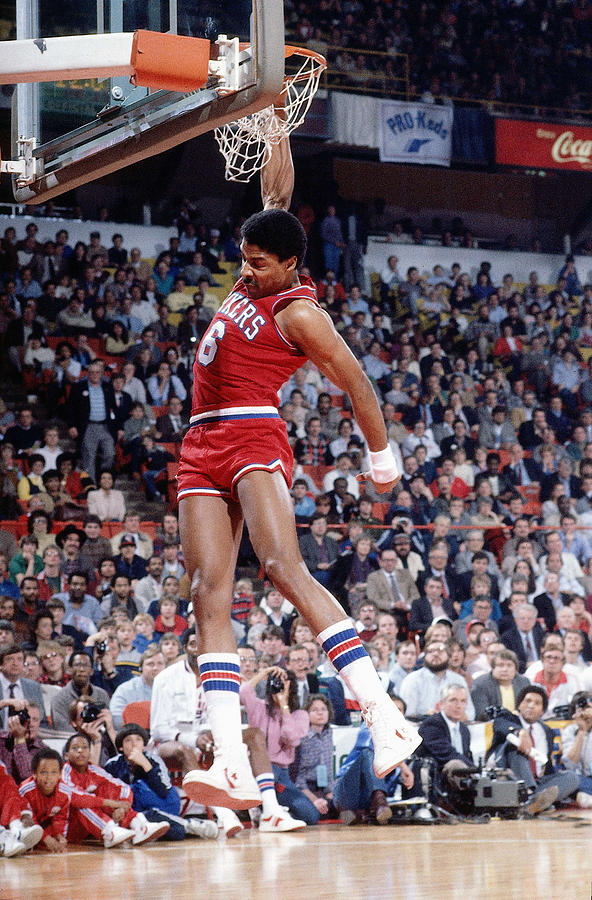
Top 100 NBA Players: #14 - Julius Erving


Julius Erving

Teams

Virginia Squires (ABA) - 1971-73

New York Nets (ABA) - 1973-76

Philadelphia 76ers - 1976-87


Playoffs

Appearances - 16 (1972,1973,1974,1975,1976,1977,1978,1979,1980,1981,1982,1983,1984,1985,1986,1987)

Conference Finals - 10 (1972,1974,1976,1977,1978,1980,1981,1982,1983,1985)

ABA/NBA Finals - 6 (1974,1976,1977,1980,1982,1983)

Championships - 3 (1974,1976,1983)


Awards and Honors

Rookie of the Year - 1972

MVP - 4 (1972,1974,1975,1976,1981)

Finals MVP - 2 (1974,1976)

All-ABA/NBA First Team - 9 (1972,1973,1974,1975,1976,1978,1980,1981,1982,1983)

All-ABA/NBA Second Team - 3 (1972,1977,1984)

Hall of Fame - 1993

*(actual in bold, deserved in italics)


All-Time Ranks

Total Points - #8

Total Steals - #8

Steals Per Game - #17

Points Per Game - #22

Total Blocks - #23

Total Rebounds - #35

Blocks Per Game - #43

Total Assists - #62


League Leads

Total Points (#1-1974,1976, #2-1973,1975, #3-1980, #5-1972,1981,1982)

Points Per Game (#1-1973,1974,1976, #2-1975, #4-1980, #5-1972,1982)

Total Steals (#2-1976, #3-1973,1974,1975)

Total Assists (#4-1974,1975, #5-1976)

Rebounds Per Game (#3-1972, #5-1973,1976)

Steals Per Game (#3-1974,1976, #4-1975)

Total Rebounds (#2-1972, #3-1976)

Total Blocks (#3-1974, #4-1975)

Blocks Per Game (#3-1974, #4-1975)

Field Goal Percentage (#4-1973)

Three-Pointers Made (#5-1976)


After playing 2 seasons of college basketball at Massachusetts and averaging 26.3 points and 20.2 rebounds per game, Julius Erving applied to be allowed to join the ABA as a hardship case, then signed as a free agent with the Virginia Squires.

Erving was the best player in the entire ABA as a rookie. He averaged 27.3 points, 15.7 rebounds, and 4.0 assists per game, but lost the Rookie of the Year and MVP awards to Artis Gilmore. He led the Squires to the Conference Finals, where they lost to Rick Barry and the Nets in 7 games, despite Erving averaging 33.3 points and 20.4 rebounds in the playoffs.

After the season, Erving discovered that his agent was a team employee who tricked him into signing for the team for less than he was worth, so he left the team to sign with the Atlanta Hawks of the NBA. At around the same time, he was drafted by the Milwaukee Bucks with the #12 pick in the NBA Draft, so both Milwaukee and Virginia disputed the validity of his contract with Atlanta, and a judge finally ruled that he would not be allowed to play for anyone but the Squires, so he returned to Virginia.

Erving averaged a career-high 31.9 points that season to lead the ABA, while also grabbing 12.2 rebounds per game. Even though he was teamed with George Gervin that year, the Squires lost in the first round of the playoffs, and Virginia sold him to the New York Nets after the season to save money.

In his first season with the Nets, Erving was named the MVP after he led the league in scoring for the second straight year with 27.4 per game while also averaging 10.7 rebounds, 5.2 assists, 2.3 steals, and 2.4 blocks. He also led the Nets all the way to the ABA Finals, where they beat the Utah Stars to win the championship, with Erving's 28.2 points and 11.4 rebounds earning him the Finals MVP.

He won the MVP in each of the next 2 seasons as well, closing out the final season of the ABA with another scoring title, his 3rd, and another championship and Finals MVP, his second of each. When the two leagues merged, the Nets appeared to be ready to contend immediately with the 3-time defending MVP on the roster, but they were forced to pay a double fee to enter the NBA because they played in the same city as the Knicks, and they couldn't afford to keep Erving, so they sold him to the 76ers in exchange for the money to pay the additional fee.

He made the All-NBA Second Team in his first season with the 76ers, averaging 21.6 points and 8.5 rebounds per game, and he led the Sixers all the way to the NBA Finals in the first year after the merger, knocking off the defending champion Celtics in the Conference Finals before falling to Bill Walton and Portland in the NBA Finals in 6 games.

He was able to take Philadelphia all the way back to the Conference Finals the next year, but without any other star teammates, he was unable to get the team any farther. As Maurice Cheeks started to grow into a star, the team started ascending again, reaching the NBA Finals in 1980 after beating Larry Bird and the Celtics in the Conference Finals, but losing to Magic, Kareem, and the Lakers in the Finals.

In 1981, Erving was named the MVP of the NBA, becoming the first and only player to win MVP in both leagues, and he did it with averages of 24.6 points and 8.0 rebounds per game. He led the 76ers back to the Conference Finals, but this time the Celtics beat them after overcoming a 3-1 deficit by winning the last 3 games by 2 points or fewer each.

In 1982 they turned the tables on the Celtics again, winning the Conference Finals in 7 games, but they met up with the Lakers in the Finals again, losing again in 6 games. After that season, the team added Moses Malone, and the pair of superstars led the 76ers to one of the most dominant seasons in history, and after sweeping the Lakers in the Finals, Erving finally had an NBA championship as well.

Erving was still a very good scorer at that point, but age was starting to catch up to him. He was able to help the Sixers to the Conference Finals once more, in 1985, and averaged over 20 points that season as well, but averaged only 18.1 and 16.8 in his final 2 seasons after exceeding 20 per game in each of his first 14 seasons. He retired at the conclusion of the 1987 season.

Erving was probably the best player in ABA history, winning 3 MVPs, 3 scoring titles, and 2 Finals MVPs in only 5 years as part of the league. His production dipped slightly in the NBA, but he still won an MVP and led his team to 3 NBA Finals before finally winning an NBA title as Moses Malone's sidekick. Erving is #8 on the all-time leaderboards for both points and steals, and is one of only 3 players in the top 100 all time in all 5 major stat categories, along with Karl Malone and Kevin Garnett, and he is definitely one of the greatest to ever play the game.


Friday, September 24, 2021

Top 100 NBA Players: #37 - Artis Gilmore


Artis Gilmore

Teams

Kentucky Colonels (ABA) - 1971-76

Chicago Bulls - 1976-82, 1987

San Antonio Spurs - 1982-87

Boston Celtics - 1988


Playoffs

Appearances - 11 (1972,1973,1974,1975,1976,1977,1981,1983,1985,1986,1988)

Conference Finals - 5 (1973,1974,1975,1983,1988)

ABA Finals - 2 (1973,1975)

Championships - 1 (1975)


Awards and Honors

Rookie of the Year - 1972

ABA MVP - 1972

Finals MVP - 1975

All-ABA/NBA First Team - 5 (1972,1973,1974,1975,1976,1978)

All-NBA Second Team - 0 (1977,1979,1981,1983)

Hall of Fame - 2011

*(actual in bold, deserved in italics)


All-Time Ranks

Total Blocks - #4

Total Rebounds - #5

Field Goal Percentage - #9

Blocks Per Game - #14

Rebounds Per Game - #15

Total Points - #27


League Leads

Field Goal Percentage (#1-1972,1973,1981,1982,1983,1984, #2-1975,1976,1985,1986,1987, #3-1978,1980, #4-1979)

Total Blocks (#1-1972,1973,1975, #2-1974, #3-1976,1982, #4-1977,1981,1983, #5-1978,1985)

Total Rebounds (#1-1972,1973,1974,1975,1976, #2-1979, #3-1977, #4-1978,1983)

Blocks Per Game (#2-1974,1975, #3-1976, #4-1977,1982, #5-1981,1983,1984)

Rebounds Per Game (#1-1972,1973,1974,1976, #2-1975, #4-1977,1979,1983)

Total Points (#3-1976, #4-1975)

Points Per Game (#4-1976)


Artis Gilmore averaged 23.3 points and 22.7 rebounds per game in 2 seasons with the Jacksonville Dolphins, leading them to the national championship game as a junior, before being drafted #7 overall by the Kentucky Colonels in the ABA Draft. He was also a 7th round pick by the Bulls in the NBA, but it was already known that he was headed to the ABA, hence the low pick.

Gilmore was a dominant force from his first day in the ABA. He averaged 23.8 points, a league-leading 17.8 rebounds, and 5.0 blocks per game while also leading the league with a .598 field goal percentage, which earned him both the Rookie of the Year and MVP awards, both narrowly over Julius Erving, who averaged 27.3 points and 15.7 rebounds. The Colonels finished with the best record in ABA history, but lost in the first round of the playoffs to the Nets in 6 games.

Gilmore led the league in rebounding and field goal percentage for the second year in a row in 1973, and this time was able to lead the Colonels to the ABA Finals, where they lost to the Indiana Pacers in a very tight 7-game series. He won his third rebounding title in a row the next year with a career high of 18.3 per game, but they lost in the Conference Finals to the Nets again.

They finally broke through in 1975. Gilmore led the league in total blocks and rebounds, but not in average, making it the first time in his career he didn't lead the league in any per game category. He did, however, lead the Colonels back to the ABA Finals, and he clinched the championship with 28 points and 31 rebounds in Game 5 to beat the Indiana Pacers, earning himself the Finals MVP as a result.

Gilmore averaged a career high 24.6 points per game the next year, and led the league in rebounding for the 4th time as he grabbed 15.5 per game, but the Colonels fell to the Nuggets in the second round of the playoffs, ending their chance at a repeat, and closing out the Colonels franchise, which wasn't invited to join the NBA in that summer's merger.

Because his team didn't join the NBA, Gilmore was put into a dispersal draft, where he was the top overall pick by the Chicago Bulls, who had drafted him 5 years earlier as well. Gilmore played 6 seasons for the Bulls, but the team only made 2 playoff appearances during that time, both ending early. He led the league in field goal percentage in his final 2 seasons in Chicago, including an amazing .670 average in 1981.

Gilmore was traded to the San Antonio Spurs in 1982, and continued to lead the league in shooting percentage, making it 4 seasons in a row by 1984. In his first season with the Spurs, he and George Gervin led the Spurs to the Western Conference Finals, but they lost in 6 games to the Lakers in the deepest playoff run he would have after joining the NBA.

After 5 seasons with the Spurs, Gilmore's game had started to decline, with averages of 11.4 points and 7.1 rebounds in his final season with San Antonio. He signed with the Bulls as a free agent, but was released on the day after Christmas after hardly playing in the first couple months of the season, then he signed with the Celtics to finish the season, tagging along with Larry Bird, Kevin McHale, and Robert Parish to plan in one final Conference Final before retiring.

Gilmore's biggest success came in the ABA, where he was a Rookie of the Year, MVP, and Finals MVP while winning 4 rebounding titles and 2 field goal shooting titles. He was still a very good center in the NBA for almost a decade, leading the league in field goal percentage 4 straight times, and he is currently #4 on the all-time leaderboard for blocks, #5 for rebounds, and #9 for shooting percentage, which just goes to show that even though many people don't remember him well, he was one of the greatest to ever play the game.


Saturday, September 18, 2021

Top 100 NBA Players: #43 - Dan Issel


Dan Issel

Teams

Kentucky Colonels (ABA) - 1970-75

Denver Nuggets (ABA/NBA) - 1975-85


Playoffs

Appearances - 13 (1971,1972,1973,1974,1975,1976,1977,1978,1979,1982,1983,1984,1985)

Conference Finals - 7 (1971,1973,1974,1975,1976,1978,1985)

ABA Finals - 4 (1971,1973,1975,1976)

Championships - 1 (1975)


Awards and Honors

Rookie of the Year - 1971

MVP - 0 (1971)

All-ABA First Team - 1 (1971,1972,1973,1974,1976)

All-ABA Second Team - 4 (1971,1973,1974,1976,1980,1981)

Hall of Fame - 1993

*(actual in bold, deserved in italics)


All-Time Ranks

Total Points - #11

Total Rebounds - #31

Points Per Game - #33

Rebounds Per Game - #97


League Leads

Total Points (#1-1971,1972,1973, #2-1974)

Points Per Game (#1-1971, #3-1972,1973,1974)

Total Rebounds (#4-1976)

Field Goal Percentage (#2-1973)


Dan Issel is the all-time leading scorer for the University of Kentucky, and after a senior season where he averaged 33.9 points and 13.2 rebounds, he was drafted by the Kentucky Colonels in the first round of the ABA Draft. He was also drafted in the 8th round of the NBA Draft by Detroit, but it was known that he was going to stay in Kentucky.

In Issel's rookie season with the Colonels, he led the league in scoring with 29.9 points per game, grabbed 13.2 rebounds per game, and was named the Rookie of the Year. Mel Daniels of Indiana won the MVP that year with averages of 21.0 points and 18.0 rebounds, with the difference probably the fact that the Pacers had the league's best record, but Issel was the league's best player.

In the playoffs that year, Issel led the Colonels all the way to the ABA Finals, beating the Floridians and Virginia in 6 games each along the way, but Kentucky fell to Utah in the Finals in 7 games. All taken together, it was one of the best rookie seasons of any player in history.

Issel scored a career-high 30.6 points per game the next season, leading the league in total scoring again, though he was only #3 in average, due to the fact that he rarely missed a game, never missing more than 6 games in a season in his career. The same thing happened in his third season, when he scored more points than any other player, but came in third in the scoring race by average.

The Colonels had drafted Artis Gilmore after Issel's rookie season, placing him at starting center and forcing Issel to move to power forward. Issel's role on the team grew smaller each year, with Gilmore playing the starring role on the team that reached the 1973 finals, where they lost in 7 games to the Pacers. 

His numbers dropped clear down to 17.7 points and 8.6 rebounds per game in 1975, and it was the only season where he wasn't named to an All-ABA Team, but it was also the only season in which he would win a championship. Issel averaged 21.6 points and 12.0 rebounds in the Finals, but Gilmore was the star and Finals MVP.

Issel was traded to Baltimore for cash before the next season, but when Baltimore folded, and Issel was sent to Denver in the process. He averaged 23 points and 11 rebounds for the Nuggets that season, then helped the Nuggets beat his old team in the Conference Finals to reach his 4th ABA Finals in 6 years. They lost the series to Julius Erving and the Nets before the ABA was merged into the NBA.

Issel played 9 more seasons with the Nuggets in the NBA, scoring at least 20 points per game in 6 of those seasons. He was never named to an All-NBA Team, though he probably deserved it a couple of times, especially in 1980, when he averaged 23.8 points and 8.8 rebounds per game. 

He led them to the playoffs in their first 3 seasons in the NBA, but they won only 1 playoff series in that time, then had 2 straight seasons where they came up short of the postseason. The team turned things around when Alex English began to grow into a superstar, and they were able to make one more deep playoff run in 1985, losing to the Lakers in the Conference Finals in Issel's final season.

Issel was the #2 all-time scorer in the ABA, behind his former teammate Louie Dampier, though Issel only played 6 seasons in the ABA to Dampier's 9. When he retired from the NBA, he was #4 on the all-time scoring list, behind only Kareem, Wilt, and Julius Erving, and today he still stands at #11. He was a superstar from the day he became a pro, and though his team never won a title when he was the best player, he was a big part of a championship, and one of the greatest to ever play the game.


Saturday, September 4, 2021

Top 100 NBA Players: #57 - George McGinnis


George McGinnis

Teams

Indiana Pacers - 1971-75 (ABA), 1980-82 (NBA)

Philadelphia 76ers - 1975-78

Denver Nuggets - 1978-80


Playoffs

Appearances - 8 (1972,1973,1974,1975,1976,1977,1978,1981)

Conference Finals - 6 (1972,1973,1974,1975,1977,1978)

ABA/NBA Finals - 4 (1972,1973,1975,1977)

Championships - 2 (1972,1973)


Awards and Honors

All-ABA/NBA First Team - 3 (1973,1974,1975,1976)

All-ABA/NBA Second Team - 2 (1973,1976,1977)

ABA MVP - 1 (1975)

ABA Finals MVP - 1 (1973)

Hall of Fame - 2017

*(actual in bold, deserved in italics)


All-Time Ranks

Steals Per Game - #25

Rebounds Per Game - #37

Total Steals - #55

Total Rebounds - #58

Points Per Game - #65


League Leads

Total Points (#1-1975, #3-1973,1974, #5-1976)

Total Rebounds (#2-1974, #3-1973, #5-1975)

Points Per Game (#1-1975, #2-1973,1974)

Rebounds Per Game (#2-1974, #4-1973, #5-1975)

Total Steals (#2-1975, #4-1976)

Steals Per Game (#2-1975,1976)

Total Assists (#3-1975)

Field Goal Percentage (#5-1973)

Three-Point Percentage (#4-1975)

Assists Per Game (#3-1975)

Three-Pointers Made (#2-1975)


George McGinnis played only one season of college basketball at Indiana, putting up amazing averages of 30.0 points and 14.7 rebounds, before leaving school to sign with the Indiana Pacers of the ABA.

He made an impact immediately as a pro, averaging 16.9 points and 9.7 rebounds as a rookie, and his first season ended with his first championship. In his second season, he was named to the All-ABA Second Team, though he deserved to be on the First, with averages of 27.6 points, 12.5 rebounds, and 2.0 steals per game, and he led the Pacers to a championship repeat and was named the Finals MVP.

After that season, McGinnis was drafted by the Philadelphia 76ers in the second round of the NBA Draft. He decided to resign with the Pacers instead for another 2 years, and he was dominant in those two seasons. In 1974-75, he was named the ABA MVP after leading the league in scoring with 29.8 per game, coming in fifth in rebounding at 14.3, #3 in assists at 6.3, and #2 in steals at 2.6. All but the rebounding average were the highest of his career.

In that season's playoffs, McGinnis was even more dominant, averaging 32.3 points, 15.9 rebounds, and 8.2 assists per game while leading the Pacers to the Finals for the third time in 4 years, but they fell to the Kentucky Colonels in a disappointing 5-game series for Indiana.

After the season, with the end of the ABA in sight, McGinnis decided to jump to the NBA, signing with the New York Knicks, but the contract was invalidated because the 76ers still held his draft rights, so he signed with Philly instead. He averaged 23.0 points and 12.6 rebounds in his first season with the 76ers, and was named to the All-NBA First Team, becoming one of just 6 players to receive that honor in both leagues. 

The team traded for Julius Erving the next season, and the pair of superstars led Philadelphia to the NBA Finals, where they fell to the Trail Blazers after McGinnis only managed to average 13 points per game, well below his 21.4 average in the regular season. After one more season with the 76ers, he was traded to Denver, where he had one more really good season, averaging 22.6 points and 11.4 rebounds for the Nuggets.

He was traded back to the Pacers midway through the next season, but he was no longer the same player. He played a little more than 2 years with the Pacers in his second stint in his hometown, but after averaging only 4.7 points per game in 1982, he was released by the Pacers and his career came to an end.

McGinnis rose to superstardom very quickly, then continued to play at a high level for several years after transitioning to the NBA, but then he declined just as quickly as he rose. His final season in the ABA was one of the most dominant in history, and though his career was not long, he is definitely one of the greatest to ever play the game.


Monday, July 26, 2021

Top 100 NBA Players: #97 - Mel Daniels


Mel Daniels

Teams

Minnesota Muskies (ABA) - 1967-68

Indiana Pacers (ABA) - 1968-74

Memphis Sounds (ABA) - 1974-75

New York Nets - 1976


Playoffs

Appearances - 8 (1968,1969,1970,1971,1972,1973,1974,1975)

Conference Finals - 7 (1968,1969,1970,1971,1972,1973,1974)

ABA Finals - 4 (1969,1970,1972,1973)

ABA Championships - 3 (1970,1972,1973)


Awards and Honors

ABA Rookie of the Year - 1968

All-ABA First Team - 4 (1968,1969,1970,1971)

All-ABA Second Team - 1 (1972,1973)

ABA MVP - 2 (1969,1971)

Finals MVP - 0 (1972)

Hall of Fame - 2012

*(actual in bold, deserved in italics)


All-Time Ranks

Rebounds Per Game - #6

Total Rebounds - #51


League Leads

Rebounds Per Game (#1-1968,1969,1971, #2-1970,1972,1973, #5-1974)

Total Rebounds (#1-1968,1969,1971, #2-1970,1973, #3-1972)

Total Points (#4-1969, #5-1968)

Points Per Game - (#4-1969)

Total Blocks - (#4-1973)

Field Goal Percentage (#2-1971)


Mel Daniels made this list despite playing on 11 games in the NBA, but he was one of the greatest players in the history of the ABA, where he played 8 full seasons. Daniels was an All-American center at New Mexico, where he averaged over 20 points per game, then was drafted #9 by the Cincinnati Royals of the NBA, who featured Oscar Robertson, but he was also drafted by the Minnesota Muskies of the ABA, which was just starting up that year, and he took the ABA offer that came with more money.

He was named the Rookie of the Year in the ABA after averaging 22.2 points and 15.6 rebounds, and he was also named to the All-ABA First Team. Unfortunately, the Muskies couldn't afford his contract, so they traded him to the Indiana Pacers after the season for cash, then moved the team to Miami.

In his first season with Indiana, Daniels was named the league MVP with averages of 24.0 points and 16.5 rebounds, which was the second straight time he had led the league in rebounding, and he led the Pacers to the Finals, where they lost to Rick Barry and the Oakland Oaks.

The next season, he took a backseat to Roger Brown as the star of the team, and the two of them together led the Pacers the their first championship, with Brown winning the Finals MVP. In 1971, they again reversed roles, with Daniels leading the team and winning the league MVP, but this time they fell short in the playoffs.

The following season, the team added another superstar in George McGinnis, and the trio led the Pacers to another championship, with Freddie Lewis winning the Finals MVP, though I feel that Daniels should have won this one, with averages of 15.3 points and 15.1 rebounds in the playoffs.

The Pacers won their third title in 4 years in 1973, this time with McGinnis dominating the playoffs, but Daniels still pulling in a strong double-double average. He played one more year for the Pacers, in which his numbers dipped significantly, before he was traded to Memphis.

In Memphis, Daniels suffered a back injury that cost him a lot of time, then continued to linger even after he returned, and he was never able to fully recover his old level of play. The team moved to Baltimore after that year, but folded before they even played a game, and nobody picked up the injured Daniels in the dispersal draft. He made a brief comeback with the New York Nets after the leagues merged in 1976, but was waived after averaging only 3.5 points in 11 games.

There are only 2 players in this countdown who have shorter careers than Daniels, who played 8 full seasons and appeared briefly in a 9th, and one of those players is still active. Even though his career was short, Daniels packed in a lot of accomplishments. He won 2 MVPs, 3 championships, and is the ABA's all-time leader in rebounds, falling just outside the top 50 of the NBA/ABA combined list. He is largely forgotten today, but he was so good during the ABA's run that he deserves to be recognized as one of the greatest players of all time.