Showing posts with label Blocks Leader. Show all posts

Friday, October 29, 2021

Top 100 NBA Players: #2 - Kareem Abdul-Jabbar


Kareem Abdul-Jabbar

Teams

Milwaukee Bucks - 1969-75

Los Angeles Lakers - 1975-89


Playoffs

Appearances - 18 (1971,1972,1973,1974,1977,1978,1979,1980,1981,1982,1983,1984,1985,1986,1987,1988,1989)

Conference Finals - 14 (1970,1971,1972,1974,1977,1980,1982,1983,1984,1985,1986,1987,1988,1989)

NBA Finals - 10 (1971,1974,1980,1982,1983,1984,1985,1987,1988,1989)

Championships - 6 (1971,1980,1982,1985,1987,1988)


Awards and Honors

Rookie of the Year - 1970

MVP - 6 (1971,1972,1974,1976,1977,1979,1980)

Finals MVP - 2 (1971,1980,1985)

All-NBA First Team - 10 (1970,1971,1972,1973,1974,1975,1976,1977,1978,1979,1980,1981,1984,1986)

All-NBA Second Team - 5 (1970,1978,1979,1982,1983,1984,1985)

Hall of Fame - 1995

*(actual in bold, deserved in italics)


All-Time Ranks

Total Points - #1

Total Blocks - #3

Total Rebounds - #4

Blocks Per Game - #8

Points Per Game - #17

Field Goal Percentage - #21

Rebounds Per Game - #31

Total Assists - #45


League Leads

Field Goal Percentage (#1-1977, #2-1971,1972,1974,1979,1980, #3-1973, #4-1975,1978,1982,1983,1985, #5-1976,1981,1987)

Total Points (#1-1970,1971,1972, #2-1973,1974,1976,1977, #4-1975,1981, #5-1980)

Points Per Game (#1-1971,1972, #2-1970,1973,1976, #3-1974,1975,1977, #4-1978,1981)

Total Blocks (#1-1976,1977,1979,1980, #2-1974,1975,1981, #4-1978,1982)

Rebounds Per Game (#1-1976, #2-1977, #3-1970,1972,1979, #4-1971,1973,1974, #5-1975)

Blocks Per Game (#1-1975,1976,1979,1980, #2-1974,1977,1978, #3-1981,1982)

Total Rebounds (#1-1976,1977, #2-1972, #3-1970,1971,1974, #4-1979, #5-1973)


After being named the National Player of the Year 3 times, winning 3 straight national championships, and 3 straight Most Oustanding Player of the NCAA Tournament awards at UCLA, Kareem Abdul-Jabbar (then known as Lew Alcindor) was the #1 overall pick in the NBA Draft by the Milwaukee Bucks.

As a rookie, Alcindor finished #2 in the league in scoring, with 28.8 per game, and third in rebounding with 14.5, and was easily named the Rookie of the Year. He led the Bucks from the worst record in the East the year before to the #2 seed, and he had 46 points and 25 rebounds in the deciding game of the first round, before the team's season ended in the second round.

The team traded for Oscar Robertson before the next season, and finished the season with the league's best record, with Alcindor averaging a league-leading 31.7 points per game along with 16.0 rebounds and winning his first MVP award. They lost only 2 games on their way to the NBA Finals, where they swept the Bullets, winning the championship and earning Alcindor the Finals MVP as well.

After the championship season, he announced that he wanted to be known by his Muslim name, Kareem Abdul-Jabbar, which he had used privately for several years. He had another dominant season, averaging 34.8 points and 16.6 rebounds, his second straight year leading the league in scoring, but the Bucks lost to the record-setting Lakers team in the Conference Finals, ending their bid for a repeat title.

After a slightly down year in 1973 (30.2 points, 16.1 rebounds, and 5.0 assists per game) that ended in a first-round playoff loss, he won his 3rd MVP in 4 years in 1974, and led the Bucks back to the NBA Finals for the second time in their history. They played the Boston Celtics in that series, and Abdul-Jabbar averaged 32.6 points, but they lost in 7 games.

Abdul-Jabbar privately requested a trade after that season after the retirement of Oscar Robertson, but nothing came of it at the time. He played one more season with the Bucks, averaging 30.0 points, 14.0 rebounds, and leading the league in blocks with 3.3 per game in the second season the stat was recorded. Despite his individual success, the team missed the playoffs, the first time in his life that he did not reach the postseason.

He was traded to the Los Angeles Lakers during the offseason, and he had his best individual season, averaging 27.7 points, 5.0 assists, and league-leading 16.9 rebounds and 4.1 blocks, both career highs as well. He was named the MVP for the 4th time due to his great play, but despite his dominance, the Lakers missed the playoffs.

His individual numbers dropped a bit the next year, but he was able to lead the Lakers to the best record in the league, winning his 5th MVP along the way. They reached the Conference Finals, where they met Bill Walton and the Trail Blazers, and they ended up being swept by Portland.

He broke his hand punching an opponent in the first game of the next season, which caused him to miss 20 games, the only major injury of his career, and that was the only season in which he was not named an All-Star. The next year he led the league in blocks for the third time, but they lost in the second round, which was the second and last time in his career that he would have consecutive seasons without reaching the Conference Finals.

Magic Johnson was drafted by the team in 1979, and Kareem went on to win his record 6th MVP that year, with averages of 24.8 points, 10.8 rebounds, 4.5 assists, and 3.4 blocks, which led the league again. The Lakers went all the way to the Finals, winning the championship over Philadelphia in 6 games, with Kareem sitting out the final game due to injury.

Kareem was still the Lakers' best player for one more season, while Magic Johnson missed the majority of the season due to injury. He averaged 26.2 points and 10.3 rebounds, the 12th straight season that he averaged at least 23 points and 10 rebounds. He averaged at least 20 points per game for 5 more seasons, making it 17 in a row to start his career, a feat that has been surpassed by only LeBron James.

He went on to win 4 more championships with the Lakers, 3 as the sidekick to Magic Johnson, and even won another Finals MVP in 1985, 14 years after his first. By the time he won his 6th and final championship in 1988, he was no longer playing at a star level, but he returned for one final season, retiring in 1989 at the age of 42.

Kareem has been the NBA's all-time scoring leader since he passed Wilt Chamberlain's record in 1984, and he is also currently #4 in rebounds and #3 in blocks, despite the stat not being tracked during his first 4 seasons. He reached the Conference Finals 14 times in his career, more than any other player ever, and played in 10 NBA Finals more than anyone but Bill Russell and Sam Jones. He won 6 championships, and was either the best or second-best player on 5 of those teams, and won 6 MVPs, the most of any player ever. No matter how you look at his career, he was one of the greatest players of all time.


Thursday, October 21, 2021

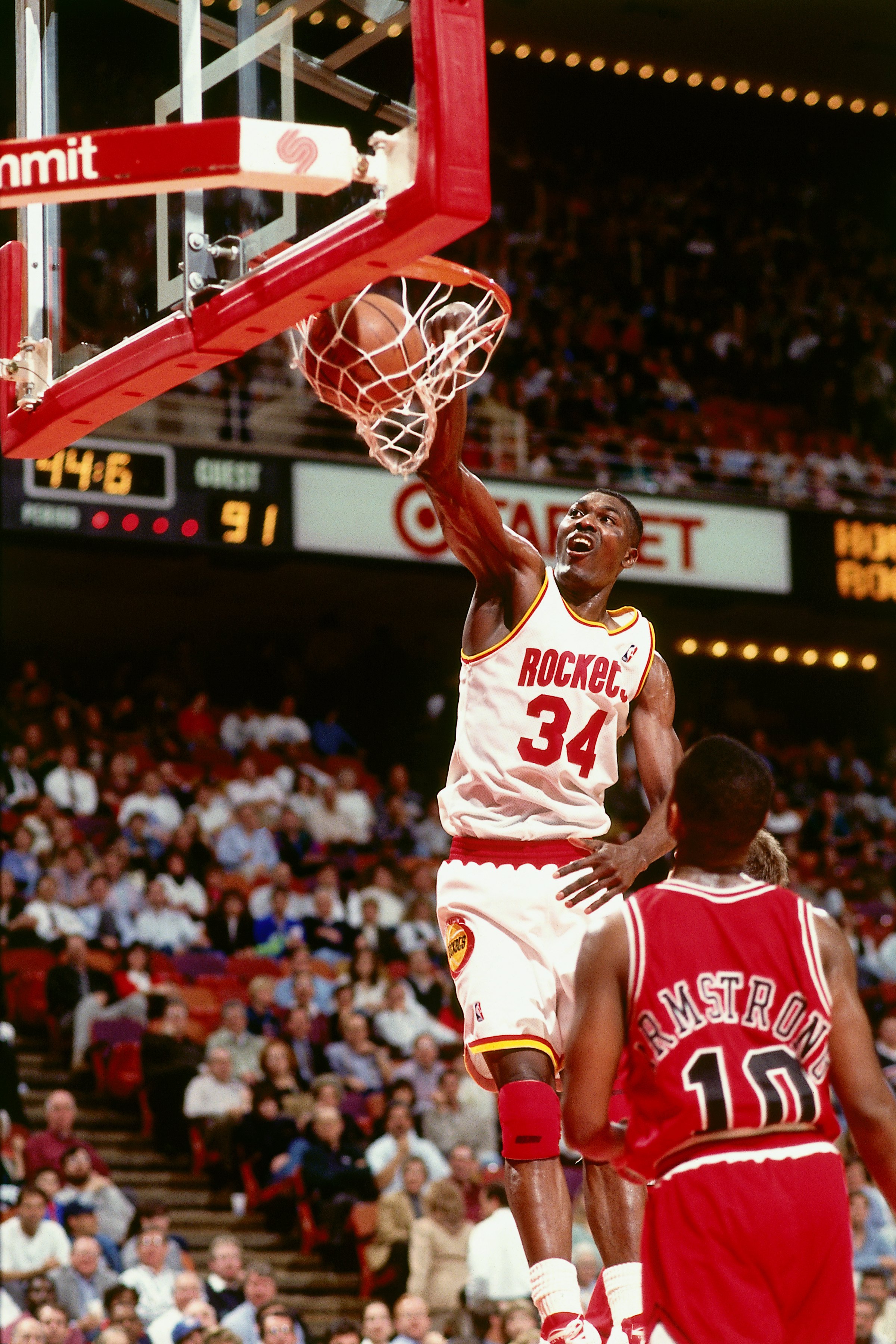
Top 100 NBA Players: #10 - Hakeem Olajuwon


Hakeem Olajuwon

Teams

Houston Rockets - 1984-01

Toronto Raptors - 2001-02


Playoffs

Appearances - 15 (1985,1986,1987,1988,1989,1990,1991,1993,1994,1995,1996,1997,1998,1999,2002)

Conference Finals - 4 (1986,1994,1995,1997)

NBA Finals - 3 (1986,1994,1995)

Championships - 2 (1994,1995)


Awards and Honors

MVP - 1 (1994)

Finals MVP - 2 (1994,1995)

Defensive Player of the Year - 2 (1993,1994)

All-NBA First Team - 6 (1986,1987,1988,1989,1990,1993,1994,1995,1996,1997)

All-NBA Second Team - 3 (1985,1986,1990,1996)

All-NBA Third Team - 3 (1991,1992,1995,1999)

Hall of Fame - 2008

*(actual in bold, deserved in italics)


All-Time Ranks

Total Blocks - #1

Blocks Per Game - #3

Total Steals - #10

Total Points - #14

Total Rebounds - #15

Rebounds Per Game - #33

Steals Per Game - #38

Points Per Game - #40

Field Goal Percentage - #97


League Leads

Total Blocks (#1-1990,1993, #2-1985,1992,1994, #3-1986,1987,1989, #4-1988,1991,1995, #5-1996)

Blocks Per Game (#1-1990,1991,1993, #2-1985,1992,1994,1995, #3-1986,1987, #4-1988,1989,1996)

Rebounds Per Game (#1-1989,1990, #3-1988, #4-1985,1993,1994, #5-1992)

Total Rebounds (#1-1989,1990, #3-1988, #4-1985,1993)

Total Points (#3-1993,1994, #4-1995,1996)

Points Per Game (#2-1995,1996, #3-1994, #4-1993)

Total Steals (#3-1989)

Field Goal Percentage (#3-1999)


After reaching the Final Four in three straight seasons with Houston, including back-to-back losses in the championship game, Hakeem Olajuwon was drafted by the Houston Rockets with the #1 overall pick in the 1984 NBA Draft.

Olajuwon was great in his rookie season, averaging 20.6 points, 11.9 rebounds, and 2.9 blocks per game, but did not win the Rookie of the Year because Michael Jordan was also a rookie that year. He and Ralph Sampson led the Rockets to the playoffs, but they lost in the first round.

The next season, Hakeem and the Rockets both continued to improve, with Olajuwon averaging 23.5 points, 11.5 rebounds, and 3.4 blocks and leading Houston on a deep playoff run. They faced the defending champions, the Lakers, in the Conference Finals, and beat them in 5 games, putting them in the NBA Finals for the second time in team history, but the Boston Celtics knocked off the young Rockets in a 6-game series.

The next season was the last one where Ralph Sampson would be healthy enough to play a full season, and it ended with the Rockets going out in the second round. He was eventually traded in the 1987-88 season, making Olajuwon the team's undisputed leader, but the team didn't add other stars around him, and they lost in the first round of the playoffs 4 straight times before missing the playoffs completely in 1992.

He did have some impressive individual seasons during that time, leading the league in rebounds in 1989 and 1990, and leading the league in blocks in 1990 and 1991. His 1990 averages of 24.3 points, 14.0 rebounds, and 4.6 blocks were especially impressive, but still not enough to make a title contender. He would have led the league in rebounding again in 1991, but he missed too many games to qualify for the leaderboard due to a broken eye socket he suffered after an elbow to the face. After the 1992 season, he publicly demanded a trade, but it never happened, and it turned out to be a good thing it didn't.

In the 1992-93 season, Olajuwon averaged 26.1 points, 13.0 rebounds, and led the league with 4.2 blocks per game, and he finished as the runner-up in MVP voting and won the Defensive Player of the Year award for the first time. Houston made it back to the playoffs, and nearly made the Conference Finals, losing to Seattle in 7 games in the second round.

The next season was one of the greatest in history. Olajuwon averaged 27.3 points, 11.9 rebounds, a career high 3.6 assists, and 3.7 blocks while leading Houston to 58 wins. His performance earned him both the MVP and Defensive Player of the Year awards, a rare feat, but then he led the Rockets to the championship, beating Patrick Ewing and the Knicks in the Finals in 7 games, earning the Finals MVP and becoming the only player in history to earn all three of those major awards in the same season.

He averaged a career high 27.8 points the next year, but the Rockets struggled, ending up as the 6th seed in the West. They added Clyde Drexler, Olajuwon's college teammate, in a late-season trade, and the reunion, helped both players, and the pair led Houston back to the NBA Finals, where they swept Shaq and the Magic in 4 games, with Hakeem averaging 33 points per game in the Finals to repeat as Finals MVP.

After falling in the second round to Seattle the next year, the Rockets added Charles Barkley in an attempt to make one last run at a championship, and the star trio was able to get the Rockets all the way back to the Conference Finals, but they fell to Malone, Stockton, and the Jazz in 6 games.

Olajuwon missed more than 2 months in the middle of the next season due to injury, and the result was the worst season of his career to that point, averaging only 16.4 points to end his streak of 13 straight seasons of more than 20 points per game. He had one more strong season after that, averaging 18.9 points and 9.6 rebounds, but he was the only remaining star on the team after Drexler and Barkley had retired, and the Rockets lost in the first round. 

Olajuwon missed a lot of games due to injury over the next 2 years, and the team started to rebuild with younger stars, leading them to trade him away to the Toronto Raptors in 2001. He played one final season north of the border, averaging only 7.1 points per game before retiring in the summer of 2002.

In addition to his awards, which include an MVP, 2 Finals MVPs, and 2 DPOY awards, Olajuwon is the all-time leader in blocked shots and #10 in steals, while also ranking 14th in points and 15th in rebounds, the only player to appear in the top 15 in four of the five major categories. He also led the league in rebounding twice and blocked shots 3 times, and is the only player to ever record 200 blocks and 200 steals in the same season, and he is easily one of the greatest to ever play the game.


Thursday, September 30, 2021

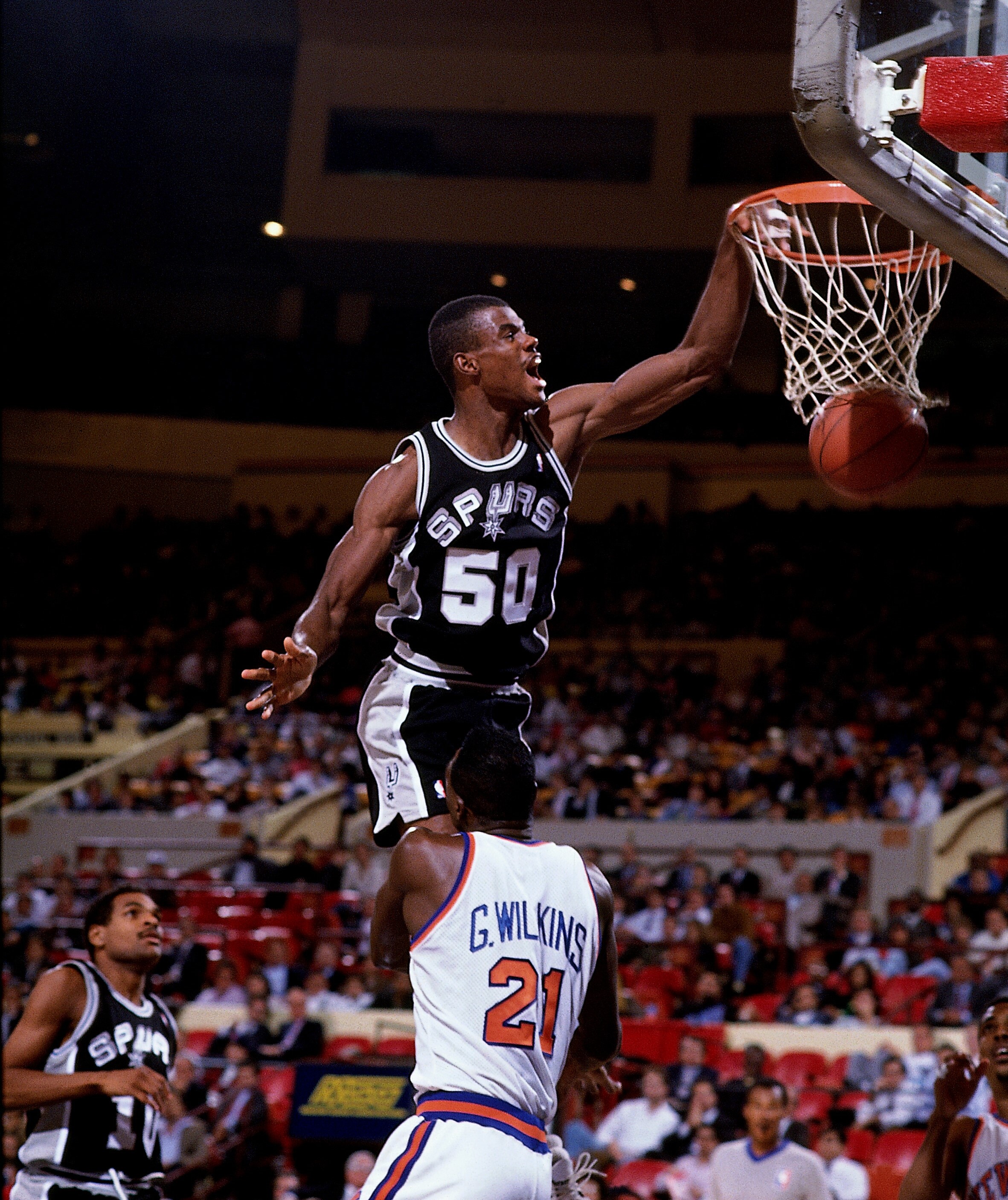
Top 100 NBA Players: #31 - David Robinson


David Robinson

Teams

San Antonio Spurs - 1989-03


Playoffs

Appearances - 12 (1990,1991,1993,1994,1995,1996,1998,1999,2000,2001,2002,2003)

Conference Finals - 4 (1995,1999,2001,2003)

NBA Finals - 2 (1999,2003)

Championships - 2 (1999,2003)


Awards and Honors

Rookie of the Year - 1990

MVP - 1 (1995)

Defensive Player of the Year - 1 (1992)

All-NBA First Team - 4 (1991,1992,1994,1995,1996,1998)

All-NBA Second Team - 2 (1990,1992,1993,1994,1998,1999)

All-NBA Third Team - 4 (1990,1993,2000,2001)

Hall of Fame - 2009

*(actual in bold, deserved in italics)


All-Time Ranks

Blocks Per Game - #4

Total Blocks - #7

Total Rebounds - #36

Rebounds Per Game - #42

Points Per Game - #43

Total Points - #46

Total Steals - #62

Field Goal Percentage - #78


League Leads

Total Blocks (#1-1991,1992, #3-1990,1994,1995,1996, #5-1993,2000)

Blocks Per Game (#1-1992, #2-1991, #3-1990,1994,1996, #4-1995, #5-1993,1998)

Rebounds Per Game (#1-1991, #2-1990,1996, #4-1992, #5-1998)

Total Rebounds (#1-1991,1996, #2-1990, #4-1995)

Total Points (#1-1994, #2-1995, #3-1996, #5-1991)

Points Per Game (#1-1994, #3-1995, #5-1996)

Field Goal Percentage (#5-1999)

Steals Per Game (#5-1992)


David Robinson was the college basketball player of the year at Navy in 1987, averaging 28.2 points, 11.8 rebounds, and 4.5 blocks per game, and was then drafted by the San Antonio Spurs with the #1 overall pick in the draft. Because he was a Navy graduate, he had to fulfill a 2-year active duty commitment before he was able to join the Spurs.

The Spurs won only 21 games the year before Robinson arrived, and in his rookie year he engineered the biggest single-season turnaround in league history at the time, leading them to 56 wins. He was the unanimous Rookie of the Year after averaging 24.3 points, 12.0 rebounds, and 3.9 blocks that year, and led them to the second round of the playoffs.

In his second season, he was already one of the best players in the entire league. He averaged 25.6 points and 3.9 blocks, and led the league with 13.0 rebounds per game, and made his first appearance on the All-NBA First Team. In his third season, he led the league in blocks with an incredible 4.5 per game and was named the Defensive Player of the Year, but a late-season injury kept him out of the playoffs, where the Spurs were swept in the first round.

In 1993-94, Robinson got into a race for the scoring title with Shaq, and knowing that he needed 70 points to lead the league, Robinson closed the season with a 71-point game against the Clippers to finish best in the league at 29.8 per game. He is one of only 6 players to ever score 70 in a single game, along with Wilt (6 times), Kobe, Baylor, Devin Booker, and David Thompson. 

The next year, Robinson was named the MVP after averaging 27.6 points, 10.8 rebounds, and 3.2 blocks per game and leading the Spurs to the best record in the league. He was able to lead the Spurs to the Conference Finals for the first time in his career, but they lost to Hakeem Olajuwon and the defending-champion Rockets one step short of the Finals.

After one more great year where the Spurs fell short in the playoffs, Robinson suffered a preseason back injury that caused him to miss more than a month at the start of the season, then broke his foot just 6 games after returning, which ended his season early. His absence caused the Spurs to plummet to the bottom of the league, but it turned out to be a good thing, because the Spurs won the Draft lottery and picked Tim Duncan with the #1 pick.

Robinson had one more year as the team's best player after returning from injury, averaging 21.6 points and 10.6 rebounds in his comeback season. The next year, Duncan became the team's biggest star, though Robinson was still very good, averaging 15.8 points and 10.0 rebounds, and the Spurs dominated their way to the NBA Finals, losing only one game in the first 3 rounds. In the first Finals in franchise history, the Spurs beat New York in 5 games, and Robinson finally had a championship.

The Spurs reached the Conference Finals again 2 years later, but were swept by the Lakers, then lost to LA again in the second round the year after that. In Robinson's final season, the Spurs were finally able to get back to the Finals, and Robinson finished off strong, scoring 13 points and grabbing 17 rebounds in the decisive Game 6 against New Jersey, finishing off his career with a second ring.

Robinson was one of the best players on earth in his first 7 seasons, leading the league once each in rebounding, blocks, and scoring, winning the Rookie of the Year, Defensive Player of the Year, MVP, and an Olympic Gold Medal in the process. He was definitely slowed down by the injuries he suffered in 1996, but he took on his slightly-reduced role well, and was a big part of their first title, and played well again to win his second. It's sad that injuries took him down right at his peak, because there is no telling how great he could have been, but he had already done enough to prove that he is one of the best basketball players of all time.


Friday, September 24, 2021

Top 100 NBA Players: #37 - Artis Gilmore


Artis Gilmore

Teams

Kentucky Colonels (ABA) - 1971-76

Chicago Bulls - 1976-82, 1987

San Antonio Spurs - 1982-87

Boston Celtics - 1988


Playoffs

Appearances - 11 (1972,1973,1974,1975,1976,1977,1981,1983,1985,1986,1988)

Conference Finals - 5 (1973,1974,1975,1983,1988)

ABA Finals - 2 (1973,1975)

Championships - 1 (1975)


Awards and Honors

Rookie of the Year - 1972

ABA MVP - 1972

Finals MVP - 1975

All-ABA/NBA First Team - 5 (1972,1973,1974,1975,1976,1978)

All-NBA Second Team - 0 (1977,1979,1981,1983)

Hall of Fame - 2011

*(actual in bold, deserved in italics)


All-Time Ranks

Total Blocks - #4

Total Rebounds - #5

Field Goal Percentage - #9

Blocks Per Game - #14

Rebounds Per Game - #15

Total Points - #27


League Leads

Field Goal Percentage (#1-1972,1973,1981,1982,1983,1984, #2-1975,1976,1985,1986,1987, #3-1978,1980, #4-1979)

Total Blocks (#1-1972,1973,1975, #2-1974, #3-1976,1982, #4-1977,1981,1983, #5-1978,1985)

Total Rebounds (#1-1972,1973,1974,1975,1976, #2-1979, #3-1977, #4-1978,1983)

Blocks Per Game (#2-1974,1975, #3-1976, #4-1977,1982, #5-1981,1983,1984)

Rebounds Per Game (#1-1972,1973,1974,1976, #2-1975, #4-1977,1979,1983)

Total Points (#3-1976, #4-1975)

Points Per Game (#4-1976)


Artis Gilmore averaged 23.3 points and 22.7 rebounds per game in 2 seasons with the Jacksonville Dolphins, leading them to the national championship game as a junior, before being drafted #7 overall by the Kentucky Colonels in the ABA Draft. He was also a 7th round pick by the Bulls in the NBA, but it was already known that he was headed to the ABA, hence the low pick.

Gilmore was a dominant force from his first day in the ABA. He averaged 23.8 points, a league-leading 17.8 rebounds, and 5.0 blocks per game while also leading the league with a .598 field goal percentage, which earned him both the Rookie of the Year and MVP awards, both narrowly over Julius Erving, who averaged 27.3 points and 15.7 rebounds. The Colonels finished with the best record in ABA history, but lost in the first round of the playoffs to the Nets in 6 games.

Gilmore led the league in rebounding and field goal percentage for the second year in a row in 1973, and this time was able to lead the Colonels to the ABA Finals, where they lost to the Indiana Pacers in a very tight 7-game series. He won his third rebounding title in a row the next year with a career high of 18.3 per game, but they lost in the Conference Finals to the Nets again.

They finally broke through in 1975. Gilmore led the league in total blocks and rebounds, but not in average, making it the first time in his career he didn't lead the league in any per game category. He did, however, lead the Colonels back to the ABA Finals, and he clinched the championship with 28 points and 31 rebounds in Game 5 to beat the Indiana Pacers, earning himself the Finals MVP as a result.

Gilmore averaged a career high 24.6 points per game the next year, and led the league in rebounding for the 4th time as he grabbed 15.5 per game, but the Colonels fell to the Nuggets in the second round of the playoffs, ending their chance at a repeat, and closing out the Colonels franchise, which wasn't invited to join the NBA in that summer's merger.

Because his team didn't join the NBA, Gilmore was put into a dispersal draft, where he was the top overall pick by the Chicago Bulls, who had drafted him 5 years earlier as well. Gilmore played 6 seasons for the Bulls, but the team only made 2 playoff appearances during that time, both ending early. He led the league in field goal percentage in his final 2 seasons in Chicago, including an amazing .670 average in 1981.

Gilmore was traded to the San Antonio Spurs in 1982, and continued to lead the league in shooting percentage, making it 4 seasons in a row by 1984. In his first season with the Spurs, he and George Gervin led the Spurs to the Western Conference Finals, but they lost in 6 games to the Lakers in the deepest playoff run he would have after joining the NBA.

After 5 seasons with the Spurs, Gilmore's game had started to decline, with averages of 11.4 points and 7.1 rebounds in his final season with San Antonio. He signed with the Bulls as a free agent, but was released on the day after Christmas after hardly playing in the first couple months of the season, then he signed with the Celtics to finish the season, tagging along with Larry Bird, Kevin McHale, and Robert Parish to plan in one final Conference Final before retiring.

Gilmore's biggest success came in the ABA, where he was a Rookie of the Year, MVP, and Finals MVP while winning 4 rebounding titles and 2 field goal shooting titles. He was still a very good center in the NBA for almost a decade, leading the league in field goal percentage 4 straight times, and he is currently #4 on the all-time leaderboard for blocks, #5 for rebounds, and #9 for shooting percentage, which just goes to show that even though many people don't remember him well, he was one of the greatest to ever play the game.


Monday, September 20, 2021

Top 100 NBA Players: #41 - Dwight Howard


Dwight Howard

Teams

Orlando Magic - 2004-12

Los Angeles Lakers - 2012-13, 2019-20, present

Houston Rockets - 2013-16

Atlanta Hawks - 2016-17

Charlotte Hornets - 2017-18

Washington Wizards - 2018-19

Philadelphia 76ers - 2020-21


Playoffs

Appearances - 12 (2007,2008,2009,2010,2011,2013,2014,2015,2016,2017,2020,2021)

Conference Finals - 4 (2009,2010,2015,2020)

NBA Finals - 2 (2009,2020)

Championships - 1 (2020)


Awards and Honors

Defensive Player of the Year - 3 (2009,2010,2011)

All-NBA First Team - 5 (2008,2009,2010,2011,2012)

All-NBA Second Team - 1 (2008,2010,2014)

All-NBA Third Team - 2 (2007,2012,2013,2014)

*(actual in bold, deserved in italics)


All-Time Ranks

Field Goal Percentage - #7

Total Rebounds - #12

Total Blocks - #15

Rebounds Per Game - #19

Blocks Per Game - #29

Total Points - #63


League Leads

Total Rebounds (#1-2006,2007,2008,2009,2010,2012, #2-2011,2013, #3-2018, #5-2005,2014,2016)

Rebounds Per Game (#1-2008,2009,2010,2012,2013, #2-2006,2011, #3-2007,2018, #4-2014,2016, #5-2017)

Field Goal Percentage (#1-2010, #2-2007,2011,2012,2013,2016, #3-2008,2014, #4-2009,2017)

Total Blocks (#1-2009,2010, #3-2011,2018, #4-2008,2013)

Blocks Per Game (#1-2009,2010, #3-2012, #4-2011, #5-2008,2013)


After his senior season at Southwest Atlanta Christian Academy in which he averaged 25 points, 18 rebounds, and 8.1 blocks per game, Dwight Howard decided to skip college and enter the NBA Draft, where he was drafted by the Orlando Magic with the #1 overall pick.

As a rookie, he averaged 12.0 points and 10.0 rebounds per game, becoming the youngest player in history to average a double-double and finishing 3rd in the Rookie of the Year voting. He raised those averages to 15.8 points and 12.5 rebounds in his second year, and had more rebounds than any other player in the league.

In his third season, he made his first All-Star team and the All-NBA Third Team after averaging 17.6 points and 12.3 rebounds, again leading the league in total rebounds, and helped the Magic make the playoffs for the first time in his career. They lost in the first round, but Howard was just starting to reach his potential.

In 2007-08, Howard was named to the All-NBA First Team after averaging 20.7 points and leading the league with 14.2 rebounds per game, and he led the Magic to a playoff series victory for the first time as well, though their run would end in the second round. He averaged 18.9 points and 15.8 rebounds in the playoffs, but the Pistons stopped them for the second straight year.

The next season was the best of his career. He averaged 20.6 points, and led the league in rebounds with 13.8 and blocks with 2.9 per game, earning him the Defensive Player of the Year award, becoming the youngest to ever win the award at age 23. In the playoffs, he was able to push the Magic through the first two rounds, then had 40 points and 14 rebounds in the deciding game of the Conference Finals to help Orlando beat Cleveland and advance to the Finals, where they would fall to the Lakers in 5 games.

The next year Howard became the first player ever to lead the league in both rebounds and blocks in the same season twice, and he did it twice in a row. He also led the league in field goal percentage with a rate of .612 and won his second Defensive Player of the Year award in a row, but this time their playoff run was stopped in the Conference Finals by the Celtics, keeping them from a repeat Finals appearance.

Howard had another great season in 2010-11, setting a career high with 22.9 points per game to go along with 14.1 rebounds and 2.4 blocks, and he won the Defensive Player of the Year award for the third time in a row, the first and so far only player to ever accomplish that feat, but the Magic lost in the first round of the playoffs. 

In 2011-12, Howard led the league in rebounding for the 4th time in 5 seasons, but was not happy in Orlando, asking to be traded to Brooklyn, and his season ended a month early when he decided to have back surgery. Orlando did trade him after the season, but they sent him to the Lakers instead of the Nets.

Howard numbers were down in his season with the Lakers, but he was still good enough to win the rebounding title for a 5th time with an average of 12.4 per game, but he didn't get along with Kobe Bryant and didn't feel like he fit well in their system, so he left the team as a free agent after the season.

He signed with Houston for the 2013-14 season, and posted good averages of 18.3 points and 12.2 rebounds in his first season with the team, but they failed to advance past the first round again. He missed half of the next season with a knee injury, but was able to return in time for the playoffs, where he averaged 16.4 points and 14 rebounds to help the Rockets reach the Conference Finals, but they fell to the Golden State Warriors one step shy of the Finals.

He played one more season with the Rockets, but decided to leave as a free agent after that season after his relationship with James Harden soured. He signed with his hometown Hawks, but again wore out his welcome quickly and was traded after one year to the Hornets. He had a bit of a resurgence in Charlotte, averaging 16.6 points and 12.5 rebounds for the season, but again was traded after just one season, this time to the Nets, who immediately released him.

He signed with the Washington Wizards, but a sore backside kept him out until the regular season had already started. He finally joined the team and played in 9 games before deciding to have spinal surgery to relieve his pain, which caused him to miss the rest of the season. He wanted to return to the team, but they traded him after the season for the third year in a row, this time to Memphis, who released him.

He signed to return to the Los Angeles Lakers, where he came off the bench for the first time in his career, averaging only 7.5 points and 7.3 rebounds per game, and his averaged dropped even more in the playoffs, but it paid off in the end, as he was able to win a championship for the first time in his career.

He signed as a free agent with Philadelphia last season, once again in a reserve role, then decided to return to the Lakers as a free agent last month to try to earn another title. His best years are obviously behind him, but he still has the ability to make contributions to a winning team.

Howard was a monster early in his career, especially in Orlando. He won 3 DPOY awards, 5 rebounding titles, 2 block titles, and led the league in shooting percentage once. He led the Magic all the way to the NBA Finals once, and to the Conference Finals the next year, and is the active leader in both rebounds and blocks, while ranking in the top 15 all time in both categories. He was well past his prime before he won a championship, but there is no denying how dominant he was for about a decade in the post, and that is enough to put him on this list of the greatest players of all time.


Saturday, August 28, 2021

Top 100 NBA Players: #64 - Ben Wallace


Ben Wallace

Teams

Washington Bullets/Wizards - 1996-99

Orlando Magic - 1999-00

Detroit Pistons - 2000-06, 2009-12

Chicago Bulls - 2006-08

Cleveland Cavaliers - 2008-09


Playoffs

Appearances - 8 (2002,2003,2004,2005,2006,2007,2008,2009)

Conference Finals - 5 (2003,2004,2005,2006,2009)

NBA Finals - 2 (2004,2005)

Championships - 1 (2004)


Awards and Honors

All-NBA Second Team - 3 (2003,2004,2006)

All-NBA Third Team - 2 (2002,2003,2005,2006)

Defensive Player of the Year - 4 (2002,2003,2005,2006)

Finals MVP - 0 (2004)

Hall of Fame - 2021

*(actual in bold, deserved in italics)


All-Time Ranks

Total Blocks - #16

Blocks Per Game - #25

Total Rebounds - #37

Total Steals - #65

Rebounds Per Game - #75


League Leads

Total Rebounds (#1-2001,2003, #2-2002,2004, #3-2005, #4-2006)

Rebounds Per Game (#1-2002,2003, #3-2001,2005, #3-2004, #4-2006)

Total Blocks (#1-2002, #2-2004,2005, #3-2003, #5-2006)

Blocks Per Game (#1-2002, #2-2003,2004, #5-2005)


Ben Wallace played two seasons of college basketball at a junior college, then transferred to Virginia Union, a Division II school, where he averaged 13.4 points, 10.0 rebounds, and 3.7 blocks per game, and helped his team reach the Division II Final Four, but he was not drafted by any NBA team in the 1996 Draft.

Wallace was able to sign as a free agent with the Washington Bullets, where he hardly played during his first two seasons, but in his third year he averaged 6.0 points, 8.3 rebounds, and 2.0 blocks per game off the bench, and he started to be recognized as a defensive threat.

After 3 years in Washington, he was traded to Orlando, where he would get his first opportunity to be a full-time starter, though he was still only on the court for 24 minutes per game. After the season, Orlando traded him as part of a package to Detroit for Grant Hill, a trade that turned out better for the Pistons than the Magic, surprisingly.

In his first season in Detroit, he led the league in total rebounds, and the next year, he led the league in rebounding with 13 per game, blocks with 3.5 per game, and won the Defensive Player of the Year award. He also got to play in the playoffs for the first time in his career, helping the Pistons to the second round, where they fell to the Celtics.

2002-03 was Wallace's best regular season of his career. He still wasn't a big scorer, with only 6.9 points per game, but he led the league with 15.4 rebounds per game, and blocked 3.2 shots per game, which earned him his second straight DPOY. In the playoffs, the Pistons went one step further than the year before, reaching the Conference Finals before falling to the Nets, even with Wallace averaging 16.3 rebounds per game in the playoffs.

The next year, Wallace increased his scoring to 9.5 per game, and still grabbed 12.4 boards per game, and the Pistons were able to fight their way through the Eastern Conference playoffs to reach their first NBA Finals in 14 years, where they faced the heavily-favored Lakers. The Pistons would go on to surprise everyone by winning the championship in 5 games, with Wallace putting up 18 points and 22 rebounds in the deciding game. Chauncey Billups was named the Finals MVP, but Wallace probably should have won it, especially after his dominant Game 5 performance against Shaq.

Wallace followed up the championship season with another of his best, setting his career high with 9.7 points per game, to go along with 12.2 rebounds and 2.4 blocks, which earned him his third DPOY award. The Pistons again made it through the Eastern Conference playoffs, this time to face the San Antonio Spurs in the Finals, but Tim Duncan was too much, and the Pistons lost in 7 games.

Wallace again took home the DPOY award in 2006, becoming only the second player to win it 4 times, joining Dikembe Mutombo, and the Pistons made it to the Conference Finals for the 4th year in a row, but this time they weren't able to reach the NBA Finals, falling instead to the Miami Heat, with Wallace sitting out the 4th quarter of the deciding game after an altercation with his coach.

The relationship was not able to be fixed, and Wallace left Detroit after the season to sign with Chicago as a free agent. Wallace played nearly 2 seasons with the Bulls, but saw his numbers drop due to knee issues, though he didn't miss many games. He was trade to Cleveland late in 2008, and he was able to reach one more Conference Final series with them, though he was not the star he had been in Detroit.

After a year and a half with Cleveland, he was traded to the Phoenix Suns for Shaq, and was immediately released. He went back to Detroit to finish out his career, playing 3 more seasons with the Pistons, though at a much lower level than in his previous stint with the team.

Wallace is a very unique player. He is the only player on this list to never average 10 points per game in a single season, and the only player on this list who was never drafted by an NBA team since the draft began. He won 4 DPOY awards, the most of any player ever, and led the league in blocks and rebounds in the same season, one of only 5 players to ever do that. Add in a championship where he was probably the best player, and 3 other deep playoff runs during his prime, and you have a player who belong on the list of the greatest players of all time.


Monday, August 16, 2021

Top 100 NBA Players: #76 - Anthony Davis


Anthony Davis

Teams

New Orleans Hornets/Pelicans - 2012-19

Los Angeles Lakers - 2019-present


Playoffs

Appearances - 4 (2015,2018,2020,2021)

Conference Finals - 1 (2020)

NBA Finals - 1 (2020)

Championships - 1 (2020)


Awards and Honors

All-NBA First Team - 4 (2015,2017,2018,2020)

All-NBA Second Team - 0 (2015,2017,2020)

*(actual in bold, deserved in italics)


All-Time Ranks

Blocks Per Game - #15

Points Per Game - #23

Total Blocks - #51

Rebounds Per Game - #55

Field Goal Percentage - #89


League Leads

Blocks Per Game (#1-2014,2015,2018, #2-2017, #3-2020, #4-2016)

Total Blocks (#1-2015,2018, #3-2014,2017,2020)

Points Per Game (#2-2018, #4-2015,2017)

Total Points (#3-2018, #4-2017)

Total Rebounds (#5-2018)

Rebounds Per Game (#5-2018)


Anthony Davis had an incredible year in 2012. He was name the College Player of the Year, then led Kentucky to the National Championship, where he was named Most Outstanding Player, then he was the #1 overall pick by the New Orleans Hornets, and then he was picked to play on the Olympic Team that won the gold medal in London.

He had a solid rookie year, with averages of 13.5 points and 8.2 rebounds, but lost the Rookie of the year award to Damian Lillard. The next season he made the jump to superstar, averaging 20.8 points, 10.0 rebounds, and a league-leading 2.8 blocks per game.

The next year he was even better, boosting his scoring to 24.4 per game and leading the league in blocks for the second year in a row. He was also named to the All-NBA First Team for the first time in his career, and led the Pelicans to the playoffs, where they were swept in the first round despite Davis averaging 31 points and 11 rebounds per game.

His next season ended early because of injuries to his shoulder and his knee, but he came back better than ever the next year, putting up 28 points per game and 11.8 rebounds, and he broke the All-Star Game scoring record by putting up 52 points, beating Wilt Chamberlain's old record of 42, and was easily named the MVP of that game. Even though his team missed the playoffs, he was still named to the All-NBA First Team again.

The next year he had the best regular season of his career so far. He set a new career-high with 28.1 points, along with 11.1 rebounds and 2.6 blocks, which led the league for the third time in his career. He also made the All-NBA Team once again, and was able to win a playoff series for the first time as well.

He requested a trade from New Orleans in the middle of the next season, and when he wasn't dealt before the trade deadline, the Pelicans decided to play him in a more limited role for the rest of the season, but he was still among the best players in the league still. After the season, he got his wish, getting traded to the Lakers to join LeBron James.

In his first season with LA, he made the All-NBA First Team for the 4th time, and the season ended just the way he had hoped when he was traded, with him providing LeBron James with the second star needed to win an NBA title. That win made Davis the only player ever to win an NBA title, NCAA title, Olympic gold medal, and FIBA gold medal.

Last season, Davis missed 30 games due to calf and heel injuries, by far the longest absence of his career, and though he returned for the playoffs, he suffered a groin injury that pretty much ended his season in the middle of Game 4 of the first round.

Davis is the second-youngest player on this list, at only 28 years old, but he has already done a lot in his career. He has led the league in blocks 3 times, scored over 20 points per game 8 times in 9 seasons, and been the second-best player on an NBA Champion. He has suffered a lot of injuries in his career, but very few that held him out for any significant amount of time, and with many more years of his prime yet to come, he should find himself much higher in future editions of this list of the greatest players of all time.


Sunday, August 15, 2021

Top 100 NBA Players: #77 - Dikembe Mutombo


Dikembe Mutombo

Teams

Denver Nuggets - 1991-96

Atlanta Hawks - 1996-01

Philadelphia 76ers - 2001-02

New Jersey Nets - 2002-03

New York Knicks - 2003-04

Houston Rockets - 2004-09


Playoffs

Appearances - 13 (1994,1995,1997,1998,1999,2001,2002,2003,2004,2005,2007,2008,2009)

Conference Finals - 1 (2001)

NBA Finals - 2 (2001,2003)

Championships - 0


Awards and Honors

All-NBA Second Team - 1 (2001)

All-NBA Third Team - 2 (1998,2001,2002)

Defensive Player of the Year - 4 (1995,1997,1998,2001)

Hall of Fame - 2015

*(actual in bold, deserved in italics)


All-Time Ranks

Total Blocks - #2

Blocks Per Game - #7

Total Rebounds - #21

Rebounds Per Game - #52

Field Goal Percentage - #74


League Leads

Blocks Per Game (#1-1994,1995,1996, #2-1997,1998,2000, #3-1993, #4-1999, #5-1992,2001,2002)

Total Blocks (#1-1994,1995,1996,1997,1998, #2-1993,2000, #4-1999,2002, #5-2001)

Total Rebounds (#1-1995,1997,1999,2000, #2-2001, #3-1993,1994,1998, #4-1996)

Rebounds Per Game (#1-2000,2001, #2-1995,1997, #3-1992,1993,1996,1999, #4-1998)

Field Goal Percentage (#2-1994,2000)


When Dikembe Mutombo left the Congo to attend Georgetown University at age 21, it wasn't to play basketball, it was to study medicine. At 7'2", he drew the attention of the basketball coach, who talked him into joining the team, and he went on to win the Conference Defensive Player of the Year award in both his junior and senior years, and he was drafted #4 overall by the Denver Nuggets.

He made an immediate impact in Denver, averaging 16.6 points, 12.3 rebounds, and 3 blocks per game, and was named an All-Star. He would never score near that much again, but his rebounding and blocks would continue to rise for several more years.

In 1994, Mutombo led the league in blocks for the first time, swatting 4.1 shots per game, and he led the Nuggets to one of the biggest playoff upsets of all time. Denver was facing #1 seed Seattle in the first round, and after falling behind 0-2, they came back to win 3 straight to become the first 8-seed ever to win a playoff series. He set a record in that series by blocking 31 shots, the most ever in 5 games in the playoffs.

He won his first Defensive Player of the Year award the next year and won the blocks title two more times, but the Nuggets weren't making progress, failing to win a single playoff game in those 2 years, so Mutombo left as a free agent to join the Atlanta Hawks. 

Mutombo won the Defensive Player of the Year in each of his first 2 seasons with the Hawks, averaging nearly identical stat lines in each season, with 13 points, 11 rebounds and 3 blocks per game. A couple of years later, he led the league in rebounding for the first time, grabbing a career-high 14.1 per game, then did it again in 2001.

Mutombo was traded in the middle of that season to the 76ers, who were #1 in the East, but had just lost their center for the season. He won his record-setting 4th Defensive Player of the Year award that year to go with the rebounding title, and reached his first NBA Finals led by Allen Iverson. In Game 7 of the Conference Finals, Mutombo led the way with 23 points, 19 rebounds, and 7 blocks, but they would fall to the Lakers in the Finals in 5 games.

After 1 more year in Philly, he was traded to the Nets, who were looking to make a repeat trip to the Finals, but he missed most of the season and half of the playoffs with injuries, which gave him the interesting situation of having played in the Conference Finals only once in his career, but the NBA Finals twice. After the Nets lost to the Spurs in the Finals, Mutombo was waived, and joined the Knicks as a free agent.

After one season as a starter in New York, Mutombo left for Houston, where he spent his final 5 seasons, mostly as a backup to Yao Ming, and even though he was playing less than 20 minutes per game, he still managed to block at least one shot per game. He announced that the 2009 season would be his last, and it ended just slightly earlier than expected when he injured his knee in a playoff game.

Aside from his rookie season, Mutombo was never much of a scorer, and his career average ended up below 10, a rarity on this list. He more than made up for that with his shot-blocking, where his average is the 7th-best of all time and his total is #2, behind only Hakeem Olajuwon. He's also #21 in rebounds all-time, and has more DPOY awards than any other player, and for sure belongs on this list of the greatest players of all time.


Friday, August 13, 2021

Top 100 NBA Players: #79 - Alonzo Mourning


Alonzo Mourning

Teams

Charlotte Hornets - 1992-95

Miami Heat - 1995-02, 2005-08

New Jersey Nets - 2003-04


Playoffs

Appearances - 11 (1993,1995,1996,1997,1998,1999,2000,2001,2005,2006,2007)

Conference Finals - 3 (1997,2005,2006)

NBA Finals - 1 (2006)

Championships - 1 (2006)


Awards and Honors

All-NBA First Team - 1 (1999,2000)

All-NBA Second Team - 1 (1993,1999,2000)

Defensive Player of the Year - 2 (1999,2000)

Hall of Fame - 2014

*(actual in bold, deserved in italics)


All-Time Ranks

Blocks Per Game - #6

Total Blocks - #12

Field Goal Percentage - #56


League Leads

Blocks Per Game (#1-1999,2000, #3-2002,2006, #4-1993,1994,1997, #5-1995,1996)

Total Blocks (#1-1999,2000, #4-1993,1997, #5-1995,2002)

Field Goal Percentage (#3-1998,2000, #4-1999)


Alonzo Mourning was a 3-time Big East Defensive Player of the Year at Georgetown, only losing the award to teammate Dikembe Mutombo as a junior, and he averaged 5 blocks per game in both his freshman and senior seasons, which led to him being drafted #2 overall by the Charlotte Hornets in 1992, just after Shaquille O'Neal.

Mourning was already among the best players in the league as a rookie. He averaged 21 points, 10.3 rebounds, and 3.5 blocks per game, which was #4 in the league. In most seasons, he would have easily won the Rookie of the Year, but Shaq was also a rookie, and he was even better. Still, Mourning and Larry Johnson led the Hornets to the second round of the playoffs.

He played 2 more years with the Hornets, but the team wasn't able to see any more postseason success, and the relationship between Johnson and Mourning soured, leading to Mourning being traded in 1995 to the Miami Heat, where he would really make his mark. He averaged a career-high 23.2 points per game in his first year in Miami, but the team was swept in the first round by the record-setting 72-win Bulls team.

The following year, Mourning, along with Tim Hardaway, led the Heat to 61 wins, a franchise record at the time, and they also led the team to the Eastern Conference Finals, where they again ran into the Bulls and fell in 5 games. 

After missing the beginning of the next season due to knee surgery, Mourning slowly worked his way back to full strength, and he really hit his stride in the next two seasons, when he led the league in blocked shots twice in a row, averaging 3.9 and 3.7 per game, and was given the Defensive Player of the Year award both times as a result. He also averaged over 20 points and 9 rebounds per game in those seasons, showing that he was a star on both ends of the court.

Right after that season is when his health problems started. He missed most of the next season battling kidney disease, then returned for one more full season with Miami, but he was obviously not at the same level he had been at before. He missed his entire final season with the Heat for the same reason, then signed as a free agent with the New Jersey Nets in the offseason.

His time with the Nets did not go well. After just 12 games, he retired from the league because of his ongoing kidney issues, but after he was able to get a kidney transplant from his cousin, he began training and was able to make a comeback the next season. The Nets still didn't give him much of a role, and after making public complaints, he was traded to the Raptors, who immediately cut him due to his health issues.

He was able to return to the Heat late in the season on a smaller contract, and served as Shaq's backup for the remainder of his career, while also starting any time that Shaq was out, which was often. In 2006, while playing only 20 minutes per game, he was able to finish #3 in the league in blocks per game again, and even blocked 5 shots in the Heat's championship-clinching Game 6 against Dallas that year.

Mourning averaged at least 19 points, 9 rebounds, and 2 blocks per game in each of his first 8 seasons, and was just coming off of his best year when his health betrayed him. There's no telling how great he could have been, but his great early seasons, combined with his second career as a solid role player, make him one of the greatest to ever play the game.