Showing posts with label Field Goal Percentage Leader. Show all posts

Tuesday, October 26, 2021

Top 100 NBA Players: #5 - Shaquille O'Neal


Shaquille O'Neal

Teams

Orlando Magic - 1992-96

Los Angeles Lakers - 1996-04

Miami Heat - 2004-08

Phoenix Suns - 2008-09

Cleveland Cavaliers - 2009-10

Boston Celtics - 2010-11


Playoffs

Appearances - 17 (1994,1995,1996,1997,1998,1999,2000,2001,2002,2003,2004,2005,2006,2007,2008,2010,2011)

Conference Finals - 9 (1995,1996,1998,2000,2001,2002,2004,2005,2006)

NBA Finals - 6 (1995,2000,2001,2002,2004,2006)

Championships - 4 (2000,2001,2002,2006)


Awards and Honors

Rookie of the Year - 1993

MVP - 1 (1995,1999,2000,2001)

Finals MVP - 3 (2000,2001,2002)

All-NBA First Team - 8 (1993,1994,1995,1998,1999,2000,2001,2002,2003,2004,2005,2006)

All-NBA Second Team - 2 (1995,1996,1999,2005)

All-NBA Third Team - 4 (1994,1996,1997,2006,2009)

Hall of Fame - 2016

*(actual in bold, deserved in italics)


All-Time Ranks

Field Goal Percentage - #8

Total Blocks - #9

Total Points - #10

Total Rebounds - #16

Blocks Per Game - #17

Points Per Game - #24

Rebounds Per Game - #40


League Leads

Field Goal Percentage (#1-1994,1998,1999,2000,2001,2002,2004,2005,2006,2009, #2-1995,2003, #3-1996, #4-1993,1997,2008)

Points Per Game (#1-1995,2000, #2-1994,1998,1999,2002, #3-1996,2001, #4-2003)

Total Rebounds (#2-1993,1994,1995,2000, #4-2001)

Total Blocks (#3-1993,2000, #4-1994,2001,2005)

Total Points (#1-1995,1999,2000, #2-1994, #3-2001)

Rebounds Per Game (#2-1993,1994,2000, #3-1995,2001)

 Blocks Per Game (#2-1993, #3-1997,2000, #4-2001)


After winning the college Player of the Year award as a sophomore and averaging 24.1 points, 14.0 rebounds, and 5.2 blocks as a junior, Shaquille O'Neal entered the NBA Draft, where he was taken by the Orlando Magic with the #1 overall pick.

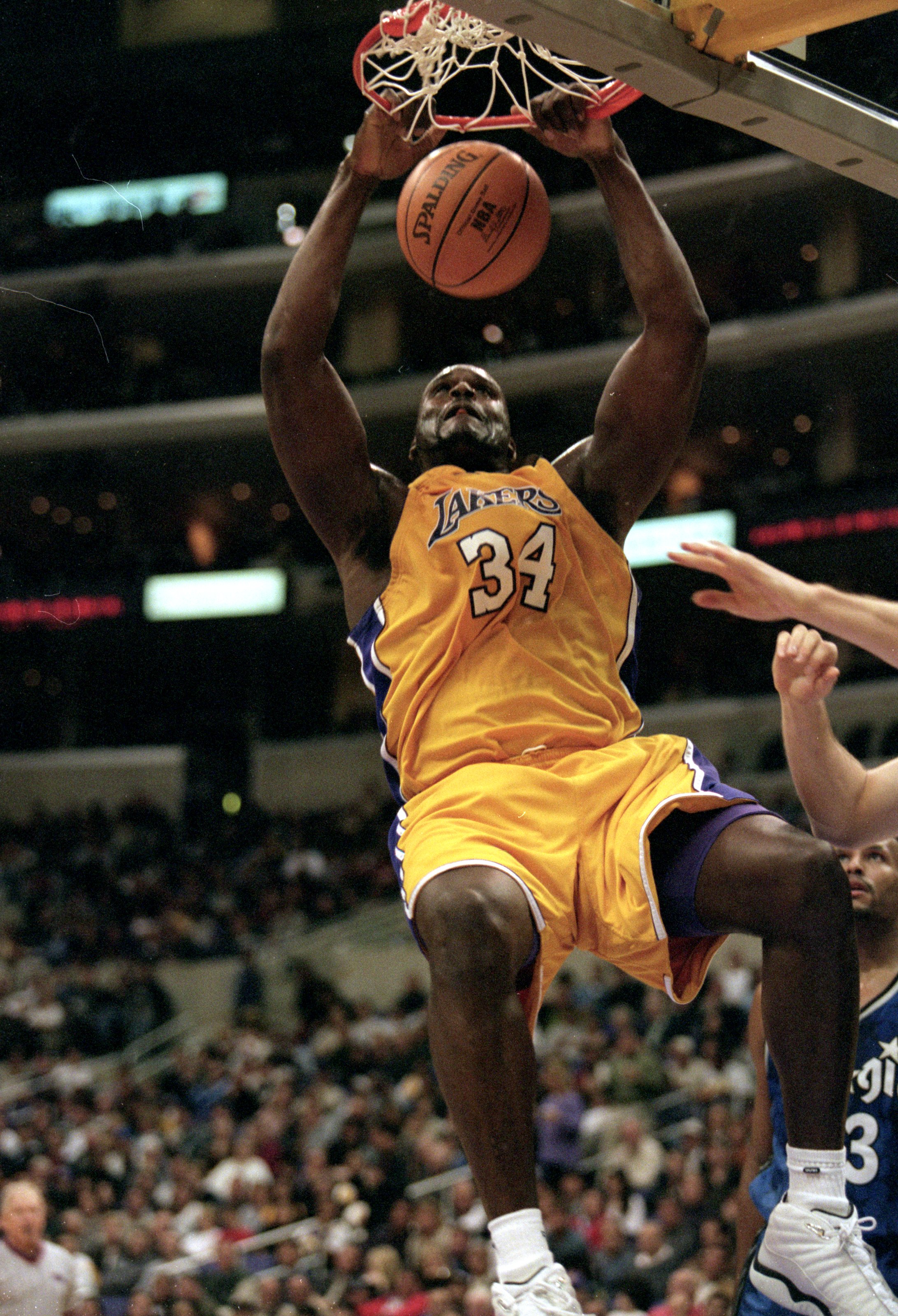
Shaq was already a dominant force as a rookie, averaging 23.4 points, 13.9 rebounds, and 3.5 blocks per game, nearly matching his college averages. He easily won the Rookie of the Year, and nearly took the Magic from last place to the playoffs, missing out on the postseason due to a tiebreaker.

His scoring average jumped to 29.3 the next season, #2 in the league to David Robinson, and he led the league in field goal percentage by shooting .599 on the season, while also grabbing 13.2 rebounds per game. He had his first triple-double that year, getting 24 points, 28 rebounds, and 15 blocks in a game, and led the Magic to the playoffs, but they were swept in the first round.

In his third season, he led the league in scoring for the first time, pouring in 29.3 points per game again, and finished as the runner-up in the MVP voting. In the playoffs, the Magic defeated Michael Jordan and the Bulls in the second round, then Reggie Miller's Pacers in the Conference Finals to reach their first NBA Finals. Shaq averaged 28.0 points and 12.5 rebounds in that series, but they were swept by Hakeem Olajuwon and the Houston Rockets.

Shaq missed 28 games the next season due to injury, something that would become commonplace throughout his career, but the team still finished with 60 wins. They breezed through the first 2 rounds of the playoffs, meeting the 72-win Bulls in the Conference Finals, where their season ended in a sweep.

Shaq decided to leave Orlando as a free agent after that season, signing with the Los Angeles Lakers. He missed over 30 games that season due to injuries, and the Lakers were only able to reach the second round. He was healthier the next year, only missing 22 games, and he raised his scoring average back up to 28.3, but lost in the Conference Finals to the Jazz in another sweep.

He missed only 1 game the next season and led the league in field goal percentage for the second season in a row and the 3rd overall, but the team was in a constant state of flux that year, with numerous trades and a coaching change, and the instability contributed to the team falling in the second round of the playoffs to the Spurs.

Phil Jackson was hired as the coach after that season, and he brought out the best in O'Neal. He had his best season, leading the league with a career high 29.7 points per game, along with 13.6 rebounds and 3.0 blocks, both his highest since his rookie year. He was named the MVP that season, then dominated in the postseason, averaging 38.0 points and 16.7 rebounds per game in the Finals to win his first Finals MVP award.

He was nearly as dominant the next year, averaging 28.7 points and 12.7 rebounds, but lost the MVP vote to Allen Iverson. The Lakers took it out on everyone in the playoffs, losing only one game in the entire postseason on their way to a repeat title for the team and a repeat Finals MVP for Shaq.

His production decreased slightly the next year, as well as his games played, but when the playoffs came around, he was the same old Shaq, averaging 36.3 points and 12.3 rebounds in the Finals as the Lakers beat the Nets in a sweep, winning their 3rd straight title and Shaq's third straight Finals MVP.

He had toe surgery before the next season to deal with a long time issue, missing the first month of the season as a result. He still averaged 27.5 points and 11.1 rebounds once he returned, but his streak of 5 straight seasons leading the league in field goal percentage came to an end, as well as the Lakers' championship streak, which ended with a second-round playoff loss.

The team added Karl Malone and Gary Payton in hopes of making another title run, and Shaq's scoring average dropped to 21.5 per game, the lowest of his career up to that point. He did lead the league in shooting percentage again, and led the Lakers back to the Finals, but they were not able to beat the Pistons, losing in a huge upset in 5 games.

Problems between Shaq and Kobe led to O'Neal asking for a trade after the season, and he was sent to Miami during the offseason. He averaged 22.9 points per game on the season, led the league with .601 shooting from the field, finished as the MVP runner-up, and led Miami to the best record in the East and reached the Conference Finals before the Pistons ended his season again, this time in 7 games.

Shaq averaged 20.0 points per game the next season for the final time in his career, and it was the 14th straight season reaching that mark starting at the beginning of his career. Dwyane Wade blossomed into a star that year, and led the Heat to the Finals, where they beat the Dallas Mavericks in 6 games, while Shaq averaged only 13.7 points in the series.

Shaq missed half of the next season after having knee surgery at the beginning of the season, then the team lost Wade to an injury right after Shaq returned. The result was that Miami barely made the playoffs, and ended up being swept in the first round, the first time Shaq hadn't made it past that round since his second season in the league.

Shaq's production dropped significantly after that season, averaging only 13.6 points the next year, and he was traded at midseason to the Phoenix Suns. In his first full season with Phoenix, he had a bit of a resurgence, averaging 17.8 points per game and shooting a league-leading .609 from the field, which was the record 10th time he led the league in that category. Unfortunately, the team wasn't good, and he missed out on the playoffs for the first time since his rookie year.

He was traded to Cleveland after that season, hoping to chase a championship with LeBron James, but he broke his thumb and required surgery, causing him to miss over a month late in the season. He returned in the playoffs, but the team lost to the Celtics in the second round.

He signed with Boston as a free agent after his year with the Cavs, but spent most of the year injured. He returned in the second round of the playoffs, but was only able to manage 12 minutes on the court, and announced his retirement at the end of the season.

At his peak, Shaq was one of the most dominant players of all time. He led the league in field goal percentage 10 times, breaking Wilt Chamberlain's record of 9, and led the league in scoring twice while finishing as the runner-up 4 different times. During his best years, he won an MVP and probably should have won a couple more, and won 3 straight Finals MVPs, and is easily one of the greatest players to ever play the game.


Friday, September 24, 2021

Top 100 NBA Players: #37 - Artis Gilmore


Artis Gilmore

Teams

Kentucky Colonels (ABA) - 1971-76

Chicago Bulls - 1976-82, 1987

San Antonio Spurs - 1982-87

Boston Celtics - 1988


Playoffs

Appearances - 11 (1972,1973,1974,1975,1976,1977,1981,1983,1985,1986,1988)

Conference Finals - 5 (1973,1974,1975,1983,1988)

ABA Finals - 2 (1973,1975)

Championships - 1 (1975)


Awards and Honors

Rookie of the Year - 1972

ABA MVP - 1972

Finals MVP - 1975

All-ABA/NBA First Team - 5 (1972,1973,1974,1975,1976,1978)

All-NBA Second Team - 0 (1977,1979,1981,1983)

Hall of Fame - 2011

*(actual in bold, deserved in italics)


All-Time Ranks

Total Blocks - #4

Total Rebounds - #5

Field Goal Percentage - #9

Blocks Per Game - #14

Rebounds Per Game - #15

Total Points - #27


League Leads

Field Goal Percentage (#1-1972,1973,1981,1982,1983,1984, #2-1975,1976,1985,1986,1987, #3-1978,1980, #4-1979)

Total Blocks (#1-1972,1973,1975, #2-1974, #3-1976,1982, #4-1977,1981,1983, #5-1978,1985)

Total Rebounds (#1-1972,1973,1974,1975,1976, #2-1979, #3-1977, #4-1978,1983)

Blocks Per Game (#2-1974,1975, #3-1976, #4-1977,1982, #5-1981,1983,1984)

Rebounds Per Game (#1-1972,1973,1974,1976, #2-1975, #4-1977,1979,1983)

Total Points (#3-1976, #4-1975)

Points Per Game (#4-1976)


Artis Gilmore averaged 23.3 points and 22.7 rebounds per game in 2 seasons with the Jacksonville Dolphins, leading them to the national championship game as a junior, before being drafted #7 overall by the Kentucky Colonels in the ABA Draft. He was also a 7th round pick by the Bulls in the NBA, but it was already known that he was headed to the ABA, hence the low pick.

Gilmore was a dominant force from his first day in the ABA. He averaged 23.8 points, a league-leading 17.8 rebounds, and 5.0 blocks per game while also leading the league with a .598 field goal percentage, which earned him both the Rookie of the Year and MVP awards, both narrowly over Julius Erving, who averaged 27.3 points and 15.7 rebounds. The Colonels finished with the best record in ABA history, but lost in the first round of the playoffs to the Nets in 6 games.

Gilmore led the league in rebounding and field goal percentage for the second year in a row in 1973, and this time was able to lead the Colonels to the ABA Finals, where they lost to the Indiana Pacers in a very tight 7-game series. He won his third rebounding title in a row the next year with a career high of 18.3 per game, but they lost in the Conference Finals to the Nets again.

They finally broke through in 1975. Gilmore led the league in total blocks and rebounds, but not in average, making it the first time in his career he didn't lead the league in any per game category. He did, however, lead the Colonels back to the ABA Finals, and he clinched the championship with 28 points and 31 rebounds in Game 5 to beat the Indiana Pacers, earning himself the Finals MVP as a result.

Gilmore averaged a career high 24.6 points per game the next year, and led the league in rebounding for the 4th time as he grabbed 15.5 per game, but the Colonels fell to the Nuggets in the second round of the playoffs, ending their chance at a repeat, and closing out the Colonels franchise, which wasn't invited to join the NBA in that summer's merger.

Because his team didn't join the NBA, Gilmore was put into a dispersal draft, where he was the top overall pick by the Chicago Bulls, who had drafted him 5 years earlier as well. Gilmore played 6 seasons for the Bulls, but the team only made 2 playoff appearances during that time, both ending early. He led the league in field goal percentage in his final 2 seasons in Chicago, including an amazing .670 average in 1981.

Gilmore was traded to the San Antonio Spurs in 1982, and continued to lead the league in shooting percentage, making it 4 seasons in a row by 1984. In his first season with the Spurs, he and George Gervin led the Spurs to the Western Conference Finals, but they lost in 6 games to the Lakers in the deepest playoff run he would have after joining the NBA.

After 5 seasons with the Spurs, Gilmore's game had started to decline, with averages of 11.4 points and 7.1 rebounds in his final season with San Antonio. He signed with the Bulls as a free agent, but was released on the day after Christmas after hardly playing in the first couple months of the season, then he signed with the Celtics to finish the season, tagging along with Larry Bird, Kevin McHale, and Robert Parish to plan in one final Conference Final before retiring.

Gilmore's biggest success came in the ABA, where he was a Rookie of the Year, MVP, and Finals MVP while winning 4 rebounding titles and 2 field goal shooting titles. He was still a very good center in the NBA for almost a decade, leading the league in field goal percentage 4 straight times, and he is currently #4 on the all-time leaderboard for blocks, #5 for rebounds, and #9 for shooting percentage, which just goes to show that even though many people don't remember him well, he was one of the greatest to ever play the game.


Monday, September 20, 2021

Top 100 NBA Players: #41 - Dwight Howard


Dwight Howard

Teams

Orlando Magic - 2004-12

Los Angeles Lakers - 2012-13, 2019-20, present

Houston Rockets - 2013-16

Atlanta Hawks - 2016-17

Charlotte Hornets - 2017-18

Washington Wizards - 2018-19

Philadelphia 76ers - 2020-21


Playoffs

Appearances - 12 (2007,2008,2009,2010,2011,2013,2014,2015,2016,2017,2020,2021)

Conference Finals - 4 (2009,2010,2015,2020)

NBA Finals - 2 (2009,2020)

Championships - 1 (2020)


Awards and Honors

Defensive Player of the Year - 3 (2009,2010,2011)

All-NBA First Team - 5 (2008,2009,2010,2011,2012)

All-NBA Second Team - 1 (2008,2010,2014)

All-NBA Third Team - 2 (2007,2012,2013,2014)

*(actual in bold, deserved in italics)


All-Time Ranks

Field Goal Percentage - #7

Total Rebounds - #12

Total Blocks - #15

Rebounds Per Game - #19

Blocks Per Game - #29

Total Points - #63


League Leads

Total Rebounds (#1-2006,2007,2008,2009,2010,2012, #2-2011,2013, #3-2018, #5-2005,2014,2016)

Rebounds Per Game (#1-2008,2009,2010,2012,2013, #2-2006,2011, #3-2007,2018, #4-2014,2016, #5-2017)

Field Goal Percentage (#1-2010, #2-2007,2011,2012,2013,2016, #3-2008,2014, #4-2009,2017)

Total Blocks (#1-2009,2010, #3-2011,2018, #4-2008,2013)

Blocks Per Game (#1-2009,2010, #3-2012, #4-2011, #5-2008,2013)


After his senior season at Southwest Atlanta Christian Academy in which he averaged 25 points, 18 rebounds, and 8.1 blocks per game, Dwight Howard decided to skip college and enter the NBA Draft, where he was drafted by the Orlando Magic with the #1 overall pick.

As a rookie, he averaged 12.0 points and 10.0 rebounds per game, becoming the youngest player in history to average a double-double and finishing 3rd in the Rookie of the Year voting. He raised those averages to 15.8 points and 12.5 rebounds in his second year, and had more rebounds than any other player in the league.

In his third season, he made his first All-Star team and the All-NBA Third Team after averaging 17.6 points and 12.3 rebounds, again leading the league in total rebounds, and helped the Magic make the playoffs for the first time in his career. They lost in the first round, but Howard was just starting to reach his potential.

In 2007-08, Howard was named to the All-NBA First Team after averaging 20.7 points and leading the league with 14.2 rebounds per game, and he led the Magic to a playoff series victory for the first time as well, though their run would end in the second round. He averaged 18.9 points and 15.8 rebounds in the playoffs, but the Pistons stopped them for the second straight year.

The next season was the best of his career. He averaged 20.6 points, and led the league in rebounds with 13.8 and blocks with 2.9 per game, earning him the Defensive Player of the Year award, becoming the youngest to ever win the award at age 23. In the playoffs, he was able to push the Magic through the first two rounds, then had 40 points and 14 rebounds in the deciding game of the Conference Finals to help Orlando beat Cleveland and advance to the Finals, where they would fall to the Lakers in 5 games.

The next year Howard became the first player ever to lead the league in both rebounds and blocks in the same season twice, and he did it twice in a row. He also led the league in field goal percentage with a rate of .612 and won his second Defensive Player of the Year award in a row, but this time their playoff run was stopped in the Conference Finals by the Celtics, keeping them from a repeat Finals appearance.

Howard had another great season in 2010-11, setting a career high with 22.9 points per game to go along with 14.1 rebounds and 2.4 blocks, and he won the Defensive Player of the Year award for the third time in a row, the first and so far only player to ever accomplish that feat, but the Magic lost in the first round of the playoffs. 

In 2011-12, Howard led the league in rebounding for the 4th time in 5 seasons, but was not happy in Orlando, asking to be traded to Brooklyn, and his season ended a month early when he decided to have back surgery. Orlando did trade him after the season, but they sent him to the Lakers instead of the Nets.

Howard numbers were down in his season with the Lakers, but he was still good enough to win the rebounding title for a 5th time with an average of 12.4 per game, but he didn't get along with Kobe Bryant and didn't feel like he fit well in their system, so he left the team as a free agent after the season.

He signed with Houston for the 2013-14 season, and posted good averages of 18.3 points and 12.2 rebounds in his first season with the team, but they failed to advance past the first round again. He missed half of the next season with a knee injury, but was able to return in time for the playoffs, where he averaged 16.4 points and 14 rebounds to help the Rockets reach the Conference Finals, but they fell to the Golden State Warriors one step shy of the Finals.

He played one more season with the Rockets, but decided to leave as a free agent after that season after his relationship with James Harden soured. He signed with his hometown Hawks, but again wore out his welcome quickly and was traded after one year to the Hornets. He had a bit of a resurgence in Charlotte, averaging 16.6 points and 12.5 rebounds for the season, but again was traded after just one season, this time to the Nets, who immediately released him.

He signed with the Washington Wizards, but a sore backside kept him out until the regular season had already started. He finally joined the team and played in 9 games before deciding to have spinal surgery to relieve his pain, which caused him to miss the rest of the season. He wanted to return to the team, but they traded him after the season for the third year in a row, this time to Memphis, who released him.

He signed to return to the Los Angeles Lakers, where he came off the bench for the first time in his career, averaging only 7.5 points and 7.3 rebounds per game, and his averaged dropped even more in the playoffs, but it paid off in the end, as he was able to win a championship for the first time in his career.

He signed as a free agent with Philadelphia last season, once again in a reserve role, then decided to return to the Lakers as a free agent last month to try to earn another title. His best years are obviously behind him, but he still has the ability to make contributions to a winning team.

Howard was a monster early in his career, especially in Orlando. He won 3 DPOY awards, 5 rebounding titles, 2 block titles, and led the league in shooting percentage once. He led the Magic all the way to the NBA Finals once, and to the Conference Finals the next year, and is the active leader in both rebounds and blocks, while ranking in the top 15 all time in both categories. He was well past his prime before he won a championship, but there is no denying how dominant he was for about a decade in the post, and that is enough to put him on this list of the greatest players of all time.


Friday, September 3, 2021

Top 100 NBA Players: #58 - Kevin McHale


Kevin McHale

Teams

Boston Celtics - 1980-93


Playoffs

Appearances - 13 (1981,1982,1983,1984,1985,1986,1987,1988,1989,1990,1991,1992,1993)

Conference Finals - 7 (1981,1982,1984,1985,1986,1987,1988)

NBA Finals - 5 (1981,1984,1985,1986,1987)

Championships - 3 (1981,1984,1986)


Awards and Honors

All-NBA First Team - 1 (1987)

All-NBA Second Team - 0 (1987)

Sixth Man of the Year - 2 (1984,1985)

Hall of Fame - 1999

*(actual in bold, deserved in italics)


All-Time Ranks

Field Goal Percentage - #22

Total Blocks - #31

Blocks Per Game - #36

Total Points - #93


League Leads

Field Goal Percentage (#1-1987,1988, #5-1986)

Total Blocks (#4-1983)

Free Throw Percentage (#5-1990)

Blocks Per Game (#5-1983)


After averaging 17.4 points and 8.8 rebounds per game as a senior at Minnesota, Kevin McHale was drafted by the Boston Celtics with the #3 overall pick in the 1980 Draft. They originally held the #1 pick, but they traded it to the Golden State Warriors in exchange for Robert Parish and the #3 pick, which turned out to be one of the most lopsided trades in history.

The Celtics had Cedric Maxwell at power forward, so McHale came off the bench for the first several years of his career. McHale averaged 10 points per game in the regular season, but he was given less time in the playoffs, averaging only 4.7 per game in the Finals, but he came away with a championship as a rookie.

McHale made some improvement over the next couple years, averaging 14.1 per game in his third season, but after the team fired coach Bill Fitch, McHale decided to leave the team to sign with the Knicks. The Celtics retaliated by offering contracts to 3 Knicks players, and New York withdrew their offer, and McHale resigned with the Celtics.

That next season, McHale was named the Sixth Man of the year after averaging 18.4 points and 7.4 rebounds, and the Celtics finished with the league's best record. They reached the NBA Finals for the first time in 3 years, facing the Lakers, and after a hard foul late in Game 4 by McHale turned the momentum, the Celtics won the series in 7 games.

McHale increased his averages to 19.8 points and 9.0 rebounds per game the next season, and was a repeat winner of the Sixth Man award. He became a starter late in the season after Maxwell was injured, and within a month set a new Celtics scoring record with 56 points in a game, a record which was broken 9 days later by Larry Bird. They reached the Finals again, but this time fell to the Lakers, with McHale leading the Celtics with 26.0 points and 10.7 rebounds per game.

Before the next season, Maxwell was traded away, and McHale became a full-time starter, and the Celtics had one of the greatest seasons of all time, winning 50 of 51 home games in the regular season and playoffs, and McHale led the team in scoring in the Finals once again, averaging 25.8 per game as the Celtics beat the Rockets in 6 games.

McHale had his best season the next year. He career-highs with 26.1 points and 9.9 rebounds and was named to the All-NBA First Team and All-Defensive First Team while also leading the league in field goal percentage at .604. He also became the first player ever to shoot over 60% from the field and 80% from the line in the same season. He broke a bone in his foot late in the season, but played through the injury, and Boston was able to reach their 4th straight Finals, but with Parish, Bill Walton, and Danny Ainge also injured, the Celtics fell to the Lakers.

After having foot surgery, McHale missed the first month of the next season, but was back in top form when he returned, leading the league in field goal percentage once again with an identical .604 average. The Celtics reached the Conference Finals for the 5th straight year, but fell to the Detroit Pistons in the last deep playoff run for this version of the Celtics dynasty.

Bird missed most of the next season with several injuries, and the Celtics were only able to reach the second round behind McHale's 22.5 points per game. McHale came off the bench most of the time in his final 4 seasons, and his scoring average dropped slowly each season, from 20.9 in 1990 to 10.7 in 1993, when he announced his retirement right after the team was eliminated from the playoffs.

McHale spent much of his prime coming off the bench, which limited his production somewhat, but he still made contributions to 2 title teams early in his career. He was the second-best player on the team for the next several years, which included 3 Finals appearances and another championship, and was one of the best players in the league for that one season before injuries started to slow him down. All taken together, he definitely belongs among the greatest players of all time.


Monday, August 30, 2021

Top 100 NBA Players: #62 - Bob McAdoo


Bob McAdoo

Teams

Buffalo Braves - 1972-76

New York Knicks - 1976-79

Boston Celtics - 1979

Detroit Pistons - 1979-81

New Jersey Nets - 1981

Los Angeles Lakers - 1981-85

Philadelphia 76ers - 1986


Playoffs

Appearances - 9 (1974,1975,1976,1978,1982,1983,1984,1985,1986)

Conference Finals - 4 (1982,1983,1984,1985)

NBA Finals - (1982,1983,1984,1985)

Championships - 2 (1982,1985)


Awards and Honors

Rookie of the Year - 1973

MVP - 1 (1975)

All-NBA First Team - 1 (1974,1975,1976,1978)

All-NBA Second Team - 1 (1974,1977)

Hall of Fame - 2000


All-Time Ranks

Points Per Game - #36

Total Blocks - #68

Total Points - #70

Blocks Per Game - #70

Total Rebounds - #81

Rebounds Per Game - #82


League Leads

Points Per Game (#1-1974,1975,1976, #3-1978, #4-1979, #5-1977)

Total Points (#1-1974,1975,1976, #3-1978)

Rebounds Per Game (#3-1974, #4-1975, #5-1977)

Total Rebounds (#1-1975, #4-1974)

Total Blocks (#4-1974, #5-1975)

Field Goal Percentage (#1-1974, #5-1975)

Blocks Per Game (#3-1974)


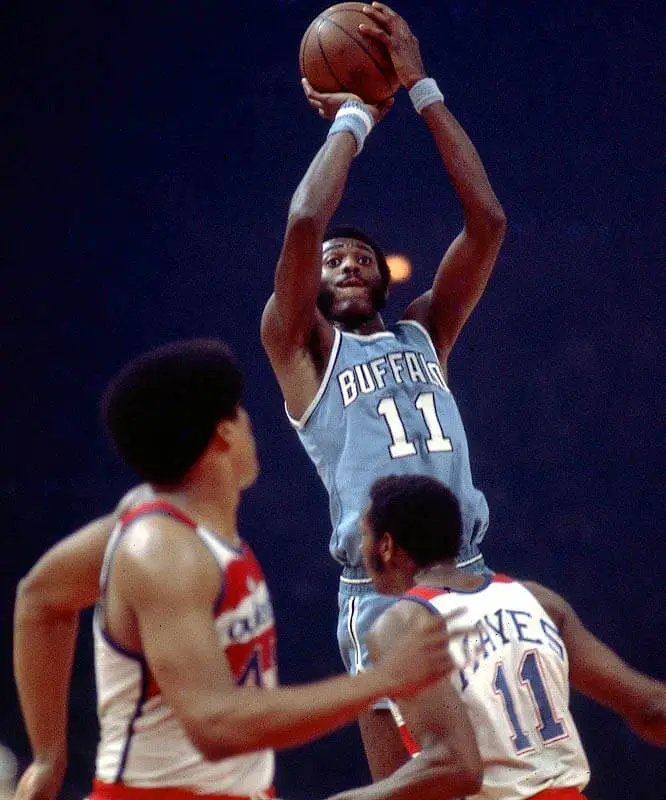
After playing two seasons in junior college, Bob McAdoo transferred to North Carolina, where he averaged 19.5 points and 10.1 rebounds and helped guide the team to the Final Four. After that great junior season, he entered the draft, where he was the #1 overall pick in the ABA Draft by the Virginia Squires, and the #2 overall pick in the NBA Draft by the Buffalo Braves, where he decided to sign.

McAdoo averaged 18.0 points and 9.1 rebounds as a rookie, easily winning the Rookie of the Year award, but his team was terrible. The next year, he became a superstar overnight, leading the league with 30.6 points per game and a .547 field goal percentage, and grabbed 15.1 rebounds per game while blocking 3.3 shots per game, yet was somehow only named to the All-NBA Second Team. It is the last time so far that a player has averaged 30 points and 15 rebounds for a full season.

In his third season, he led the league in scoring again, with a career-high of 34.5 per game, to go with 14.1 rebounds and 2.1 blocks, and was named the MVP of the league, earning his one and only All-NBA First Team honor as well. He averaged 37.4 points in the playoffs, but his team lost in 7 games in the first round.

He finished the 1976 season leading the league in scoring for the third straight season, notching 31.1 per game to go along with 12.1 rebounds, but was left off the All-NBA teams completely. He did, however, lead the Braves to a playoff series win for the first time in his career, though they would fall in the second round.

20 games into the next season, McAdoo was only scoring 23.7 per game, and the Braves decided to ship him across the state to the Knicks. In his first full season with the Knicks, he averaged 26.5 points and 12.8 rebounds, but the Knicks fell in the second round of the playoffs, which was the furthest McAdoo would ever advance during his superstar years.

He was playing just as well the next season when the Knicks decided to trade him to the Boston Celtics, who were in a rebuilding year and had a crowded frontcourt, making it hard to find enough playing time to keep McAdoo happy. After the season he was traded again, this time to the Detroit Pistons.

He averaged 21.1 points in his first season in Detroit, but after playing just 6 games in 1980-81, he was injured, missing several months. When he told the coach that he was healthy and wanted to play again, the coach disagreed, and McAdoo left the team and was waived within the month. He signed with the Nets to finish the season, but was given very little playing time. 

The Nets did not play him at all through the first 2 months of the next season, and he was finally mercifully traded to the Lakers, where he took on a reserve role on one of the most talented teams in history. He averaged only 9.6 points during the regular season, but increased that to 16.7 per game in the playoffs on the way to his first championship. 

His role with the team increased over the next couple of years, with scoring averages of 15.0 and 13.1 points in those 2 seasons, but both ended with losses in the NBA Finals. In 1984-85, after averaging 10.5 in the regular season, he scored 11.4 in the playoffs while winning another title, though this time in a much smaller role than before.

The Lakers did not offer him a contract after that season, but he was able to catch on with the 76ers for the end of the following season for his final NBA action. He played another 7 years of professional basketball in Italy, winning multiple championships before hanging it up for good in 1992 at age 41.

McAdoo had a very quick rise, but his decline happened almost as quickly. He won a well-deserved MVP and 3 impressive scoring titles early in his career, but was never able to translate it into postseason success. Once he caught on with the right team late in his career, he was able to finally contribute to a couple of championships, though in a reduced role. But no matter how you look at it, McAdoo is definitely one of the greatest to ever play the game.


Friday, August 6, 2021

Top 100 NBA Players: #86 - Dennis Rodman


Dennis Rodman

Teams

Detroit Pistons - 1986-93

San Antonio Spurs - 1993-95

Chicago Bulls - 1995-98

Los Angeles Lakers - 1998-99

Dallas Mavericks - 1999-00


Playoffs

Appearances - 11 (1987,1988,1989,1990,1991,1992,1994,1995,1996,1997,1998)

Conference Finals - 9 (1987,1988,1989,1990,1991,1995,1996,1997,1998)

NBA Finals - 6 (1988,1989,1990,1996,1997,1998)

Championships - 5 (1989,1990,1996,1997,1998)


Awards and Honors

Defensive Player of the Year - 2 (1990,1991)

All-NBA Third Team - 2 (1992,1995)

Hall of Fame - 2011

*(actual in bold, deserved in italics)


All-Time Ranks

Rebounds Per Game - #12

Total Rebounds - #24

Field Goal Percentage - #69


League Leads

Rebounds Per Game (#1-1992,1993,1994,1995,1996,1997,1998, #2-1991)

Total Rebounds (#1-1992,1993,1994,1998, #2-1991,1996, #3-1997)

Field Goal Percentage (#1-1989)


Dennis Rodman took a very unusual route to the NBA, and his path to NBA greatness was even more unusual. He hardly played high school basketball, and was working as a janitor for a couple of years after high school when he had a huge growth spurt. He enrolled at NAIA school Southeast Oklahoma State, where he averaged 25.7 points and 15.7 rebounds per game over 3 seasons, which got the attention of scouts and helped him get drafted in the second round of the 1986 Draft by the Detroit Pistons.

During his first several seasons in the NBA, Rodman was mostly a bench player for the Pistons. They were a great team at the time, reaching at least the Conference Finals in Rodman's first 5 seasons and winning 2 NBA titles, with Rodman an important bench player. He led the league in field goal percentage in 1989 and won the Defensive POY in the next two seasons.

The following season Rodman was shifted to power forward, and he became hyper-focused on rebounding, leading the league in the category that season for the first of 7 straight seasons. His total of 1530 that season was the highest by any player in 20 years, and no other player has come within 250 of that total since. 

The next season was a tough one for Rodman. His coach resigned, leaving a huge father-figure void in his life, and his marriage was ending, and the Pistons missed the playoffs for the first time in years. After nearly committing suicide late in the season, Rodman decided to change his persona, and from then on he was known just as much for his technical fouls, suspensions, and ever-changing hair color as for his rebounding prowess.

He demanded a trade after the 1993 season, and was sent away to the San Antonio Spurs, where he joined David Robinson on a very good team. The team thrived during the regular season, but fell short in the playoffs, falling in the first round in 1994 and the Conference Finals in 1995. After multiple incidents and public complaints about every level of the organization, Rodman was traded away to Chicago after 2 years with the Spurs.

He is probably most famous for his time in Chicago, thanks to his role alongside all-time greats Michael Jordan and Scottie Pippen in helping the Bulls win 3 straight championships, along with a then-record 72 wins in 1996. The rest of his game suffered as he focused on rebounds, averaging less than 6 points per game throughout his time in Chicago, and his field goal percentage dropped lower each season, down to .431 in 1998, more than 16% lower than his league-leading percentage 9 years earlier.

After the Bulls were dismantled following the 1998 championship, Rodman made brief stops in LA and Dallas, both times wearing out his welcome quickly and being cut by each team. 

Rodman is the ultimate example of a player who excelled at one part of the game while being below average at nearly everything else. His career free throw percentage was only 58%, he averaged less than 2 assists per game for his career, and finished his career with a scoring average of 7.3 per game, which is higher than only one other player on this list. Even though he was not a great all-around player, he was one of the greatest rebounders of all time, and was a solid player on several title teams, which is enough to earn him a spot among the greatest players of all time.


Tuesday, August 3, 2021

Top 100 NBA Players: #89 - Wes Unseld


Wes Unseld

Teams

Baltimore/Capital/Washington Bullets - 1968-81


Playoffs

Appearances - 12 (1969,1970,1971,1972,1973,1974,1975,1976,1977,1978,1979,1980)

Conference Finals - 4 (1971,1975,1978,1979)

NBA Finals - 4 (1971,1975,1978,1979)

Championships - 1 (1978)


Awards and Honors

Rookie of the Year - 1969

MVP - 1969

Finals MVP - 1978

All-NBA First Team - 1 (1969)

Hall of Fame - 1988

*(actual in bold, deserved in italics)


All-Time Ranks

Rebounds Per Game - #7

Total Rebounds - #14


League Leads

Total Rebounds (#2-1969,1970, #3-1972,1975,1976,1980, #4-1973, #5-1971)

Rebounds Per Game (#1-1975, #2-1970,1971,1972, #3-1976,1980, #5-1969,1973)

Field Goal Percentage (#1-1976, #3-1979)


After averaging 20.6 points and 18.9 rebounds in his college career playing for his hometown Louisville Cardinals, Wes Unseld was drafted #2 overall by the Baltimore Bullets, rejecting an offer from the Kentucky Colonels of the ABA, who had also drafted the local hero. He never scored close to that level in the NBA, but the rebounding translated well.

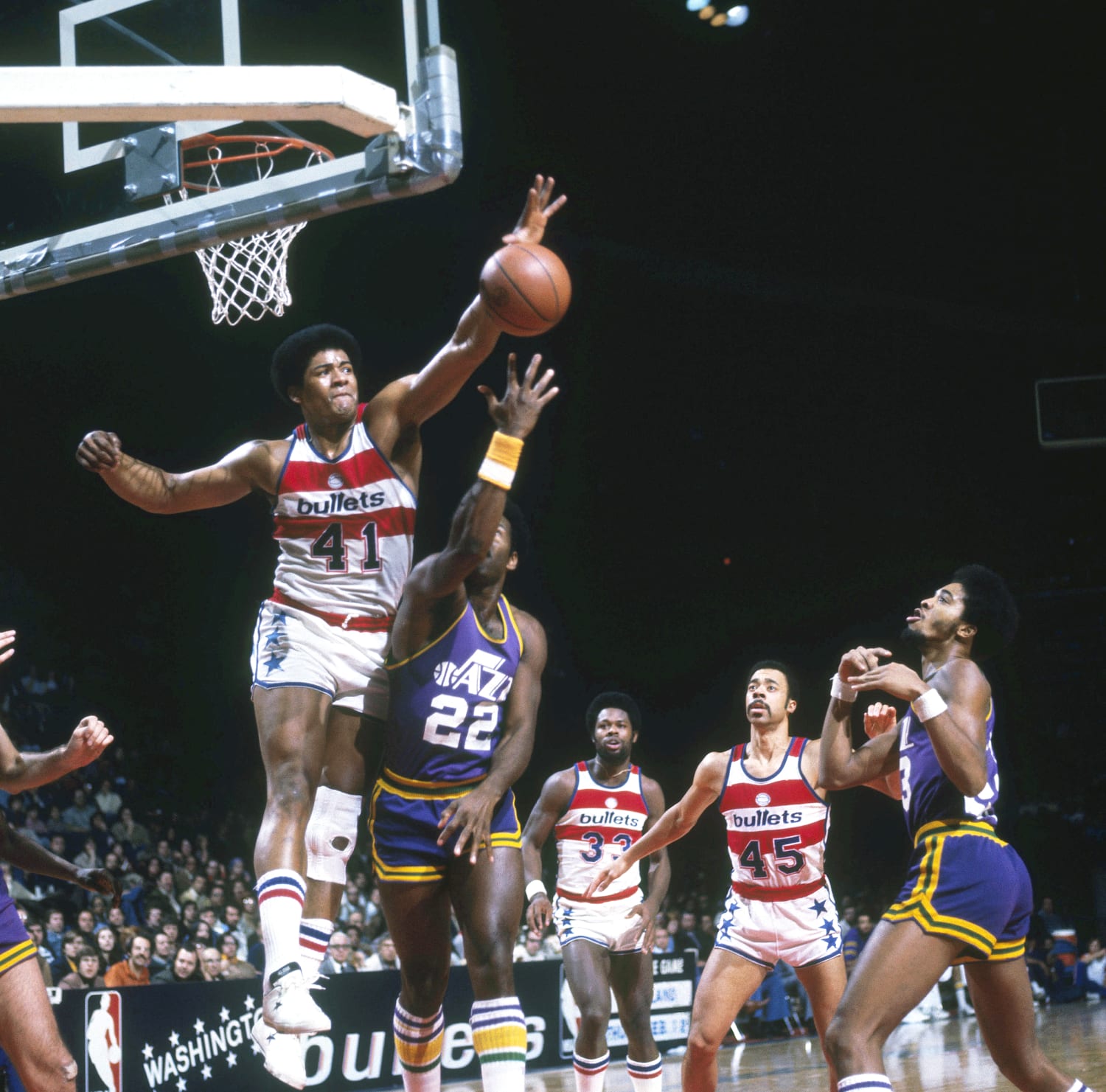
His rookie season of 1968-69 was one for the ages. Unseld averaged 13.8 points and 18.2 rebounds per game, and led the Bullets to 57 wins, best in the league, just one season after they had finished last in the East. For his efforts he was named both Rookie of the Year and MVP, only the second player ever to achieve that double, following Wilt Chamberlain a decade earlier. 

The team played in Baltimore for Unseld's first 5 seasons, and he averaged at least 12 points and 15 rebounds per game in all 5 of those seasons, guiding them to the playoffs each season and all the way to the Finals in 1971, where they fell to Kareem and the Bucks in 4 games.

The team moved to the suburbs of Washington DC in 1973, where Unseld had his lone subpar season. He was in and out of the lineup, especially early in the season, with lingering injuries, and finished the season with averages of 5.9 points and 9.2 rebounds, the only time he would not finish in double figures in that category.

The team moved into downtown Washington the next season, and in 7 seasons in the nation's capital, Unseld was extremely steady, averaging between 7 and 11 points each year to go along with between 10 and 15 rebounds. He led the league in rebounding in their first season in Washington, and field goal percentage the next year.

They also made the playoffs in each of their first 6 seasons in Washington, extending Unseld's streak to 12 straight playoff appearances to open his career. He led the team back to the Finals in 1975, when they were swept again, this time by Rick Barry and the Warriors.

The team finally broke through in 1978, taking the NBA Championship in 7 games over the Seattle SuperSonics, with Unseld being named the Finals MVP. He averaged 9.0 points and 11.7 rebounds for the series, while Elvin Hayes averaged 20.7 points and 11.9 rebounds, and should have won the MVP in my opinion, though Unseld was always the franchise favorite, which helped him get the award.

The team returned to the Finals the next season, losing to the Sonics in a rematch 4-1, and two years later, after missing the playoffs for the first and only time in his career, Unseld announced his retirement. He remained with the organization for the next 22 years, serving first as vice president, then head coach, and later general manager before retiring for good.

Unseld was well-known for his masterful full-court passes, and he averaged 3.9 assists per game for his career, above average for a center. He was never much of a scorer in the NBA, with a career average of just 10.8, but he was one of the best rebounders throughout his career, even though he was only 6'7", one of the shortest centers in history. He is proof that a player can be one of the best of all time without being a volume scorer and focusing more on defense, and he deserves to be remembered for it.