Showing posts with label Bob McAdoo. Show all posts

Monday, August 30, 2021

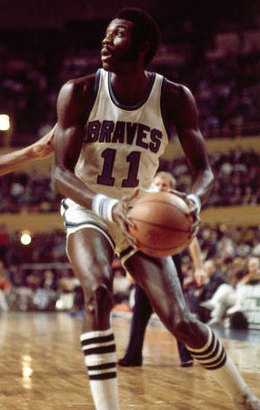
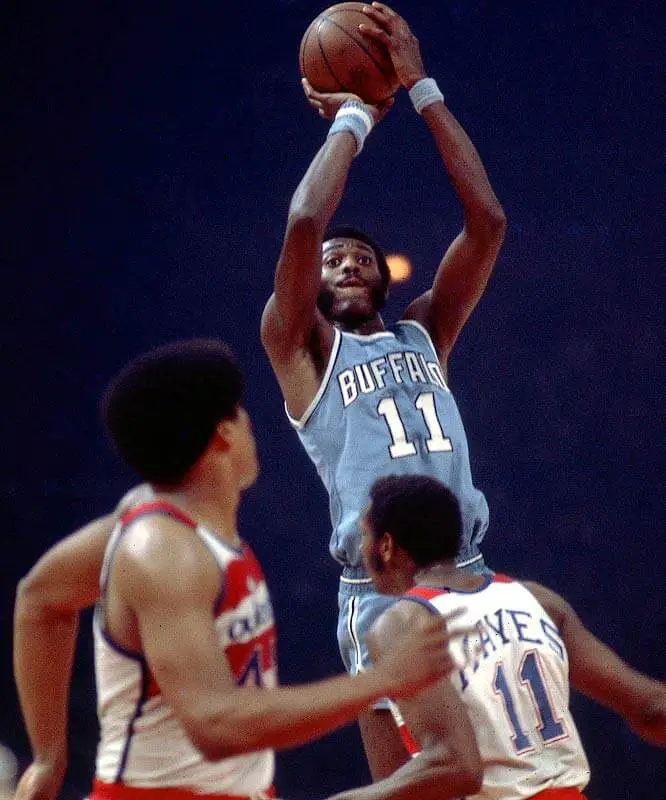
Top 100 NBA Players: #62 - Bob McAdoo


Bob McAdoo

Teams

Buffalo Braves - 1972-76

New York Knicks - 1976-79

Boston Celtics - 1979

Detroit Pistons - 1979-81

New Jersey Nets - 1981

Los Angeles Lakers - 1981-85

Philadelphia 76ers - 1986


Playoffs

Appearances - 9 (1974,1975,1976,1978,1982,1983,1984,1985,1986)

Conference Finals - 4 (1982,1983,1984,1985)

NBA Finals - (1982,1983,1984,1985)

Championships - 2 (1982,1985)


Awards and Honors

Rookie of the Year - 1973

MVP - 1 (1975)

All-NBA First Team - 1 (1974,1975,1976,1978)

All-NBA Second Team - 1 (1974,1977)

Hall of Fame - 2000


All-Time Ranks

Points Per Game - #36

Total Blocks - #68

Total Points - #70

Blocks Per Game - #70

Total Rebounds - #81

Rebounds Per Game - #82


League Leads

Points Per Game (#1-1974,1975,1976, #3-1978, #4-1979, #5-1977)

Total Points (#1-1974,1975,1976, #3-1978)

Rebounds Per Game (#3-1974, #4-1975, #5-1977)

Total Rebounds (#1-1975, #4-1974)

Total Blocks (#4-1974, #5-1975)

Field Goal Percentage (#1-1974, #5-1975)

Blocks Per Game (#3-1974)


After playing two seasons in junior college, Bob McAdoo transferred to North Carolina, where he averaged 19.5 points and 10.1 rebounds and helped guide the team to the Final Four. After that great junior season, he entered the draft, where he was the #1 overall pick in the ABA Draft by the Virginia Squires, and the #2 overall pick in the NBA Draft by the Buffalo Braves, where he decided to sign.

McAdoo averaged 18.0 points and 9.1 rebounds as a rookie, easily winning the Rookie of the Year award, but his team was terrible. The next year, he became a superstar overnight, leading the league with 30.6 points per game and a .547 field goal percentage, and grabbed 15.1 rebounds per game while blocking 3.3 shots per game, yet was somehow only named to the All-NBA Second Team. It is the last time so far that a player has averaged 30 points and 15 rebounds for a full season.

In his third season, he led the league in scoring again, with a career-high of 34.5 per game, to go with 14.1 rebounds and 2.1 blocks, and was named the MVP of the league, earning his one and only All-NBA First Team honor as well. He averaged 37.4 points in the playoffs, but his team lost in 7 games in the first round.

He finished the 1976 season leading the league in scoring for the third straight season, notching 31.1 per game to go along with 12.1 rebounds, but was left off the All-NBA teams completely. He did, however, lead the Braves to a playoff series win for the first time in his career, though they would fall in the second round.

20 games into the next season, McAdoo was only scoring 23.7 per game, and the Braves decided to ship him across the state to the Knicks. In his first full season with the Knicks, he averaged 26.5 points and 12.8 rebounds, but the Knicks fell in the second round of the playoffs, which was the furthest McAdoo would ever advance during his superstar years.

He was playing just as well the next season when the Knicks decided to trade him to the Boston Celtics, who were in a rebuilding year and had a crowded frontcourt, making it hard to find enough playing time to keep McAdoo happy. After the season he was traded again, this time to the Detroit Pistons.

He averaged 21.1 points in his first season in Detroit, but after playing just 6 games in 1980-81, he was injured, missing several months. When he told the coach that he was healthy and wanted to play again, the coach disagreed, and McAdoo left the team and was waived within the month. He signed with the Nets to finish the season, but was given very little playing time. 

The Nets did not play him at all through the first 2 months of the next season, and he was finally mercifully traded to the Lakers, where he took on a reserve role on one of the most talented teams in history. He averaged only 9.6 points during the regular season, but increased that to 16.7 per game in the playoffs on the way to his first championship. 

His role with the team increased over the next couple of years, with scoring averages of 15.0 and 13.1 points in those 2 seasons, but both ended with losses in the NBA Finals. In 1984-85, after averaging 10.5 in the regular season, he scored 11.4 in the playoffs while winning another title, though this time in a much smaller role than before.

The Lakers did not offer him a contract after that season, but he was able to catch on with the 76ers for the end of the following season for his final NBA action. He played another 7 years of professional basketball in Italy, winning multiple championships before hanging it up for good in 1992 at age 41.

McAdoo had a very quick rise, but his decline happened almost as quickly. He won a well-deserved MVP and 3 impressive scoring titles early in his career, but was never able to translate it into postseason success. Once he caught on with the right team late in his career, he was able to finally contribute to a couple of championships, though in a reduced role. But no matter how you look at it, McAdoo is definitely one of the greatest to ever play the game.


Tuesday, August 30, 2016

Top 100 NBA Players: #32 - Rick Barry


Rick Barry

Rick Barry is today most remembered for his unique style of free throw shooting, but he was one of the best players in the NBA for many years, and if he hadn't jumped to the ABA for five years, he could have been one of the 10 best players in NBA history.

Barry started out his career with the San Francisco Warriors, where he won the Rookie of the Year award after averaging 25.7 points and 10.6 rebounds per game at only 21 years of age. The next season he was even better, putting up one of the best seasons in history for a non-MVP. Here are his stats from that year, along with those of Wilt Chamberlain, who was the MVP that season:

Barry - 35.6 pts, 9.2 reb, 3.6 ast, .451 FG%, .884 FT%
Chamberlain - 24.1 pts, 24.2 reb, 7.8 ast, .683 FG%, .441 FT%

You can see that Wilt was the better player that season and deserved the MVP, since he led the league in rebounding, minutes played, and field goal percentage, while Barry only led the league in scoring. The two players led their respective teams to the Finals, where Wilt and the 76ers beat Barry and the Warriors in six games, proving that the MVP was awarded properly.

After that season, Barry had a disagreement with the Warriors over incentive bonuses, so he left to sign a contract with the Oakland Oaks of the ABA. Barry was not allowed to play the next season because of a clause in his Warriors contract, but when he made it to the league he was pretty good, although not as good as in his NBA days. After four seasons, a judge ruled that Barry's original contract with San Francisco was still binding, and that he could not play for anyone else, so he went back to the Golden State Warriors, who had changed their name in his absence.

He had an immediate impact upon his return, leading Golden State to the Western Conference Finals and leading the league in free throw percentage, but he was still building up to his second career peak in 1975, when he started to look like the Barry of old at age 30, once again establishing himself as the #2 player in the league, although this time he ranked behind Bob McAdoo, who rightfully won the MVP. Here are their stats from that year:

Barry - 30.6 pts, 5.7 reb, 6.2 ast, 2.9 stl, .464 FG%, .904 FT%
McAdoo - 34.5 pts, 14.1 reb, 2.2 ast, 2.1 blk, .512 FG%, .805 FT%

Barry was the league leader in steals and free throw percentage, while McAdoo led in scoring, but McAdoo's awesome rebounding average and field goal percentage were the big reason he was a better player that year, and it helped that he was 7 years younger. Barry had the last laugh in the playoffs, however, as McAdoo's Braves lost in the first round, while Barry and the Warriors swept the highly-favored Bullets in the Finals for the franchise's third championship and first in California.

Barry was named the MVP of the Finals, and although he wasn't as good as in the regular season, there was no other choice for this award. The second best player on that team was probably Jamaal Wilkes, who was a rookie, and here is a comparison of their playoff stats from 1975:

Barry - 28.2 pts, 5.5 reb, 6.1 ast, 2.9 stl, .444 FG%, .918 FT%
Wilkes - 15.0 pts, 7.0 reb, 1.6 ast, 1.5 stl, .446 FG%, .702 FT%

There was definitely no disputing why the Warriors won the title. This was one of the few teams to ever win a title without two verifiable star players, so that title has a lot of weight in Barry's placement among the all-time greats. By giving up 5 years during what should have been the prime of his career, he hurt his standing greatly, but he was still one of the best of all time with just ten seasons on the court.

Saturday, August 13, 2016

Top 100 NBA Players: #51 - Bob McAdoo


Bob McAdoo

Bob McAdoo was a great player for a few years in the 1970's, and if he had maintained his early level of play for a full decade, he would have been one of the top ten players of all time easily. Instead, he developed a reputation for not caring, then tried to turn it around once he was past his peak by playing unselfishly for two champs.

McAdoo started off his career in style, averaging 18.0 points and 9.1 rebounds per game and winning the Rookie of the Year Award, but nobody saw what was coming next. He came in second in the MVP race by leading the league in scoring and field goal percentage, with 30.6 points, 15.1 rebounds, 3.3 blocks, and a .547 field goal percentage. That was in 1974, and no player has averaged 30-15 over a full season since.

The next year he was even better, upping his scoring average to 34.5, while still grabbing 14.1 rebounds and leading the league in minutes played. That performance won him the MVP Award, and he definitely deserved it. Here are his stats and Rick Barry's, who should have come in second in the voting that year.

McAdoo - 34.5 pts, 14.1 reb, 2.2 ast, 2.1 blk, .512 FG%, .805 FT%
Barry - 30.6 pts, 5.7 reb, 6.2 ast, 2.9 stl, .464 FG%, .904 FT%

Barry was a great player, but McAdoo was definitely the best player that year. The next season he led the league in scoring for the third straight season, and he is one of only seven players who can say that. (Most of the others have yet to appear on this list.) Here are his overall stats from that three-year period, when he was one of the top 2 players and the league scoring leader.

McAdoo - 32.1 pts, 13.8 reb, 2.8 ast, 2.5 blk, .514 FG%, .787 FT%

He remained a good player for the next two years, but his scoring average started to drop and he still could not get past the second round of the playoffs. From 1976 to 1982, he played for 6 different teams, wearing out his welcome more and more quickly in each stop. When he finally made it to Los Angeles in 1981, he finally found himself in a good situation and applied himself in a sixth man role, which helped the Lakers win the championship, to which he contributed 16.7 points and 6.8 rebounds per game. He was not the star anymore, but he had contributed to a title while he was still slightly relevant. He would win one more title before retiring, but by then he wasn't quite as important to the team.

McAdoo was the first high-scoring, outside-shooting big man, something that has become commonplace in today's game. If he had been born 25 years later, he could have dominated in an era in which his style was not so uncommon, and he may have been appreciated more.

Friday, September 9, 2011

Top 100 NBA Players: #31


Rick Barry

(Kalb: #22, Simmons: #26, BBR: #46)

Rick Barry is today most remembered for his unique style of free throw shooting, but he was one of the best players in the NBA for many years, and if he hadn't jumped to the ABA for five years, he could have been one of the 10 best players in NBA history.

Barry started out his career with the San Francisco Warriors, where he won the Rookie of the Year award after averaging 25.7 points and 10.6 rebounds per game at only 21 years of age. The next season he was even better, putting up one of the best seasons in history for a non-MVP. Here are his stats from that year, along with those of Wilt Chamberlain, who was the MVP that season:

Barry - 35.6 pts, 9.2 reb, 3.6 ast, .451 FG%, .884 FT%
Chamberlain - 24.1 pts, 24.2 reb, 7.8 ast, .683 FG%, .441 FT%

You can see that Wilt was the better player that season and deserved the MVP, since he led the league in rebounding, minutes played, and field goal percentage, while Barry only led the league in scoring. The two players led their respective teams to the Finals, where Wilt and the 76ers beat Barry and the Warriors in six games, proving that the MVP was awarded properly.

After that season, Barry had a disagreement with the Warriors over incentive bonuses, so he left to sign a contract with the Oakland Oaks of the ABA. Barry was not allowed to play the next season because of a clause in his Warriors contract, but when he made it to the league he was pretty good, although not as good as in his NBA days. After four seasons, a judge ruled that Barry's original contract with San Francisco was still binding, and that he could not play for anyone else, so he went back to the Golden State Warriors, who had changed their name in his absence.

He had an immediate impact upon his return, leading Golden State to the Western Conference Finals and leading the league in free throw percentage, but he was still building up to his second career peak in 1975, when he started to look like the Barry of old at age 30, once again establishing himself as the #2 player in the league, although this time he ranked behind Bob McAdoo, who rightfully won the MVP. Here are their stats from that year:

Barry - 30.6 pts, 5.7 reb, 6.2 ast, 2.9 stl, .464 FG%, .904 FT%
McAdoo - 34.5 pts, 14.1 reb, 2.2 ast, 2.1 blk, .512 FG%, .805 FT%

Barry was the league leader in steals and free throw percentage, while McAdoo led in scoring, but McAdoo's awesome rebounding average and field goal percentage were the big reason he was a better player that year, and it helped that he was 7 years younger. Barry had the last laugh in the playoffs, however, as McAdoo's Braves lost in the first round, while Barry and the Warriors swept the highly-favored Bullets in the Finals for the franchise's third championship and first in California.

Barry was named the MVP of the Finals, and although he wasn't as good as in the regular season, there was no other choice for this award. The second best player on that team was probably Jamaal Wilkes, who was a rookie, and here is a comparison of their playoff stats from 1975:

Barry - 28.2 pts, 5.5 reb, 6.1 ast, 2.9 stl, .444 FG%, .918 FT%
Wilkes - 15.0 pts, 7.0 reb, 1.6 ast, 1.5 stl, .446 FG%, .702 FT%

There was definitely no disputing why the Warriors won the title. This was one of the few teams to ever win a title without two verifiable star players, so that title has a lot of weight in Barry's placement among the all-time greats. By giving up 5 years during what should have been the prime of his career, he hurt his standing greatly, but he was still one of the best of all time with just ten seasons on the court.


You can see that Barry's missing years occurred right during Iverson's peak years, and there's no doubt it would have been the same for Barry, but immediately before and after his disappearance, he put up seasons that Iverson would have killed to have (literally). Barry's championship also helped him immensely, since Iverson's lone trip to the Finals ended in defeat, so Barry has to be recognized as the better player overall.

Saturday, August 13, 2011

Top 100 NBA Players: #51


Chris Webber

(Simmons: #72, BBR: #62)

When Chris Webber was drafted #1 overall in 1993, most people expected him to be the next superstar. He had been the best all through high school and college, and the teams he played on were winners, always finishing among the top 4 by season's end. His NBA career started out well enough, with his 17.5 points and 9.1 rebounds good enough to win him the Rookie of the Year Award, but he butted heads with his coach, Don Nelson, and was traded away to Washington, where his injury problems started and he never really reached his potential.

One thing most people don't remember about Webber was that he was a horrendous free throw shooter. In his first six seasons, his average from the line was .541, not much higher than his field goal percentage of .508. That included the 1998-99 season, in which he led the league in rebounding with 13.0 per game and averaged 20 points, yet somehow shot only .454 from the free throw line.

Webber really hit his stride once he reached Sacramento, although injuries still sidelined him for at least 10 games nearly every season. From 1999 to 2003, he was one of the top players in the league and led the Kings to the playoffs every year, where they usually met up with the Lakers and folded. Even with Los Angeles as a thorn in his side, his numbers over that span were pretty good:

Webber - 24.8 pts, 10.6 reb, 4.7 ast, 1.5 stl, 1.5 blk, .479 FG%, .704 FT%

You'll notice that he was able to do a bit of everything, from crashing the boards to finding open teammates to actually hitting his free throws. During that time the Kings made the only meaningful playoff run of Webber's career, when they lost in 7 games to Los Angeles in the Western Conference Finals in 2002. Webber's numbers during that playoff run didn't vary much from his regular season numbers, with the exception of his free throw shooting, which dipped below 60% again.

Webber may have had some nice numbers, for example his nine straight seasons of at least 20 points per game, and his teams may have won more games than they lost, but Webber had two fatal flaws. His teams could never get anywhere in the playoffs, and Webber spent a lot of time on the bench wearing street clothes. In seven different seasons he missed at least 15 games, and twice he missed more than 50. He had the talent to be one of the all-time greatest players, but he never realized his full potential.


Chris Webber and Bob McAdoo had a lot of similarities. They were both about the same size and had similar styles of play. Both won the Rookie of the Year Award and were traded multiple times during their productive years. McAdoo won two championships, but was not a big contributor to those titles. Webber gets the edge because he was able to keep himself in the mix as a star player clear through his 13th season, while McAdoo was basically done after 6. Even with the spectacular seasons early in Mac's career, he can't quite measure up to Webber historically.

Friday, August 12, 2011

Top 100 NBA Players: #52


Bob McAdoo

(Kalb: #44, Simmons: #61, BBR: #39)

Bob McAdoo was a great player for a few years in the 1970's, and if he had maintained his early level of play for a full decade, he would have been one of the top ten players of all time easily. Instead, he developed a reputation for not caring, then tried to turn it around once he was past his peak by playing unselfishly for two champs.

McAdoo started off his career in style, averaging 18.0 points and 9.1 rebounds per game and winning the Rookie of the Year Award, but nobody saw what was coming next. He came in second in the MVP race by leading the league in scoring and field goal percentage, with 30.6 points, 15.1 rebounds, 3.3 blocks, and a .547 field goal percentage.

The next year he was even better, upping his scoring average to 34.5, while still grabbing 14.1 rebounds and leading the league in minutes played. That performance won him the MVP Award, and he definitely deserved it. Here are his stats and Rick Barry's, who should have come in second in the voting that year.

McAdoo - 34.5 pts, 14.1 reb, 2.2 ast, 2.1 blk, .512 FG%, .805 FT%
Barry - 30.6 pts, 5.7 reb, 6.2 ast, 2.9 stl, .464 FG%, .904 FT%

Barry was definitely good, but McAdoo was definitely the best player that year. The next season he led the league in scoring for the third straight season, and he is one of only eight players who can say that. (Most of the others have yet to appear on this list.) Here are his overall stats from that three-year period, when he was one of the top 2 players and the league scoring leader.

McAdoo - 32.1 pts, 13.8 reb, 2.8 ast, 2.5 blk, .514 FG%, .787 FT%

He remained a good player for the next two years, but his scoring average started to drop and he still could not get past the second round of the playoffs. From 1976 to 1982, he played for 6 different teams, wearing out his welcome more and more quickly in each stop. When he finally made it to Los Angeles in 1981, he finally found himself in a good situation and applied himself in a sixth man role, which helped the Lakers win the championship, to which he contributed 16.7 points and 6.8 rebounds per game. He was not the star anymore, but he had contributed to a title while he was still slightly relevant. He would win one more title before retiring, but by then he wasn't quite as important to the team.

McAdoo was the first high-scoring, outside-shooting big man, something that has become commonplace in today's game. If he had been born 25 years later, he could have dominated in an era in which his style was not so uncommon, and he may have been appreciated more.


McAdoo, like McGrady, won multiple scoring titles in a row, but he was a much better rebounder than McGrady was, even taking their positions into consideration. McAdoo's playoff success, although meager, still beat McGrady's handily. Even though McGrady was good for a little longer, McAdoo was so good for those three seasons that there is no way he can be any lower on this list.