Showing posts with label Bill Sharman. Show all posts

Saturday, July 24, 2021

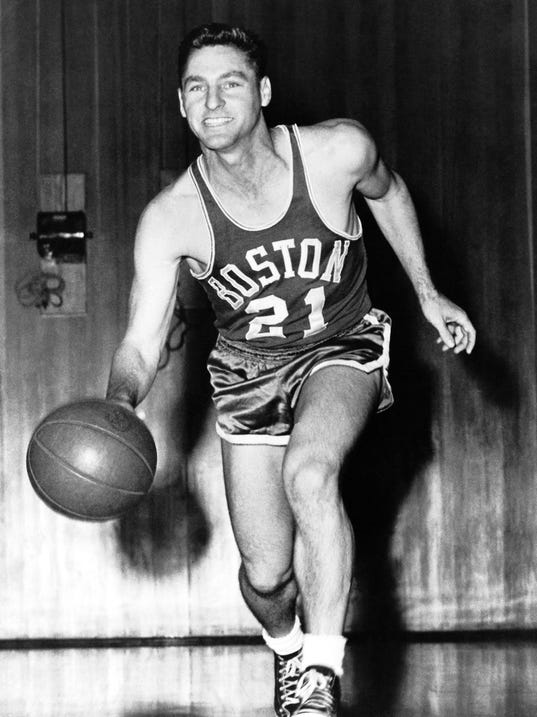
Top 100 NBA Players: #99 - Bill Sharman


Bill Sharman

Teams

Washington Capitols - 1950-51

Boston Celtics - 1951-61


Playoffs

Appearances - 10 (1952,1953,1954,1955,1956,1957,1958,1959,1960,1961)

Conference Finals - 8 (1953,1954,1955,1957,1958,1959,1960,1961)

NBA Finals - 5 (1957,1958,1959,1960,1961)

Championships - 4 (1957,1959,1960,1961)


Awards and Honors

All-NBA First Team - 4 (1956,1957,1958,1959)

All-NBA Second Team - 3 (1953,1954,1955,1956,1957,1958,1959,1960)

Hall of Fame - 1976

*(actual in bold, deserved in italics)


All-Time Ranks

Free Throw Percentage - #14


League Leads

Free Throw Percentage (#1-1953,1954,1955,1956,1957,1959,1961, #2-1958, #3-1952, #4-1960)

Field Goal Percentage (#2-1954, #4-1953, #5-1956)

Points Per Game (#5-1958)


Bill Sharman was a multi-sport star at USC, starting at First Base on the College World Series champions, while also being named an All-American in basketball. After college, he played both sports professionally, spending 6 seasons as a minor league baseball player in the Dodgers' system before focusing full-time on basketball.

He was drafted by the Washington Capitols, and was a decent player in limited playing time before the team folded midway through the season. He was drafted by the Fort Wayne Pistons in the dispersal draft, who then immediately traded him to the Boston Celtics, which was the best thing that could have happened to him.

During his 10 seasons in Boston, he played alongside some of the all-time greats, including Bill Russell, Bob Cousy, Tom Heinsohn, and Sam Jones. He led the Celtics in scoring 4 times, and did it with his incredible efficiency. In that era, it was extremely rare for a guard to shoot over 40% from the field, but Sharman did it in 9 straight seasons, and even finished in the top 5 of the league 3 times, despite standing only 6'1".

He was also the first great free throw shooter in history, leading the league 7 times, a record he shares with Rick Barry (including Barry's time in the ABA). In 1959 he set the record with a .932 free throw rate, and that record stood for nearly 20 years before it was finally broken. Even after all these years, his career percentage is still #14 of all time.

Once Bill Russell arrived in Boston in 1956, the Celtics finally started winning championships, with Sharman playing an important role on each title team, though he was never the best player on any of those teams, thanks to the presence of Cousy and Russell.

After his retirement as a player, Sharman went on to become a great coach, including leading the Lakers team that won a record 33 games in a row and a championship in 1972, after having coached the Utah Stars to the ABA title the season before. He is one of only 5 men to be enshrined in the Hall of Fame as both a player and a coach, joining John Wooden, Lenny Wilkens, and former teammates Bill Russell and Tom Heinsohn.

Sharman was the league first great shooting guard, even though he was never a true superstar player. He was never the reason a team won a title, but he was an important contributor on 4 championships within a 5-year period, which is why he deserves to be remembered as one of the greatest players of all time.



Sunday, August 21, 2016

Top 100 NBA Players: #42 - Sam Jones


Sam Jones

Of all the players who have even taken the court in the NBA, only one has won more championships than the 10 that Sam Jones took home, and that player was his teammate, Bill Russell. Russell won one title before Jones arrived in town, but Jones was a big part of the reason that the Celtics continued to win titles throughout the 1960's.

Jones was the second-best player on the Celtics through a large chunk of their unmatched playoff run, but he was well-known for being their best player in the clutch. He was always good during the regular season, better during the playoffs, then unstoppable during a game 7. Below are his stats for the 1960-68 seasons, during which the Celtics won 7 titles.

Jones (Regular Season) - 20.6 pts, 5.1 reb, 2.9 ast, .812 FT%
Jones (Playoffs) - 22.6 pts, 5.1 reb, 2.7 ast, .814 FT%

Jones' numbers remained virtually unchanged during the playoffs, with one exception, which was his scoring an extra 2 points in each game. Even more impressive was his scoring average in game 7 over that same time period, which was 30.5, an additional 10 points per game more than he normally scored in the regular season.

Jones started his career playing behind Bill Sharman, so it took four seasons before he was finally able to become a starter and play much of a role in the Celtics' titles, but once he was in the starting lineup, he was always a force. He was the #2 player on four straight championship teams, then he was the third best on the next. In all, he was a top 3 player on 5 of the 10 championship teams of which he was a member.

Saturday, August 6, 2016

Top 100 NBA Players: #59 - Bill Sharman


Bill Sharman

Bill Sharman was probably the first great shooting guard in NBA history. During his era, guards never shot over 40% from the field, but Sharman did it 9 straight times. He was also the first great free throw shooter, never shooting worse than .844 from the line, which included 7 seasons leading the league, and his .932 in 1959 stood as the best in history for nearly 20 years.

Sharman also won 4 NBA titles as a starter for the Boston Celtics at the end of his career. He was never the best player on those title teams, but he was the second-best player on the 1957 champs, then third or 4th best on the other 3 winners as Bill Russell and Tom Heinsohn emerged as stars. Here are his, Russell's, and Cousy's stats from that 1957 title run:

Sharman - 21.1 pts, 3.5 reb, 2.9 ast, .381 FG%, .953 FT%
Russell - 13.9 pts, 24.4 reb, 3.2 ast, .365 FG%, .508 FT%
Cousy - 20.2 pts, 6.1 reb, 9.3 ast, .324 FG%, .747 FT%

You can see that Sharman provided the scoring and shooting while Russell had the muscle and Cousy distributed the ball. What's most interesting is that Sharman had a better field goal percentage than his center, and he was only 6-1. He was one of the 5 best regular season players 3 times, including his peak years of 1956-57 and 1957-58, where he and Bob Cousy were the best duo in the league. Look at their overall stats from those two years:

Sharman - 21.7 pts, 4.5 reb, 3.1 ast, .420 FG%, .900 FT%
Cousy - 19.3 pts, 4.9 reb, 7.3 ast, .365 FG%, .833 FT%

Both were great scorers and rebounders for their position and era, both got a lot of assists in a time in which they were tougher to get, and both could hit free throws with the best of them. Putting these two together in the backcourt at that time would be similar to putting Michael Jordan and Magic Johnson together in the late 1980's. Can you imagine losing with that combination. It's no wonder they won 4 titles in 5 years.

Sunday, July 31, 2011

Top 100 NBA Players: #64


Sam Jones

(Kalb: #42, Simmons: #33, BBR: #111)

Of all the players who have even taken the court in the NBA, only one has won more championships than the 10 that Sam Jones took home, and that player was his teammate, Bill Russell. Russell won one title before Jones arrived in town, but Jones was a big part of the reason that the Celtics continued to win titles throughout the 1960's.

Jones was the second-best player on the Celtics through a large chunk of their unmatched playoff run, but he was well-known for being their best player in the clutch. He was always good during the regular season, better during the playoffs, then unstoppable during a game 7. Below are his stats for the 1960-68 seasons, during which the Celtics won 7 titles.

Jones (Regular Season) - 20.6 pts, 5.1 reb, 2.9 ast, .812 FT%
Jones (Playoffs) - 22.6 pts, 5.1 reb, 2.7 ast, .814 FT%

Jones' numbers remained virtually unchanged during the playoffs, with one exception, he was scoring an extra 2 points in each game. Even more impressive was his scoring average in game 7 over that same time period, which was 30.5, an additional 10 points per game more than he normally scored in the regular season.

Jones started his career playing behind Bill Sharman, so it took four seasons before he was finally able to become a starter and play much of a role in the Celtics' titles, but once he was in the starting lineup, he was always a force. He was the #2 player on four straight championship teams, then he was the third best on the next. In all, he was a top 3 player on 5 of the 10 championship teams he was a member of.


Jones was never the star of his team, like Finley was for three seasons, but Finley was never as successful as Jones was at his peak. Finley definitely rose to stardom a lot faster than Jones, but Jones remained a star for longer and peaked at a much older age, 31, than Finley's 26. Overall, they come out pretty even as far as the regular season is concerned, with a slight edge to Finley, but the contributions to all those title teams puts Jones ahead of Finley as an all-time great.

Wednesday, July 6, 2011

Top 100 NBA Players: #89


Manu Ginobili

(BBR: #73)

If you have any doubts about whether my rankings include any personal bias, today's entry wipes away those doubts. Including one of my least favorite players of all time in my all-time top 100 is difficult, but I must stay true to the statistics, and the numbers don't lie. Can you name every 6th Man Award Winner who has at least 2 All-Star appearances and 3 championships? There are only two: Kevin McHale and Ginobili.

Manu has always kicked his game up a notch in the playoffs. In 2005, for example, he was the #2 player on the World Champion Spurs, and his stats from the postseason are much more impressive than those from the regular season. Take a look:

Regular Season - 16.0 pts, 4.4 reb, 3.9 ast, .471 FG%, .376 3P%, .803 FT%
Playoffs - 20.8 pts, 5.8 reb, 4.2 ast, .507 FG%, .438 3P%, .795 FT%

That was the most impressive point of his career so far, but he was also the third best player on the 2007 Spurs and the 4th best player on the 2003 Spurs, also both NBA champs.


Manu and Bill Sharman were both among the best players on multiple championship teams, but neither was ever the best player on his team. Manu has been in the top 5% of players in the NBA multiple times, just as Sharman was in his career. Sharman's overall numbers may appear to be more impressive than Ginobili's, but Manu plays in an era with increased competition and a greater number of talented players overall.

Tuesday, July 5, 2011

Top 100 NBA Players: #90


Bill Sharman

(Simmons: #51, BBR: #77)

Bill Sharman was probably the first great shooting guard in NBA history. During his era, guards never shot over 40% from the field, but Sharman did it 9 straight times. He was also the first great free throw shooter, never shooting worse than .844 from the line, which included 7 seasons leading the league, and his .932 in 1959 stood as the best in history for nearly 20 years.

Sharman also won 4 NBA titles as a starter for the Boston Celtics at the end of his career. He was never the best player on those title teams, but he was the second-best player on the 1957 champs, then third or 4th best on the other 3 winners as Bill Russell and Tom Heinsohn emerged as stars.

He was one of the 5 best regular season players 3 times, including his peak years of 1956-57 and 1957-58, where he and Bob Cousy were the best duo in the league. Look at their overall stats from those two years:

Sharman - 21.7 pts, 4.5 reb, 3.1 ast, .420 FG%, .900 FT%
Cousy - 19.3 pts, 4.9 reb, 7.3 ast, .365 FG%, .833 FT%

Both were great scorers and rebounders for their position and era, both got a lot of assists in a time in which they were tougher to get, and both could hit free throws with the best of them. Putting these two together in the backcourt at that time would be similar to putting Michael Jordan and Magic Johnson together in the late 1980's. Can you imagine losing with that combination. It's no wonder they won 4 titles in 5 years.


Sharman's peak years may not have been quite as good as Boozer's, but he was consistently improving his game, as you can see from the trajectory of his chart above. He was always one of the best players in the league, and when he finally fell from that position, he walked away and became one of the better coaches of all time, and he is currently one of only 3 men to be inducted into the Hall of Fame as both a player and as a coach. The reason that he falls so much lower in these rankings than in some other similar ranking systems is that he was never better than the #4 player in the league in any given season or playoff series, and in a time when there were only between 80 and 110 players in the league, that only puts him in the top 5% for his time.