Showing posts with label Three Point Leader. Show all posts

Wednesday, October 13, 2021

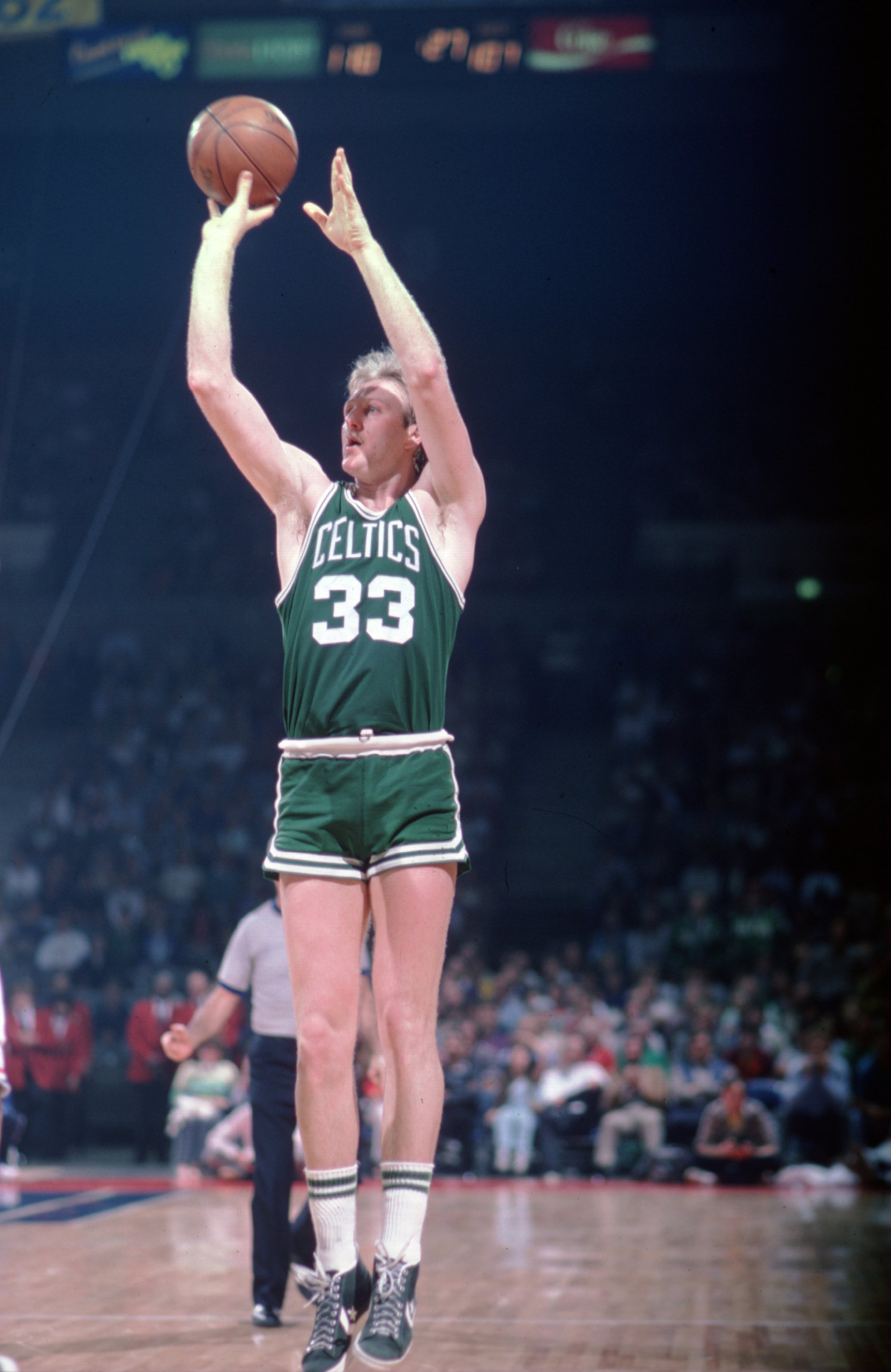
Top 100 NBA Players: #18 - Larry Bird


Larry Bird

Teams

Boston Celtics - 1979-92


Playoffs

Appearances - 12 (1980,1981,1982,1983,1984,1985,1986,1987,1988,1990,1991,1992)

Conference Finals - 8 (1980,1981,1982,1984,1985,1986,1987,1988)

NBA Finals - 5 (1981,1984,1985,1986,1987)

Championships - 3 (1981,1984,1986)


Awards and Honors

Rookie of the Year - 1980

MVP - 3 (1984,1985,1986)

Finals MVP - 2 (1981,1984,1986)

All-NBA First Team - 9 (1980,1981,1982,1983,1984,1985,1986,1987,1988)

All-NBA Second Team - 1 (1982,1990)

Hall of Fame - 1998

*(actual in bold, deserved in italics)


All-Time Ranks

Free Throw Percentage - #13

Points Per Game - #18

Total Steals - #40

Steals Per Game - #41

Total Points - #41

Total Assists - #44

Assists Per Game - #47

Rebounds Per Game - #60

Total Rebounds - #61


League Leads

Free Throw Percentage (#1-1984,1986,1987,1990, #2-1988,1992, #5-1982)

Three-Pointers Made (#1-1986,1987, #4-1985,1988, #5-1980)

Total Points (#2-1985, #3-1988, #4-1986, #5-1987)

Points Per Game (#2-1985, #3-1988, #4-1986,1987)

Three-Point Percentage (#2-1985, #3-1980, #4-1986)

Total Rebounds (#4-1981)

Rebounds Per Game (#4-1981)


Following a junior season in which he averaged 30.0 points and 11.5 rebounds for Indiana State, Larry Bird was selected with the #6 overall pick in the NBA Draft by the Boston Celtics. He decided to return to school for his senior year, and led the Sycamores to an undefeated season and their first-ever NCAA Tournament, where they advanced all the way to the championship game before losing to Magic Johnson and Michigan State.

Bird made an immediate impact with the Celtics, helping them win 32 more games than the year before and winning the Rookie of the Year award with averages of 21.3 points, 10.4 rebounds, and 4.5 assists per game. He edged out Magic Johnson, who averaged 18.0 points, 7.7 rebounds, 7.3 assists, and 2.4 steals. He also took Boston all the way to the Conference Finals before losing to Philadelphia.

Before the next season the Celtics added Robert Parish and Kevin McHale, and with Bird matching his averages from the year before, they were able to get revenge on the 76ers in the Conference Finals, then beat the Houston Rockets in the Finals to win the first title of Bird career. Bird averaged 15.3 points, 15.3 rebounds, and 7 assists in the Finals was awarded the Finals MVP after putting up 17.7 points and 9.5 rebounds per game.

Bird made steady improvement over the next 2 years, but both seasons ended in playoff disappointment, with the 76ers beating them in the Conference Finals in 1982, and the Bucks beating them in the second round in 1983. In 1984, Bird won his first MVP award after averaging 24.2 points, 10.1 rebounds, and 6.6 assists per game and leading the league by shooting .888 from the free throw line.

That year in the playoffs, Boston faced Milwaukee again, this time in the Conference Finals, and they got their revenge, which got them to the NBA Finals to play Magic Johnson and the Lakers. The series went to 7 games, with Boston finally winning, and Bird won the Finals MVP after averaging 27.4 points and 14 rebounds per game.

Bird averages the next year were nearly identical, with the exception of his scoring, which rose to 28.7 per game, which was #2 in the league and earned him his second straight MVP. He once again led Boston to the NBA Finals for a rematch with the Lakers, but this time they fell in 6 games.

Bird became the third player ever, after Wilt Chamberlain and Bill Russell, to win 3 consecutive MVP awards in 1986, with averages of 25.8 points, 9.8 rebounds, and 6.8 assists while leading the league in free throw shooting again. Boston led the league with 67 wins that year, then cruised to another championship, beating the Rockets in 6 games and earning Bird his second Finals MVP.

Bird led the Celtics back to the Finals for the 4th straight year in 1987, beating the Pistons in the Conference Finals, before meeting the Lakers for the third time in 4 seasons in the championship round. Just like 2 years before, the Lakers knocked off the Celtics in 6 games, preventing a championship repeat.

Bird set a career high in scoring the next year, pouring in 29.9 per game, but Boston lost to Detroit in a Conference Finals rematch, and the Celtics would not make the Finals again in Bird's career. Just 6 games into the next season, Bird had surgery to remove bone spurs from both heels, which put him out for the rest of the season.

Bird had one more season where he was still among the best in the league. He averaged 24.3 points upon returning from his missed season and led the league in free throw percentage for the 4th time, but Boston lost in the first round for the first time in his career.

He missed 59 games over the next two seasons due to back issues, though he was still productive while he was on the court, scoring around 20 points per game each season, but Boston couldn't make any noise in the playoffs, and Bird's back forced him to retire in the summer of 1992, right after playing for the Dream Team in Barcelona.

The only statistical category where Bird ever led the league was free throw percentage, but he was very good and very consistent in the 3 major categories throughout his career, averaging between 19 and 30 points each season, between 8 and 11 rebounds (not counting the year he largely missed), and at least 5 assists in every full season after his rookie year. He got 3 well-deserved MVP awards and should have had 3 Finals MVPs as well, and he is definitely one of the best to ever play the game.


Wednesday, October 6, 2021

Top 100 NBA Players: #25 - Stephen Curry


Stephen Curry

Teams

Golden State Warriors - 2009-present


Playoffs

Appearances - 7 (2013,2014,2015,2016,2017,2018,2019)

Conference Finals - 5 (2015,2016,2017,2018,2019)

NBA Finals - 5 (2015,2016,2017,2018,2019)

Championships - 3 (2015,2017,2018)


Awards and Honors

MVP - 2 (2015,2016)

Finals MVP - 0 (2015,2017)

All-NBA First Team - 4 (2013,2014,2015,2016,2017,2019,2021)

All-NBA Second Team - 2 (2014,2017,2018,2019,2021)

All-NBA Third Team - 1 (2018)

*(actual in bold, deserved in italics)


All-Time Ranks

Free Throw Percentage - #1

Three-Pointers Made - #2

Three-Point Percentage - #7

Points Per Game - #21

Assists Per Game - #40

Steals Per Game - #50

Total Assists - #70

Total Points - #74

Total Steals - #80


League Leads

Free Throw Percentage (#1-2011,2015,2016,2018, #2-2013,2019, #5-2021)

Three-Pointers Made (#1-2013,2014,2015,2016,2017,2021, #2-2019)

Three Point Percentage (#2-2016, #3-2011,2012,2013,2015, #4-2019)

Total Steals (#1-2015,2016, #2-2010, #5-2017)

Total Points (#1-2021, #2-2015,2016)

Points Per Game (#1-2016,2021, #5-2019)

Steals Per Game (#1-2016, #3-2010, #4-2015)

Total Assists (#3-2014, #4-2015)

Assists Per Game (#5-2014)


After leading Davidson on a Cinderella run to the Elite Eight as a sophomore, then leading the nation in scoring with 28.6 per game as a junior, Stephen Curry was selected by the Golden State Warriors with the #7 overall pick in the NBA Draft.

He had a strong start to his career, averaging 17.5 points, 4.5 rebounds, and 5.9 assists as a rookie, finishing as the runner-up in the Rookie of the Year voting. In his second season he raised his scoring up to 18.6 per game and led the league in free throw percentage, hitting .934 from the line, breaking Rick Barry's single-season team record.

He had ankle surgery right after that season ended, but his issues persisted, causing him to miss 40 games the next year and requiring a second surgery at the end of that season. He signed a new 4-year contract before the next season, which seemed risky at the time, but it turned out to be a great move for the Warriors.

That year, Curry averaged 22.9 points and 6.9 assists per game, set a new record for 3-pointers made in a season with 272, and led the Warriors to the playoffs, where they reached the second round before falling to the Spurs in 6 games. He led the league in three pointers again the next season, but fell just short of breaking his own record, and the Warriors fell in the first round of the playoffs that year.

In 2014-15, Golden State got a new coach, Steve Kerr, who emphasized faster-paced play and more opportunities for Curry to shoot, and the result was amazing. The Warriors won 67 games and Curry was named the MVP after putting up 23.8 points and 7.7 assists per game while breaking his three-pointer record with 286 made and leading the league in free throw percentage for the second time. 

In the playoffs, Curry was able to lead the Warriors all the way to the NBA Finals, breaking the record for most threes made in a single postseason in Game 3 of the Conference Finals. He struggled in the first two games of the NBA Finals, but rebounded in the next 4 games, leading the Warriors to a championship in Game 6. Andre Iguodala was named the Finals MVP because of his defense on LeBron James, but Curry's averages of 26 points and 6.3 assists per game in the Finals should have been enough to get him the award.

The next season, Curry became the only player in history to win the MVP award unanimously after leading the Warriors to a record 73 wins and leading the league in scoring with 30.1 per game, steals with 2.1 per game, free throw shooting at .908, and setting a new record for three-pointers made again with 402, becoming the first player ever to reach 300 or 400. He also became the seventh member of the 50-40-90 club, shooting a career-high of .504 from the field and .454 from three in addition to his league-leading free throw percentage. He was able to lead the Warriors back to the NBA Finals, but LeBron James and the Cavaliers were able to overcome a 3-1 deficit to knock them off and stop them from finishing their historic season on a high note.

Kevin Durant joined the Warriors the next year, and Curry happily took on a slightly smaller role despite being the 2-time defending MVP, dropping his scoring to only 25.3 per game, but the result was a 3rd straight trip to the NBA Finals, where they knocked off the Cavaliers in 5 games. Kevin Durant averaged 35.2 points, 8.2 rebounds, and 5.4 assists per game in the Finals and was named the MVP, but Curry may have been better, averaging 26.8 points, 8.0 rebounds, and 9.4 assists.

The next year he missed quite a bit of time due to injury, 11 games early in the season with an ankle injury and then 22 games with an MCL injury that kept him out through the first round of the playoffs, but he returned in full health in the second round, and helped lead the Warriors to their 4th straight Finals, where they again beat the Cavaliers, this time in a sweep to earn Curry his 3rd championship in 4 years, this time with 27.5 points per game in the Finals.

Curry averaged 27.3 points per game the next season, the second-highest of his career at the time, and once again led Golden State all the way to the NBA Finals, making it 5 years in a row. He averaged over 30 points per game in the Finals for the first time in his career, but the Warriors fell to Kawhi Leonard and the Raptors in 6 games after losing Kevin Durant and Klay Thompson to injuries.

Curry was expected to take on a huge load the next year with Durant gone to Brooklyn and Klay Thompson out with injury, but just 4 games into the season he broke his hand, which practically ended his season. He returned in March for one game before the season was shut down for COVID, and the Warriors record was bad enough that they weren't invited to participate in the bubble that finished off the season.

Back at full health last year, Curry led the league in scoring for the second time, finishing with a career high 32.0 points per game and leading the league in 3-pointers made for the 6th time. Golden State narrowly missed the playoffs, but Curry still finished #3 in the MVP voting.

As the reigning league scoring leader, Curry is obviously still at the top of his game and has a lot of potential to continue moving up the list of all-time greats. He is currently the best free throw shooter in the history of the league, and is #2 in 3-pointers made, a record he will likely take from Ray Allen this coming season. He has led the league in scoring twice, steals once, and won 2 MVPs, and he is easily one of the greatest players of all time.


Monday, October 4, 2021

Top 100 NBA Players: #27 - James Harden


James Harden

Teams

Oklahoma City Thunder - 2009-12

Houston Rockets - 2012-21

Brooklyn Nets - 2021-present


Playoffs

Appearances - 12 (2010,2011,2012,2013,2014,2015,2016,2017,2018,2019,2020,2021)

Conference Finals - 4 (2011,2012,2015,2018)

NBA Finals - 1 (2012)

Championships - 0


Awards and Honors

MVP - 1 (2018,2019)

Sixth Man of the Year - 1 (2012)

All-NBA First Team - 6 (2014,2015,2016,2017,2018,2019,2020)

All-NBA Second Team - 0 (2013,2014,2021)

All-NBA Third Team - 1 (2013)

*(actual in bold, deserved in italics)


All-Time Ranks

Three-Pointers Made - #5

Points Per Game - #10

Total Points - #38

Total Assists - #42

Assists Per Game - #42

Free Throw Percentage - #49

Total Steals - #67

Steals Per Game - #75


League Leads

Points Per Game (#1-2018,2019,2020, #2-2015,2016,2017, #5-2013,2014)

Total Points (#1-2015,2016,2019,2020, #2-2017,2018, #4-2013)

Three-Pointers Made (#1-2018,2019,2020, #3-2016,2017, #4-2015)

Total Assists (#1-2017, #4-2018, #5-2019)

Total Steals (#1-2020, #2-2019, #3-2015)

Assists Per Game (#1-2017, #3-2018)

Steals Per Game (#2-2019, #5-2020)


After being named the Pac 10 Player of the Year as a sophomore with averages of 20.1 points, 5.6 rebounds, and 4.2 assists, James Harden entered the NBA Draft, where he was taken with the #3 overall pick by the Oklahoma City Thunder.

Harden played with the Thunder for 3 seasons, all in a reserve role, but that role increased each season, and in 2012 he was named the Sixth Man of the Year after averaging 16.8 points, 4.1 rebounds, and 3.7 assists per game. He was also a big part of the Thunder's push to the NBA Finals, though he averaged only 12.4 points in the Finals once they got there, losing in 5 games to the Miami Heat.

Oklahoma City offered him an extension after that season, but Harden wanted to be a starter, so he was traded to the Houston Rockets just days before the next season began. He immediately showed that he belonged, averaging 25.9 points in his first season as a starter and being named to the All-NBA Third Team.

After posting nearly identical numbers the next year, he was named to the All-NBA First Team, but the next big step happened the next year. That season he averaged 27.4 points, 5.7 rebounds, and 7.0 assists per game and led the Rockets to the Conference Finals, the first time getting that far as a star, but the team fell to the Warriors in 5 games, and Harden had a terrible final game, with 14 points and 13 turnovers.

Two years later, he had his best individual season after being moved to point guard for the first time in his career, setting career highs with 8.1 rebounds and 11.2 assists, which also led the league, along with 29.1 points per game. The Rockets reached the second round, but Harden again struggled in the decisive game, scoring only 10 points before fouling out.

Harden moved back to shooting guard the next year, and after three seasons finishing as the runner-up in the scoring race, Harden finally won his first scoring title, pouring in 30.4 points per game, along with 5.4 rebounds and 8.8 assists. Houston finished with the league's best record, and Harden won the MVP, but they were again turned back in the Conference Finals by the Warriors, this time in 7 games, though Harden redeemed himself somewhat by scoring 32 in the final game.

The next year Harden was a scoring machine, averaging 36.1 per game, ending up winning the scoring title by 8.1 points, the largest margin in 56 years, but he lost the MVP to Giannis Antetokounmpo. For the 4th time in 5 seasons, the Warriors ended Houston's season, this time in the second round, once again keeping Harden from reaching the Finals as a star player.

Harden won his third consecutive scoring title in 2020, finishing the season with 34.3 per game, but Houston fell to the eventual champion Lakers in the second round of the playoffs, which led to coach Mike D'Antoni being fired, which led Harden to ask for a trade. He began last season in Houston, but was traded early in January to the Brooklyn Nets.

In Brooklyn Harden was able to reduce his scoring load, and he finished the season with only 24.6 per game, his lowest since leaving Oklahoma City, but he also averaged 7.9 rebounds and 10.8 assists per game, and was in the MVP race before he went down with a hamstring injury that caused him to miss over a month. He came back in the playoffs, but was ineffective in the team's second round loss to the Bucks.

Harden is one of the best scorers in the game today, but he also puts up numbers across the board. He has averaged at least 5 rebounds in 7 straight seasons, which is very solid for a guard, and has also averaged at least 7 assists in each of those seasons, including the one where he led the league. He also led the league in total steals in 2020, and in scoring and 3-pointers made in each of his last 3 seasons in Houston. He is still only 32 years old and not far removed from his best seasons, so there is a good chance he will eventually win a championship, and he should also continue to climb this list of the best players of all time.


Friday, September 17, 2021

Top 100 NBA Players: #44 - Gary Payton


Gary Payton

Teams

Seattle SuperSonics - 1990-03

Milwaukee Bucks - 2003

Los Angeles Lakers - 2003-04

Boston Celtics - 2004-05

Miami Heat - 2005-07


Playoffs

Appearances - 15 (1991,1992,1993,1994,1995,1996,1997,1998,2000,2002,2003,2004,2005,2006,2007)

Conference Finals - 4 (1993,1996,2004,2006)

NBA Finals - 3 (1996,2004,2006)

Championships - 1 (2006)


Awards and Honors

All-NBA First Team - 2 (1998,1999,2000,2002)

All-NBA Second Team - 5 (1995,1996,1997,1998,1999,2001,2002)

All-NBA Third Team - 2 (1994,2001,2003)

Defensive Player of the Year - 1 (1996)

Hall of Fame - 2013

*(actual in bold, deserved in italics)


All-Time Ranks

Total Steals - #4

Total Assists - #10

Steals Per Game - #29

Assists Per Game - #32

Total Points - #40

Three-Pointers Made - #91


League Leads

Total Steals (#1-1996, #2-1995, #3-1997,1998,2000, #4-1993)

Total Assists (#1-2000, #2-2003, #3-1999,2002, #5-1998)

Assists Per Game (#3-2002,2003, #4-1999,2000, #5-2001)

Steals Per Game (#1-1996, #3-1995,1997, #4-1998)

Total Points (#5-1999,2000)

Three-Pointers Made (#1-2000)


Gary Payton played 4 years of college basketball at Oregon State, where he set nearly every school record, and averaged 25.7 points, 4.7 rebounds, 8.1 assists, and 3.4 steals during his senior season, which led the Seattle SuperSonics to draft him #2 overall in the 1990 Draft.

Payton wasn't a great scorer right away, scoring only 7.2 per game as a rookie, but he averaged 6.2 assists and 2.0 steals that year, so his other skills were already NBA-ready. He improved over the next couple of years, raising his scoring average to 13.5 per game in his third season, and he helped the Sonics reach the Conference Finals that year, where the team fell to Phoenix in 7 games, but Payton earned his nickname "the Glove" for his tough defense during the series.

The next year, Payton was named to the All-Defensive First Team for the first time, an honor he would receive in each of the next 8 seasons as well, tying him for the record for most appearances on that list with 9. He also made the All-NBA Third Team that year, the first of 9 straight seasons he would be named to one of the All-NBA teams.

In 1995-96, he led the league in steals with 2.9 per game and was named the Defensive Player of the Year, and is still the only point guard to ever win the award. He also averaged 19.3 points and 7.5 assists that year, and Seattle finished with the best record in the West, then went all the way to the NBA Finals, where they faced the Chicago Bulls. Payton guarded Michael Jordan during that series, and Jordan averaged only 27.3 points per game, the lowest he would ever average in the Finals, but the Sonics would still lose in 6 games.

The Sonics were not able to repeat that level of success over the next several years, but Payton continued to improve each year, having his best individual season in 1999-00, when he averaged career-highs of 24.2 points and 6.5 rebounds, along with 8.9 assists, which was his best at the time as well, and he was named to the All-NBA First Team for the second time in 3 seasons.

Payton had two more great individual seasons with Seattle, but the team continued to struggle, and Payton did not get along with the team's new owner, who decided to trade his star, sending him to the Milwaukee Bucks in 2003 in exchange for Ray Allen. He finished out the season with the Bucks, then left as a free agent in search of a championship.

He signed with the Los Angeles Lakers, joining Kobe, Shaq, and Karl Malone on a superteam, and Payton was the only one of the stars to play in every game. They reached the NBA Finals as expected, but were upset by the Pistons in 5 games, with Payton averaging only 4.2 points per game in the series. He was traded to the Boston Celtics after the season.

Payton's averages had started to drop off, and he was traded at the deadline to the Atlanta Hawks for Antoine Walker, but the Hawks waived him later that week, and he then resigned with the Celtics to finish out the season, but that season ended in another first-round playoff disappointment.

He signed with the Miami Heat for the next season, playing as a backup for the first time in his career, and averaged only 7.7 points per game, his lowest since his rookie year. That team, led by Dwyane Wade and Shaq, were able to reach the NBA Finals, and this time Payton finally won his title, though he had little to do with it, scoring only 2.7 points per game in the Finals. He played one more season with Miami before retiring from the game.

Payton was one of the best defensive guards of all time, and was always a good passer, making him a perfect point guard. As his career went on, he became a very good scorer as well, scoring over 20 points per game 7 times as well. He also rarely missed a game, missing only 11 games in his first 16 seasons, with 3 of those happening because he had been traded and hadn't arrived with his new team yet. He only reached the NBA Finals once during his prime years, and didn't win a title until he was well past his prime, but he is still one of the greatest to ever play the game.


Thursday, September 2, 2021

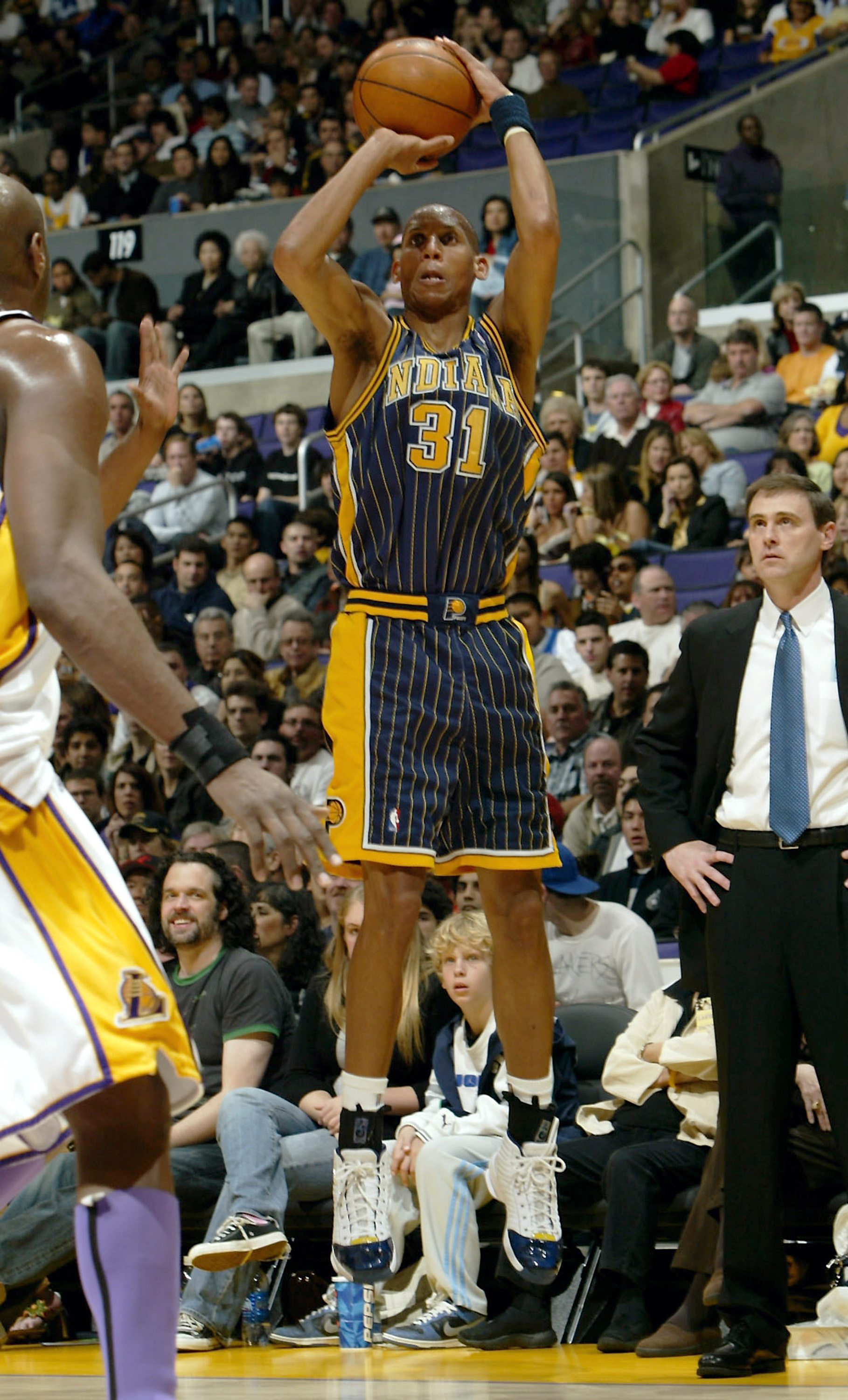
Top 100 NBA Players: #59 - Reggie Miller


Reggie Miller

Teams

Indiana Pacers - 1987-05


Playoffs

Appearances - 15 (1990,1991,1992,1993,1994,1995,1996,1998,1999,2000,2001,2002,2003,2004,2005)

Conference Finals - 6 (1994,1995,1998,1999,2000,2004)

NBA Finals - 1 (2000)

Championships - 0


Awards and Honors

All-NBA Third Team - 3 (1995,1996,1998)

Hall of Fame - 2012

*(actual in bold, deserved in italics)


All-Time Ranks

Three-Pointers Made - #3

Free Throw Percentage - #12

Total Points - #24

Total Steals - #49

Three-Point Percentage - #63


League Leads

Three-Pointers Made (#1-1993,1997, #2-1998, #3-1990,1999, #4-2000,2001,2002, #5-1991,1992,1995)

Free Throw Percentage (#1-1991,1999,2001,2002,2005, #2-1994,2000, #4-1995, #5-2003,2004)

Three Point Percentage (#3-1994)


After finishing a 4-year career at UCLA as the school's all-time second-leading scorer (behind Kareem Abdul-Jabbar), Reggie Miller was drafted at #11 by the Indiana Pacers, where he would spend the next 18 years.

Miller came off the bench as a rookie and put up 10 points per game on the season before moving into the starting lineup early in his second season, where he would remain for the rest of his career. In his third season, he set a career-high with 24.6 points per game, and led the Pacers to the playoffs, which would be the first of 15 playoff appearances in 16 seasons for Reggie.

He averaged over 20 points per game for each of the next 3 years, and led the league in free throw percentage in 1991, but the Pacers fell in the first round of the playoffs each season. He had a big season in 1993-94, when he joined the 50-40-90 club, shooting .503 from the field, .421 from deep, and .908 from the free throw line.

He became a big name during that season's playoff run, when he led the Pacers to the Conference Finals, and it was highlighted by his performance in Game 5 in New York, when he scored 25 of his 39 points in the 4th quarter to help Indiana take a 3-2 lead in the series, but they would end up losing the next two games and the series.

His reputation grew again the next year when he scored 8 points in 9 seconds against the Knicks in Game 1 of the second round, helping the Pacers go from down 6 to a 2-point victory with his 2 three-pointers, a steal, a rebound, and 2 free throws to steal the game. They won the series in 7 games, then took the Orlando Magic to 7 games before falling just short of the Finals again.

Miller suffered an eye injury just before the 1996 playoffs, which led to his team losing in the first round, and they missed the playoffs in 1997, but in 1998 they bounced back strong, going all the way to the Conference Finals again. Miller hit a game-winning three over Michael Jordan to win Game 4 to tie the series, but they fell in 7 games for the third time in 5 years.

Miller and the Pacers reached yet another Conference Final in 1999, but fell to New York again in a huge upset, but they were finally able to break through in 2000, when Miller scored 17 of his 34 points in the 4th quarter of the decisive Game 6 to beat New York and advance to the NBA Finals. Miller averaged 24.3 points in the Finals, but Indiana lost to the Lakers in 6 games.

Miller's role began to decrease slightly over the next few years, but Miller was still one of the top shooters in the league. He led the league in free throw shooting 4 times in the latter half of his career, including his final season, when he shot a career-high .933 from the line. Even with all of his playoff heroics, he was never able to win that elusive championship before retiring in 2005.

When Miller retired, he was the all-time leader in three-pointers made, though he has since been passed by Ray Allen and Stephen Curry. He averaged at least 18 points per game in 12 straight seasons, and was among the top 5 in the league in free throw shooting 10 times and threes made 11 times. Even though he never won a title, he was always great in the playoffs, and is definitely one of the greatest players of all time.


Tuesday, August 17, 2021

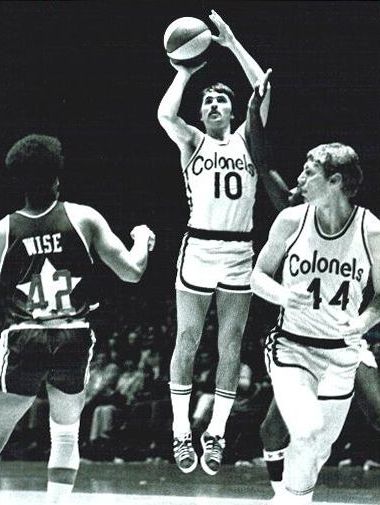
Top 100 NBA Players: #75 - Louie Dampier


Louie Dampier

Teams

Kentucky Colonels (ABA) - 1967-76

San Antonio Spurs - 1976-79


Playoffs

Appearances - 12 (1968,1969,1970,1971,1972,1973,1974,1975,1976,1977,1978,1979)

Conference Finals - 6 (1970,1971,1973,1974,1975,1979)

ABA Finals - 3 (1971,1973,1975)

ABA Championships - 1 (1975)


Awards and Honors

All-ABA First Team - 0 (1969,1970)

All-ABA Second Team - 4 (1968,1969,1970,1971,1974)

Hall of Fame - 2015


All-Time Ranks

Total Assists - #82


League Leads

Three Point Percentage (#1-1974, #2-1970,1975,1976, #4-1969,1971,1972, #5-1973)

Total Assists (#3-1969,1972,1974,1976, #4-1970,1973, #5-1975)

Assists Per Game (#3-1969,1973,1974, #4-1972,1976, #5-1970)

Three-Pointers Made (#1-1969,1970, #2-1971, #3-1972,1973)

Total Points (#3-1969, #4-1970)

Points Per Game (#3-1969, #4-1970)


Louie Dampier was a 2-time All-American at the University of Kentucky, and an Academic All-American, and played on the losing side in one of the most famous college basketball games of all time, when the all-white Kentucky team lost to Texas Western, who were the first national champs with an all-black starting lineup. Following graduation, Dampier was drafted in the 4th round by the Cincinnati Royals, but he chose to take an offer from the Kentucky Colonels of the brand-new ABA instead.

Dampier was an immediate star in the ABA, making the All-ABA Second Team after averaging 20.7 points as a rookie. He was even better in his second season, putting in 24.8 points per game to go along with 5.8 assists, and led the league with 199 3-pointers made, which ended up as the all-time ABA record for a season.

The next season he remained one of the best players in the league, leading the league in 3-pointers again while falling a single shot short of his record from the previous season, and he averaged an amazing 26.0 points per game, 4th-best in the league. He also led the Colonels to the Conference Finals, which would be a common occurrence over the next several years.

In 1970, the Colonels drafted Dan Issel, another University of Kentucky star, who took over as the star of the team as a rookie, with Dampier settling into a sidekick role. The duo worked well together, leading the Colonels to the ABA Finals, where they fell in 7 games to the Utah Stars.

The next season, the team drafted Artis Gilmore, who immediately supplanted Issel as the team's star, winning both the Rookie of the Year and MVP awards, and the threesome led Kentucky to the ABA's best record ever, finishing at 68-16, but they were upset in the conference semifinals, once again falling short of the ultimate prize despite an extremely strong team.

Kentucky was able to return to the ABA Finals in 1973, but they again fell in 7 games, this time to the Indiana Pacers. Dampier led the entire league in three-point percentage the next year, after ranking in the top 5 in that stat in each of the previous 5 seasons, but they still weren't able to break through in the playoffs, falling in the conference semis again.

Dampier finally won his championship in 1975, the penultimate season of the ABA. By this point, his scoring had slipped to a still-respectable 16.8 per game, and he was still the #3 star on the team behind Gilmore and Issel, but he was still a very important part of the title team. The ABA lasted only one more season, and the Colonels were among the teams that folded, with Dampier being selected by the San Antonio Spurs in the dispersal draft.

Dampier played 3 seasons with the Spurs as the backup to George Gervin, but never made much of a mark in the NBA, as he was past his prime by the time the merger happened. Still, he is one of the all-time greats of the ABA. He is the ABA's all-time leader in many statistical categories, including points scored, assists, minutes played, and three-pointers made.

He reached the Conference Finals only once as the star of his team, with 4 more appearances happening after he took a slightly reduced but still large role, and it was in that role that he became a champion. He is among the greatest players in the history of the ABA, and though he is not well-known today, he still deserves to be remembered among the greatest basketball players of all time.


Wednesday, August 11, 2021

Top 100 NBA Players: #81 - Ray Allen


Ray Allen

Teams

Milwaukee Bucks - 1996-03

Seattle SuperSonics - 2003-07

Boston Celtics - 2007-12

Miami Heat - 2012-14


Playoffs

Appearances - 11 (1999,2000,2001,2005,2008,2009,2010,2011,2012,2013,2014)

Conference Finals - 6 (2001,2008,2010,2012,2013,2014)

NBA Finals - 4 (2008,2010,2013,2014)

Championships - 2 (2008,2013)


Awards and Honors

All-NBA Second Team - 1 (2001,2005)

All-NBA Third Team - 1 (2001,2005)

Hall of Fame - 2018

*(actual in bold, deserved in italics)


All-Time Ranks

Three-Pointers Made - #1

Free Throw Percentage - #6

Total Points - #29

Three-Point Percentage - #48

Total Steals - #54

Total Assists - #98


League Leads

Free Throw Percentage (#2-2003,2009, #3-1998,2006,2010, #4-1999,2004,2007,2008, #5-2000,2013)

Three Pointers Made (#1-2002,2003,2006, #2-2000,2001,2009, #4-2005, #5-2008,2011)

Three Point Percentage (#2-2011, #4-2012)


Ray Allen was a great shooter and scorer at the University of Connecticut, and after being drafted #5 overall in 1996, he became a very good scorer in the NBA, and one of only a handful of players in the conversation for the best shooter of all time.

He was drafted by Minnesota, but immediately traded to Milwaukee for Stephon Marbury, who was drafted right before him. He was named to the All-Rookie Second Team, then quickly improved to become an All-Star within just a few years. In his 4th season, he averaged 22.1 points per game, the first of 8 consecutive seasons where he scored at least 21 per game, and he made his first of 10 All-Star appearances in a 12-year period.

In 2001, he, along with Glenn Robinson and Sam Cassell, led the Bucks to the Eastern Conference Finals, his deepest playoff run to that point, but they fell to Allen Iverson and the 76ers in 7 games, even with Allen scoring 27.1 points per game, including 41 in a big Game 6 win.

The Bucks were not able to replicate that success the next year, and early in 2003 Allen was traded to the Seattle SuperSonics in a deal involving Gary Payton. His 4 full seasons in Seattle were the 4 highest-scoring of his career, but they would only make one playoff appearance, losing in the second round in 2005. After averaging a career-high 26.4 points per game in 2007, but missing the end of the season after double ankle surgery, Allen was traded to the Boston Celtics.

It was in Boston that Allen began to gain his reputation as a clutch playoff performer. In his first season with the Celtics, his scoring average dropped by 9 points per game due to having superstars Paul Pierce and Kevin Garnett as teammates, but Allen stepped up in important moments, like Game 6 of the NBA Finals, when he set a Finals record with 7 three-pointers as they finished the series and he won his first championship.

As great as Allen was as a three-point shooter, he was even better from the free throw line. Although he never led the league in free throw shooting, he was in the top five 11 different times, and currently ranks as the 6th-best free throw shooter of all time. In 2008-09, he hit 72 straight free throws, breaking the Celtics franchise record that was previously held by Larry Bird.

In 2010, Allen would break his own record for most 3-pointers in a Finals game when he hit 8 of them in Game 2, but the Celtics fell to the Lakers in 7 games. In 2011, he passed Reggie Miller to become the all-time leader in three-pointers made, a distinction he still holds, and in 2013 he passed Miller to take over first place in playoff three-pointers, though he has since fallen to third behind Stephen Curry and LeBron James.

Allen finished out his career with 2 seasons in Miami, where he won another championship in 2013 after hitting one of the greatest 3-pointers in playoff history to tie game 6 in the closing seconds, and making a 4th Finals appearance in his final season, this time losing to the Spurs in 5 games. Allen considered returning to the league several time over the next few seasons, but eventually made his retirement official in 2016.

Allen never had a ton of rebounds or assists in his career, never reaching 6 rebounds or 5 assists per game in any season of his career. He was primarily a shooter and a scorer, but he was great at what he did. He is among the all-time leaders in both three-point and free throw percentage, with career averages of .400 and .894, which are both amazing numbers, and made important contributions to 2 title teams late in his career, which makes him one of the greatest players of all time.