Showing posts with label Bob Lanier. Show all posts

Sunday, August 1, 2021

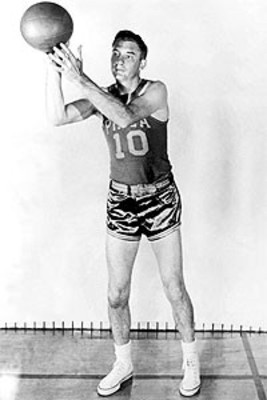
Top 100 NBA Players: #91 - Bob Lanier


Bob Lanier

Teams

Detroit Pistons - 1970-79

Milwaukee Bucks - 1980-84


Playoffs

Appearances - 9 (1974,1975,1976,1977,1980,1981,1982,1983,1984)

Conference Finals - 2 (1983,1984)

NBA Finals - 0

Championships - 0


Awards and Honors

All-NBA First Team - 0 (1974,1975,1977)

All-NBA Second Team - 0 (1972,1973)

Hall of Fame - 1992

*(actual in bold, deserved in italics)


All-Time Ranks

Total Rebounds - #47

Rebounds Per Game - #57

Total Points - #60

Blocks Per Game - #62

Points Per Game - #70

Total Blocks - #80

Field Goal Percentage - #88


League Leads

Field Goal Percentage (#4-1976, #5-1977)

Blocks Per Game (#4-1974, #5-1975)

Total Rebounds (#5-1974)

Total Blocks (#3-1974)


Bob Lanier was a superstar from the day he started playing in college for St. Bonaventure, leading them to the NCAA Tournament twice and averaging 27.6 points and 15.7 rebounds in his college career. He suffered a knee injury in his final college game, which kept him from playing in the Final Four, but it didn't stop him from being drafted #1 overall by Detroit in the NBA and as a territorial pick by the Nets from the ABA.

He decided to play for Detroit, and he even signed his contract while still in the hospital recovering from surgery. Rather than letting him fully heal, the team decided to play him immediately, a choice that may have severely hampered his later years. Still, he averaged 15.6 points and 8.1 rebounds and made the All-Rookie First Team.

After his rookie season he went on a monster run, with 7 straight seasons averaging at least 21 points and 11 rebounds per game, with highs of 25.7 points in 1972 and 14.9 rebounds in 1973. He also averaged 3 blocks per game in 1974, the first season in which they were recorded, which was 4th-best in the league that year.

While he was steady during his decade in Detroit, the team was not. He played for 8 different coaches in 10 years, and the team only made the playoffs 4 times, winning a playoff series only once. His knees also started to cause problems, and he missed at least 18 games in each of his 4 final seasons in Detroit.

He was traded to the Milwaukee Bucks midway through the 1979-80 season, joining a team with a lot more talent that allowed him to not have to carry the team every night. He never averaged more than 16 points in Milwaukee, but they never missed the playoffs, and made 2 trips to the Conference Finals, losing to the eventual champions both times. He retired in 1984 after his 8th knee surgery.

Lanier's best seasons all came during the time when Kareem Abdul-Jabbar was at his prime in Milwaukee, so he is often overlooked because there was a better player at the same position the whole time. He also was never able to reach the NBA Finals or win a title, which also decreases visibility and recognition, but he was one of the very best players in the league for the better part of a decade, and deserves to be recognized as one of the greatest players of all time.




Wednesday, July 6, 2016

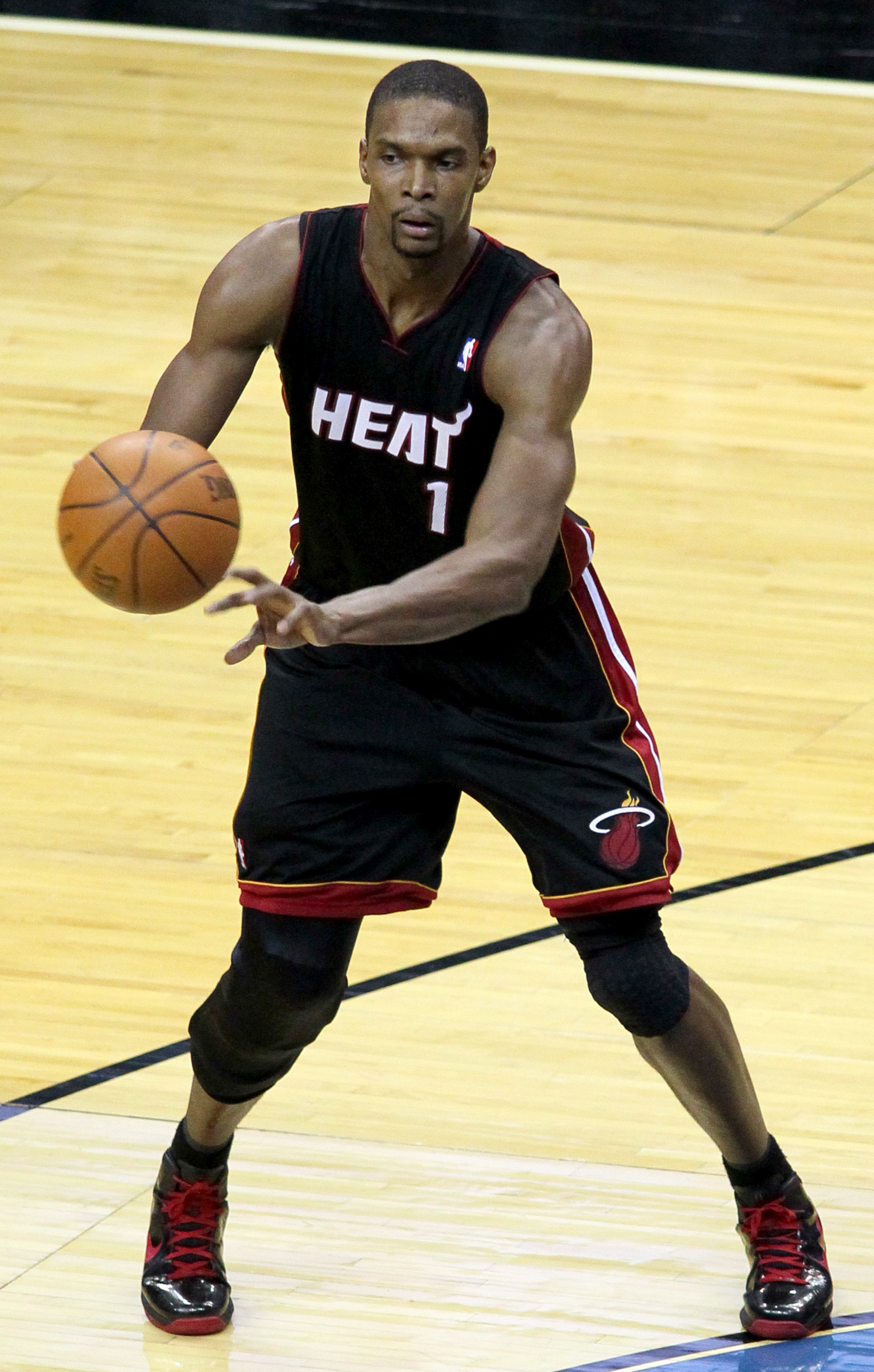
Top 100 NBA Players: #92 - Chris Bosh


Chris Bosh

Chris Bosh is another example of a player who spent years as a star player without much playoff success, then took a backseat in order to achieve playoff success. He's missed a lot of time over the past couple of years due to problems with blood clots, but he was one of the league's top players for several years back in Toronto. Just look at his cumulative averages over his final 5 years as a Raptor:

2005-2010 - 22.8 pts, 9.9 reb, 2.5 ast, .500 FG%, .811 FT%

Those would be pretty good averages for a single season, but those were the numbers he posted over the course of five seasons on average. Only 3 men have ever matched those numbers in a single season, and all 3 are players whose all-time ranking hasn't been revealed yet: Bob Lanier, Kevin McHale, and Larry Bird. It's pretty rare to find a big man who can also score and make his free throws, but that's what Bosh brings to the table.

When he reached Miami, all of those numbers dropped off slightly, most notably his scoring, which was 4 points lower than the average above. Many would say that it was a bad career move for him, but when you look at the bigger picture, he enjoyed more success in one year than in the rest of his career combined, reaching the NBA Finals with the Heat, which was much better than his previous best, which was losing in the first round.

But the success didn't end there. With LeBron leading the way, the Heat reached 4 straight NBA Finals, winning twice, and Bosh was the #3 player on the team throughout that time. His best postseason was his first in Miami, when he averaged 18.6 points and 8.5 rebounds. When LeBron left Miami, Bosh's averages made a nice jump, with a scoring average of 20.0 per game over the past 2 seasons, but he has missed so much time that it hasn't helped him move up the list. Hopefully he is able to regain his health so that we can see a few more good years while he is still in his late prime.

Saturday, July 16, 2011

Top 100 NBA Players: #79


Joe Fulks

Joe Fulks is another early star who is rarely recognized as one of the best in history. He earned his nickname, Jumpin' Joe, because he was the first to popularize the jump shot, and he was the first high-scoring big man in the league. During the BAA's first year of existence, he led the league in field goals and free throws made and attempted, as well as scoring, in which he dominated all other players by more than 6 points per game.

Fulks and the Warriors entered the first playoffs with the 4th-best record in the league, yet managed to pull upsets all the way to the title, with Fulks once again leading all players in field goals and free throws made and attempted and scoring, with 22.2 points per game. The MVP and Finals MVP awards did not yet exist, but if they had, there would be no doubt that Fulks would have won both in a landslide.

The next year was more of the same, except that Fulks was no longer the unquestioned best player in the league. That year he was edged out by Max Zaslofsky, who scored slightly less but did so more efficiently. The Warriors entered the playoffs as the top seed in the Eastern Conference (they played in Philadelphia back then), and Fulks led them all the way back to the Finals, but they were unable to repeat as champions.

Fulks was a force again in year three, improving in every category, but the Warriors barely made it to the playoffs and were swept in the first round. That year also featured the debut of George Mikan, who was obviously the best player in the league from day one. Mikan set a league scoring record that year with 48 in a single game, so Fulks went and broke it weeks later, pouring in 63 points, a record which stood for 10 years. Sadly, the years of Fulks as a star had come to an end, and the reason for his being left off lists similar to this was born. He was only a great player for three years, but those three years were pretty amazing.


Fulks may not compare favorably to Lanier when comparing them statistically, but when you compare dominance, Lanier was nowhere near the player Fulks was. Fulks was one of the two best players for three straight years, which Lanier never approached. Fulks also led two teams to the Finals as the star player, winning a championship in the process. Lanier never even reached the Finals as a role player. Fulks' career, short as it was, still contained enough accomplishment to earn him a spot among the all-time greats.

Friday, July 15, 2011

Top 100 NBA Players: #80


Bob Lanier

(Simmons: #92, BBR: #57)

During the 1970's, Bob Lanier was one of the premier players in the entire league, yet he was never voted to an All-NBA Team. He was the #1 pick in the draft, yet he never won a championship. He put together 8 of the most solid seasons in history, but he was traded away for almost nothing. Lanier's career was a string of almosts, but he still ended up making the Hall of Fame.

From 1971 to 1979, Lanier starred for the Detroit Pistons, but was never able to move them past the second round of the playoffs. He finished in the top 10 in scoring six times and rebounding four times in that decade. His overall numbers for those eight seasons are very impressive:

Lanier - 23.9 pts, 12.5 reb, 3.5 ast, 2.0 blk, .512 FG%, .780 FT%

Despite those incredibly regular season numbers, his Piston teams regularly lost early in the playoffs. In fact, the only time in his entire career that he made it as far as the Conference Finals was 1984, his final season as a player, and a season in which he was not anything more than a role player for the Milwaukee Bucks. It's impossible to make a list like this without including him somewhere, but it's also impossible to move him any higher when he was so playoff-challenged.


Lanier gets the nod over Aguirre thanks to his long, steady peak in the early years of his career, which coincides perfectly with a valley in Aguirre's best years. Both moved on to better teams later in their careers, and although Aguirre was able to win some championships late in his career, he wasn't a major player on those teams, so it wasn't quite enough to push him past Lanier on the list of great players who couldn't quite get it done in the playoffs during their peak years.

Saturday, July 9, 2011

Top 100 NBA Players: #86


Chris Bosh

(BBR: #106)

Bosh may seem like an unlikely candidate to make this list, especially ahead of contemporaries Ginobili and Parker, who have a much better track record at winning, but even though many were disappointed with his performance during his first season in Miami, it actually wasn't that bad, and the last five years he spent in Toronto were very good. Take a look:

2005-2010 - 22.8 pts, 9.9 reb, 2.5 ast, .500 FG%, .811 FT%

Those would be pretty good averages for a single season, but those were the numbers he posted over the course of five seasons on average. Only 3 men have ever matched those numbers in a single season, and all 3 are players whose all-time ranking hasn't been revealed yet: Bob Lanier, Kevin McHale, and Larry Bird. It's pretty rare to find a big man who can also score and make his free throws, but that's what Bosh brings to the table.

During his first season in Miami, all of those numbers dropped off slightly, most notably his scoring, which was 4 points lower than the average above. Many would say that it was a bad career move for him, but when you look at the bigger picture, he enjoyed more success in one year than in the rest of his career combined, reaching the NBA Finals with the Heat, which was much better than his previous best, which was losing in the first round.

While he was in Toronto, he was the best player on the Raptors for years, but they realized that they couldn't win a title with him as their best player, so he moved to Miami to become a third option, and he adjusted pretty well. In fact, I'm not sure how long it's been since a team's third-best player averaged over 18 points per game.


While Parker has definitely enjoyed much more playoff success than Chris Bosh, there's no denying that Bosh has always been the better player overall, even with the playoffs added in, as they are above. Add to that the fact that Bosh is just hitting his peak in the 8th year of his career, and you may be seeing him make a much bigger move in years to come.