Showing posts with label Max Zaslofsky. Show all posts

Wednesday, September 7, 2016

Top 100 NBA Players: #22 - Kevin Durant


Kevin Durant

Kevin Durant is easily the youngest player to be ranked among my top 25, and although he is still only 27 years old, he has done some very impressive things in the early stages of his career.

In his first season in the NBA, playing for the Seattle SuperSonics, Durant won the Rookie of the Year award by averaging 20.3 points per game while starting every single night. It turns out that his rookie season would start to look weak after what he started doing in year two. At only 20 years old, he was one of the top 10 players in the entire league and ranked #5 in scoring at 25.3 points per game, while also increasing his rebounding average from 4.4 to 6.5.

The next season he became the youngest player ever to lead the league in scoring, averaging 30.1 points per game and supplanting Max Zaslofsky as the youngest scoring leader, breaking a record that had stood for 62 years. He was also named to the All-NBA First Team, came in second in the MVP race, and led the Thunder to the playoffs. He also grabbed 7.6 rebounds per game and shot 90% from the free throw line while leading all players in minutes played.

His fourth season was even better somehow. His stats may have slipped slightly in each major category, but he was still one of the top 5 players in the league and led Oklahoma City to the Western Conference Finals as the best player on a very good Thunder team. He led the league in scoring for the second straight season and matched that feat in the playoffs, where he averaged 28.6 over 17 games.

He led the league in scoring again the following season, becoming just the 7th player ever to lead the league in three straight seasons. He established himself as the #2 player in the league, behind only LeBron James, then took the Thunder all the way to the Finals. He raised his scoring average the next season, but ended up behind Carmelo in the scoring race, and the Thunder failed to match their previous playoff success.

His 6th season was easily his best. He led the league in scoring again with a career-high 32 per game to go along with 7.4 rebounds and 5.5 assists, and he took the Thunder back to the Conference Finals. He suffered an unfortunate foot injury that cost him most of the following season, and when he got back, Russell Westbrook had taken over as the best player on the team, though Durant was still one of the top 5 players in the league, and they reached the conference finals yet again.

At this point in his career it's impossible to tell exactly where he'll end up at the end of his career. He has the highest scoring average of any active player, and the third highest average of all time, behind only MJ and Wilt. He has yet to win a championship, and there is only one player ahead of him in these rankings who never won one, but Durant is still young and should have a lot of chances to finish on top. We could be looking at one of the top 10 players of all time by the time his career ends.

Wednesday, July 27, 2016

Top 100 NBA Players: #70 - Joe Fulks


Joe Fulks

Joe Fulks is another early star who is rarely recognized as one of the best in history. He earned his nickname, Jumpin' Joe, because he helped popularize the jump shot, and he was the first high-scoring big man in the league. During the BAA's first year of existence, he led the league in field goals and free throws made and attempted, as well as scoring, in which he dominated all other players by more than 6 points per game.

Fulks and the Warriors entered the first playoffs with the 4th-best record in the league, yet managed to pull upsets all the way to the title, with Fulks once again leading all players in field goals and free throws made and attempted and scoring, with 22.2 points per game. The MVP and Finals MVP awards did not yet exist, but if they had, there would be no doubt that Fulks would have won both in a landslide.

The next year was more of the same, except that Fulks was no longer the unquestioned best player in the league. That year he was edged out by Max Zaslofsky, who scored slightly less but did so more efficiently. The Warriors entered the playoffs as the top seed in the Eastern Conference (they played in Philadelphia back then), and Fulks led them all the way back to the Finals, but they were unable to repeat as champions.

Fulks was a force again in year three, improving in every category, but the Warriors barely made it to the playoffs and were swept in the first round. That year also featured the debut of George Mikan, who was obviously the best player in the league from day one. Mikan set a league scoring record that year with 48 in a single game, so Fulks went and broke it weeks later, pouring in 63 points, a record which stood for 10 years. Sadly, the years of Fulks as a star had come to an end, and the reason for his being left off lists similar to this was born. He was only a great player for three years, but those three years were pretty amazing.

Tuesday, July 12, 2016

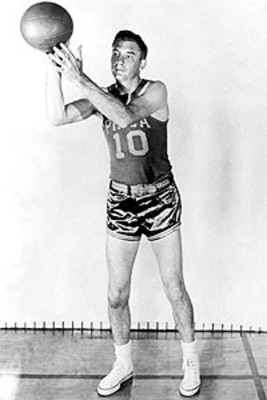
Top 100 NBA Players: #86 - Max Zaslofsky


Max Zaslofsky

Many people tend to ignore the very early years of the NBA (or BAA as it was called for 3 years), but there were some pretty good players back then, and Zaslofsky was probably the league's first star player, even before George Mikan came along.

In 1946-47, the very first year of the BAA, Zaslofsky was named to the All-BAA First Team at only 21 years old, and he remained the youngest player named to the First Team for nearly 50 years, when LeBron James took that honor away from him. With all of the great young players who have come through since then, wouldn't you have thought one of them would have made the First Team? As it stands, he is still the second-youngest ever given that honor.

In 1947-48, he led the league in scoring and would have been named the MVP if the award existed back then. His 21.0 points per game doesn't look so impressive today, which may be another reason that he is overlooked, but the average team only scored 72.7 per game back then, because there was no shot clock to increase the speed of the game. If you adjusted his scoring average for today's faster-paced league, his average would be 28.8, which is considered a pretty good average.

Another reason people don't remember him is that his best years were spent with a team that no longer exists. He was named to the All-BAA or All-NBA First Team in each of his first four seasons with the Chicago Stags, but when they went out of business in 1950, his rights were given to the New York Knicks in the dispersal draft. The fact that there is no team around to celebrate his accomplishments makes him more likely to be forgotten.

Zaslofsky never won a title as a player, but he did play in the NBA Finals 4 times, twice as the best player on his team, and once as its second option. The fourth appearance was after his prime, but the fact remains that he was largely responsible for 3 teams appearing in the NBA Finals, a huge accomplishment in any era.

Wednesday, July 27, 2011

Top 100 NBA Players: #68


Kevin Durant

Kevin Durant is by far the youngest player to be ranked among my top 100, and although he is still only 22 years old, he has done some very impressive things in the early stages of his career.

In his first season in the NBA, playing for the Seattle Supersonics, Durant won the Rookie of the Year award by averaging 20.3 points per game while starting every single night. It turns out that his rookie season would start to look weak after what he started doing in year two. At only 20 years old, he was one of the top 10 players in the entire league and ranked #5 in scoring at 25.3 points per game, while also increasing his rebounding average from 4.4 to 6.5.

The next season he became the youngest player ever to lead the league in scoring, averaging 30.1 points per game and supplanting Max Zaslofsky as the youngest scoring leader, breaking a record that had stood for 62 years. He was also named to the All-NBA First Team, came in second in the MVP race, and led the Thunder to the playoffs. He also grabbed 7.6 rebounds per game and shot 90% from the free throw line while leading all players in minutes played.

His fourth season was even better somehow. His stats may have slipped slightly in each major category, but he was still one of the top 5 players in the league and led Oklahoma City to the Western Conference Finals as the best player on a very good Thunder team. He led the league in scoring for the second straight season and matched that feat in the playoffs, where he averaged 28.6 over 17 games.

At this point in his career it's impossible to tell exactly where he'll end up at the end of his career. We could be looking at one of the top 10 players of all time, or he may turn into a Penny Hardaway or Grant Hill, who dominated the league early on the same way but succumbed to injuries. Only time will tell, but one thing is for sure: we are currently witnessing the rise of one of the most talented players to ever take the court, and even though it's still early, he just can't be overlooked.


Durant has reached such a high level at such a young age that very few can compare to him at this point in his career, and those that can are all in the top 10 players of all time. Elton Brand has been a very good player, even winning a Rookie of the Year award like Durant, but it took him about 8 years to reach the peak level that Durant reached in three, and Durant has already led his team on a deeper playoff run than Brand ever has, which is why I'm placing him here for now. By the end of next season, who knows? I could easily see him making the jump to top 50 of all time if he can match his last two seasons.

Saturday, July 16, 2011

Top 100 NBA Players: #79


Joe Fulks

Joe Fulks is another early star who is rarely recognized as one of the best in history. He earned his nickname, Jumpin' Joe, because he was the first to popularize the jump shot, and he was the first high-scoring big man in the league. During the BAA's first year of existence, he led the league in field goals and free throws made and attempted, as well as scoring, in which he dominated all other players by more than 6 points per game.

Fulks and the Warriors entered the first playoffs with the 4th-best record in the league, yet managed to pull upsets all the way to the title, with Fulks once again leading all players in field goals and free throws made and attempted and scoring, with 22.2 points per game. The MVP and Finals MVP awards did not yet exist, but if they had, there would be no doubt that Fulks would have won both in a landslide.

The next year was more of the same, except that Fulks was no longer the unquestioned best player in the league. That year he was edged out by Max Zaslofsky, who scored slightly less but did so more efficiently. The Warriors entered the playoffs as the top seed in the Eastern Conference (they played in Philadelphia back then), and Fulks led them all the way back to the Finals, but they were unable to repeat as champions.

Fulks was a force again in year three, improving in every category, but the Warriors barely made it to the playoffs and were swept in the first round. That year also featured the debut of George Mikan, who was obviously the best player in the league from day one. Mikan set a league scoring record that year with 48 in a single game, so Fulks went and broke it weeks later, pouring in 63 points, a record which stood for 10 years. Sadly, the years of Fulks as a star had come to an end, and the reason for his being left off lists similar to this was born. He was only a great player for three years, but those three years were pretty amazing.


Fulks may not compare favorably to Lanier when comparing them statistically, but when you compare dominance, Lanier was nowhere near the player Fulks was. Fulks was one of the two best players for three straight years, which Lanier never approached. Fulks also led two teams to the Finals as the star player, winning a championship in the process. Lanier never even reached the Finals as a role player. Fulks' career, short as it was, still contained enough accomplishment to earn him a spot among the all-time greats.

Monday, July 11, 2011

Top 100 NBA Players: #84

Rajon Rondo

(BBR: #147)

Rondo is easily the youngest player to appear on this list so far, and you may wonder if he has done enough in his short career to merit his placement among the all-time greats. He may not have a huge list of career accomplishments, but what he has done so far has been pretty impressive.

First of all, he has already won a championship as a starting point guard in 2008. During that season he may have been overshadowed by the "Big Three" of Kevin Garnett, Paul Pierce, and Ray Allen, but he wasn't far behind them in playoff production. He had more steals and assists than any other player to appear in the playoffs that year, and it quickly became clear that the Celtics were more than just 3 players.

The following season, despite only making it to the second round, he once again had the most playoff assists of any player. That season he was the best player on the Celtics in the postseason, boosting his averages to 16.9 points, 9.7 rebounds, 9.8 assists, and 2.5 steals. In 2010, he was the best playoff player for the Celtics once again, and he led them all the way back to the NBA Finals. Look at the playoff numbers for the four Celtics stars that year.

Rondo - 15.8 pts, 5.6 reb, 9.3 ast, 1.9 stl
Garnett - 15.0 pts, 7.4 reb, 2.5 ast, 1.1 stl
Pierce - 18.8 pts, 6.0 reb, 3.4 ast, 1.0 stl
Allen - 16.1 pts, 3.3 reb, 2.6 ast, 0.9 stl

Rondo was scoring and rebounding just as much as his bigger teammates, had more steals than any of them, and had more assists than all three of them combined. During the regular season he was named to the All-Defensive First Team and should have been named to the All-NBA Second Team. He has very quickly become one of the best all-around players in the league, putting up big numbers in every category.


I've included Zaslofsky's adjusted value again here, but you can see that Rondo's peak was much more impressive than Zaslofsky's, and he has been a major contributor for four straight playoff teams, winning a title (which Max didn't), leading a team to the Finals, and putting up some very strong numbers on two other teams that lost in the second round. With just five seasons under his belt, there is a very good chance we haven't even seen his peak yet. He has the potential to end up being remembered as a better player than any of his current teammates.

Sunday, July 10, 2011

Top 100 NBA Players: #85


Max Zaslofsky

You may have noticed that I didn't include Max's standing in other ranking systems above this paragraph. There is a good reason for this: He wasn't included in any of them. Many people tend to ignore the very early years of the NBA (or BAA as it was called for 3 years), but there were some pretty good players back then, and Zaslofsky was probably the league's first star player, even before George Mikan came along.

In 1946-47, the very first year of the BAA, Zaslofsky was named to the All-BAA First Team at only 21 years old, and he remained the youngest player named to the First Team for nearly 50 years, when LeBron James took that honor away from him. With all of the great young players who have come through since then, wouldn't you have thought one of them would have made the First Team? As it stands, he is still the second-youngest ever given that honor.

In 1947-48, he led the league in scoring and would have been named the MVP if the award existed back then. His 21.0 points per game doesn't look so impressive today, which may be another reason that he is overlooked, but the average team only scored 72.7 per game back then, because there was no shot clock to increase the speed of the game. If you adjusted his scoring average for today's faster-paced league, his average would be 28.8, which is considered a pretty good average.

Another reason people don't remember him is that his best years were spent with a team that no longer exists. He was named to the All-BAA or All-NBA First Team in each of his first four seasons with the Chicago Stags, but when they went out of business in 1950, his rights were given to the New York Knicks in the dispersal draft. The fact that there is no team around to celebrate his accomplishments makes him more likely to be forgotten.

Zaslofsky never won a title as a player, but he did play in the NBA Finals 4 times, twice as the best player on his team, and once as its second option. The fourth appearance was after his prime, but the fact remains that he was largely responsible for 3 teams appearing in the NBA Finals, a huge accomplishment in any era.


From the chart, it does not appear that he belongs in the same league as Chris Bosh, who I featured yesterday, but when you take the era into account, you realize that they were not that far apart, as the following pace-adjusted chart shows.


He may not have lasted nearly as long as Bosh or other players do today, but with the 3 seasons of leading teams to the finals as a top-2 player, which Bosh has never done, he has to be placed above him on the list of all-time greats. If he were transported into today's NBA, he would probably get destroyed, but the fact still remains that he had a big impact on the league when it was still forming, and that counts for something, in this case recognition as the 85th-best player of all time.