Because I can't help myself when it comes to statistics, I decided to break down the 106 players from my countdown by when they played, what position they played, and where they played.
By Decade
These are broken down by primary decade played:
1880's: 3
1890's: 3
1900's: 7
1910's: 8
1920's: 5
1930's: 13
1940's: 7
1950's: 5
1960's: 10
1970's: 8
1980's: 6
1990's: 15
2000's: 13
2010's: 3
There was quite a spike around the turn of the millennium, even if you don't count the cheaters.
By Position
These are broken down by position played in the most games:
Pitcher - 40
First Base - 14
Left Field - 11
Right Field - 11
Center Field - 10
Second Base - 7
Third Base - 4
Catcher - 3
Shortstop - 3
Designated Hitter - 3
By Team
These are broken down by primary team, with total players who appeared with that team in parentheses:
New York Yankees - 16 (29)
Philadelphia/Oakland Athletics - 10 (18)
Boston Red Sox - 9 (18)
Saint Louis Cardinals - 8 (17)
New York/San Francisco Giants - 8 (12)
Detroit Tigers - 7 (13)
Brooklyn/Los Angeles Dodgers - 5 (12)
Boston/Milwaukee/Atlanta Braves - 5 (7)
Philadelphia Phillies - 4 (12)
Saint Louis Browns/Baltimore Orioles - 3 (14)
New York Mets - 3 (13)
Cleveland Indians - 3 (10)
Washington Senators/Minnesota Twins - 3 (7)
Cincinnati Reds - 3 (7)
Chicago Cubs - 2 (8)
Chicago White Sox - 2 (8)
California/Anaheim/Los Angeles Angels - 2 (5)
Houston Astros - 1 (10)
Texas Rangers - 1 (6)
Toronto Blue Jays - 1 (6)
Montreal Expos/Washington Nationals - 1 (6)
San Diego Padres - 1 (5)
Pittsburgh Pirates - 1 (5)
Seattle Mariners - 1 (4)
Milwaukee Brewers - 1 (4)
Kansas City Royals - 1 (3)
Florida/Miami Marlins - 1 (2)
Arizona Diamondbacks - 1 (2)
Colorado Rockies - 1 (1)
Tampa Bay Rays - 0 (1)
The only team that didn't have a player represented in the top 106 was Tampa Bay, but they at least had the twilight years of Wade Boggs. The other 3 most recent expansion teams also had fewer representatives than most, while the Yankees obviously dominated.
Thanks to everybody who followed this countdown and commented (mostly through Facebook). I hope you enjoyed it, and I can't wait to unveil my next set of all-time rankings.
Showing posts with label Top 106 Baseball Players. Show all posts
Showing posts with label Top 106 Baseball Players. Show all posts
Thursday, August 9, 2018


Tuesday, August 7, 2018
Top 106 Baseball Players: #1 - Babe Ruth
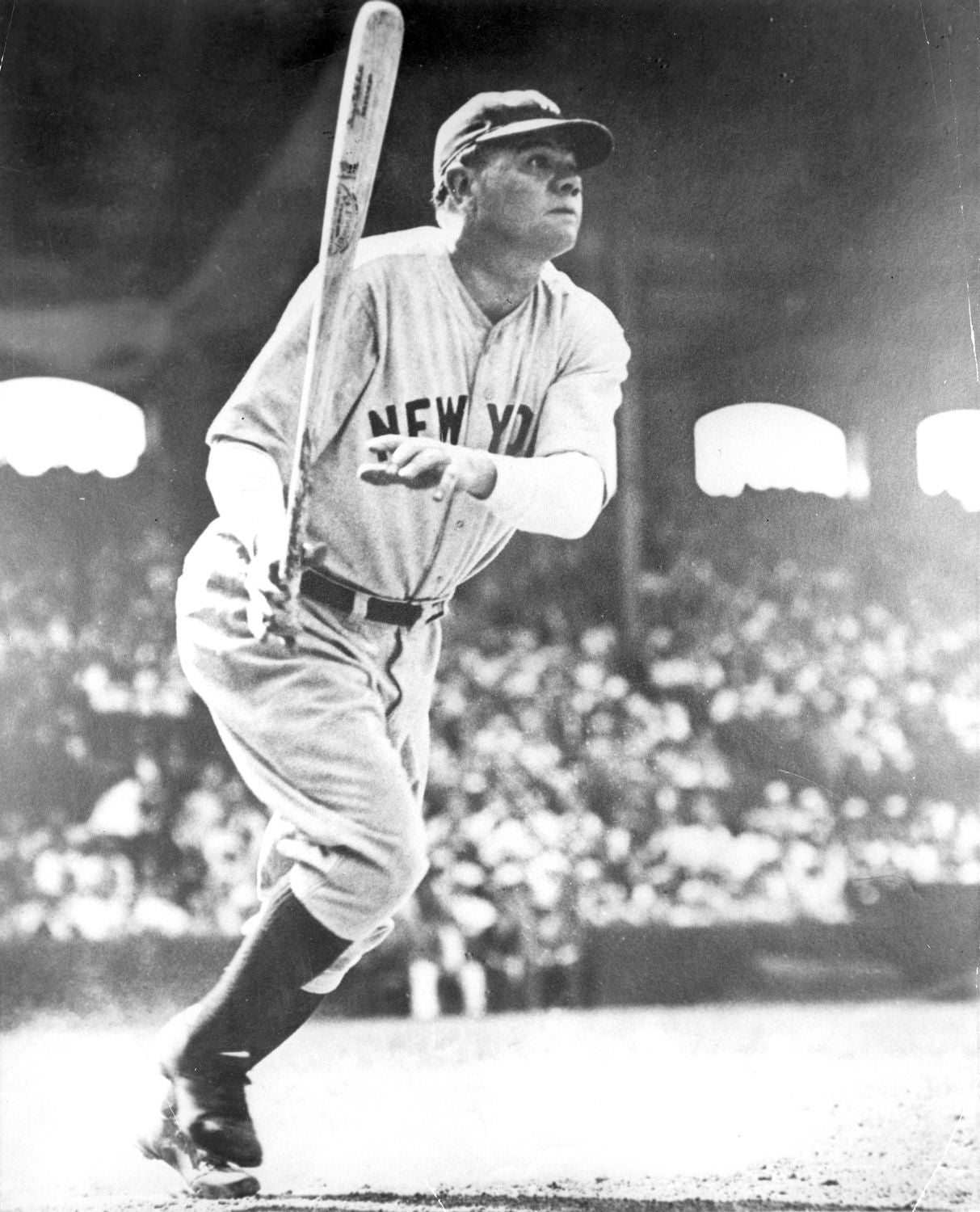
Babe Ruth
Babe Ruth is the greatest baseball player of all time, and it isn't even close. Even if you remove all of his pitching performances from his statistics, he is still the greatest of all time by a considerable margin.
Ruth joined the Red Sox in 1914, but was hardly used as a rookie. He started out as a pitcher, and in his third season he led the league in ERA and shutouts, and also led the Red Sox to the World Series, where he had the best pitching performance of anyone that year, pitching a 14-inning complete game that Boston won 2-1 over Brooklyn.
After the 1917 season, he grew tired of only playing once or twice a week, and asked to be used in the outfield more often. He was used occasionally in that role in 1918, but because the Red Sox were in the pennant race, they wanted to use him more as a pitcher. He did tie for the league lead with 11 home runs that year, and he also ended up with his second title.
With the Red Sox out of the running pretty early in 1919, they allowed him more time in the outfield, and he took full advantage, breaking the previous home run record by hitting 29, 2 more than the old record. With the owner short on cash after the season, and recognizing the value he was sitting on, Ruth was sold to the Yankees for $100,000.
In his first season in New York, he obliterated his own record, hitting 54 home runs to nearly double his record from the previous season, and he finished far ahead of the next-highest total of 19 that year. He also led the league in runs scored, RBI's, walks, on-base percentage, and slugging percentage, making him easily the best player in the league.
The next year was his best overall. He broke the home run record again, this time upping it to 59, far ahead of the 24 of his nearest competitor. He also led the league with 177 runs, 168 RBI, and 145 walks, and batted .378 for the season. He also took over the career home run lead that season when he hit #139, and he would extend that record nearly 600 more times over the course of his career.
Ruth was suspended for the first 6 weeks of the 1922 season for playing exhibition games following the World Series, which was not allowed at the time. The rule was changed before the season ended, but it was enough to prevent Ruth from winning the home run title for one of the few times in his career.
When he returned in 1924, he played like a man on a mission, leading the league in all of his regular categories while batting a career high .393 and leading the Yankees to the World Series for the third year in a row against the New York Giants, with which they shared a stadium. He had a great series, batting .368 with 3 homers and 8 walks, and finally defeated the Giants on their third attempt.
Ruth missed much of the 1925 season due to a mysterious belly problem, probably the result of overindulgence in alcohol and hot dogs. He came back strong in 1926, having another Ruthian season, and led them back to the World Series, where he had his best postseason series, hitting 4 home runs and walking 11 times, but the Yankees lost to the Cardinals in 7.
In 1927 he broke his home run record one more time, reaching 60, a number that would not be touched for 34 seasons. He also had another good postseason, batting .400 with 2 home runs and 7 RBI in the World Series as the Yankees swept Pittsburgh. They repeated the feat in 1928, with Ruth hitting .625 with 3 home runs in a sweep of the Cardinals.
He spent a few more seasons as the best player in baseball, leading the league in home runs 3 more times, making it a total of 12 seasons in his career. He also led the league in RBI's 5 times in his career, runs 6 times, and walks 11 times. He retired as the all-time leader in home runs, RBI's, walks, and slugging percentage, and is still in the top 3 in each of those categories, and still leads in slugging. There has never been a player who dominated in the way he did, and he did it for over a decade, so there is no doubt at all that he is the greatest player of all time, and may be forever.
Monday, August 6, 2018
Top 106 Baseball Players: #2 - Lou Gehrig
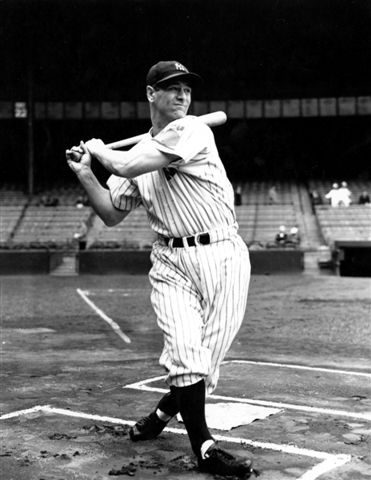
Lou Gehrig
Lou Gehrig was a great all-around player who rarely missed a game before he was forced into an early retirement by the disease that was named for him and took his life soon afterward.
Gehrig first joined the Yankees in 1923, as a 19-year-old, and was used sparingly as a pinch hitter in his first two years, and wasn't included on the postseason roster when they won the 1923 World Series. Midway through the 1925 season, first baseman Wally Pipp sat out with a headache, allowing Gehrig to start the game, and he didn't sit out another game until 1939.
He had his breakout season in 1927, the year in which the Yankees' lineup was known as Murderer's Row. He batted directly behind Babe Ruth in the lineup for most of his career, but still managed to lead the league in RBI's 5 times, including that season. He broke Ruth's record by knocking in 175 RBI's that season, fell two short of Ruth's record for extra-base hits, and 10 short of his record for total bases. Though Ruth set the record with 60 home runs that year, Gehrig was awarded the league's MVP.
Gehrig had won his first World Series in 1927, but he had his best World Series in 1928, when he hit .545 with 4 home runs and 9 RBI in a 4-game sweep of the Cardinals. He would finish his career with 6 total championships, spread out from 1927 to 1938, his final full season.
From 1930 to 1932, Gehrig had a total of 509 RBI, which is a higher total than any other player had in their 3 best career seasons. That included 185 in 1931, which is the highest in AL history and the second-highest of all time. He also tied with Babe Ruth for the home run title for the first time in his career, and he was the MVP runner-up in both 1931 and 1932.
In 1932, he became the first player ever to hit 4 home runs in a game, and nearly had a fifth that was pulled back from over the fence by an outfielder. He and Ruth were able to lead the Yankees back to the World Series that year after a 3-year absence, and Gehrig was again the driving force behind a sweep, this time against the Cubs. He hit .529 with 3 home runs and 8 RBI in the series as he took home his third ring.
That was Ruth's last great season, and Gehrig took over as the team's biggest star for the next several years. In 1934 he won the Triple Crown with 49 home runs, 166 RBI, and an average of .363, and led the league in total bases. In each of the next 3 seasons, he led the league in walks, and won a second MVP in 1936 when he also led the league in home runs and runs scored.
Between 1926 and 1938, Gehrig did not miss a single game, and also surpassed both 100 runs scored and 100 RBI in each season. He started to feel tired midway through the 1938 season, and when he was unable to hit with any power or cover first base through the first few games of 1939, he voluntarily removed himself from the lineup after playing 2130 straight games, and he would never play again.
He was diagnosed with ALS in June, and a ceremony was held to honor him between games of a doubleheader on July 4th, during which he gave his famous farewell speech and was honored by being the first player ever to have his number retired by any team. After the season ended, a special election was held to induct him into the Hall of Fame before his death, and he was the youngest elected until Sandy Koufax.
In addition to the impressive RBI records listed above, he also holds the record for most times reaching 400 total bases in a season, and is one of only 2 players to hit 40 doubles and 40 homers in the same season 3 times, along with Albert Pujols. He holds the record by scoring the game-winning run in 8 different World Series games, and is definitely one of the all-time great men in baseball history, as well as one of the greatest players ever.
Sunday, August 5, 2018
Top 106 Baseball Players: #3 - Barry Bonds*

Barry Bonds
Barry Bonds has hit more home runs than any other player in history, but accusations of steroid use have added controversy to that record and prevented him from being elected to the Hall of Fame so far.
Bonds first played for the Pittsburgh Pirates, joining the team in 1986. After a few years of growing into his role, he became the MVP in 1990, when he joined the 30-30 club with 33 homers and 52 stolen bases, and also hit above .300 for the first time. A slight dropoff in homers led to him being the MVP runner-up the next year, but he was not nearly finished.
In 1992, he won his 2nd MVP, with another 30-30 season in which he also led the league in runs as well as walks. He became a free agent after the season, and the Pirates were unable to offer him a large enough contract, so he signed with the San Francisco Giants for what was then the largest contract in history.
During his first season in California, he led the league in home runs for the first time, as well as RBI and total bases, which earned him a 3rd MVP, tying the all-time record. Over the next 4 years he continued to hit home runs at a good pace, while leading the league in intentional walks and total walks each time.
He started a career resurgence in 2000, when he hit 49 home runs, which was then his career high, and led the league in walks for the 6th time. It was also during that season that he tested positive for steroids, though that result was not made public for several years.
In 2001 he started his assault on the record books, starting when he joined the 500-home-run club in April. By the end of the season, he had broken the season records for walks and slugging percentage, as well as the famous home run record. He also had the highest on-base percentage of any player in over 40 years, and took home his record 4th MVP award.
In 2002, it was more of the same for Bonds. He reached 600 home runs, less than a year after his 500th. He broke the walks record again that year, along with the intentional walk record and the on-base percentage record, which was previously held by Ted Williams. It was no surprise that he took home his 5th MVP that season.
That was also the first season in which he won a playoff series. He was able to guide the Giants to the World Series that year, and he was great, batting .471 with 4 home runs and 13 walks, and he set an all-time record with a slugging percentage of 1.294, but they lost to the Angels in 7 games, which was the closest he ever got to a championship.
In 2003 he became the first player ever to reach the 500-500 club, with 500 home runs and stolen bases, and he was already the only member of the 400-400 club, and no player has joined either one since either. Though he did not break any major records that year, he did win his 3rd straight MVP and 6th overall, both records.
He had his best season in 2004, when he again broke several records. He reached 700 home runs in September, becoming the 3rd player ever to reach it. He also hit 45 home runs while only striking out 41 times, which is an extremely rare feat. He also destroyed his old records for walks, intentional walks, and on-base percentage. He won his 4th straight MVP, which is more in a row than any other player has total, also becoming the oldest MVP ever, and broke Rickey Henderson's all-time steals record.
He missed most of 2005 with injuries, then returned for two final seasons. He passed Babe Ruth for 2nd place on the all-time home run list in 2006, then surpassed Hank Aaron in 2007. At the conclusion of the season, the Giants declined to re-sign him, and no other team expressed interest, even though he still had enough talent to play, most likely because of the steroid allegations.
Though it is apparent that he cheated for a while in his career, Bonds' greatness is still indisputable. He had a record 13 straight seasons with at least 30 home runs, holds the all-time records for stolen bases, home runs, walks, and intentional walks, and the single-season records for home runs, walks, intentional walks, slugging percentage, and on-base percentage, along with those 7 MVP's, more than double any other player's total. There is no denying that Barry Bonds is one of the greatest baseball players of all time.
Saturday, August 4, 2018
Top 106 Baseball Players: #4 - Bob Gibson
Bob Gibson
Bob Gibson was the first great modern power pitcher, who was largely responsible for the last change to the pitching mound and was an absolute monster in the World Series.
Gibson first appeared with the Cardinals in 1959, but was used sparingly through his first 2.5 seasons, partly due to racial prejudice on the part of his manager. When the manager was replaced midway through 1961, Gibson was installed as a full-time starter, and remained one for the remainder of his career.
He showed steady improvement, increasing his win total each year through 1966, but it was in the 1964 postseason when people really began to take notice. He started 3 games in the World Series, losing a close one in Game 2, then winning Games 5 and 7, the latter a complete game on 2 days rest, to earn the series victory for the Cardinals. He set a new World Series record with 31 strikeouts, and was named the MVP as well.
He had his first two 20-win seasons in 1965 and 1966, and was on pace for another when a ball hit by Roberto Clemente hit him in the leg, breaking his fibula in half. He missed 3 months, but returned in time to lead the Cardinals to the pennant, where he was again great. He pitched 3 complete games, giving up only 14 hits, and struck out 26 with an ERA of 1.00 as he won all 3 of his starts and won another World Series MVP.
In 1968 he had one of the greatest pitching seasons ever. He posted a live-ball era record 1.12 ERA, led the league with 268 strikeouts and 13 shutouts, and pitched 28 complete games. During June and July, he started 12 games, winning them all in complete games, 8 of which were shutouts. He also posted an 0.50 ERA during that time, and had a 47-inning scoreless streak as well, and was named both the Cy Young and MVP winner after the season.
In Game 1 of the World Series, Gibson set an all-time record with 17 strikeouts, still the most ever in a World Series game, and it was also just the second time ever that a pitcher struck out at least one batter in ever single inning of a World Series game. After that shutout, he pitched the Cardinals to another victory in Game 4, then started strong in Game 7 before giving up a 3-run triple in the seventh that ended up costing them the series. He struck out 35 in that series, breaking his own record, and would have easily been named MVP again with a 1.67 ERA if they had won, but they fell just short.
After that season, the league decided to lower the pitchers mound and reduce the size of the strike zone, a set of rules often referred to as the "Gibson Rules." He was still the top pitcher that season, matching his 28 complete games from the previous season, getting one more strikeout, while his ERA rose only to 2.18 despite the rule changes.
The following season he set another new career high in strikeouts and led the league in wins for the first time, which enabled him to win his 2nd Cy Young award. He was also used regularly as a pinch-hitter that year, hitting .303 in 109 at-bats, an amazing feat for a pitcher.
In 1971, he had 2 major accomplishments. He reached 200 wins first, then pitched a no-hitter 10 days later, the first of his career. In 1974, he became the second pitcher ever to reach 3000 strikeouts, and the first to do it in the NL.
Though he is not at the top of any major pitching leaderboards, he has a load of impressive accomplishments. He won 2 Cy Young awards and an MVP, and had one of the best pitching seasons ever in 1968. He was a 2-time World Series MVP, and still holds the World Series record for most strikeouts in a game and in a series, and he ranks first, second, and fifth on the second list. He was the first pitcher in over 50 years to reach 3000 strikeouts, and is definitely one of the greatest players ever to take the mound.
Friday, August 3, 2018
Top 106 Baseball Players: #5 - Nolan Ryan

Nolan Ryan
Nolan Ryan had the longest career of any player in baseball history, and set numerous Major League records along the way, though not all of them were positive.
Ryan started his career in 1966 with the New York Mets, but did not fully show his promise during his time there, partly due to service with the Army Reserve, which took him away from the team frequently throughout the season. He was a member of the World Series-winning 1969 Mets, pitching 2 shutout innings in relief in the lone World Series appearance of his career.
After the 1971 season, he was traded to the California Angels, where he was finally able to become a full-time starter, and he began to show his still immediately. In his first season with the Angels, he led the league with 329 strikeouts, which would be the first of 11 times he led the league. He also led the league in walks allowed for the first of 8 times, and wild pitches for the first of 6 times, which showed both sides of him.
In his second season with California, he broke Sandy Koufax's single-season strikeout record by one, fanning 383 batters that season. Koufax remarked jokingly that he had also broken his walk record by 91. He finished #2 in the Cy Young voting that year, the closest he would come to winning the award, which is one of the greatest travesties in the history of baseball.
He also recorded his first 2 no-hitters in 1973, and he struck out 17 batters in the second one, still the record for most in a no-hitter. The next year, he recorded his third, this time setting a record with 8 walks in a no-hitter. He threw his 4th in 1975, tying Sandy Koufax's career record, with all 4 coming within 3 seasons.
In his 8th and final season with the Angels, they finally made the playoffs, and he pitched well, giving up just one run and striking out 8 in 7 innings, but the Angels lost the game and the series anyway. After the season, he signed a big contract with the Houston Astros, allowing him to pitch in his home state.
He reached 3000 career strikeouts during his first season in Houston, and was able to pitch in the postseason a couple times. In 1981, he pitched against Fernando Valenzuela in the NLDS, giving up only 2 hits in a complete game win, which would be the second and final victory of his playoff career.
In 1983, he passed Walter Johnson for first place in career strikeouts. During the season Steve Carlton passed him several times to take the lead, but Ryan ended up pulling away and making the record his permanently. He was the first to reach 4000 strikeouts two years later.
During his first 7 seasons in Houston, he failed to lead the league in strikeouts, then had a sudden resurgence in 1987, when he led the league in ERA and strikeouts at age 40. Though he pitched well, the Astros did not offer him much run support, and he finished the season with an 8-16 record.
After the 1988 season, he was unable to reach a deal with Houston, and signed instead with the Texas Rangers. With Texas, he led the league in strikeouts again in 1989 and 1990, surpassing 300 strikeouts in 1989 at age 42. It was also during the 1989 season that he became the only pitcher ever to reach 5000 strikeouts.
He threw two no-hitters for Texas, one in 1990 and another in 1991, giving him 7 for his career, still the most by any pitcher ever. He decided to retire at the end of the 1993 season, but ended up finishing a few weeks early when he tore a ligament in his elbow after giving up his record 10th career grand slam.
Ryan is the career leader in strikeouts by far, and threw more no-hitters than any other pitcher ever. He also holds the career mark for fewest hits allowed per 9 innings and most seasons played. He also, however, is the all-time leader in walks allowed and wild pitches. He is the greatest pitcher to never win a Cy Young, and had a small role on his only title team, but there is no doubt that he is one of the greatest ever to take the mound.
Thursday, August 2, 2018
Top 106 Baseball Players: #6 - Randy Johnson

Randy Johnson
Randy Johnson was one of the greatest power pitchers in history, and played a huge part in the only championship in Diamondbacks history.
Johnson began his career with Montreal in 1988, but after struggling to find his control, he was traded to the Mariners in 1989. During his first 3 seasons in Seattle, he led the league in walks allowed, a dubious distinction for a pitcher, and not generally a sign of future greatness.
Late in the 1992 season, he sought out Nolan Ryan to ask for advice, and Ryan helped him find the flaw in his delivery, and his entire career changed. He had led the league in both strikeouts and walks in 1992, but he would never lead the league in walks again, while finishing as the strikeout leader 8 more times.
In 1993 he became the top pitcher in the game, almost overnight, leading the league with 308 strikeouts, the first of many times he would reach 300. He was on pace for another 300-strikeout season in 1994 before the season ended early due to a strike.
He took his game to another level in 1995, and was finally recognized with his first Cy Young. He fell just short of 300 strikeouts, but still led the league, and also led the league in ERA at 2.48 and had an 18-2 record, good for the second-best win percentage in history. In his first career playoff series that year, he won two games against the Yankees, striking out 16 in 10 innings, including 3 innings in relief in the deciding Game 5.
A back injury limited him to 8 starts in 1996, but he came back to form in 1997 with 291 strikeouts, but requested a trade in 1998 when the Mariners refused to offer him an extension, and he got his wish minutes before the trade deadline, being dealt to the Astros. He had a 10-1 record in Houston, with a 1.28 ERA. He had the most strikeouts of any player in the league, though it didn't count as leading the league because it was split between the two leagues.
After his short stint in Houston, he signed with the Arizona Diamondbacks, who had just finished their first season. In his first 4 seasons in Arizona, he had 4 of the best pitching seasons in history, surpassing 300 strikeouts each time, setting an all-time record with 5 seasons in a row. He also won the Cy Young in all 4 seasons, tying Greg Maddux's record for consecutive Cy Young awards.
Johnson was incredible in the 2001 postseason, striking out 19 with a 1.13 ERA in 2 wins against the Braves in the NLCS, then pitching even better in the World Series. He struck out 19 against the Yankees as well, with an ERA of 1.04, while winning Games 2 and 6, then getting another win in relief in Game 7 as the Diamondbacks won their first and only championship, and he was named co-MVP of the Series, along with Curt Schilling.
In 2002 he won the pitching Triple Crown, winning 24 games, striking out 334, and recording an ERA of 2.32, which made him an easy choice for his 5th Cy Young, the second-most of any player in history. He missed most of the following season with various injuries, ending his streak of great seasons.
He had one more great season still in the tank, though, and he pulled it out in 2004, when he was 40 years old. He won the strikeout title yet again, became the oldest pitcher ever to throw a perfect game, and became the 4th pitcher ever to reach 4000 strikeouts. He finished as the Cy Young runner-up, the third time he had just fallen short of the award.
Over the final 5 years of his career, he reached some impressive milestones, including the 300 win mark, and passing Roger Clemens to take over 2nd place on the career strikeout list, behind his mentor, Nolan Ryan. He pitched his final game at age 46, and was elected to the Hall of Fame on the first ballot.
In addition to the record for consecutive 300-strikeout seasons and consecutive Cy Youngs, Johnson also holds the record for most strikeouts per 9 innings, with 10.61. He also holds the record for most strikeouts in a game by a lefty, with 20, and has 5 of the top 11 strikeout seasons in history. He was a very deserving World Series MVP in 2001, and one of the greatest players the game has ever seen.
Wednesday, August 1, 2018
Top 106 Baseball Players: #7 - Ty Cobb

Ty Cobb
Ty Cobb was one of the greatest all-around players in the early days of the game, and held many record that stood for decades, and one big one that still stands.
Cobb played his first season with Detroit in 1905, when he was just 18 years old. He hit only .240 that season, but it would be the only time in a 24 year career that he would hit below .310. In his third season, he became the youngest player to win a batting title, with a .350 average, though that record would later be broken by Al Kaline, who was 12 days younger when he won his first. Cobb also led the league in hits, RBI's, and stolen bases that year.
That was also the first season Cobb would reach the World Series, but he hit only .200 against the Cubs and they lost the series in 5. He would lead them back to the final series in each of the next two seasons, but they lost each time, even though Cobb did play well in the 1908 series, and he never did end up winning a championship.
In 1908, he led the league in the same categories as the year before, but also added doubles and triples to his leading categories. The next year he won his only Triple Crown, when he led the league in home runs for the only time in his career. Interestingly, all 9 home runs he hit that year were inside the park, making him the only home run champ in history who didn't hit one over the fence.
Cobb had his best season in 1911, when he hit .420, which was the record for many years until it was eclipsed by Rogers Hornsby. He also led the league in runs, RBI's, hits, doubles, triples, stolen bases, total bases, and slugging, and fell just 3 homers short of the home run title, which would have given him every major statistical category.
He won 12 batting titles between 1907 and 1919, losing only in 1916, and his 12 batting titles are still an all-time record. His career batting average of .366 is still the highest of all time, and may stand forever. He hit over .350 in 16 of his 24 seasons, and reached .400 3 times, along with those 23 straight seasons over .300.
He was also the all-time hit leader for hits until Pete Rose passed him in 1985, and he was the first member of the 4000 hit club. He was the all-time runs leader until 2001, when Rickey Henderson surpassed him, and he is still #2 in each of those categories. He was the leader in stolen bases until 1977, when Lou Brock moved past him, and he has since fallen to #4 on that list. His record of 54 times stealing home is still the record, along with the 5 times that he stole 2nd, 3rd, and home in succession.
Cobb was also a member of the first group elected to the Baseball Hall of Fame, and was the leading votegetter of the group, which included Babe Ruth, Walter Johnson, Honus Wagner, and Christy Mathewson. His vote total was the highest by any player until Tom Seaver's election, and is still among the 5 highest in history. There is no doubt that Cobb is one of the greatest players ever to play the game.
Tuesday, July 31, 2018
Top 106 Baseball Players: #8 - Walter Johnson

Walter Johnson
Walter Johnson was the greatest power pitcher of the dead ball era, and was the MLB strikeout king for 55 years.
Johnson pitched his entire career for the Washington Senators, first appearing for them in 1907 as a 19 year old. In 1908, he had what was probably the greatest week of any pitcher in history. He started 3 consecutive games against the New York Yankees, and threw complete game shutouts in each of them, all within the space of 4 days.
It took a few years before he exhibited that kind of dominance regularly, but in 1910 he had his first superstar season, leading the league with 313 strikeouts and 38 complete games, while recording an ERA of 1.36. Even though he was an amazing pitcher, his team did not make the playoffs until late in his career.
In 1912, he led the league with 303 strikeouts and a 1.39 ERA in what was probably the greatest single pitching season ever. The next season he lowered his ERA to 1.14, which is still the sixth-lowest in history, and also led the league in wins for the first time, which was enough to earn him his first Triple Crown and the MVP award.
In that decade, he led the league in strikeouts in 8 consecutive seasons and 9 overall, wins 5 times, ERA 4 times, and complete games and shutouts 6 times each. He wasn't quite as dominant in the 1920's, but he had one more great season in 1924, winning his third Triple Crown and his second MVP at age 37.
He also got the Senators to their first World Series that year, and though he lost Games 1 and 5 of the series, he came in in relief in Game 7 and pitched 4 scoreless innings to take the championship. In a return appearance the next season, almost the exact opposite happened. He pitched well in his first 2 starts in the series, but ended up losing in Game 7 in his last appearance in the final series.
In 1913, Johnson pitched an AL record 55.2 consecutive scoreless innings, and in 1918 he had another streak of 40 straight, making him the only pitcher ever to have 2 streaks of that length. He was the first pitcher ever to reach 3000 strikeouts, and it was 51 years before another pitcher, Bob Gibson, would join him in that club.
He is still the all-time record holder for shutouts, with 110, 20 more than Grover Cleveland Alexander, who is #2 on the list. He is #2 on the wins list, behind only Cy Young, and held the all-time strikeout record for over 55 years, when Nolan Ryan, Steve Carlton, and Gaylord Perry all passed him in the same season.
He still holds the record for most seasons leading the league in strikeouts, with a total of 12, one more than overall strikeout king Nolan Ryan. He was also one of the original 5 members of the Baseball Hall of Fame, along with Babe Ruth, Ty Cobb, Honus Wagner, and Christy Mathewson, and there is little doubt that he is one of the greatest to ever step foot on a baseball diamond.
Monday, July 30, 2018
Top 106 Baseball Players: #9 - Hank Aaron
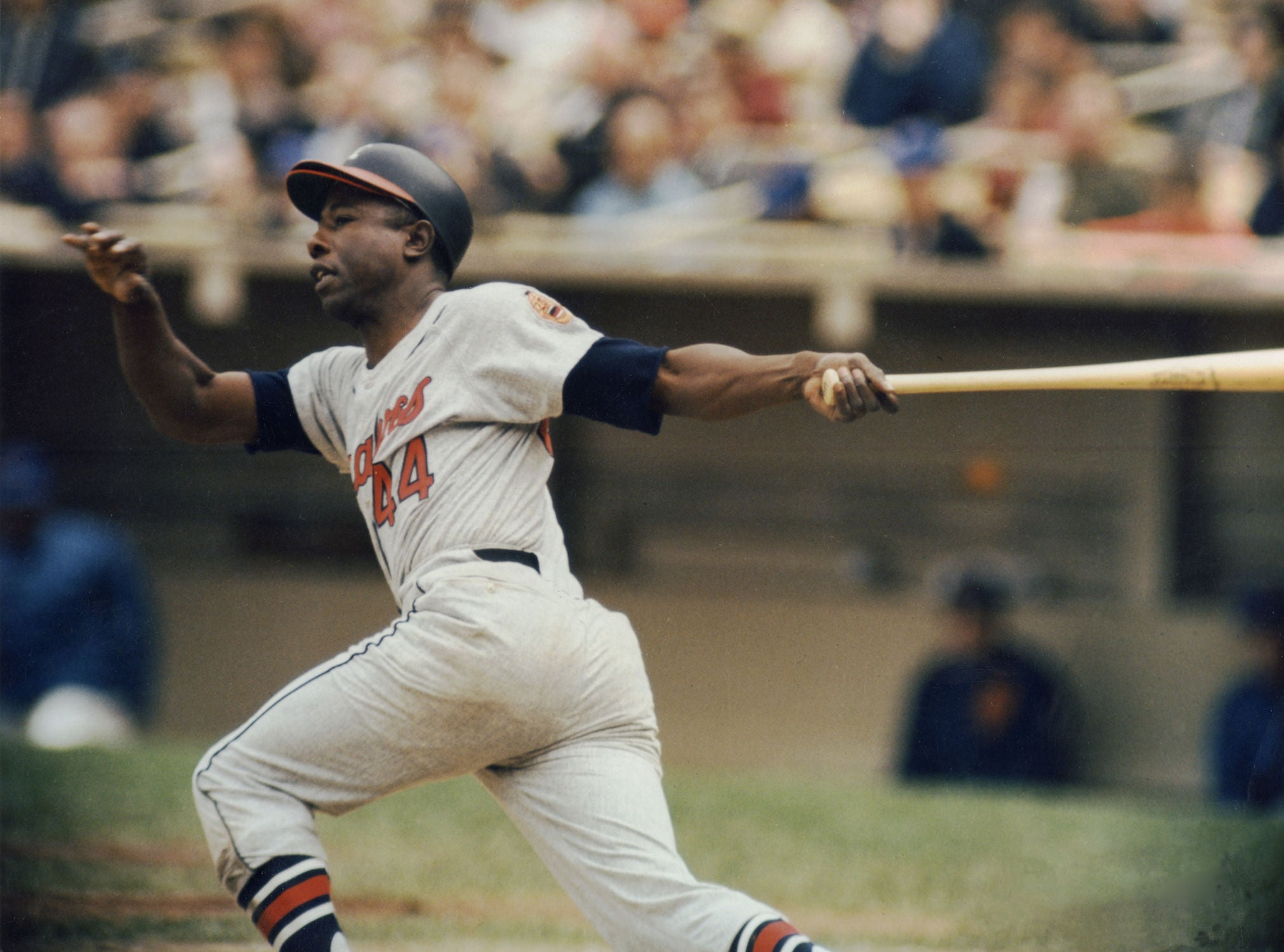
Hank Aaron
Hank Aaron was the all-time MLB home run king for 33 years, and still is the all-time home run leader among those who have not been credibly accused of steroid use.
Aaron reached the major leagues with the Milwaukee Braves in 1954, after short stints in the minor leagues and the Negro Leagues. By the time he retired, he would be the final former Negro League player in pro baseball. In his third season, he won the batting title with a .328 average.
Aaron won his only MVP award in 1957, when he led the league in runs, home runs, and RBI, and fell just short of the Triple Crown, finishing third in batting average. That was also the first of 4 seasons in which he would hit exactly 44 home runs, which also happened to be his uniform number. He also led the Braves to the World Series that year, where they upset the defending champion Yankees in 7 games behind Aaron's .393 average, 3 homers, and 7 RBI.
The next season ended in disappointment when his .333 average wasn't enough for a repeat title, as the Yankees won the rematch in 7 games. In 1959, he had his only career 3-homer game, each one good for 2 runs, and he set career highs in hits and batting average, with 223 and .355 respectively, both best in the league, but he finished only third in the MVP voting.
He had another close brush with a Triple Crown in 1963, when he again led the league in runs, homers, and RBI, but came in third in batting. That was also his second time with 44 home runs, and his 4th time finishing 3rd in the MVP race, though it should have been his 4th MVP by that time.
The Braves moved to Atlanta after the 1965 season, and in his first season there, he hit 44 home runs again, his third time leading the league with that exact total. In 1968 he hit his 500th home run, the second-youngest at the time to reach that milestone, behind only Jimmie Foxx, and the next year moved into third place on the all-time list behind Ruth and Mays.
In 1969 he hit 44 home runs in a season again, though this time is was not enough to lead the league, but it was enough to get the Braves into the playoffs for the first time in Atlanta. During the NLCS, he hit .357 with 3 home runs and 7 RBI, but the Braves were swept by the Mets despite his best efforts.
In 1970, he reached the 3000 hit plateau, then broke the NL record with his 12th season of at least 30 home runs, a record he would extend to 15 seasons by 1973. In 1971 he reached 600 home runs, and set the NL record for most seasons with 40 home runs, when he did it for the 7th time with a career high of 47. He would add another 40-homer season later as well.
In 1972, he passed Willie Mays to take over 2nd place on the all-time home runs list, reached 2000 RBI's, and became the all-time leader in total bases, a record he still holds today. The spotlight was on him throughout the 1973 season, as he approached Babe Ruth's all-time home run mark, and he ended up finishing the year one short of Ruth's record.
He said that his greatest fear was that he wouldn't live to see the 1974 season, as he received numerous death threats for his pursuit of the record, many of them racially motivated. He hit the record-tying home run on his very first swing of the season, then broke the record in the first home game of the season. The record would eventually reach 755, and would stand until 2007, when Barry Bonds surpassed him.
After the season he did not want to retire, so the Braves traded him to the Brewers, where he broke Ruth's all-time RBI record the following year, another record which is still his. He also holds the record for most consecutive seasons of 100 runs scored, with 13 from 1955 to 1967.
In addition to his all-time records for RBI's and total bases, he is #3 on the all-time hit list, #4 in runs scored, and #2 in home runs. He won an MVP early in his career, but should have won 6 others. He did finish #3 in the MVP voting 6 times, and in addition to being a great ballplayer, was also a great person, never causing any controversy and always being graceful in breaking records and in relinquishing them when they were surpassed. There is no way that a list of the very best players of all time can't include Hank Aaron.
Sunday, July 29, 2018
Top 106 Baseball Players: #10 - Roger Clemens*
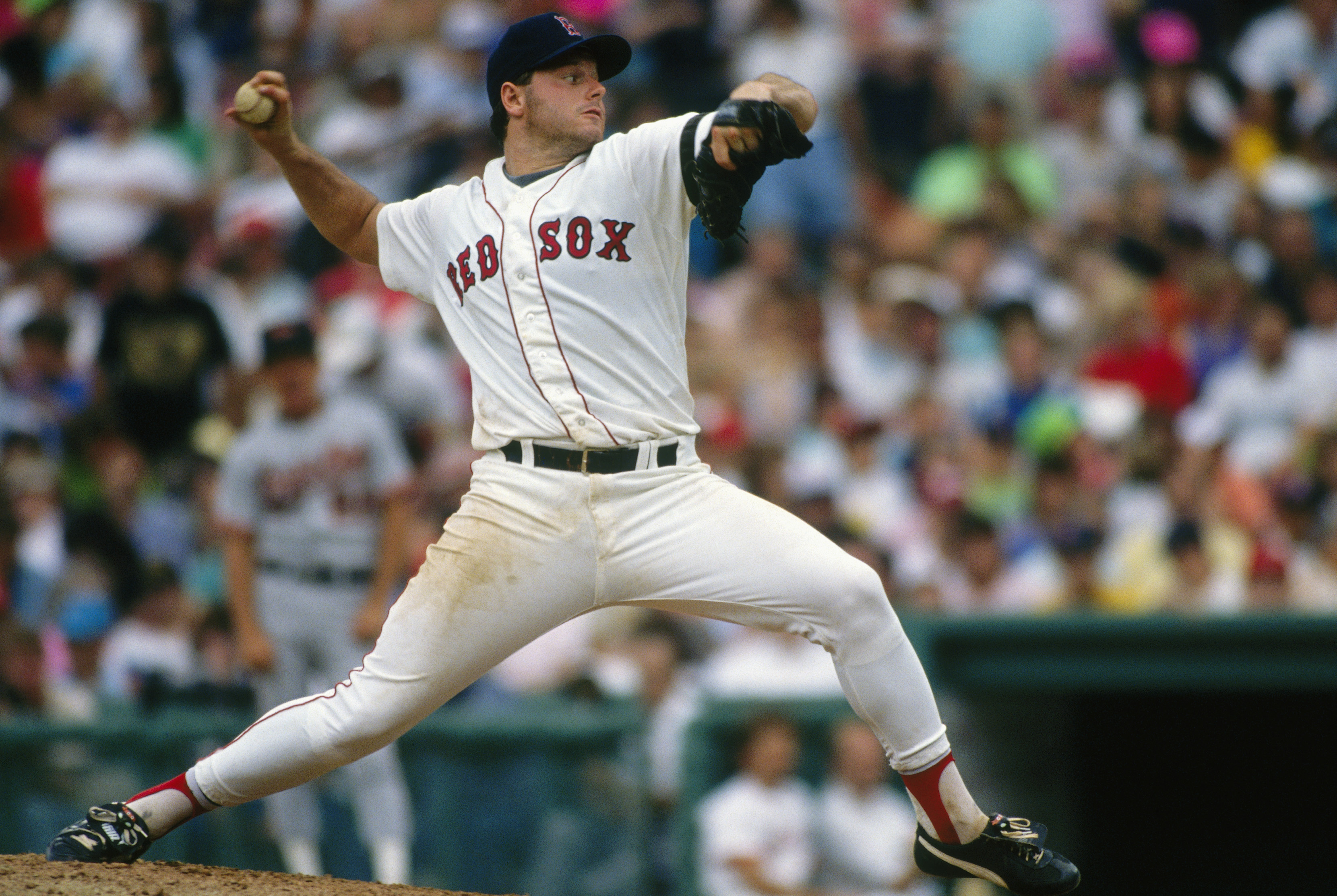
Roger Clemens
Roger Clemens was a great pitcher over a very long period, and won more Cy Young awards than any other pitcher in history, but his career has been tainted by allegations of steroid use.
Clemens was called up to the Red Sox in 1984, and after pitching sparingly but well in his first two seasons, he jumped straight to superstar status in 1986. That year he led the league with a 2.48 ERA and 24 wins, with only 4 losses, and won both the Cy Young and the MVP. He also set the record for most strikeouts in a 9-inning game, when he sat down 20 batters in an April game, a number that has been matched twice since (3 if you count Randy Johnson's game that went to extra innings without him pitching).
The Red Sox reached the World Series that year, but Clemens did not pitch well enough to get Boston their first title in decades. He led the league in wins, complete games, and shutouts in 1987, and won another Cy Young as well. Though he still pitched just as well in 1988, he failed to win the Cy Young when his record fell to 18-12, though he did win his first strikeout crown that year.
From 1990 to 1992 he led the league in shutouts and ERA, and finished in the top 3 of the Cy Young voting each season, winning the award for the third time in 1991 when he took home the strikeout title as well. He struggled for the next four years, though he did win another strikeout crown in 1996, but it appeared that his best years were behind him, and when Boston did not offer him the contract he wanted, he signed with Toronto as a free agent.
He pitched 2 seasons for the Blue Jays, winning the pitching Triple Crown and the Cy Young award each time, but he grew tired of Toronto's mediocrity, and asked to be traded to a contender. He got his wish before the 1999 season, when he was traded to the Yankees, who had just won the World Series.
His numbers took an immediate nosedive when he reached New York, but he got his wish in the postseason, as he was a member of the championship team for the first time. He was better in 2000, especially in the playoffs. In his appearance in the ALCS, he pitched a complete-game one-hit shutout with 15 strikeouts against Seattle, then pitched 8 innings without giving up a run against the Mets in the World Series, earning him his second ring.
In 2001 he got off to a great start, becoming the first pitcher ever to start a season 20-1 and was awarded his 6th Cy Young award after the season. He pitched well through the postseason as well, and he held the Diamondbacks in check through 6 innings of Game 7 before Mariano Rivera blew a postseason save for the first time in his career, costing them the title.
Clemens pitched 2 more seasons for the Yankees, announcing before the 2003 season that it would be his last. During that season, he reached 300 career wins and 4000 strikeouts, doing both in the same game. Before the 2004 season started, he changed his mind on retiring, signing on with the Astros for a season, and he ended up with an 18-4 record and a 7th Cy Young, more than any other player in history, and he also became the oldest ever to win one at age 42.
He changed his mind about retirement again before the 2005 season, signing the largest contract ever for a pitcher, and had one of his best season, setting a career low in ERA at 1.87, but due to terrible run support his record was only 13-8. In April he pitched three straight shutouts that his team ended up losing 1-0 in extra innings.
Two months into his third retirement, he returned to the Astros again and pitched a decent season, then did the same thing the following year, pitching one final partial season with the Yankees before retiring from the Major Leagues for good, though he has pitched in the minors a few times since.
The biggest controversy of his career is the alleged use of steroids, which followed him for years. He was named in Jose Canseco's book on steroid use in baseball, as well as the Mitchell Report, and was indicted for lying to Congress about his use of steroids, though he was never convicted, and has never failed a drug test. The feeling among most fans and media members is that he probably did use PED's, and that has prevented him from being elected to the Hall of Fame, even though his career is first-ballot worthy.
In addition to the record 7 Cy Youngs, Clemens is one of 3 pitchers in the live-ball era to reach 350 wins, along with Greg Maddux and Warren Spahn, and is #9 among all pitchers in history in wins. He is also #3 in career strikeouts, behind Nolan Ryan and Randy Johnson. Even with the probable steroid use, there is no doubt that Clemens is one of the greatest baseball players of all time.
Saturday, July 28, 2018
Top 106 Baseball Players: #11 - Albert Pujols

Albert Pujols
Albert Pujols is by far the greatest active player in baseball, and ranks among the all-time greats in many statistical categories, even if his glory years are behind him now.
Pujols was on the Cardinals' opening day roster in 2001, and the rookie did not disappoint. He set an NL rookie record with 130 RBI and led the Cardinals with 37 home runs, which earned him the unanimous Rookie of the Year award, and a 4th-place finish in the MVP race.
In his second season, he became the first player in history to hit .300 with 30 home runs, 100 runs, and 100 RBI's in each of his first 2 seasons, and he ended up doing it in each of his first 6 seasons. He finished as the MVP runner-up that season, with Barry Bonds beating him in the vote, which would be a common occurrence in his career.
In 2003, he won the batting title with a .359 average, along with league leads in hits, doubles, and runs scored, and finished as MVP runner-up to Bonds yet again. He also became only the second Cardinal ever to have 40 homers and 200 hits in a season, joining Rogers Hornsby.
In 2004, he became only the third player to reach 500 career RBI's in his 4th season, joining Ted Williams and Joe DiMaggio. He finished in 3rd place in the MVP vote, making him the second Cardinal ever to finish in the top 5 for 4 straight seasons, joining Stan Musial. He hit .500 with 4 home runs, 10 runs scored, and 9 RBI in the NLCS, earning the series MVP, but they were swept by the Red Sox in the World Series.
In 2005, he finally won his first MVP when Barry Bonds missed most of the season due to injury. His season stats were nearly identical to each of the previous 2 years, but that was enough this time. The Cardinals also made the playoffs again, and Pujols hit .556 in the first round, but his .304 average in the NLCS wasn't enough for a return trip to the World Series.
In 2006 he hit 49 home runs, the best of his career, and 20 of those were game winners, which broke Willie Mays' record set in 1962. That continued in the playoffs, with 2 more game-winning homers, one in Game 1 of the NLDS, and another in Game 1 of the World Series, and the Cards won the title over the Tigers in 5 games, giving Pujols his first championship.
After a slightly down season in 2007, he bounced back in 2008, taking home his second MVP, then repeated in 2009, when he had his best overall season and led the league in home runs and on-base percentage for the first time each. His third MVP tied Stan Musial for the most in Cardinals history, and was his first won by unanimous vote.
In 2010, he reached 400 career home runs, becoming the third-youngest player to reach that milestone, behind Alex Rodriguez and Ken Griffey Jr. He also reached 100 RBI for the 10th straight year, a streak which trails only the 11 by Al Simmons as the most to start a career, and he finished as the MVP runner-up for the 4th time in his career.
In 2011, he failed to bat .300 for the first time in his career, ending up at .299 with 99 RBI, falling just short of reaching those milestones for the 11th straight year. He was great in the playoffs, especially in the NLCS, when he hit .478 with 9 RBI to lead the Cardinals to another World Series. In Game 3, he became the third player ever to hit 3 home runs in a World Series game, joining Babe Ruth and Reggie Jackson on that exclusive list, and ended up taking home his second career title.
After that season, he was a free agent for the first time in his career, and he elected to sign with the Los Angeles Angels. He has played well since joining the Angels, but nowhere near the superstar level he had grown accustomed to in Saint Louis, but he has reached several big career milestones in Los Angeles.
He hit his 500th home run in 2014, becoming the third-youngest to reach that mark as well. In 2016, he became the second player to reach 300 intentional walks in his career, joining Barry Bonds, and later passed Mark McGwire for 10th place on the all-time home run leaderboard. In 2017 he reached 600 home runs, the 9th ever to do so, and was the first ever to reach that total on a grand slam.
Though stats for the 2018 season have not been included in this ranking, it's worth noting that Pujols reached 3000 hits earlier this season, making him the 4th player ever with 600 home runs and 3000 hits, joining Alex Rodriguez, Willie Mays, and Hank Aaron. He is the active leader in runs scored, doubles, home runs, RBI's, walks, and total bases, and is among the top 10 all-time in home runs, doubles, total bases, and RBI's, and is definitely one of the greatest players of all time.
Friday, July 27, 2018
Top 106 Baseball Players: #12 - Eddie Collins
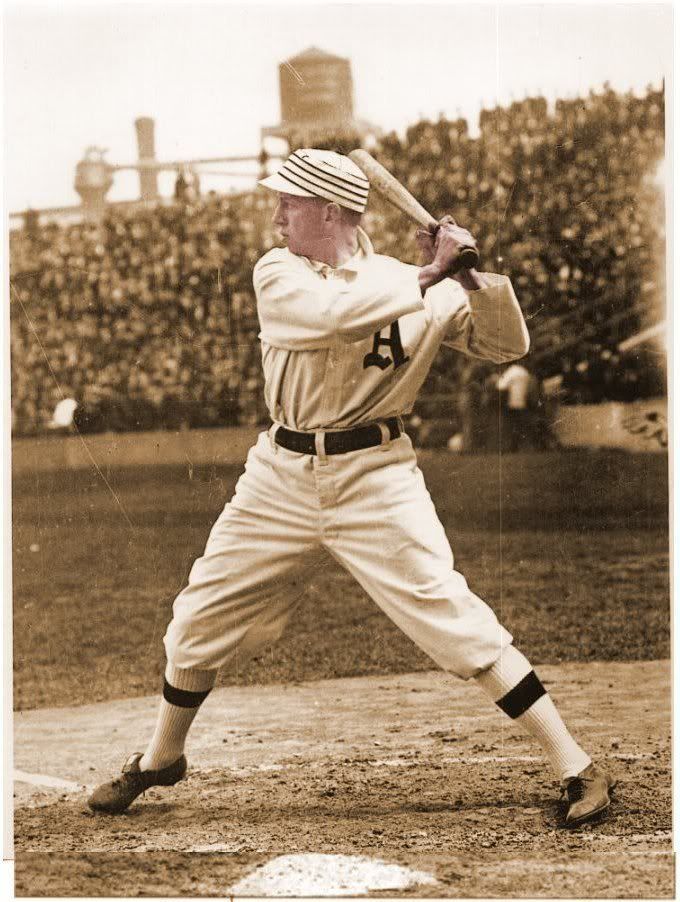
Eddie Collins
Eddie Collins was one of the greatest hitters of the dead-ball era, then continued to make solid contributions once the live-ball era began.
Collins first played for the Philadelphia Athletics in 1906, but he wasn't a full-time player until 1909. In that first full season, he hit .347 and stole 63 bases, making him one of the top tier of players already when he was just 22.
The next season, he became the first AL player ever to steal 80 bases in a season, leading the league with 81, and led the A's to the World Series, where he hit .429 with 4 stolen bases as Philadelphia beat the Cubs in 5 games.
He guided the A's back to the World Series the next year with a .365 average, and this time they beat the Giants in 6 games, even though Collins hit only .286. In 1912, he tied the record for stolen bases in a game twice within 11 days, swiping 6 bases each on September 11th and 22nd.
After missing the World Series in 1912, he led them back to the title series in 1913, this time beating the Giants in 5 games behind Collins'.421 average, which was lower only than that of Home Run Baker for the series, and he grabbed his 3rd championship in 4 years.
He was named the MVP in 1914 after leading the league in runs for the third year in a row and leading the A's to another pennant, but the A's were upset by the Braves, and it resulted in the owner blowing up the team, selling Collins to the White Sox for $50,000, the highest amount ever at that time, and the first time ever that a reigning MVP had been traded.
He led the league in walks in his first year in Chicago, keeping his reputation as one of the top players in the league, then led the White Sox to the World Series in his third year there, with another win over the Giants punctuating the season, with Collins batting .409 in the World Series.
Two years later, the White Sox returned to the World Series, this time losing as the result of the Black Sox scandal, in which 8 of his teammates were implicated for losing intentionally, with Collins one of the only starters who was not implicated.
He led the league in stolen bases twice late in his career, in 1923 and 1924, the latter of which was his first season as player/manager of the White Sox. After 3 seasons filling both roles in Chicago, he returned to the Athletics in the same position, and led them to two World Series titles in 1929 and 1930, though he only made 12 plate appearances in those 2 seasons combined, and did not play in either World Series.
Collins was known as a small-ball player, who was adept at reaching base and stealing bases. He is the all-time leader in sacrifice bunts, with a lead of more than 100 over the next player on the list. He had over 3300 hits in his career, currently #11 all-time, and is #8 in stolen bases and #17 in runs scored. He was always doing the small things needed to help his team succeed, and he did it so well for so long that he is still one of the best players of all time.
Thursday, July 26, 2018
Top 106 Baseball Players: #13 - Stan Musial

Stan Musial
Stan Musial was one of the most consistent hitters in baseball for over a decade, and held many NL and major league records at the time of his retirement.
Musial was called up by the Cardinals in the final month of the 1941 season, and he hit .426 in the 20 games he played. The Cardinals faced the Yankees in the 1942 World Series, Musial's first full season, and he contributed the winning RBI in game 2 of a series that resulted in his first championship.
The next season he won his first MVP, when he was just 22. He led the league in hits with 220, along with doubles, triples, batting average, on-base percentage, slugging percentage, and total bases. The Cardinals had a World Series rematch with the Yankees that year, but this time they fell in 5 games.
He should have won another MVP the next year, but his average fell to .347, and apparently that was too low for the voters. He led the Cardinals to the World Series for the third year in a row, and had his best championship performance, hitting .302 as the Cardinals took down the crosstown Browns in 6 games for another championship.
He missed the 1945 season after joining the Navy, but returned in 1946 even better than before. He won his second MVP that year after taking home another batting title with a .365 average, with 228 hits, while also leading the league in doubles, triples, and runs. The Cardinals won another championship that year, his third in 4 full seasons in the majors.
He struggled in 1947, when it was discovered that he was suffering from appendicitis and tonsillitis, but he put on having them removed until after the season. He still hit .312, but it was far below the standard he had set.
He had his best season when he came back healthy in 1948, falling just one home run short of winning the Triple Crown, while leading the league in hits, doubles, triples, runs, RBI's, batting average, on-base percentage, slugging percentage, and total bases. As he led the league in almost every single category, he was an easy choice to win his third MVP, becoming the first NL player to achieve that.
Musial was the MVP runner-up in each of the next 3 seasons, though this may have been because the voters were tired of voting for the same player every year. In 1954, he accomplished an amazing feat, hitting 5 home runs in one day, 3 in the first game and 2 in the second game of a doubleheader. He was the first ever to do that, and it's only happened once since.
Musial's stats began to decline starting in 1959, but he still had plenty of impressive accomplishments and milestones during that time. In 1962, he became the oldest player ever to hit 3 home runs in one game, at 41 years of age. The following season, he became a grandfather for the first time, and hit a home run in his first at bat that evening.
At the time of his retirement, he held 17 different MLB records, and though many have been eclipsed, he is still near the top of many leaderboards. He is #4 on the all-time hits list, #2 in total bases, #3 in doubles, #8 in RBI, and #10 in runs scored. He hit 475 home runs in his career without ever leading the league in a single season, and was the first person with 400 home runs and 3000 hits. He was a 3-time MVP, a 3-time champion, hit over .300 in 16 straight seasons, and is definitely one of the greatest players of all time.
Tuesday, July 24, 2018
Top 106 Baseball Players: #14 - Mickey Mantle

Mickey Mantle
Mickey Mantle was the greatest switch-hitter in history, and was a major part of the Yankees dynasty that dominated the 1950's.
Mantle joined the Yankees as a rookie in 1951, which was Joe DiMaggio's final season. In that year's World Series, Mantle and DiMaggio both went after a fly ball, with Mantle swerving at the last minute to avoid a collision and tripping over a drain pipe, which caused him to tear his ACL, an injury for which surgery was impossible at the time. He played the rest of his career on that injured knee.
He showed improvement the next season after being shifted to center field to replace DiMaggio, and had a great World Series, batting .345 with 2 home runs as the Yankees beat the Dodgers in 7 games. He took home his third World Series title in his third season, a pretty good way to start a career.
He became a superstar in 1956, when he became the only switch-hitter in history to win the Triple Crown, batting .353 with 52 home runs and 130 RBI, each of which led both leagues, making him the most recent player to lead both leagues in all 3 categories. He won the MVP that season, then hit 3 home runs in the World Series as he became a champion for the 4th time.
He won another MVP the next season, hitting a career-high .365, though he lost out to Ted Williams in the batting race, but he also led the league with 146 walks. In 1960 he led the league in home runs for the 4th time, then had a great World Series again, batting .400 with 3 home runs and 11 RBI, but the Yankees fell to the Pirates in 7 games that year.
The 1961 season was a big one for Mantle and the Yankees, as he and teammate Roger Maris were locked in a race to beat Babe Ruth's single-season home run record, but a late-season hip injury cause Mantle to fall behind and finish with 54 as he watched his teammate break the record.
He won his third MVP in 1962, after leading the league in walks, on-base percentage, and slugging percentage, even after missing nearly 40 games due to injuries. He had his last great season in 1964, when he finished as the MVP runner-up, then hit another 3 home runs in the World Series, though they lost to the Cardinals that season.
Mantle played in 12 World Series during his career, coming away with 7 championships, and holds several career World Series records, including home runs, walks, runs scored, RBI's, and total bases. When he retired, he was #3 in career home runs, though he has fallen to #18 over the past 50 years. He is still #8 all-time in walks, and one of the greatest players in the history of the sport.
Monday, July 23, 2018
Top 106 Baseball Players: #15 - Yogi Berra

Yogi Berra
Yogi Berra was the greatest catcher of all time, and the greatest winner in the history of baseball, winning the championship in more than half of the seasons he played.
He signed with the Yankees, in 1943, but his debut was postponed due to service in the Navy during World War II, where he was involved in the D-Day invasion. He made his debut late in the 1946 season, and in 1947 reached his first World Series, where he became the first pinch hitter ever to hit a home run in the World Series, and earned his first title.
He had his best season in 1950, when he hit .322 with 116 runs, 194 hits, and 30 doubles, all career highs, along with 28 home runs, 124 RBI, and only 12 strikeouts. He finished #3 in the MVP voting that year, but took home the trophy for the first time in 1951, along with his 4th championship in the postseason.
He remained the mainstay of the Yankees team through the decade, winning 2 more MVP awards in 1954 and 1955, making him one of the few players in history to have 3 MVP awards. After winning 6 championships in his first 8 seasons, he experienced his first World Series loss in 1955, when the Dodgers won in 7 games despite Berra's .417 average.
Berra and the Yankees were able to get redemption in the 1956 World Series, this time beating the Dodgers in 7, with Berra batting .360 with 3 home runs and 10 RBI, which is one of the greatest Series performances by a position player in history.
Berra continued on with the Yankees until 1963, when he retired to become the team's manager, though he was fired after losing in the World Series. He is the holder of many World Series records, including games played, at-bats, hits, singles, doubles, total Series played (14), and championships won (10).
Berra is probably the greatest player to never lead the league in any category, but he was the greatest winner in the history of the sport. Part of his greatness could be attributed to playing for the Yankees, but part of the Yankees' greatness needs to be attributed to having Berra behind the plate. With those 3 MVP's, 10 championships, and tons of World Series records, there is no doubt that Berra is one of the best players of all time.
Sunday, July 22, 2018
Top 106 Baseball Players: #16 - Ted Williams
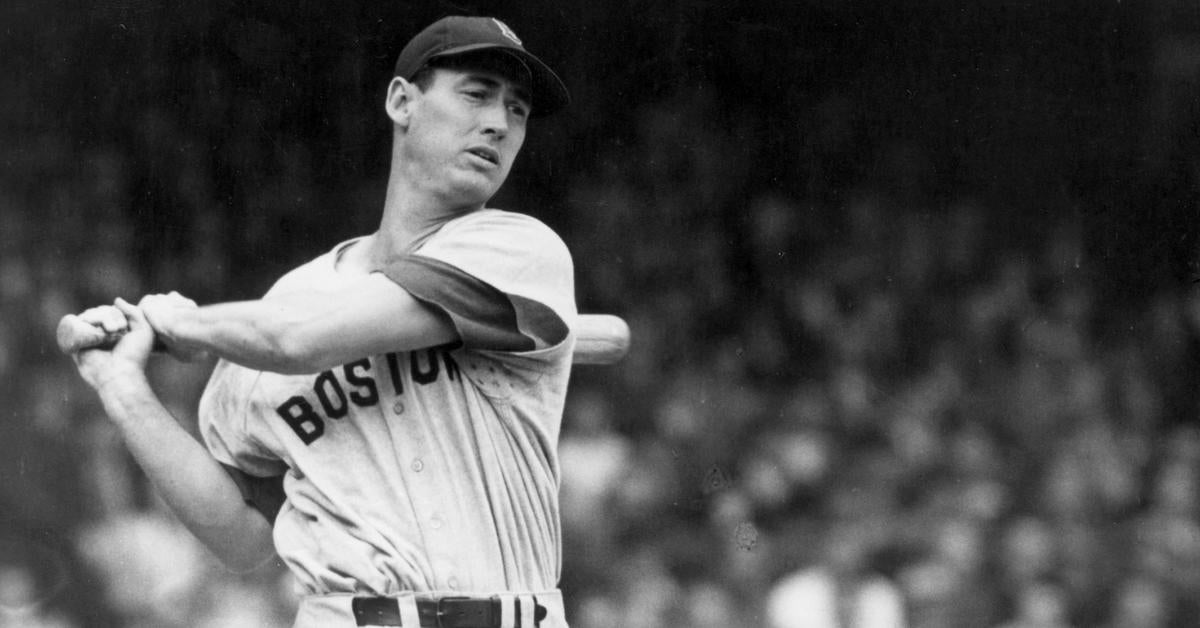
Ted Williams
Ted Williams is known by many as the greatest hitter in the history of baseball, and he would have been one of the 5 greatest players ever if military service hadn't interrupted his career.
Williams was an immediate success when he arrived in Boston in 1939, leading the league in ERA as a rookie with 145, becoming the first rookie ever to lead the league in that category. The Rookie of the Year award did not exist yet, but he would have won it easily if it had.
In his third season, he had a memorable year. He hit .406, which is still the highest average by any player in the past 90 years, and the last time a player hit .400 for a full season. He also led the league in runs, home runs, walks, on-base percentage, and slugging percentage, but did not win the MVP because of Joe DiMaggio's record hitting streak.
The next season he led the league in all of the same categories, and added RBI's to the list as well, which earned him his first Triple Crown, but he was once again deprived of the MVP he earned, finishing as the runner-up for the second year in a row. It would be a few years before he got to compete for an MVP again, because he was drafted into the Army to fight in World War II.
When he returned to Boston in 1946, he had not lost a step. He led the league in runs, walks, on-base percentage, and slugging, and led the Red Sox to the pennant, which meant that he was able to play in his first and only World Series. Unfortunately, he was hit by a pitch in an exhibition game just prior to the series, and it prevented him from swinging freely, resulting in a series loss.
He was great again for the next couple years, including another Triple Crown in 1947, then had an amazing season in 1949, when he led the league in doubles, homers, runs scored, RBI's, walks, on-base percentage, and slugging. He fell just .0002 short of the batting title that year, depriving him of a 3rd Triple Crown, and also set a record by reaching base in 84 straight games, which is still the record today, and received his 2nd MVP, though it should have been his 6th.
He missed a good chunk of the next season with a broken arm, but came back strong in 1951 to lead the league in walks again, his 7th consecutive full season leading the league in that category. He hit over .400 in both 1952 and 1953, but only played a total of 43 combined in those seasons due to being called back into active military duty in Korea.
He led the league in walks and on-base percentage again in 1954, which made 9 straight full seasons leading the league in on-base percentage. He retired before the start of the 1955 season, but changed his mind a couple months in and came back to the lineup to finish the season. Over the next 3 seasons he led the league in on-base percentage again each time, along with 2 more batting titles, the final one coming when he was 40 years old.
Williams was known for his patience at the plate, and it was said that he never swung at the first pitch, feeling that it allowed him to get a feel for the pitcher's "stuff." This allowed him to get on base with greater regularity than any other player ever, with a .482 career on-base percentage that is the best of all time.
He also has the highest batting average of any player who began playing after 1920, and is #8 all time in that category. He is among the top 20 all time in runs, home runs, and RBI's, and is #4 in walks. He was considered by most to be a liability in the field, but there is no doubting that he was one of the greatest ever at the plate, would probably have been the second-greatest player of all time if he hadn't missed nearly 5 years to the military, and is definitely one of the greatest players of all time.
Friday, July 20, 2018
Top 106 Baseball Players: #17 - John Smoltz

John Smoltz
John Smoltz was the anchor of the Braves pitching staff for two decades, and though he wasn't usually the biggest star on the staff, he was a great pitcher and nearly always pitched his best in the postseason.
Smoltz first arrived in Atlanta in 1988 and made his first All-Star team in 1989, but his coming-out show was the 1991 playoffs. In the NLCS, he won both of his starts, including a complete game shutout in Game 7 to send the Braves to their first World Series in Atlanta, and he struck out 15 batters in his 15 innings of work. His ERA in the World Series was 1.26, but the Braves lost 1-0 in Game 7 after he was pulled in the 8th inning of a scoreless game.
His success continued into the next season, when he led the league in strikeouts for the first time, then performed even better in the postseason. Smoltz was named the NLCS MVP after winning two of his 3 starts and striking out 19 Pirates over 20 innings of work, with an ERA of 2.66. He also pitched well in his two World Series starts, helping the Braves fend off elimination in Game 5 before they fell to Toronto in the next game.
In the 1993 NLCS, he received his first postseason loss, despite not giving up an earned run, then had his only poor postseason run in 1995, the year that the Braves finally broke through and won the championship behind the great pitching of Greg Maddux. He would bounce back with his best season in 1996.
That year he won the Cy Young, breaking Maddux's streak at 4, leading the league with 24 wins and 276 strikeouts. He also set a franchise record with 14 straight wins during the season, then pitched even better in the playoffs, recording 33 strikeouts in 38 innings, while posting an ERA below 1.20 in all 3 playoff series, but they Braves fell to the Yankees in the title round.
He pitched well again in 1997, and was effective in 1998 and 1999 when he pitched, but he missed about a quarter of his starts to injury, and it culminated in him missing the entire 2000 season following Tommy John surgery. When he returned in 2001, he was ineffective as a starter, so he was installed as the team's closer.
In his first full season as the closer, he set the NL record for saves in a season with 55, and he spent the next 2 seasons as one of the best closers in the game. He also joined Dennis Eckersley as only the second pitcher ever to have a 20-win season and a 50-save season. After the 2004 season, he was put back into the starting rotation.
Smoltz recorded his 200th win in 2007, and his 3000th strikeout in 2008, both of which were notable. His 200th win came against Tom Glavine, his former teammate, and made him the only pitcher in history with 200 wins and 150 saves. The 3000th strikeout made him the 4th pitcher ever to reach that milestone with one team, joining Steve Carlton, Walter Johnson, and Bob Gibson.
When he retired, he had the most postseason wins of any pitcher in history, but he has since been passed by Andy Pettitte, so he now stands in 2nd place, just ahead of Greg Maddux. He was the only player who was with the Braves through all 14 of their record consecutive division titles, and pitched better in the postseason every season, with the exception of his championship season. Add it all together, and you have one of the greatest baseball players of all time.
Thursday, July 19, 2018
Top 106 Baseball Players: #18 - Sandy Koufax
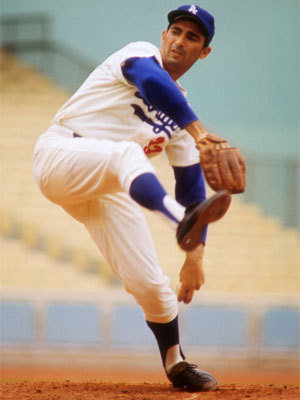
Sandy Koufax
For a few years in the early 1960's, Sandy Koufax was the most dominant pitcher in baseball, but was forced to retire at age 30 due to a life-threatening arm injury.
Koufax was signed by his hometown Brooklyn Dodgers when he was 19 years old, and was not allowed to pitch in the minors because of the size of his signing bonus. Over his first 6 seasons, he struggled with control, and was often kept on the bench for weeks at a time, and he didn't even appear in the Dodgers' World Series victory in 1955.
The Dodgers reached the World Series again in 1959, soon after their move to Los Angeles, and this time Koufax was given a couple of appearances, pitching 2 perfect innings in relief in game 1, then started game 5, giving up only 1 run over 7 innings, but that run lost them the game 1-0. They ended up winning the series after the next game, so his small mistake did not cost the team too much.
After struggling through the 1960 season, Koufax was ready to quit baseball, but the team convinced him to come back for one more season, and it was a good thing he did. That season he led the league in strikeouts for the first time, then in ERA the following year, and that was just the beginning.
In 1963, he won his first Triple Crown, leading the league with 25 wins, 306 strikeouts, and a 1.88 ERA, and it resulted in him winning the Cy Young unanimously, becoming the first ever to earn every vote. In that season's World Series, he pitched 2 complete games, outpitching Whitey Ford in both of his games, and gave up only 3 runs while striking out 23, which earned him the World Series MVP.
Early in the 1964 season, he felt something pop in his elbow, and after using pain injections to pitch through the pain, they shut him down, but he still led the league in ERA for the third season in a row. In 1965, he was told not to throw at all between starts to avoid losing his arm, but he still had his best season, winning another Triple Crown and unanimous Cy Young and setting a new record with 382 strikeouts in the season (since broken by Nolan Ryan).
He threw a perfect game in 1965, which was his 4th career no-hitter, which was also a record until broken by Nolan Ryan. The Dodgers returned to the World Series that year, and Koufax sat out Game 1 due to Yom Kippur, instead starting Game 2. He was pulled after 6 innings, and the Dodgers lost that game to Minnesota, but he came back with complete game shutouts in Games 5 and 7, finishing with 29 strikeouts and another World Series MVP.
Before the 1966 season, he was told by the team doctor that his arm would not last another season, but he decided to go for one more year. He won the Triple Crown for the third time in 4 seasons, and a third unanimous Cy Young, and also got the Dodgers back to the World Series. He pitched well in Game 1, allowing only 1 run in 6 innings, but was pulled in hopes of having him pitch in Game 5, which never happened due to Baltimore's sweep.
Koufax announced his retirement a few weeks later, and due to his early retirement, he was eligible for the Hall of Fame sooner, and became the youngest player ever elected in his first season on the ballot. He is one of only 4 Hall of Fame pitchers to have more strikeouts than innings pitched in his career, along with Pedro Martinez, Randy Johnson, and Nolan Ryan, and though his career was short, and his dominant seasons even shorter, he was so great at his best that he has to be included among the greatest players of all time.
Wednesday, July 18, 2018
Top 106 Baseball Players: #19 - Pedro Martinez
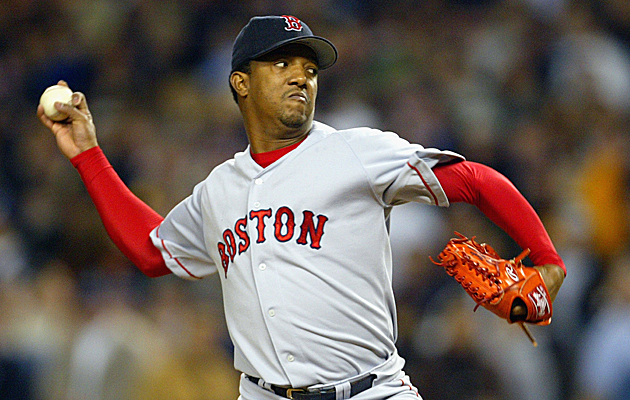
Pedro Martinez
Pedro Martinez was the best pitcher in baseball for several years around the turn of the millennium, and a few of his seasons rank among the best seasons by a pitcher in history.
Pedro first pitched for the Dodgers in 1992, joining a team where his older brother Ramon was the star pitcher, but the team did not feel that he had the ability to be a starting ace, and he was traded to the Expos after the 1993 season.
He showed steady improvement through his first 3 seasons in Montreal, including a perfect game that he lost in the 10th inning in 1995 then took the league by storm in 1997, when he threw 305 strikeouts with an ERA of 1.90 and a league-leading 13 complete games. He won his first Cy Young that season, becoming the only Expo ever to win the award, and also became the only pitcher under 6 feet tall to ever throw 300 strikeouts in a season.
Rather than lose him to free agency the next year, Montreal traded Pedro to the Red Sox just days after he won the Cy Young, and his 7-year stretch in Boston was legendary. After coming in #2 in the Cy Young voting in his first season in Boston, he took home the award in 1999, when he won the Triple Crown with 23 wins, 313 strikeouts, and a 2.07 ERA. He was just as good in the playoffs, pitching 17 scoreless innings with 23 strikeouts, but they fell to the Yankees in the ALCS.
Between the end of 1999 and the beginning of 2000, he had 10 consecutive games with at least 10 strikeouts, 3 longer than the previous record of 7, which he also owned. He also set the record for consecutive innings with a strikeout, reaching 40 during 1999. He also became the first pitcher ever to start an All-Star game by striking out the side that season.
His very best season came in 2000, when he posted a 1.74 ERA, less than half of the next-lowest ERA, Roger Clemens' 3.70. He also set a record with a WHIP of 0.74 that season, allowing only 128 hits and 32 walks in 217 innings that season, and he was awarded his 3rd Cy Young in 4 years after the season.
A rotator cuff injury in 2001 caused him to miss half of the season, though he was still the best pitcher in the AL. He led the league in ERA and winning percentage in both 2002 and 2003, but was overlooked in the Cy Young voting each time, despite leading the winners in every major category each time.
In 2004 he had the highest ERA in his season up to that point, as it reached 3.90, but he was able to reach the World Series for the first time in his career, where he pitched 7 scoreless innings as Boston swept St. Louis to take home their first championship in decades.
After the title, he left Boston to sign with the Mets, where he had one more solid season, then faded into obscurity as injuries began to take their toll. He did get the opportunity to pitch in one more World Series with Philadelphia in 2009, but recorded a loss in each of his starts.
Martinez was the second-fastest pitcher to reach 3000 strikeouts, trailing only Randy Johnson, and is the only pitcher to retire with more than 3000 strikeouts in fewer than 3000 innings pitched. His career winning percentage of .687 is second to Whitey Ford in the modern era, and his peak was higher than any other modern pitcher. Though his great years ended abruptly, he is still definitely one of the greatest ever to play the game.
Subscribe to:
Posts (Atom)