Showing posts with label Montreal Expos. Show all posts

Thursday, August 2, 2018

Top 106 Baseball Players: #6 - Randy Johnson


Randy Johnson

Randy Johnson was one of the greatest power pitchers in history, and played a huge part in the only championship in Diamondbacks history.

Johnson began his career with Montreal in 1988, but after struggling to find his control, he was traded to the Mariners in 1989. During his first 3 seasons in Seattle, he led the league in walks allowed, a dubious distinction for a pitcher, and not generally a sign of future greatness.

Late in the 1992 season, he sought out Nolan Ryan to ask for advice, and Ryan helped him find the flaw in his delivery, and his entire career changed. He had led the league in both strikeouts and walks in 1992, but he would never lead the league in walks again, while finishing as the strikeout leader 8 more times.

In 1993 he became the top pitcher in the game, almost overnight, leading the league with 308 strikeouts, the first of many times he would reach 300. He was on pace for another 300-strikeout season in 1994 before the season ended early due to a strike.

He took his game to another level in 1995, and was finally recognized with his first Cy Young. He fell just short of 300 strikeouts, but still led the league, and also led the league in ERA at 2.48 and had an 18-2 record, good for the second-best win percentage in history. In his first career playoff series that year, he won two games against the Yankees, striking out 16 in 10 innings, including 3 innings in relief in the deciding Game 5.

A back injury limited him to 8 starts in 1996, but he came back to form in 1997 with 291 strikeouts, but requested a trade in 1998 when the Mariners refused to offer him an extension, and he got his wish minutes before the trade deadline, being dealt to the Astros. He had a 10-1 record in Houston, with a 1.28 ERA. He had the most strikeouts of any player in the league, though it didn't count as leading the league because it was split between the two leagues.

After his short stint in Houston, he signed with the Arizona Diamondbacks, who had just finished their first season. In his first 4 seasons in Arizona, he had 4 of the best pitching seasons in history, surpassing 300 strikeouts each time, setting an all-time record with 5 seasons in a row. He also won the Cy Young in all 4 seasons, tying Greg Maddux's record for consecutive Cy Young awards.

Johnson was incredible in the 2001 postseason, striking out 19 with a 1.13 ERA in 2 wins against the Braves in the NLCS, then pitching even better in the World Series. He struck out 19 against the Yankees as well, with an ERA of 1.04, while winning Games 2 and 6, then getting another win in relief in Game 7 as the Diamondbacks won their first and only championship, and he was named co-MVP of the Series, along with Curt Schilling.

In 2002 he won the pitching Triple Crown, winning 24 games, striking out 334, and recording an ERA of 2.32, which made him an easy choice for his 5th Cy Young, the second-most of any player in history. He missed most of the following season with various injuries, ending his streak of great seasons.

He had one more great season still in the tank, though, and he pulled it out in 2004, when he was 40 years old. He won the strikeout title yet again, became the oldest pitcher ever to throw a perfect game, and became the 4th pitcher ever to reach 4000 strikeouts. He finished as the Cy Young runner-up, the third time he had just fallen short of the award.

Over the final 5 years of his career, he reached some impressive milestones, including the 300 win mark, and passing Roger Clemens to take over 2nd place on the career strikeout list, behind his mentor, Nolan Ryan. He pitched his final game at age 46, and was elected to the Hall of Fame on the first ballot.

In addition to the record for consecutive 300-strikeout seasons and consecutive Cy Youngs, Johnson also holds the record for most strikeouts per 9 innings, with 10.61. He also holds the record for most strikeouts in a game by a lefty, with 20, and has 5 of the top 11 strikeout seasons in history. He was a very deserving World Series MVP in 2001, and one of the greatest players the game has ever seen.


Wednesday, July 18, 2018

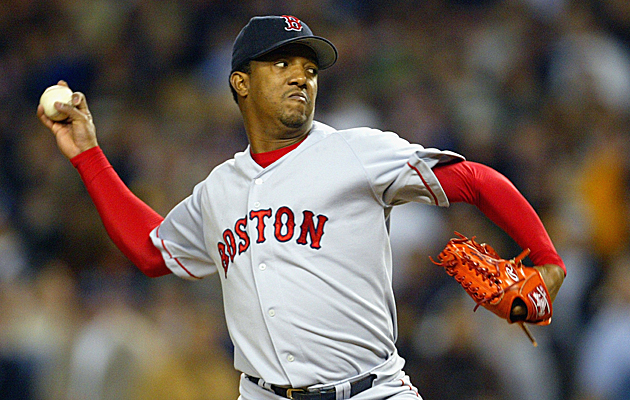
Top 106 Baseball Players: #19 - Pedro Martinez


Pedro Martinez

Pedro Martinez was the best pitcher in baseball for several years around the turn of the millennium, and a few of his seasons rank among the best seasons by a pitcher in history.

Pedro first pitched for the Dodgers in 1992, joining a team where his older brother Ramon was the star pitcher, but the team did not feel that he had the ability to be a starting ace, and he was traded to the Expos after the 1993 season.

He showed steady improvement through his first 3 seasons in Montreal, including a perfect game that he lost in the 10th inning in 1995 then took the league by storm in 1997, when he threw 305 strikeouts with an ERA of 1.90 and a league-leading 13 complete games. He won his first Cy Young that season, becoming the only Expo ever to win the award, and also became the only pitcher under 6 feet tall to ever throw 300 strikeouts in a season.

Rather than lose him to free agency the next year, Montreal traded Pedro to the Red Sox just days after he won the Cy Young, and his 7-year stretch in Boston was legendary. After coming in #2 in the Cy Young voting in his first season in Boston, he took home the award in 1999, when he won the Triple Crown with 23 wins, 313 strikeouts, and a 2.07 ERA. He was just as good in the playoffs, pitching 17 scoreless innings with 23 strikeouts, but they fell to the Yankees in the ALCS.

Between the end of 1999 and the beginning of 2000, he had 10 consecutive games with at least 10 strikeouts, 3 longer than the previous record of 7, which he also owned. He also set the record for consecutive innings with a strikeout, reaching 40 during 1999. He also became the first pitcher ever to start an All-Star game by striking out the side that season.

His very best season came in 2000, when he posted a 1.74 ERA, less than half of the next-lowest ERA, Roger Clemens' 3.70. He also set a record with a WHIP of 0.74 that season, allowing only 128 hits and 32 walks in 217 innings that season, and he was awarded his 3rd Cy Young in 4 years after the season.

A rotator cuff injury in 2001 caused him to miss half of the season, though he was still the best pitcher in the AL. He led the league in ERA and winning percentage in both 2002 and 2003, but was overlooked in the Cy Young voting each time, despite leading the winners in every major category each time.

In 2004 he had the highest ERA in his season up to that point, as it reached 3.90, but he was able to reach the World Series for the first time in his career, where he pitched 7 scoreless innings as Boston swept St. Louis to take home their first championship in decades.

After the title, he left Boston to sign with the Mets, where he had one more solid season, then faded into obscurity as injuries began to take their toll. He did get the opportunity to pitch in one more World Series with Philadelphia in 2009, but recorded a loss in each of his starts.

Martinez was the second-fastest pitcher to reach 3000 strikeouts, trailing only Randy Johnson, and is the only pitcher to retire with more than 3000 strikeouts in fewer than 3000 innings pitched. His career winning percentage of .687 is second to Whitey Ford in the modern era, and his peak was higher than any other modern pitcher. Though his great years ended abruptly, he is still definitely one of the greatest ever to play the game.


Tuesday, June 12, 2018

Top 106 Baseball Players: #52* - Pete Rose


Pete Rose

Pete Rose is the only player in this countdown with an asterisk that is not related to performance-enhancing drugs, but his gambling broke the rules and may have compromised the integrity of the game, which is a shame, because he was incredibly talented.

Rose first joined the Reds in 1963, and before he even played a game he had already earned the nickname "Charlie Hustle", which was given to him in spring training by an opponent who was making fun of the way he sprinted to first base after being walked. The extra hustle paid off with the Rookie of the Year award.

By his third season, he was leading the league in hits, something he would do 7 times in his career. He led the league in batting average back-to-back in 1968 and 1969, then in the 1970's became one of the stars of the Big Red Machine, which reached 4 World Series, winning twice. He was named MVP of the 1975 World Series after batting .370 in their 7-game win over the Red Sox.

Rose was also named the MVP of the regular season in 1973, when he led all players with 230 hits and a .338 average. During the next three seasons, he led the league in both runs scored and doubles each year. He also rarely missed a game, and led the league in plate appearances 6 times during the 1970's.

Rose joined the 3000 hit club in 1978, then started the first major challenge to Joe DiMaggio's hit streak a few weeks later. The streak nearly ended at 31 when Rose walked in the 8th inning, but the Reds batted through the entire lineup in the 9th, which gave rose one more chance at the plate, and he came through with a bunt single. The streak eventually reached 44, which tied the NL record and no player has reached that number since.

After 15 years with the Reds, Rose signed with the Phillies as a free agent, and that move enabled him to win a 3rd World Series ring in 1980. After his worst professional season in 1983, he was released by Philadelphia and signed by the Expos, where he recorded his 4000th hit against the Phillies, becoming the second player ever to reach that milestone, after Ty Cobb.

A few months later, he was traded back to the Reds, where he was installed as player-manager, a position he held for two and a half years, before being taken off the roster, though he retained the managerial job. It was a few years after his retirement as a player that the allegations of gambling came out, and in 1989 he was banned from baseball for life.

The betting began while he was still playing, at least as early as 1985, and for years he denied the allegations, though he accepted the lifetime ban. A year after the ban, the Hall of Fame voted to exclude people on the permanently ineligible list from the yearly ballot, which Rose did not think was going to be included in his ban. After years of denials, he finally admitted in 2004 that he had bet on games, including his own, though he denied ever betting against his team. Whatever the full truth is, he put the game in danger with his actions. Even if he didn't bet against his team, he could have been coerced into losing a game he didn't bet on in order to make up a portion of his debt.

Even with all that, the fact remains that Rose was one of the greatest players of all time. He is famously the all-time hit leader, but he is also the all-time leader in games played, plate appearances, at-bats, and singles, and he is #2 in doubles and #6 in runs. He was an MVP and a World Series MVP and a 7-time batting champ, and belongs on the list of the greatest players of all time.


Friday, May 18, 2018

Top 106 Baseball Players: #75 - Tim Raines


Tim Raines

Tim Raines was one of the best basestealers in history, but spending the majority of his career in Montreal has caused him to be somewhat overlooked by many baseball fans as one of the greats.

Raines played in a few games for the Expos in 1979 and 1980, but he became a full-time Major Leaguer in 1981, which was a strike-shortened season, and in his first season he led all players with 71 stolen bases, a record for a rookie, which also included 27 successful attempts in a row to begin his career, also a record.

His performance dropped a bit the following year, but still managed to lead the NL in steals. After the season, he entered into drug rehab to over come cocaine addiction, and it was revealed that he had been using the drug constantly, so much so that he kept some in his hip pocket when he was playing so he could use it between innings, and he started sliding headfirst to avoid it falling out on the basepaths.

When he returned clean in 1983, he became the best position player in baseball, leading the league in runs scored with 133 and the NL with 90 stolen bases, the third season in a row he had done that. He also walked 97 times, which would be the best of his career, but still only came in 5th in the MVP voting.

Over the next 4 seasons, he led the league once each in runs scored, stolen bases, doubles, and batting average, showing his all-around prowess at the plate, and he ranked as the best player in the NL 4 times over the span from 1983 to 1987, but as I said above, playing for Montreal, which rarely made the playoffs and played in a small market, he never got the MVP recognition he deserved.

After the 1990 season, he requested a trade to a contender, and he was sent to the White Sox, where he played 5 seasons but only made one playoff appearance, and though he played well in that series, batting .444 and scoring 5 runs, the Sox lost to the Blue Jays in 6 games.

Following the 1995 season, he was traded to the Yankees, where he was finally able to accomplish his dream of a championship. His role had diminished somewhat, as he appeared in only about half of the team's games in his 3 seasons in the city, but he was able to get 2 championship rings, in 1996 and 1998, though he didn't appear in the 1998 World Series.

He signed with the Oakland A's in 1999, but midway through the season was diagnosed with lupus, and sat out a season and a half while recovering. He returned to Montreal in 2001, then was traded briefly to the Orioles so that he would have the opportunity of playing with his son, becoming the second father-son pair to play together in the Majors.

Raines was elected to the Hall of Fame in 2017, his tenth year on the ballot, just another sign of how underappreciated he was. He is #5 all-time in stolen bases, and has the best stolen base percentage of any player with at least 400 steals, and he was the best player in baseball for several years, and he definitely deserves to be part of this list of the all-time greats.


Thursday, May 3, 2018

Top 106 Baseball Players: #88 - Vladimir Guerrero


Vladimir Guerrero

Vladimir Guerrero burst onto the scene in the late 1990's with the Montreal Expos, and it didn't take long before he became a perennial All-Star and MVP candidate. He was notorious for swinging at almost any pitch, but he was skilled enough that it didn't hamper his career.

He spent 8 years playing for Montreal, and during that time he was involved in two of the most amazing plays ever seen. The first came at the plate, where he cemented his reputation as a bad-ball hitter, when he got a hit off a pitch that had bounced before reaching the plate. Not only did the ball bounce, his bat also hit the ground as he was swinging, but he reached base safely nonetheless.

His most amazing defensive play came in 2001, when a ball was hit into deep right field, where Guerrero fielded it off one bounce, then threw a perfect strike of about 300 feet straight into the catcher's glove to tag out a runner trying to score from second. That throw can be seen in the highlight video attached to the end of this post.

In 2002, he led the league in hits and total bases, and came just one home run short of joining the very exclusive 40-40 club, as he posted a career high with 40 steals that year. The next season he was slowed by a back injury, and he became a free agent for the first time at the end of the season.

He decided to join the Angels for the 2004 season, and he had one of his very best seasons right away. He led the league with 124 runs, 366 total bases, and tied his career high with 206 hits. In September, he won the Player of the Month award after batting .371 with 10 home runs as they came back from a 3-game deficit to win the division and make the playoffs.

He did not play well in the playoffs, getting only 2 hits, though one of them was a grand slam, so it didn't look quite as bad. His overall numbers dropped slightly the next season, but he was still the best player in the AL, though it's very difficult to repeat as MVP when your numbers drop, so he ended up 3rd in the voting.

He continued to guide the Angels to the playoffs nearly every year, and while his playoff stats improved over the next few years, they were never quite able to break through to the World Series. He left for Texas before the 2010 season, where he was able to finally break through and get to the World Series, knocking in 3 runs in the deciding Game 6 of the ALCS. He did not end up with a championship ring, but it further cemented his status as an all-time great.

Guerrero may have been famous for swinging at bad pitches, but despite that, he never reached 100 strikeouts in a season, an amazing feat given his reputation. He is the Expos all-time leader in several categories, and had two MVP-caliber seasons in Anaheim. He maintained a high level of play for well over a decade, and as a result he is a part of my list of the best players of all time.


Sunday, April 15, 2018

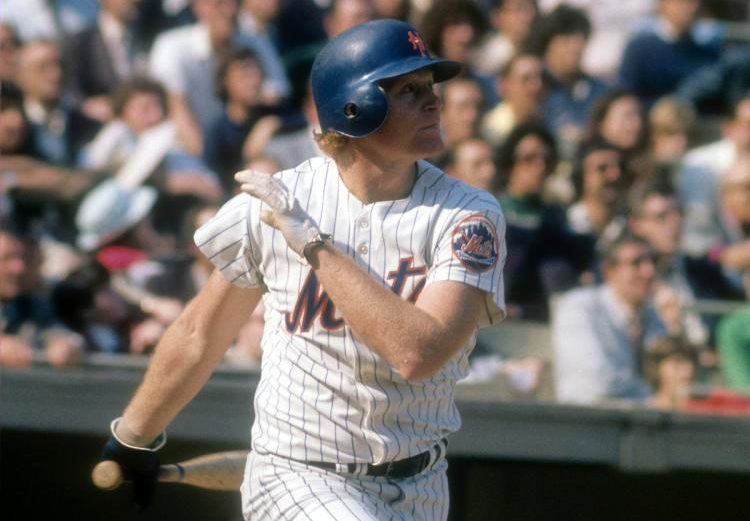
Top 106 Baseball Players: #103 - Rusty Staub


Rusty Staub

Rusty Staub is yet another example of a player who played at a high level for a long time but never quite achieved superstar status. He played 23 seasons in the Major Leagues for 5 different teams, and was remarkably consistent from 1966 to 1978, recording between 145 and 186 each season in which he was healthy.

His career began slowly following his call up to the Major Leagues just after his 19th birthday, with a few disappointing seasons that made people question the relatively large salary he was earning. He finally started to fulfill his promise in season 4, and by season 5 had become an All-Star, leading the league with 44 doubles while batting .333 for the season.

After a couple of good seasons, he still wasn't gaining popularity in Houston, but his big break came with a trade to expansion Montreal before the 1969 season. He was instantly popular in Montreal, and he helped out by taking French lessons in his spare time, as well as performing well on the field, hitting 29 and 30 homers in his first two seasons in Canada.

After three seasons up north, the Mets put together a trade for the star player, hoping to get to the playoffs. He broke his hand and missed half of his first season in New York, but the following season they were able to make a huge late-season push to reach the postseason, where Staub played some of the best baseball of his career.

He hit three home runs in the ALCS against Cincinnati before separating his shoulder making a catch against the wall in the 11th inning of game 4, which caused him to miss the final game of the series, which his team still won, earning a trip to the World Series. Despite being unable to throw overhand during the Series, Staub batted .423 with 11 hits and 6 RBI, but the Mets lost to Oakland in 7 games. It would be his one and only career trip to the playoffs.

He remained a solid player for several more seasons, even after yet another trade, this time to Detroit, before finally making his way back to New York to finish out his career. After hitting one home run in his final season, he became one of 4 players in history to hit a home run in both his teens and his 40's, and the other 3 players are all ahead of him on this list.

Perhaps the best part of Staub's game was his patience at the plate. He was among the top 10 in times reaching base 8 different times, and walks and on-base percentage 6 times, with a total of over 4000 times reaching base in his career, which is #44 all-time. He never received even 8% of the vote on the Hall of Fame ballot and is no longer eligible, but even though he was never a dominant player, he was very good for a very long time, and deserves to be remembered among the best players of all time.