Showing posts with label New York Mets. Show all posts

Friday, August 3, 2018

Top 106 Baseball Players: #5 - Nolan Ryan


Nolan Ryan

Nolan Ryan had the longest career of any player in baseball history, and set numerous Major League records along the way, though not all of them were positive.

Ryan started his career in 1966 with the New York Mets, but did not fully show his promise during his time there, partly due to service with the Army Reserve, which took him away from the team frequently throughout the season. He was a member of the World Series-winning 1969 Mets, pitching 2 shutout innings in relief in the lone World Series appearance of his career.

After the 1971 season, he was traded to the California Angels, where he was finally able to become a full-time starter, and he began to show his still immediately. In his first season with the Angels, he led the league with 329 strikeouts, which would be the first of 11 times he led the league. He also led the league in walks allowed for the first of 8 times, and wild pitches for the first of 6 times, which showed both sides of him.

In his second season with California, he broke Sandy Koufax's single-season strikeout record by one, fanning 383 batters that season. Koufax remarked jokingly that he had also broken his walk record by 91. He finished #2 in the Cy Young voting that year, the closest he would come to winning the award, which is one of the greatest travesties in the history of baseball.

He also recorded his first 2 no-hitters in 1973, and he struck out 17 batters in the second one, still the record for most in a no-hitter. The next year, he recorded his third, this time setting a record with 8 walks in a no-hitter. He threw his 4th in 1975, tying Sandy Koufax's career record, with all 4 coming within 3 seasons.

In his 8th and final season with the Angels, they finally made the playoffs, and he pitched well, giving up just one run and striking out 8 in 7 innings, but the Angels lost the game and the series anyway. After the season, he signed a big contract with the Houston Astros, allowing him to pitch in his home state.

He reached 3000 career strikeouts during his first season in Houston, and was able to pitch in the postseason a couple times. In 1981, he pitched against Fernando Valenzuela in the NLDS, giving up only 2 hits in a complete game win, which would be the second and final victory of his playoff career.

In 1983, he passed Walter Johnson for first place in career strikeouts. During the season Steve Carlton passed him several times to take the lead, but Ryan ended up pulling away and making the record his permanently. He was the first to reach 4000 strikeouts two years later.

During his first 7 seasons in Houston, he failed to lead the league in strikeouts, then had a sudden resurgence in 1987, when he led the league in ERA and strikeouts at age 40. Though he pitched well, the Astros did not offer him much run support, and he finished the season with an 8-16 record.

After the 1988 season, he was unable to reach a deal with Houston, and signed instead with the Texas Rangers. With Texas, he led the league in strikeouts again in 1989 and 1990, surpassing 300 strikeouts in 1989 at age 42. It was also during the 1989 season that he became the only pitcher ever to reach 5000 strikeouts.

He threw two no-hitters for Texas, one in 1990 and another in 1991, giving him 7 for his career, still the most by any pitcher ever. He decided to retire at the end of the 1993 season, but ended up finishing a few weeks early when he tore a ligament in his elbow after giving up his record 10th career grand slam.

Ryan is the career leader in strikeouts by far, and threw more no-hitters than any other pitcher ever. He also holds the career mark for fewest hits allowed per 9 innings and most seasons played. He also, however, is the all-time leader in walks allowed and wild pitches. He is the greatest pitcher to never win a Cy Young, and had a small role on his only title team, but there is no doubt that he is one of the greatest ever to take the mound.


Wednesday, July 18, 2018

Top 106 Baseball Players: #19 - Pedro Martinez


Pedro Martinez

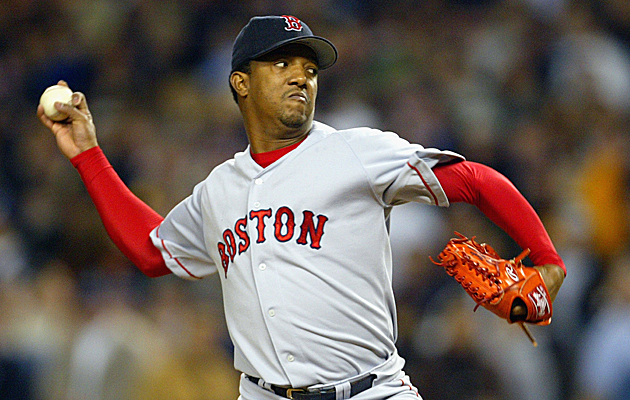
Pedro Martinez was the best pitcher in baseball for several years around the turn of the millennium, and a few of his seasons rank among the best seasons by a pitcher in history.

Pedro first pitched for the Dodgers in 1992, joining a team where his older brother Ramon was the star pitcher, but the team did not feel that he had the ability to be a starting ace, and he was traded to the Expos after the 1993 season.

He showed steady improvement through his first 3 seasons in Montreal, including a perfect game that he lost in the 10th inning in 1995 then took the league by storm in 1997, when he threw 305 strikeouts with an ERA of 1.90 and a league-leading 13 complete games. He won his first Cy Young that season, becoming the only Expo ever to win the award, and also became the only pitcher under 6 feet tall to ever throw 300 strikeouts in a season.

Rather than lose him to free agency the next year, Montreal traded Pedro to the Red Sox just days after he won the Cy Young, and his 7-year stretch in Boston was legendary. After coming in #2 in the Cy Young voting in his first season in Boston, he took home the award in 1999, when he won the Triple Crown with 23 wins, 313 strikeouts, and a 2.07 ERA. He was just as good in the playoffs, pitching 17 scoreless innings with 23 strikeouts, but they fell to the Yankees in the ALCS.

Between the end of 1999 and the beginning of 2000, he had 10 consecutive games with at least 10 strikeouts, 3 longer than the previous record of 7, which he also owned. He also set the record for consecutive innings with a strikeout, reaching 40 during 1999. He also became the first pitcher ever to start an All-Star game by striking out the side that season.

His very best season came in 2000, when he posted a 1.74 ERA, less than half of the next-lowest ERA, Roger Clemens' 3.70. He also set a record with a WHIP of 0.74 that season, allowing only 128 hits and 32 walks in 217 innings that season, and he was awarded his 3rd Cy Young in 4 years after the season.

A rotator cuff injury in 2001 caused him to miss half of the season, though he was still the best pitcher in the AL. He led the league in ERA and winning percentage in both 2002 and 2003, but was overlooked in the Cy Young voting each time, despite leading the winners in every major category each time.

In 2004 he had the highest ERA in his season up to that point, as it reached 3.90, but he was able to reach the World Series for the first time in his career, where he pitched 7 scoreless innings as Boston swept St. Louis to take home their first championship in decades.

After the title, he left Boston to sign with the Mets, where he had one more solid season, then faded into obscurity as injuries began to take their toll. He did get the opportunity to pitch in one more World Series with Philadelphia in 2009, but recorded a loss in each of his starts.

Martinez was the second-fastest pitcher to reach 3000 strikeouts, trailing only Randy Johnson, and is the only pitcher to retire with more than 3000 strikeouts in fewer than 3000 innings pitched. His career winning percentage of .687 is second to Whitey Ford in the modern era, and his peak was higher than any other modern pitcher. Though his great years ended abruptly, he is still definitely one of the greatest ever to play the game.


Tuesday, July 17, 2018

Top 106 Baseball Players: #20 - Rickey Henderson


Rickey Henderson

Rickey Henderson was the greatest leadoff hitter in the history of baseball, and he is the owner of numerous all-time and single-season records.

Rickey first played for the Athletics in 1979, and in his second season, he was already setting records, breaking Ty Cobb's AL record by stealing 100 bases, becoming just the third player ever to reach that number. Two years later, he broke Lou Brock's Major League record by stealing 130. He had 84 steals by the All-Star break, a number no other player has reached in a full season since, let alone the actual record. He also had at least 100 runs, steals, and walks in 1980, 1982, and 1983, and he is the only player in the modern era to ever achieve that even once.

He was traded to the Yankees after the 1984 season, and his first season in New York was the best of his career. He led the league with 146 runs and 80 steals, and the runs scored were the most by any player since 1950, and he was the first player since 1939 to have more runs scored than games played.

In 1989, he was traded back to the A's at midseason, and he led them to the playoffs after leading the league with 113 runs, 77 steals, and 126 walks. He was very proud to have become Nolan Ryan's 5000th strikeout victim during that season as well. He was named the ALCS MVP after setting a postseason record with 8 steals in a 5-game series, while also batting .400 with 7 walks and 2 home runs. He then hit .474 in a World Series sweep of the Giants as he earned his first title.

The next season he led the league in runs, stolen bases, and on-base percentage, and finished second to George Brett in batting average, and finally won an MVP award, though he deserved a few earlier in his career. The A's returned to the World Series, but this time were victims of a sweep against the Reds, though Henderson batted .333 for the series.

In 1991 he broke the career record that is most associated with him when he passed Lou Brock to become the all-time leader in stolen bases. By the time he finished his career, he had a total of 1406, more than 50% above Brock's second-place total.

He was traded to the Blue Jays near the end of the 1993 season, but struggled after breaking his hand just a few games into his time in Toronto. The Blue Jays did reach the World Series that year, and Henderson scored on the final play of the series to win his second title, though he did little else to contribute to the win.

He was a nomad for the rest of his career, never spending more than 2 consecutive seasons with the same team again, and he had 2 more stints with the Athletics, even leading the league in steals and walks with them in 1998. In 2001, while playing with San Diego, he broke a couple more career marks, Ty Cobb's career runs record and Babe Ruth's walk record. He is still the leader in runs and unintentional walks, though Barry Bonds has more total walks. With all the records he holds, and his amazing performance in his first World Series run, he definitely needs to be remembered as one of the greatest players of all time.


Saturday, July 14, 2018

Top 106 Baseball Players: #23 - Willie Mays


Willie Mays

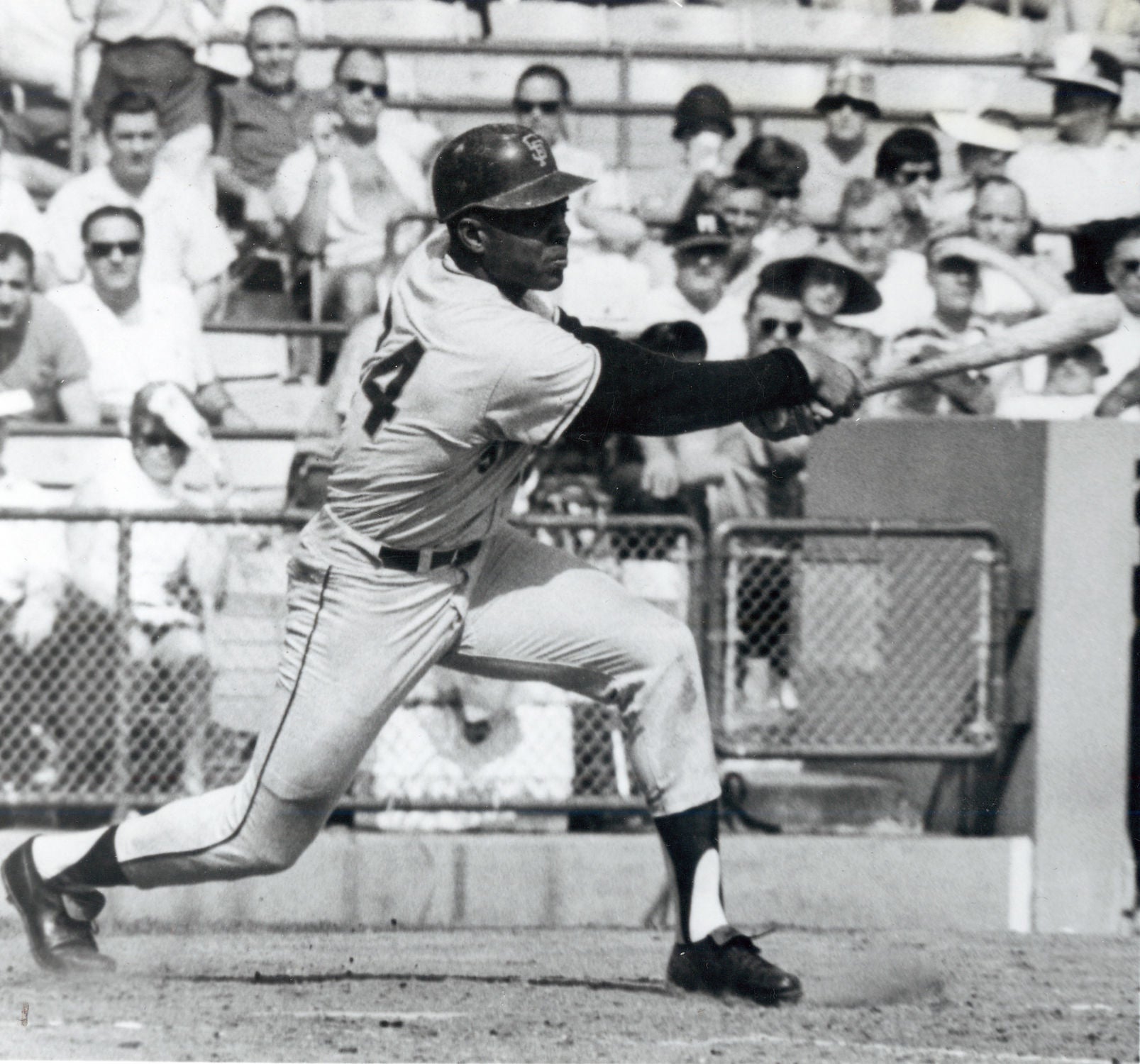
Willie Mays was one of the greatest all-around players of all time, playing at a high level at the plate, on the basepaths, and in the outfield, and doing it all for a very long time.

Mays first reached the Majors in 1951 with the New York Giants, and won the Rookie of the Year award despite having what would turn out to be one of the worst seasons of his career. Early in his second season, he was drafted into the Army, where he would spend nearly 2 seasons, before returning to baseball on a mission in 1954.

He led the league with a .345 batting average that year while also slugging 41 homers, which resulted in him taking home the MVP award, and he wasn't done yet. The Giants won the pennant, returning to the World Series after losing in Mays' rookie season, and this time Mays played well, getting 4 hits and 4 walks in a 4-game sweep of the Indians, and he also made one of the most famous defensive plays in history when he made an over-the-shoulder running grab to save 2 runs in the 8th inning of game 1.

The next season he was even better, leading the league with 51 homers and 382 total bases, but he finished #4 in the MVP voting when the Giants failed to reach the playoffs. The next year he became the second player ever to join the 30-30 club, finishing with 36 homers and a league-leading 40 steals. In his first 3 full seasons after his rookie season, he had led the league in hitting, homers, and steals, showing his all-around acumen.

He led the league in steals in each of the next 3 seasons as well, which bridged the Giants' move from New York to San Francisco. He continued his high level of play for many more years, finishing among the top 10 of the MVP voting for 10 straight seasons from 1957 to 1966.

He had his two best seasons in 1964 and 1965, when he hit 47 and 52 home runs, respectively, both times tops in the league. The 10 year gap between his two 50-home run seasons is the longest in history, which shows his longevity he had as well. He was also given his second MVP in 1965, 11 years after winning his first.

From that point on, his productivity started to slip, but he played on until 1973, when he reached the World Series with the New York Mets, becoming the oldest starting position player ever in the championship round. Though they lost that year, giving him just one win in his 4 World Series appearances, his regular season numbers are among the best ever.

Mays is #3 all-time in total bases, #5 in home runs, #7 in runs, and #12 in hits and RBI. He is one of only 4 players with 3000 hits and 600 home runs, along with Hank Aaron, Albert Pujols, and Alex Rodriguez. He holds the record for most All-Star games played, with 24 (there were multiples All-Star games for a few seasons), and is absolutely one of the greatest to ever play the game.


Friday, June 29, 2018

Top 106 Baseball Players: #36 - Tom Seaver


Tom Seaver

Tom Seaver was the best pitcher in baseball for many years, and was the man who put the Mets on the map.

Seaver joined the Mets in 1967, and was so good that he won the Rookie of the Year award that season, with an ERA of 2.76. In his second season, he reached 200 strikeouts for the first of nine consecutive seasons, which is still the all-time record.

He won the Cy Young Award in his third season after leading the league with 25 wins, and he nearly threw a perfect game that season, losing it with 2 outs to go. The Mets also won their first ever World Series that season, and though Seaver gave up a bunch of runs in his 3 postseason starts, he still won 2 of those games, and became a champion.

Seaver was the best pitcher in baseball for the next 2 seasons, though he did not win the Cy Young either time. He led the league with a 2.82 ERA and 283 strikeouts in 1970, and also set a record by striking out 10 consecutive batters in a game while tying the record with 19 in that game, although that record has been surpassed. He then had his best overall season in 1971, with a 1.76 ERA and 289 strikeouts, both tops in the league and the best in his career.

He had a slightly down year in 1972, then bounced back in 1973 by leading the league in strikeouts and ERA for the third time in 4 seasons, and took home his 2nd Cy Young. He also helped the Mets to get back to the World Series that season, and pitched extremely well, posting and ERA under 2.00 with 35 strikeouts in 4 appearances, but the Mets fell to the A's, denying him a chance at another title.

In 1975 he led the league in wins and strikeouts, marking the 4th time that he had fallen one category short of the pitching Triple Crown. He did, however, win the Cy Young again, giving him 3 in his career. He attempted to renegotiate his contract during the 1977 season, but after reaching an impasse, he was traded to the Reds.

In his first full season in Cincinnati, Seaver threw his first no-hitter after having 5 one-hitters as a member of the Mets. In 1981, he had another stellar season, finishing with a 14-2 record, which was the best in the league by wins and win percentage, and earned him the runner-up spot in the Cy Young voting, 12 years after he had won his first. He also reached 3000 strikeouts that season, the 5th pitcher ever to reach that mark.

Seaver bounced around for a few more years, reaching his 300th win in 1985 before retiring after the 1986 season. He is one of 2 pitchers in history with 3000 strikeouts, 300 wins, and an ERA below 3.00, along with Walter Johnson. He also has the second-most shutouts of any pitcher since 1920, trailing only Warren Spahn.

Spahn still holds the all-time records for consecutive strikeouts and consecutive 200-strikeout seasons, and led his team to 2 World Series, winning one. He was the Cy Young winner 3 times, though he should have had 6, and is the greatest player in the history of the Mets, and also one of the greatest baseball players of all time.


Friday, June 15, 2018

Top 106 Baseball Players: #49 - Gary Sheffield


Gary Sheffield

Gary Sheffield was a great player for 8 different teams over the course of 22 seasons, and the reason for so many changes in scenery appears to have been his bad habit of bashing his management and teammates.

Sheffield first played in the Majors in 1988, when he was called up by the Milwaukee Brewers during the final month of the season. He hit a home run in his first at-bat, but overall did not play very well in his first couple seasons. His average improved to .294 in 1990, but he ended the season with a .194 average and a ticket out of town due to his claims of racism by the manager in moving him to third base.

He was traded to the Padres before the 1992 season, and contended for the Triple Crown, falling short by 2 home runs and 9 RBI, but he did win the batting title, making him the only Padre not named Tony Gwynn to achieve that. He also had the opportunity to bat against his uncle, Dwight Gooden, in a game that May, quite a rare occurrence.

He didn't start off very well the next season, and was traded to the Marlins midway through the season. He missed a lot of time over the next two seasons, but when he was healthy again in 1996, he had one of his best seasons, with 42 home runs, 120 RBI, and 142 walks. The next year, Florida advanced clear to the World Series, with Sheffield walking 20 times in 16 postseason games and knocking in 5 runs in the Marlins' championship round.

He was traded to the Dodgers early the next season because the Marlins knew they couldn't afford a contract extension. With LA, he had 3 straight very solid seasons, getting at least 100 RBI, 90 walks, and 30 runs each year while always batting over .300. After just over 3 years with the team, he began publicly criticizing the team's management, and was traded to Atlanta before the 2002 season.

In 2003 with the Braves, he had his best overall season, setting career highs with a .330 average, 126 runs, 190 hits, 37 doubles, and 132 RBI, to go along with 39 home runs. He was easily the best player in the league that year, but only came in #3 in the MVP voting, most likely because he was not well-liked.

He signed with the Yankees after that season, and had two more All-Star level seasons where he was also on the MVP radar, but a wrist injury cut his 2006 season short, and he was traded to the Tigers after the season. He would spend two seasons as the team's DH before they decided to move on. He signed with the Mets, where he was able to hit his 500th home run, and he also became the third player ever to hit a home run as a teen and a 40-year old, after Ty Cobb and Rusty Staub.

Sheffield has been on the Hall of Fame ballot for 4 years, but is nowhere near the number of votes needed for election, and many feel that his personality is hurting his chances, despite his solid career numbers. He was the best player on a World Series champion, and the best player in the league one year, and hit 500 homers, which is still quite rare. Whether he makes it or not, he still definitely belongs on this list of the greatest baseball players of all time.


Wednesday, June 13, 2018

Top 106 Baseball Players: #51 - Carlos Beltran


Carlos Beltran

Carlos Beltran is the most recent retiree on this list, having left the game after finally winning the World Series last year, a fitting close to a great 20-year career.

Beltran joined the Kansas City Royals near the end of the 1998 season, so he was still officially a rookie in 1999, when he batted .293 with 108 RBI to win the Rookie of the Year award. He missed a good chunk of the following season, and slumped so badly he lost his starting job, but won it back before the 2001 season.

During his entire career, Beltran only led the league in a category once, games played in 2002, when he didn't miss a game. Even though he wasn't dominant in the regular season, he was one of the better players in the league for several years, and he always played well in the playoffs, earning him the nickname Senor Octubre.

He was traded to the Houston Astros halfway through the 2004 season, where he was able to have his first and best playoff performance. Though the Astros failed to reach the World Series, Beltran tied Barry Bonds' playoff record with 8 home runs in a single postseason, which was incredible for only playing 12 games. He hit home runs in 5 straight games, a postseason record at the time, and hit a gamewinner in Game 4 of the NLCS.

Beltran signed with the Mets following that season, which is where he would spend the most time in his career. He had his best year there in 2006, setting career highs in runs, home runs, walks, and RBI, and he finished #4 in the MVP voting, his highest career finish. In that year's NLCS, he was great again, batting .296 with 3 home runs, but it wasn't enough to reach the World Series yet again.

He was traded again just before his contract expired, this time to San Francisco, and again he was a short-term rental. He left to sign with the Cardinals after the season, and in 2013 was finally able to reach the World Series, only to lose to the Red Sox in 6 games, even after he robbed David Ortiz of a grand slam in game 1.

He left for the Yankees immediately after losing the World Series, but only played one postseason game in 2.5 years there, before being traded again just before his contract expired, joining the Rangers for the end of the 2016 season, but Texas came up short in the playoffs, so Beltran decided to go back to Houston for one final shot at a title.

He played mostly as a DH in 2017, and had the lowest batting average of his career, but the Astros were great, making it clear to the World Series. Beltran did not play much in the playoffs, getting only 3 hits in the 2 early playoff series, then batting 0 for 3 in the World Series, but he was able to go out a champion, even if he wasn't really a contributor.

Beltran was a very good all-around player, one of 5 in history to reach 400 home runs and 300 steals, and one of only 4 who also reached 2500 hits and 1000 walks, along with Willie Mays, Barry Bonds, and Alex Rodriguez. Beltran was always better in the playoffs, playing well enough that he should have won a couple of titles in his prime, but there is still no doubt that he belongs with the greatest players of all time.


Thursday, June 7, 2018

Top 106 Baseball Players: #56 - Tim Keefe


Tim Keefe

Many people have not heard of Tim Keefe, and that is probably because he retired 125 years ago, but he was an excellent pitcher back in the formative years of pro baseball, and was around for two changes in the placement of the mound.

Keefe debuted for the Troy Trojans in 1880, the final year that the mound was 45 feet from the plate, and he had an ERA of 0.86, still the best in baseball history. Somehow, even with his historic ERA, he only had a 6-6 record that season.

The Trojans folded 2 years later, and he moved to the New York Metropolitans, where he had one of the best seasons in history, pitching 68 games, all of them complete, and striking out 359 batters in 619 innings of work. On Independence Day, he pitched both games of a doubleheader, allowing only 3 total hits and winning both games.

After 2 years with the Metropolitans, the owner transferred him to the New York Giants, another team he owned in the rival National League. While with the Giants, he led the league in ERA and wins twice each, and strikeouts, complete games, and strikeouts once each. In 1888 he went 35-12 with a 1.74 ERA, 335 strikeouts, and 8 shutouts, all best in the league, which earned him the Triple Crown.

He was released midway through the 1891 season after a 5-11 start to the season, and joined the Phillies for the final few years of his career. It was during his final season of 1893 that the mound from 50 feet to 60.5 feet, which is the current distance.

125 years after his retirement, Keefe is still #10 all time on the pitching wins list with 342, and #3 in complete games with 554. He led the league in every major category at some point, and won the Triple Crown in 1888. He may have pitched in a very different era, but the way he dominated the league for seasons at a time have earned him a spot among the best players ever.

Wednesday, May 16, 2018

Top 106 Baseball Players: #77 - Roberto Alomar


Roberto Alomar

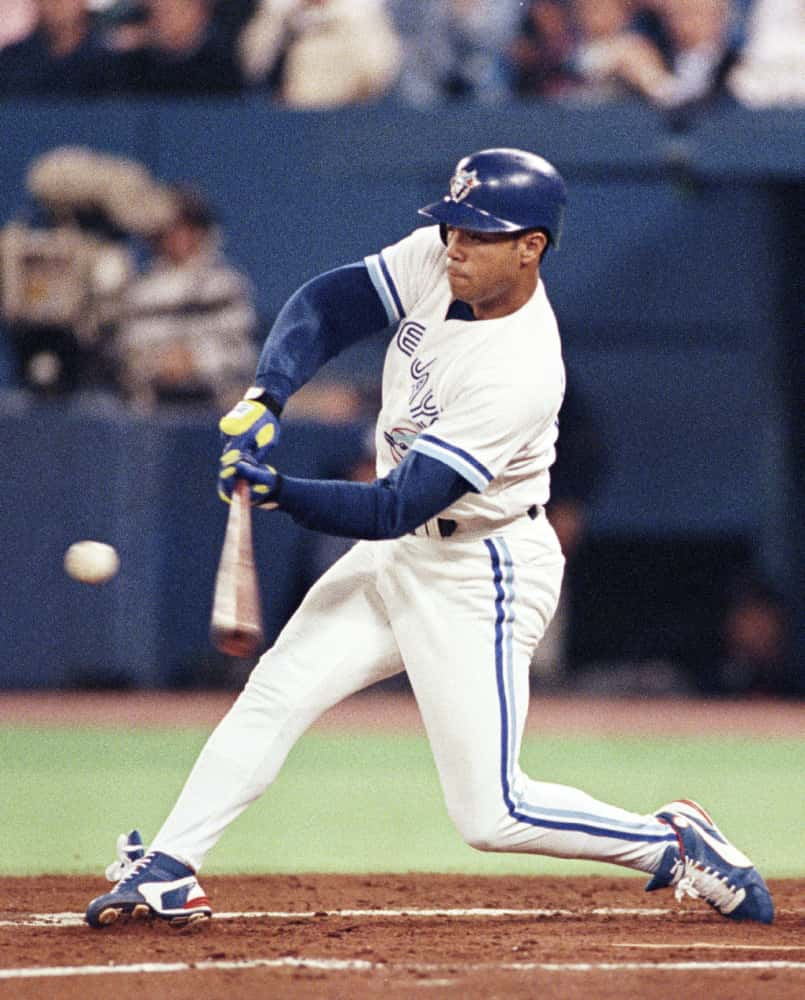
Roberto Alomar was a speedy second baseman who was well-known for his solid all-around game and was instrumental in the only 2 World Series titles for the Toronto Blue Jays.

He reached the Major Leagues with the San Diego Padres in 1988, when he finished 5th in the Rookie of the Year voting, and within 2 years had reached his first All-Star team, but he didn't hit his stride offensively until he was traded to Toronto after the 1990 season.

The Blue Jays reached the playoffs in each of Alomar's first three seasons with the team, and he was one of the team's best players in each of those playoff runs, batting .373 over those seasons and leading the Jays to 2 World Series. In 1992 he was the ALCS MVP, when he hit .423 in a 6-game series against the A's while also stealing 5 bases.

After dominating the ALCS, he struggled a bit in the World Series, but he did end up scoring the winning run in the 11th inning of Game 6, The following season, he hit .480 in the World Series with 6 RBI's as the Jays repeated as champs by taking down the Phillies, marking the third straight year that Alomar was huge in the playoffs, and the second time that he finished the season with a championship ring.

Alomar played two more seasons in Toronto, but the team started to enter a rebuilding process, and he wanted to chase more championships, so he left as a free agent in 1995 to sign with Baltimore, but he left the Blue Jays as the franchise's all-time leader with a .307 batting average. He played 3 seasons with the Orioles, reaching the ALCS twice, but they were never quite able to break through to the World Series.

His time in Baltimore was marred by an incident near the end of the 1996 season, when he became angry after a called third strike and got into a shouting match with the umpire. In the course of the confrontation, Alomar spat in the face of the umpire, and was suspended 5 games for the incident. He claims that the umpire used a racial slur against him, but the two later settled their differences publicly before a game the next season.

Alomar signed with Cleveland before the 1999 season in order to play with his brother Sandy, and while with the Indians he had two of his best seasons. He led the league in runs with 138 in 1999 while setting a career high with 120 RBI's, then had a career-high 193 hits in 2001, along with 100 RBI's and 30 stolen bases.

He played another 3 seasons, but his production dropped off and he retired before the 2005 season. He first appeared on the Hall of Fame ballot in 2010, but fell 8 votes short, the closest anyone has ever come during their first season without being elected, and many feel it was due to the spitting incident, but he was elected easily the following season, and deservedly so.

Alomar finished his career with a .300 batting average and 2724 hits, and he made 12 straight All-Star teams. He was a major contributor to two World Series champions, and played really well in another ALCS, and though he was never the MVP or a full-fledged superstar, he was a very good player for a very long time, and one of the best players of all time.


Saturday, May 12, 2018

Top 106 Baseball Players: #81 - Duke Snider


Duke Snider

Duke Snider was the star centerfielder for the Dodgers in the 1950's, at a time when it was a very prestigious position in New York City, with Mickey Mantle and Willie Mays manning the position for the other 2 teams at the time.

Snider reached the Major Leagues with Brooklyn in 1947, the same season that Jackie Robinson joined the team, but spent a lot of time in the minors over his first 2 seasons. He became the full-time centerfielder in 1949, and in 1950 he led the league with 199 hits, which would be his career high.

He was a pretty good player for a few years, then had his coming out party in the 1952 World Series, when he hit .345 with 4 home runs and 8 RBI's in a losing effort against the Yankees. Even though he did not quite get the title that year, it was the beginning of his time as a superstar in the league.

For the next few years he just kept getting better, surpassing 120 runs scored and batted in for 3 straight seasons, and he was the league leader in runs scored in all 3 of those seasons, and he also reached at least 40 home runs in each while finishing in the top 4 of the MVP voting.

In 1955 he was able to get his revenge on the Yankees, as he led the Dodgers to their only title in Brooklyn, this time hitting .320 with 7 RBI's and another 4 home runs as they won it all. In doing so, he became the first and so far only player ever to hit 4 home runs in a single World Series twice.

In 1956 his production dropped just slightly, with the exception of his home runs total,which was a career high 43, good enough to lead the league for the first time. The next season was the final one for the Dodgers in Brooklyn, and Snider was the last person ever to hit a home run at Ebbets field.

He followed the Dodgers to Los Angeles, but he had already reached the downhill side of his career, and while he was still a good player, he was not the superstar he had been on the other side of the country. He did win another World Series in LA in 1959, but wasn't as dominant as before.

Snider played 18 seasons in the majors, leading the league once each in RBI's, walks, hits, and home runs, along with the 3 straight seasons of leading the league in runs scored. He made the World Series 6 times with the Dodgers, winning it all twice, and was usually at his best in the postseason, which is why he belongs on this list of the all-time greats.


Thursday, May 10, 2018

Top 106 Baseball Players: #82 - Eddie Murray


Eddie Murray

Eddie Murray played 21 seasons in Major League Baseball, earning the nickname "Steady Eddie" along the way, and it fits, since his batting average stayed within a 40 point range for his first 12 seasons, and he missed very few games each season.

His rookie season was 1977, and he started out solid, with a .283 average and 27 homers, and was given the Rookie of the Year award for his efforts. Two years later he helped lead the Orioles to the World Series, and while he was great in the ALCS, with 5 hits and 5 walks in 17 plate appearances, he struggled in the final round, getting only 4 hits in the 7 games.

Over the next 6 years, he became an RBI machine surpassing 110 in each complete season, and leading the league with 78 in the strike-shortened 1981 season. He also led the league in home runs that season, the only time he would accomplish that, though he was quite a consistent long ball hitter through his career.

In 1983 he helped lead the Orioles back to the World Series, and was solid throughout both rounds, getting 9 hits in 9 games, including 3 home runs, and he was able to finish the season with a championship ring, the only one he would earn.

He continued to be Steady Eddie for more than a decade with multiple teams, even leading the league in batting in 1990, and he returned to Baltimore late in his career just in time to hit his 500th home run, which made him the third player in history to reach 500 home runs and 3000 hits, joining Willie Mays and Hank Aaron, later to be joined by Alex Rodriguez, Rafael Palmeiro, and Albert Pujols.

In 1995, at the age of 39, he was able to help the Cleveland Indians get to the World Series, and he hit a home run in each round of the playoffs, even at his advanced age, but he failed to get a second ring, just as he did the following season when he reached the playoffs again in Baltimore, which was the only time he ever reached the playoffs without making the World Series.

Although he was never a superstar, he was a very good player for a very long time, finishing in the top 5 of the MVP voting 6 times, reaching the World Series 3 times, each time in a different decade, and surpassing the two biggest batting milestones by showing up every day and doing his job well, which is why he deserves his spot on this list of the all-time greats.


Sunday, April 15, 2018

Top 106 Baseball Players: #103 - Rusty Staub


Rusty Staub

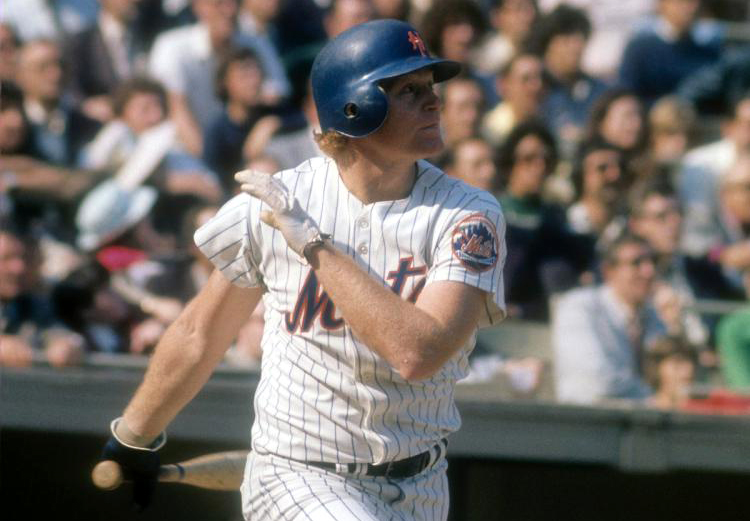
Rusty Staub is yet another example of a player who played at a high level for a long time but never quite achieved superstar status. He played 23 seasons in the Major Leagues for 5 different teams, and was remarkably consistent from 1966 to 1978, recording between 145 and 186 each season in which he was healthy.

His career began slowly following his call up to the Major Leagues just after his 19th birthday, with a few disappointing seasons that made people question the relatively large salary he was earning. He finally started to fulfill his promise in season 4, and by season 5 had become an All-Star, leading the league with 44 doubles while batting .333 for the season.

After a couple of good seasons, he still wasn't gaining popularity in Houston, but his big break came with a trade to expansion Montreal before the 1969 season. He was instantly popular in Montreal, and he helped out by taking French lessons in his spare time, as well as performing well on the field, hitting 29 and 30 homers in his first two seasons in Canada.

After three seasons up north, the Mets put together a trade for the star player, hoping to get to the playoffs. He broke his hand and missed half of his first season in New York, but the following season they were able to make a huge late-season push to reach the postseason, where Staub played some of the best baseball of his career.

He hit three home runs in the ALCS against Cincinnati before separating his shoulder making a catch against the wall in the 11th inning of game 4, which caused him to miss the final game of the series, which his team still won, earning a trip to the World Series. Despite being unable to throw overhand during the Series, Staub batted .423 with 11 hits and 6 RBI, but the Mets lost to Oakland in 7 games. It would be his one and only career trip to the playoffs.

He remained a solid player for several more seasons, even after yet another trade, this time to Detroit, before finally making his way back to New York to finish out his career. After hitting one home run in his final season, he became one of 4 players in history to hit a home run in both his teens and his 40's, and the other 3 players are all ahead of him on this list.

Perhaps the best part of Staub's game was his patience at the plate. He was among the top 10 in times reaching base 8 different times, and walks and on-base percentage 6 times, with a total of over 4000 times reaching base in his career, which is #44 all-time. He never received even 8% of the vote on the Hall of Fame ballot and is no longer eligible, but even though he was never a dominant player, he was very good for a very long time, and deserves to be remembered among the best players of all time.


Friday, April 13, 2018

Top 106 Baseball Players: #105 - David Cone


David Cone

David Cone was never the best pitcher in the league, and never really reached superstar status, but he was in the upper echelon of Major League pitchers for about a decade, even as he switched teams every couple of years, and he accomplished quite a few impressive feats over his long career.

One of the highlights of the early part of his career was a 19-strikeout performance he recorded for the New York Mets while facing the Phillies on the final day of the 1991 season, which is still tied for the second-most ever in a single game. He had joined the Mets in a trade immediately after their 1986 World Series title, but the team grew progressively worse over his time there, though it was the strongest phase of his career statistically.

He became a World Series champion the following year after a late-season trade to Toronto, but he was merely a serviceable starter during the championship run, despite having led the league in strikeouts for the 3rd consecutive season. He left for his hometown Kansas City Royals the next year, where he was awarded the AL Cy Young Award in the strike-shortened 1994 season.

After another short stop in Toronto, he was traded to the New York Yankees, where he earned four more World Series rings in his stay of just over 5 years. He did not perform well in his first and last World Series with the Yankees, but in 1999 he was very good, allowing only 1 hit in 7 innings of his start against the Braves.

Earlier that season he had joined a very exclusive club when he threw a perfect game against the Montreal Expos, one of only 23 players to accomplish that to date, and the circumstances were pretty special. That night was Yogi Berra night at Yankee Stadium, and Don Larsen, who had thrown a perfect game in the World Series for the Yankees years earlier, had thrown out the first pitch and was in attendance at the game. It is still the only perfect game in interleague play, other than Larsen's World Series perfecto.

His long career as one of the better pitchers in the league wasn't enough to impress the Hall of Fame committee, only receiving votes from 3.9% of the voters, which was not enough to keep him on the ballot for the next year. He is still the only pitcher to have a Cy Young, 19-strikeout game, and 5 World Series titles, and for that reason, he has earned the right to be remembered as one of the best baseball players of all time.