Showing posts with label Chicago White Sox. Show all posts

Friday, July 27, 2018

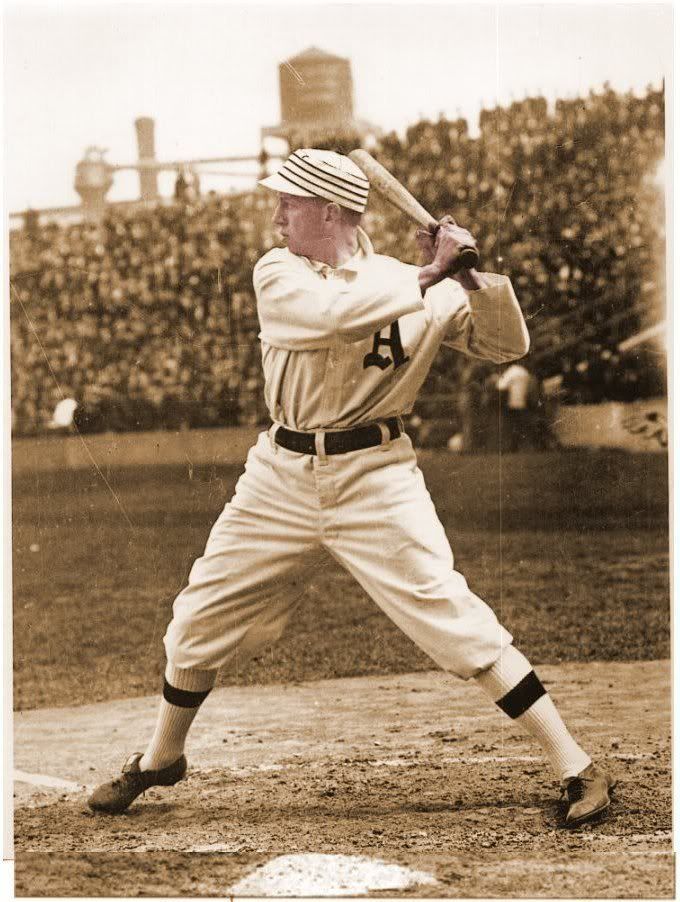
Top 106 Baseball Players: #12 - Eddie Collins


Eddie Collins

Eddie Collins was one of the greatest hitters of the dead-ball era, then continued to make solid contributions once the live-ball era began.

Collins first played for the Philadelphia Athletics in 1906, but he wasn't a full-time player until 1909. In that first full season, he hit .347 and stole 63 bases, making him one of the top tier of players already when he was just 22.

The next season, he became the first AL player ever to steal 80 bases in a season, leading the league with 81, and led the A's to the World Series, where he hit .429 with 4 stolen bases as Philadelphia beat the Cubs in 5 games.

He guided the A's back to the World Series the next year with a .365 average, and this time they beat the Giants in 6 games, even though Collins hit only .286. In 1912, he tied the record for stolen bases in a game twice within 11 days, swiping 6 bases each on September 11th and 22nd.

After missing the World Series in 1912, he led them back to the title series in 1913, this time beating the Giants in 5 games behind Collins'.421 average, which was lower only than that of Home Run Baker for the series, and he grabbed his 3rd championship in 4 years.

He was named the MVP in 1914 after leading the league in runs for the third year in a row and leading the A's to another pennant, but the A's were upset by the Braves, and it resulted in the owner blowing up the team, selling Collins to the White Sox for $50,000, the highest amount ever at that time, and the first time ever that a reigning MVP had been traded.

He led the league in walks in his first year in Chicago, keeping his reputation as one of the top players in the league, then led the White Sox to the World Series in his third year there, with another win over the Giants punctuating the season, with Collins batting .409 in the World Series.

Two years later, the White Sox returned to the World Series, this time losing as the result of the Black Sox scandal, in which 8 of his teammates were implicated for losing intentionally, with Collins one of the only starters who was not implicated.

He led the league in stolen bases twice late in his career, in 1923 and 1924, the latter of which was his first season as player/manager of the White Sox. After 3 seasons filling both roles in Chicago, he returned to the Athletics in the same position, and led them to two World Series titles in 1929 and 1930, though he only made 12 plate appearances in those 2 seasons combined, and did not play in either World Series.

Collins was known as a small-ball player, who was adept at reaching base and stealing bases. He is the all-time leader in sacrifice bunts, with a lead of more than 100 over the next player on the list. He had over 3300 hits in his career, currently #11 all-time, and is #8 in stolen bases and #17 in runs scored. He was always doing the small things needed to help his team succeed, and he did it so well for so long that he is still one of the best players of all time.


Friday, June 29, 2018

Top 106 Baseball Players: #36 - Tom Seaver


Tom Seaver

Tom Seaver was the best pitcher in baseball for many years, and was the man who put the Mets on the map.

Seaver joined the Mets in 1967, and was so good that he won the Rookie of the Year award that season, with an ERA of 2.76. In his second season, he reached 200 strikeouts for the first of nine consecutive seasons, which is still the all-time record.

He won the Cy Young Award in his third season after leading the league with 25 wins, and he nearly threw a perfect game that season, losing it with 2 outs to go. The Mets also won their first ever World Series that season, and though Seaver gave up a bunch of runs in his 3 postseason starts, he still won 2 of those games, and became a champion.

Seaver was the best pitcher in baseball for the next 2 seasons, though he did not win the Cy Young either time. He led the league with a 2.82 ERA and 283 strikeouts in 1970, and also set a record by striking out 10 consecutive batters in a game while tying the record with 19 in that game, although that record has been surpassed. He then had his best overall season in 1971, with a 1.76 ERA and 289 strikeouts, both tops in the league and the best in his career.

He had a slightly down year in 1972, then bounced back in 1973 by leading the league in strikeouts and ERA for the third time in 4 seasons, and took home his 2nd Cy Young. He also helped the Mets to get back to the World Series that season, and pitched extremely well, posting and ERA under 2.00 with 35 strikeouts in 4 appearances, but the Mets fell to the A's, denying him a chance at another title.

In 1975 he led the league in wins and strikeouts, marking the 4th time that he had fallen one category short of the pitching Triple Crown. He did, however, win the Cy Young again, giving him 3 in his career. He attempted to renegotiate his contract during the 1977 season, but after reaching an impasse, he was traded to the Reds.

In his first full season in Cincinnati, Seaver threw his first no-hitter after having 5 one-hitters as a member of the Mets. In 1981, he had another stellar season, finishing with a 14-2 record, which was the best in the league by wins and win percentage, and earned him the runner-up spot in the Cy Young voting, 12 years after he had won his first. He also reached 3000 strikeouts that season, the 5th pitcher ever to reach that mark.

Seaver bounced around for a few more years, reaching his 300th win in 1985 before retiring after the 1986 season. He is one of 2 pitchers in history with 3000 strikeouts, 300 wins, and an ERA below 3.00, along with Walter Johnson. He also has the second-most shutouts of any pitcher since 1920, trailing only Warren Spahn.

Spahn still holds the all-time records for consecutive strikeouts and consecutive 200-strikeout seasons, and led his team to 2 World Series, winning one. He was the Cy Young winner 3 times, though he should have had 6, and is the greatest player in the history of the Mets, and also one of the greatest baseball players of all time.


Sunday, June 24, 2018

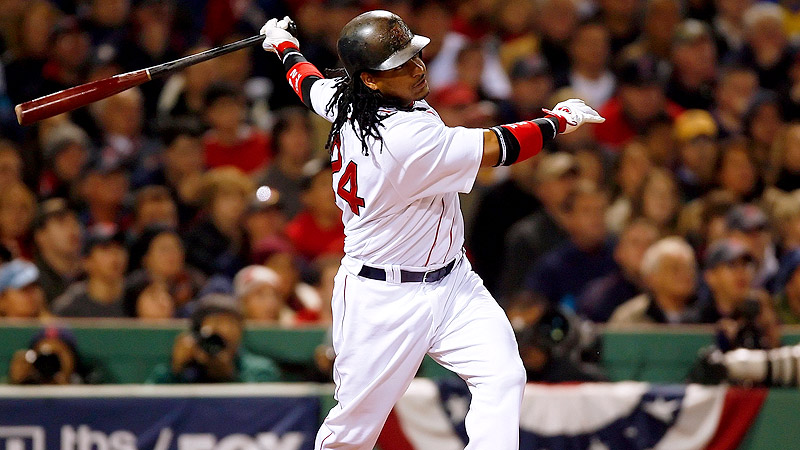
Top 106 Baseball Players: #41 - Manny Ramirez*


Manny Ramirez

Manny Ramirez was one of the most colorful players in recent memory, and was well-known for his great playoff performances, but he is the second straight player in this countdown whose reputation was tarnished by testing positive for steroids.

Manny first played in the Majors for the Indians near the end of 1993, and came in #2 in the Rookie of the Year voting in 1994. In 1995, he reached 30 home runs and 100 RBI's, which are benchmarks he would reach 11 more times in the next 13 seasons, which is a testament to his incredible consistency.

That was also the first of 5 consecutive seasons in which the Indians would reach the postseason with Ramirez on board. That included trips to the World Series in 1995 and 1997, when they lost to the Braves and the Marlins, and while Ramirez didn't play well in those World Series losses, he hit 13 total home runs in those 5 postseasons.

During the 1999 season, he led the entire league in RBI with 165, and finished third in the MVP voting, the highest he would get in his career. After the Indians failed to reach the playoffs in 2000, he left as a free agent to sign with the Red Sox, with the largest contract in history at that time.

In his second season with Boston, he led the league in batting average at .349, but the Red Sox did not reach the playoffs in his first two seasons there. The addition of David Ortiz to the team in 2003 was the boost the team needed, vaulting them into the playoffs, where they lost in 7 games to the Yankees during the ALCS.

In 2004, Ramirez led the league with 43 home runs and a .613 slugging percentage, and the Red Sox returned to the playoffs, where they again met the Yankees in the ALCS. This time, they fell behind 3-0, but rallied to win 4 in a row behind the greatness of his teammate, Ortiz. In the World Series, Ramirez hit .412 in a 4-game sweep to win the World Series MVP award.

The Red Sox won another World Series in 2007, and this time Ramirez was even better. In the ALCS, he hit .409 with 10 RBI as Boston beat Cleveland, and he hit .348 total for the postseason. He also broke the all-time record for playoff home runs that year, hitting his 23rd to pass Bernie Williams, and he would eventually extend his record to 29.

Ramirez was traded to the Dodgers midway through the following season, and he was great in the postseason for LA, batting over .500 in each of the teams' postseason series, but they would fail to reach the World Series that season. He began the 2009 season on a good pace, but just a month into the season was informed that he had failed a drug test and would be suspended for 50 games.

This was the second time that Ramirez had been caught cheating. He had tested positive in 2003, when the league randomly tested players to determine the extent of steroid use in baseball, but players were given immunity for positive tests during that round of testing. After joining the Rays in 2011, Ramirez again tested positive for a banned substance, and chose to retire rather than face a 100-game suspension.

Ramirez finished his career with 555 home runs, #15 all-time, and is also #18 all-time in RBI. He hit 21 grand slams in his career, good for third place in history, and is still the all-time leader in postseason home runs. He was a World Series MVP, and a very consistent performer in the regular season, and even with the proof that he cheated on multiple occasions, he is still one of the greatest ever to play the game.


Wednesday, June 20, 2018

Top 106 Baseball Players: #44 - Al Simmons


Al Simmons

Al Simmons was one of the greatest all-around hitters in the early years of the live-ball era, and though was overshadowed in his time by bigger stars like Babe Ruth and Lou Gehrig, he was just as good a player for quite a while.

He first played for the Philadelphia Athletics in 1924, and in his second season he had already broken out, leading all players with 253 hits, which is still the Major League record for a right-handed hitter. He also hit .387 that season, and led all players with 392 total bases, which ended with him finishing as the MVP runner-up.

For the next 6 years, he never batted below .340, and he won the batting title in 1930 and 1931, with averages of .381 and .390. He also led the league with 157 RBI in 1929 and 152 runs in 1930. From 1929 to 1933 he recorded at least 200 hits in each season, and he also surpassed 30 home runs 3 times over that span.

Simmons was one of the top players on three straight World Series teams from 1929 to 1931, hitting 2 home runs in each season's championship round, and batting at least .300 in each as well. The A's won the first two times they reached the Series, with Simmons as the best batter in the 1930 Series, at .364, but they fell to the Cardinals in 7 games in 1931.

After the 1932 season, the Athletics blew up their roster, and Simmons was sold to the White Sox, where he had two more very good years, batting at least .330 in both seasons with at least 190 hits. In 1935 his average dropped below .300 for the first time in his career.

Following that down year, he was sold to the Tigers, where he had his final star-level season, batting .327 with 112 RBI and 186 hits. After that, he bounced around several teams, switching uniforms 6 times over his final 7 seasons, all while his production slowly declined.

Simmons was a true superstar during his time with the Athletics, batting at least .340 8 times, and over .380 4 times, and he reached 200 hits 6 times, with 4 more seasons of at least 180. He was great in each of his first 3 World Series appearances, and earned two championship rings as a result, and though many do not remember his name today, he is definitely worthy of being remembered as one of the top 50 players of all time.

Sunday, May 27, 2018

Top 106 Baseball Player: #67 - Frank Thomas


Frank Thomas

Frank Thomas, nicknamed "the Big Hurt," was a superstar as soon as he reached the Major Leagues, and he was historically good in his first 7 seasons, and had a few more very good seasons over the following decade.

Thomas reached the Majors in 1990 at age 22, and hit .330 over the course of 60 games. In his first full season, he led the league in walks, which he would do 4 times in his first 5 full seasons, and he finished #3 in the MVP voting, the first of 7 straight years and 9 overall that he would be in the top 10.

He was the best all-around batter in the AL in 1992, the first of 5 times he would do this, leading the league in walks and doubles while batting .323 with 115 RBI. In 1993, his numbers dropped in almost every category, except for home runs and RBI's, and was awarded the AL MVP after becoming just the 5th player ever (the others are Babe Ruth, Lou Gehrig, Jimmie Foxx, and Ted Williams) to have 100 runs, RBI's, and walks, along with 20 home runs and a .300 average in three straight seasons.

The 1994 season was cut short by the strike, but he still managed to keep that streak alive, reaching 101 RBI's and leading the league in runs and walks on his way to a repeat MVP award. He continued at that torrid pace through 1997, when he even led the league in batting average, making it 7 straight seasons with those stats, breaking Ted Williams' record of 6 in a row. It's especially amazing considering that the other 4 who had done it at least 3 straight times had done it at least 50 years earlier, and no one has done it since.

After a couple of down years, he rebounded at full strength in 2000, winning the Comeback Player of the Year Award after hitting those markers again, but he would never bat .300 again and would only play 4 more full seasons, though he would remain in the league until 2008.

Thomas did not experience much playoff success in his career, appearing in the playoffs only 3 times in his career, and only winning a series for the first time in 2006, when he was playing for Oakland. He was very good in his first playoff appearance, batting .353 and walking 10 times in a 6-game loss to Toronto in 1993. He did earn a World Series ring in 2005, but he didn't play due to injury.

Thomas finished his career with 521 homers, #20 all time, and is also #24 in RBI's, #10 in walks, and #4 in sacrifice flies. He was the best player in the AL for half of the 1990's, and was one of the only stars of that era to never come under suspicion of using PED's, and he was always a big proponent of random drug testing. His all-around greatness can't be ignored, so he has to be included on this list of the all-time greats.


Friday, May 18, 2018

Top 106 Baseball Players: #75 - Tim Raines


Tim Raines

Tim Raines was one of the best basestealers in history, but spending the majority of his career in Montreal has caused him to be somewhat overlooked by many baseball fans as one of the greats.

Raines played in a few games for the Expos in 1979 and 1980, but he became a full-time Major Leaguer in 1981, which was a strike-shortened season, and in his first season he led all players with 71 stolen bases, a record for a rookie, which also included 27 successful attempts in a row to begin his career, also a record.

His performance dropped a bit the following year, but still managed to lead the NL in steals. After the season, he entered into drug rehab to over come cocaine addiction, and it was revealed that he had been using the drug constantly, so much so that he kept some in his hip pocket when he was playing so he could use it between innings, and he started sliding headfirst to avoid it falling out on the basepaths.

When he returned clean in 1983, he became the best position player in baseball, leading the league in runs scored with 133 and the NL with 90 stolen bases, the third season in a row he had done that. He also walked 97 times, which would be the best of his career, but still only came in 5th in the MVP voting.

Over the next 4 seasons, he led the league once each in runs scored, stolen bases, doubles, and batting average, showing his all-around prowess at the plate, and he ranked as the best player in the NL 4 times over the span from 1983 to 1987, but as I said above, playing for Montreal, which rarely made the playoffs and played in a small market, he never got the MVP recognition he deserved.

After the 1990 season, he requested a trade to a contender, and he was sent to the White Sox, where he played 5 seasons but only made one playoff appearance, and though he played well in that series, batting .444 and scoring 5 runs, the Sox lost to the Blue Jays in 6 games.

Following the 1995 season, he was traded to the Yankees, where he was finally able to accomplish his dream of a championship. His role had diminished somewhat, as he appeared in only about half of the team's games in his 3 seasons in the city, but he was able to get 2 championship rings, in 1996 and 1998, though he didn't appear in the 1998 World Series.

He signed with the Oakland A's in 1999, but midway through the season was diagnosed with lupus, and sat out a season and a half while recovering. He returned to Montreal in 2001, then was traded briefly to the Orioles so that he would have the opportunity of playing with his son, becoming the second father-son pair to play together in the Majors.

Raines was elected to the Hall of Fame in 2017, his tenth year on the ballot, just another sign of how underappreciated he was. He is #5 all-time in stolen bases, and has the best stolen base percentage of any player with at least 400 steals, and he was the best player in baseball for several years, and he definitely deserves to be part of this list of the all-time greats.


Sunday, May 13, 2018

Top 106 Baseball Players: #80 - Ed Walsh


Ed Walsh

Ed Walsh was an amazing pitcher for the Chicago White Sox early in the last century, but he burned out early due to overwork, though what he did was enough to get him on this list.

He broke into the majors in 1904 just days before his 23rd birthday, and he spent his first couple of seasons as a spot starter and middle reliever. When he broke into the starting rotation in 1906, he was immediately the ace, not just of the team but of the entire league.

That season he led the league with 10 shutouts, while posting a 1.88 ERA, and the White Sox also won the AL pennant that year, with Walsh winning 2 games in the World Series. In Game 3, he struck out 12 batters, which was a record at the time, and he also recorded at least one strikeout in every inning, a feat that has only been matched by Bob Gibson in Game 1 of the 1968 World Series.

The following season he led the league in a lot of categories, including games pitched, started, complete games, saves, innings pitched and ERA. Even after that, he somehow improved the next season, leading the league in strikeouts, wins, and shutouts, in addition to everything from the previous season except ERA. That year he started 49 games, and completed 42 of them, 11 in shutout fashion, and he ended the season with 40 wins, something nobody has done since.

Two years later he posted a 1.27 ERA, best in the league, and ended up with the best ERA ever for a pitcher who finished with a losing record after at least 20 starts. He had 2 more dominant seasons after that, before his arm gave out and his career basically ended.

From 1906 to 1912, he had an ERA below 2.22 every year, pitched in at least 40 games 6 times, pitched at last 20 complete games every season, reached 200 strikeouts 5 times, and led the league in saves 5 times as well. The overwork ruined his arm, and he was rarely ever able to overcome the pain enough to pitch again.

Over the final 5 seasons of his career, he appeared in only 33 games, which is a number of games he surpassed 6 times in the previous 7 single seasons, and though he still pitched well when he appeared, his starts were so sporadic that he was eventually let go.

Walsh had one of the greatest 7-year stretches for a pitcher in history, and he still holds the all-time record for career ERA (1.82). He was by far the best pitcher in the 1906 World Series, and nobody has since come close to the number of innings pitched or complete games he threw in 1907 and 1908. Though he flamed out at age 31, he still deserves to be remembered as one of the all-time greats.

Friday, April 27, 2018

Top 106 Baseball Players: #94 - Ken Griffey Jr.


Ken Griffey Jr.

Ken Griffey Jr. was destined to be a star from the time he was a small child. His father was an All-Star outfielder, and Junior was the #1 overall pick in the 1987 draft. When he reached the Major Leagues in 1989, his father was still playing for the Cincinnati Reds, making them the first father-son duo to play in the majors at the same time.

To make that relationship even more interesting, Ken Sr. joined the Mariners the following season, and in September 1990 they hit back-to-back home runs in the top of the first inning of a game against the Angels, a feat that has never been and probably never will be duplicated.

Griffey was a great power hitter, even if he didn't look like it. He hit at least 40 home runs 7 times in 8 seasons from 1993 to 2000, falling short just once when he broke his wrist in 1995. He even had 40 home runs in 1994, when the season was cut short by a strike, and he was within striking distance of the single-season record at the time.

In 4 of those seasons he led the AL in home runs, reaching 56 twice, including the 1998 season when he was overshadowed by Mark McGwire and Sammy Sosa. He was awarded the MVP in 1997 after leading the league in runs, home runs, RBI's, and total bases.

Seattle traded him away to his hometown of Cincinnati after the 1999 season amid worries that he wouldn't stay in free agency, and he had one more star-level season for the Reds before the injury bug really started to bite. He had season-ending injuries in 3 straight seasons, and his production when he was on the field dropped off as well.

In 2005, he bounced back somewhat, batting 35 home runs while hitting .301, which earned him the Comeback Player of the Year award. He hung around for 5 more seasons, reaching numerous home run milestones on the way, and ended his career with 630. At one point he reached #5 on the all-time list, but has since fallen behind Alex Rodriguez, and could fall behind Albert Pujols in the near future.

Griffey never reached the World Series, but he had a memorable playoff run in 1995. The Mariners went down 0-2 to the Yankees in the ALDS, but Griffey turned in one of the best playoff series performances of all time, becoming just the second player ever to hit 5 home runs in a single playoff series, and he capped it off by scoring from first base on a double in the bottom of the 11th inning, sliding into home to win the series. Despite failing to reach the World Series that year, he still had the best overall playoff performance of any player that postseason.

Had his career not been derailed by injuries, there is no telling how high he might have climbed on this list. Still, even with just half a career at full strength, he received a great honor from the Hall of Fame voters, receiving the highest vote total ever in his first season on the ballot, and he definitely deserves his spot on this list.