Showing posts with label Baltimore Orioles. Show all posts

Friday, July 13, 2018

Top 106 Baseball Players: #24 - Curt Schilling


Curt Schilling

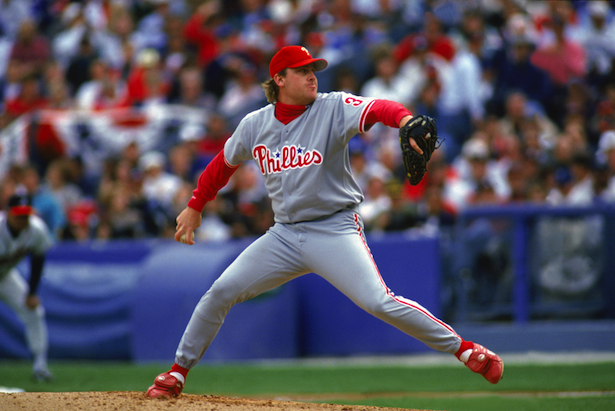
Curt Schilling was a longtime pitcher who blossomed into a superstar in his 30's, and had two of the best postseason runs ever by a pitcher, which helped vault him into the upper echelon of all-time players.

Schilling first pitched in the majors for Baltimore in 1988, but it took him until 1990 to get his first win, the only one he would record for the Orioles. He pitched out of the bullpen for the Astros after that, but still was not notable in any way.

He joined the Phillies in 1992, and that is where his career started to improve. He had 14 wins and a 2.35 ERA in that first season, then got his first taste of the postseason in 1993, where he started to earn his reputation as a big-game player. He won the NLCS MVP after posting a 1.69 ERA in two starts while striking out 19 Braves, then pitched a shutout while facing elimination in the World Series, but the Phillies ended up losing anyway.

After a couple of down seasons, he bounced back in a big way in 1997, leading the league with 319 strikeouts, the most he would have in his career, and 133 more than he had ever had before, making it the best regular season of his career.

The next season he threw exactly 300 strikeouts while also leading the league with 15 complete games and pitching more innings than any other pitcher. Although he was having great success, his team wasn't, and he requested a trade to a contender, and he got his wish in 2000, when he was sent to the Arizona Diamondbacks.

His first season in the desert was a memorable one, as he led the league with 22 wins, while posting a 2.98 ERA and striking out 293 batters. The Diamondbacks made the playoffs, where Schilling was spectacular, with a 4-0 record, 1.12 ERA, and 56 strikeouts, including 26 strikeouts in 21 innings in the World Series, where he shared the MVP award with Randy Johnson after Arizona upset the 3-time defending champion Yankees.

He was just as great in 2002, with a 23-7 record and 316 strikeouts, which was his third time reaching the 300-strikeout mark. For the second year in a row, he finished as the runner-up in the Cy Young voting to his teammate, Randy Johnson, and he pitched great in the playoffs, striking out 7 in 7 innings and giving up only one run, but Arizona fell to Saint Louis in the NLDS.

After a down year, he was traded to the Red Sox, where he led the league with 21 wins in his first season, and finished as the Cy Young runner-up for the third time in 4 seasons. He pitched through an ankle injury in the playoffs, and became famous for his bloody sock in game 6 of the ALCS, and the Red Sox won their first World Series in decades.

Injuries slowed him over his final 3 seasons, but he again played well in the 2007 playoffs, going 3-0 in 4 starts as the Red Sox won another title. His World Series win made him the second pitcher over 40 in history to start and win a World Series game. After missing the following season with a shoulder injury, he retired before the 2009 season began.

Schilling is one of the best pitchers since the Cy Young award began who did not receive the honor. He finished his career with 3116 strikeouts, #15 all time. While his time as a superstar was relatively short compared to others around him on this list, he had 4 extremely great seasons, and 2 of the best playoff runs in history, which earned him this spot on the list of the all-time greats.


Thursday, July 5, 2018

Top 106 Baseball Players: #30 - Frank Robinson


Frank Robinson

Frank Robinson was a groundbreaking player and manager for multiple teams in a long and outstanding career.

Robinson joined the Cincinnati Reds in 1956 when he was 20 years old, and he led the league in runs scored as a rookie, while also tying the rookie home run record, which was 38 (broken by Aaron Judge last season). That solid debut season earned him the Rookie of the Year Award.

He maintained that level of play for several seasons, before exploding in 1961, when he led the league with a .611 slugging percentage to go along with 117 runs and 124 RBI's. That season he led the Reds to the pennant, which resulted in a World Series loss to the Yankees, but he was awarded his first MVP award for the stellar season.

The next season he improved in nearly every single category, and had arguably his best season, when he hit .342, led the league with 134 runs and 51 doubles, and set career highs with 208 hits and 136 RBI. He only finished 4th in the MVP voting that year, even though he was even more deserving than the year before.

After 3 more years with the Reds, the team decided to move on from Robinson, trading him to the Orioles, and in his first season in Baltimore he had a season for the ages. He won the Triple Crown with 49 home runs, 122 RBI, and a .316 average, while also leading the league in runs and total bases, earning another MVP, and becoming the only player ever to win an MVP in each league.

The Orioles advanced to the World Series that year, and Robinson was named the MVP after hitting 2 home runs in the 4-game sweep of the Dodgers, including a solo shot to score the only run in the decisive final game. In a series dominated by pitching, Robinson was the offensive constant that made the difference.

From 1969 to 1971, the Orioles made 3 more playoff appearances, reaching the World Series each time, and they won the title in 1970 against Robinson's old team, the Reds, earning him a second championship ring. After the 1971 season, he was traded to the Dodgers, then to the Angels the following season.

Around this time Robinson decided that he wanted to become a manager, and because of that desire, he was traded to the Indians, where he was installed as player/manager, making him the first black manager in league history. Several years later, when he was hired to manage the Giants, he became the first black manager in the NL as well.

At the time of his retirement as a player, Robinson was #4 in home runs, behind Ruth, Aaron, and Mays, and has since fallen back to #10. His number was retired by Cincinnati, Baltimore, and Cleveland, making him one of only 2 players (along with Nolan Ryan) to have his number retired by 3 teams. He is still the only player to win an MVP in each league, a rare batting Triple Crown winner, a World Series MVP, and one of the greatest baseball players of all time.


Thursday, May 31, 2018

Top 106 Baseball Players: #63 - Mike Mussina


Mike Mussina

Mike Mussina may not seem like the type of superstar you would expect to see on this list, and he was rarely a league leader during his career and never won a Cy Young, but he was a very good pitcher for a very long time, and he did everything he could to get his team to win a World Series, though he never succeeded at that.

Mussina was drafted by the Baltimore Orioles out of high school, but decided to attend college at Stanford instead, after which he was again drafted by the Orioles, this time in the first round. After just over a year in the minors, he was brought up to the big league club, and he wouldn't go back.

In 1992, his first full season with the Orioles, he led the league in win percentage, with a record of 18-5, and came in 4th in the Cy Young voting. He would finish in the top 5 three more times in the next 4 seasons, including the 1995 season, when he led the league with 19 wins and 4 shutouts.

The 1997 season was his best with Baltimore, with a career high 218 strikeouts and a 3.20 ERA, his lowest since 1992, and the Orioles made the playoffs for the second straight year. He was very good in the ALDS, outdueling Randy Johnson twice while giving up only 3 runs in 14 innings as Baltimore swept. In the ALCS, he was even better, giving up only 4 hits and 1 run over 15 innings while striking out 25 batters, which was the ALCS record at the time, but the Orioles failed to score a run in either game, and they lost the series.

After a few more seasons with Baltimore, Mussina left to join the 3-time defending champion Yankees as a free agent, hoping to get a championship ring. His first season in New York was his best, with a 3.15 ERA and 214 strikeouts, and the Yankees did reach the World Series, but they lost to Arizona in 7 games.

He pitched 7 more seasons for the Yankees, reaching the playoffs in the next 6, but never did get that championship ring. In 2008, he finally reached the 20-win plateau for the first time in his career, becoming the oldest pitcher ever to do it for the first time, and he also became the first pitcher in over 40 years to retire immediately after a 20-win season.

Mussina came very close to recording a perfect game on 5 different occasions, with 4 different games of just one man allowed on base, three of which were perfect until at least the 8th inning. He has been on the Hall of Fame ballot for 5 years, and has been inching closer to election. There are currently only 2 eligible pitchers who have at least 100 more wins than losses that are not in the Hall, Mussina and Roger Clemens.

Mussina holds the AL record for most consecutive seasons with at least 11 wins, with 17, so even though he was never dominant, he was always very good and very steady and reliable. He was amazing in the 1997 postseason, but couldn't overcome the lack of run support, and played well in several postseason appearances late in his career with the Yankees. He may not seem like the obvious choice, but Mussina belongs on this list of the greatest players of all time.


Friday, May 18, 2018

Top 106 Baseball Players: #75 - Tim Raines


Tim Raines

Tim Raines was one of the best basestealers in history, but spending the majority of his career in Montreal has caused him to be somewhat overlooked by many baseball fans as one of the greats.

Raines played in a few games for the Expos in 1979 and 1980, but he became a full-time Major Leaguer in 1981, which was a strike-shortened season, and in his first season he led all players with 71 stolen bases, a record for a rookie, which also included 27 successful attempts in a row to begin his career, also a record.

His performance dropped a bit the following year, but still managed to lead the NL in steals. After the season, he entered into drug rehab to over come cocaine addiction, and it was revealed that he had been using the drug constantly, so much so that he kept some in his hip pocket when he was playing so he could use it between innings, and he started sliding headfirst to avoid it falling out on the basepaths.

When he returned clean in 1983, he became the best position player in baseball, leading the league in runs scored with 133 and the NL with 90 stolen bases, the third season in a row he had done that. He also walked 97 times, which would be the best of his career, but still only came in 5th in the MVP voting.

Over the next 4 seasons, he led the league once each in runs scored, stolen bases, doubles, and batting average, showing his all-around prowess at the plate, and he ranked as the best player in the NL 4 times over the span from 1983 to 1987, but as I said above, playing for Montreal, which rarely made the playoffs and played in a small market, he never got the MVP recognition he deserved.

After the 1990 season, he requested a trade to a contender, and he was sent to the White Sox, where he played 5 seasons but only made one playoff appearance, and though he played well in that series, batting .444 and scoring 5 runs, the Sox lost to the Blue Jays in 6 games.

Following the 1995 season, he was traded to the Yankees, where he was finally able to accomplish his dream of a championship. His role had diminished somewhat, as he appeared in only about half of the team's games in his 3 seasons in the city, but he was able to get 2 championship rings, in 1996 and 1998, though he didn't appear in the 1998 World Series.

He signed with the Oakland A's in 1999, but midway through the season was diagnosed with lupus, and sat out a season and a half while recovering. He returned to Montreal in 2001, then was traded briefly to the Orioles so that he would have the opportunity of playing with his son, becoming the second father-son pair to play together in the Majors.

Raines was elected to the Hall of Fame in 2017, his tenth year on the ballot, just another sign of how underappreciated he was. He is #5 all-time in stolen bases, and has the best stolen base percentage of any player with at least 400 steals, and he was the best player in baseball for several years, and he definitely deserves to be part of this list of the all-time greats.


Wednesday, May 16, 2018

Top 106 Baseball Players: #77 - Roberto Alomar


Roberto Alomar

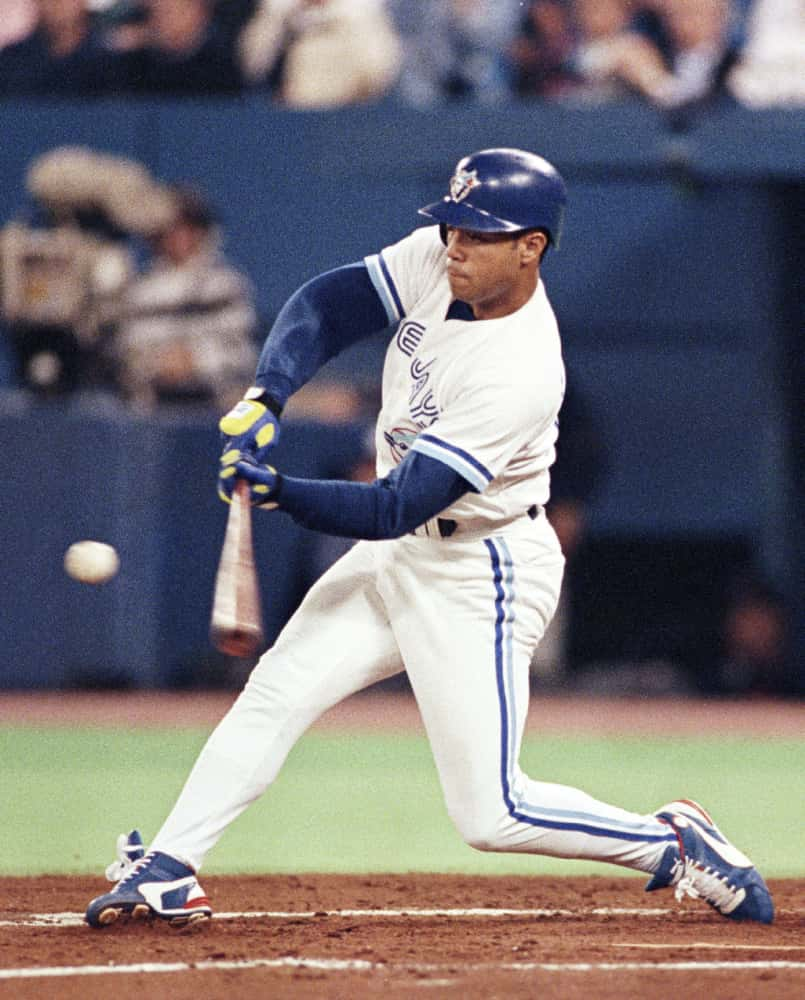
Roberto Alomar was a speedy second baseman who was well-known for his solid all-around game and was instrumental in the only 2 World Series titles for the Toronto Blue Jays.

He reached the Major Leagues with the San Diego Padres in 1988, when he finished 5th in the Rookie of the Year voting, and within 2 years had reached his first All-Star team, but he didn't hit his stride offensively until he was traded to Toronto after the 1990 season.

The Blue Jays reached the playoffs in each of Alomar's first three seasons with the team, and he was one of the team's best players in each of those playoff runs, batting .373 over those seasons and leading the Jays to 2 World Series. In 1992 he was the ALCS MVP, when he hit .423 in a 6-game series against the A's while also stealing 5 bases.

After dominating the ALCS, he struggled a bit in the World Series, but he did end up scoring the winning run in the 11th inning of Game 6, The following season, he hit .480 in the World Series with 6 RBI's as the Jays repeated as champs by taking down the Phillies, marking the third straight year that Alomar was huge in the playoffs, and the second time that he finished the season with a championship ring.

Alomar played two more seasons in Toronto, but the team started to enter a rebuilding process, and he wanted to chase more championships, so he left as a free agent in 1995 to sign with Baltimore, but he left the Blue Jays as the franchise's all-time leader with a .307 batting average. He played 3 seasons with the Orioles, reaching the ALCS twice, but they were never quite able to break through to the World Series.

His time in Baltimore was marred by an incident near the end of the 1996 season, when he became angry after a called third strike and got into a shouting match with the umpire. In the course of the confrontation, Alomar spat in the face of the umpire, and was suspended 5 games for the incident. He claims that the umpire used a racial slur against him, but the two later settled their differences publicly before a game the next season.

Alomar signed with Cleveland before the 1999 season in order to play with his brother Sandy, and while with the Indians he had two of his best seasons. He led the league in runs with 138 in 1999 while setting a career high with 120 RBI's, then had a career-high 193 hits in 2001, along with 100 RBI's and 30 stolen bases.

He played another 3 seasons, but his production dropped off and he retired before the 2005 season. He first appeared on the Hall of Fame ballot in 2010, but fell 8 votes short, the closest anyone has ever come during their first season without being elected, and many feel it was due to the spitting incident, but he was elected easily the following season, and deservedly so.

Alomar finished his career with a .300 batting average and 2724 hits, and he made 12 straight All-Star teams. He was a major contributor to two World Series champions, and played really well in another ALCS, and though he was never the MVP or a full-fledged superstar, he was a very good player for a very long time, and one of the best players of all time.


Thursday, May 10, 2018

Top 106 Baseball Players: #82 - Eddie Murray


Eddie Murray

Eddie Murray played 21 seasons in Major League Baseball, earning the nickname "Steady Eddie" along the way, and it fits, since his batting average stayed within a 40 point range for his first 12 seasons, and he missed very few games each season.

His rookie season was 1977, and he started out solid, with a .283 average and 27 homers, and was given the Rookie of the Year award for his efforts. Two years later he helped lead the Orioles to the World Series, and while he was great in the ALCS, with 5 hits and 5 walks in 17 plate appearances, he struggled in the final round, getting only 4 hits in the 7 games.

Over the next 6 years, he became an RBI machine surpassing 110 in each complete season, and leading the league with 78 in the strike-shortened 1981 season. He also led the league in home runs that season, the only time he would accomplish that, though he was quite a consistent long ball hitter through his career.

In 1983 he helped lead the Orioles back to the World Series, and was solid throughout both rounds, getting 9 hits in 9 games, including 3 home runs, and he was able to finish the season with a championship ring, the only one he would earn.

He continued to be Steady Eddie for more than a decade with multiple teams, even leading the league in batting in 1990, and he returned to Baltimore late in his career just in time to hit his 500th home run, which made him the third player in history to reach 500 home runs and 3000 hits, joining Willie Mays and Hank Aaron, later to be joined by Alex Rodriguez, Rafael Palmeiro, and Albert Pujols.

In 1995, at the age of 39, he was able to help the Cleveland Indians get to the World Series, and he hit a home run in each round of the playoffs, even at his advanced age, but he failed to get a second ring, just as he did the following season when he reached the playoffs again in Baltimore, which was the only time he ever reached the playoffs without making the World Series.

Although he was never a superstar, he was a very good player for a very long time, finishing in the top 5 of the MVP voting 6 times, reaching the World Series 3 times, each time in a different decade, and surpassing the two biggest batting milestones by showing up every day and doing his job well, which is why he deserves his spot on this list of the all-time greats.


Friday, May 4, 2018

Top 106 Baseball Players: #87* - Rafael Palmeiro


Rafael Palmeiro*

Rafael Palmeiro is the first player to make this list with an asterisk, which I have affixed to the 6 players on this list who broke rules in order to gain an advantage. Since it is not possible to tell the extent of the cheating, or what impact it had, he appears on the list at his actual ranking.

Palmeiro broke into the league with the Chicago Cubs in 1986, and in his third season had become an All-Star by batting .307, good for second in the NL that season, behind only Tony Gwynn. Because of issues with teammate Ryne Sandberg, Palmeiro was traded to the Texas Rangers after the season.

During his first stint with the Rangers, he began to establish himself as a true star, leading the league in hits in 1990, doubles, in 1991, and runs scored in 1993. After his fifth year in Texas, which was his best year to date, he decided to leave as a free agent after teammate Will Clark was offered a slightly larger contract.

He signed with the Orioles for slightly more than Clark had been offered, and it was there that he became a home run hitter, with a streak of 9 straight seasons of between 38 and 47 homers starting in 1995, and he also surpassed 100 RBI's in each of those seasons, something he had only done once before.

He decided to return to the Rangers in 1999, where he and his family were still living, and in his first season back had his best overall season, when he set career highs with 47 home runs, 148 RBI's, and a .324 batting average, while also amassing 183 hits. He came in fifth in the MVP voting, though I feel he should have won the award that year for the AL, as he had far more home runs, RBI's, and walks than Ivan Rodriguez, his teammate who won the award, while nearly matching him in hits and runs scored.

He returned to Baltimore in 2004 to chase a few more career milestones, and he reached a very impressive one in 2005, when he reached hit #3000, and as he had already reached 500 home runs, he became only the fifth player to reach both milestones, joining Hank Aaron, Willie Mays, Alex Rodriguez, and Eddie Murray, all Hall of Famers.

Just days after reaching that milestone, he was suspended for 10 days for a positive steroid test, which also came just a few months after he had been accused by Jose Canseco of using steroids, and after he had testified before Congress that he had never used them. He claimed that he had been given a tainted Vitamin B12 shot by teammate Miguel Tejada and that it was not intentional.

He returned to the team after his suspension ended, but his team and the fans had turned on him, both because of the implications of cheating and the accusation against his own teammate. Rafael Palmeiro Appreciation Day was cancelled, which was to be a celebration of his amazing achievement weeks earlier, and he ended up retiring a few days later due to all of the negativity. He also never came close to being elected to the Hall of Fame, despite having career statistics that would generally be considered surefire.

While Palmeiro most likely cheated, it is unclear how much and how often, and there is still a question as to whether it was intentional, but there is still no doubt that with all that he did in his career, he still deserves to be mentioned as one of the best baseball players of all time.


Thursday, May 3, 2018

Top 106 Baseball Players: #88 - Vladimir Guerrero


Vladimir Guerrero

Vladimir Guerrero burst onto the scene in the late 1990's with the Montreal Expos, and it didn't take long before he became a perennial All-Star and MVP candidate. He was notorious for swinging at almost any pitch, but he was skilled enough that it didn't hamper his career.

He spent 8 years playing for Montreal, and during that time he was involved in two of the most amazing plays ever seen. The first came at the plate, where he cemented his reputation as a bad-ball hitter, when he got a hit off a pitch that had bounced before reaching the plate. Not only did the ball bounce, his bat also hit the ground as he was swinging, but he reached base safely nonetheless.

His most amazing defensive play came in 2001, when a ball was hit into deep right field, where Guerrero fielded it off one bounce, then threw a perfect strike of about 300 feet straight into the catcher's glove to tag out a runner trying to score from second. That throw can be seen in the highlight video attached to the end of this post.

In 2002, he led the league in hits and total bases, and came just one home run short of joining the very exclusive 40-40 club, as he posted a career high with 40 steals that year. The next season he was slowed by a back injury, and he became a free agent for the first time at the end of the season.

He decided to join the Angels for the 2004 season, and he had one of his very best seasons right away. He led the league with 124 runs, 366 total bases, and tied his career high with 206 hits. In September, he won the Player of the Month award after batting .371 with 10 home runs as they came back from a 3-game deficit to win the division and make the playoffs.

He did not play well in the playoffs, getting only 2 hits, though one of them was a grand slam, so it didn't look quite as bad. His overall numbers dropped slightly the next season, but he was still the best player in the AL, though it's very difficult to repeat as MVP when your numbers drop, so he ended up 3rd in the voting.

He continued to guide the Angels to the playoffs nearly every year, and while his playoff stats improved over the next few years, they were never quite able to break through to the World Series. He left for Texas before the 2010 season, where he was able to finally break through and get to the World Series, knocking in 3 runs in the deciding Game 6 of the ALCS. He did not end up with a championship ring, but it further cemented his status as an all-time great.

Guerrero may have been famous for swinging at bad pitches, but despite that, he never reached 100 strikeouts in a season, an amazing feat given his reputation. He is the Expos all-time leader in several categories, and had two MVP-caliber seasons in Anaheim. He maintained a high level of play for well over a decade, and as a result he is a part of my list of the best players of all time.


Sunday, April 22, 2018

Top 106 Baseball Players: #98 - Dan Brouthers


Dan Brouthers

Dan Brouthers was known as the first great slugger in baseball, and he is one of just a handful of players from the 19th century to make this list, due to having 12 straight seasons of leading the league in at least one major statistical category.

As was the case with most players back then, Brouthers' career was very nomadic. He played for 10 different teams in his 19 seasons, with his longest tenure in one city just 5 years, which ended when the Buffalo Bisons folded following the 1885 season.

That stretch in Buffalo was the best of his career, as he led the league in slugging percentage all 5 years, while also leading in batting average and hits twice, and triples, homers, and RBI's once each. He reached his peak batting average of .374 in 1883, and he never hit below .300 in his career.

After Buffalo folded, he was sold to the Detroit Wolverines, where he led the league in doubles 3 straight years, along with slugging percentage and runs scored twice and home runs once. In 1887 the first "World Series" was played, but it was just an exhibition series between the top 2 teams and wasn't considered to be of any importance, and Brouthers appeared in just one of the 15 games.

Detroit folded after the 1888 season, and he was purchased by the Boston Beaneaters, where he led the league in batting average and times hit by a pitch (14), but he left after the season to form a new league with many other players who had just formed the first-ever baseball players union, of which he had been voted vice president.

The new league lasted just two seasons, and he returned to the NL with the Brooklyn Grooms, where he had his best individual season. He led the league with 197 hits, a .335 average, 124 RBI's, and 282 total bases, and probably would have won the MVP if it existed at that point.

Even more than 100 years later, he is still #8 all time in triples, and his career batting average of .342 ranks ninth among all players. He was the all-time leader in home runs from 1887-1889, a distinction held by only 10 players in history. When the old-timers committee was created for the Hall of Fame, he was in the first class elected by that group, and there is no doubt that it was well deserved.


Saturday, April 14, 2018

Top 106 Baseball Players: #104 - Jim Palmer


Jim Palmer

For the Baltimore Orioles, the Jim Palmer era represents the glory days. Palmer is the only player who appeared in all 6 World Series in Orioles history, and he was one of the best pitchers in baseball for a full decade, consistently finishing near the top of the Cy Young voting.

Other than his high leg kick, not much about Palmer's game was flashy. He wasn't a strikeout master, but he was a workhorse and extremely consistent, winning at least 20 games 8 times in 9 years during the 1970's. He led the majors in innings pitched 4 times, starts twice, batters faced twice, and complete games once, and his career spanned 19 seasons with Baltimore.

He also had a reputation for not giving up big plays, proven by the fact that he never gave up a Grand Slam or back-to-back home runs in his entire career. He was the league leader in ERA twice, and still has the third-lowest career ERA of any starting pitcher since 1920. Those traits were a large part of the reason that his teams consistently made the playoffs and reached the World Series.

In his first World Series appearance in 1966, he pitched a complete game shutout against the Dodgers, becoming the youngest pitcher ever to do that, and he still holds that record. The feat is even more amazing considering the fact that the opposing pitcher that day was Sandy Koufax, and that the Dodgers were huge favorites to win the Series. The Orioles ended up pitching two more shutouts in a row to sweep LA and take their first-ever title.

In the 1970's, he pitched more innings and won more games than any other AL pitcher. He also won 3 Cy Young Awards and finished in the top 5 three other times, while also picking up 4 Gold Gloves and another World Series ring in 1970. Palmer was the gold standard for pitching in the decade.

By 1983, he was 37 years old and no longer a regular in the rotation, but he was brought in in relief during Game 3 of the World Series, and threw 2 shutout innings to clinch the victory and earn the win, making him the only pitcher in history to win a World Series game in 3 different decades. He retired midway through the following season, and the Orioles have not returned to the World Series since.

Palmer was elected to the Hall of Fame in 1980 in his first year of eligibility, with 92.6% of voters including him on their ballot. He may not have been a huge star, but much like David Cone below him, he was a very good pitcher for a very long time, he helped his team win when it mattered, and he was very consistent and reliable throughout his career.