Showing posts with label Philadelphia Phillies. Show all posts

Wednesday, July 18, 2018

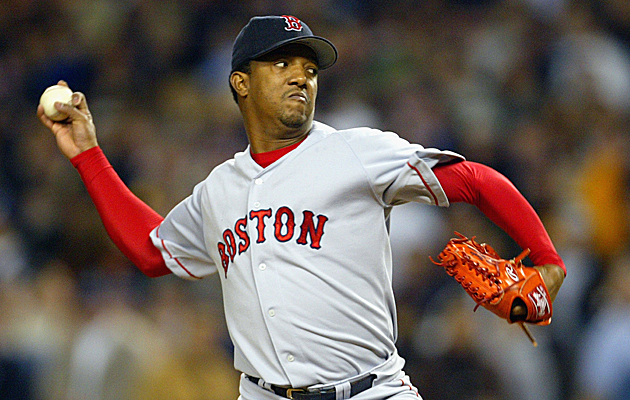
Top 106 Baseball Players: #19 - Pedro Martinez


Pedro Martinez

Pedro Martinez was the best pitcher in baseball for several years around the turn of the millennium, and a few of his seasons rank among the best seasons by a pitcher in history.

Pedro first pitched for the Dodgers in 1992, joining a team where his older brother Ramon was the star pitcher, but the team did not feel that he had the ability to be a starting ace, and he was traded to the Expos after the 1993 season.

He showed steady improvement through his first 3 seasons in Montreal, including a perfect game that he lost in the 10th inning in 1995 then took the league by storm in 1997, when he threw 305 strikeouts with an ERA of 1.90 and a league-leading 13 complete games. He won his first Cy Young that season, becoming the only Expo ever to win the award, and also became the only pitcher under 6 feet tall to ever throw 300 strikeouts in a season.

Rather than lose him to free agency the next year, Montreal traded Pedro to the Red Sox just days after he won the Cy Young, and his 7-year stretch in Boston was legendary. After coming in #2 in the Cy Young voting in his first season in Boston, he took home the award in 1999, when he won the Triple Crown with 23 wins, 313 strikeouts, and a 2.07 ERA. He was just as good in the playoffs, pitching 17 scoreless innings with 23 strikeouts, but they fell to the Yankees in the ALCS.

Between the end of 1999 and the beginning of 2000, he had 10 consecutive games with at least 10 strikeouts, 3 longer than the previous record of 7, which he also owned. He also set the record for consecutive innings with a strikeout, reaching 40 during 1999. He also became the first pitcher ever to start an All-Star game by striking out the side that season.

His very best season came in 2000, when he posted a 1.74 ERA, less than half of the next-lowest ERA, Roger Clemens' 3.70. He also set a record with a WHIP of 0.74 that season, allowing only 128 hits and 32 walks in 217 innings that season, and he was awarded his 3rd Cy Young in 4 years after the season.

A rotator cuff injury in 2001 caused him to miss half of the season, though he was still the best pitcher in the AL. He led the league in ERA and winning percentage in both 2002 and 2003, but was overlooked in the Cy Young voting each time, despite leading the winners in every major category each time.

In 2004 he had the highest ERA in his season up to that point, as it reached 3.90, but he was able to reach the World Series for the first time in his career, where he pitched 7 scoreless innings as Boston swept St. Louis to take home their first championship in decades.

After the title, he left Boston to sign with the Mets, where he had one more solid season, then faded into obscurity as injuries began to take their toll. He did get the opportunity to pitch in one more World Series with Philadelphia in 2009, but recorded a loss in each of his starts.

Martinez was the second-fastest pitcher to reach 3000 strikeouts, trailing only Randy Johnson, and is the only pitcher to retire with more than 3000 strikeouts in fewer than 3000 innings pitched. His career winning percentage of .687 is second to Whitey Ford in the modern era, and his peak was higher than any other modern pitcher. Though his great years ended abruptly, he is still definitely one of the greatest ever to play the game.


Friday, July 13, 2018

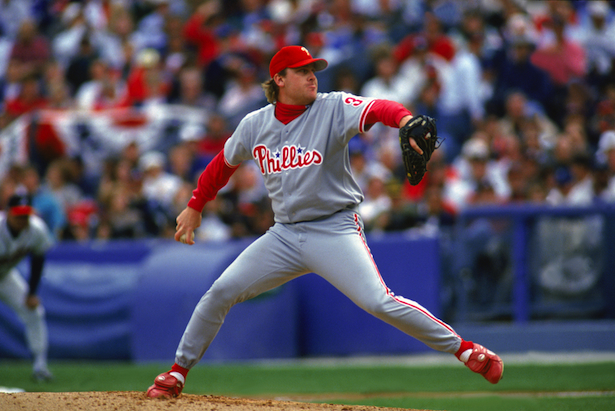
Top 106 Baseball Players: #24 - Curt Schilling


Curt Schilling

Curt Schilling was a longtime pitcher who blossomed into a superstar in his 30's, and had two of the best postseason runs ever by a pitcher, which helped vault him into the upper echelon of all-time players.

Schilling first pitched in the majors for Baltimore in 1988, but it took him until 1990 to get his first win, the only one he would record for the Orioles. He pitched out of the bullpen for the Astros after that, but still was not notable in any way.

He joined the Phillies in 1992, and that is where his career started to improve. He had 14 wins and a 2.35 ERA in that first season, then got his first taste of the postseason in 1993, where he started to earn his reputation as a big-game player. He won the NLCS MVP after posting a 1.69 ERA in two starts while striking out 19 Braves, then pitched a shutout while facing elimination in the World Series, but the Phillies ended up losing anyway.

After a couple of down seasons, he bounced back in a big way in 1997, leading the league with 319 strikeouts, the most he would have in his career, and 133 more than he had ever had before, making it the best regular season of his career.

The next season he threw exactly 300 strikeouts while also leading the league with 15 complete games and pitching more innings than any other pitcher. Although he was having great success, his team wasn't, and he requested a trade to a contender, and he got his wish in 2000, when he was sent to the Arizona Diamondbacks.

His first season in the desert was a memorable one, as he led the league with 22 wins, while posting a 2.98 ERA and striking out 293 batters. The Diamondbacks made the playoffs, where Schilling was spectacular, with a 4-0 record, 1.12 ERA, and 56 strikeouts, including 26 strikeouts in 21 innings in the World Series, where he shared the MVP award with Randy Johnson after Arizona upset the 3-time defending champion Yankees.

He was just as great in 2002, with a 23-7 record and 316 strikeouts, which was his third time reaching the 300-strikeout mark. For the second year in a row, he finished as the runner-up in the Cy Young voting to his teammate, Randy Johnson, and he pitched great in the playoffs, striking out 7 in 7 innings and giving up only one run, but Arizona fell to Saint Louis in the NLDS.

After a down year, he was traded to the Red Sox, where he led the league with 21 wins in his first season, and finished as the Cy Young runner-up for the third time in 4 seasons. He pitched through an ankle injury in the playoffs, and became famous for his bloody sock in game 6 of the ALCS, and the Red Sox won their first World Series in decades.

Injuries slowed him over his final 3 seasons, but he again played well in the 2007 playoffs, going 3-0 in 4 starts as the Red Sox won another title. His World Series win made him the second pitcher over 40 in history to start and win a World Series game. After missing the following season with a shoulder injury, he retired before the 2009 season began.

Schilling is one of the best pitchers since the Cy Young award began who did not receive the honor. He finished his career with 3116 strikeouts, #15 all time. While his time as a superstar was relatively short compared to others around him on this list, he had 4 extremely great seasons, and 2 of the best playoff runs in history, which earned him this spot on the list of the all-time greats.


Wednesday, July 4, 2018

Top 106 Baseball Players: #31 - Grover Cleveland Alexander


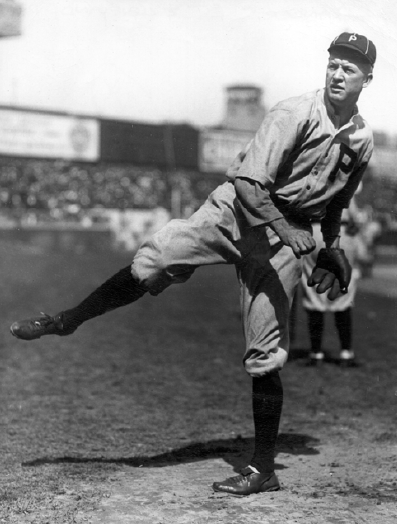
Grover Cleveland Alexander

Grover Cleveland Alexander was one of the greatest pitchers of the dead-ball era, then continued to have success for a decade afterward.

Alexander joined the Philadelphia Phillies in 1911, and was immediately a superstar, leading the league as a rookie with 28 wins (still the rookie record), 31 complete games, 7 shutouts, and 367 innings pitched, and he finished #3 in the MVP voting. He pitched well over the next two seasons, but then he became truly dominant.

In 1914 he led the league in wins and strikeouts, then had one of the best seasons in history in 1915, winning the Triple Crown with 31 wins, a 1.22 ERA and 241 strikeouts, to go along with 36 complete games and 12 shutouts. He repeated the feat in 1916 and 1917 as well, winning over 30 games and posting an ERA below 2.00 and basically beating down everyone in his path.

He led the Phillies to the World Series in 1915, and won Game 1 against the Red Sox, but they lost the next 4, and the Phillies would not win another World Series game until 1980. The Phillies traded him to the Cubs following his 3rd Triple Crown, fearful that he would be drafted into the military for World War I and be lost.

Their fears turned out to be partially founded, as he was drafted after pitching just 3 games for the Cubs, but he survived the war, though exposure to mustard gas did cause some hearing loss and epileptic seizures. When he came back, he was still the best pitcher in the league, winning his 4th Triple Crown in 1920.

After years of dealing with his epilepsy and his alcoholism that resulted from it, the Cubs decided to trade him to the Cardinals in 1926. The Cardinals won the pennant that year, and Alexander pitched complete game victories in games 2 and 6 against the Yankees, followed by a save to finish off game 7 and take the championship. At age 39, he had pitched over 20 innings with a 1.33 ERA and 17 strikeouts against one of the greatest teams in history, still one of the 5 greatest World Series performances in history.

Alexander finished his career with 373 wins, tied for the most in NL history and #3 among all pitchers. He also hold the NL record with 90 shutouts, and is only behind Walter Johnson on the all-time list. He is the only pitcher to win the Triple Crown 4 times, had one of the greatest World Series performances of all time at the tail end of his career, and is obviously one of the greatest to ever play the game.


Monday, July 2, 2018

Top 106 Baseball Players: #33 - Jimmie Foxx


Jimmie Foxx

Jimmie Foxx was one of the greatest power hitters in history, second only to Babe Ruth during his time, and his numbers still stand up against the best among today's players.

Foxx dropped out of high school to play minor league baseball when he was 16, and was signed by the Philadelphia Athletics when he was 17, playing sparingly with the team throughout the rest of his teenage years.

He had his breakout year in 1929, at the age of 21, when he hit .354 with 123 runs, 118 RBI, and 103 walks, and he only got better from there. The A's made the World Series that year, and Foxx was the biggest reason for their victory, batting .350 with 2 home runs and 5 RBI as they took down the Cubs in 5 games.

The A's returned to the World Series in each of the next two seasons as well, winning in 1930 but falling to the Cardinals in 1931. Foxx hit well over .300 in each of those Series as well, leaving his career World Series average at .344.

1932 was a monster season for Foxx, as he led the league with 151 hits, 169 RBI, and 58 home runs, the first major challenge to Babe Ruth's record of 60. Foxx actually hit 60 home runs that season, but two didn't count because the games were later called because of rain. He also hit .364 that season, just 3 points short of winning the Triple Crown, though he did still win the MVP easily.

He did win the Triple Crown the next season, though his numbers were all slightly lower than the previous season's. He had 48 home runs, 163 RBI, and a .356 average, surpassed 200 hits for the second year in a row, and won his second straight MVP.

He continued to produce at a high level for Philadelphia for two more years, but financial problems forced the team to get rid of most of its best players in the early 1930's, and Foxx was eventually sold to the Boston Red Sox, where he didn't miss a beat, batting .338 with 143 RBI in his first season up north.

He had his very best season with Boston in 1938, when he hit 50 homers and led the league with 175 RBI, 119 walks, and a .349 average. He also led the league in slugging and on-base percentage that year, and took home his 3rd MVP, which was the record until Barry Bonds broke it in 2001.

He nearly won another MVP the next year, finishing as the runner-up after leading the league in homers for the 4th time and batting .360. In 1940, he became the second player to reach 500 home runs, and he remained the youngest to reach that milestone until Alex Rodriguez beat him in 2007. It was also his 12th straight season with at least 30 homers, which was the record until Barry Bonds broke it in 2004.

Foxx is still on the all-time leaderboard in many categories, including the top 25 for home runs, total bases, runs scored, and walks, and is #10 in RBI's. He was the first to truly threaten Babe Ruth's home run record, and the records he held have only been broken by players who used steroids, making Foxx one of the greatest baseball players of all time.


Thursday, June 28, 2018

Top 106 Baseball Players: #37 - Joe Morgan


Joe Morgan

Joe Morgan was one of the shorter modern baseball players, but he was the driving force behind the Big Red Machine because he did all of the little things very well.

Morgan debuted with the Houston Colt .45's in 1963, playing in only a few games over his first couple of seasons before the team became the Astros, and he became the starting second baseman. During that first full season, he led the league with 97 walks, which would become one of his trademarks, and came in #2 in the Rookie of the Year race.

He played with Houston through 1971, becoming a little better each year, and in his final 3 seasons with the Astros he stole at least 40 bases and drew at least 80 walks. The team did not feel like he was a powerful enough hitter, so he was traded to Cincinnati in a blockbuster deal that turned out much better for the Reds than for the Astros.

Immediately upon arriving in Cincinnati, Morgan became the best batter in baseball. He led the league in runs, walks, and on-base percentage in his first season there, and over his first 5 seasons with the Reds remained the best position player in baseball, scoring at least 100 runs, stealing at least 50 bases, and knocking in at least 110 runs in each of those seasons, while leading the league in on-base percentage in 4 of those seasons.

He received many MVP votes in those first 3 seasons, and finally broke through in 1975 and 1976, winning the award back-to-back when he raised his batting average over .320 for the first two times. The Reds also made the playoffs in 4 of those season, reaching 3 World Series, with Morgan playing well in all 3. In 1972, he walked 6 times and stole 2 bases in a 7-game loss to Oakland, and between 1975 and 1976, he walked a total of 15 times in 17 games as the Reds won back-to-back titles.

He was still the best player in the NL in 1977, marking 6 straight seasons at the top, but didn't even receive an MVP vote, probably because his numbers had dipped slightly from his dominant MVP seasons. After a couple more All-Star level seasons in Cincinnati, he left town as a free agent, and he spent the next 5 years going from Houston to San Francisco to Philadelphia to Oakland, making good contributions at all of those stops.

Morgan today stands at #11 in stolen bases, despite never leading the league in that category, and is #5 on the all-time walks list. He won two MVP awards, and probably should have won several more, and was also an important part of 2 World Series champions and two other World Series teams. He may not have been a big man, but he was a strong performer, and one of the greatest baseball players of all time.


Wednesday, June 27, 2018

Top 106 Baseball Players: #38 - Steve Carlton


Steve Carlton

Steve Carlton was a great pitcher for well over a decade with the Philadelphia Phillies, and a former holder of many of the most prestigious records for pitchers.

Carlton first pitched for the Saint Louis Cardinals in 1965, and he had a couple of pretty good seasons with the Cardinals, but it was after he left that he became a real superstar. He pitched in the World Series for Saint Louis in 1967 and 1968, being tagged with a loss in the 1967 Series after pitching 6 innings and giving up only one unearned run, but he did earn a championship ring with that team.

The first record that Carlton broke in his career was the single-game strikeout record, which he took in 1969 when he struck out 19 New York Mets in one game, though he lost that game 4-3. That record has been exceeded on a few occasions, but it is one of the big ones for pitchers.

After winning 20 games for the first time in 1971, he demanded a higher salary, and instead was traded to the Phillies. During his first season with the team, he had one of the greatest pitching seasons ever. He won the pitching Triple Crown with 27 wins, a 1.97 ERA, and 310 strikeouts, and was also given the Cy Young unanimously. He also pitched 30 complete games that season, and set a record for winning the largest percentage of his team's games in history, winning 27 of his teams 59 wins that season, good for 46% of their total wins.

His 1973 season was a complete reversal, as he led the league in runs allowed and losses. He won the Cy Young again in 1977 after leading the league with 23 wins, and another in 1980. That season he was on top again with 24 wins and 286 strikeouts, and he also pitched 304 innings, a number that has not been reached since.

In that year's postseason, he went 3-0 with 23 strikeouts and won the final game of the World Series to earn his second championship, achieving the rare feat of being the best pitcher in both the regular season and the postseason in the same year.

He won his 4th Cy Young award in 1982 after leading the league in wins, complete games, shutouts, innings pitched, and strikeouts, and he became the first pitcher ever to reach 4. That mark has since been tied by Greg Maddux and exceeded by Roger Clemens and Randy Johnson. He also held the all-time strikeout record on several occasions from 1983 to 1984, when he and Nolan Ryan both surpassed Walter Johnson's record within weeks of each other, then kept passing the record back and forth for about a year, with Ryan eventually pulling away from Carlton.

Carlton was once the record holder for single-game strikeouts, career strikeouts, and Cy Young awards, though he no longer holds any of them. He struck out 4136 batters in his career, which was the most by a lefty at the time, since surpassed by Randy Johnson. He was twice a World Series champion, and was the best pitcher on one of those teams, and definitely one of the greatest players of all time.


Tuesday, June 12, 2018

Top 106 Baseball Players: #52* - Pete Rose


Pete Rose

Pete Rose is the only player in this countdown with an asterisk that is not related to performance-enhancing drugs, but his gambling broke the rules and may have compromised the integrity of the game, which is a shame, because he was incredibly talented.

Rose first joined the Reds in 1963, and before he even played a game he had already earned the nickname "Charlie Hustle", which was given to him in spring training by an opponent who was making fun of the way he sprinted to first base after being walked. The extra hustle paid off with the Rookie of the Year award.

By his third season, he was leading the league in hits, something he would do 7 times in his career. He led the league in batting average back-to-back in 1968 and 1969, then in the 1970's became one of the stars of the Big Red Machine, which reached 4 World Series, winning twice. He was named MVP of the 1975 World Series after batting .370 in their 7-game win over the Red Sox.

Rose was also named the MVP of the regular season in 1973, when he led all players with 230 hits and a .338 average. During the next three seasons, he led the league in both runs scored and doubles each year. He also rarely missed a game, and led the league in plate appearances 6 times during the 1970's.

Rose joined the 3000 hit club in 1978, then started the first major challenge to Joe DiMaggio's hit streak a few weeks later. The streak nearly ended at 31 when Rose walked in the 8th inning, but the Reds batted through the entire lineup in the 9th, which gave rose one more chance at the plate, and he came through with a bunt single. The streak eventually reached 44, which tied the NL record and no player has reached that number since.

After 15 years with the Reds, Rose signed with the Phillies as a free agent, and that move enabled him to win a 3rd World Series ring in 1980. After his worst professional season in 1983, he was released by Philadelphia and signed by the Expos, where he recorded his 4000th hit against the Phillies, becoming the second player ever to reach that milestone, after Ty Cobb.

A few months later, he was traded back to the Reds, where he was installed as player-manager, a position he held for two and a half years, before being taken off the roster, though he retained the managerial job. It was a few years after his retirement as a player that the allegations of gambling came out, and in 1989 he was banned from baseball for life.

The betting began while he was still playing, at least as early as 1985, and for years he denied the allegations, though he accepted the lifetime ban. A year after the ban, the Hall of Fame voted to exclude people on the permanently ineligible list from the yearly ballot, which Rose did not think was going to be included in his ban. After years of denials, he finally admitted in 2004 that he had bet on games, including his own, though he denied ever betting against his team. Whatever the full truth is, he put the game in danger with his actions. Even if he didn't bet against his team, he could have been coerced into losing a game he didn't bet on in order to make up a portion of his debt.

Even with all that, the fact remains that Rose was one of the greatest players of all time. He is famously the all-time hit leader, but he is also the all-time leader in games played, plate appearances, at-bats, and singles, and he is #2 in doubles and #6 in runs. He was an MVP and a World Series MVP and a 7-time batting champ, and belongs on the list of the greatest players of all time.


Thursday, June 7, 2018

Top 106 Baseball Players: #56 - Tim Keefe


Tim Keefe

Many people have not heard of Tim Keefe, and that is probably because he retired 125 years ago, but he was an excellent pitcher back in the formative years of pro baseball, and was around for two changes in the placement of the mound.

Keefe debuted for the Troy Trojans in 1880, the final year that the mound was 45 feet from the plate, and he had an ERA of 0.86, still the best in baseball history. Somehow, even with his historic ERA, he only had a 6-6 record that season.

The Trojans folded 2 years later, and he moved to the New York Metropolitans, where he had one of the best seasons in history, pitching 68 games, all of them complete, and striking out 359 batters in 619 innings of work. On Independence Day, he pitched both games of a doubleheader, allowing only 3 total hits and winning both games.

After 2 years with the Metropolitans, the owner transferred him to the New York Giants, another team he owned in the rival National League. While with the Giants, he led the league in ERA and wins twice each, and strikeouts, complete games, and strikeouts once each. In 1888 he went 35-12 with a 1.74 ERA, 335 strikeouts, and 8 shutouts, all best in the league, which earned him the Triple Crown.

He was released midway through the 1891 season after a 5-11 start to the season, and joined the Phillies for the final few years of his career. It was during his final season of 1893 that the mound from 50 feet to 60.5 feet, which is the current distance.

125 years after his retirement, Keefe is still #10 all time on the pitching wins list with 342, and #3 in complete games with 554. He led the league in every major category at some point, and won the Triple Crown in 1888. He may have pitched in a very different era, but the way he dominated the league for seasons at a time have earned him a spot among the best players ever.

Tuesday, May 29, 2018

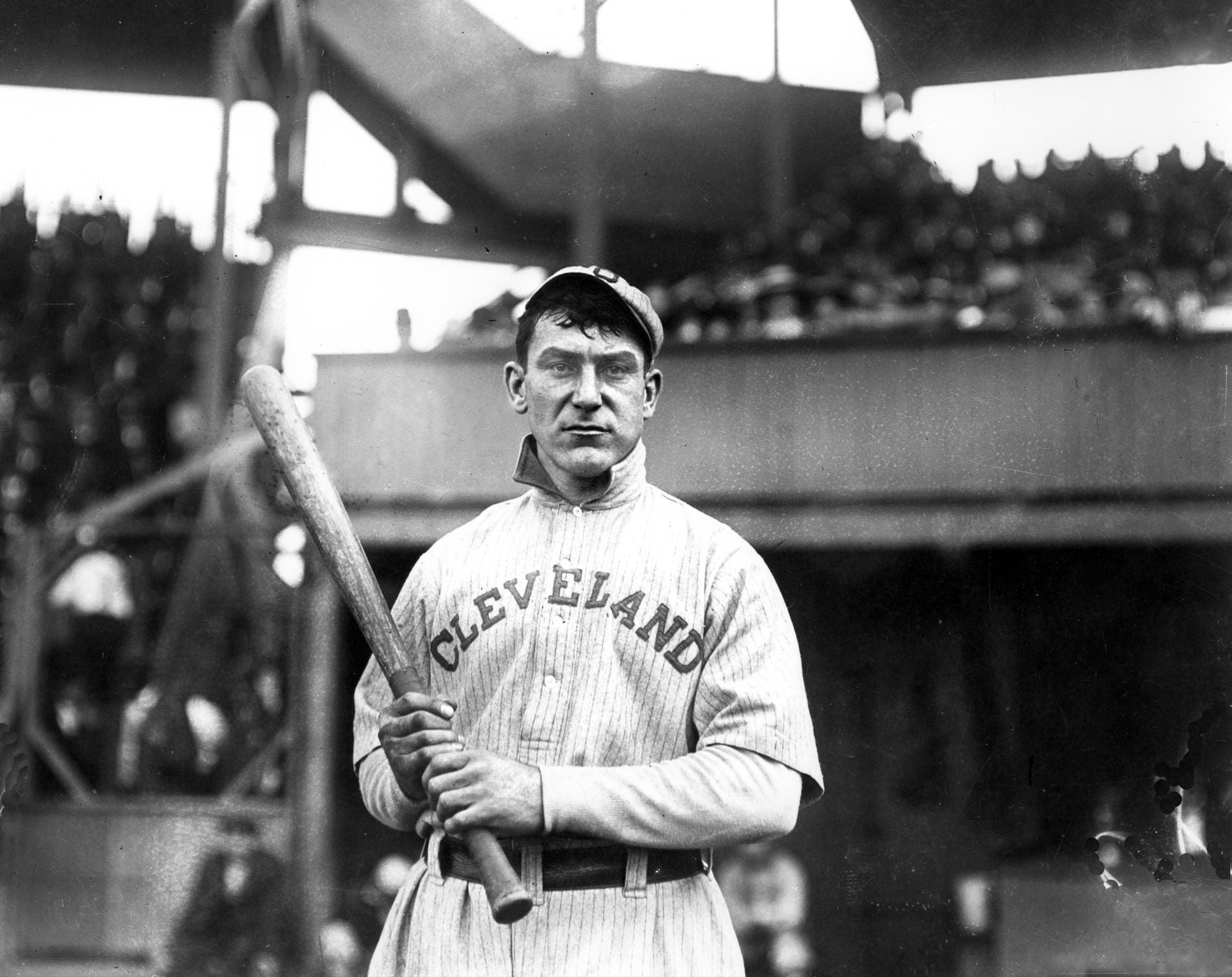
Top 106 Baseball Players: #65 - Nap Lajoie


Nap Lajoie

Nap Lajoie was among the perennial batting leaders in the early part of the 20th century who had a career-long rivalry with Ty Cobb, and put together one of the best batting seasons ever seen.

Lajoie began his career in 1896 with the Philadelphia Phillies, and he had several solid seasons, even leading the league in doubles and RBI in 1898. After the 1900 season, the AL was formed, and the teams were offering larger contracts, so Lajoie jumped to the crosstown Athletics for a much larger payday, and the Phillies sued.

Lajoie had one of the greatest seasons in history in 1901 for the A's. He won the Triple Crown with 14 home runs, 125 RBI, and a .426 batting average, which is still the AL record. Not only did he win the Triple Crown, he also led the league with 145 runs scored, 232 hits, and 48 doubles, and would have been an easy choice for MVP if the award existed at the time.

Just as the following season started, the Pennsylvania Supreme Court ruled that his contract was void, and that the only team he could play for was the Phillies. It was determined that the ruling was only valid in Pennsylvania, so Lajoie was traded to the Cleveland Bronchos, who immediately changed their nickname to the Naps in his honor. For the next two years, Lajoie was forced to travel separately from the rest of his team to avoid entering Pennsylvania due to a subpoena related to the case, and he was unable to play any games within the state.

Lajoie led the league in batting average during his first 3 seasons in Cleveland, making it 4 in a row overall, and he again led the league in hits, doubles, and RBI in 1904. The streak came to an end in 1905, when he missed more than half the season due to blood poisoning from a spike injury and a broken ankle not long after his return.

Lajoie continued his stellar play for Cleveland for almost another decade, and even managed to win one more batting title in 1910 with a .384 average, the only break in Ty Cobb's dominance between 1907 and 1915. Lajoie hit over .300 in each of his first 12 seasons and 17 of his first 18 seasons, which is incredible for someone playing in the dead ball era.

When Lajoie retired, he was #2 all-time in hits, and is currently #14 on the list. His career batting average of .338 is #19 all time, and he is seventh among all players in doubles. He never played on a team that reached the postseason, which didn't even exist for 8 seasons early in his career, but that doesn't diminish his accomplishments on the field, especially his magical 1901 season, and he is definitely worthy of being remembered with the best players of all time.

Monday, May 7, 2018

Top 106 Baseball Players: #84 - Chief Bender


Chief Bender

Chief Bender was a great pitcher from the early days of baseball, who was given his nickname due to his membership in the Ojibwe tribe of Minnesota.

Bender was discovered while pitching for a semi-pro team in Pennsylvania after he beat the Chicago Cubs in an exhibition game in 1902, and in 1903 he was a full-time Major League pitcher with the Philadelphia Athletics as a 19-year-old rookie.

Over his first 8 seasons, Bender lowered his ERA every single season, starting with his rookie ERA of 3.07 and continuing until reaching a low of 1.58 in 1910, and that was the season when he was finally able to lead the A's to the AL pennant and the World Series.

He had pitched in the World Series early in his career, and had done well, pitching 2 complete games and giving up only 2 runs, but one of those games was a 3-0 shutout win, while the other was a 2-0 shutout loss to Christy Mathewson and the Giants. This time he was dominant in the Series, pitching a 3-hitter with 8 strikeouts in the opener, with another complete game later in the Series, and earned his first World Series title.

The next year he was back for more, and this time they faced Mathewson and the Giants in the World Series again, and though Mathewson outdueled him in Game 1, Bender earned the win in Games 4 and 6, finishing off the Series with a 1.04 ERA, 20 strikeouts, and 3 complete games, which tied Mathewson's record for the World Series.

After missing a chunk of the next season overcoming problems with alcohol abuse, he returned in 1913 at close to his previous level, and it was enough to get the A's another World Series title, their 3rd in 4 years, though he was not as dominant this time, giving up 8 earned runs in 2 complete games, nearly as many as he had given up in 7 games in his previous 3 World Series seasons.

At the end of the next season, he was offered a much larger contract by the Baltimore Terrapins of the new Federal League, but he struggled, winning only 4 of his 26 starts, and he said openly that he regretted leaving Philadelphia, so he returned to the city the next season as a member of the Phillies, where he wrapped up his career with a couple of mediocre seasons.

While Bender was a very good regular season pitcher, he excelled in the World Series, where he pitched 10 games over 5 different seasons, with 9 complete games and a 2.44 ERA and 3 World Series rings as a result of his play. He was largely overshadowed by Christy Mathewson during his career, but managed to defeat him in 2 of the 3 seasons in which they met in the World Series, and his great play when it mattered most is what earned him this spot on the list of the all-time greats.


Thursday, April 26, 2018

Top 106 Baseball Players: #95 - Billy Hamilton


Billy Hamilton

Billy Hamilton is the name of a current Major League baseball player, but it is also the name of one of the all-time greats, and this ranking belongs to the old-time Hall of Famer. Hamilton was one of the greatest baserunners of all time, as well as an incredible batter.

Hamilton reached the majors in 1888 with the Kansas City Cowboys, and in his first full season he led all players with 111 stolen bases while also batting .301, which would be the lowest average he would have until his final season, and it would be a sign of things to come.

After his second season, the Cowboys folded, so he was sold to the Philadelphia Phillies, where he led the Majors in 5 categories in his second season, with a .340 average, 141 runs, 179 hits, 102 walks, and another 111 steals, and that wasn't even his best season.

In 1894 he set a record that still stands, scoring 198 runs, a number that no one has even approached, with Babe Ruth's 177 in 1921 the next highest. He also stole 100 bases and walked 128 times, both also tops in the league, while batting .403, which was only good for fifth that year, and was only the fourth-best on his own team.

Over the course of his career, he led the league in stolen bases 5 times, and his career total stood at 937 when he retired, a number that wouldn't be matched until Lou Brock stole his final base in 1979. The number has since been adjusted to 914 after reviewing box scores due to different rules on counting steals in the 1800's, but he is still #3 all time, trailing only Brock and Rickey Henderson.

He is also one of 3 players in history to average more than one run scored per game over his career, and his on-base percentage in #4 in history, behind Babe Ruth, Ted Williams, and John McGraw. He was also the first player ever to hit a leadoff and game-ending home run in the same game, something that has happened only 4 times since, and that's even more impressive considering that his biggest season only contained 7 home runs.

While many will try to discount his accomplishments because of the era in which he played, the fact is that Hamilton was a great player for many years, easily the best baserunner of his era, and one of the best ever at getting on base and scoring runs, so he deserves to be included as one of the all-time greats.


Sunday, April 22, 2018

Top 106 Baseball Players: #98 - Dan Brouthers


Dan Brouthers

Dan Brouthers was known as the first great slugger in baseball, and he is one of just a handful of players from the 19th century to make this list, due to having 12 straight seasons of leading the league in at least one major statistical category.

As was the case with most players back then, Brouthers' career was very nomadic. He played for 10 different teams in his 19 seasons, with his longest tenure in one city just 5 years, which ended when the Buffalo Bisons folded following the 1885 season.

That stretch in Buffalo was the best of his career, as he led the league in slugging percentage all 5 years, while also leading in batting average and hits twice, and triples, homers, and RBI's once each. He reached his peak batting average of .374 in 1883, and he never hit below .300 in his career.

After Buffalo folded, he was sold to the Detroit Wolverines, where he led the league in doubles 3 straight years, along with slugging percentage and runs scored twice and home runs once. In 1887 the first "World Series" was played, but it was just an exhibition series between the top 2 teams and wasn't considered to be of any importance, and Brouthers appeared in just one of the 15 games.

Detroit folded after the 1888 season, and he was purchased by the Boston Beaneaters, where he led the league in batting average and times hit by a pitch (14), but he left after the season to form a new league with many other players who had just formed the first-ever baseball players union, of which he had been voted vice president.

The new league lasted just two seasons, and he returned to the NL with the Brooklyn Grooms, where he had his best individual season. He led the league with 197 hits, a .335 average, 124 RBI's, and 282 total bases, and probably would have won the MVP if it existed at that point.

Even more than 100 years later, he is still #8 all time in triples, and his career batting average of .342 ranks ninth among all players. He was the all-time leader in home runs from 1887-1889, a distinction held by only 10 players in history. When the old-timers committee was created for the Hall of Fame, he was in the first class elected by that group, and there is no doubt that it was well deserved.