Showing posts with label Philadelphia Athletics. Show all posts

Wednesday, August 1, 2018

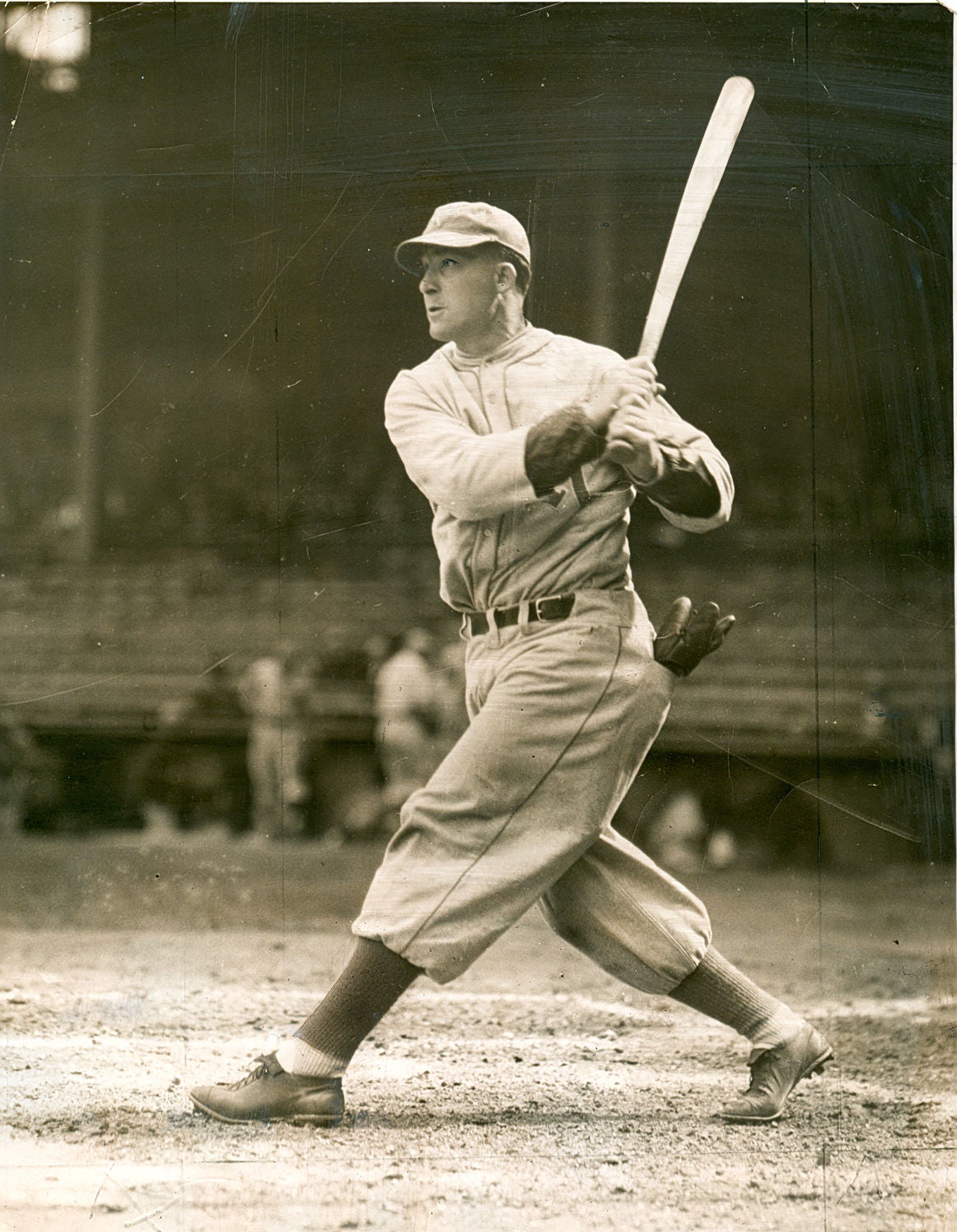
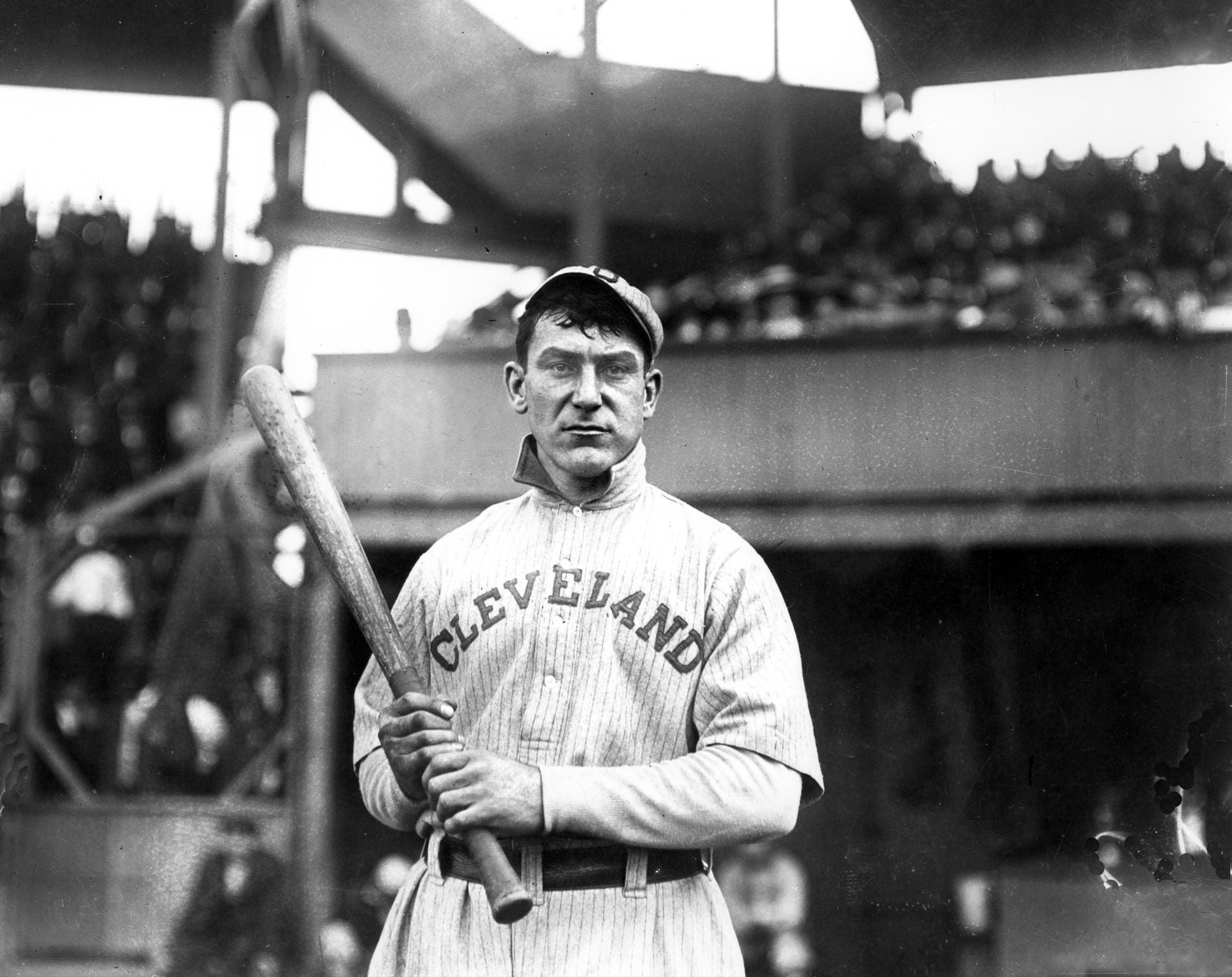
Top 106 Baseball Players: #7 - Ty Cobb


Ty Cobb

Ty Cobb was one of the greatest all-around players in the early days of the game, and held many record that stood for decades, and one big one that still stands.

Cobb played his first season with Detroit in 1905, when he was just 18 years old. He hit only .240 that season, but it would be the only time in a 24 year career that he would hit below .310. In his third season, he became the youngest player to win a batting title, with a .350 average, though that record would later be broken by Al Kaline, who was 12 days younger when he won his first. Cobb also led the league in hits, RBI's, and stolen bases that year.

That was also the first season Cobb would reach the World Series, but he hit only .200 against the Cubs and they lost the series in 5. He would lead them back to the final series in each of the next two seasons, but they lost each time, even though Cobb did play well in the 1908 series, and he never did end up winning a championship.

In 1908, he led the league in the same categories as the year before, but also added doubles and triples to his leading categories. The next year he won his only Triple Crown, when he led the league in home runs for the only time in his career. Interestingly, all 9 home runs he hit that year were inside the park, making him the only home run champ in history who didn't hit one over the fence.

Cobb had his best season in 1911, when he hit .420, which was the record for many years until it was eclipsed by Rogers Hornsby. He also led the league in runs, RBI's, hits, doubles, triples, stolen bases, total bases, and slugging, and fell just 3 homers short of the home run title, which would have given him every major statistical category.

He won 12 batting titles between 1907 and 1919, losing only in 1916, and his 12 batting titles are still an all-time record. His career batting average of .366 is still the highest of all time, and may stand forever. He hit over .350 in 16 of his 24 seasons, and reached .400 3 times, along with those 23 straight seasons over .300.

He was also the all-time hit leader for hits until Pete Rose passed him in 1985, and he was the first member of the 4000 hit club. He was the all-time runs leader until 2001, when Rickey Henderson surpassed him, and he is still #2 in each of those categories. He was the leader in stolen bases until 1977, when Lou Brock moved past him, and he has since fallen to #4 on that list. His record of 54 times stealing home is still the record, along with the 5 times that he stole 2nd, 3rd, and home in succession.

Cobb was also a member of the first group elected to the Baseball Hall of Fame, and was the leading votegetter of the group, which included Babe Ruth, Walter Johnson, Honus Wagner, and Christy Mathewson. His vote total was the highest by any player until Tom Seaver's election, and is still among the 5 highest in history. There is no doubt that Cobb is one of the greatest players ever to play the game.


Friday, July 27, 2018

Top 106 Baseball Players: #12 - Eddie Collins


Eddie Collins

Eddie Collins was one of the greatest hitters of the dead-ball era, then continued to make solid contributions once the live-ball era began.

Collins first played for the Philadelphia Athletics in 1906, but he wasn't a full-time player until 1909. In that first full season, he hit .347 and stole 63 bases, making him one of the top tier of players already when he was just 22.

The next season, he became the first AL player ever to steal 80 bases in a season, leading the league with 81, and led the A's to the World Series, where he hit .429 with 4 stolen bases as Philadelphia beat the Cubs in 5 games.

He guided the A's back to the World Series the next year with a .365 average, and this time they beat the Giants in 6 games, even though Collins hit only .286. In 1912, he tied the record for stolen bases in a game twice within 11 days, swiping 6 bases each on September 11th and 22nd.

After missing the World Series in 1912, he led them back to the title series in 1913, this time beating the Giants in 5 games behind Collins'.421 average, which was lower only than that of Home Run Baker for the series, and he grabbed his 3rd championship in 4 years.

He was named the MVP in 1914 after leading the league in runs for the third year in a row and leading the A's to another pennant, but the A's were upset by the Braves, and it resulted in the owner blowing up the team, selling Collins to the White Sox for $50,000, the highest amount ever at that time, and the first time ever that a reigning MVP had been traded.

He led the league in walks in his first year in Chicago, keeping his reputation as one of the top players in the league, then led the White Sox to the World Series in his third year there, with another win over the Giants punctuating the season, with Collins batting .409 in the World Series.

Two years later, the White Sox returned to the World Series, this time losing as the result of the Black Sox scandal, in which 8 of his teammates were implicated for losing intentionally, with Collins one of the only starters who was not implicated.

He led the league in stolen bases twice late in his career, in 1923 and 1924, the latter of which was his first season as player/manager of the White Sox. After 3 seasons filling both roles in Chicago, he returned to the Athletics in the same position, and led them to two World Series titles in 1929 and 1930, though he only made 12 plate appearances in those 2 seasons combined, and did not play in either World Series.

Collins was known as a small-ball player, who was adept at reaching base and stealing bases. He is the all-time leader in sacrifice bunts, with a lead of more than 100 over the next player on the list. He had over 3300 hits in his career, currently #11 all-time, and is #8 in stolen bases and #17 in runs scored. He was always doing the small things needed to help his team succeed, and he did it so well for so long that he is still one of the best players of all time.


Thursday, July 12, 2018

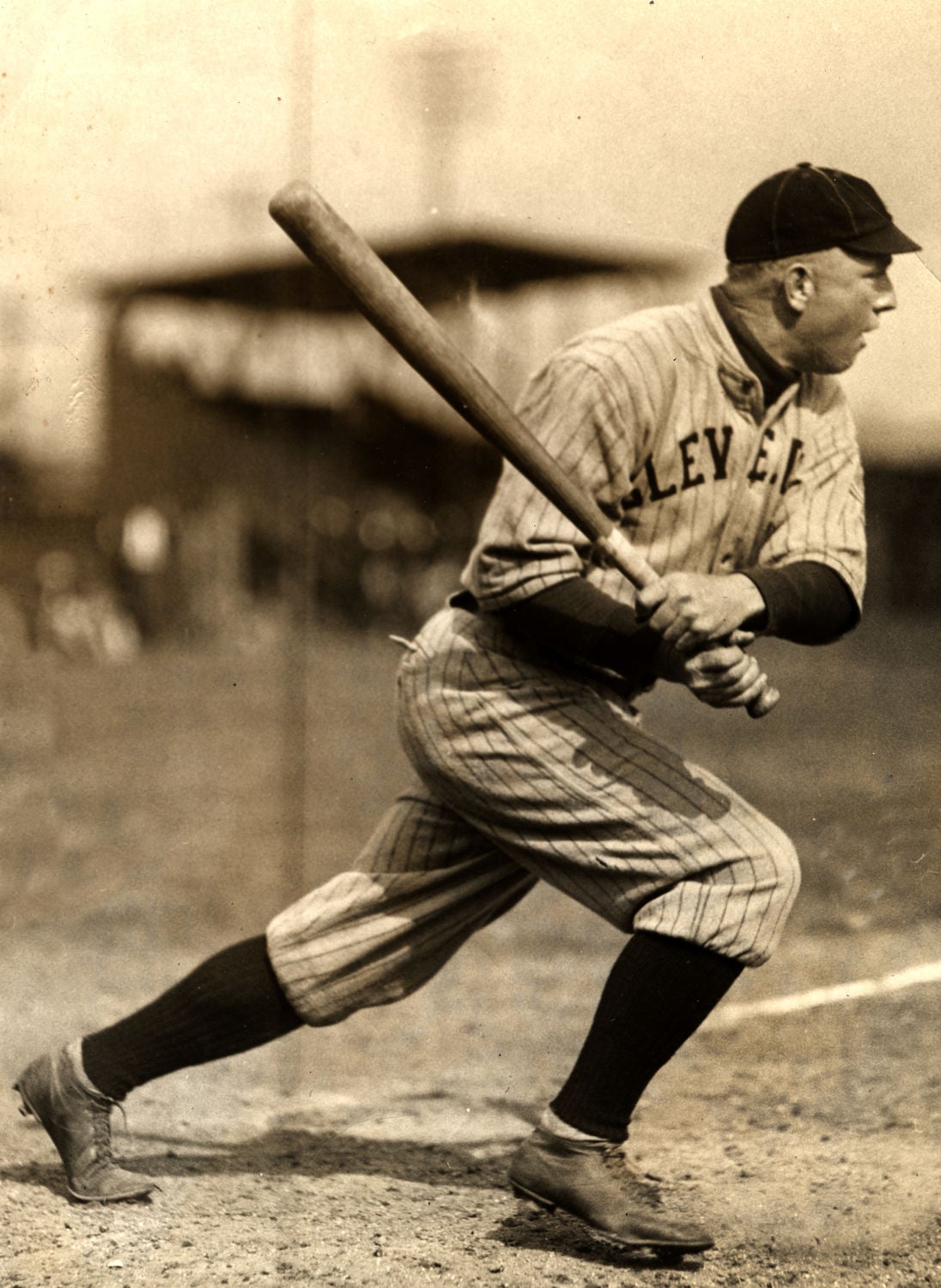
Top 106 Baseball Players: #25 - Tris Speaker


Tris Speaker

Tris Speaker was one of the greatest hitters in history, and one of the first great outfielders in the game of baseball.

Tris began his career with the Boston Americans in 1907, the year before they changed their name to the Red Sox. He did not play much in his first two seasons, but became the starting center fielder in his third season, and that year was the first of 10 in a row where he hit above .300.

He improved steadily until 1912, when he won the MVP after leading the league with 53 doubles and 10 home runs, and he also had 222 hits and a .383 average. His Red Sox won the pennant, and Speaker hit .300 in that World Series, winning his first championship as well.

In 1915 the Red Sox added a young pitcher named Babe Ruth, and the star pair led the Red Sox back to the World Series, though Speaker hit only .322 that season, his worst since 1909. The combination of the two was enough to bring home another title to Boston, but Speaker was asked to take a pay cut after the season due to his low batting average, and after refusing, he was traded to the Indians.

Speaker responded to the trade with his best season yet, leading the league in hits, doubles, batting average, slugging percentage, and on-base percentage. For his first 4 seasons with the Indians, he served unofficially as the team's assistant manager, as he was consulted on all in-game moves. When the manager resigned after misunderstanding one of Speaker's signals, he was made the official manager.

His first full season as player/manager was 1920, and he had his very best season that year. Though he only led the league in his specialty, doubles, he had a batting average of .388, 214 hits, a career-high 137 runs scored, and reached 100 RBI for the first time in his career. He also took the Indians to the World Series, where he hit .320 as the Indians beat the Dodgers in 7 games to claim the title, his third in 3 tries.

He led the league in doubles again in each of the next 3 seasons, and also led the league in RBI in 1923, a career first at age 35. Over the course of his 11 seasons in Cleveland, he batted over .350 7 times during the period that bridged the dead-ball era and the live-ball era.

Speaker led the league in doubles 8 times in his career, and his 792 are still the career record. He is #6 in triples, and is the most recent player to reach 200 for his career in that category. His career batting average of .345 is #6 all-time, which is especially great since he played half of his career in the deal-ball era, and he was solid in all 3 of his World Series appearances, finishing his career with 3 titles, and a place among the greatest baseball players of all time.


Tuesday, July 3, 2018

Top 106 Baseball Players: #32 - Lefty Grove


Lefty Grove

Lefty Grove was one of the greatest left-handed pitchers in history, and he spent almost an entire decade as the best pitcher in baseball, though few remember him today.

Grove did not pitch in the Majors until he was 25, in 1925, because his independent minor league team refused to send him to a Major League team for years. When he finally made his way to the Philadelphia Athletics, he was already ready for success. He led the league in strikeouts as a rookie, the first of 7 straight years that he would lead the league, an incredible way to start a career.

In 1926 he led the league in ERA, and in 1928 in strikeouts, then in 1930 and 1931 put it all together to win 2 straight pitching Triple Crowns. In 1930 he went 28-5 with a 2.54 ERA and 209 strikeouts, plus 9 saves to lead the league. The next year he went 31-4 with a 2.06 ERA and 175 strikeouts, and also led the league with 27 complete games and 4 shutouts, and took home the AL MVP award for his dominance.

He was also a part of the Athletics teams that reached 3 straight World Series, along with Jimmie Foxx, who was behind him in this countdown, and Lefty was a big part of those titles. In the 1929 World Series he pitched exclusively in relief, facing 22 batters, 10 of whom he struck out, and didn't give up a single run to finish as the best pitcher in that Series. The next year he went 2-1 with a 1.42 ERA as the A's repeated as champs, but his ERA "ballooned" to 2.42 the following year as they failed to three-peat.

Even as the most dominant period of his career was ending as he entered his mid-30's, he maintained his great ERA numbers. He was traded to the Red Sox before the 1934 season, and led the league in ERA 4 more times in Boston, in addition to the 5 times he won the title in Philadelphia. Those 9 ERA titles are the most of any pitcher in history.

He won his 300th game late in the 1941 season, and it would turn out to be his final victory, making his career record 300-141, the 8th-best winning percentage in history, and the highest of any member of the 300-win club. He is one of the few pitcher to ever win an MVP, was instrumental in 2 World Series titles, led the league in ERA more often than anyone else ever, and is definitely one of the greatest players of all time.


Monday, July 2, 2018

Top 106 Baseball Players: #33 - Jimmie Foxx


Jimmie Foxx

Jimmie Foxx was one of the greatest power hitters in history, second only to Babe Ruth during his time, and his numbers still stand up against the best among today's players.

Foxx dropped out of high school to play minor league baseball when he was 16, and was signed by the Philadelphia Athletics when he was 17, playing sparingly with the team throughout the rest of his teenage years.

He had his breakout year in 1929, at the age of 21, when he hit .354 with 123 runs, 118 RBI, and 103 walks, and he only got better from there. The A's made the World Series that year, and Foxx was the biggest reason for their victory, batting .350 with 2 home runs and 5 RBI as they took down the Cubs in 5 games.

The A's returned to the World Series in each of the next two seasons as well, winning in 1930 but falling to the Cardinals in 1931. Foxx hit well over .300 in each of those Series as well, leaving his career World Series average at .344.

1932 was a monster season for Foxx, as he led the league with 151 hits, 169 RBI, and 58 home runs, the first major challenge to Babe Ruth's record of 60. Foxx actually hit 60 home runs that season, but two didn't count because the games were later called because of rain. He also hit .364 that season, just 3 points short of winning the Triple Crown, though he did still win the MVP easily.

He did win the Triple Crown the next season, though his numbers were all slightly lower than the previous season's. He had 48 home runs, 163 RBI, and a .356 average, surpassed 200 hits for the second year in a row, and won his second straight MVP.

He continued to produce at a high level for Philadelphia for two more years, but financial problems forced the team to get rid of most of its best players in the early 1930's, and Foxx was eventually sold to the Boston Red Sox, where he didn't miss a beat, batting .338 with 143 RBI in his first season up north.

He had his very best season with Boston in 1938, when he hit 50 homers and led the league with 175 RBI, 119 walks, and a .349 average. He also led the league in slugging and on-base percentage that year, and took home his 3rd MVP, which was the record until Barry Bonds broke it in 2001.

He nearly won another MVP the next year, finishing as the runner-up after leading the league in homers for the 4th time and batting .360. In 1940, he became the second player to reach 500 home runs, and he remained the youngest to reach that milestone until Alex Rodriguez beat him in 2007. It was also his 12th straight season with at least 30 homers, which was the record until Barry Bonds broke it in 2004.

Foxx is still on the all-time leaderboard in many categories, including the top 25 for home runs, total bases, runs scored, and walks, and is #10 in RBI's. He was the first to truly threaten Babe Ruth's home run record, and the records he held have only been broken by players who used steroids, making Foxx one of the greatest baseball players of all time.


Wednesday, June 20, 2018

Top 106 Baseball Players: #44 - Al Simmons


Al Simmons

Al Simmons was one of the greatest all-around hitters in the early years of the live-ball era, and though was overshadowed in his time by bigger stars like Babe Ruth and Lou Gehrig, he was just as good a player for quite a while.

He first played for the Philadelphia Athletics in 1924, and in his second season he had already broken out, leading all players with 253 hits, which is still the Major League record for a right-handed hitter. He also hit .387 that season, and led all players with 392 total bases, which ended with him finishing as the MVP runner-up.

For the next 6 years, he never batted below .340, and he won the batting title in 1930 and 1931, with averages of .381 and .390. He also led the league with 157 RBI in 1929 and 152 runs in 1930. From 1929 to 1933 he recorded at least 200 hits in each season, and he also surpassed 30 home runs 3 times over that span.

Simmons was one of the top players on three straight World Series teams from 1929 to 1931, hitting 2 home runs in each season's championship round, and batting at least .300 in each as well. The A's won the first two times they reached the Series, with Simmons as the best batter in the 1930 Series, at .364, but they fell to the Cardinals in 7 games in 1931.

After the 1932 season, the Athletics blew up their roster, and Simmons was sold to the White Sox, where he had two more very good years, batting at least .330 in both seasons with at least 190 hits. In 1935 his average dropped below .300 for the first time in his career.

Following that down year, he was sold to the Tigers, where he had his final star-level season, batting .327 with 112 RBI and 186 hits. After that, he bounced around several teams, switching uniforms 6 times over his final 7 seasons, all while his production slowly declined.

Simmons was a true superstar during his time with the Athletics, batting at least .340 8 times, and over .380 4 times, and he reached 200 hits 6 times, with 4 more seasons of at least 180. He was great in each of his first 3 World Series appearances, and earned two championship rings as a result, and though many do not remember his name today, he is definitely worthy of being remembered as one of the top 50 players of all time.

Tuesday, May 29, 2018

Top 106 Baseball Players: #65 - Nap Lajoie


Nap Lajoie

Nap Lajoie was among the perennial batting leaders in the early part of the 20th century who had a career-long rivalry with Ty Cobb, and put together one of the best batting seasons ever seen.

Lajoie began his career in 1896 with the Philadelphia Phillies, and he had several solid seasons, even leading the league in doubles and RBI in 1898. After the 1900 season, the AL was formed, and the teams were offering larger contracts, so Lajoie jumped to the crosstown Athletics for a much larger payday, and the Phillies sued.

Lajoie had one of the greatest seasons in history in 1901 for the A's. He won the Triple Crown with 14 home runs, 125 RBI, and a .426 batting average, which is still the AL record. Not only did he win the Triple Crown, he also led the league with 145 runs scored, 232 hits, and 48 doubles, and would have been an easy choice for MVP if the award existed at the time.

Just as the following season started, the Pennsylvania Supreme Court ruled that his contract was void, and that the only team he could play for was the Phillies. It was determined that the ruling was only valid in Pennsylvania, so Lajoie was traded to the Cleveland Bronchos, who immediately changed their nickname to the Naps in his honor. For the next two years, Lajoie was forced to travel separately from the rest of his team to avoid entering Pennsylvania due to a subpoena related to the case, and he was unable to play any games within the state.

Lajoie led the league in batting average during his first 3 seasons in Cleveland, making it 4 in a row overall, and he again led the league in hits, doubles, and RBI in 1904. The streak came to an end in 1905, when he missed more than half the season due to blood poisoning from a spike injury and a broken ankle not long after his return.

Lajoie continued his stellar play for Cleveland for almost another decade, and even managed to win one more batting title in 1910 with a .384 average, the only break in Ty Cobb's dominance between 1907 and 1915. Lajoie hit over .300 in each of his first 12 seasons and 17 of his first 18 seasons, which is incredible for someone playing in the dead ball era.

When Lajoie retired, he was #2 all-time in hits, and is currently #14 on the list. His career batting average of .338 is #19 all time, and he is seventh among all players in doubles. He never played on a team that reached the postseason, which didn't even exist for 8 seasons early in his career, but that doesn't diminish his accomplishments on the field, especially his magical 1901 season, and he is definitely worthy of being remembered with the best players of all time.

Friday, May 25, 2018

Top 106 Baseball Players: #69 - Cap Anson


Cap Anson

Cap Anson was the first great professional baseball player, with a career that spanned 27 seasons from 1871 to 1897, and was the first player ever to reach 3000 hits.

His career began with the Rockford Forest Citys in 1871 in the National Association, which is where he played his first 5 seasons, one in Rockford and 4 in Philadelphia with the Athletics. Many historians don't count these seasons as part of Major League Baseball, which is why there are differing opinions on the number of hits he had.

He joined the Chicago White Stockings (later to become the Cubs) in 1876, and he remained with the club for the remainder of his career. He earned his nickname Cap in 1879 when he was named captain and manager of the team. The team's nickname changed in 1890 after Anson sold all of his older players and brought in newer, younger blood, called "Colts" by the media, and the name stuck.

Anson was a machine throughout the 1880's, leading the league in RBI's 7 times during the decade, and he led the team to 5 league pennants as well. He is also credited with inventing the hit and run play, pitching rotations, and the third base coach, as well as racial segregation in professional baseball, unfortunately.

After 22 years in Chicago, the team owner decided that it was time to go in a different direction, but couldn't convince Anson to retire, so he was fired, and the media once again renamed the franchise, this time the Orphans, because they had lost their Captain.

If his time in the National Association is included, he finished with 3435 hits. Without, that number drops to 3081. Either way, he reached 3000 hits before any other player, and is number 7 all-time if they are all included. He is also #9 in runs scored and #4 in RBI's, a category in which he led the league 8 times total during his career, and he had a career batting average of .334, also in the top 25 all time.

While the time period in which he played was very different from today's game, there is no doubt that Anson was one of the great innovators that made baseball what it is today. While some of his ideas were terrible, particularly banning black players, many of his ideas are still in use today, and he was a very good player and manager for a very long time, and deserves a spot on the list of the all-time greats.


Thursday, May 24, 2018

Top 106 Baseball Players: #70 - Home Run Baker


Home Run Baker

Frank Baker was known by his given name for the first few years of his career, before earning his nickname due to his exploits in the 1911 World Series, and the nickname stuck for the rest of his career.

Baker joined the Philadelphia Athletics late in the 1908 season, and in his first full season in 1909, he led the league with 19 triples. Through 2 full seasons in the Majors, he had hit a total of 6 home runs, which didn't seem to foreshadow his future nickname.

In 1911 he led the league with 11 homers, a huge total for that time, but it was the World Series that year that earned him his nickname. He had hit .409 in the previous year's World Series win, but this time he hit game-winning home runs in games 2 and 3, off Rube Marquard and Christy Mathewson. There was a 6-day break after Game 3 due to rain, and the newspapers spent days talking about his heroics and gave him the new moniker.

The next 2 years he led the league in both home runs and RBI's, and in 1913 he led the A's to their 3rd championship in 4 years by batting .450 with 7 RBI's in 5 games against the New York Giants. In his 3 World Series championship seasons, he batted at least .375 with an average of an RBI in every game.

He led the league in home runs for the 4th straight season in 1914, and the A's returned to the World Series again as heavy favorites, but were swept by the Boston Braves, and the manager decided to dismantle his team. Baker was traded to the Yankees, but he did not want to play so far from his home in Maryland, so he refused to report in 1915.

After a season playing minor league ball close to home, he decided to go to New York, and he played 4 solid seasons for the Yankees, but not quite up to his previous standard. He retired before the 1920 to take care of his wife and daughters, who were sick with scarlet fever, but after she passed away and his children recovered, he returned to the team for 2 more seasons.

He was still a decent player in his final 2 seasons, and he had two more chances to play in the World Series, but they lost both times, and Baker only recorded 2 total hits in 5 games played, so he retired for the final time in 1922.

While Baker's career total of 96 home runs seems tiny by today's standards, especially considering his name, he was the premier power hitter of his time, and the main offensive reason for 3 World Series titles. His career was relatively short, especially with 2 missing seasons in the middle, but he was so good during his prime, and especially in the postseason, that he has to be part of the list of all-time greats.


Tuesday, May 22, 2018

Top 106 Baseball Players: #71 - Eddie Plank


Eddie Plank

Eddie Plank was the first great left-handed pitcher in baseball, and still holds some records for lefties, and he was one of the most consistent pitchers in baseball for 16 years.

Eddie didn't even play baseball until after high school, when the local college coach asked him to try out for the team, even though he didn't attend school there. He jumped from there straight to the Philadelphia Athletics of the American League, where he was immediately a solid starter, pitching 28 complete games with a 3.31 ERA, which would be the highest ERA of his career.

He led the league in several categories during his career, including games started twice, shutouts twice, complete games and saves once each, and also win percentage once. He was never a strikeout or ERA leader, but he was among the top 10 in at least one of those nearly every season.

The A's reached the World Series 5 times during his time with the team, and Plank was always at his best in the postseason. He missed the 1910 series due to a sore arm, but in the other 4 seasons, he had an ERA of only 1.32, more than a run lower than his regular season average of 2.35.

Unfortunately, he often faced the other teams' best pitchers in those games, so he finished with a postseason record of 2-5, despite giving up only 11 runs over 54 innings. In his first World Series, in 1905, his team did not score a single earned run in the entire series, but they were able to get revenge on the Giants in both 1911 and 1913, the years in which he was able to outduel Christy Mathewson once each.

After the A's lost the 1914 World Series, the team was dismantled, and Plank left to join the Saint Louis Terriers, where he won 21 games and had an ERA of 2.08. When the team folded at the end of the season, he joined the crosstown Browns, where he pitched his final 2 seasons before deciding to retire at age 41.

After his retirement, the Yankees still had interest in him, so they traded 5 players and cash to the Browns for Plank and Del Pratt, but Plank refused to report, reiterating that he was done. He was elected to the Hall of Fame in 1946, 20 years after he died of a stroke.

When he retired, he was the all-time leader among left-handed pitchers in wins, which is now #3 among all lefties, but he is still the all-time lefty leader in complete games and shutouts, 100 years after his retirement. He won two World Series titles while facing off with his opponents' best pitcher, and though he wasn't flashy, he was one of the top pitchers in the game for 16 years, and is one of the all-time greats.

Monday, May 7, 2018

Top 106 Baseball Players: #84 - Chief Bender


Chief Bender

Chief Bender was a great pitcher from the early days of baseball, who was given his nickname due to his membership in the Ojibwe tribe of Minnesota.

Bender was discovered while pitching for a semi-pro team in Pennsylvania after he beat the Chicago Cubs in an exhibition game in 1902, and in 1903 he was a full-time Major League pitcher with the Philadelphia Athletics as a 19-year-old rookie.

Over his first 8 seasons, Bender lowered his ERA every single season, starting with his rookie ERA of 3.07 and continuing until reaching a low of 1.58 in 1910, and that was the season when he was finally able to lead the A's to the AL pennant and the World Series.

He had pitched in the World Series early in his career, and had done well, pitching 2 complete games and giving up only 2 runs, but one of those games was a 3-0 shutout win, while the other was a 2-0 shutout loss to Christy Mathewson and the Giants. This time he was dominant in the Series, pitching a 3-hitter with 8 strikeouts in the opener, with another complete game later in the Series, and earned his first World Series title.

The next year he was back for more, and this time they faced Mathewson and the Giants in the World Series again, and though Mathewson outdueled him in Game 1, Bender earned the win in Games 4 and 6, finishing off the Series with a 1.04 ERA, 20 strikeouts, and 3 complete games, which tied Mathewson's record for the World Series.

After missing a chunk of the next season overcoming problems with alcohol abuse, he returned in 1913 at close to his previous level, and it was enough to get the A's another World Series title, their 3rd in 4 years, though he was not as dominant this time, giving up 8 earned runs in 2 complete games, nearly as many as he had given up in 7 games in his previous 3 World Series seasons.

At the end of the next season, he was offered a much larger contract by the Baltimore Terrapins of the new Federal League, but he struggled, winning only 4 of his 26 starts, and he said openly that he regretted leaving Philadelphia, so he returned to the city the next season as a member of the Phillies, where he wrapped up his career with a couple of mediocre seasons.

While Bender was a very good regular season pitcher, he excelled in the World Series, where he pitched 10 games over 5 different seasons, with 9 complete games and a 2.44 ERA and 3 World Series rings as a result of his play. He was largely overshadowed by Christy Mathewson during his career, but managed to defeat him in 2 of the 3 seasons in which they met in the World Series, and his great play when it mattered most is what earned him this spot on the list of the all-time greats.


Monday, April 30, 2018

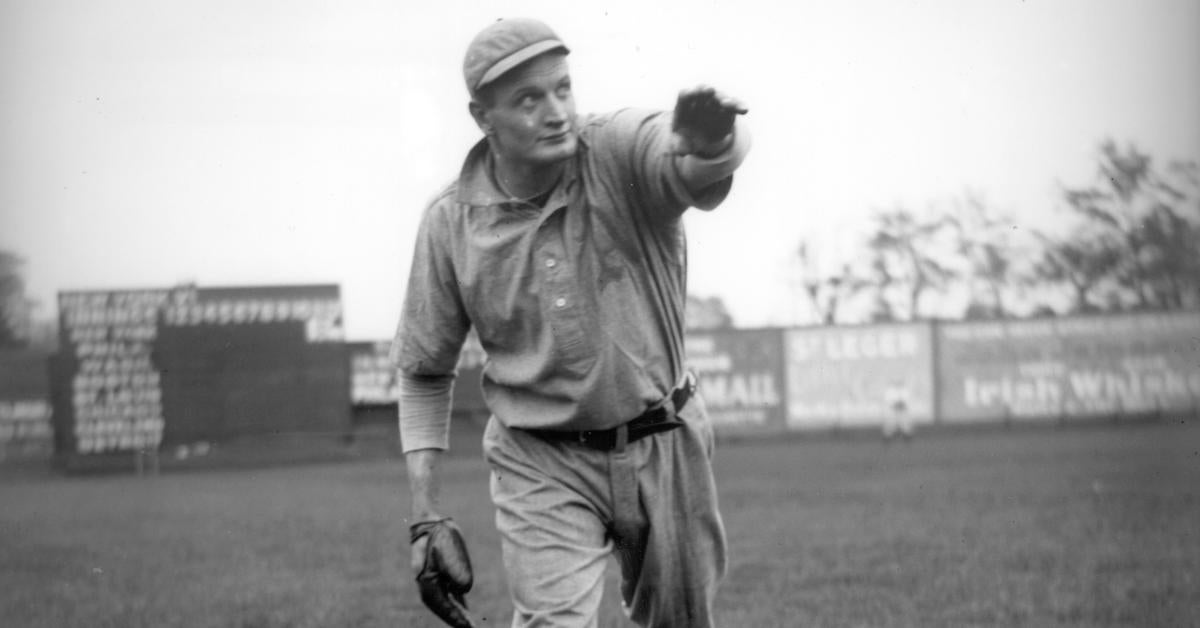
Top 106 Baseball Players: #91 - Rube Waddell


Rube Waddell

Rube Waddell was one of the greatest pitchers ever to take the mound at his peak, but other struggles prevented him from reaching his full potential as one of the greatest few pitchers to ever live.

In the first 5 years of his career, he played for 7 teams, including 4 minor league teams, because he quickly wore out his welcome everywhere he went. He was known to sneak off in the middle of a game to go fishing, or to leave the field to chase a passing fire truck. He was also a raging alcoholic, and it is said that he spent his entire first signing bonus on alcohol.

In 1902, he was picked up by the Philadelphia Athletics, where manager Connie Mack was able to keep him somewhat under control for a few years, and the following 6 years were some of the most productive any pitcher has ever had.

He led the league in strikeouts for 6 consecutive seasons, and topped 300 strikeouts in 1903 and 1904, a feat no other pitcher would reach in consecutive seasons until Sandy Koufax in 1965 and 1966. Not only did he have a huge number of strikeouts, but he led the league by an enormous margin each time, with no pitcher coming within 100 strikeouts of him in either of those seasons.

The next season he dropped to 287 strikeouts, but he accomplished another major feat when he won the pitching Triple Crown, topping the league with a 1.48 ERA and 27 wins as well as the usual strikeouts. His team reached the World Series that year, but he didn't pitch, and there is some controversy as to the reason, as he and the team claimed a shoulder injury, but had conflicting stories as to what happened. There is also a rumor that he was paid by a gambler to skip the Series, but that has not been proven.

After the 1907 season, despite still being the league's top pitcher, the A's grew tired of his antics and sold him to the Saint Louis Browns, where his performance regressed quickly, and by the end of 1910 he was out of the majors completely. He died of tuberculosis just a few years later, leaving behind a strange and amazing legacy.

It is unclear what caused Waddell's bizarre behavior, and it's unfortunate that there was no help available to him for his possible mental health disorder, because he was one of the most talented pitchers to ever take the mound, but even in his abbreviated career, he showed enough greatness to be included on this list of the all-time greats.

Monday, April 16, 2018

Top 106 Baseball Players: #102 - Mickey Cochrane


Mickey Cochrane

Mickey Cochrane was one of the best catchers in the Major Leagues during the late 1920's and 1930's, winning 2 MVP's, 3 World Series and 5 pennants during a 13-year career behind the plate.

He broke into the majors in 1925 at age 22 and made an immediate impact, performing so impressively that he replaced Cy Perkins, one of the best catchers in the league, as the team's starter early in his rookie season. He finished the season batting .331, a number he would surpass several times in his career.

He was known as a great leader and a star on defense, which were obviously taken into account in 1928, when he was awarded the AL MVP award despite batting only .293 and hitting only 10 home runs in a season in which Babe Ruth hit 54.

The following season the Athletics reached the World Series, and Cochrane was the star, leading all players by reaching base 13 times in only 22 plate appearances, and Philadelphia beat the Cubs in 5 games. The A's repeated the feat the following season, and Cochrane was just as good, reaching base 10 times in the series and hitting 2 homers, the most of any player in the Series.

The team attempted a 3-peat the following year, but struggled offensively and fell in 7 games in a rematch with Saint Louis. Just 7 years into his career, he already had 2 World Series rings and had come very close to another, and had an MVP as well. After 2 more seasons in Philadelphia, Detroit traded for him in order to install him as a player-manager.

Under Cochrane's leadership, the Tigers immediately rose to the top of the league, and he was awarded another MVP, even though Lou Gehrig won the Triple Crown that year. The Tigers played in the World Series that season, then took home the title the next year, with Cochrane leading the team on the field and in the dugout.

He missed most of the following season after a nervous breakdown, then was hit in the head by a pitch in 1937, fracturing his skull and ending his career. Forced into retirement at age 34, he held the mark for highest career batting average by a catcher (.320) until 2009, when he was surpassed by Joe Mauer.

Despite having his career cut short, Cochrane was a proven leader and winner, reaching the World Series 5 times in his career and winning it 3 times. He also proved his skill as a manager, coaching his team to the Series at age 31, and he was elected to the Hall of Fame in 1947, becoming only the third catcher to join that club.