Showing posts with label Washington Senators. Show all posts

Tuesday, July 31, 2018

Top 106 Baseball Players: #8 - Walter Johnson


Walter Johnson

Walter Johnson was the greatest power pitcher of the dead ball era, and was the MLB strikeout king for 55 years.

Johnson pitched his entire career for the Washington Senators, first appearing for them in 1907 as a 19 year old. In 1908, he had what was probably the greatest week of any pitcher in history. He started 3 consecutive games against the New York Yankees, and threw complete game shutouts in each of them, all within the space of 4 days.

It took a few years before he exhibited that kind of dominance regularly, but in 1910 he had his first superstar season, leading the league with 313 strikeouts and 38 complete games, while recording an ERA of 1.36. Even though he was an amazing pitcher, his team did not make the playoffs until late in his career.

In 1912, he led the league with 303 strikeouts and a 1.39 ERA in what was probably the greatest single pitching season ever. The next season he lowered his ERA to 1.14, which is still the sixth-lowest in history, and also led the league in wins for the first time, which was enough to earn him his first Triple Crown and the MVP award.

In that decade, he led the league in strikeouts in 8 consecutive seasons and 9 overall, wins 5 times, ERA 4 times, and complete games and shutouts 6 times each. He wasn't quite as dominant in the 1920's, but he had one more great season in 1924, winning his third Triple Crown and his second MVP at age 37.

He also got the Senators to their first World Series that year, and though he lost Games 1 and 5 of the series, he came in in relief in Game 7 and pitched 4 scoreless innings to take the championship. In a return appearance the next season, almost the exact opposite happened. He pitched well in his first 2 starts in the series, but ended up losing in Game 7 in his last appearance in the final series.

In 1913, Johnson pitched an AL record 55.2 consecutive scoreless innings, and in 1918 he had another streak of 40 straight, making him the only pitcher ever to have 2 streaks of that length. He was the first pitcher ever to reach 3000 strikeouts, and it was 51 years before another pitcher, Bob Gibson, would join him in that club.

He is still the all-time record holder for shutouts, with 110, 20 more than Grover Cleveland Alexander, who is #2 on the list. He is #2 on the wins list, behind only Cy Young, and held the all-time strikeout record for over 55 years, when Nolan Ryan, Steve Carlton, and Gaylord Perry all passed him in the same season.

He still holds the record for most seasons leading the league in strikeouts, with a total of 12, one more than overall strikeout king Nolan Ryan. He was also one of the original 5 members of the Baseball Hall of Fame, along with Babe Ruth, Ty Cobb, Honus Wagner, and Christy Mathewson, and there is little doubt that he is one of the greatest to ever step foot on a baseball diamond.


Thursday, July 12, 2018

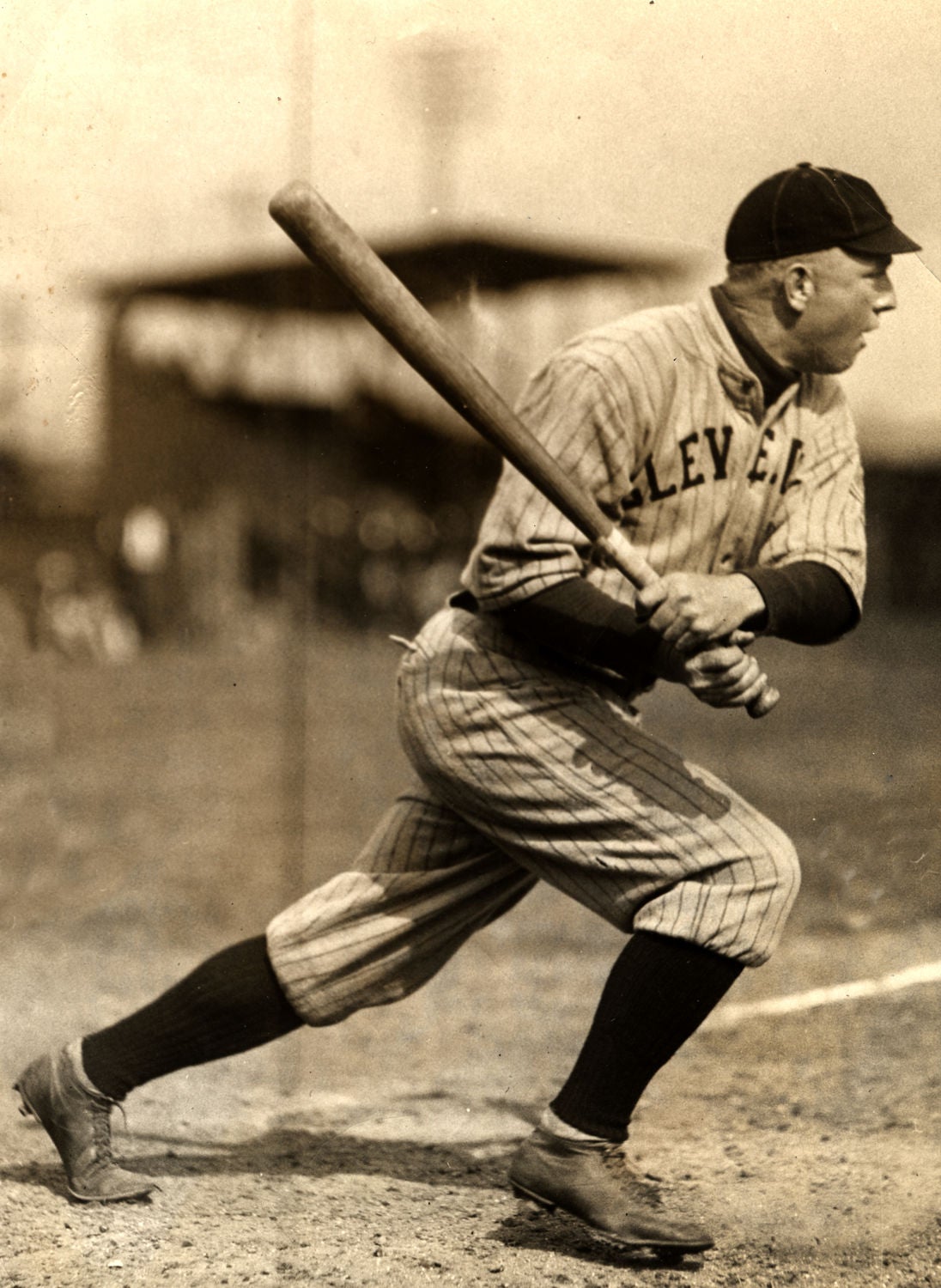
Top 106 Baseball Players: #25 - Tris Speaker


Tris Speaker

Tris Speaker was one of the greatest hitters in history, and one of the first great outfielders in the game of baseball.

Tris began his career with the Boston Americans in 1907, the year before they changed their name to the Red Sox. He did not play much in his first two seasons, but became the starting center fielder in his third season, and that year was the first of 10 in a row where he hit above .300.

He improved steadily until 1912, when he won the MVP after leading the league with 53 doubles and 10 home runs, and he also had 222 hits and a .383 average. His Red Sox won the pennant, and Speaker hit .300 in that World Series, winning his first championship as well.

In 1915 the Red Sox added a young pitcher named Babe Ruth, and the star pair led the Red Sox back to the World Series, though Speaker hit only .322 that season, his worst since 1909. The combination of the two was enough to bring home another title to Boston, but Speaker was asked to take a pay cut after the season due to his low batting average, and after refusing, he was traded to the Indians.

Speaker responded to the trade with his best season yet, leading the league in hits, doubles, batting average, slugging percentage, and on-base percentage. For his first 4 seasons with the Indians, he served unofficially as the team's assistant manager, as he was consulted on all in-game moves. When the manager resigned after misunderstanding one of Speaker's signals, he was made the official manager.

His first full season as player/manager was 1920, and he had his very best season that year. Though he only led the league in his specialty, doubles, he had a batting average of .388, 214 hits, a career-high 137 runs scored, and reached 100 RBI for the first time in his career. He also took the Indians to the World Series, where he hit .320 as the Indians beat the Dodgers in 7 games to claim the title, his third in 3 tries.

He led the league in doubles again in each of the next 3 seasons, and also led the league in RBI in 1923, a career first at age 35. Over the course of his 11 seasons in Cleveland, he batted over .350 7 times during the period that bridged the dead-ball era and the live-ball era.

Speaker led the league in doubles 8 times in his career, and his 792 are still the career record. He is #6 in triples, and is the most recent player to reach 200 for his career in that category. His career batting average of .345 is #6 all-time, which is especially great since he played half of his career in the deal-ball era, and he was solid in all 3 of his World Series appearances, finishing his career with 3 titles, and a place among the greatest baseball players of all time.


Wednesday, June 20, 2018

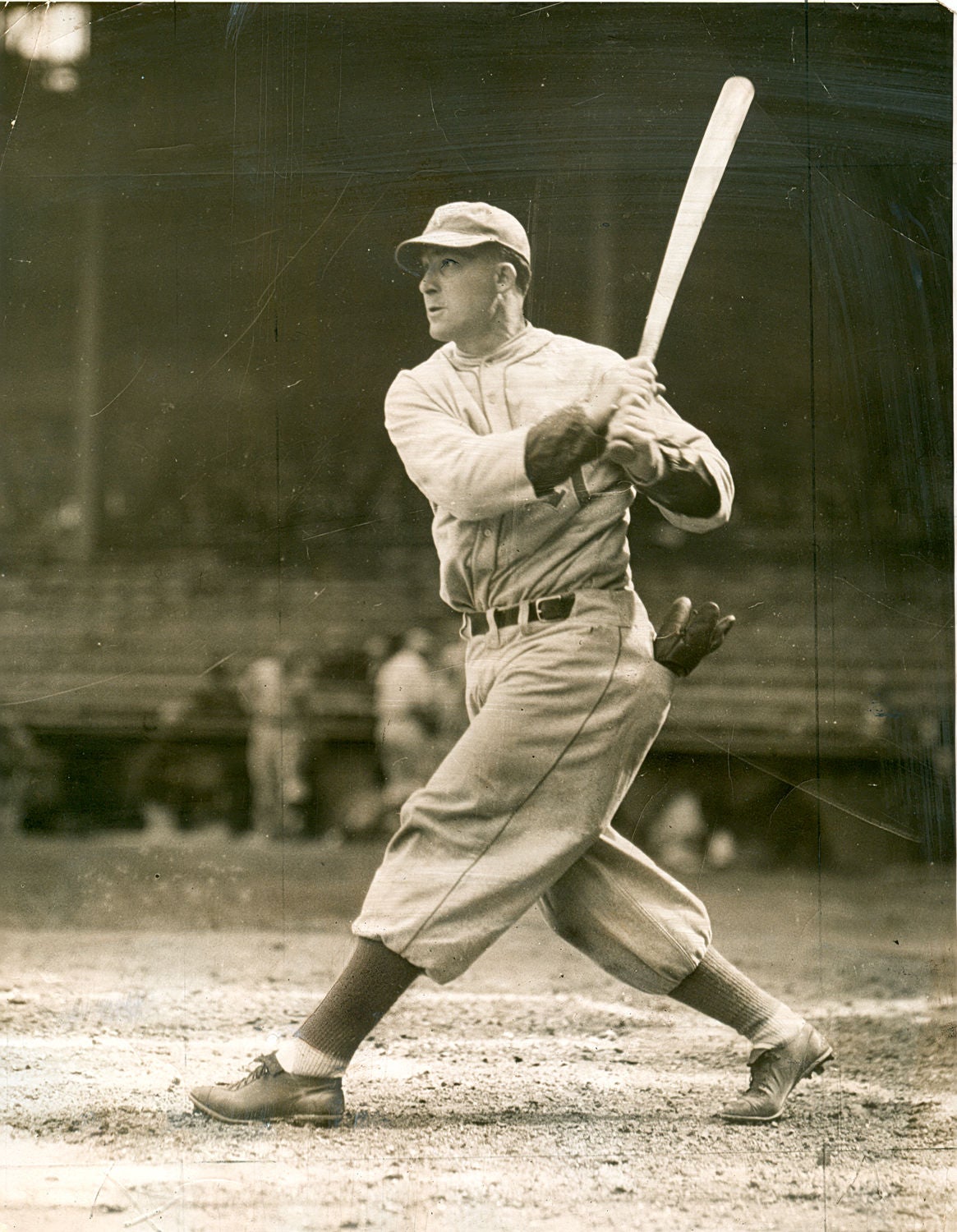
Top 106 Baseball Players: #44 - Al Simmons


Al Simmons

Al Simmons was one of the greatest all-around hitters in the early years of the live-ball era, and though was overshadowed in his time by bigger stars like Babe Ruth and Lou Gehrig, he was just as good a player for quite a while.

He first played for the Philadelphia Athletics in 1924, and in his second season he had already broken out, leading all players with 253 hits, which is still the Major League record for a right-handed hitter. He also hit .387 that season, and led all players with 392 total bases, which ended with him finishing as the MVP runner-up.

For the next 6 years, he never batted below .340, and he won the batting title in 1930 and 1931, with averages of .381 and .390. He also led the league with 157 RBI in 1929 and 152 runs in 1930. From 1929 to 1933 he recorded at least 200 hits in each season, and he also surpassed 30 home runs 3 times over that span.

Simmons was one of the top players on three straight World Series teams from 1929 to 1931, hitting 2 home runs in each season's championship round, and batting at least .300 in each as well. The A's won the first two times they reached the Series, with Simmons as the best batter in the 1930 Series, at .364, but they fell to the Cardinals in 7 games in 1931.

After the 1932 season, the Athletics blew up their roster, and Simmons was sold to the White Sox, where he had two more very good years, batting at least .330 in both seasons with at least 190 hits. In 1935 his average dropped below .300 for the first time in his career.

Following that down year, he was sold to the Tigers, where he had his final star-level season, batting .327 with 112 RBI and 186 hits. After that, he bounced around several teams, switching uniforms 6 times over his final 7 seasons, all while his production slowly declined.

Simmons was a true superstar during his time with the Athletics, batting at least .340 8 times, and over .380 4 times, and he reached 200 hits 6 times, with 4 more seasons of at least 180. He was great in each of his first 3 World Series appearances, and earned two championship rings as a result, and though many do not remember his name today, he is definitely worthy of being remembered as one of the top 50 players of all time.

Monday, May 21, 2018

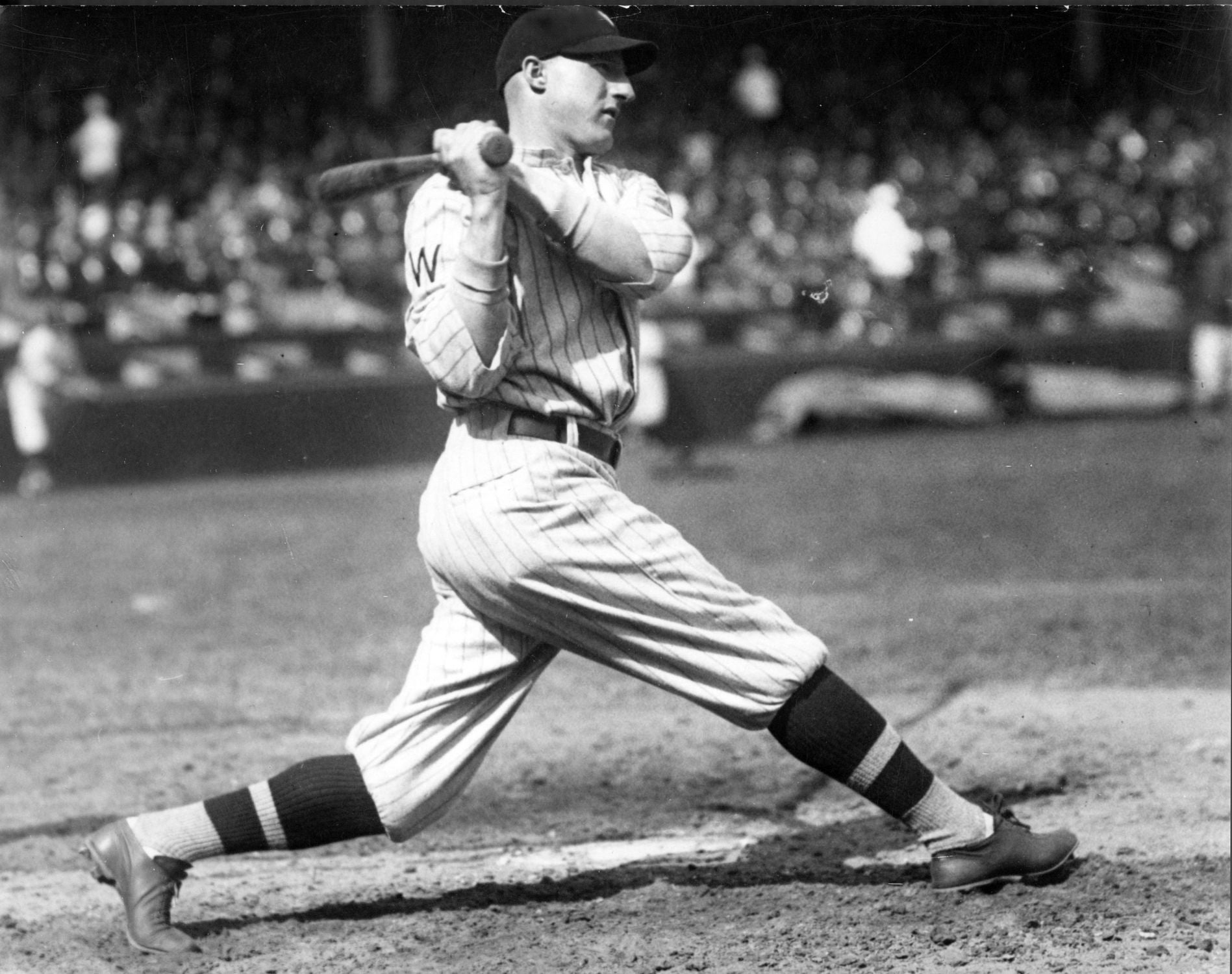
Top 106 Baseball Players: #72 - Goose Goslin


Goose Goslin

Goose Goslin was a great offensive player who played before World War II who also had a great arm, but he earned his nickname due to his struggles with catching fly balls, as he would often flap his arms wildly while trying to position himself for the catch.

Goslin was called up to the Washington Senators during the final month of the 1921 season, and played well enough to become the starting leftfielder the following season. Starting in 1922, he batted at least .300 for 7 straight seasons, which also included 2 seasons leading the league in triples and one leading the league in RBI's.

When he led the league in RBI's in 1924, he also led the Senators to the World Series, and their only championship ever, by batting .344 with 7 RBI's in 7 games against the Giants. He got them back to the World Series again the next year, and still played just as well, but they fell to the Pirates in 7 games.

He won the batting title in 1928 in interesting fashion. He was tied with Heinie Manush for the lead heading into the final game, and they happened to be facing each other in that game. Goslin was leading when his turn came to bat in the 9th inning, and he told the manager to pull him from the game so he would win the title, but after his teammates called him a coward, he decided to take his turn at bat. After two strikes, he started to regret the decision, and tried to get thrown out of the game by arguing with the umpire so that the at-bat wouldn't count, but the umpire knew what he was doing and told him to finish the at-bat. He ended up getting a hit on the next swing and winning the batting title.

For the next year and a half, he struggled to regain that form, and the Senators decided to trade him to the St. Louis Browns for Manush. He spent two and a half years in Saint Louis, and his numbers rebounded somewhat, then he was traded back to the Senators, where he dropped back below .300, and was again traded away, this time to Detroit.

He had 3 solid years with the Tigers, helping them to two straight World Series, including the title in 1935, when he reached base on more than 40% of his plate appearances to earn his second championship ring. He played one final subpar year in Detroit before signing with Washington one more time to finish his career where it started.

Goslin was never an MVP, though he was in the conversation many times from the early 1920's to the late 1930's, and his RBI title and batting title were both very impressive. He was also very good in both of his World Series wins, and was the best offensive player in his first World Series loss. He is currently #22 all-time in triples and #36 in RBI's, and needs to be remembered as one of the all-time greats.