Showing posts with label Detroit Tigers. Show all posts

Wednesday, August 1, 2018

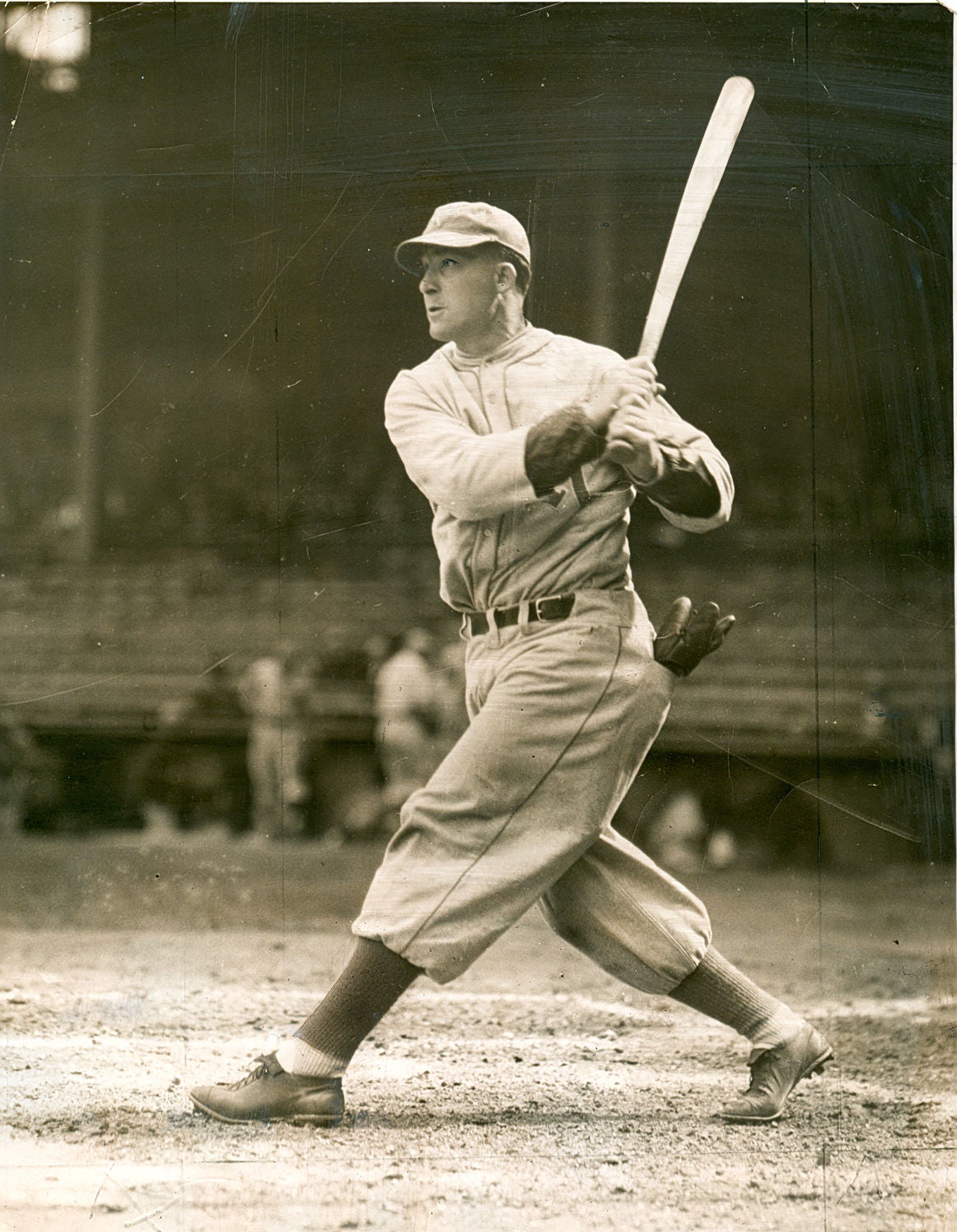
Top 106 Baseball Players: #7 - Ty Cobb


Ty Cobb

Ty Cobb was one of the greatest all-around players in the early days of the game, and held many record that stood for decades, and one big one that still stands.

Cobb played his first season with Detroit in 1905, when he was just 18 years old. He hit only .240 that season, but it would be the only time in a 24 year career that he would hit below .310. In his third season, he became the youngest player to win a batting title, with a .350 average, though that record would later be broken by Al Kaline, who was 12 days younger when he won his first. Cobb also led the league in hits, RBI's, and stolen bases that year.

That was also the first season Cobb would reach the World Series, but he hit only .200 against the Cubs and they lost the series in 5. He would lead them back to the final series in each of the next two seasons, but they lost each time, even though Cobb did play well in the 1908 series, and he never did end up winning a championship.

In 1908, he led the league in the same categories as the year before, but also added doubles and triples to his leading categories. The next year he won his only Triple Crown, when he led the league in home runs for the only time in his career. Interestingly, all 9 home runs he hit that year were inside the park, making him the only home run champ in history who didn't hit one over the fence.

Cobb had his best season in 1911, when he hit .420, which was the record for many years until it was eclipsed by Rogers Hornsby. He also led the league in runs, RBI's, hits, doubles, triples, stolen bases, total bases, and slugging, and fell just 3 homers short of the home run title, which would have given him every major statistical category.

He won 12 batting titles between 1907 and 1919, losing only in 1916, and his 12 batting titles are still an all-time record. His career batting average of .366 is still the highest of all time, and may stand forever. He hit over .350 in 16 of his 24 seasons, and reached .400 3 times, along with those 23 straight seasons over .300.

He was also the all-time hit leader for hits until Pete Rose passed him in 1985, and he was the first member of the 4000 hit club. He was the all-time runs leader until 2001, when Rickey Henderson surpassed him, and he is still #2 in each of those categories. He was the leader in stolen bases until 1977, when Lou Brock moved past him, and he has since fallen to #4 on that list. His record of 54 times stealing home is still the record, along with the 5 times that he stole 2nd, 3rd, and home in succession.

Cobb was also a member of the first group elected to the Baseball Hall of Fame, and was the leading votegetter of the group, which included Babe Ruth, Walter Johnson, Honus Wagner, and Christy Mathewson. His vote total was the highest by any player until Tom Seaver's election, and is still among the 5 highest in history. There is no doubt that Cobb is one of the greatest players ever to play the game.


Wednesday, June 20, 2018

Top 106 Baseball Players: #44 - Al Simmons


Al Simmons

Al Simmons was one of the greatest all-around hitters in the early years of the live-ball era, and though was overshadowed in his time by bigger stars like Babe Ruth and Lou Gehrig, he was just as good a player for quite a while.

He first played for the Philadelphia Athletics in 1924, and in his second season he had already broken out, leading all players with 253 hits, which is still the Major League record for a right-handed hitter. He also hit .387 that season, and led all players with 392 total bases, which ended with him finishing as the MVP runner-up.

For the next 6 years, he never batted below .340, and he won the batting title in 1930 and 1931, with averages of .381 and .390. He also led the league with 157 RBI in 1929 and 152 runs in 1930. From 1929 to 1933 he recorded at least 200 hits in each season, and he also surpassed 30 home runs 3 times over that span.

Simmons was one of the top players on three straight World Series teams from 1929 to 1931, hitting 2 home runs in each season's championship round, and batting at least .300 in each as well. The A's won the first two times they reached the Series, with Simmons as the best batter in the 1930 Series, at .364, but they fell to the Cardinals in 7 games in 1931.

After the 1932 season, the Athletics blew up their roster, and Simmons was sold to the White Sox, where he had two more very good years, batting at least .330 in both seasons with at least 190 hits. In 1935 his average dropped below .300 for the first time in his career.

Following that down year, he was sold to the Tigers, where he had his final star-level season, batting .327 with 112 RBI and 186 hits. After that, he bounced around several teams, switching uniforms 6 times over his final 7 seasons, all while his production slowly declined.

Simmons was a true superstar during his time with the Athletics, batting at least .340 8 times, and over .380 4 times, and he reached 200 hits 6 times, with 4 more seasons of at least 180. He was great in each of his first 3 World Series appearances, and earned two championship rings as a result, and though many do not remember his name today, he is definitely worthy of being remembered as one of the top 50 players of all time.

Saturday, June 16, 2018

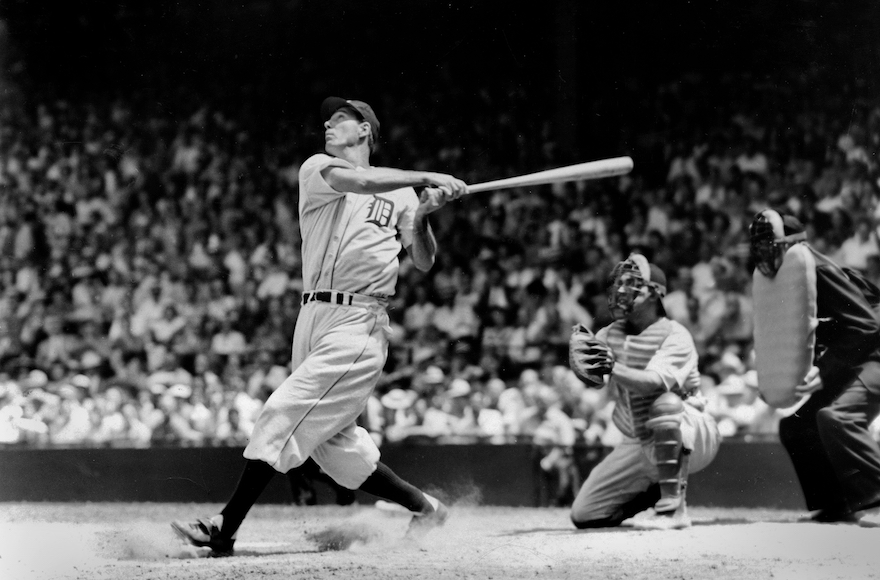
Top 106 Baseball Players: #48 - Charlie Gehringer


Charlie Gehringer

Charlie Gehringer was nicknamed the Mechanical Man, partly due to his quiet demeanor, and partly due to his remarkable consistency over a long period of time. His manager/teammate Mickey Cochrane joked, "Charlie says 'hello' on Opening Day, 'goodbye' on Closing Day, and in between hits .350"

He made brief appearances with the Tigers in 1924 and 1925, and finally won the starting second base job in 1926, which he wouldn't give up for 15 years. That would be one of only 3 full seasons in his career where he wouldn't hit .300.

He really broke out in 1929, when he led the league in several offensive categories, including runs, hits, doubles, triples, and stolen bases. Then in 1932, he began a string of 7 consecutive seasons finishing among the top 10 in MVP voting.

He had what was probably his best season in 1934, leading the league with 214 hits and 135 runs to go along with 127 RBI and a .356 average. He lost out on the MVP vote to teammate Mickey Cochrane, and the Tigers reached the World Series, where Gehringer batted .379, but the Tigers lost to the Cardinals in 7 games.

In 1935 he was nearly as good, reaching 200 hits for the third year in a row, and leading the Tigers back to the World Series, where they beat the Cubs in 6 games behind Gehringer's .375 average and 4 RBI.

He was still great for a couple more years, reaching career highs of 144 runs, 227 hits, and 60 doubles in 1936, then winning the MVP in 1937 after winning the batting title with a .371 average while surpassing 200 hits for the 5th year in a row. His stats started to drop off after that, but he was still a good player for a couple more years before being benched.

Gehringer finished his career with a .320 average, and hit over .300 in 13 seasons. He also reached 200 hits and 40 doubles 7 times each, and finished in the top 10 of the MVP voting 7 times in a row. He was great in his first two World Series appearances, and was the biggest reason for their win in 1935, and though his name isn't well-known today, he cannot be left off the list of the greatest players of all time.


Friday, June 15, 2018

Top 106 Baseball Players: #49 - Gary Sheffield


Gary Sheffield

Gary Sheffield was a great player for 8 different teams over the course of 22 seasons, and the reason for so many changes in scenery appears to have been his bad habit of bashing his management and teammates.

Sheffield first played in the Majors in 1988, when he was called up by the Milwaukee Brewers during the final month of the season. He hit a home run in his first at-bat, but overall did not play very well in his first couple seasons. His average improved to .294 in 1990, but he ended the season with a .194 average and a ticket out of town due to his claims of racism by the manager in moving him to third base.

He was traded to the Padres before the 1992 season, and contended for the Triple Crown, falling short by 2 home runs and 9 RBI, but he did win the batting title, making him the only Padre not named Tony Gwynn to achieve that. He also had the opportunity to bat against his uncle, Dwight Gooden, in a game that May, quite a rare occurrence.

He didn't start off very well the next season, and was traded to the Marlins midway through the season. He missed a lot of time over the next two seasons, but when he was healthy again in 1996, he had one of his best seasons, with 42 home runs, 120 RBI, and 142 walks. The next year, Florida advanced clear to the World Series, with Sheffield walking 20 times in 16 postseason games and knocking in 5 runs in the Marlins' championship round.

He was traded to the Dodgers early the next season because the Marlins knew they couldn't afford a contract extension. With LA, he had 3 straight very solid seasons, getting at least 100 RBI, 90 walks, and 30 runs each year while always batting over .300. After just over 3 years with the team, he began publicly criticizing the team's management, and was traded to Atlanta before the 2002 season.

In 2003 with the Braves, he had his best overall season, setting career highs with a .330 average, 126 runs, 190 hits, 37 doubles, and 132 RBI, to go along with 39 home runs. He was easily the best player in the league that year, but only came in #3 in the MVP voting, most likely because he was not well-liked.

He signed with the Yankees after that season, and had two more All-Star level seasons where he was also on the MVP radar, but a wrist injury cut his 2006 season short, and he was traded to the Tigers after the season. He would spend two seasons as the team's DH before they decided to move on. He signed with the Mets, where he was able to hit his 500th home run, and he also became the third player ever to hit a home run as a teen and a 40-year old, after Ty Cobb and Rusty Staub.

Sheffield has been on the Hall of Fame ballot for 4 years, but is nowhere near the number of votes needed for election, and many feel that his personality is hurting his chances, despite his solid career numbers. He was the best player on a World Series champion, and the best player in the league one year, and hit 500 homers, which is still quite rare. Whether he makes it or not, he still definitely belongs on this list of the greatest baseball players of all time.


Thursday, June 14, 2018

Top 106 Baseball Players: #50 - Al Kaline


Al Kaline

Al Kaline was a perennial MVP contender who played for the Detroit Tigers for 22 seasons, and is one of the greatest players in that franchise's history.

Kaline joined the Tigers in 1953 straight out of high school, never having played a game in the minor leagues. In his third season, he led the league with 200 hits and a .340 average, becoming the youngest player ever to win a batting title at 20 years of age. That season he also became the 4th player ever to hit 2 home runs in the same inning and the youngest ever to hit 3 in a game.

That started a streak of 7 straight seasons of at least 150 hits and 13 straight selections to the All-Star team. Through all that time, he never played a playoff game, but in 1968, his first season not on the All-Star roster since he was a teenager, the Tigers won the pennant and faced the Cardinals in the World Series. Kaline had a great World Series, batting .379 with 8 RBI as the Tigers won in 7 games.

Kaline nearly died on the baseball field in 1970, when he had a collision with a teammate in the outfield chasing down a fly ball. He collapsed on the warning track after he collision, and teammate Willie Horton rushed over to check on him and realized that his airway was blocked and he was turning blue, so he reached in and cleared it out and saved his life.

In 1974, Kaline reached the 3000 hit plateau, the 12th player to reach that mark, and retired just weeks later at the conclusion of the season. He ended up with 399 home runs, having reached 25 in a season 7 times without ever reaching 30, which goes to show how consistent he was for so long. He finished with a .297 batting average, having surpassed .300 nine times, stretching from ages 20 to 37.

Kaline was elected to the Hall of Fame in his first year of eligibility, the 10th player so honored. He is the Tigers all-time leader in games played, walks, and home runs, and played extremely well in his only World Series appearance. He was a model of consistency for over 2 decades, and as a result is the player opening up the top 50 on the all-time greatest players list.


Sunday, June 3, 2018

Top 106 Baseball Players: #60 - Miguel Cabrera


Miguel Cabrera

Miguel Cabrera is the third active player to make this list, and has been one of the most complete all-around players for at least a decade.

Cabrera broke into the Majors in 2003 with the Florida Marlins, and was able to reach his first career World Series as a rookie, and he contributed to the upset victory over the Yankees with a home run off Roger Clemens in Game 4, and he ended up with the greatest team honor in his first season.

Cabrera played 4 more solid seasons for the Marlins, hitting at least 110 RBI in each, while also reaching 30 home runs and a .300 batting average 3 times. He was traded to the Tigers after the 2007 season, and signed the fourth-biggest contract in history at the time before even putting on a uniform.

In his first season with Detroit, he led the league in home runs and total bases, and within 2 years was the best player in the AL. In 2010 he led the league in RBI, in 2011 he led in batting average and doubles, and he finally put in all together in 2012, winning the first Triple Crown in 45 years with 44 homers, 139 RBI, and an average of .330.

In addition to the Triple Crown, he was also named the MVP, which seemed obvious when looking at his accomplishment. He was even better in 2013, matching the previous season's home run total, with just 2 fewer RBI and a league-leading .348 average, and he was again rewarded with the AL MVP award.

The Tigers reached the postseason in each of those 4 MVP-level seasons, but each time fell short of the championship. They reached the World Series in 2012, his first time reaching the final series in 9 years, but they fell to the Giants in 4 games. Cabrera had 3 more very good seasons after his back-to-back MVP's, but just a bit short of what had come to be expected of him.

Cabrera is among the active leaders in nearly every important category. He is #4 in hits and runs, #3 in doubles, RBI, slugging percentage, and total bases, and #2 in batting average, home runs, and walks. He is the closest active player to both the 3000-hit club and the 500-home run club, and could reach both within the next 2-3 years.

Cabrera is obviously one of the greatest players still on the field, and winning the Triple Crown in an era when it has become extremely rare is a huge achievement. At only 35 years of age, he still has a great opportunity to continue his climb, but for now it is pretty impressive to be ranked this high among the greatest players of all time.


Saturday, May 26, 2018

Top 106 Baseball Players: #68 - Hank Greenberg


Hank Greenberg

Hank Greenberg was one of the best power hitters of all time, but his career was cut severely short by injury and military service, keeping his from reaching the levels his performance promised.

Greenberg first played in the Majors in 1930, getting one at-bat with the Detroit Tigers at age 19 before being sent down to the minors for 3 years. When he returned in 1933, he was ready, and he never had a poor complete season as a full-time player.

He led the league in 1934 with 63 doubles, the 4th-most that have ever been hit in a season, and led the Tigers to their first World Series in 25 years, which they lost to the Cardinals in 7 games despite Greenberg batting .321 with 7 RBI.

The following season he led the league in both home runs and RBI's for the first of many times in his career, was awarded the AL MVP, and earned the Tigers a return trip to the World Series, which they won in 6 games over the Cubs even though Greenberg sprained his wrist in Game 2 and missed the final 4 games.

Early in the 1936 season, he reinjured the same wrist after 12 games and ended up missing the rest of the season while it healed. When he came back in 1937, he had a monster season, with 40 home runs, 200 hits, and 184 RBI's, which is the 3rd-highest total in history, and has not been matched since.

In 1938, he very nearly beat Babe Ruth's home run record, finishing the season with 58. He had one home run that didn't count because of  game that was called because of rain, and he was walked more in the final month of that season than in any other in his career, and ended up leading the league with 119.

He had a bit of a down season in 1939, which prompted his manager to move him to the outfield to create room at first base for Rudy York, and Greenberg responded with his second MVP season, in which he led the league in doubles, homers, and RBI's, and had 195 hits as he became the first player ever to win MVP awards at 2 different positions.

In May 1941, Greenberg was drafted into the military, where he served for 7 months, which cost him most of that season. He was released 2 days before Pearl Harbor, after which he immediately reenlisted, serving clear until June 1945, and he holds the league record for most time lost to military service.

When he returned in the middle on 1945, he picked up right where he left off, leading Detroit back to the World Series. He clinched the pennant on the final at-bat of the season in Saint Louis. The story goes that the ump wanted to call the game due to darkness, since the field had no lights, but Greenberg said he could see fine and hit the next ball out of the park for a grand slam to prevent a tie for the title. In the World Series, he hit .304 with 7 RBI's in another 7-game win over the Cubs, and he also hit two of the 3 home runs hit in the entire series.

In 1946, he played his first full season since 1940, and again led the league in home runs and RBI's, the 4th time leading in each category, but he retired after the season due to a salary dispute. The Pittsburgh Pirates convinced him to come out of retirement for one more season at a record salary of $80,000, and he had 25 home runs, making him the first player to hit 25 home runs in a season in each league.

He retired for good after that, ending his career with just 9 full seasons under his belt, having lost one to a wrist injury and nearly 4 to military service. Without the break for World War II, he most likely would have reached 500 home runs in his career. He was definitely one of the best power hitters of all time, and was great in his final World Series, and cannot possibly be left off a list of the best baseball players of all time.


Monday, May 21, 2018

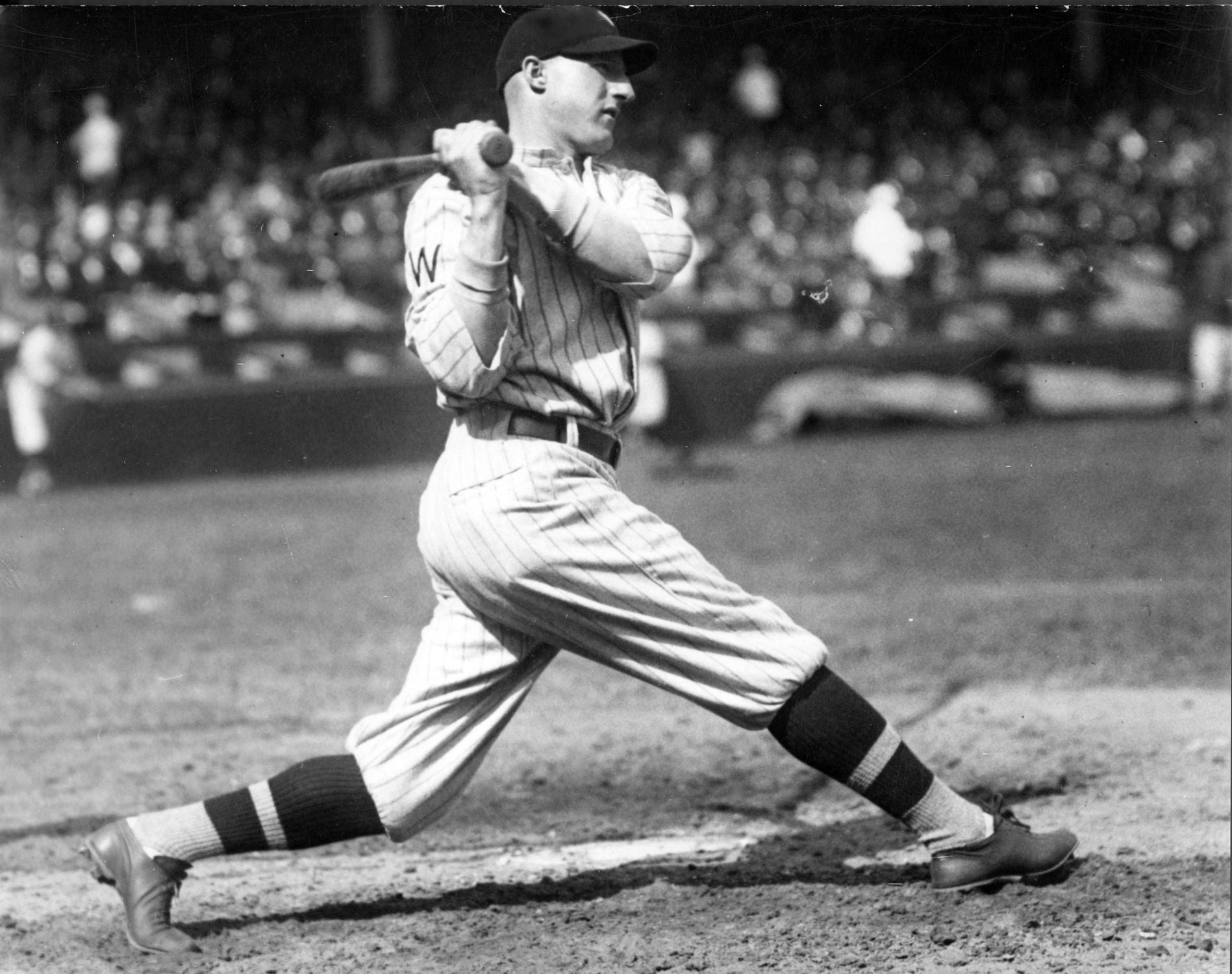
Top 106 Baseball Players: #72 - Goose Goslin


Goose Goslin

Goose Goslin was a great offensive player who played before World War II who also had a great arm, but he earned his nickname due to his struggles with catching fly balls, as he would often flap his arms wildly while trying to position himself for the catch.

Goslin was called up to the Washington Senators during the final month of the 1921 season, and played well enough to become the starting leftfielder the following season. Starting in 1922, he batted at least .300 for 7 straight seasons, which also included 2 seasons leading the league in triples and one leading the league in RBI's.

When he led the league in RBI's in 1924, he also led the Senators to the World Series, and their only championship ever, by batting .344 with 7 RBI's in 7 games against the Giants. He got them back to the World Series again the next year, and still played just as well, but they fell to the Pirates in 7 games.

He won the batting title in 1928 in interesting fashion. He was tied with Heinie Manush for the lead heading into the final game, and they happened to be facing each other in that game. Goslin was leading when his turn came to bat in the 9th inning, and he told the manager to pull him from the game so he would win the title, but after his teammates called him a coward, he decided to take his turn at bat. After two strikes, he started to regret the decision, and tried to get thrown out of the game by arguing with the umpire so that the at-bat wouldn't count, but the umpire knew what he was doing and told him to finish the at-bat. He ended up getting a hit on the next swing and winning the batting title.

For the next year and a half, he struggled to regain that form, and the Senators decided to trade him to the St. Louis Browns for Manush. He spent two and a half years in Saint Louis, and his numbers rebounded somewhat, then he was traded back to the Senators, where he dropped back below .300, and was again traded away, this time to Detroit.

He had 3 solid years with the Tigers, helping them to two straight World Series, including the title in 1935, when he reached base on more than 40% of his plate appearances to earn his second championship ring. He played one final subpar year in Detroit before signing with Washington one more time to finish his career where it started.

Goslin was never an MVP, though he was in the conversation many times from the early 1920's to the late 1930's, and his RBI title and batting title were both very impressive. He was also very good in both of his World Series wins, and was the best offensive player in his first World Series loss. He is currently #22 all-time in triples and #36 in RBI's, and needs to be remembered as one of the all-time greats.

Wednesday, May 2, 2018

Top 106 Baseball Players: #89 - Sam Crawford


Sam Crawford

Sam Crawford was one of the early slugging stars of Major League Baseball, and he was also a great baserunner, which he displayed throughout his 19-year career and which earned him a spot in the Hall of Fame.

Crawford reached the Majors in 1899 at age 19, playing for the Cincinnati Reds. It took him a couple of years to grow into a star, but when he did, he led the league in at least one batting category 10 times in 15 seasons.

1901 was his first season as a league leader, when he hit 16 home runs, including 12 that were inside the park, which is still the single season record over 100 years later. Over the next 2 seasons he led the league in what became his signature category, triples, even as he jumped teams to Detroit between those seasons.

After a few years in Detroit, he was joined by Ty Cobb, and they became one of the most potent outfield combinations of all time, batting one after the other in the lineup, and becoming famous for their skill at the double steal, where each player would steal a base at the same time.

From 1907-1909, the dynamic duo led the Tigers to the AL pennant in 3 straight seasons, but they lost in the World Series in all 3 attempts, as both Cobb and Crawford slumped in the Series, with neither reaching .300, though both had career batting averages well above that.

Late in his career, Crawford became one of the best at knocking runners in, reaching 100 RBI's 5 times in 6 seasons and leading the league 3 times. He also led the league in triples 4 more times during those seasons, including 26 in 1914, which is still the AL record.

In total, Crawford ended his career with 309 triples, which is still the Major League record, and he also had 51 inside-the-park home runs, which is #2 all time. He led the league in runs, doubles, triples, home runs, RBI's, and total bases at different points in his career.

Crawford was elected to the Hall of Fame in 1957, and by that time he was living in a small cabin in the California desert. When reporters showed up to interview him, the locals were all surprised to find out that their neighbor had once played baseball. His spot in the Hall was well-deserved, especially considering his triples record, and he definitely deserves his spot on this list as well.


Tuesday, May 1, 2018

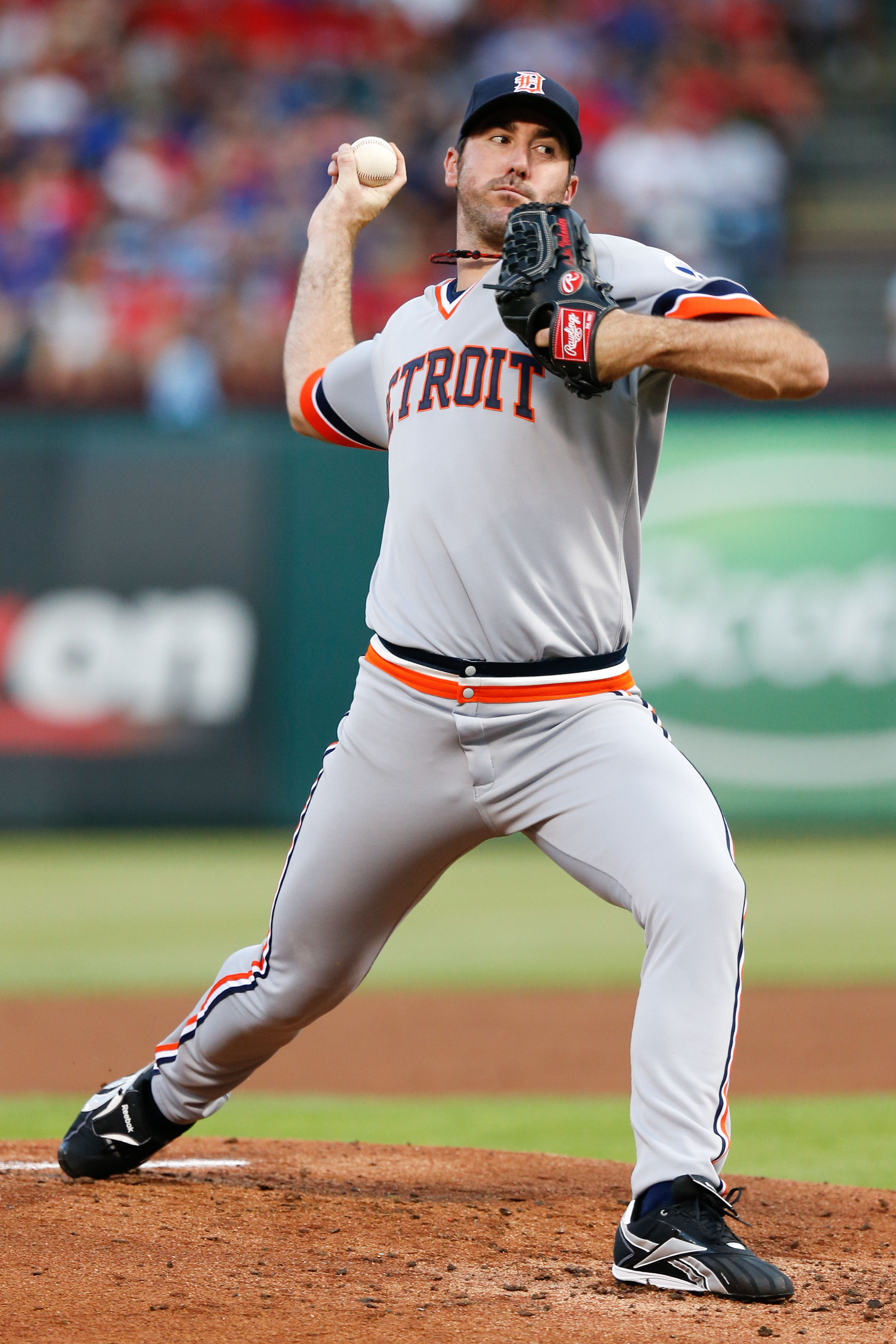
Top 106 Baseball Players: #90 - Justin Verlander


Justin Verlander

Justin Verlander is the first active player to appear in my rankings, and his extended period of great pitching for the Tigers and the Astros has definitely earned him this honor.

Verlander pitched a couple of forgettable games for the Tigers in 2005, before being called up full-time in 2006, where immediately set the league on fire. He became the first rookie ever to win 10 games before the end of June, and he ended the season with the AL Rookie of the Year Award. He also made his first World Series appearance that year, but was terrible, giving up 12 hits and 10 runs in 11 innings, and being responsible for 2 losses.

He was pretty good in 2007, then had a major slump in 2008, but he finally found his form in 2009, when he led the league in wins and strikeouts while finishing 3rd in the Cy Young voting.

2011 is when he really made his mark. He led the league in wins and strikeouts again, but this time he also had the lowest ERA, earning him the pitching Triple Crown. Clayton Kershaw matched the feat in the NL, making it the first time since 1924 that each league had a Triple Crown pitcher in the same season.

He not only won the Triple Crown that year, he was also awarded the AL Cy Young award by unanimous vote, the 16th player ever to receive every first place vote, a club that would later be joined by Clayton Kershaw as well. He was also awarded the AL MVP award, the first pitcher in 19 years to earn it, which also made him the second pitcher in history to earn Rookie of the Year, MVP, and the Cy Young during their career, joining Don Newcombe.

The following year he finished #2 in ERA, while still leading the league in strikeouts and innings pitched, but lost in the closest Cy Young vote in history. He took it out on the rest of the AL in the playoffs, where he gave up only 2 runs in over 24 innings while striking out 25 and leading the Tigers to the World Series, but gave up 5 runs in 4 innings of his World Series game as the Tigers fell short again.

In the next season's playoffs he had his best performance to date, starting 3 games and giving up just one run while striking out 31 batters in 23 innings, but the Tigers only won one of those 3 starts, with the 2 losses both coming by a score of 1-0. Even though they did not reach the World Series, he was by far the best pitcher of the postseason.

A variety of injuries hampered him over the next two years, but in 2016 he was back at full strength, and he showed it by leading the league in strikeouts for the 4th time, and came in 2nd in the Cy Young voting again, this time in the 2nd-closest voting of all time, and it was also the first time in AL history that the player with the most 1st-place votes did not win the award.

Verlander was traded to the Houston Astros late in the 2017 season, where he gave up only 4 runs in his 5 regular season starts, before dominating his way through the playoffs once again, giving up only 4 runs in over 24 innings of work en route to his 3rd World Series appearance, where the Astros were able to defeat the Dodgers to earn their first and his first championship, and Verlander was named co-MVP along with Jose Altuve.

In his career, Verlander has led the league in strikeouts 4 times, had 3 Cy Young-quality seasons (though just one official award), 3 dominant playoff runs, an MVP award, and a World Series ring and MVP, and he is off to a great start again in 2018, so he may not be done climbing the list of all-time greats.


Tuesday, April 24, 2018

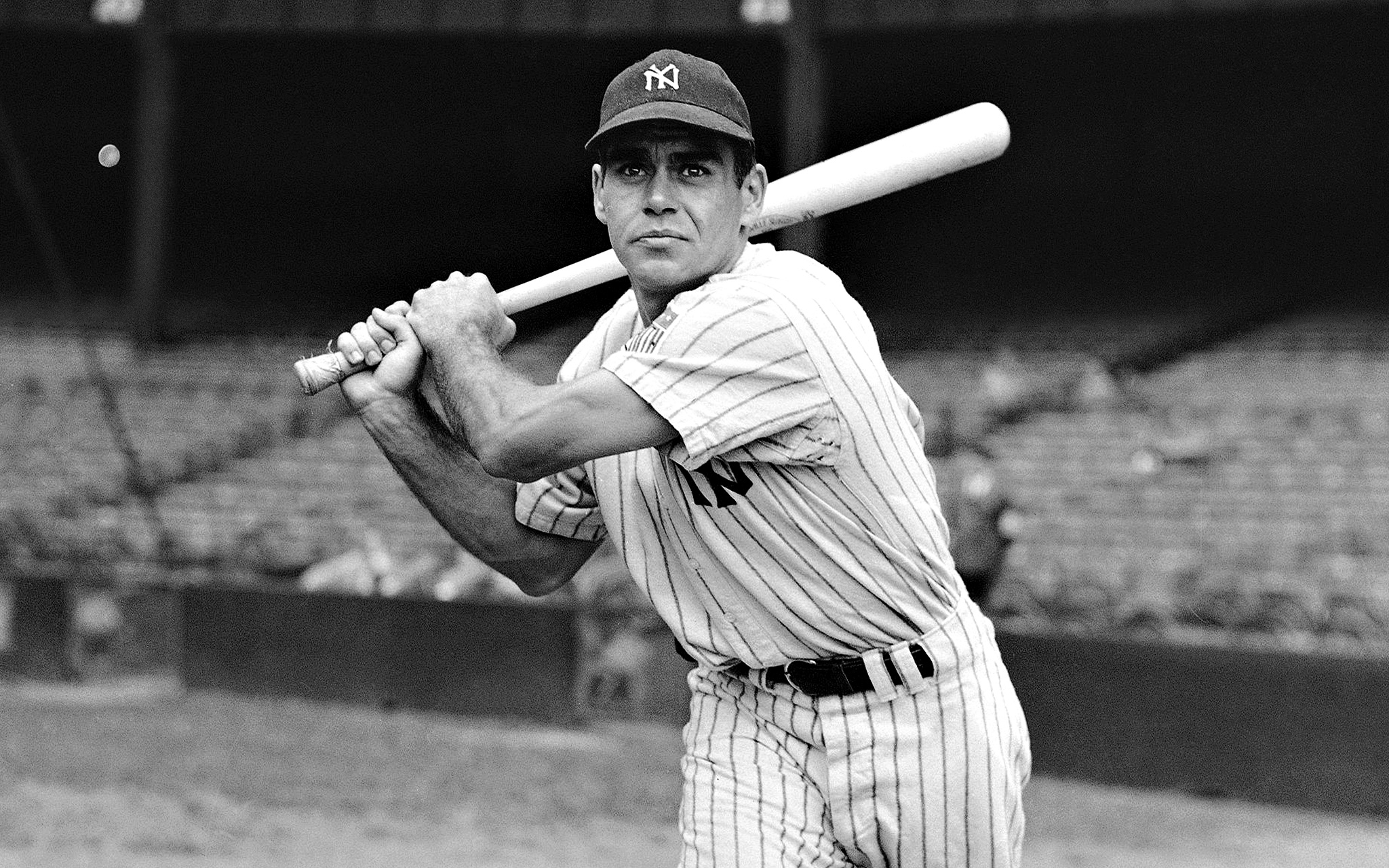
Top 106 Baseball Players: #97 - Charlie Keller


Charlie Keller

The first player of many to spend the majority of his career with the Yankees to make this list is Charlie Keller, who is not well-known, and was often overshadowed during his playing career as well due to sharing the outfield with Joe DiMaggio.

Keller broke into the majors in 1939, and made an immediate impact. He posted an average of .334 that season, and walked 81 times in only 111 games, while the Yankees won the pennant and reached the World Series.

He was the star of the World Series, leading the Yankees in runs, hits, triples, home runs, RBI's, and batting average, and he became the first rookie ever to hit 2 home runs in a World Series game, a feat that has been matched 3 times since. It was probably the best performance by a rookie in World Series history, and the biggest reason he made this list.

In 1941, the Yankees returned to the World Series, with Keller again playing an important role, finishing #2 in the league in home runs and #4 in walks. He again led the team in hits, runs, and RBI's in the World Series, and also had the most doubles, and the Yankees beat the Dodgers in 5 games.

American was getting into World War II at this point, and by 1943 many players had left the league to join the troops, and Keller ended up being the best player in the AL that season, finishing #1 in walks, #2 in home runs, #5 in runs, and #6 in RBI's, and the Yankees made it back to the World Series, which they won despite Keller struggling for once.

He spent the next season and a half in the Marines, returning once the war ended, and though he played several more seasons, he never quite reached the production level he was at before he enlisted.

While his peak period was much shorter than that of most players on this list, he played at the same level as Joe DiMaggio for several years, and outplayed him by far in 2 World Series victories, so he deserves to be remembered for his contributions to the Yankee dynasty.


Monday, April 16, 2018

Top 106 Baseball Players: #102 - Mickey Cochrane


Mickey Cochrane

Mickey Cochrane was one of the best catchers in the Major Leagues during the late 1920's and 1930's, winning 2 MVP's, 3 World Series and 5 pennants during a 13-year career behind the plate.

He broke into the majors in 1925 at age 22 and made an immediate impact, performing so impressively that he replaced Cy Perkins, one of the best catchers in the league, as the team's starter early in his rookie season. He finished the season batting .331, a number he would surpass several times in his career.

He was known as a great leader and a star on defense, which were obviously taken into account in 1928, when he was awarded the AL MVP award despite batting only .293 and hitting only 10 home runs in a season in which Babe Ruth hit 54.

The following season the Athletics reached the World Series, and Cochrane was the star, leading all players by reaching base 13 times in only 22 plate appearances, and Philadelphia beat the Cubs in 5 games. The A's repeated the feat the following season, and Cochrane was just as good, reaching base 10 times in the series and hitting 2 homers, the most of any player in the Series.

The team attempted a 3-peat the following year, but struggled offensively and fell in 7 games in a rematch with Saint Louis. Just 7 years into his career, he already had 2 World Series rings and had come very close to another, and had an MVP as well. After 2 more seasons in Philadelphia, Detroit traded for him in order to install him as a player-manager.

Under Cochrane's leadership, the Tigers immediately rose to the top of the league, and he was awarded another MVP, even though Lou Gehrig won the Triple Crown that year. The Tigers played in the World Series that season, then took home the title the next year, with Cochrane leading the team on the field and in the dugout.

He missed most of the following season after a nervous breakdown, then was hit in the head by a pitch in 1937, fracturing his skull and ending his career. Forced into retirement at age 34, he held the mark for highest career batting average by a catcher (.320) until 2009, when he was surpassed by Joe Mauer.

Despite having his career cut short, Cochrane was a proven leader and winner, reaching the World Series 5 times in his career and winning it 3 times. He also proved his skill as a manager, coaching his team to the Series at age 31, and he was elected to the Hall of Fame in 1947, becoming only the third catcher to join that club.


Sunday, April 15, 2018

Top 106 Baseball Players: #103 - Rusty Staub


Rusty Staub

Rusty Staub is yet another example of a player who played at a high level for a long time but never quite achieved superstar status. He played 23 seasons in the Major Leagues for 5 different teams, and was remarkably consistent from 1966 to 1978, recording between 145 and 186 each season in which he was healthy.

His career began slowly following his call up to the Major Leagues just after his 19th birthday, with a few disappointing seasons that made people question the relatively large salary he was earning. He finally started to fulfill his promise in season 4, and by season 5 had become an All-Star, leading the league with 44 doubles while batting .333 for the season.

After a couple of good seasons, he still wasn't gaining popularity in Houston, but his big break came with a trade to expansion Montreal before the 1969 season. He was instantly popular in Montreal, and he helped out by taking French lessons in his spare time, as well as performing well on the field, hitting 29 and 30 homers in his first two seasons in Canada.

After three seasons up north, the Mets put together a trade for the star player, hoping to get to the playoffs. He broke his hand and missed half of his first season in New York, but the following season they were able to make a huge late-season push to reach the postseason, where Staub played some of the best baseball of his career.

He hit three home runs in the ALCS against Cincinnati before separating his shoulder making a catch against the wall in the 11th inning of game 4, which caused him to miss the final game of the series, which his team still won, earning a trip to the World Series. Despite being unable to throw overhand during the Series, Staub batted .423 with 11 hits and 6 RBI, but the Mets lost to Oakland in 7 games. It would be his one and only career trip to the playoffs.

He remained a solid player for several more seasons, even after yet another trade, this time to Detroit, before finally making his way back to New York to finish out his career. After hitting one home run in his final season, he became one of 4 players in history to hit a home run in both his teens and his 40's, and the other 3 players are all ahead of him on this list.

Perhaps the best part of Staub's game was his patience at the plate. He was among the top 10 in times reaching base 8 different times, and walks and on-base percentage 6 times, with a total of over 4000 times reaching base in his career, which is #44 all-time. He never received even 8% of the vote on the Hall of Fame ballot and is no longer eligible, but even though he was never a dominant player, he was very good for a very long time, and deserves to be remembered among the best players of all time.