Showing posts with label Pittsburgh Pirates. Show all posts

Sunday, August 5, 2018

Top 106 Baseball Players: #3 - Barry Bonds*


Barry Bonds

Barry Bonds has hit more home runs than any other player in history, but accusations of steroid use have added controversy to that record and prevented him from being elected to the Hall of Fame so far.

Bonds first played for the Pittsburgh Pirates, joining the team in 1986. After a few years of growing into his role, he became the MVP in 1990, when he joined the 30-30 club with 33 homers and 52 stolen bases, and also hit above .300 for the first time. A slight dropoff in homers led to him being the MVP runner-up the next year, but he was not nearly finished.

In 1992, he won his 2nd MVP, with another 30-30 season in which he also led the league in runs as well as walks. He became a free agent after the season, and the Pirates were unable to offer him a large enough contract, so he signed with the San Francisco Giants for what was then the largest contract in history.

During his first season in California, he led the league in home runs for the first time, as well as RBI and total bases, which earned him a 3rd MVP, tying the all-time record. Over the next 4 years he continued to hit home runs at a good pace, while leading the league in intentional walks and total walks each time.

He started a career resurgence in 2000, when he hit 49 home runs, which was then his career high, and led the league in walks for the 6th time. It was also during that season that he tested positive for steroids, though that result was not made public for several years.

In 2001 he started his assault on the record books, starting when he joined the 500-home-run club in April. By the end of the season, he had broken the season records for walks and slugging percentage, as well as the famous home run record. He also had the highest on-base percentage of any player in over 40 years, and took home his record 4th MVP award.

In 2002, it was more of the same for Bonds. He reached 600 home runs, less than a year after his 500th. He broke the walks record again that year, along with the intentional walk record and the on-base percentage record, which was previously held by Ted Williams. It was no surprise that he took home his 5th MVP that season.

That was also the first season in which he won a playoff series. He was able to guide the Giants to the World Series that year, and he was great, batting .471 with 4 home runs and 13 walks, and he set an all-time record with a slugging percentage of 1.294, but they lost to the Angels in 7 games, which was the closest he ever got to a championship.

In 2003 he became the first player ever to reach the 500-500 club, with 500 home runs and stolen bases, and he was already the only member of the 400-400 club, and no player has joined either one since either. Though he did not break any major records that year, he did win his 3rd straight MVP and 6th overall, both records.

He had his best season in 2004, when he again broke several records. He reached 700 home runs in September, becoming the 3rd player ever to reach it. He also hit 45 home runs while only striking out 41 times, which is an extremely rare feat. He also destroyed his old records for walks, intentional walks, and on-base percentage. He won his 4th straight MVP, which is more in a row than any other player has total, also becoming the oldest MVP ever, and broke Rickey Henderson's all-time steals record.

He missed most of 2005 with injuries, then returned for two final seasons. He passed Babe Ruth for 2nd place on the all-time home run list in 2006, then surpassed Hank Aaron in 2007. At the conclusion of the season, the Giants declined to re-sign him, and no other team expressed interest, even though he still had enough talent to play, most likely because of the steroid allegations.

Though it is apparent that he cheated for a while in his career, Bonds' greatness is still indisputable. He had a record 13 straight seasons with at least 30 home runs, holds the all-time records for stolen bases, home runs, walks, and intentional walks, and the single-season records for home runs, walks, intentional walks, slugging percentage, and on-base percentage, along with those 7 MVP's, more than double any other player's total. There is no denying that Barry Bonds is one of the greatest baseball players of all time.


Friday, July 6, 2018

Top 106 Baseball Players: #29 - Honus Wagner


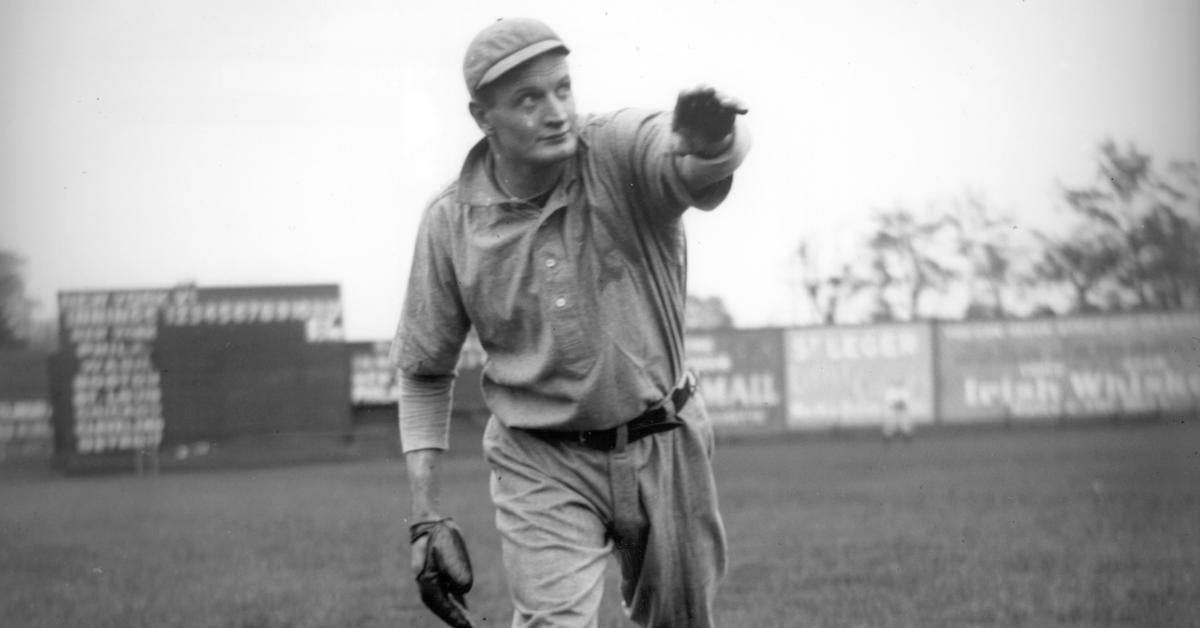
Honus Wagner

Honus Wagner was the first true superstar in baseball history, dominating the league for an entire decade and doing everything at a high level.

Wagner joined the Louisville Colonels in 1897, and he worked his way up to being one of the better players in the league over his first few seasons before his team folded and he was assigned to the Pittsburgh Pirates. As soon as he began playing for his hometown team, he became the best player in baseball.

There was no season in the entire decade of the 1900's where Wagner was not the best player. In 1900 he led the league in doubles, triples, total bases, and batting average (.381). The following season he led the league in RBI and stolen bases, showing his broad skill set and expertise.

In 1903, the first World Series was played between the Pirates and the Boston Americans, and Wagner was expected to dominate as he had done in the 4 previous regular seasons, but he only hit .222 as they fell 5 games to 3 against Cy Young's team. Playing poorly in the losing effort haunted Wagner for years, and he felt that his individual achievements did not make up for his performance.

Over the next 8 seasons, Wagner won 6 more batting titles, giving him a total of 8 for his career, which is still the NL record more than 100 years later, though it was tied by Tony Gwynn. He also led the league in doubles 7 times, and stolen bases 5 times.

Wagner retired before the start of the 1908 season, but after being offered the largest contract in history at the time to return, he changed his mind, and had his best season of all. That year he led the league in hits, doubles, triples, RBI, stolen bases, batting average, on-base percentage, slugging percentage, and total bases, and came up just 2 home runs short of winning that title, and the Triple Crown, as well.

In 1909, he finally got the Pirates back to the World Series, this time facing the Tigers and their young star, Ty Cobb, and it was the first ever World Series matchup between that season's batting champions. This time Wagner played incredibly, batting .333 with 6 RBI and 6 stolen bases, a record at the time, as the Pirates won in 7 games.

By 1912, Wagner was the oldest player in the league, and he began to hit the major milestones. In 1914 he reached 3000 hits, the second player to do so, after Cap Anson, and just before Nap Lajoie. The next year, he became the oldest player ever to hit a grand slam, a record which stood for 70 years, and the next year became the oldest ever to hit an inside-the-park home run.

When the Hall of Fame was created in 1936, Wagner was one of the first 5 players elected, along with Ty Cobb, Babe Ruth, Christy Mathewson, and Walter Johnson, finishing behind only Cobb in the voting. His career batting average of .328 was incredible for a player in the dead ball era, he is still #9 in doubles and #3 in triples for his career, and #10 in stolen bases.

Perhaps most incredible of all, he led all players in the decade of the 1900's in runs, hits, doubles, total bases, RBI, stolen bases, batting average, on-base percentage, and slugging percentage, leaving no doubt as to the identity of the best player of the decade, and he absolutely belongs this high on the list of the greatest players to ever play the game.


Monday, June 11, 2018

Top 106 Baseball Players: #53 - Bert Blyleven


Bert Blyleven

Bert Blyleven was a pitcher known for his curveball, and he threw it with such consistency that he was able to play for 22 years and pitch nearly 5000 innings.

Blyleven was called up to the Minnesota Twins in 1970, when he was just 19 years old, after only half a season in the minors. By 1973, he led the league in shutouts with 9, and earned Cy Young votes for the first of 4 times in his career.

After two more seasons in Minnesota, he grew unhappy with his salary, so the Twins traded him to Texas. He pitched for the Rangers for a year and a half, and in his final start of the 1977 season he pitched a no-hitter just two weeks after returning from a groin injury. The team, however, objected to a rude gesture he made to the camera during the game and traded him after the season, making him the first player ever to be traded immediately after a no-hitter.

His next stop was Pittsburgh, where in 1979 he was able to reach his first World Series. He gave up only 2 runs in 10 innings of work, easily the best in the series, and won his first championship. Just a season later, however, he grew tired of the Pirates, and again demanded a trade, this time heading to Cleveland.

After an elbow injury cost him most of the 1982 season, he struggled in 1983 upon returning, but was finally at full strength in 1984, when he recorded a 2.87 ERA and finished 3rd in the Cy Young voting, his first time being considered for the award in more than a decade.

Even with him pitching well, the Indians were struggling, so he again asked for a trade, and this time he was sent back to Minnesota, and he had a great season, leading the league with 206 strikeouts, 5 shutouts, and 24 complete games, which is a number no pitcher has approached since.

He passed 3000 strikeouts in 1986, then returned to the World Series in 1987. He won two games in the ALCS, then picked up another win in the World Series, finishing with 12 strikeouts and a 2.77 ERA as he earned his second championship.

He led the league in losses in 1988, and was released as a result. He went to play for the Angels, where he flipped his record, going from 17 losses to 17 wins, which earned him the Comeback Player of the Year award and a 4th-place finish in the Cy Young voting at age 38.

It took 14 years for Blyleven to get voted into the Hall of Fame, and before he was elected he was the only member of the 3000 strikeout club not in the Hall. He never won a Cy Young, and only received votes 4 times, but he was a very effective pitcher for a very long time, and pitched very well in both of his World Series appearances, which has earned him a spot among the best baseball players of all time.


Saturday, May 26, 2018

Top 106 Baseball Players: #68 - Hank Greenberg


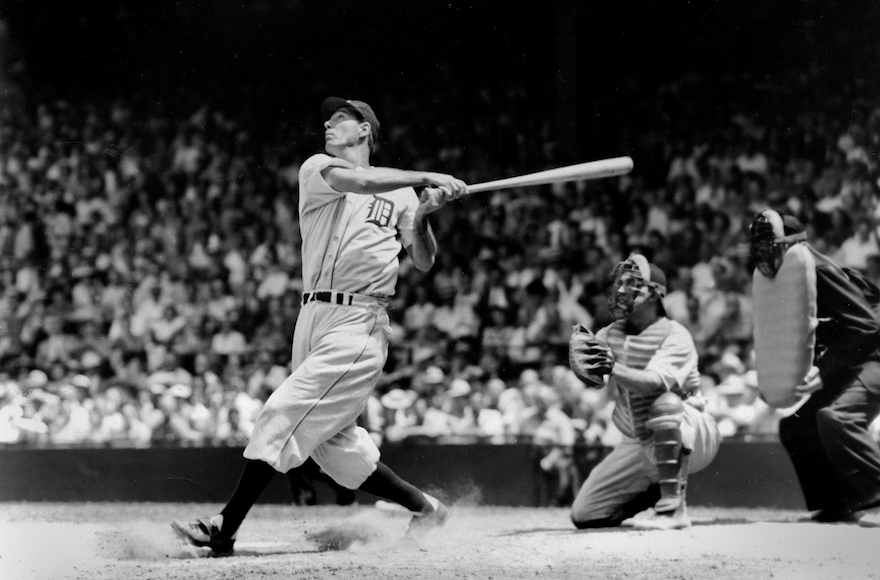
Hank Greenberg

Hank Greenberg was one of the best power hitters of all time, but his career was cut severely short by injury and military service, keeping his from reaching the levels his performance promised.

Greenberg first played in the Majors in 1930, getting one at-bat with the Detroit Tigers at age 19 before being sent down to the minors for 3 years. When he returned in 1933, he was ready, and he never had a poor complete season as a full-time player.

He led the league in 1934 with 63 doubles, the 4th-most that have ever been hit in a season, and led the Tigers to their first World Series in 25 years, which they lost to the Cardinals in 7 games despite Greenberg batting .321 with 7 RBI.

The following season he led the league in both home runs and RBI's for the first of many times in his career, was awarded the AL MVP, and earned the Tigers a return trip to the World Series, which they won in 6 games over the Cubs even though Greenberg sprained his wrist in Game 2 and missed the final 4 games.

Early in the 1936 season, he reinjured the same wrist after 12 games and ended up missing the rest of the season while it healed. When he came back in 1937, he had a monster season, with 40 home runs, 200 hits, and 184 RBI's, which is the 3rd-highest total in history, and has not been matched since.

In 1938, he very nearly beat Babe Ruth's home run record, finishing the season with 58. He had one home run that didn't count because of  game that was called because of rain, and he was walked more in the final month of that season than in any other in his career, and ended up leading the league with 119.

He had a bit of a down season in 1939, which prompted his manager to move him to the outfield to create room at first base for Rudy York, and Greenberg responded with his second MVP season, in which he led the league in doubles, homers, and RBI's, and had 195 hits as he became the first player ever to win MVP awards at 2 different positions.

In May 1941, Greenberg was drafted into the military, where he served for 7 months, which cost him most of that season. He was released 2 days before Pearl Harbor, after which he immediately reenlisted, serving clear until June 1945, and he holds the league record for most time lost to military service.

When he returned in the middle on 1945, he picked up right where he left off, leading Detroit back to the World Series. He clinched the pennant on the final at-bat of the season in Saint Louis. The story goes that the ump wanted to call the game due to darkness, since the field had no lights, but Greenberg said he could see fine and hit the next ball out of the park for a grand slam to prevent a tie for the title. In the World Series, he hit .304 with 7 RBI's in another 7-game win over the Cubs, and he also hit two of the 3 home runs hit in the entire series.

In 1946, he played his first full season since 1940, and again led the league in home runs and RBI's, the 4th time leading in each category, but he retired after the season due to a salary dispute. The Pittsburgh Pirates convinced him to come out of retirement for one more season at a record salary of $80,000, and he had 25 home runs, making him the first player to hit 25 home runs in a season in each league.

He retired for good after that, ending his career with just 9 full seasons under his belt, having lost one to a wrist injury and nearly 4 to military service. Without the break for World War II, he most likely would have reached 500 home runs in his career. He was definitely one of the best power hitters of all time, and was great in his final World Series, and cannot possibly be left off a list of the best baseball players of all time.


Monday, April 30, 2018

Top 106 Baseball Players: #91 - Rube Waddell


Rube Waddell

Rube Waddell was one of the greatest pitchers ever to take the mound at his peak, but other struggles prevented him from reaching his full potential as one of the greatest few pitchers to ever live.

In the first 5 years of his career, he played for 7 teams, including 4 minor league teams, because he quickly wore out his welcome everywhere he went. He was known to sneak off in the middle of a game to go fishing, or to leave the field to chase a passing fire truck. He was also a raging alcoholic, and it is said that he spent his entire first signing bonus on alcohol.

In 1902, he was picked up by the Philadelphia Athletics, where manager Connie Mack was able to keep him somewhat under control for a few years, and the following 6 years were some of the most productive any pitcher has ever had.

He led the league in strikeouts for 6 consecutive seasons, and topped 300 strikeouts in 1903 and 1904, a feat no other pitcher would reach in consecutive seasons until Sandy Koufax in 1965 and 1966. Not only did he have a huge number of strikeouts, but he led the league by an enormous margin each time, with no pitcher coming within 100 strikeouts of him in either of those seasons.

The next season he dropped to 287 strikeouts, but he accomplished another major feat when he won the pitching Triple Crown, topping the league with a 1.48 ERA and 27 wins as well as the usual strikeouts. His team reached the World Series that year, but he didn't pitch, and there is some controversy as to the reason, as he and the team claimed a shoulder injury, but had conflicting stories as to what happened. There is also a rumor that he was paid by a gambler to skip the Series, but that has not been proven.

After the 1907 season, despite still being the league's top pitcher, the A's grew tired of his antics and sold him to the Saint Louis Browns, where his performance regressed quickly, and by the end of 1910 he was out of the majors completely. He died of tuberculosis just a few years later, leaving behind a strange and amazing legacy.

It is unclear what caused Waddell's bizarre behavior, and it's unfortunate that there was no help available to him for his possible mental health disorder, because he was one of the most talented pitchers to ever take the mound, but even in his abbreviated career, he showed enough greatness to be included on this list of the all-time greats.