Showing posts with label Saint Louis Browns. Show all posts

Wednesday, June 6, 2018

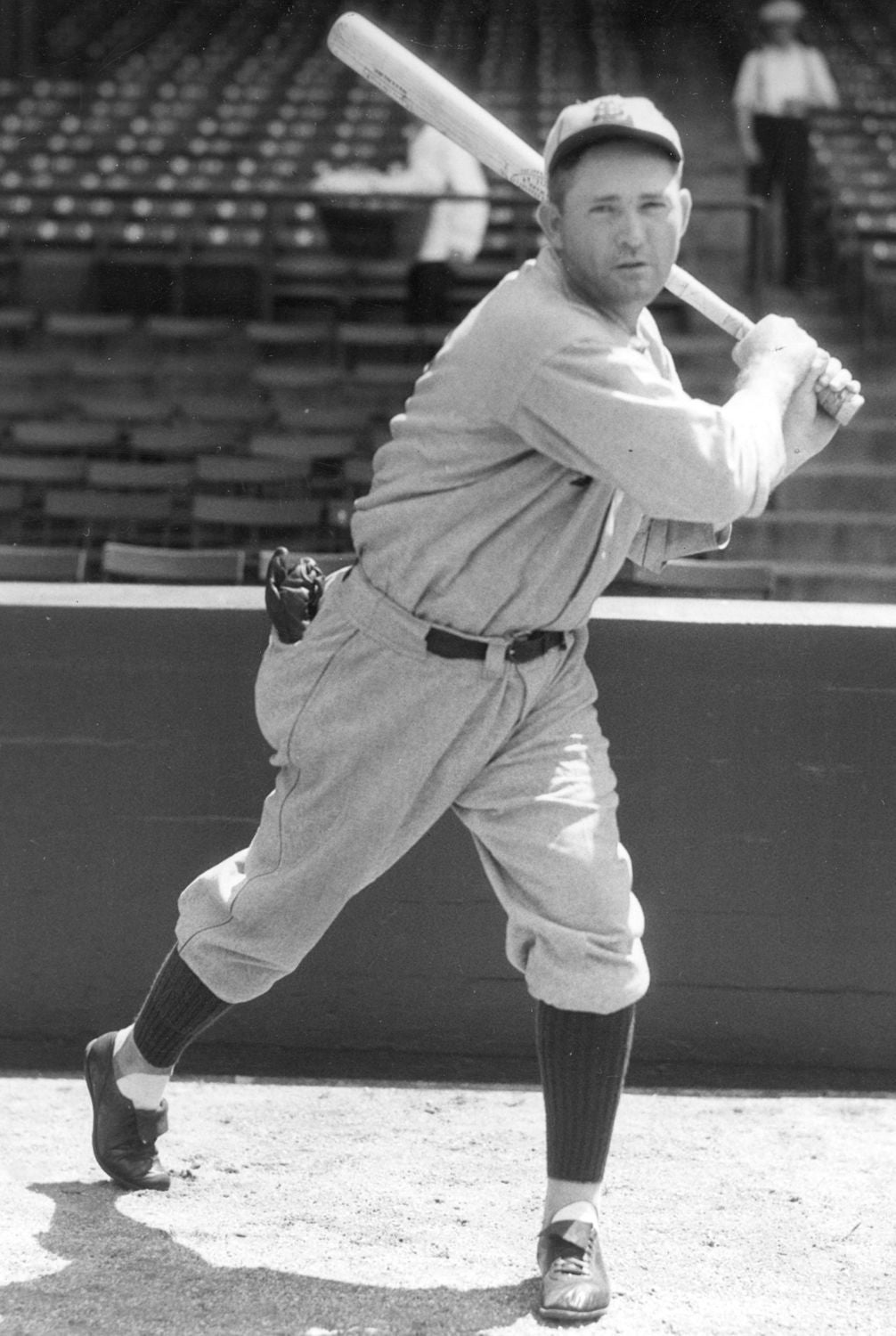
Top 106 Baseball Players: #57 - Rogers Hornsby


Rogers Hornsby

Rogers Hornsby was one of the greatest hitters in history, and a 2-time winner of the Triple Crown, but injuries and problems with managers and teammates shortened his career.

Hornsby's career started in 1915 with the Saint Louis Cardinals at 19 years old, and it took him a few years to work his way up to his peak. In 1917 he led the league in total bases and triples while batting .327, but those stats were tame compared to what was to come.

He burst onto the scene in 1920 with his first great season, and he was the best player in the NL for most of that decade. In 1920 he led the league with 218 hits, 44 doubles, 94 RBI, a .370 batting average, .559 slugging percentage, and 329 total bases. The MVP award did not exist at the time, but he most likely would have won it based on those numbers.

In 1921 he led the league in all of those same categories, but also added triples and runs scored to his collection while playing in every single game. In 1922 he fell behind in triples, but took the home run crown with a career-high 42, which earned him his first Triple Crown. His batting average was .401 that year, making him the only player in history to hit .400 with 40 home runs in a single season.

Hornsby missed a couple months in 1923 to a knee injury, so he led the league in batting and slugging, but none of the other categories due to the time missed. He returned with a vengeance in 1924, leading the league in runs, hits, doubles, walks, batting average, slugging, and total bases, and his batting average was .424, the highest of any player after 1900. The NL MVP award returned that year, but was given to Dazzy Vance, because one voter who did not like him left him off the ballot completely, though the Baseball Writers Association of America retroactively gave him the award in 1962, recognizing the obvious error in judgment.

In 1925 he won his second Triple Crown, with 29 homers, 143 RBI, and an average of .403, the third time he surpassed .400, becoming the first to do it twice, and one of only two to achieve the feat to this day (the other is Ted Williams).

He had his worst offensive year of the decade in 1926, but the Cardinals won the pennant and advanced to the World Series. He only hit .250 in the Series, but the Cardinals beat the Yankees in 7 games, with Hornsby recording the final out by tagging out Babe Ruth on a steal attempt.

A contract dispute after the championship led to him being traded to the Giants, and though he had a solid season, he didn't get along well with the team owner, who traded him again after the season to the Boston Braves. He led the league in batting for the 7th time during his season in Boston, but the Braves couldn't afford his contract and traded him to the Cubs after the season, his third time being traded in just over 2 years.

He led the league in hits in his first season in Chicago, and won the MVP for the second time after leading the Cubs to the pennant. He struggled again in the World Series, batting .238 and setting a record with 8 strikeouts in a 5-game loss to the Philadelphia Athletics. He broke his ankle early in the 1930 season, and for the rest of his career was used mainly as a pinch hitter.

Hornsby's domination of the 1920's was extremely rare. In fact, he led the NL in homers, RBI's, and batting average for the decade, making him one of only 4 players in history to win a decade Triple Crown, along with Honus Wagner, Ted Williams, and Albert Pujols.

Hornsby's career batting average of .358 is #2 all-time behind Ty Cobb, and is the best among right-handed hitters. Only Cobb, Wagner, and Tony Gwynn won more batting titles than Hornsby's 7, and he was the first NL player to reach 300 home runs. He only reached the postseason twice, and struggled both times, but he still ended up as a world champion, and is definitely deserving of recognition as one of the greatest baseball players of all time.


Tuesday, May 22, 2018

Top 106 Baseball Players: #71 - Eddie Plank


Eddie Plank

Eddie Plank was the first great left-handed pitcher in baseball, and still holds some records for lefties, and he was one of the most consistent pitchers in baseball for 16 years.

Eddie didn't even play baseball until after high school, when the local college coach asked him to try out for the team, even though he didn't attend school there. He jumped from there straight to the Philadelphia Athletics of the American League, where he was immediately a solid starter, pitching 28 complete games with a 3.31 ERA, which would be the highest ERA of his career.

He led the league in several categories during his career, including games started twice, shutouts twice, complete games and saves once each, and also win percentage once. He was never a strikeout or ERA leader, but he was among the top 10 in at least one of those nearly every season.

The A's reached the World Series 5 times during his time with the team, and Plank was always at his best in the postseason. He missed the 1910 series due to a sore arm, but in the other 4 seasons, he had an ERA of only 1.32, more than a run lower than his regular season average of 2.35.

Unfortunately, he often faced the other teams' best pitchers in those games, so he finished with a postseason record of 2-5, despite giving up only 11 runs over 54 innings. In his first World Series, in 1905, his team did not score a single earned run in the entire series, but they were able to get revenge on the Giants in both 1911 and 1913, the years in which he was able to outduel Christy Mathewson once each.

After the A's lost the 1914 World Series, the team was dismantled, and Plank left to join the Saint Louis Terriers, where he won 21 games and had an ERA of 2.08. When the team folded at the end of the season, he joined the crosstown Browns, where he pitched his final 2 seasons before deciding to retire at age 41.

After his retirement, the Yankees still had interest in him, so they traded 5 players and cash to the Browns for Plank and Del Pratt, but Plank refused to report, reiterating that he was done. He was elected to the Hall of Fame in 1946, 20 years after he died of a stroke.

When he retired, he was the all-time leader among left-handed pitchers in wins, which is now #3 among all lefties, but he is still the all-time lefty leader in complete games and shutouts, 100 years after his retirement. He won two World Series titles while facing off with his opponents' best pitcher, and though he wasn't flashy, he was one of the top pitchers in the game for 16 years, and is one of the all-time greats.

Monday, May 21, 2018

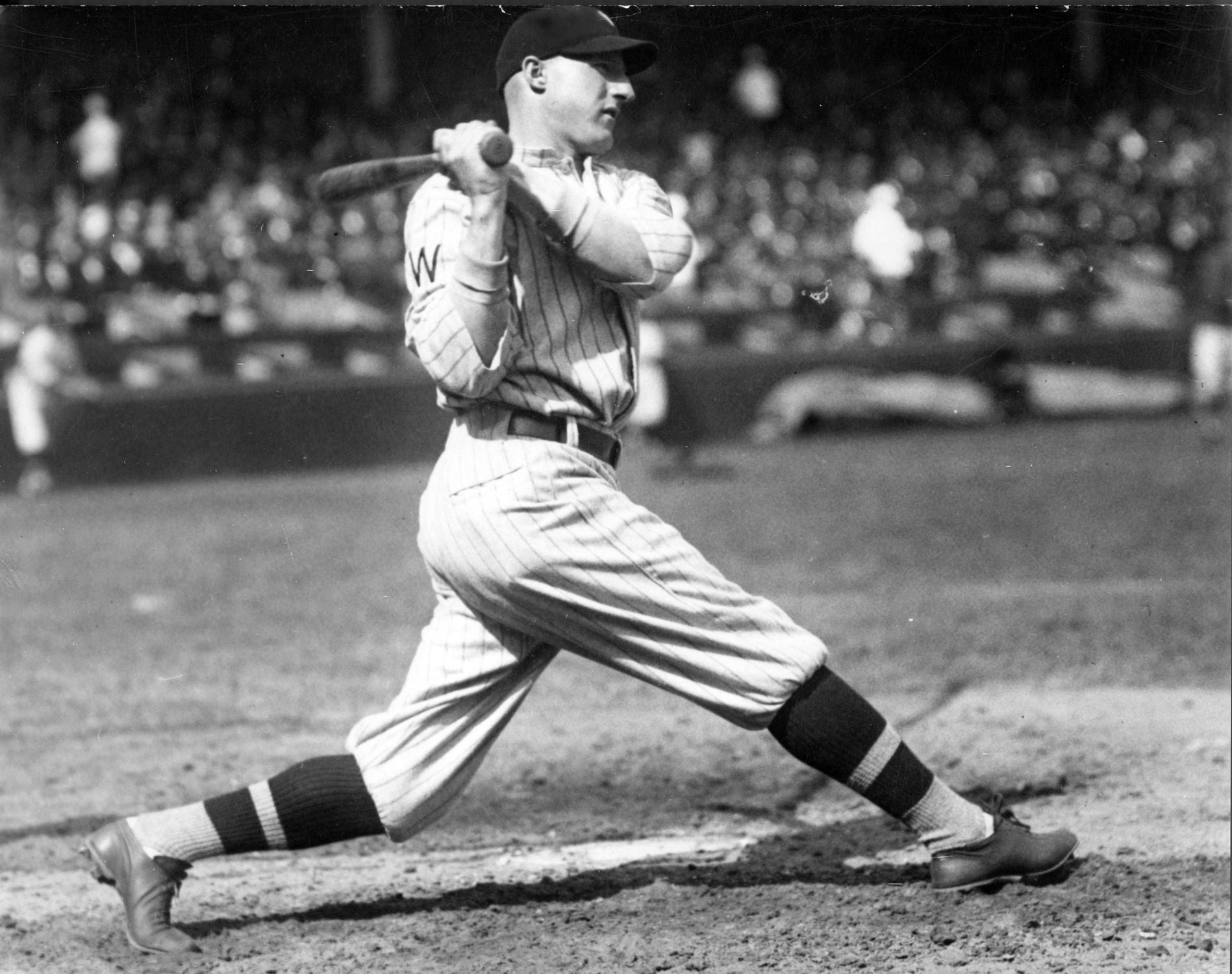
Top 106 Baseball Players: #72 - Goose Goslin


Goose Goslin

Goose Goslin was a great offensive player who played before World War II who also had a great arm, but he earned his nickname due to his struggles with catching fly balls, as he would often flap his arms wildly while trying to position himself for the catch.

Goslin was called up to the Washington Senators during the final month of the 1921 season, and played well enough to become the starting leftfielder the following season. Starting in 1922, he batted at least .300 for 7 straight seasons, which also included 2 seasons leading the league in triples and one leading the league in RBI's.

When he led the league in RBI's in 1924, he also led the Senators to the World Series, and their only championship ever, by batting .344 with 7 RBI's in 7 games against the Giants. He got them back to the World Series again the next year, and still played just as well, but they fell to the Pirates in 7 games.

He won the batting title in 1928 in interesting fashion. He was tied with Heinie Manush for the lead heading into the final game, and they happened to be facing each other in that game. Goslin was leading when his turn came to bat in the 9th inning, and he told the manager to pull him from the game so he would win the title, but after his teammates called him a coward, he decided to take his turn at bat. After two strikes, he started to regret the decision, and tried to get thrown out of the game by arguing with the umpire so that the at-bat wouldn't count, but the umpire knew what he was doing and told him to finish the at-bat. He ended up getting a hit on the next swing and winning the batting title.

For the next year and a half, he struggled to regain that form, and the Senators decided to trade him to the St. Louis Browns for Manush. He spent two and a half years in Saint Louis, and his numbers rebounded somewhat, then he was traded back to the Senators, where he dropped back below .300, and was again traded away, this time to Detroit.

He had 3 solid years with the Tigers, helping them to two straight World Series, including the title in 1935, when he reached base on more than 40% of his plate appearances to earn his second championship ring. He played one final subpar year in Detroit before signing with Washington one more time to finish his career where it started.

Goslin was never an MVP, though he was in the conversation many times from the early 1920's to the late 1930's, and his RBI title and batting title were both very impressive. He was also very good in both of his World Series wins, and was the best offensive player in his first World Series loss. He is currently #22 all-time in triples and #36 in RBI's, and needs to be remembered as one of the all-time greats.

Monday, April 30, 2018

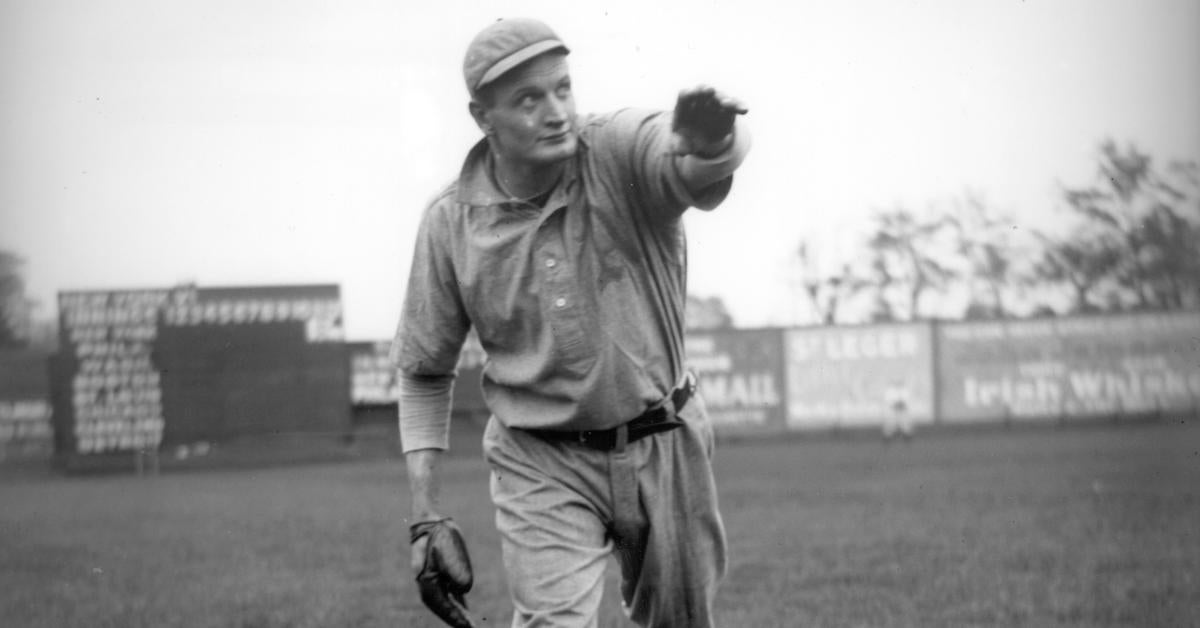
Top 106 Baseball Players: #91 - Rube Waddell


Rube Waddell

Rube Waddell was one of the greatest pitchers ever to take the mound at his peak, but other struggles prevented him from reaching his full potential as one of the greatest few pitchers to ever live.

In the first 5 years of his career, he played for 7 teams, including 4 minor league teams, because he quickly wore out his welcome everywhere he went. He was known to sneak off in the middle of a game to go fishing, or to leave the field to chase a passing fire truck. He was also a raging alcoholic, and it is said that he spent his entire first signing bonus on alcohol.

In 1902, he was picked up by the Philadelphia Athletics, where manager Connie Mack was able to keep him somewhat under control for a few years, and the following 6 years were some of the most productive any pitcher has ever had.

He led the league in strikeouts for 6 consecutive seasons, and topped 300 strikeouts in 1903 and 1904, a feat no other pitcher would reach in consecutive seasons until Sandy Koufax in 1965 and 1966. Not only did he have a huge number of strikeouts, but he led the league by an enormous margin each time, with no pitcher coming within 100 strikeouts of him in either of those seasons.

The next season he dropped to 287 strikeouts, but he accomplished another major feat when he won the pitching Triple Crown, topping the league with a 1.48 ERA and 27 wins as well as the usual strikeouts. His team reached the World Series that year, but he didn't pitch, and there is some controversy as to the reason, as he and the team claimed a shoulder injury, but had conflicting stories as to what happened. There is also a rumor that he was paid by a gambler to skip the Series, but that has not been proven.

After the 1907 season, despite still being the league's top pitcher, the A's grew tired of his antics and sold him to the Saint Louis Browns, where his performance regressed quickly, and by the end of 1910 he was out of the majors completely. He died of tuberculosis just a few years later, leaving behind a strange and amazing legacy.

It is unclear what caused Waddell's bizarre behavior, and it's unfortunate that there was no help available to him for his possible mental health disorder, because he was one of the most talented pitchers to ever take the mound, but even in his abbreviated career, he showed enough greatness to be included on this list of the all-time greats.