Friday, August 21, 2015

Top 50 NFL Quarterbacks: #1 - Peyton Manning


Peyton Manning

Peyton Manning is always included in conversations about the greatest quarterbacks of all time, but he is rarely called the greatest due to the fact that despite his amazing regular season statistics, he has only won one Super Bowl in his career. While he may not be the greatest champion in league history, he is the greatest regular season player ever, and has greater longevity than nearly every other QB in history.

He began his career as a #1 pick in 1998, going to the Indianapolis Colts, where he was immediately inserted as the starting quarterback. In his 17 seasons, he has only missed a total of 16 games, comprising the entire 2011 season, when he sat out due to two neck surgeries. His rookie season was the only time in his entire career when he wasn't one of the top passers in the entire league, with 3739 yards, 26 touchdowns, and 28 interceptions, each of which was the worst he would ever have.

He vaulted to the top of the league in his second season, with 4135 yards, 26 touchdowns, and only 15 interceptions, and the Colts improved by 10 games, to 13-3. They would lose in their first playoff game, however, which would become a pattern in his career, with 9 seasons ending with a loss in his first playoff game.

In his third season, he led the league with 4413 yards and 33 touchdowns, the first of many times he would lead the league in each. He failed to win a playoff game once again, and didn't even get the Colts to the playoff the following year. It would be the final time he would miss the playoffs. He got them back in 2002, but again lost in round 1.

In 2003, he led the league in yardage for the second time, winning his first MVP award while leading Indy to a 12-4 record, and once the playoffs started, he finally got things on track. In his first ever playoff win, he threw 377 yards and 5 touchdowns, destroying the Broncos 41-10. He threw 304 yards and 3 touchdowns in the next round, getting to his first AFC title game, where the Colts fell to Tom Brady and the Patriots 24-14.

He followed up his first MVP season with a repeat performance, throwing 4557 yards, his best to that point, along with 49 touchdowns, which broke Dan Marino's long-standing record of 48, and had only 10 interceptions. He was awarded his 2nd MVP for that amazing performance, but fell to New England in the playoffs again.

In 2005 he posted his worst statistical season since he was a rookie, missing the 4000 yard mark for only the second time in his career, but the Colts finished with a 14-2 record, the best of Manning's career. It was Pittsburgh that would end his season early this time, the third straight season he fell to the eventual champions in the playoffs.

In 2006 he was back on top, leading the league in touchdown passes for the third time, and he finally exorcised his playoff demons, taking out the Patriots in the AFC title game and reaching his first Super Bowl. He was not great in that game, with 247 yards and 1 touchdown, but it was enough for him to earn the Super Bowl MVP.

He was his usual great self in 2007, but was overshadowed by Tom Brady, who broke his record when he reached 50 touchdown passes while leading the Patriots to an undefeated season. Manning would bow out in his first playoff game once again. When Brady was hurt at the beginning of 2008, Manning looked to have a clear path to another title, but despite winning his 3rd MVP, he couldn't get past his first playoff opponent again.

In 2009 he was even better, with 4500 yards and 33 touchdowns, and the Colts were better also, getting back to 14-2. He pushed right through the playoffs, getting to the Super Bowl for the second time, and while he played better than the previous game, his 333 yards and 1 touchdown weren't enough to stop Drew Brees and the Saints.

In 2010 he set a new career high with 4700 yards, but the Colts only won 10 games, their lowest total in 8 years. After another first round playoff exit, he went to a doctor about neck pain that he had been having for several years, and discovered that he would need surgery on his neck, and the recovery cost him the entire 2011 season. Nervous about how he would fare after his return, the Colts released him before the 2012 season.

He signed with Denver during the offseason, and posted one of the best seasons of his career, with 4659 yards and 37 touchdowns while leading the Broncos to a 13-3 record. He was awarded the Comeback Player of the Year Award for his great season, meaning that each of the top 3 of all time have been recipients of the award. He was also back to his old tricks in the playoffs, losing in the first game once again.

The 2013 season would be truly historic, and ranks as one of the best seasons ever by any quarterback. He broke Drew Brees' passing yard record when he finished with 5477, and he broke Tom Brady's touchdown record with 55. He also threw only 10 interceptions all season, and was one of the easiest choices for MVP in history. The first two playoff games went great, with another win over Tom Brady and the Patriots in the AFC title game earning a third Super Bowl berth, but the big game couldn't have gone much worse, and they were destroyed 43-8.

In 2014 he became one of the oldest passers ever to play at an elite level, passing for 4727 yards and 39 touchdowns, a bit lower than the previous season but still better than most of the league. He was disappointed with another quick playoff exit, continuing his career trend.

While it is obvious that Tom Brady is the better playoff quarterback, with twice as many Super Bowl appearances and 4 wins to Manning's one, Brady has been nowhere near the same player as Manning in the regular season. Manning has thrown for over 4000 yards 14 times, a league record, while Brady has only 7. He has thrown 30 touchdowns 9 times, while Brady has done it only 5. He has a record 5 MVP's, while Brady has only 2. He owns the single season records for both touchdowns and yardage, along with the career record for touchdowns. He has also played 2 more seasons than Brady, and 3 more at an elite level, which is the biggest reason he is at the top. If you judge the two based on per-season greatness, Brady's pace is slightly ahead of Manning's, meaning that if he lasts two or three years longer than Manning while still playing well, the #1 spot will most likely be his, at least until Aaron Rodgers passes them both. For now, Manning still holds the spot he took from Joe Montana 5 years ago.

Thursday, August 20, 2015

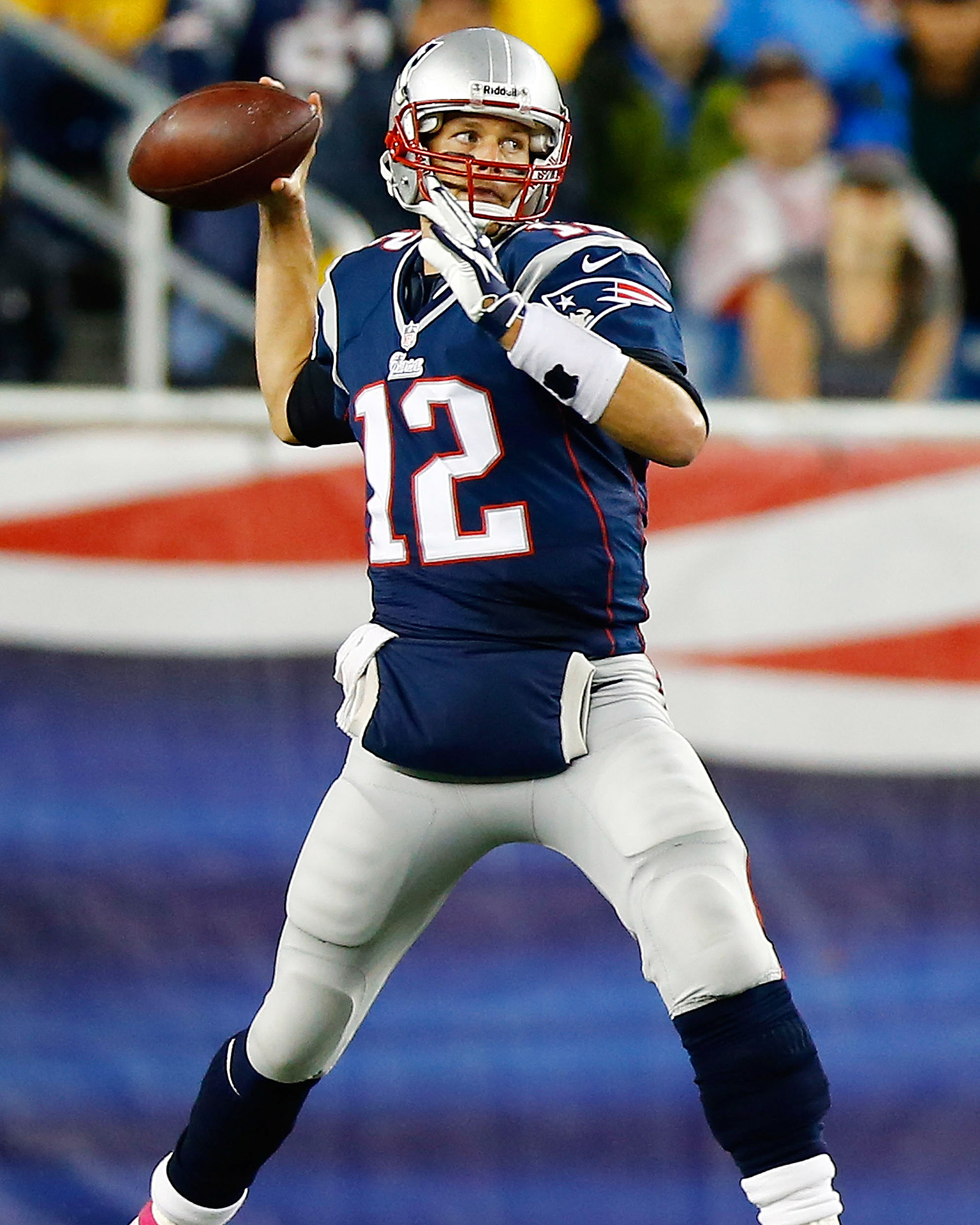
Top 50 NFL Quarterbacks: #2 - Tom Brady


Tom Brady

Tom Brady is universally recognized as one of the greatest quarterbacks of all time, due to his 4 Super Bowl victories, tied for the most all time, and 6 Super Bowl appearances, which put him ahead of John Elway last season for the most all time.

He began his career as a 6th-round pick in 2000, and he spent his rookie season riding the bench behind Drew Bledsoe, completing only one pass for 6 yards all season long. He took over as the starter in the third game in 2001, and has started in every game he played since.

 He was a decent player in his first season, but his totals in every category turned out to be career lows. He did enough to get New England to the playoffs, and even survived the first two rounds of the playoffs somehow, without throwing a single touchdown pass on the way to the Super Bowl. In the Super Bowl, he threw 145 yards and 1 touchdown, but was awarded the MVP anyway, even though Adam Vinatieri was really the reason they won.

He was a little better in his second season, even leading the league in touchdown passes with 28, but the Patriots missed the playoffs, which would be the only time in his entire career as a starter that he would fail to make the postseason.

His regular season numbers remained steady in 2003, even dropping off a little, but he led New England to a 14-2 record, then threw one touchdown in his first two playoff games, which was better than his previous postseason run, and had a great Super Bowl, throwing 354 yards and 3 touchdowns while winning his second Super Bowl MVP.

He remained a steady passer again in 2004, among the top 5 in the league, putting up nearly identical numbers while leading the Patriots to an identical 14-2 record. He threw 3 touchdowns leading up to the Super Bowl, once again slightly better than the previous year, and threw 236 yards and 2 touchdowns in the Super Bowl, which was somewhat average for a winning QB, and did not win the MVP.

He raised his numbers in 2005, leading the league with 4110 yards, but lost in the second round of the playoffs, which was the first time Brady ever lost in the postseason, which was pretty amazing after winning his first 10 games. When he dropped his numbers back down to his average in 2006, the team's playoff performance improved, but they lost in the AFC title game to Peyton Manning and the Colts.

His 2007 season was the best he ever had, and is the second-best ever recorded by a quarterback in history. He led the league with 4806 yards and a record-setting 50 touchdowns, and the Patriots became the first team to ever finish a season 16-0. They won two playoff games easily, and appeared headed to a perfect 19-0, but Brady was outplayed by Eli Manning in the Super Bowl, throwing only 266 yards and 1 touchdown as the perfect season ended one game short.

There would be no repeat in 2008, as Brady tore his ACL in the first game of the season, and the Patriots missed the playoffs as a result of losing their star. He came back very strong in 2009, posting his second-best season in both yardage and touchdowns, and was given the Comeback Player of the Year award for his amazing bounceback, though the Patriots failed to win a single playoff game for the first time with Brady at the helm.

He was even better in 2010, dropping his yardage a bit, but throwing 36 touchdowns with only 4 interceptions on the season for an amazing 9:1 TD:INT ratio. Once again, the Patriots would lose their first playoff game, leaving Brady without a playoff victory in 3 full seasons.

He had his second-best season in 2011, breaking Dan Marino's single season passing yardage record one week after Drew Brees did it, which means that he never actually held the record. He finished with 5235 yards and 39 touchdowns, then led another Super Bowl run, but it ended the same way as it did 4 years earlier, with a mediocre performance in the Super Bowl that ended in a loss to the Giants and Eli Manning. His best two seasons both ended in Super Bowl losses to New York.

He was the best QB in the league in 2012, putting together 4827 yards, 34 touchdowns, and 8 interceptions while taking New England to a 12-4 record. He played well in his first playoff game, but struggled against Baltimore in the AFC title game, falling short in his bid to reach a record 6th Super Bowl.

He had a significant dropoff in 2013, falling down to 4343 yards and 25 touchdowns, but the Patriots reached 12-4 again, and Brady led them back to the AFC title game, where they lost to Peyton Manning and the Broncos, leaving him out of the Super Bowl again.

His 2014 season started off rough, but he rebounded nicely as the season went on, and ended up with 4109 yards and 33 touchdowns, and New England reached 12-4 for the third straight year. The playoffs that season would be the best of his entire career. He threw 3 touchdowns in each of the first two playoff games, which earned him a trip to his 6th Super Bowl. In that game he threw 328 yards and 4 touchdowns, which earned him his record-tying 3rd Super Bowl MVP.

Brady is ahead of Joe Montana for several reasons. He has played in 2 more Super Bowls than Montana, and won 4, tying him with Joe. Both won 3 Super Bowl MVP's and 2 regular season MVP's, but Brady reached more conference title games, with an NFL-record 9 to Montana's 6. He was the first QB to ever throw 50 touchdowns, and the 3rd ever to reach 5000 yards. In addition, he has been an elite quarterback for 11 full seasons, two more than Montana. Without last season, he wouldn't be ranked ahead of him, but everything that happened last season vaulted him into the #2 spot.

Wednesday, August 19, 2015

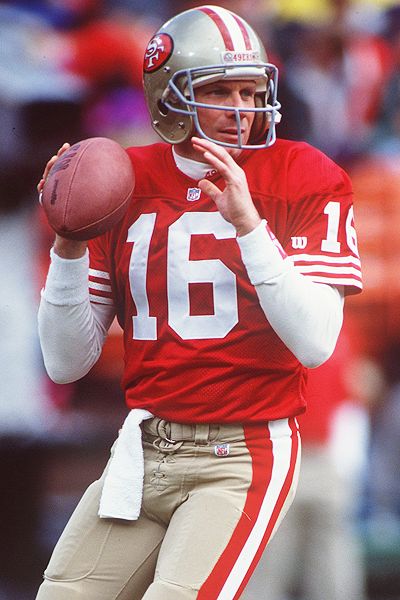
Top 50 NFL Quarterbacks: #3 - Joe Montana


Joe Montana

Putting Joe Montana anywhere outside of the top 2 quarterbacks of all time may seem almost sacrilegious, but a couple of severe injuries shortened his career, which allowed two active quarterbacks to pass him on the all-time list within the past 5 years.

Joe Montana was a 3rd round pick by the 49ers in 1979, but hardly even saw the field as a rookie. He took over the starting job midway through his second season, but both he and the team were horrible. That would all change in his 3rd season.

1981 would be the first year that he showed his true promise. He led the league in completion percentage with 63.7%, threw 3565 yards, 19 touchdowns, and 12 interceptions, and led the 49ers to the best record in the league at 13-3. In his first ever playoff appearance, he was able to get past the Giants and Cowboys to reach his first Super Bowl, then won the Super Bowl MVP after throwing 157 yards and a touchdown while running for another.

The 1982 season was a strange one for Montana. The season was shortened to 9 games by a strike, but he led the league in touchdowns with 17 and had the highest per-game yardage of his career, but the 49ers finished at 3-6 the year after winning it all.

His personal rise continued in 1983, as he reached 3910 passing yards and 26 touchdowns, and the team made it back to the playoffs, advancing as far as the NFC title game before falling to Washington, ending up one game short of getting back to the championship.

He finally put it all together in 1984, with 3630 yards and 28 touchdowns, while San Francisco finished at 15-1, becoming the first team in history to reach 15 wins in a regular season. Despite throwing more picks than touchdowns in the first two playoff games, the 49ers still advanced to the Super Bowl again, where Montana put on a show, throwing 331 yards and 3 touchdowns while winning his second Super Bowl MVP.

They followed up their second Super Bowl win with another dud, although Montana did have a pretty good season overall. The 49ers barely made it into the playoffs, then lost in the wild card game, meaning that they followed up a championship season with no playoff wins just like before.

Montana suffered a serious back injury during week one of the 1986 season, and he was told by doctors that he should retire, but after surgery and rehab, he came back to finish out the season, and though his numbers for the season looked terrible, he won the Comeback Player of the Year award for making it back from such a terrible injury.

He missed 5 more game in 1987 due to injury, but set a career high with 31 touchdowns, which led the league for the entire season. That is also the season that Steve Young first joined the team, and he started to show some promise filling in for Montana through injuries. The Niners would fail to win a playoff game for the third season in a row, leading many to wonder whether Montana should be replaced by Young permanently.

Young did start a few games in 1988, and Montana's numbers took a hit as a result, but the 49ers would make the playoffs, and Montana would lead a great playoff run, with a total of 8 touchdowns and only 1 interception in the three games, and it ended with a 3rd Super Bowl victory. He threw 357 yards and 2 touchdowns in the Super Bowl, with 215 of those yards going to Jerry Rice, who took home the MVP.

Despite being a 3-time champion, Montana had never won a regular-season MVP, but that changed in 1989, when he put up his best season ever. He completed 70.2% of his passes, which led the league for the 5th time, and had 26 touchdowns with only 8 picks, and the 49ers finished at 14-2, best in the league by far. That year's playoff run was one of the greatest of all time, with a total of 800 yards and 11 touchdowns without an interception over 3 games, a feat only matched by Joe Flacco in 2012. His Super Bowl performance was also one of the best ever, with 297 yards and 5 touchdowns without an interception, earning him a 3rd Super Bowl MVP, becoming the first player ever to achieve that feat.

He was great again in 1990, taking home his second straight MVP award while setting a career high with 3944 passing yards, but his interceptions did double to 16, which makes it rank just a notch lower in his career hierarchy. They seemed well on their way to a third straight Super Bowl win, which has never been achieved, but he suffered a severe elbow injury late in the NFC title game, which allowed the Giants to end their chance at a three-peat.

The elbow injury turned out to be very severe, causing Montana to miss nearly two full seasons, with only a relief appearance in the final game of 1992 in that entire time. After the season ended, a full-blown quarterback controversy ensued, due to Steve Young leading them to the playoffs and winning the MVP in 1992. The result was that Montana was traded to Kansas City prior to the 1993 season, allowing him to continue his career.

He was definitely not the same player with the Chiefs, tossing a career low in yardage for a season in which he started most of the games, and had only 13 touchdown passes, but he did get the Chiefs to the AFC title game, which didn't do much for his ranking, but shows that he was a winner. He played one more mediocre season before retiring.

While many consider Montana the greatest of all time due to his 4-0 record in Super Bowls, his injury-plagued career was cut short, causing him to miss out on several years that could have catapulted him to the top. He had only 2 MVP seasons, but 3 Super Bowl MVP's and 4 championships. He had 9 seasons as an elite quarterback in the NFL, comprising the entire decade of the 1980's, other than the 1986 season that he nearly missed. The quarterbacks who have passed him up both have had longer careers, more league-leading seasons in different categories, and more playoff seasons, but it still does not mean that Montana is not one of the best to ever play the game.

Tuesday, August 18, 2015

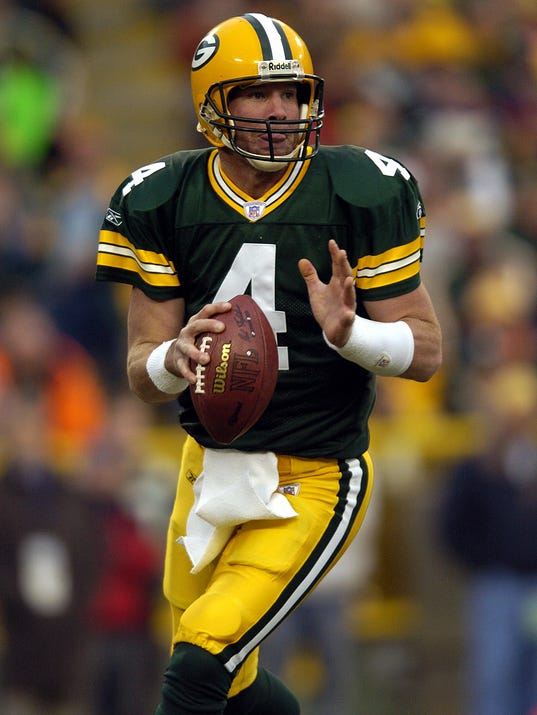
Top 50 NFL Quarterbacks: #4 - Brett Favre


Brett Favre

Brett Favre is yet another quarterback whose name is all over the NFL record book, but it didn't start out looking like it would lead there. He was a second-round pick of Atlanta in 1991, but only threw 4 passes in his rookie season with the Falcons, 2 of them resulting in interceptions. He was traded to Green Bay after the season for a first-round pick.

In the fourth game of his Packers career, Favre took over the starting job from Don Majkowski, and he would not give it up for the rest of his time with the team. His first two years in Green Bay were decent, but nothing special, but he started to show his greatness in 1994, when he threw 3882 yards, 33 touchdowns, and only 14 interceptions while leading Green Bay to the playoffs for the second straight year, where they lost to Dallas in the second round.

1995 was even better, with the highest passing total of his career (4413), which led the league, along with 38 touchdowns, also #1 in the league. Green Bay won the division with an 11-5 record, and Favre won his first MVP award. In the first two round of the playoffs, he threw 5 touchdowns without a pick, but he tossed 2 in the NFC title game, which led to them losing to Dallas for the third straight season to end their run.

In 1996 he dropped his yardage total back below 4000, but threw one more touchdown while getting the Packers to the best record in the league at 13-3, earning him his second straight MVP. He didn't have amazing numbers in the playoffs, but was able to finally break through and reach the Super Bowl, where he was good. He passed for 246 yards and 2 touchdowns and ran for another, but became the only QB in history to score 3 touchdowns in a Super Bowl win without being awarded the MVP.

Three-peats of any kind are a very difficult feat in sports, but Favre accomplished one in 1997, when he led the league in touchdowns for the third straight season and was awarded his 3rd consecutive MVP, becoming the first and only player ever so honored. That amazing season was followed up with another run to the Super Bowl, where they met John Elway and the Broncos, and though Favre outplayed Elway significantly, Terrell Davis led the Broncos to victory with his 3rd touchdown late in the game.

In 1998 he led the league in passing yards for the second time, reaching 4212, but threw 23 interceptions, and his down season led to the Packers falling in the wild card round to the 49ers, marking the first time in 4 years that they failed to reach the NFC title game.

He and the Packers had a couple of down years after that, with Favre throwing a lot of interceptions and Green Bay missing the playoffs, but he made a bit of a comeback in 2001, raising his TD's back up to 32 while dropping his picks down to 15. He also led them to their first playoff victory since the Super Bowl loss, but it was just a single game, and Favre ended up throwing 6 interceptions in their second round loss to Kurt Warner and the Rams.

He remained a solid quarterback on a decent team for several more seasons, with nearly every season ending with speculation of retirement, followed by a decision to play one more season to chase another Super Bowl. His final season in Green Bay came in 2007, when he threw 4155 yards and 28 touchdowns at age 38 and led the Packers to the NFC Championship Game for the 4th time in his career.

The Packers were desperate to move on and allow Aaron Rodgers to take over the starting job, and Favre felt that they forced him into retirement, but he quickly decided to unretire, which forced the Packers to trade him away to avoid a quarterback controversy. He was sent to the Jets for a year, where he had a pretty mediocre year, followed by another retirement, and another decision to come back.

When he came back in 2009, he joined the Minnesota Vikings, and had his best season since his 3 MVP years early in his career. He finished with 4202 yards, 33 touchdowns, and a career-low 7 picks. He led the Vikings to the playoffs, and even won a playoff game, which earned them a spot in the NFC title game, the fifth of Favre's career. The playoff win earned Favre the distinction of being the oldest quarterback ever to win a playoff game, at age 40.

He played one more season with Minnesota, but was terrible, with only 11 touchdown passes and 2509 yards, the lowest total since his rookie season, which ended with 0 yards. He finally retired for good at the end of the 2010 season after a career that spanned 20 years.

The reason Favre is this high is not due to any record-breaking seasons, like most of the other top QB's. He had three excellent MVP seasons, and 6 other seasons as one of the best in the league. He led his teams to 5 conference title games and 2 Super Bowls, coming away victorious once. What really sets him apart is the volume of his career. He is currently #1 all time in passing yards, completions, attempts, interceptions, wins, and games started, as well as consecutive starts, and was #1 in touchdowns until last season. He is also the only player in history to win 3 straight MVP's, which is pretty remarkable, so there is no doubt that he deserves to be remembered as one of the best of all time.

Monday, August 17, 2015

Top 50 NFL Quarterbacks: #5 - Drew Brees


Drew Brees

Drew Brees may seem to be ranked a little high here, but he is often overlooked because of the success of his comtemporaries, Peyton Manning and Tom Brady. He was drafted by the San Diego Chargers in the second round of the 2001 NFL Draft, but only saw action in one game during his rookie season.

He won the starting job from Doug Flutie before the 2002 season, and was a usable starter, but did nothing of note. His second season as a starter was a disaster, and he lost his starting job back to Flutie midway through the season. When San Diego picked up Philip Rivers on Draft Day in 2004, it appeared that Brees was headed out of town, but that isn't quite what happened.

His impending replacement seemed to wake him up, and he started to show flashes of his future brilliance in 2004, putting up 3159 yards and 27 touchdowns with only 7 interceptions. He also had his first playoff appearance, although it ended quickly, going down 20-17 in the wild card round. He was about as good in 2005, but tore his labrum and rotator cuff in his throwing shoulder in the final game of the season, and San Diego did not want to commit much to him, so he walked away, signing with New Orleans, which turned out to be the best decision he ever made.

In his first season with the Saints, he led the league in passing with 4418 yards, which would turn out to be one of the lowest totals of his Saints career, and led the Saints to the playoffs, one season after they finished 3-13. Not only did they make the playoffs, they went clear to the NFC Championship Game, where they fell to the Bears, but it was just the start of something great.

After putting up nearly the same numbers in 2007 but missing the playoffs, he had an amazing season in 2008, becoming only the second player in league history to reach 5000 yards, coming up just 15 yards short of breaking Dan Marino's 24-year-old record. He also led the league with 34 touchdown passes, but New Orleans missed the playoffs again, making his amazing season a little less meaningful.

In 2009 he had the lowest passing yard total of his Saints career, reaching "only" 4388, but did lead the league with 34 touchdowns, and New Orleans led the NFC with a 13-3 record. He had a great postseason, throwing three touchdowns in each of the playoff games leading up to the Super Bowl, which was a first in Saints history. In the Super Bowl, he outplayed Peyton Manning by throwing 288 yards and 2 touchdowns as the Saints won 31-17, earning Brees the Super Bowl MVP.

His follow-up season wasn't quite as good, with 4620 yards, 33 touchdowns, and a career-high 22 interceptions, and the Saints ended up losing in the wild card round. 2011, however, was a different story, as he destroyed Dan Marino's yardage record, breaking it with a week to spare and ending up with 5476. He also led the league in touchdowns with 46 and set another record with a 71.2% completion percentage. He was also great in the playoffs, throwing 466 yards and 3 touchdowns in a wild card win, then throwing 462 yards and 4 touchdowns in a loss to the 49ers in the divisional round.

The Saints were severely hampered by the Bountygate scandal the next year, causing them to win only 7 games as several players and coaches were suspended during the season, but Brees was his usual awesome self, leading the league with 5177 yards and 43 touchdowns. He also became the first and only player to reach 5000 yards in consecutive seasons.

In 2013 he did it again, passing for 5162 yards and 39 touchdowns, but was overshadowed by Peyton Manning breaking his yardage record by a single yard while setting the touchdown record as well. He did get the full-strength Saints back to the playoffs, but they only reached the second round of the playoffs.

The 2014 season was a bit of a disappointment for Brees, as he missed the 5000 yards plateau for the first time in 4 years, ending the season just short at 4952, which was still enough to lead the league, and the Saints missed the playoffs despite playing in the weakest division. While that would still be considered a career year for most players, for Brees it was a little lackluster.

Brees has had the least playoff success of any of the top 5, and ranks only behind Dan Marino among the top 10 in that regard, but he did have a big Super Bowl victory and one other great playoff run two years later. What qualifies him to be in the top 5 is his record-setting passing. Of the eight 5000 yard seasons in NFL history, 4 belong to Drew Brees, and the other 4 to Matthew Stafford, Dan Marino, Tom Brady, and Peyton Manning. He also holds the record for most consecutive 4000 yard seasons, with 9 and counting, and the highest completion percentage in a season. He was the first QB ever to throw 40 touchdowns in back-to-back seasons, and holds the record for most consecutive games with a touchdown pass, breaking a very old record belonging to Johnny Unitas. He may not be the postseason stud most of the greatest quarterbacks are, but his amazing performance over the past 9 seasons was enough to put him at #5

Sunday, August 16, 2015

Top 50 NFL Quarterbacks: #6 - Dan Marino


Dan Marino

Dan Marino is the only quarterback in the top 10 to have never won a Super Bowl, and he only reached one in his career, but what he accomplished throughout his lengthy career was enough to overcome that and earn him one of the top spots in the all-time rankings.

He was the 27th pick in the 1983 NFL Draft, the sixth quarterback taken in that first round, but he ended up with the best career of any of them. He earned the starting job in just the sixth week of his rookie season, and ended up with the most passing yardage in the AFC, but that was nothing compared to what was coming.

In 1984, he posted the greatest season by a quarterback in the history of the league, even today. He set new NFL records with 5084 yards and 48 touchdowns, destroying the old records of 4802 yards and 36 touchdowns. Both were way above the average starter numbers in the league of 2799 and 18, the greatest difference in history for either category. He also led Miami to an AFC-best 14-2 record and was obviously awarded the MVP following the season.

He also had the best playoff performance of his career that season, putting up 683 yards, 7 touchdowns, and 3 interceptions in the two games that led Miami to the Super Bowl, and his 421 yards and 4 touchdowns are still AFC title game records. The Super Bowl didn't go quite as well, with 318 yards, but only 1 touchdown and two picks, and the Dolphins lost 38-16 to Joe Montana and the 49ers. It would be the only Super Bowl appearance of his career.

His production dropped off significantly the next season, but he was still good enough to lead the league in both yards and touchdowns, at 4137 and 30, which just goes to show how great his previous season was. Miami was able to make it only as far as the AFC title game that year, losing to New England 31-14.

In 1986 he again led the league in yardage and touchdowns for the third straight year, this time throwing 4746 yards and 44 touchdowns, marking only the second time a player reached 40 touchdowns, joining himself in the club. His Dolphins failed to make the playoffs that year, however, which made it somewhat of a waste.

He had a bit of a down year in 1987, but made a nice personal comeback in 1988, leading the league in yardage again with 4434, becoming the first player ever to reach 4000 yards 4 times, passing Dan Fouts, who had done it three times. The Dolphins missed the playoffs for the third straight season, though, so his production continued to do nothing.

After a fourth straight playoff-free season, Miami finally made it back in 1990, although Marino threw only 3563 yards. He was decent in the playoffs, throwing 5 touchdowns in 2 games, but he couldn't get past Buffalo, which was on its way to its first Super Bowl defeat.

Two years later he reached 4000 yards yet again, leading the league in yardage for the 5th and final time in his career, and he also got Miami back to the AFC title game for the first time in 7 years, but they lost to Buffalo again, leaving Marino short of the ultimate prize one more time.

He tore his Achilles tendon early in 1993, causing him to miss the final 11 games, the first major injury of his career. Many doubted that he would be able to return to his previous form, but he came back strong in 1994, tossing 4453 yards and 30 touchdowns and earning the Comeback Player of the Year Award, but Miami would fall in the second round again.

From there on it was a slow decline for Marino, who would continue to get Miami to the playoffs, but could never win more than one game in a single postseason. He was no longer among the elite quarterbacks, but he played through 1999, a career that spanned 17 seasons.

Marino may not have the championship resume of any other player in the top 10, but what he does have is eight full seasons as an elite quarterback, including 2 seasons as the best passer in the league and the 1984 season, which was the greatest in NFL history. He was also very good in that playoff run, and though that would be one of only 3 deep playoff runs in his career, his regular season prowess was enough to earn him a spot among the best to ever play the game.

In Defense of Kurt Warner

It seems that there are several people who do not agree with Kurt Warner being placed above John Elway in my all-time rankings, and I believe that I may not have adequately proven that Warner was a greater overall quarterback, so let me go a little deeper into the numbers to show why Warner belongs where I have placed him.

First of all, let's start by examining the careers of the 4 quarterbacks already included in the top 10. Each of them had a very similar length of time as an elite quarterback, with 5 years each for Young and Warner, and 6 years for Rodgers and Elway. You may think that Elway was better than that, but if you actually look at his numbers, he was only among the best in 1986, 1987, 1993, and 1996-1998. Besides those years, he was a fairly mediocre, although consistent, quarterback.

Now let's compare the best season for each against the average starter in the league for that season, the only fair way to compare players from different eras:

Rodgers (2011) - 4643 yards, 45 touchdowns, 6 interceptions
Average (2011) - 3341 yards, 21 touchdowns, 13 interceptions

His yardage was 39.0% higher than the average, touchdowns 114.3%, and interceptions far lower than the average.

Young (1998) - 4170 yards, 36 touchdowns, 12 interceptions
Average (1998) - 2647 yards, 17 touchdowns, 11 interceptions

His yardage was 57.5% higher than the average, touchdowns 111.8%, with interceptions slightly higher (9.1%) than average.

Elway (1993) - 4030 yards, 25 touchdowns, 10 interceptions
Average (1993) - 2603 yards, 14 touchdowns, 11 interceptions

His yardage was 54.8% higher than the average, touchdowns 78.6%, with interceptions slightly lower than the average.

Warner (1999) - 4353 yards, 41 touchdowns, 13 interceptions
Average (1999) - 2789 yards, 17 touchdowns, 12 interceptions

His yardage was 56.1% higher than the average, touchdowns 141.2%, and interceptions slightly higher (8.3%) than average.

If you were to rank each of these passers against each other in each of these categories, Young comes out best in yardage, Warner in touchdowns, and Rodgers in interceptions, with Elway left out. If you rank them overall based on their rank in each category, Warner comes in first due to finishing #1 in TD's, #2 in yardage, and #3 in interceptions, with Rodgers second with a #1 in picks, #2 in touchdowns, and #4 in yardage. Young comes in third with #1 in yardage but #3 in touchdowns and #4 in interceptions, and Elway comes in last due to being #2 in picks, #3 in yardage, and last in touchdowns.

When you look at the playoff successes of these 4, each was responsible for one Super Bowl victory. (John Elway's first Super Bowl win was 100% due to Terrell Davis. Elway's performance in that game was the worst ever for a winning QB.) Let's look at their stats in Super Bowl MVP games:

Rodgers (2011) - 304 yards, 3 touchdowns, 0 interceptions
Young (1995) - 325 yards, 6 touchdowns, 0 interceptions
Elway (1999) - 336 yards, 1 touchdown, 1 interception
Warner (2000) - 414 yards, 2 touchdowns, 0 interceptions

In comparing the players based on these performances, Warner and Young come out tied for first, with Young #1 in touchdowns and #3 in yards while Warner was #1 in yards and #3 in touchdowns, both without interceptions. Elway comes in last again, with the fewest touchdowns and the only interception, even with the second-most yards.

Other than their championship seasons, Rodgers has advanced to one NFC title game, Young 3 of them, Elway 4 Super Bowls (including the first win), and Warner 2 Super Bowls, showing a clear demarcation between the first two and the last. When you look at how Warner and Elway performed in the Super Bowls in which they weren't MVP, you can see that Warner was far superior to Elway in championship games.

Warner (2 games) - 742 yards, 4 touchdowns, 3 interceptions
Elway (4 games) - 792 yards, 2 touchdowns, 7 interceptions

As you can clearly see, Warner had nearly as many yards in two games as Elway had in 4, meaning he averaged nearly twice as many per game. The interceptions are nearly identical, slightly in Warner's favor as well, but the touchdowns are far apart, with Warner throwing twice as many in half as many games. Elway may have been good at getting his team to the Super Bowl, but he wasn't good once he got there.

No matter which way you look at it, Warner's career was the best of any of these quarterbacks up to this point (Rodgers could easily pass all of them in the next year or two). People tend to look back at Elway's career with rose-colored glasses due to the storybook ending, but he just wasn't quite as great as most think. Elway has the slight edge in elite regular seasons and a decent edge in deep playoff runs, but Warner has a huge edge in MVP season performance, Super Bowl MVP performance, and Super Bowl losing performance, all of which proves my point that Warner was a greater overall quarterback than John Elway.