Showing posts with label Brett Favre. Show all posts

Saturday, August 17, 2019

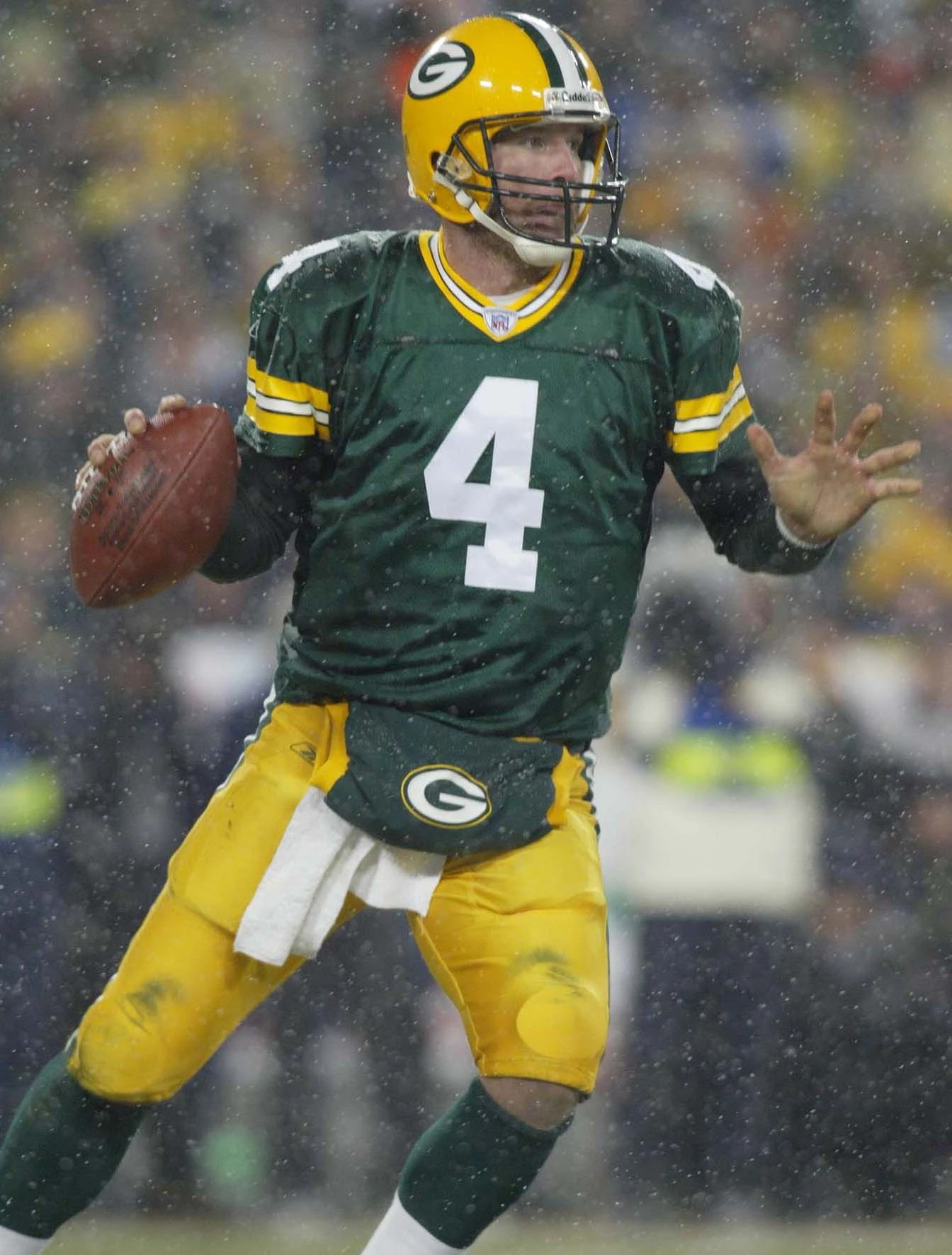
Top 50 NFL Quarterbacks: #8 - Brett Favre


Brett Favre

Brett Favre is yet another quarterback whose name is all over the NFL record book, but it didn't start out looking like it would lead there. He was a second-round pick of Atlanta in 1991, but only threw 4 passes in his rookie season with the Falcons, 2 of them resulting in interceptions. He was traded to Green Bay after the season for a first-round pick.

In the fourth game of his Packers career, Favre took over the starting job from Don Majkowski, and he would not give it up for the rest of his time with the team. His first two years in Green Bay were decent, but nothing special, but he started to show his greatness in 1994, when he threw 3882 yards, 33 touchdowns, and only 14 interceptions while leading Green Bay to the playoffs for the second straight year, where they lost to Dallas in the second round.

1995 was even better, with the highest passing total of his career (4413), which led the league, along with 38 touchdowns, also #1 in the league. Green Bay won the division with an 11-5 record, and Favre won his first MVP award. In the first two round of the playoffs, he threw 5 touchdowns without a pick, but he tossed 2 in the NFC title game, which led to them losing to Dallas for the third straight season to end their run.

In 1996 he dropped his yardage total back below 4000, but threw one more touchdown while getting the Packers to the best record in the league at 13-3, earning him his second straight MVP. He didn't have amazing numbers in the playoffs, but was able to finally break through and reach the Super Bowl, where he was good. He passed for 246 yards and 2 touchdowns and ran for another, but became the only QB in history to score 3 touchdowns in a Super Bowl win without being awarded the MVP.

Three-peats of any kind are a very difficult feat in sports, but Favre accomplished one in 1997, when he led the league in touchdowns for the third straight season and was awarded his 3rd consecutive MVP, becoming the first and only player ever so honored. That amazing season was followed up with another run to the Super Bowl, where they met John Elway and the Broncos, and though Favre outplayed Elway significantly, Terrell Davis led the Broncos to victory with his 3rd touchdown late in the game.

In 1998 he led the league in passing yards for the second time, reaching 4212, but threw 23 interceptions, and his down season led to the Packers falling in the wild card round to the 49ers, marking the first time in 4 years that they failed to reach the NFC title game.

He and the Packers had a couple of down years after that, with Favre throwing a lot of interceptions and Green Bay missing the playoffs, but he made a bit of a comeback in 2001, raising his TD's back up to 32 while dropping his picks down to 15. He also led them to their first playoff victory since the Super Bowl loss, but it was just a single game, and Favre ended up throwing 6 interceptions in their second round loss to Kurt Warner and the Rams.

He remained a solid quarterback on a decent team for several more seasons, with nearly every season ending with speculation of retirement, followed by a decision to play one more season to chase another Super Bowl. His final season in Green Bay came in 2007, when he threw 4155 yards and 28 touchdowns at age 38 and led the Packers to the NFC Championship Game for the 4th time in his career.

The Packers were desperate to move on and allow Aaron Rodgers to take over the starting job, and Favre felt that they forced him into retirement, but he quickly decided to unretire, which forced the Packers to trade him away to avoid a quarterback controversy. He was sent to the Jets for a year, where he had a pretty mediocre year, followed by another retirement, and another decision to come back.

When he came back in 2009, he joined the Minnesota Vikings, and had his best season since his 3 MVP years early in his career. He finished with 4202 yards, 33 touchdowns, and a career-low 7 picks. He led the Vikings to the playoffs, and even won a playoff game, which earned them a spot in the NFC title game, the fifth of Favre's career. The playoff win earned Favre the distinction of being the oldest quarterback ever to win a playoff game, at age 40, which has since been surpassed by Tom Brady.

He played one more season with Minnesota, but was terrible, with only 11 touchdown passes and 2509 yards, the lowest total since his rookie season, which ended with 0 yards. He finally retired for good at the end of the 2010 season after a career that spanned 20 years.

Favre had three excellent MVP seasons, and 6 other seasons as one of the best in the league. He led his teams to 5 conference title games and 2 Super Bowls, coming away victorious once, but what really sets him apart is the volume of his career. He was #1 all time in passing yards, completions, attempts, interceptions, wins, games started, consecutive starts, and touchdowns when he retired, though most of those have now been eclipsed. He is also the only player in history to win 3 straight MVP's, which is pretty remarkable, so there is no doubt that he deserves to be remembered as one of the best of all time.


Tuesday, August 18, 2015

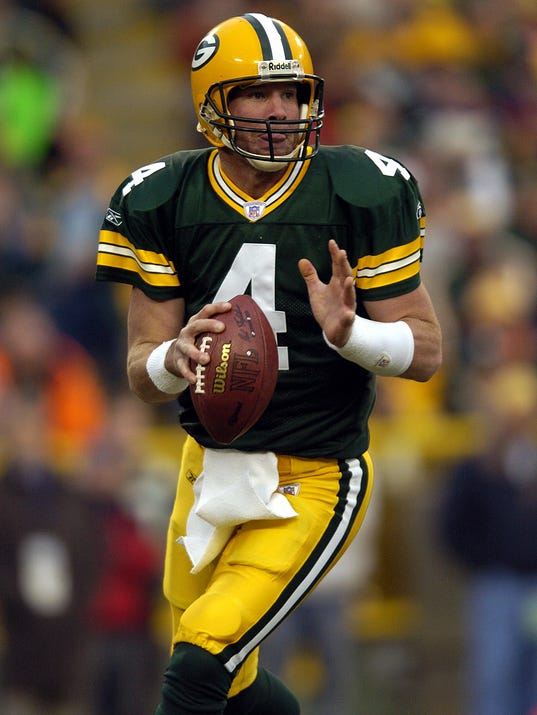
Top 50 NFL Quarterbacks: #4 - Brett Favre


Brett Favre

Brett Favre is yet another quarterback whose name is all over the NFL record book, but it didn't start out looking like it would lead there. He was a second-round pick of Atlanta in 1991, but only threw 4 passes in his rookie season with the Falcons, 2 of them resulting in interceptions. He was traded to Green Bay after the season for a first-round pick.

In the fourth game of his Packers career, Favre took over the starting job from Don Majkowski, and he would not give it up for the rest of his time with the team. His first two years in Green Bay were decent, but nothing special, but he started to show his greatness in 1994, when he threw 3882 yards, 33 touchdowns, and only 14 interceptions while leading Green Bay to the playoffs for the second straight year, where they lost to Dallas in the second round.

1995 was even better, with the highest passing total of his career (4413), which led the league, along with 38 touchdowns, also #1 in the league. Green Bay won the division with an 11-5 record, and Favre won his first MVP award. In the first two round of the playoffs, he threw 5 touchdowns without a pick, but he tossed 2 in the NFC title game, which led to them losing to Dallas for the third straight season to end their run.

In 1996 he dropped his yardage total back below 4000, but threw one more touchdown while getting the Packers to the best record in the league at 13-3, earning him his second straight MVP. He didn't have amazing numbers in the playoffs, but was able to finally break through and reach the Super Bowl, where he was good. He passed for 246 yards and 2 touchdowns and ran for another, but became the only QB in history to score 3 touchdowns in a Super Bowl win without being awarded the MVP.

Three-peats of any kind are a very difficult feat in sports, but Favre accomplished one in 1997, when he led the league in touchdowns for the third straight season and was awarded his 3rd consecutive MVP, becoming the first and only player ever so honored. That amazing season was followed up with another run to the Super Bowl, where they met John Elway and the Broncos, and though Favre outplayed Elway significantly, Terrell Davis led the Broncos to victory with his 3rd touchdown late in the game.

In 1998 he led the league in passing yards for the second time, reaching 4212, but threw 23 interceptions, and his down season led to the Packers falling in the wild card round to the 49ers, marking the first time in 4 years that they failed to reach the NFC title game.

He and the Packers had a couple of down years after that, with Favre throwing a lot of interceptions and Green Bay missing the playoffs, but he made a bit of a comeback in 2001, raising his TD's back up to 32 while dropping his picks down to 15. He also led them to their first playoff victory since the Super Bowl loss, but it was just a single game, and Favre ended up throwing 6 interceptions in their second round loss to Kurt Warner and the Rams.

He remained a solid quarterback on a decent team for several more seasons, with nearly every season ending with speculation of retirement, followed by a decision to play one more season to chase another Super Bowl. His final season in Green Bay came in 2007, when he threw 4155 yards and 28 touchdowns at age 38 and led the Packers to the NFC Championship Game for the 4th time in his career.

The Packers were desperate to move on and allow Aaron Rodgers to take over the starting job, and Favre felt that they forced him into retirement, but he quickly decided to unretire, which forced the Packers to trade him away to avoid a quarterback controversy. He was sent to the Jets for a year, where he had a pretty mediocre year, followed by another retirement, and another decision to come back.

When he came back in 2009, he joined the Minnesota Vikings, and had his best season since his 3 MVP years early in his career. He finished with 4202 yards, 33 touchdowns, and a career-low 7 picks. He led the Vikings to the playoffs, and even won a playoff game, which earned them a spot in the NFC title game, the fifth of Favre's career. The playoff win earned Favre the distinction of being the oldest quarterback ever to win a playoff game, at age 40.

He played one more season with Minnesota, but was terrible, with only 11 touchdown passes and 2509 yards, the lowest total since his rookie season, which ended with 0 yards. He finally retired for good at the end of the 2010 season after a career that spanned 20 years.

The reason Favre is this high is not due to any record-breaking seasons, like most of the other top QB's. He had three excellent MVP seasons, and 6 other seasons as one of the best in the league. He led his teams to 5 conference title games and 2 Super Bowls, coming away victorious once. What really sets him apart is the volume of his career. He is currently #1 all time in passing yards, completions, attempts, interceptions, wins, and games started, as well as consecutive starts, and was #1 in touchdowns until last season. He is also the only player in history to win 3 straight MVP's, which is pretty remarkable, so there is no doubt that he deserves to be remembered as one of the best of all time.

Wednesday, August 12, 2015

Top 50 NFL Quarterbacks: #10 - Aaron Rodgers


Aaron Rodgers

It may seem strange to see such a young quarterback this high in the rankings, but Aaron Rodgers has been one of the best quarterbacks in the league ever since the day he became a starter, which was 7 years ago, after spending 3 years backing up Brett Favre, learning from one of the best.

His first season as a starter was easily his worst, finishing with "only" 4038 yards, 28 touchdowns, and 13 interceptions. In his full seasons since, he has had fewer yards only once, and has never had fewer touchdowns or more interceptions. That was also the only season in his career in which he did not lead Green Bay to the playoffs.

In 2009, he was already the second-best QB in the entire league, throwing for 4434 yards, 30 touchdowns, and only 7 picks, and the Packers finished at 11-5. They lost in the wild card game to the Arizona Cardinals, but it wasn't because of Rodgers. He finished his first playoff start with 423 yards and 4 touchdowns, but was outplayed by Kurt Warner in a 51-45 shootout loss.

He completed his ascension to the peak in his third season, when he failed to reach 4000 passing yards for the only time in his career when healthy, but destroyed the competition in the playoffs. In the first two games combined, he threw over 540 yards and 6 touchdowns without an interception. After a rough game against Chicago that they still won 21-14, he made it to the Super Bowl and had a great game, with 304 yards and 3 touchdowns, and no interceptions for the third time in the postseason. That performance made him the Super Bowl MVP.

Right after the best postseason of his career, he came back with the best regular season of his career, and one of the greatest of all time. He threw career highs of 4643 yards and 45 touchdowns, and had only 6 interceptions all season. The team finished the season 15-1, and Rodgers was named the league's MVP, as if there could be any question after a season of that magnitude.

He was great again in 2012, with 4295 yards and 39 touchdowns, a little lower than the season before, but the season ended early again with a loss in the divisional round of the playoffs. He was on pace for another great season in 2013, but broke his collarbone and missed the final 7 games.

He came back at full strength last season, with 4381 yards and 38 touchdowns with a career-low 5 picks, and Green Bay finished at 12-4, tied for the best in the NFC. He was awarded his second NFL MVP award after the season, and he led the Pack to the NFC title game, where they lost a close one to Seattle, 28-22.

Although he has only played 6 full seasons, he has been one of the top 2 quarterbacks in the league in 5 of those seasons. He has never had fewer than 3900 yards or 28 touchdowns, and never more than 13 interceptions in a season. His career TD:INT ratio is almost 4:1, which is by far the best in history. He has set records for most yardage for a QB in their first two season and in their first 5 seasons, and has the third-highest completion percentage of any quarterback in history. Add in 2 MVP's and a Super Bowl MVP, and you have one of the greatest in history, and he still has a long career ahead of him.

Sunday, July 26, 2015

Top 50 NFL Quarterbacks: #26 - Philip Rivers


Philip Rivers

Philip Rivers is the next quarterback in my countdown, and his placement here is pretty interesting, because the man ranked two spots below him, Eli Manning, was traded for him on draft day in 2004. Even though Manning has had more postseason success, Rivers has been far superior in regular season success.

Rivers did not start a game in his first two seasons with San Diego, throwing a total of 30 passes while backing up Drew Brees. When Brees left as a free agent in 2006, Rivers was promoted and immediately became a strong player, leading the Chargers to a 14-2 record in his first season at the helm. They lost to New England in their first playoff game, however, wasting their best chance at a title.

He was pretty solid again the next season, leading the Chargers to another division title, and this time they won a couple playoff games, ultimately falling to the Patriots once again in the AFC title game, coming up just a game short of making the Super Bowl.

The following season was his best as a pro, as he threw for a league-leading 34 touchdowns and led the Chargers to their third straight division title, as well as an upset of Peyton Manning and the Colts in the wild card game. It was also the first time he eclipsed 4000 yards, something he has done 5 more times since.

He has also led the league in passing yards once, with 4710 in 2010, and completion percentage, at 69.5% in 2013. He has reached 4000 yards 6 times, and 30 touchdowns 4 times, while winning 4 division titles and starting every game for 9 straight seasons, which is good for the 4th-longest streak of all time, behind Favre and the Manning brothers. While he has only made it to the conference title game once in his career, he has still been so good for so long that he has earned the right to sit ahead of the man he was traded for, at least for now.

Friday, July 24, 2015

Top 50 NFL Quarterbacks: #28 - Eli Manning


Eli Manning

Eli Manning was also the #1 overall pick in the draft, picked in 2004 by San Diego and immediately traded to the Giants. He became the starter midway through his rookie season, and has started every game since. He is the active leader in consecutive starts, with 167, which is #3 all-time, behind only Brett Favre and his brother Peyton.

The biggest reason Eli is this high on the all-time list is that he is a 2-time Super Bowl Champion. The first came in 2008, when they faced the undefeated New England Patriots, the only team to finish 16-0 in a regular season, and he outplayed Tom Brady, leading the Giants on the championship-winning drive over the last two minutes to earn his first Super Bowl MVP trophy.

His second Super win came 4 years later, when the Giants eked into the playoffs with a 9-7 record, but Manning went on a tear in the playoffs, throwing for 923 yards, 8 touchdowns, and only 1 pick in the first three playoff games, two of which came on the road. They again faced New England in the Super Bowl, and though he only threw one touchdown, it was enough to pull off another upset and take home another Super Bowl MVP trophy.

That season Manning also became the only player in history to throw for over 4900 yards in a season and win the Super Bowl, a pretty impressive accomplishment. Other than that year, he has never been a great regular season quarterback, but he has rarely been bad. He has struggled in the playoffs aside from those two great seasons, losing all 3 other games he has played in.

Although he has always lived in the shadow of his older brother, Eli has carved out his own place in history. He is a 2-time champion, 2-time Super Bowl MVP, a long-term iron man, and has put up some big numbers. And while he has won one fewer Super Bowl than Troy Aikman, who sits behind him on this list, Manning was much better in the playoffs than Aikman, and put up much better regular season numbers than the Cowboy, eclipsing 20 TD's 9 times to Aikman's one.

Monday, July 13, 2015

Top 50 NFL Quarterbacks: #39


Matt Hasselbeck

Matt Hasselbeck is the second active quarterback to appear on this list, although he has hardly played at all in the past two seasons. He is on this this because of his work during his decade as the starting quarterback for the Seattle Seahawks, which was the most successful decade in team history.

He arrived in Seattle in 2001, after spending the first two years of his career backing up Brett Favre in Green Bay, and was immediately the team's starting quarterback. He had his first impressive season in 2003, when he finished #4 in the league with 3841 yards and third with 26 touchdowns, and Seattle made its first of 5 consecutive playoff appearances, losing to his former team in overtime in his first ever playoff game.

His greatest season came two years later, when he led Seattle to a 13-3 record, best in the NFC, and was once again among the leaders in both yards and touchdowns and set career highs in TD:INT ratio and completion percentage. He also led Seattle to its first Super Bowl appearance that year, which they lost to the Pittsburgh Steelers, although both the referees and the league have since admitted that incorrect calls influenced the result of the game.

He suffered through injuries the next year, including an MCL sprain that caused him to miss 4 games and some broken fingers that decreased his efficiency late in the season, but he came back strong again in 2007, leading Seattle back to the division crown with career highs of 3966 yards and 28 touchdowns. Unfortunately, they lost again to Green Bay in the playoffs.

He spent the next several years battling a variety of injuries, but managed to get healthy in time for the wild card game against defending champion New Orleans, and he outplayed Drew Brees with 272 yards, 4 touchdowns, and just one interception as Seattle pulled off one of the biggest upsets in playoff history.

After that season he started for just over a year for Tennessee, then signed on with Indianapolis to be Andrew Luck's backup, where you will find him still today. The work he did in Seattle, especially from 2003-2007, including 5 straight playoff appearances and a trip to the Super Bowl, are what makes his one of the all-time greats.