Saturday, October 30, 2021

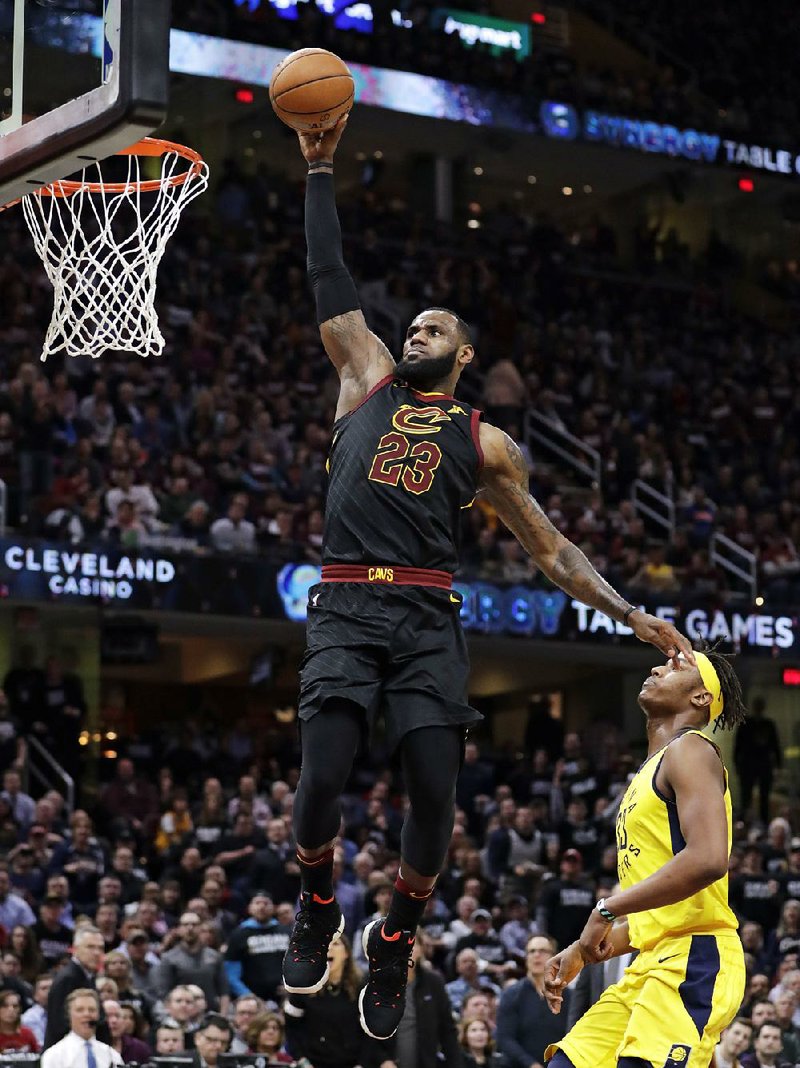
Top 100 NBA Players: #1 - LeBron James


LeBron James

Teams

Cleveland Cavaliers - 2003-10, 2014-18

Miami Heat - 2010-14

Los Angeles Lakers - 2018-present


Playoffs

Appearances - 15 (2006,2007,2008,2009,2010,2011,2012,2013,2014,2015,2016,2017,2018,2020,2021)

Conference Finals - 11 (2007,2009,2011,2012,2013,2014,2015,2016,2017,2018,2020)

NBA Finals - 10 (2007,2011,2012,2013,2014,2015,2016,2017,2018,2020)

Championships - 4 (2012,2013,2016,2020)


Awards and Honors

Rookie of the Year - 2004

MVP - 4 (2009,2010,2012,2013,2018,2020)

Finals MVP - 4 (2012,2013,2016,2020)

All-NBA First Team - 13 (2006,2007,2008,2009,2010,2011,2012,2013,2014,2015,2016,2017,2018,2020)

All-NBA Second Team - 3 (2005,2007,2021)

All-NBA Third Team - 1 (2019,2021)

*(actual in bold, deserved in italics)


All-Time Ranks

Total Points - #3

Points Per Game - #6

Total Assists - #8

Three-Pointers Made - #13

Total Steals - #14

Assists Per Game - #23

Total Rebounds - #46

Steals Per Game - #70


League Leads

Total Points (#1-2018, #2-2005,2006,2007,2008,2009,2010,2011,2012, #3-2013,2014, #4-2015,2016)

Points Per Game (#1-2008, #2-2009,2010,2011, #3-2005,2006,2012,2014,2015,2018, #4-2007,2013, #5-2016)

Total Assists (#1-2020, #2-2018, #5-2005,2017)

Total Steals (#2-2005, #4-2012)

Field Goal Percentage (#4-2014, #5-2013)

Assists Per Game (#1-2020, #2-2018)

Steals Per Game (#3-2005,2012)


After winning 3 state championships in 4 years of high school, LeBron James was drafted by his hometown Cleveland Cavaliers with the #1 overall pick in the NBA Draft.

James had a very strong rookie season, averaging 20.9 points, 5.5 rebounds, and 5.9 assists, and was the runaway winner of the Rookie of the Year award. He helped the Cavaliers double their win total from the previous year, but they still fell short of missing the playoffs.

In his second season, he averaged 27.2 points, 7.4 rebounds, and 7.2 assists, a clear improvement over the previous season, and was named to the All-NBA Second Team, the first of 17 straight seasons being named to one of the teams, a streak that is still active and the longest of any player in history. The team improved again, but still fell just short of making the playoffs.

In his third season, he averaged a career high 31.4 points per game, along with 7.0 rebounds, and 6.6 assists, and finished as the MVP runner-up. He led Cleveland to the playoffs for the first time in his career, and they advanced to the second round, where their playoff run ended.

In 2007, his regular season averages dropped off a bit, but in the playoffs, he led Cleveland all the way to the NBA Finals despite not having any other star players on the roster. They faced the experienced Spurs in that series, and LeBron was unable to overcome the star power of San Antonio, who swept the series.

The next year, LeBron led the league in scoring for the first time with 30.0 per game, along with 7.9 rebounds and 7.2 assists per game, but the team lost to Boston in the second round. The next year, he led Cleveland to 66 wins, best in the league, and won his first MVP award. He led the Cavaliers to the Conference Finals, but despite his 35.3 points per game in the playoffs, they weren't able to beat the Magic, losing one step short of the Finals for the only time in his career so far.

He led Cleveland to the best record in the league again the next season, and won a second straight MVP after averaging 29.7 points, 7.3 rebounds, and 8.6 assists. Despite this, they only reached the second round of the playoffs, losing to Boston in 6 games, even though LeBron had a triple-double in the final game.

After that season, LeBron decided to leave Cleveland as a free agent and sign with Miami, though he officially ended up being traded for 4 draft picks. He joined former Finals MVP Dwyane Wade on the Heat, and the pair was able to lead Miami to the NBA Finals, but LeBron struggled in that series, averaging only 17.8 points per game, and they lost to Dallas in 6 games.

He bounced back in a big way the next season, averaging 27.1 points, 7.9 rebounds, and 6.2 assists, and won his third MVP in 4 seasons. He led Miami back to the Finals, and averaged 28.6 points, 10.2 rebounds, and 7.4 assists against the Thunder, including a triple-double in the deciding 5th game, winning his first championship and Finals MVP as a result.

The next year he led the Heat to the best record in the league while his averages remained pretty much the same as the year before, which earned him his 4th MVP award, a number surpassed by only Michael Jordan and Kareem Abdul-Jabbar. He led Miami back to the Finals, where they beat the Spurs in 7 games, with LeBron scoring 37 in the final game to earn his second straight Finals MVP.

The Heat struggled with injuries the next year, with LeBron being one of the few players to remain healthy throughout the year, but he was still able to lead Miami to the Finals for the 4th year in a row. They had a rematch with the Spurs, his third time facing them in the Finals, and they ended up falling short, losing to San Antonio in 5 games.

After that season, LeBron decided to leave as a free agent and return to Cleveland, feeling that he still owed the city a championship. He had another strong season back with the Cavaliers, and led them to the Finals for the second time in team history, where they faced Golden State. James averaged 35.8 points, 13.3 rebounds, and 8.8 assists in the Finals, but it wasn't enough to beat the Warriors, who took the title in 6 games.

The next year, Cleveland coasted through the first 3 rounds of the playoffs, losing only 2 games on their way back to the Finals, where they met the record-setting 73-win Warriors. Cleveland fell behind 3-1 in the Finals, but LeBron had back-to-back 41-point games to even the series, then a triple-double in Game 7 to complete the comeback. He averaged 29.7 points, 11.3 rebounds, 8.9 assists, 2.6 steals, and 2.3 blocks in the Finals, becoming the first player ever to lead both teams in all 5 categories in a playoff round and earning his 3rd Finals MVP.

He led Cleveland back to the Finals again the next year, the 7th year in a row that he would play in the last round, and they were once again facing the Warriors, this time with Kevin Durant added to their rivals. James became the first player to ever average a triple-double in the Finals, with 33.6 points, 12.0 rebounds, and 10.0 assists, but it wasn't enough to prevent Cleveland from losing in 5 games.

In his 4th season back in Cleveland, he reached the NBA Finals yet again, the 8th straight time he had reached that point, something that has never been done by anyone who didn't play for the Celtics in the 1960s. He had another great individual series, but the team had traded away Kyrie Irving before the season, leaving him without a star teammate, and Cleveland's season ended in a sweep.

He decided to leave Cleveland again after that season, joining the Lakers as a free agent, hoping to resurrect another franchise that had missed the playoffs for several years in a row. He injured his groin on Christmas Day, the first major injury of his career, and he ended up missing 27 total games, and the Lakers were unable to reach the playoffs without their star on the court.

The Lakers traded for Anthony Davis before the next season, and LeBron shifted to playing more of a point guard role, even leading the league in assists with 10.2 per game. He was named to the All-NBA First Team for the 13th time, 2 more than any other player in history, and led the Lakers to the NBA Finals, where they beat the Heat in 6 games, with James earning his 4th Finals MVP, becoming the second-oldest player to ever win the award.

Last season, James suffered an ankle injury that caused him to miss the most games he has ever missed in his career, returning just in time to start the playoffs. He did finish the season with an average of 25.0 points per game, marking the 17th year in a row he had met that mark, but the Lakers lost in the first round of the playoffs after Davis suffered a groin injury, spoiling their chance at a repeat. 

LeBron James has played at a high level for longer than any other player in history. He has averaged at least 25 points per game for the past 17 seasons, 5 more than any other player ever, and has reached the NBA Finals 10 times, a number only Sam Jones and Bill Russell have surpassed, though James is the only one who was the best player on all 10 Finals teams. He has been named to the All-NBA First Team 13 times, all well-deserved, which is 2 times more than anyone else, and he is still playing at the same high level, which leaves room to extend all of those marks.

He is currently #3 on the all-time scoring list, behind only Kareem and Karl Malone, and is also #8 on the all-time assist leaderboard, the only player in the top 30 who was not a point guard. His career scoring average of 27.0 per game is #6 all time, despite the fact that he has only led the league in scoring once. There are many players with great longevity, many with great playoff success, many who are great in 2 or 3 different statistical categories, but LeBron James has excelled in all of these areas, and is the greatest to ever play the game of basketball.


NBA Predictions - 30 Oct

Upset picks are in italics.

Boston at Washington - Wizards by 9.5

Orlando at Detroit - Pistons by 1

New York at New Orleans - Knicks by 8

Toronto at Indiana - Pacers by 1.5

Atlanta at Philadelphia - Hawks by 0.5

Utah at Chicago - Jazz by 5.5

Miami at Memphis - Heat by 9.5

San Antonio at Milwaukee - Bucks by 9.5

Oklahoma City at Golden State - Warriors by 16

Denver at Minnesota - Nuggets by 0.5

Cleveland at Phoenix - Cavaliers by 6


Results

NBA: 2-5 (.286) 39-38 overall (.506)

Upsets: 0-5 (.000) 3-17 overall (.150)

Friday, October 29, 2021

Top 100 NBA Players: #2 - Kareem Abdul-Jabbar


Kareem Abdul-Jabbar

Teams

Milwaukee Bucks - 1969-75

Los Angeles Lakers - 1975-89


Playoffs

Appearances - 18 (1971,1972,1973,1974,1977,1978,1979,1980,1981,1982,1983,1984,1985,1986,1987,1988,1989)

Conference Finals - 14 (1970,1971,1972,1974,1977,1980,1982,1983,1984,1985,1986,1987,1988,1989)

NBA Finals - 10 (1971,1974,1980,1982,1983,1984,1985,1987,1988,1989)

Championships - 6 (1971,1980,1982,1985,1987,1988)


Awards and Honors

Rookie of the Year - 1970

MVP - 6 (1971,1972,1974,1976,1977,1979,1980)

Finals MVP - 2 (1971,1980,1985)

All-NBA First Team - 10 (1970,1971,1972,1973,1974,1975,1976,1977,1978,1979,1980,1981,1984,1986)

All-NBA Second Team - 5 (1970,1978,1979,1982,1983,1984,1985)

Hall of Fame - 1995

*(actual in bold, deserved in italics)


All-Time Ranks

Total Points - #1

Total Blocks - #3

Total Rebounds - #4

Blocks Per Game - #8

Points Per Game - #17

Field Goal Percentage - #21

Rebounds Per Game - #31

Total Assists - #45


League Leads

Field Goal Percentage (#1-1977, #2-1971,1972,1974,1979,1980, #3-1973, #4-1975,1978,1982,1983,1985, #5-1976,1981,1987)

Total Points (#1-1970,1971,1972, #2-1973,1974,1976,1977, #4-1975,1981, #5-1980)

Points Per Game (#1-1971,1972, #2-1970,1973,1976, #3-1974,1975,1977, #4-1978,1981)

Total Blocks (#1-1976,1977,1979,1980, #2-1974,1975,1981, #4-1978,1982)

Rebounds Per Game (#1-1976, #2-1977, #3-1970,1972,1979, #4-1971,1973,1974, #5-1975)

Blocks Per Game (#1-1975,1976,1979,1980, #2-1974,1977,1978, #3-1981,1982)

Total Rebounds (#1-1976,1977, #2-1972, #3-1970,1971,1974, #4-1979, #5-1973)


After being named the National Player of the Year 3 times, winning 3 straight national championships, and 3 straight Most Oustanding Player of the NCAA Tournament awards at UCLA, Kareem Abdul-Jabbar (then known as Lew Alcindor) was the #1 overall pick in the NBA Draft by the Milwaukee Bucks.

As a rookie, Alcindor finished #2 in the league in scoring, with 28.8 per game, and third in rebounding with 14.5, and was easily named the Rookie of the Year. He led the Bucks from the worst record in the East the year before to the #2 seed, and he had 46 points and 25 rebounds in the deciding game of the first round, before the team's season ended in the second round.

The team traded for Oscar Robertson before the next season, and finished the season with the league's best record, with Alcindor averaging a league-leading 31.7 points per game along with 16.0 rebounds and winning his first MVP award. They lost only 2 games on their way to the NBA Finals, where they swept the Bullets, winning the championship and earning Alcindor the Finals MVP as well.

After the championship season, he announced that he wanted to be known by his Muslim name, Kareem Abdul-Jabbar, which he had used privately for several years. He had another dominant season, averaging 34.8 points and 16.6 rebounds, his second straight year leading the league in scoring, but the Bucks lost to the record-setting Lakers team in the Conference Finals, ending their bid for a repeat title.

After a slightly down year in 1973 (30.2 points, 16.1 rebounds, and 5.0 assists per game) that ended in a first-round playoff loss, he won his 3rd MVP in 4 years in 1974, and led the Bucks back to the NBA Finals for the second time in their history. They played the Boston Celtics in that series, and Abdul-Jabbar averaged 32.6 points, but they lost in 7 games.

Abdul-Jabbar privately requested a trade after that season after the retirement of Oscar Robertson, but nothing came of it at the time. He played one more season with the Bucks, averaging 30.0 points, 14.0 rebounds, and leading the league in blocks with 3.3 per game in the second season the stat was recorded. Despite his individual success, the team missed the playoffs, the first time in his life that he did not reach the postseason.

He was traded to the Los Angeles Lakers during the offseason, and he had his best individual season, averaging 27.7 points, 5.0 assists, and league-leading 16.9 rebounds and 4.1 blocks, both career highs as well. He was named the MVP for the 4th time due to his great play, but despite his dominance, the Lakers missed the playoffs.

His individual numbers dropped a bit the next year, but he was able to lead the Lakers to the best record in the league, winning his 5th MVP along the way. They reached the Conference Finals, where they met Bill Walton and the Trail Blazers, and they ended up being swept by Portland.

He broke his hand punching an opponent in the first game of the next season, which caused him to miss 20 games, the only major injury of his career, and that was the only season in which he was not named an All-Star. The next year he led the league in blocks for the third time, but they lost in the second round, which was the second and last time in his career that he would have consecutive seasons without reaching the Conference Finals.

Magic Johnson was drafted by the team in 1979, and Kareem went on to win his record 6th MVP that year, with averages of 24.8 points, 10.8 rebounds, 4.5 assists, and 3.4 blocks, which led the league again. The Lakers went all the way to the Finals, winning the championship over Philadelphia in 6 games, with Kareem sitting out the final game due to injury.

Kareem was still the Lakers' best player for one more season, while Magic Johnson missed the majority of the season due to injury. He averaged 26.2 points and 10.3 rebounds, the 12th straight season that he averaged at least 23 points and 10 rebounds. He averaged at least 20 points per game for 5 more seasons, making it 17 in a row to start his career, a feat that has been surpassed by only LeBron James.

He went on to win 4 more championships with the Lakers, 3 as the sidekick to Magic Johnson, and even won another Finals MVP in 1985, 14 years after his first. By the time he won his 6th and final championship in 1988, he was no longer playing at a star level, but he returned for one final season, retiring in 1989 at the age of 42.

Kareem has been the NBA's all-time scoring leader since he passed Wilt Chamberlain's record in 1984, and he is also currently #4 in rebounds and #3 in blocks, despite the stat not being tracked during his first 4 seasons. He reached the Conference Finals 14 times in his career, more than any other player ever, and played in 10 NBA Finals more than anyone but Bill Russell and Sam Jones. He won 6 championships, and was either the best or second-best player on 5 of those teams, and won 6 MVPs, the most of any player ever. No matter how you look at his career, he was one of the greatest players of all time.


NBA Predictions - 29 Oct

Upset picks are in italics.

Orlando at Toronto - Raptors by 16

Indiana at Brooklyn - Pacers by 3

Charlotte at Miami - Heat by 7.5

Sacramento at New Orleans - Pelicans by 1.5

Dallas at Denver - Mavericks by 0.5

LA Clippers at Portland - Clippers by 0.5

Cleveland at LA Lakers - Cavaliers by 12.5


Results

NBA: 3-3 (.500) 37-33 overall (.529)

Upsets: 3-12 overall (.200)

Thursday, October 28, 2021

Top 100 NBA Players: #3 - Michael Jordan


Michael Jordan

Teams

Chicago Bulls - 1984-93, 1995-98

Washington Wizards - 2001-03


Playoffs

Appearances - 13 (1985,1986,1987,1988,1989,1990,1991,1992,1993,1995,1996,1997,1998)

Conference Finals - 8 (1989,1990,1991,1992,1993,1996,1997,1998)

NBA Finals - 6 (1991,1992,1993,1996,1997,1998)

Championships - 6 (1991,1992,1993,1996,1997,1998)


Awards and Honors

Rookie of the Year - 1985

MVP - 5 (1988,1989,1990,1991,1992,1993,1996,1998)

Finals MVP - 6 (1991,1992,1993,1996,1997,1998)

Defensive Player of the Year - 1 (1988)

All-NBA First Team - 10 (1985,1987,1988,1989,1990,1991,1992,1993,1996,1997,1998)

All-NBA Second Team - 1 (1985)

Hall of Fame - 2009

*(actual in bold, deserved in italics)


All-Time Ranks

Points Per Game - #1

Total Steals - #3

Steals Per Game - #4

Total Points - #5

Total Assists - #47

Assists Per Game - #100


League Leads

Total Points (#1-1985,1987,1988,1989,1990,1991,1992,1993,1996,1997,1998)

Points Per Game (#1-1987,1988,1989,1990,1991,1992,1993,1996,1997,1998, #3-1985)

Total Steals (#1-1988,1990,1993, #2-1987,1989, #3-1991,1996, #4-1985,1992)

Steals Per Game (#1-1988,1990,1993, #2-1987, #3-1989,1991,1996, #4-1985)


After hitting the championship-winning shot as a freshman at North Carolina, then winning the College Player of the Year award as a junior, Michael Jordan entered the NBA Draft, where he was selected by the Chicago Bulls with the #3 overall pick.

As a rookie, Jordan finished with the third-highest scoring average in the league, pouring in 28.2 per game, along with 6.5 rebounds, 5.9 assists, and 2.4 steals, which earned him the Rookie of the Year award despite solid play from Hakeem Olajuwon that year as well. He was able to help the Bulls make the playoffs for the first time in 4 years, but they lost in the first round to Milwaukee.

Jordan broke his foot in the third game of his second season, and ended up missing 64 games while recovering, but returned for the end of the regular season and the playoffs. In Game 2 of the first round, he scored a playoff-record 63 points against the Boston Celtics, but they lost that game and were swept in the series.

He was fully healthy the next season, and led the league by scoring 37.1 points per game, becoming only the second player to score 3000 points in a season, but the playoffs brought more disappointment, as Jordan and the Bulls were swept by the Celtics in the first round, the third year in a row that they failed to win a playoff series.

Scottie Pippen joined the team the next year as a rookie, and Jordan had another great year, leading the league with 35.0 points per game and 3.2 steals, and won both the MVP and Defensive Player of the Year awards. He also won a playoff series for the first time, but the Bulls lost to Detroit in the second round in 5 games.

He led the league in scoring again the next year, but his averaged dropped to 32.5, but he averaged career highs in rebounds and assists, averaging 8.0 of each for the season. That year he was able to lead the Bulls one step farther in the playoffs, reaching the Conference Finals, but the Pistons ended their season again, knocking them off in 6 games.

He raised his scoring average back up to 33.6 the next year, and led the league in steals for the second time, with 2.8 per game, and set a career high by scoring 69 points in a March game against Cleveland. He took the Bulls back to the Conference Finals, where they met the Pistons again, and once again Detroit ended their season, this time in 7 games. 

Jordan won his second MVP the next year after averaging 31.5 points per game to lead the league for the 5th year in a row, and he led the Bulls to 61 wins. They reached the Conference Finals for the third year in a row and met the Pistons there again, but this time they swept their rivals to reach their first Finals. They faced Magic Johnson and the Lakers in that series, winning in 5 games with Jordan averaging 31.2 points per game to win his first Finals MVP.

His scoring dropped to 30.1 the next year, but was still good for the league lead, and the Bulls won 67 games, earning Jordan another MVP, the third of his career. The Bulls faced a tough path the to Finals, barely getting past the Knicks in the second round before beating Cleveland in 6 games in the Conference Finals, but Jordan averaged 35.8 in the Finals to knock off Portland in 6 games, winning his second Finals MVP.

Jordan played better the next year, finishing with 32.6 points, 6.7 rebounds, and 5.5 assists, but lost the MVP award to Charles Barkley of the Suns, who finished with the league's best record. He led the Bulls back to the Finals for the third year in a row, where they faced those Suns, and Jordan set a Finals record by averaging 41.0 points per game in the Finals as they beat Phoenix in 6 games.

Shortly before the start of the next season, Jordan surprised everyone by announcing his retirement after only 9 seasons in the NBA. He played minor league baseball during his time away, and the Bulls fell short of the Finals for the first time in 4 years. Near the end of the next season, with the Bulls struggling to make the playoffs, Jordan decided to return to the Bulls.

It took a few games to shake off the rust, but by the end of the regular season he was pretty much back to his former self, and the Bulls went 13-4 after his return to make the playoffs comfortably. They reached the second round of the playoffs, where they faced Shaq and the Magic, but despite Jordan's 31.0 points per game in the series, the Bulls lost a series with Jordan on the court for the first time since 1990.

Following that playoff loss, Jordan and the Bulls came back with a vengeance, setting a new record by winning 72 games that next season, with Jordan scoring 30.4 points per game to win his record 8th scoring title. The Bulls lost only one game on their way to the NBA Finals, where they beat the SuperSonics in 6 games to earn Jordan his 4th Finals MVP.

The Bulls won "only" 69 games the next year, and Jordan averaged "only" 29.6 points, but it was enough for the scoring title and the league's best record again. Karl Malone won that season's MVP, and just like in 1993, Jordan met the man who had beaten him for MVP in the Finals, and led the Bulls to a 6-game defeat of the Jazz for a 5th championship.

The next year, Chicago won only 62 games, and Jordan only scored 28.7 per game, but he won his 10th scoring title anyway. He led the Bulls to the Finals yet again, surviving a tough 7-game series against Indiana in the Conference Finals before knocking off Utah in 6 games for the second straight year, earning Jordan his record 6th Finals MVP (though Bill Russell did not have the chance to win any during his career).

He retired again before the start of the next season, and a year later joined the Washington Wizards as President of Basketball Operations. After a couple of years in the role, Jordan decided that he still wanted to play, and unretired once again to join the Wizards.

Jordan injured his knee in his first season with the Wizards, missing 22 games as a result, only the second time he had suffered a major injury in his career. He averaged 22.9 points per game, but wasn't able to lead the team to the playoffs, missing out on the postseason for the first time in his career. He played one more season with the team, averaging a career-low 20 points per game, and once again fell short of the playoffs. Following that season, he retired for the final time.

Jordan has the highest scoring average of any player in history, ahead of Wilt Chamberlain by a fraction of a point, and won more scoring titles than any other player ever. He also led the league in steals 3 times and is #3 on the all-time list for total steals. He won 6 championships and was the best player on each of those teams, an accomplishment eclipsed by only Bill Russell, and won 5 MVP awards, second to only Kareem Abdul-Jabbar's 6, though he probably deserved to have 7. He is definitely one of the greatest to ever play the game.


Fantasy Football Rankings - Week 8


Quarterbacks


1

Josh Allen

BUF

2

Matthew Stafford

LAR

3

Justin Herbert

LAC

4

Kyler Murray

AZ

5

Patrick Mahomes

KC

6

Tom Brady

TB

7

Jalen Hurts

PHI

8

Kirk Cousins

MIN

9

Dak Prescott

DAL

10

Joe Burrow

CIN

11

Matt Ryan

ATL

12

Teddy Bridgewater

DEN

13

Aaron Rodgers

GB

14

Ryan Tannehill

TEN

15

Trevor Lawrence

JAX

16

Geno Smith

SEA

17

Sam Darnold

CAR

18

Carson Wentz

IND

19

Ben Roethlisberger

PIT

20

Taylor Heinicke

WAS

21

Jameis Winston

NO

22

Mac Jones

NE

23

Daniel Jones

NYG

24

Baker Mayfield

CLE

25

Jared Goff

DET


Running Backs


Flex

1

Derrick Henry

TEN

1

2

Ezekiel Elliott

DAL

2

3

James Robinson

JAX

3

4

Jonathan Taylor

IND

4

5

D'Andre Swift

DET

5

6

Joe Mixon

CIN

7

7

Austin Ekeler

LAC

8

8

Nick Chubb

CLE

9

9

Darrell Henderson Jr.

LAR

12

10

Alvin Kamara

NO

13

11

Dalvin Cook

MIN

16

12

Najee Harris

PIT

21

13

Darrel Williams

KC

22

14

Cordarrelle Patterson

ATL

23

15

Antonio Gibson

WAS

25

16

Leonard Fournette

TB

28

17

Damien Harris

NE

30

18

Aaron Jones

GB

31

19

James Conner

AZ

34

20

Khalil Herbert

CHI

35

21

Alex Collins

SEA

37

22

Saquon Barkley

NYG

38

23

Zack Moss

BUF

41

24

Chuba Hubbard

CAR

42

25

Myles Gaskin

MIA

52

26

Javonte Williams

DEN

53

27

Chase Edmonds

AZ

54

28

Eli Mitchell

SF

56

29

Melvin Gordon III

DEN

65

30

David Johnson

HOU

66

31

Kenneth Gainwell

PHI

67

32

Michael Carter

NYJ

69

33

Tony Pollard

DAL

74

34

Jamaal Williams

DET


35

Alexander Mattison

MIN


36

JD McKissic

WAS


37

D'Ernest Johnson

CLE


38

Damien Williams

CHI


39

Mike Davis

ATL


40

Devin Singletary

BUF


41

Samaje Perine

CIN


42

Boston Scott

PHI


43

Devontae Booker

NYG


44

Ty Johnson

NYJ


45

Nyheim Hines

IND


46

Brandon Bolden

NE


47

Chris Evans

CIN


48

Sony Michel

LAR


49

AJ Dillon

GB


50

Phillip Lindsay

HOU


Wide Receivers


Flex

1

Cooper Kupp

LAR

6

2

Mike Williams

LAC

10

3

Deebo Samuel

SF

11

4

Justin Jefferson

MIN

14

5

Tyreek Hill

KC

15

6

Ja'Marr Chase

CIN

17

7

Emmanuel Sanders

BUF

18

8

Stefon Diggs

BUF

19

9

DK Metcalf

SEA

20

10

Mike Evans

TB

24

11

DeAndre Hopkins

AZ

26

12

Randall Cobb

GB

27

13

DJ Moore

CAR

29

14

Terry McLaurin

WAS

32

15

Adam Thielen

MIN

33

16

CeeDee Lamb

DAL

36

17

Diontae Johnson

PIT

44

18

Robert Woods

LAR

45

19

Chris Godwin

TB

47

20

AJ Brown

TEN

48

21

Courtland Sutton

DEN

49

22

Jerry Jeudy

DEN

50

23

Michael Pittman Jr.

IND

51

24

Chase Claypool

PIT

55

25

Keenan Allen

LAC

59

26

Marvin Jones Jr.

JAX

60

27

AJ Green

AZ

61

28

Darnell Mooney

CHI

62

29

DeVonta Smith

PHI

63

30

Amari Cooper

DAL

68

31

Cole Beasley

BUF

70

32

Christian Kirk

AZ

71

33

Antonio Brown

TB

72

34

TY Hilton

IND

73

35

Corey Davis

NYJ

75

36

Calvin Ridley

ATL


37

Kadarius Toney

NYG


38

Laviska Shenault Jr.

JAX


39

Kalif Raymond

DET


40

Brandin Cooks

HOU


41

Marquez Callaway

NO


42

Malik Taylor

GB


43

Julio Jones

TEN


44

Tee Higgins

CIN


45

Russell Gage

ATL


46

Jakobi Meyers

NE


47

Donovan Peoples-Jones

CLE


48

Allen Robinson II

CHI


49

Odell Beckham Jr.

CLE


50

Tyler Boyd

CIN


Tight Ends


Flex

1

Kyle Pitts

ATL

39

2

Travis Kelce

KC

40

3

Hunter Henry

NE

43

4

Tommy Sweeney

BUF

46

5

CJ Uzomah

CIN

57

6

Tyler Higbee

LAR

58

7

Dalton Schultz

DAL

64

8

TJ Hockenson

DET


9

Noah Fant

DEN


10

Dallas Goedert

PHI


11

Mike Gesicki

MIA


12

Jared Cook

LAC


13

Gerald Everett

SEA


14

Jonnu Smith

NE


15

Tyler Conklin

MIN


16

Mo Alie-Cox

IND


17

Ricky Seals-Jones

WAS


18

Evan Engram

NYG


19

Zach Ertz

AZ


20

Dan Arnold

JAX


Kickers


1

Tyler Bass

BUF

2

Evan McPherson

CIN

3

Matt Gay

LAR

4

Greg Zuerlein

DAL

5

Graham Gano

NYG

6

Jake Elliott

PHI

7

Chase McLaughlin

CLE

8

Ryan Succop

TB

9

Younghoe Koo

ATL

10

Nick Folk

NE

11

Mason Crosby

GB

12

Michael Badgley

IND

13

Harrison Butker

KC

14

Matt Prater

AZ

15

Greg Joseph

MIN


Defenses

1

LA Rams

2

Buffalo

3

Cincinnati

4

San Francisco

5

Seattle

6

Dallas

7

Atlanta

8

Arizona

9

Denver

10

Cleveland

11

Tampa Bay

12

LA Chargers

13

Philadelphia

14

Chicago

15

Washington